
Mitsubishi Triton vs Nissan Navara New Zealand: Which Ute Wins?
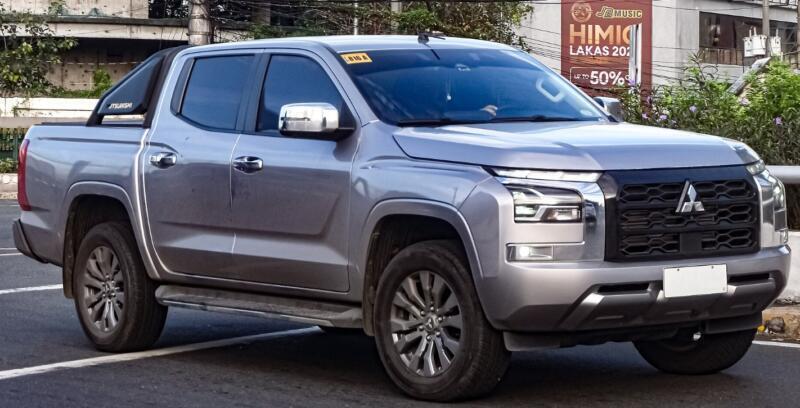
Choosing between the Mitsubishi Triton and Nissan Navara in New Zealand has suddenly become much more complicated—and much more interesting.
For years, these two utes followed different paths. The Triton was the rugged value choice with clever four-wheel-drive technology, while the Navara leaned towards comfort, familiar styling, and a more relaxed everyday character. Now, however, the latest Nissan Navara is closely related to the current Mitsubishi Triton.
In other words, they are no longer strangers staring at each other from opposite sides of the car park. They are more like siblings wearing different jackets.
Both use a 2.4-litre twin-turbo diesel engine, a six-speed automatic transmission and a shared ladder-frame platform. Both offer up to 3,500 kg of braked towing capacity, modern safety technology and serious off-road ability. Yet Nissan and Mitsubishi have tuned, packaged and marketed them differently.
So, which ute should we buy in New Zealand?
The answer depends on whether we prioritise proven value, suspension comfort, warranty coverage, off-road versatility, styling or dealer support. Let us break down the Mitsubishi Triton vs Nissan Navara New Zealand contest without getting lost in marketing smoke.
- Mitsubishi Triton vs Nissan Navara NZ at a Glance
- Are the New Mitsubishi Triton and Nissan Navara the Same Ute?
- Engine Performance: A Near-Perfect Draw
- Transmission and Everyday Driveability
- Ride Comfort on New Zealand Roads
- Towing Capacity and Trailer Performance
- Payload and Work Capability
- Four-Wheel-Drive Systems Compared
- Off-Road Ability
- Fuel Economy
- Interior Quality and Cabin Technology
- Safety Comparison
- Warranty and Ownership Support in New Zealand
- Pricing and Value for Money
- Styling: Tough Versus Distinctive
- Mitsubishi Triton Pros and Cons
- Nissan Navara Pros and Cons
- Which Ute Is Better for New Zealand Conditions?
- What Should We Check During a Test Drive?
- Mitsubishi Triton vs Nissan Navara New Zealand Verdict
- Frequently Asked Questions
Before we crawl through the details, here is the broad picture.
| Category | Mitsubishi Triton | Nissan Navara |
|---|---|---|
| Engine | 2.4L twin-turbo diesel | 2.4L twin-turbo diesel |
| Power | Around 150 kW | 150 kW |
| Torque | Around 470 Nm | 470 Nm |
| Transmission | 6-speed automatic | 6-speed automatic |
| Maximum braked towing | Up to 3,500 kg | Up to 3,500 kg |
| Fuel consumption | Variant-dependent | As low as 7.7 L/100 km claimed |
| Four-wheel drive | Easy Select or Super Select II | Easy 4WD or Super 4WD |
| Safety | Five-star ANCAP on applicable models | Five-star ANCAP on dual-cab models |
| Main advantage | Value and versatile 4WD system | Suspension tuning and warranty potential |
| Best suited to | Buyers wanting capability per dollar | Buyers prioritising comfort and Nissan support |
The new Navara’s official New Zealand specifications include 150 kW, 470 Nm, a six-speed automatic, a 3,500 kg maximum braked towing rating and claimed combined fuel consumption of 7.7 L/100 km.
Not completely—but they are closely related.
The latest Navara is based on the same fundamental vehicle architecture as the new-generation Triton. ANCAP states that the Navara’s safety rating is based on testing of the closely related Mitsubishi Triton, supported by additional Nissan technical information.
That means the two vehicles share major engineering elements, including:
- A ladder-frame chassis
- A 2.4-litre twin-turbo diesel engine
- A six-speed automatic transmission
- Similar dimensions
- Related four-wheel-drive hardware
- Comparable safety structures
- Similar towing and payload objectives
However, calling the Navara nothing more than a Triton with a Nissan grille would be too simplistic.
Nissan has applied its own exterior design, model names, equipment strategy, warranty programme and suspension approach. Certain Navara grades are also available with Premcar-tuned suspension, intended to deliver a more polished ride across New Zealand and Australian conditions.
Why Platform Sharing Is Not Necessarily Bad
Some buyers hear “shared platform” and immediately assume one vehicle is a cheap copy. That is not how modern vehicle development works.
Sharing expensive engineering foundations can allow manufacturers to spend more money refining the parts customers actually notice. Think of it like two houses built on the same foundation. The structure underneath may be similar, but the rooms, furniture, finishes and atmosphere can feel different.
For buyers, shared engineering may also bring practical advantages:
- A larger supply of mechanical components
- Better aftermarket accessory availability
- More widespread technical knowledge
- Potentially lower long-term parts costs
- Faster development of proven upgrades
The meaningful question is not whether the Navara and Triton share components. It is how successfully each manufacturer has shaped the common foundation.
Engine Performance: A Near-Perfect Draw
Under the bonnet, the rivalry becomes extremely close.
The new Navara uses a 2.4-litre four-cylinder intercooled twin-turbo diesel producing 150 kW at 3,500 rpm and 470 Nm between 1,500 and 2,750 rpm.
The current Triton uses the same basic 2.4-litre bi-turbo diesel configuration in New Zealand. Mitsubishi dealerships list the engine alongside a six-speed automatic transmission across the main Triton range.
In real driving, both should feel muscular rather than explosive. We get a broad wave of low-speed torque, which is what matters when merging with a load, climbing a steep rural road or pulling a trailer away from an intersection.
Neither ute behaves like a performance pickup. Pressing the accelerator does not launch us towards the horizon like a stone from a slingshot. Instead, they gather speed confidently and predictably.
That calm strength suits the purpose of a diesel ute.
This content may interest you! Mitsubishi Triton vs Strada New Zealand: Are They Actually Different?
How the Twin-Turbo System Helps
A twin-stage turbo arrangement is designed to improve response across a wider engine-speed range. A smaller turbo helps the engine react at low rpm, while the second turbo contributes as demand increases.
The result should be:
- Less hesitation when accelerating
- Stronger low-speed pulling power
- Easier hill climbing
- More controlled towing performance
- Reduced need to push the engine towards high rpm
For most New Zealand buyers, there will be no meaningful engine-performance winner. The driving environment, load, tyres and suspension setup will create more noticeable differences than the engine badges.
Engine Winner: Draw
Both deliver enough torque for work, towing and touring. Choosing between them based purely on power output would be like choosing between identical gumboots because one pair has a different logo.
Transmission and Everyday Driveability
Both utes use a six-speed automatic transmission.
That may sound old-fashioned beside rivals offering eight- or ten-speed gearboxes, but more gears do not automatically create a better driving experience. A well-calibrated six-speed transmission can be smoother, simpler and less eager to hunt between ratios.
When driving around Auckland, Wellington or Christchurch, we want the gearbox to shift without constantly announcing its presence. On rural roads, it should hold a sensible gear rather than jumping up and down like an impatient child.
The shared six-speed automatic should perform adequately in both vehicles, although suspension calibration and throttle tuning may make the Navara feel slightly different.
Is There a Manual Option?
Availability can vary by model grade and body configuration. Most lifestyle-focused double-cab versions promoted in New Zealand use the six-speed automatic.
Buyers seeking a manual work ute should verify the latest cab-chassis and fleet specifications directly with a dealer. Manufacturer line-ups can change, and low-volume commercial variants are not always displayed as prominently as flagship double-cab models.
Ride Comfort on New Zealand Roads
Ride quality could be one of the most important differences.
New Zealand roads are wonderfully scenic but not always wonderfully smooth. Coarse chip surfaces, patched rural roads, corrugations and unexpected dips can expose a ute’s suspension weaknesses quickly.
An unladen work ute may bounce and shuffle because its rear suspension is designed to carry weight. Load the tray, and it often settles down. Drive it empty every day, and the ride can feel busy.
Nissan has highlighted locally tuned suspension for the new Navara, with Premcar tuning available across the range and offered as an additional-cost option on the SL grade.
This could give the Navara an advantage for buyers who spend most of their time:
- Commuting without cargo
- Carrying family members
- Driving long motorway distances
- Travelling on uneven back roads
- Using the ute as their only vehicle
How the Triton Feels
The Triton’s current platform is significantly more substantial than the older generation. It feels broader, more planted and more mature.
However, heavy-duty suspension can still transmit sharper bumps into the cabin when the tray is empty. That firmness is not necessarily a fault. For tradies regularly carrying tools, building materials or equipment, a slightly firmer setup may feel more controlled once loaded.
The Navara’s tuning appears aimed at creating a more composed lifestyle experience without sacrificing load-carrying ability.
We should not expect luxury-SUV softness. It remains a body-on-frame ute with commercial responsibilities. Nevertheless, carefully chosen dampers can reduce secondary bouncing and improve control after larger bumps.
Ride Comfort Winner: Nissan Navara
For predominantly unladen daily use, the Navara is likely to have the edge, especially with the available tuned suspension. We would still test both on the same rough road before signing anything.
Towing Capacity and Trailer Performance
Both the Mitsubishi Triton and Nissan Navara offer up to 3,500 kg of maximum braked towing capacity on applicable models. Nissan officially lists this rating across its new Navara range.
That puts both utes in the expected class for modern New Zealand double-cab pickups.
They may be suitable for towing:
This content may interest you!Mitsubishi Triton vs Strada New Zealand: Are They Actually Different?- Large boats
- Horse floats
- Work trailers
- Caravans
- Machinery trailers
- Recreational equipment
However, the number printed in a brochure does not tell the entire towing story.
Why 3,500 kg Does Not Mean Unlimited Freedom
Maximum towing capacity is only one part of the calculation. We also need to consider:
- Gross vehicle mass
- Gross combined mass
- Tow-ball download
- Vehicle payload
- Passenger weight
- Tray accessories
- Canopies and drawer systems
- Tools, luggage and fuel
A ute may legally tow 3,500 kg in a particular configuration, yet lose a large portion of its available payload once the trailer’s tow-ball mass is applied.
Imagine the ute’s weight limits as a household budget. Spending more in one category leaves less available somewhere else.
Which One Is Better for Towing?
Because both share similar powertrain fundamentals, their raw pulling performance should be close.
The decision may come down to:
- Suspension behaviour under load
- Towbar and wiring costs
- Trailer camera visibility
- Gearbox calibration
- Dealer-installed towing packages
- Payload of the chosen variant
- Tyre specifications
Towing Winner: Draw
Neither vehicle earns a clear victory based solely on the official maximum rating. Buyers towing near the limit should compare the exact gross combined mass and payload figures of the specific grades being considered.
Payload and Work Capability
Nissan advertises a one-tonne payload on the Navara SL dual cab, although payload varies according to model, accessories and vehicle configuration.
The Triton is also built to compete as a serious commercial ute, with work-focused GLX configurations, heavy-duty suspension and multiple cab styles available in the broader New Zealand range.
Payload matters because almost everything added to a ute counts against it:
- Driver and passengers
- Bull bar
- Towbar
- Canopy
- Roof rack
- Drawer system
- Tools
- Recovery gear
- Fridge
- Camping equipment
- Tow-ball weight
A family touring setup can consume payload surprisingly quickly. Add four adults, a canopy, drawers, a fridge and a heavy trailer, and the ute can become overloaded long before the tray looks full.
Which Ute Is Better for Tradies?
The Triton may appeal more strongly to buyers who prioritise straightforward work specifications and sharp purchase value.
Mitsubishi’s New Zealand range includes work-oriented GLX models with features such as heavy-duty suspension, a rear differential lock, a locking tailgate, a 9-inch infotainment screen, adaptive cruise control and a multi-around-view camera.
The Navara SL counters with a one-tonne payload claim, electronic rear differential lock, surround-view technology and a more generous standard warranty period.
Work-Ute Winner: Mitsubishi Triton by a Narrow Margin
The Triton’s value-oriented model structure and established workhorse reputation give it a slight advantage. Nevertheless, fleet pricing could easily reverse the result.
Four-Wheel-Drive Systems Compared
This is where the comparison becomes more interesting.
Lower Navara grades use what Nissan calls Easy 4WD, combining a dual-range transfer case with selectable two-wheel drive and part-time four-wheel drive. An electronic rear differential lock provides extra traction in difficult conditions.
Higher grades, including the ST-X, offer a more advanced Super 4WD system with Terrain Selector.
The Triton uses Mitsubishi’s Easy Select system on some variants and the more versatile Super Select II system on higher specifications.
Why Super Select II Matters
Mitsubishi’s Super Select II system has traditionally been one of the Triton’s strongest selling points.
Its major advantage is the availability of a four-wheel-drive mode suitable for use on firm surfaces. Conventional part-time four-wheel drive should generally not be used on dry, high-grip sealed roads because the front and rear axles can bind during turns.
A full-time-capable mode allows drivers to benefit from four-wheel-drive traction on changing surfaces without waiting for the road to become properly loose.
That is useful in New Zealand when conditions shift rapidly between:
This content may interest you!Mitsubishi Triton vs Pajero Sport New Zealand: Which One Should We Buy?- Dry tarmac
- Heavy rain
- Gravel
- Frost
- Snow
- Muddy access tracks
- Wet boat ramps
The higher-grade Navara’s Super 4WD system is closely related to Mitsubishi’s technology, so the historical Mitsubishi advantage has narrowed considerably.
In practical terms, both higher-grade vehicles should offer far more flexibility than a basic part-time system.
Four-Wheel-Drive Winner: Draw on Higher Grades
When comparing equivalent premium variants, capability should be extremely close. On lower grades, check carefully which system is fitted rather than assuming all models have the same hardware.
Off-Road Ability
Both utes have the ingredients needed for serious recreational off-roading:
- Low-range gearing
- Rear differential lock
- Strong low-rpm torque
- Ladder-frame construction
- Hill-descent assistance on selected grades
- Terrain-management technology
- Competitive ground clearance
- Underbody protection on relevant models
The new Navara lists 228 mm of unladen ground clearance in the specification displayed by Nissan New Zealand. It measures 5,320 mm long, 1,865 mm wide and has a 3,130 mm wheelbase.
Those dimensions provide stability and cabin space, but a long wheelbase can also reduce manoeuvrability on tight tracks.
Where Tyres Make the Bigger Difference
Premium styling often brings larger alloy wheels and road-oriented tyres. These may look sharp outside a café but offer less protection and grip on rocks, mud or deep gravel.
For regular off-road use, we would often prefer:
- Smaller-diameter wheels
- More tyre sidewall
- Quality all-terrain tyres
- A full-size spare
- Rated recovery points
- Appropriate underbody protection
The Navara PRO-4X comes with 17-inch black alloy wheels and all-terrain tyres, giving it a useful factory advantage for buyers heading beyond the sealed road.
Off-Road Winner: Too Close to Call
The Navara PRO-4X arrives with attractive off-road-focused equipment, while the Triton’s Super Select heritage and broad model choice remain compelling.
Fuel Economy
Nissan lists combined fuel consumption of 7.7 litres per 100 km for the all-new Navara, although the exact result may depend on the variant and testing conditions.
Real-world consumption will usually be higher when we add:
- A canopy or roof rack
- All-terrain tyres
- Urban traffic
- Short journeys
- Heavy loads
- Towing
- Strong headwinds
- Mountain driving
A realistic working or touring ute may consume considerably more than its laboratory figure.
Because the vehicles share closely related engines and transmissions, we should not expect a dramatic fuel-cost difference between equivalent configurations.
What Will Affect Fuel Use Most?
Driving style matters enormously. Accelerating hard, cruising quickly and carrying permanent weight can erase small differences between official figures.
Tyre pressure, wheel alignment and unnecessary accessories also matter. A roof-top tent behaves like a small wall pushing through the air.
Fuel Economy Winner: Draw
The Navara has a clearly promoted 7.7 L/100 km figure, but real-world differences are likely to be modest when comparing equivalent models.
Interior Quality and Cabin Technology
Modern ute buyers expect more than washable floors and somewhere to place a takeaway coffee.
Both vehicles provide a much more passenger-friendly cabin than their predecessors. Depending on grade, equipment may include:
- A 9-inch infotainment touchscreen
- Smartphone connectivity
- Digital driver information
- Dual-zone climate control
- Wireless charging
- Heated seats
- Leather upholstery
- Surround-view cameras
- Adaptive cruise control
- Keyless entry and push-button start
The Triton GLX already offers a 9-inch infotainment screen, 7-inch driver display, adaptive cruise control and multi-around-view camera in the New Zealand specification presented by Mitsubishi dealers. Higher grades add climate control, wireless charging and leather trim.
The Navara ST-X adds features including 18-inch alloy wheels, wireless phone charging and its advanced Super 4WD system, while the PRO-4X brings leather upholstery, dark exterior styling and model-specific embroidery.
Which Cabin Feels Better?
The physical architecture is closely related, so neither cabin should feel dramatically more spacious.
The difference comes through presentation. Nissan gives the Navara its own visual identity, while Mitsubishi uses a tougher, more industrial theme.
This content may interest you! Ford Ranger vs Nissan Navara: Which Pickup Is Better?
The best choice is subjective:
- Choose Triton for a functional, rugged atmosphere.
- Choose Navara for distinctive Nissan styling and trim.
- Choose the grade based on equipment rather than badge prestige.
Interior Winner: Nissan Navara by a Fraction
The Navara’s trim themes and lifestyle-oriented grades may feel slightly more polished, but this remains a matter of taste.
Safety Comparison
Safety is a strong point for both utes.
The new Navara carries a five-star ANCAP rating for all dual-cab variants. ANCAP lists adult-occupant protection at 86%, child-occupant protection at 89%, vulnerable-road-user protection at 74% and safety assistance at 70%.
Standard safety technology includes systems such as:
- Autonomous emergency braking
- Lane-keeping assistance
- Lane-departure warning
- Emergency lane keeping
- Traffic-sign recognition
- Multiple airbags
- Centre airbag
- Rear automatic emergency braking on applicable variants
ANCAP notes that the Navara rating is based on Triton testing because of the vehicles’ close relationship.
The Triton range also offers advanced driver-assistance technology, including forward-collision mitigation, lane-change assistance, rear cross-traffic alert, stability control and parking sensors. Mitsubishi dealer specifications list eight airbags on key New Zealand grades.
A Note for Families
ANCAP states that installing a child restraint in the centre second-row position of the Navara dual cab is not recommended because that position lacks a top-tether anchorage.
Families should examine child-seat placement carefully during a dealership visit rather than assuming all three rear positions are equally suitable.
Safety Winner: Draw
Because their structures and major systems are closely linked, there is no decisive safety winner between equivalent new-generation dual-cab models.
Warranty and Ownership Support in New Zealand
Warranty coverage may give Nissan one of its clearest advantages.
Nissan New Zealand provides a standard five-year or 150,000 km warranty, whichever comes first, plus one year of unlimited-kilometre roadside assistance. Eligible owners who continue servicing through authorised Nissan dealers may extend coverage annually up to a maximum of ten years or 300,000 km, subject to conditions.
That is an appealing proposition for high-mileage private buyers and businesses planning to retain the vehicle.
Mitsubishi’s precise coverage should be confirmed against the current New Zealand warranty booklet and the vehicle’s purchase terms. Certain Mitsubishi commercial-vehicle warranty extensions depend on authorised servicing, approved lubricants and required inspections.
Do Not Compare Warranty Length Alone
A longer headline warranty is attractive, but we should also compare:
- Service pricing
- Service intervals
- Dealer availability
- Wear-item exclusions
- Commercial-use conditions
- Maximum kilometre limits
- Roadside-assistance duration
- Transferability to a second owner
A ten-year warranty is only valuable when the servicing conditions fit our budget and location.
Warranty Winner: Nissan Navara
Its five-year/150,000 km standard cover and service-activated extension to ten years/300,000 km create a strong ownership argument.
Pricing and Value for Money
Triton pricing has traditionally been one of Mitsubishi’s sharpest weapons.
A current New Zealand Mitsubishi dealer lists the Triton from $46,990 plus on-road costs. The same advertised range includes:
- GLX from $46,990
- GLX-R from $47,990
- GLX-S from $49,990
- VRX from $52,990
Pricing and promotions can change, so these figures should be treated as a snapshot rather than permanent retail prices.
The Navara’s value will depend on final grade pricing, dealer campaigns, accessory bundles and fleet discounts. Its SL, ST, ST-X and PRO-4X hierarchy makes it relatively easy to understand.
Why the Cheapest Ute Is Not Always the Best Value
Purchase price is only the first chapter.
We should consider:
This content may interest you!Mitsubishi Triton Best Years New Zealand: Complete Used-Buyer Guide- Interest and finance costs
- Scheduled servicing
- Insurance
- Diesel road-user charges
- Fuel economy
- Tyre replacement
- Accessories
- Depreciation
- Warranty coverage
- Expected resale value
A vehicle costing several thousand dollars more may still be cheaper over five years if it retains more value or includes accessories we would otherwise purchase separately.
Value Winner: Mitsubishi Triton
The Triton’s aggressive pricing and generous standard equipment make it difficult to ignore. Nissan may close the gap through warranty cover and promotional packages.
Styling: Tough Versus Distinctive
The Triton looks square-jawed and unapologetically mechanical. Its front end resembles a piece of industrial equipment that has learned how to use LED lights.
Some buyers will love that.
Others may find the Navara’s design more balanced. Nissan has worked to give the ute its own face, dark trim themes and recognisable PRO-4X identity.
Styling should not decide a commercial purchase, but we should not pretend it is irrelevant. Many owners keep their utes for years and see them every morning. There is nothing wrong with choosing the one that makes us glance back after parking.
Styling Winner: Personal Preference
The Triton looks tougher. The Navara looks more distinctive and lifestyle-oriented.
Mitsubishi Triton Pros and Cons
Triton Advantages
- Strong value for money
- Proven 2.4-litre twin-turbo diesel
- Up to 3,500 kg towing capacity
- Excellent higher-grade 4WD system
- Broad commercial appeal
- Strong standard equipment
- Competitive New Zealand pricing
- Useful surround-view camera
- Rugged styling
- Multiple cab and grade options
Triton Disadvantages
- Firm unladen ride on work-focused suspension
- Cabin design may feel utilitarian to some buyers
- Warranty conditions require careful comparison
- Top grades may still need costly touring accessories
- Shared engineering reduces its previous uniqueness
- Strong 150 kW and 470 Nm diesel engine
- Up to 3,500 kg towing capacity
- Five-star ANCAP rating on dual-cab variants
- Available Premcar-tuned suspension
- Potentially more comfortable unladen ride
- Five-year/150,000 km standard warranty
- Service-activated warranty up to ten years/300,000 km
- PRO-4X all-terrain tyres and distinctive styling
- Advanced four-wheel-drive system on higher grades
- One-tonne payload claim on the SL dual cab
- Mechanically very similar to the Triton
- Tuned suspension may cost extra on the base SL
- Premium grades may carry a price penalty
- Payload still varies by exact specification
- Nissan ownership benefits depend on authorised servicing
Which Ute Is Better for New Zealand Conditions?
New Zealand demands versatility from a ute.
The same vehicle may face Auckland traffic on Monday, tow a boat on Saturday and climb a muddy forestry road on Sunday. It must deal with narrow rural lanes, rough chip-seal surfaces, wet winters and long distances between service centres.
Both utes are well suited to those conditions.
The Triton makes the strongest case for buyers seeking maximum equipment and off-road versatility for the purchase price.
The Navara makes the strongest case for buyers seeking a more comfort-focused suspension setup and generous long-term warranty protection.
Choose the Mitsubishi Triton If We:
- Want the sharpest initial value
- Prefer Mitsubishi’s established 4WD reputation
- Need a practical work ute
- Frequently switch between sealed roads and loose surfaces
- Like rugged styling
- Want generous standard technology without climbing too far up the range
- Use the ute as a family vehicle
- Drive long distances without a load
- Value suspension refinement
- Plan to keep the vehicle for many years
- Want stronger headline warranty coverage
- Prefer the ST-X or PRO-4X design
- Have convenient access to a Nissan service centre
What Should We Check During a Test Drive?
A brochure cannot tell us whether the seat suits our back or whether the steering feels natural.
During a test drive, we should:
- Drive both vehicles over the same uneven road.
- Test them without weight in the tray.
- Check rear-seat knee and headroom.
- Assess visibility around the bonnet and tray.
- Try the surround-view camera.
- Listen for diesel noise during acceleration.
- Test low-speed gearbox response.
- Compare turning circles in a tight car park.
- Check child-seat access if relevant.
- Request written towing and payload figures.
- Compare servicing prices over five years.
- Obtain insurance quotes for the exact grades.
- Ask how accessories affect warranty coverage.
- Confirm whether the quoted price includes on-road costs.
- Inspect the spare wheel and recovery equipment.
A proper test drive should last longer than a lap around the dealership. These are large, expensive vehicles, not kitchen toasters.
The Mitsubishi Triton vs Nissan Navara New Zealand battle does not produce one universal winner because the latest models share so much mechanical DNA.
The Mitsubishi Triton remains our pick for overall value. It offers strong equipment, proven four-wheel-drive technology, serious towing ability and competitive pricing. For tradies, rural owners and buyers watching every dollar, it is an extremely persuasive package.
The Nissan Navara is our pick for comfort and long-term ownership confidence. Its locally focused suspension approach, recognisable model hierarchy and service-activated warranty programme make it especially attractive to family buyers and owners covering high annual kilometres.
So, which would we choose?
For a heavily used work ute, we would lean towards the Triton.
For an everyday family ute that also tows and tours, we would lean towards the Navara—provided the final price does not climb too far above the equivalent Mitsubishi.
They may share the same bones, but they do not deliver exactly the same ownership experience. The winner is the one whose suspension, dealer support, specification and price fit our real life rather than our imagined weekend adventures.
Frequently Asked Questions
Yes. The latest Navara is closely related to the current Mitsubishi Triton and shares major platform, engine, transmission and safety architecture. Nissan applies its own styling, model grades, suspension tuning and ownership programme.
This content may interest you!Mitsubishi Triton Towing Capacity: A Complete Guide for Safe, Confident TowingBoth offer up to 3,500 kg of braked towing capacity on applicable models. Actual suitability depends on payload, gross combined mass, tow-ball load, accessories and trailer weight.
3. Which ute has the better warranty in New Zealand?
The Navara has the stronger headline coverage. Nissan provides a standard five-year/150,000 km warranty and allows eligible owners to extend it through authorised servicing up to ten years or 300,000 km, subject to terms.
It may be. Nissan offers locally focused suspension tuning, including Premcar-tuned suspension across the range, although it is an extra-cost option on the SL. A back-to-back test drive is still essential.
The Triton often has a strong pricing advantage. Current advertised Mitsubishi dealer pricing starts from $46,990 plus on-road costs, but prices, promotions and stock availability can change.
Leave a Reply