
Nissan Murano Reliability by Year New Zealand: Which Years Are Best?
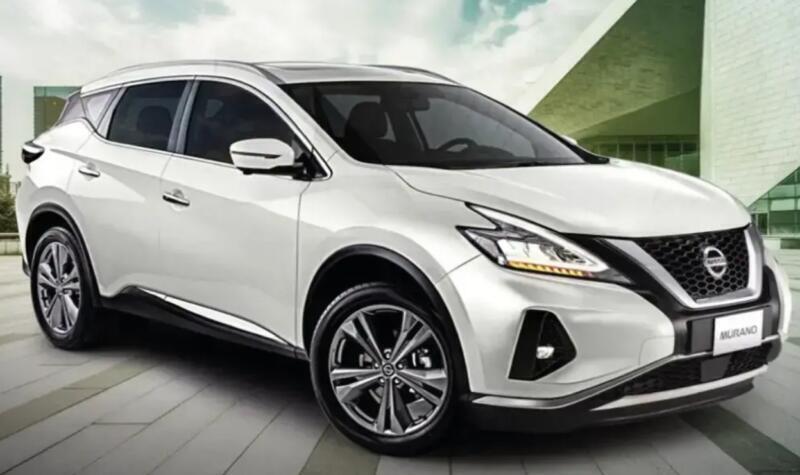
The Nissan Murano has always been a slightly unusual SUV. It sits somewhere between a practical family crossover and an affordable luxury vehicle, wrapping a strong V6 engine, generous equipment, and distinctive styling into a package that often costs surprisingly little on New Zealand's used-car market.
But there is one question we hear repeatedly: how reliable is the Nissan Murano by year in New Zealand?
That's an important question because not every Murano is equally dependable. The 3.5-litre V6 itself has generally developed a good reputation, while the continuously variable transmission, or CVT, is usually the component that deserves the closest inspection when buying an older example.
New Zealand buyers also face an unusual situation. The Murano disappeared from Nissan's local new-vehicle range after the second generation, while later third-generation models were not officially marketed here because they weren't produced in right-hand drive. Consequently, the Muranos most Kiwi buyers encounter are older Z50 and Z51 vehicles, including Japanese imports.
So which years should we chase, which should we approach carefully, and how long can a Murano realistically last?
Let's break it down year by year.
- Quick Nissan Murano Reliability by Year Overview
- Understanding the Nissan Murano Generations in New Zealand
- 2003 Nissan Murano Reliability
- 2004 Nissan Murano Reliability
- 2005 Nissan Murano Reliability
- 2006 Nissan Murano Reliability
- 2007 Nissan Murano Reliability
- 2008 Nissan Murano Reliability
- 2009 Nissan Murano Reliability
- 2010 Nissan Murano Reliability
- 2011 Nissan Murano Reliability
- 2012 Nissan Murano Reliability
- 2013 Nissan Murano Reliability
- 2014 Nissan Murano Reliability
- 2015 Nissan Murano Reliability in New Zealand
- Which Nissan Murano Years Are Most Reliable?
- Which Nissan Murano Years Should We Be Careful With?
- The CVT Is the Biggest Reliability Question
- How Reliable Is the 3.5-Litre V6 Engine?
- How Many Kilometres Can a Nissan Murano Last?
- Nissan Murano AWD Reliability
- Common Age-Related Murano Problems
- Japanese Import vs NZ-New Nissan Murano
- Checking Nissan Murano Recalls in New Zealand
- Is a Nissan Murano Expensive to Maintain in NZ?
- Fuel Economy and Reliability Are Different Questions
- Pre-Purchase Inspection Checklist
- Nissan Murano vs Toyota Highlander Reliability
- Is the Nissan Murano a Good Used SUV in New Zealand?
- Our Final Nissan Murano Reliability Ranking
- Conclusion: Which Nissan Murano Year Should We Buy in New Zealand?
- Frequently Asked Questions
Quick Nissan Murano Reliability by Year Overview
Before diving into the details, here's our broad used-car assessment.
| Model Year | Reliability Assessment | Our View |
|---|---|---|
| 2003 | Fair | Inspect carefully |
| 2004 | Fair | Buy only with strong history |
| 2005 | Fair to Good | Improving |
| 2006 | Good | Worth considering |
| 2007 | Good | One of the better Z50 years |
| 2008 | Rare/transition year | Verify exact specification |
| 2009 | Fair to Good | Early Z51 caution |
| 2010 | Good | Better choice |
| 2011 | Good | Strong used option |
| 2012 | Good | Recommended |
| 2013 | Very Good | Among our favourites |
| 2014 | Very Good | Excellent late Z51 choice |
| 2015+ | Limited NZ relevance | Mostly overseas-market vehicles |
This isn't a guarantee that every 2013 Murano will outperform every 2005 Murano. At this age, maintenance history matters almost as much as the badge on the boot.
A beautifully maintained older Murano can be a far better purchase than a neglected newer one.
Understanding the Nissan Murano Generations in New Zealand
Before judging reliability by year, we need to separate the generations.
First Generation Nissan Murano Z50
The original Murano entered production in 2002 for the 2003 model year. It combined Nissan's familiar 3.5-litre VQ35DE petrol V6 with a CVT and could be configured with front- or all-wheel drive in some overseas markets.
For its time, this was ambitious engineering.
Think about it: large crossover, powerful V6, no conventional automatic gearbox and styling that looked as though someone had fast-forwarded ten years into the future.
That combination made the Murano interesting, but the early CVT technology also means we give these first-generation vehicles extra scrutiny today.
Second Generation Nissan Murano Z51
The second-generation Murano arrived internationally as a 2009 model after Nissan skipped the 2008 model year in North America. The vehicle moved to Nissan's D platform and retained a revised 3.5-litre V6 paired with a continuously variable transmission.
The Z51 is usually the sweet spot for Kiwi used buyers.
It feels considerably more modern than the Z50 while still retaining the naturally aspirated V6 that gives the Murano much of its personality.
Third Generation Nissan Murano Z52
The third generation began with the 2015 model year internationally.
However, Nissan did not market the Z52 Murano in Australia or New Zealand because it wasn't manufactured in right-hand drive.
That's why searching Trade Me or local yards doesn't usually produce the same abundance of newer Muranos that buyers in the United States might see.
What About the Newest Murano?
The modern Murano has changed dramatically overseas. The fourth-generation vehicle replaced the long-running 3.5-litre V6/CVT combination with a turbocharged 2.0-litre engine and conventional nine-speed automatic transmission.
That is interesting from an engineering perspective, but it doesn't materially change the buying decision for most New Zealanders shopping for a used Murano today.
2003 Nissan Murano Reliability
The 2003 model represents the beginning of the Murano story.
And whenever we're shopping for the first year of a completely new vehicle, we're naturally a little cautious.
The engine itself is generally the less frightening part of the equation. The VQ-family 3.5-litre V6 became one of Nissan's most widely used engines and powered numerous Nissan and Infiniti models.
The bigger consideration is the early CVT.
With a Murano this old, we'd investigate:
- CVT shuddering or hesitation
- delayed engagement from Park into Drive
- whining noises
- overheating behaviour
- oil leaks
- neglected cooling systems
- worn suspension bushes
- wheel-bearing noise
- ageing electrical equipment
A cheap 2003 Murano can look irresistible, but remember the golden rule of used luxury-style SUVs: the purchase price gets cheaper; complicated repairs don't.
Verdict on the 2003 Murano
Reliability rating: Fair
We'd buy one only if the price reflects its age and there is convincing evidence of careful servicing.
2004 Nissan Murano Reliability
The 2004 model doesn't fundamentally change the formula.
These cars can accumulate substantial mileage, but we're still dealing with early-generation CVT technology and a vehicle now more than two decades old.
At this point, condition overrides almost everything.
One owner might have changed fluids diligently, warmed the car properly, repaired suspension components promptly and kept receipts.
Another might have driven until warning lights appeared.
They may look identical in a classified advertisement.
Mechanically, they are worlds apart.
Should We Buy a 2004 Nissan Murano?
Potentially, but we'd never purchase one without a proper road test.
Accelerate gently.
Accelerate hard.
Climb a hill.
Reverse.
Drive at motorway speed.
Listen.
A healthy CVT should feel smooth rather than jerky, excessively noisy or reluctant.
2005 Nissan Murano Reliability
By 2005, the first-generation Murano was no longer brand-new technology.
That doesn't erase the risks associated with an ageing CVT, but a carefully maintained 2005 example can make a decent low-cost SUV.
The attractive part remains the engine.
The 3.5-litre V6 delivers effortless torque compared with many smaller crossovers, and the Murano doesn't need to work especially hard in everyday suburban driving.
Where buyers get into trouble is purchasing purely on appearance.
Leather seats, big alloys and a glossy dashboard can distract us from far more important questions.
When was the transmission serviced?
Is the cooling system healthy?
Has the AWD system been maintained?
Are there warning lights?
Does the engine use oil?
Those questions matter more than whether the Bose stereo works.
Verdict on the 2005 Murano
Reliability rating: Fair to Good
Acceptable when maintenance history is strong.
2006 Nissan Murano Reliability
The 2006 Murano is where we'd start feeling more comfortable about recommending a first-generation example.
We're still dealing with old-car realities, of course, but later production generally makes more sense than jumping immediately toward the earliest examples.
A 2006 Murano with moderate kilometres and extensive service receipts can represent excellent value.
It also feels surprisingly substantial on the road.
That's one of the reasons these vehicles remain attractive: drive a tidy Murano and it can feel like far more vehicle than its used price suggests.
What Should We Inspect on a 2006 Murano?
Pay particular attention to the CVT, engine mounts, wheel bearings, suspension noises, steering feel and fluid leaks.
Ageing rubber components also matter.
Bushings, hoses and seals don't care how attractive the odometer reading looks.
2007 Nissan Murano Reliability
If we specifically wanted a Z50 Murano, 2007 would be near the top of our shopping list.
Why?
Simply because it sits near the end of the first-generation production cycle.
Late-generation vehicles often benefit from years of incremental production improvements, while the market has also had time to expose obvious weaknesses.
That doesn't mean a 2007 Murano becomes immune to transmission problems.
It simply gives us a more attractive starting point.
Verdict on the 2007 Nissan Murano
Reliability rating: Good for its age
We'd still demand excellent servicing, but this is one of the more appealing first-generation years.
2008 Nissan Murano Reliability
This year requires some explanation.
International model-year conventions can become confusing because the second-generation Murano went on sale as a 2009 model in important markets and the 2008 model year was skipped in North America.
Meanwhile, New Zealand buyers frequently encounter Japanese imports whose registration year, manufacture year and overseas model designation don't always align perfectly.
Therefore, if an advertisement says 2008 Nissan Murano, don't rely solely on the year printed at the top of the listing.
Check:
- chassis code
- VIN or frame number
- actual manufacture date
- engine specification
- generation
- import documentation
That's good advice for virtually any Japanese-import vehicle in New Zealand.
2009 Nissan Murano Reliability
Now we enter Z51 territory.
The 2009 Murano brought a substantially redesigned vehicle while retaining the basic 3.5-litre V6 and CVT philosophy. Nissan also introduced features such as a power tailgate, folding rear-seat functions and upgraded interior technology depending on specification.
The cabin feels more polished.
The body feels more mature.
The whole vehicle comes across as a classier machine.
Reliability?
We'd call it fair to good.
Because it's the beginning of a new generation, we'd still lean toward later Z51 examples when prices are similar.
Is a 2009 Nissan Murano Worth Buying?
Yes, assuming it passes a thorough mechanical inspection.
We wouldn't reject one automatically.
We simply wouldn't choose it over a similarly priced and equally maintained 2012 or 2013 model.
2010 Nissan Murano Reliability
The 2010 model makes a stronger case.
At this stage, the Z51 platform had spent additional time in production, and a good example offers an appealing blend of comfort, equipment and relatively straightforward naturally aspirated engine design.
That's significant.
Modern turbocharged SUVs may use smaller engines to produce impressive numbers, but the Murano's old-school V6 has a certain simplicity.
No tiny turbo working overtime.
No highly stressed downsized engine.
Just displacement.
Sometimes simple muscle ages gracefully.
2010 Murano Reliability Rating
We'd give it: Good
Look after the CVT, and the rest of the vehicle can be remarkably durable.
2011 Nissan Murano Reliability
The Murano received styling and equipment updates for the 2011 model year internationally, including changes to the exterior lighting and fascia.
For used buyers, the 2011 model lands in an appealing place.
It isn't so early in the Z51 lifecycle that we'd consider it experimental, yet prices can still be noticeably lower than later examples.
We'd inspect all the usual suspects but wouldn't hesitate to consider a well-maintained one.
Best Buyer for a 2011 Murano
Someone looking for a comfortable SUV without paying Toyota Highlander money may find the Murano compelling.
You're accepting slightly greater drivetrain risk in exchange for strong value and generous equipment.
That's the trade.
2012 Nissan Murano Reliability
The 2012 Murano is one of our preferred years.
At this stage, you're buying a mature version of the Z51 platform rather than an early-production example.
Find one with:
- documented maintenance
- smooth CVT operation
- clean fluid condition
- quiet wheel bearings
- good suspension
- functioning electronics
- no overheating history
…and we'd be interested.
Why the 2012 Murano Makes Sense in NZ
New Zealand used-car buyers often balance purchase cost against future repair exposure.
A later Z51 can hit a nice middle ground.
You get a comfortable cabin, strong naturally aspirated power and plenty of equipment without entering the prices attached to substantially newer SUVs.
2013 Nissan Murano Reliability
If someone asked us to choose one of the best Nissan Murano years commonly relevant to New Zealand buyers, 2013 would be high on the list.
By now, the Z51 was a mature platform.
Age remains unavoidable, but mechanically we're much more interested in a 2013 example than an early Z50 unless the price difference is enormous.
2013 Nissan Murano Strengths
The big attractions are familiar:
smooth V6 power, relaxed motorway performance, comfortable seating, useful cargo space and plenty of equipment.
The Murano isn't really an off-road SUV.
It's more like a large lounge chair that happens to have AWD available.
That's exactly what many owners want.
2013 Reliability Verdict
Rating: Very Good by Murano standards
That final phrase matters.
We're not claiming Toyota Land Cruiser levels of bulletproof durability.
We're saying that within the Murano family, this is one of the years we'd shop for first.
2014 Nissan Murano Reliability
The 2014 model is another particularly attractive choice because it sits at the mature end of the second generation.
For New Zealand buyers wanting the newest conventional Z51 they can reasonably find, this is arguably one of the most logical targets.
Would We Buy a 2014 Nissan Murano?
Yes.
Assuming inspection results are good, absolutely.
But there's a catch.
This content may interest you! Nissan Murano Models New Zealand: Generations, Specs, Trims and Buying Guide
A bad CVT can turn an inexpensive SUV into an expensive driveway ornament.
So even with one of our preferred years, we would never skip a pre-purchase inspection.
2015 Nissan Murano Reliability in New Zealand
This is where the New Zealand story changes.
The third-generation Z52 arrived internationally for the 2015 model year, once again using the 3.5-litre V6 and CVT in overseas markets. But Nissan did not officially market this generation in New Zealand or Australia because it wasn't produced in right-hand drive.
Therefore, a Kiwi searching for a 2015+ Murano needs to establish exactly what they're looking at.
Imports can create exceptions, but the later Murano is not a mainstream New Zealand-new vehicle in the way models such as the X-Trail are.
Which Nissan Murano Years Are Most Reliable?
If we were shopping in New Zealand, we'd generally prioritise:
- 2014
- 2013
- 2012
- 2011
- 2010
- 2007
That isn't because every later car is automatically better.
It's because the later Z51 years combine a mature generation with a relatively traditional naturally aspirated engine and fewer years of accumulated ageing than the earliest Muranos.
Best Value Pick
Our sweet spot would probably be a 2012-2014 Z51 with documented servicing.
That's the Murano we'd search hardest for.
Which Nissan Murano Years Should We Be Careful With?
We'd be most cautious about very early first-generation vehicles, especially when service history is incomplete.
That means 2003-2005 examples deserve particularly careful inspection.
Not because every one will fail.
Far from it.
But age plus early-generation CVT technology creates a risk profile that we can't ignore.
A bargain isn't a bargain when a major drivetrain repair costs a significant percentage of the vehicle's value.
The CVT Is the Biggest Reliability Question
We can't write an honest Murano reliability guide without spending time on the CVT.
The Murano adopted continuously variable transmission technology from its first generation, pairing the transmission with a relatively powerful V6—an unusual approach at the time.
A CVT doesn't shift through traditional fixed gears.
Instead, it continuously varies the transmission ratio.
When working properly, acceleration feels wonderfully smooth.
When problems develop, symptoms can include unusual noises, hesitation, juddering, inconsistent acceleration or poor response under load.
How to Test a Murano CVT
During a test drive, don't spend five minutes circling the dealership.
Drive properly.
We want at least 20-30 minutes if the seller allows it.
Test It When Cold
Start the car before the seller has warmed it up.
Listen for strange noises and check how quickly Drive and Reverse engage.
Test It When Hot
This matters even more.
Transmission problems may become more obvious after fluid temperatures rise.
Drive on hills if possible.
Accelerate from low speed.
Cruise at motorway speed.
Then accelerate again.
A transmission that feels perfect for the first five minutes isn't enough reassurance.
How Reliable Is the 3.5-Litre V6 Engine?
The VQ35DE V6 is one of the reasons we're more positive about the Murano than its transmission reputation might suggest.
It's a naturally aspirated 3.5-litre six-cylinder engine, and Nissan used variations of the VQ family across numerous vehicles. The original Murano launched with this engine, and revised versions continued through later generations.
With proper oil changes and cooling-system maintenance, these engines can cover substantial distances.
Age-related issues can still occur, including leaks, sensors, mounts and cooling-system components.
But generally, we'd worry about the CVT before worrying about the fundamental engine architecture.
How Many Kilometres Can a Nissan Murano Last?
There isn't a magical number where a Murano suddenly expires.
A well-maintained example can exceed 200,000 km, and higher-mileage vehicles can continue running if major systems have been looked after.
But we'd change our buying philosophy as kilometres climb.
Below roughly 120,000 km, we focus heavily on condition and service history.
Between 120,000 and 180,000 km, we become more interested in whether major preventative work has occurred.
Beyond 180,000 km, we'd budget proactively for suspension, cooling, wheel bearings, mounts, sensors and potentially drivetrain work.
Mileage is only half the story.
A motorway-driven 180,000 km Murano can be healthier than a neglected 90,000 km example that spent its life making short trips.
Nissan Murano AWD Reliability
Many Muranos appeal to New Zealand buyers because of all-wheel drive.
That's understandable.
Kiwi conditions can include wet rural roads, gravel driveways, ski-field journeys and steep terrain.
But let's keep expectations realistic.
The Murano isn't a Patrol.
Its AWD system is primarily about additional traction, not hardcore off-roading.
Before purchasing an AWD Murano, check for drivetrain noises, warning lights, mismatched tyres and evidence that fluids and related systems have been maintained.
Tyres Matter More Than We Think
AWD vehicles generally prefer tyres with consistent rolling circumference.
A vehicle running mismatched tyres or dramatically different tread depths can place unnecessary strain on the drivetrain.
It's a small visual clue that tells us something about how the previous owner treated the vehicle.
Even a mechanically good Murano can develop ordinary old-car issues.
Expect potential wear involving:
- wheel bearings
- suspension bushes
- engine mounts
- electric tailgate mechanisms
- air-conditioning components
- sensors
- infotainment systems
- window regulators
- oil seals
- cooling-system hoses
- interior electronics
None automatically makes the Murano unreliable.
The real danger is cumulative neglect.
Five small problems can become more frustrating than one big problem.
Japanese Import vs NZ-New Nissan Murano
This distinction matters in New Zealand.
Imports can offer excellent specification and attractive pricing, but we want to understand exactly what we're buying.
Japanese-market infotainment equipment, navigation and radio frequencies may differ from local expectations.
Service records can also be harder to reconstruct before the vehicle entered New Zealand.
Check the Chassis Code
Don't trust the registration year alone.
Confirm the model generation, engine, drivetrain and actual production details.
That prevents us from comparing two supposedly identical Muranos that may have different specifications.
Checking Nissan Murano Recalls in New Zealand
Recall status should be part of any pre-purchase routine.
Nissan New Zealand provides a VIN-based system for checking outstanding recall and service-campaign information. Nissan also specifically highlights the Takata airbag recall programme for affected vehicles.
Before buying, record the VIN and check it.
A recall doesn't automatically mean we shouldn't buy the vehicle.
An unresolved safety recall, however, deserves immediate attention.
Is a Nissan Murano Expensive to Maintain in NZ?
It can be more expensive than a small SUV.
That's hardly surprising.
We're dealing with a large V6 crossover using substantial tyres, more fuel and relatively sophisticated drivetrain components.
Routine engine servicing needn't be terrifying.
Major CVT work is another matter.
Our budgeting philosophy would therefore be simple: don't spend your entire used-car budget on the purchase price.
If you have NZ$12,000 available, we'd rather buy an excellent NZ$9,500 Murano and keep money aside than spend the full NZ$12,000 on a questionable example with no financial cushion.
Fuel Economy and Reliability Are Different Questions
The 3.5-litre Murano isn't the vehicle we'd choose if fuel economy sits at the top of the shopping list.
But fuel thirst shouldn't be confused with unreliability.
Large naturally aspirated engines often use more fuel precisely because they're not squeezing huge outputs from tiny displacement.
For some owners, paying more at the petrol station is an acceptable trade for smooth power and uncomplicated engine behaviour.
For others, it defeats the entire purpose.
Know which camp you're in before buying.
Pre-Purchase Inspection Checklist
A good Murano can be excellent value, but we'd never buy one blindly.
Before handing over money, we'd check the following:
- Confirm chassis and model generation.
- Inspect service records.
- Check CVT maintenance history.
- Start the engine cold.
- Test Drive and Reverse engagement.
- Drive until the transmission reaches normal operating temperature.
- Accelerate under load.
- Listen for wheel-bearing noise.
- Check suspension knocks.
- Inspect for fluid leaks.
- Test every electric accessory.
- Confirm AWD operation where applicable.
- Scan the vehicle electronically for stored fault codes.
- Check tyre condition and matching sizes.
- Check the VIN for outstanding recalls.
- Arrange an independent mechanical inspection.
That last step is worth repeating.
Get an independent inspection.
A few hundred dollars spent before buying can save thousands afterward.
Nissan Murano vs Toyota Highlander Reliability
Many Kiwi buyers considering a Murano will inevitably look at the Toyota Highlander.
We'd generally give the Toyota the advantage when reliability is the sole criterion.
However, used Highlanders can command stronger prices.
That's where the Murano becomes interesting.
You may get more equipment and comparable comfort for considerably less money.
It's essentially a value-versus-risk equation.
If maximum predictability matters, we'd lean Toyota.
If purchase price, V6 refinement and specification matter heavily, a carefully selected Murano can make sense.
Is the Nissan Murano a Good Used SUV in New Zealand?
Yes—with conditions.
The Murano isn't a vehicle we'd recommend buying casually from the first private seller with a shiny example parked outside.
We'd shop patiently.
We'd prioritise service history.
We'd test the CVT thoroughly.
We'd prefer later second-generation vehicles.
And we'd walk away quickly from anything showing questionable transmission behaviour.
Do that, and the Murano transforms from a scary used SUV into a surprisingly compelling one.
Our Final Nissan Murano Reliability Ranking
For New Zealand shoppers, here's how we'd approach the range.
Best Years
2012-2014
These are our preferred Z51 years because they combine later production with comparatively modern equipment and the proven V6 formula.
Good Alternatives
2010-2011
Strong options when condition and price are right.
Best First-Generation Choice
2006-2007
We'd favour these over the earliest Z50 examples.
Years Requiring the Most Caution
2003-2005
Not automatic rejects, but age and early CVT concerns make inspection especially important.
2015 and Newer
Less relevant to normal New Zealand used-car shopping because the third-generation Murano wasn't officially marketed in New Zealand and wasn't produced in right-hand drive.
Conclusion: Which Nissan Murano Year Should We Buy in New Zealand?
If we were spending our own money on a used Nissan Murano in New Zealand, we'd start by hunting for a 2012, 2013 or 2014 Z51 with comprehensive service records.
A 2010 or 2011 would be our next target, followed by a tidy 2006-2007 Z50 if budget mattered more.
The Murano's greatest strength is also what makes it such an interesting used purchase: it gives us a lot of vehicle for surprisingly little money.
There's a muscular V6 up front, a comfortable cabin in the middle and plenty of SUV practicality at the back.
But lurking underneath is the CVT question.
Ignore it and buying a Murano can feel like stepping onto thin ice.
Inspect it carefully, confirm its history and choose the right year, though, and that same Murano can become one of the more underrated used family SUVs on New Zealand roads.
We wouldn't buy the cheapest Murano.
We'd buy the best-maintained Murano we could afford.
That's the difference.
Frequently Asked Questions
1. What is the most reliable Nissan Murano year in New Zealand?
We'd place 2012-2014 models among the strongest choices for New Zealand buyers. These later Z51 vehicles benefit from being mature examples of the second-generation platform while retaining Nissan's naturally aspirated 3.5-litre V6. Condition and maintenance history remain more important than selecting one exact year.
2. What Nissan Murano years should we avoid?
We wouldn't automatically avoid any year, but we'd exercise greater caution with 2003-2005 models. They're now quite old and belong to the earliest generation of Murano CVT technology. Poor service records, CVT hesitation, shuddering or unusual transmission noise would make us walk away regardless of model year.
3. How long can a Nissan Murano last in kilometres?
A properly maintained Murano can exceed 200,000 km, although reliability increasingly depends on previous maintenance as mileage climbs. The V6 engine can be durable, while the transmission, cooling system, suspension, bearings and ageing electrical equipment deserve greater scrutiny on high-kilometre vehicles.
4. Is the Nissan Murano CVT reliable?
Some Murano CVTs provide long service without major trouble, while transmission problems are also one of the model's most important used-buying concerns. We'd insist on a long road test, maintenance records and an independent mechanical inspection before purchasing an older Murano.
This content may interest you!Nissan Murano Known Issues New Zealand: What Owners and Buyers Should Know5. Is a used Nissan Murano worth buying in New Zealand?
Yes, particularly when value, comfort and V6 performance matter. We'd favour a well-maintained 2012-2014 Z51 over a cheaper early example with uncertain history. The smartest Murano purchase isn't necessarily the lowest-kilometre car—it's the one with the strongest evidence of careful ownership.
Leave a Reply