
Nissan Murano Models New Zealand: Generations, Specs, Trims and Buying Guide
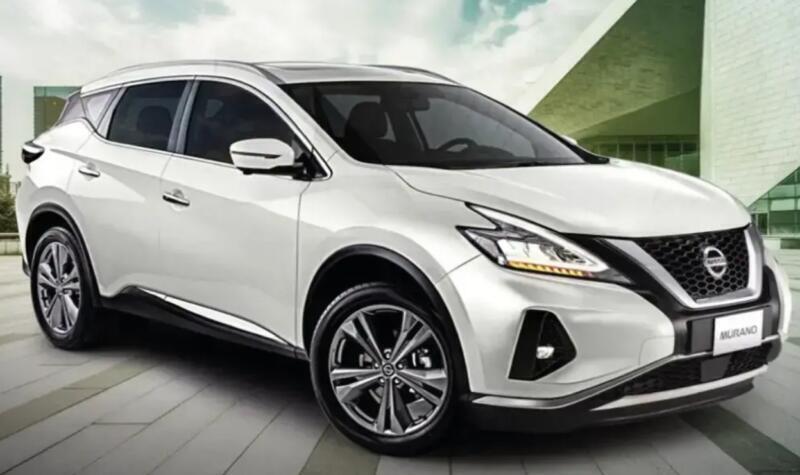
If we are shopping for a used SUV in New Zealand and want something comfortable, powerful, roomy and a little different from the usual Toyota or Mazda, the Nissan Murano deserves a serious look. Search the used market and we will still find plenty of Muranos, particularly first-generation Z50 and second-generation Z51 models. AutoTrader New Zealand, for example, continues to list used Murano vehicles, showing that the model still has a noticeable presence in the local second-hand market.
However, understanding Nissan Murano models in New Zealand can get confusing surprisingly quickly. Some vehicles were sold new through Nissan NZ, others arrived later as Japanese imports, specifications vary by year, and badges do not always tell the whole story.
Then there is another important question: why do we rarely see newer Muranos in New Zealand?
The short answer is that New Zealand mainly received the first two generations. The third-generation Murano was not manufactured in right-hand drive, effectively bringing the model's local new-car story to an end. Today, Nissan New Zealand's current vehicle range does not include the Murano.
So, which Nissan Murano should we actually buy? Let us untangle the generations, trims, engines and specifications.
- Nissan Murano Models in New Zealand at a Glance
- First-Generation Nissan Murano Z50
- Second-Generation Nissan Murano Z51
- NZ-New Nissan Murano vs Japanese Import
- Nissan Murano AWD Models
- Which Nissan Murano Generation Is Best?
- Why New Zealand Never Got the Later Murano Generations
- Nissan Murano Engine Options in New Zealand
- The Murano CVT: The Part We Must Inspect Carefully
- Nissan Murano Interior and Practicality
- Nissan Murano Safety Equipment
- What Should We Check Before Buying a Used Murano?
- Are Nissan Murano Parts Easy to Find in New Zealand?
- Is the Nissan Murano Expensive to Maintain?
- Nissan Murano vs Nissan X-Trail
- Nissan Murano vs Toyota Highlander
- Which Nissan Murano Model Would We Buy?
- Who Should Buy a Nissan Murano in New Zealand?
- Why the Murano Still Makes Sense as a Used SUV
- Conclusion: Understanding Nissan Murano Models in New Zealand
- Frequently Asked Questions
Nissan Murano Models in New Zealand at a Glance
Before diving into individual generations, here is the simplified picture.
Most Muranos we encounter on New Zealand roads belong to either the Z50 first generation or the Z51 second generation. Both are five-seat crossover SUVs known primarily for their smooth 3.5-litre V6 engines, automatic CVT transmissions and comfortable road manners.
The easiest way to think about the NZ market is:
- Z50 Murano: roughly mid-2000s to 2008-era cars commonly seen locally.
- Z51 Murano: roughly 2009-2015-era vehicles in the broader generation cycle.
- NZ-new ST: generally the more affordable specification.
- NZ-new Ti: generally the higher-specification luxury version.
- Japanese imports: often carry different trim names and equipment combinations.
- Third-generation Z52: not officially part of the mainstream New Zealand new-car market because it was not built in right-hand drive.
That distinction between NZ-new and Japanese-import Murano models matters more than we might expect.
First-Generation Nissan Murano Z50
The first Murano looked unusual when it appeared, and frankly, it still does. Rather than trying to resemble a rugged off-roader, Nissan gave it sweeping curves, a low roofline and an almost concept-car appearance.
Underneath, the formula was refreshingly simple: a large petrol V6, five seats, crossover construction and a continuously variable transmission.
What Engine Does the Z50 Murano Use?
The headline attraction is Nissan's 3.5-litre VQ35DE V6.
The VQ family appeared across numerous Nissan and Infiniti vehicles and helped give the Murano a very different personality from four-cylinder family SUVs of the period. Internationally, the first-generation Murano was offered with front-wheel drive or all-wheel drive depending on market and specification.
Push the accelerator and we get smooth, effortless shove rather than frantic four-cylinder noise. It suits the Murano perfectly.
Think of the engine as a large cup of coffee: strong, smooth and enjoyable, although certainly not free.
Fuel economy is one of the compromises.
Nissan Murano ST
For New Zealand buyers, ST is one of the most important badges to recognise.
The ST was positioned below the Ti. We should not interpret "base model" as meaning stripped bare, though. Murano models generally came with a respectable amount of convenience equipment for their era.
The bigger distinction was luxury.
Nissan Murano Ti
The Ti was the more lavish Murano.
A contemporary New Zealand review of the 2007 Murano Ti noted equipment including heated power-adjustable leather front seats, an electric sunroof and roof rails compared with the lesser ST. At the time, that review quoted pricing of NZ$54,950 for the ST and NZ$59,950 for the Ti.
That is useful context today.
A Murano Ti that now looks like an inexpensive second-hand SUV started life as a relatively expensive vehicle. Consequently, older examples can contain quite a lot of electrical and comfort equipment.
Is the Ti Worth Choosing Over the ST?
If two cars have comparable mileage, servicing and mechanical condition, we would usually favour the Ti for buyers who value comfort.
But condition beats badges every time.
We would rather own a beautifully maintained ST than a neglected Ti with tired suspension, warning lights and an uncertain transmission history.
That principle is worth remembering throughout this guide.
Second-Generation Nissan Murano Z51
The second-generation Murano, commonly known as the Z51, took the original recipe and polished it.
It still looked unmistakably like a Murano, but the cabin became more sophisticated, the exterior matured and the powertrain received improvements.
A New Zealand review of this generation reported that its 3.5-litre VQ V6 produced approximately 198 kW and 334 Nm, representing an increase over the previous model.
This is where the Murano arguably became the SUV it had always wanted to be: less experimental and more refined.
What Makes the Z51 Better Than the Z50?
The Z51 generally feels newer in almost every obvious way.
We get a more modern dashboard, better cabin ambience, improved refinement and a design that still looks reasonably contemporary when maintained properly.
The underlying philosophy does not change dramatically, though.
This remains an SUV for road trips, commuting and family duty rather than an expedition machine.
Murano Z51 Ride Comfort
Comfort is arguably the Murano's secret weapon.
Trade Me's New Zealand used-car review describes the 2009-2015 Murano as very comfortable and spacious for its price, although rearward visibility can make manoeuvring in tighter locations harder.
That trade-off captures the Murano beautifully.
It can feel like a lounge chair on wheels during a motorway trip, then suddenly feel rather large when we are squeezing into a cramped supermarket parking space.
Z51 ST Models in New Zealand
The ST remained an important model during the second-generation period.
A 2013 Murano ST owner review published by Driven Car Guide in New Zealand praises the vehicle for its V6 performance, reliability and long-distance ability. Owner experiences are naturally anecdotal rather than scientific evidence, but they illustrate why these vehicles still have loyal fans.
An ST can therefore be an excellent sweet spot.
We still get the fundamental Murano experience without necessarily paying extra for every luxury option.
This content may interest you! Nissan Murano Reliability by Year New Zealand: Which Years Are Best?
Z51 Ti Models in New Zealand
The Ti again occupies the more premium end of the range.
New Zealand listings still occasionally identify Z51 vehicles specifically as NZ-new Ti models, which matters because it helps distinguish them from Japanese-import specifications.
The Ti is the version we would inspect first if comfort equipment matters.
Leather upholstery, upgraded seat functions, sunroof-related equipment and other luxury touches can make an older Ti feel surprisingly plush.
But there is a catch.
More equipment means more equipment to test.
NZ-New Nissan Murano vs Japanese Import
This is one of the most important sections for New Zealand buyers.
Two 2010 Nissan Muranos sitting beside each other can look virtually identical yet have significantly different specifications.
Why?
Because one may have been sold new in New Zealand while the other arrived second-hand from Japan.
How Can We Identify an NZ-New Murano?
Do not rely on appearance alone.
Instead, check the vehicle records, ownership history, compliance documentation, service paperwork and specification.
An NZ-new Murano is appealing because its history can sometimes be easier to trace locally.
Japanese imports are not automatically worse, though. Far from it.
New Zealand has lived happily with Japanese used imports for decades.
What matters is understanding exactly what we are buying.
Why Japanese Import Specifications Can Differ
Japanese domestic-market cars may feature equipment packages that do not line up perfectly with New Zealand ST or Ti naming.
We may encounter differences involving infotainment, cameras, interior trim, wheels, electrical accessories or drivetrain configurations.
Japanese-language electronics can also create inconvenience in some vehicles.
That does not make an imported Murano a bad purchase. It simply means we need to inspect the actual vehicle instead of assuming that one badge guarantees a certain specification.
Do Not Buy the Badge—Buy the Car
This deserves its own rule:
Condition + history + inspection > trim badge.
A shiny Ti with questionable CVT behaviour is not a bargain.
A clean import with documented maintenance and excellent mechanical condition might be.
Simple.
Nissan Murano AWD Models
Many buyers associate the Murano with all-wheel drive.
That makes sense.
Used-car listings in New Zealand frequently promote the Murano's combination of the 3.5-litre V6 and AWD, and AWD versions suit the vehicle's large crossover personality particularly well.
However, we should understand what Murano AWD is designed to do.
Is the Nissan Murano a Real 4WD?
Not in the traditional Land Cruiser or Patrol sense.
The Murano is primarily a road-focused crossover.
Its AWD system can provide extra traction in rain, slippery surfaces, gravel roads and similar conditions, but this is not an SUV we would choose for hard-core off-road adventures.
Think hiking shoes rather than gumboots.
Capable? Absolutely.
Built to disappear into a muddy forestry track every weekend? Not really.
Do We Need AWD in New Zealand?
It depends.
For Auckland commuting, FWD would satisfy many drivers.
For people living around colder, wetter or hillier parts of the South Island, or regularly travelling to ski areas and gravel-road destinations, AWD may offer useful additional reassurance.
Tyres still matter enormously.
AWD with four cheap worn tyres can be less confidence-inspiring than a well-tyred two-wheel-drive vehicle.
Which Nissan Murano Generation Is Best?
For most buyers today, we would lean toward the second-generation Z51.
Why?
Because it retains the Murano's core strengths while feeling meaningfully newer.
This content may interest you!Nissan Murano Best Years New Zealand: Which Models Are Worth Buying?The Z50 still has charm and can provide a lot of vehicle for very little money, but age is becoming a major factor.
Rubber components, suspension parts, electronics, seals, interior plastics and transmission condition do not care whether the odometer looks attractive.
Time itself wears cars.
Best Murano for a Tight Budget
A tidy late Z50 can make sense if purchase price is the priority.
Just keep some money aside.
Buying an older luxury-oriented SUV for a low price does not magically turn it into a cheap car to maintain.
That is perhaps the greatest trap in this segment.
Best Murano for Everyday Use
A well-maintained Z51 ST could be the sweet spot.
It delivers the newer body, V6 power and comfortable cabin without making the specification itself the central reason for buying.
Best Murano for Luxury
Look at a Z51 Ti.
Choose carefully and the combination of leather, comfort features, V6 power and spaciousness can make it feel remarkably expensive relative to its current used value.
Why New Zealand Never Got the Later Murano Generations
This part often causes confusion.
Search online and we can see sleek third- and fourth-generation Muranos in overseas reviews. Then we search New Zealand listings and wonder where they all went.
They largely did not come here.
The third-generation Z52 was not produced in right-hand drive, which meant markets including New Zealand and Australia did not receive it as a normal new-car offering.
Current Nissan New Zealand listings also exclude the Murano from the local new-vehicle range, instead offering SUVs such as the Qashqai, X-Trail, Pathfinder and Patrol.
What About the New Fourth-Generation Murano?
Overseas, the Murano name continues.
The fourth-generation model dramatically changes the old formula, replacing the traditional 3.5-litre V6/CVT combination with a turbocharged 2.0-litre engine and conventional nine-speed automatic transmission in its North American configuration.
Interesting?
Definitely.
Relevant to someone buying a normal NZ-new Murano?
Not particularly.
For New Zealand shoppers, the Murano remains predominantly a used Z50/Z51 story.
Nissan Murano Engine Options in New Zealand
For most local buyers, the engine conversation revolves around one motor:
3.5-litre V6 petrol.
And that simplicity is refreshing.
We are not usually comparing five diesel engines, three petrol engines, hybrids and multiple gearbox combinations.
The Murano's identity is tied to the V6.
Why the 3.5-Litre V6 Suits the Murano
A heavy, comfortable crossover needs relaxed power.
The V6 provides exactly that.
We do not need to squeeze every last revolution out of it when joining a motorway or overtaking.
Press the accelerator and it simply moves.
The downside arrives at the fuel pump.
Is a Murano Fuel Efficient?
Nobody buys a 3.5-litre naturally aspirated petrol V6 because they are frightened of petrol stations.
Driving style, traffic, vehicle condition, tyre pressure, AWD system and route all influence consumption, but a Murano should not be approached as an economy SUV.
If our first question is, "What uses the least fuel?", we should probably be looking elsewhere.
If our first question is, "What gives me a smooth V6, plenty of space and lots of comfort for modest used-car money?", the Murano suddenly makes much more sense.
The Murano CVT: The Part We Must Inspect Carefully
Now we reach the elephant in the room.
The Murano uses a continuously variable transmission, or CVT.
Some buyers hear those three letters and immediately run for the hills.
That reaction is too simplistic, but ignoring the gearbox would be equally foolish.
How Should a Healthy Murano CVT Feel?
Smooth.
That is the whole point.
This content may interest you!Nissan Murano Engine Capacity New Zealand: Complete GuideAcceleration should feel progressive without obvious slipping, shuddering, grinding or dramatic hesitation.
A CVT does not shift like a conventional stepped automatic, so some of its behaviour naturally feels different.
But "different" and "broken" are not synonyms.
Warning Signs During the Test Drive
We should pay attention to:
- hesitation when selecting Drive or Reverse;
- shuddering under acceleration;
- unusual whining or mechanical noises;
- engine revs rising without matching acceleration;
- warning lights;
- inconsistent behaviour after the vehicle warms up;
- incomplete or unknown transmission servicing history.
If something feels wrong, do not let enthusiasm negotiate with our wallet.
Get the vehicle inspected.
Nissan Murano Interior and Practicality
The Murano is a five-seat SUV.
That matters because buyers sometimes compare it with seven-seat vehicles such as larger SUVs.
If we need seven seats, this is the wrong Nissan.
If we need five comfortable seats, however, the Murano makes a compelling argument.
Rear-Seat Space
The rear cabin is generous enough for family use, adults and child seats.
Because Nissan did not try to squeeze a third seating row into the body, rear passengers benefit from useful space.
Boot Space
The Murano's cargo area is practical for everyday family duty, and the fold-down rear seats make it substantially more flexible.
Shopping, luggage, sports equipment and weekend trips are all well within its comfort zone.
It is a crossover built around normal life.
Visibility
One weakness is visibility.
The styling that gives the Murano its distinctive appearance also produces some awkward sight lines, particularly when manoeuvring. Trade Me's New Zealand used-car review specifically identifies restricted visibility as a drawback.
Parking cameras and sensors therefore become more useful than mere gadgets.
Nissan Murano Safety Equipment
Safety specifications vary by year and market, so we should always verify the exact vehicle rather than assuming every Murano has identical equipment.
First-generation models internationally included features such as ABS, electronic brake-force distribution, brake assist, stability control and multiple airbags depending on configuration.
Later models generally introduced more sophisticated equipment and improved cabin technology.
Still, we should remember the age factor.
A 2007 luxury SUV may have been well equipped in 2007, but modern safety technology has moved forward enormously.
What Should We Check Before Buying a Used Murano?
This is where smart buying beats emotional buying.
A Murano can offer tremendous value, but only if we choose the right example.
Our pre-purchase priorities should include:
- Cold start: Listen for unusual noises before the seller warms the engine.
- CVT operation: Test it cold and fully warmed up.
- Service history: Evidence matters more than reassuring words.
- Suspension: Listen for knocks over rough New Zealand roads.
- Tyres: Check wear patterns and ensure matching quality tyres where appropriate.
- AWD operation: Investigate warning lights or drivetrain noises.
- Electrical equipment: Test seats, windows, cameras, climate control, sunroof and infotainment.
- Cooling system: Watch temperature behaviour and inspect for leaks.
- Oil leaks: Look above and underneath the engine bay.
- Import history: Establish whether the car is NZ-new or imported and understand its documentation.
- Recalls: Check the VIN against relevant recall information. Nissan New Zealand maintains a recall and service-campaign resource for owners.
- Independent inspection: Have the vehicle checked before handing over the money.
That last point can save thousands.
Are Nissan Murano Parts Easy to Find in New Zealand?
The Murano is not some obscure one-off vehicle.
Enough were sold or imported into New Zealand that regular servicing components and many mechanical parts remain obtainable through dealers, aftermarket suppliers, dismantlers and specialist import channels.
The engine family is also widely known within Nissan circles.
However, model-specific trim, electronics, body panels or unusual Japanese-market components may require more searching.
This is another reason why buying the cleanest example we can afford often makes more sense than purchasing the cheapest one available.
Is the Nissan Murano Expensive to Maintain?
It depends on our definition of expensive.
Compared with a small Japanese hatchback?
Yes, obviously.
We have a larger engine, bigger tyres, heavier suspension components and more equipment.
Compared with a similarly aged European luxury SUV?
A Murano can look much less intimidating.
The dangerous assumption is that a NZ$8,000 SUV should cost the same to maintain as a vehicle that was NZ$8,000 when new.
It will not.
Used price and maintenance complexity are separate things.
Nissan Murano vs Nissan X-Trail
This comparison comes up naturally.
The X-Trail is generally the more practical, conventional and economy-conscious choice.
This content may interest you! Toyota RAV4 Models New Zealand: The Complete Kiwi Buyer’s Guide
The Murano feels more luxurious and powerful.
If the X-Trail is a sturdy backpack, the Murano is a padded weekend suitcase.
Both carry our belongings.
They simply approach the job differently.
Choose the X-Trail if operating costs, practicality and broad availability matter most.
Choose the Murano if comfort, V6 performance and a more premium character are higher priorities.
Nissan Murano vs Toyota Highlander
The Highlander is probably one of the Murano's more natural used-market alternatives.
Both offer petrol power, comfortable road manners and family-friendly cabins.
The Toyota may appeal more strongly to buyers prioritising resale reputation and conventional ownership expectations.
The Murano can appeal when we want something less common and often surprisingly well equipped for the money.
Again, actual condition matters more than internet stereotypes.
Which Nissan Murano Model Would We Buy?
Our preference would be a late-model Z51 with excellent service history, regardless of whether the badge says ST or Ti.
If we found two equally good examples, we would probably choose the Ti for its extra comfort equipment.
If the ST had better maintenance records, fresher tyres and smoother transmission behaviour, we would buy the ST without hesitation.
That is the lesson with used Muranos.
We should shop backwards.
First: condition.
Second: history.
Third: generation.
Fourth: specification.
Not the other way around.
Who Should Buy a Nissan Murano in New Zealand?
A used Murano makes sense for someone who wants a comfortable five-seat SUV and is willing to accept higher petrol consumption in exchange for effortless V6 performance.
It particularly suits:
- families wanting plenty of cabin space;
- motorway commuters;
- drivers who prefer petrol engines to older diesels;
- buyers seeking luxury equipment without luxury-brand pricing;
- people who value comfort over sharp handling;
- anyone wanting something less predictable than the usual mid-size SUV.
It makes less sense for drivers obsessed with fuel economy, hard-core off-road ability or seven-seat versatility.
Why the Murano Still Makes Sense as a Used SUV
The Nissan Murano occupies an interesting corner of the New Zealand used market.
It is old enough to be affordable but modern enough—particularly in Z51 form—to remain comfortable and usable.
It has a proper personality, too.
The V6 gives it character.
The styling gives it identity.
The cabin gives it comfort.
And depreciation has done much of the financial damage before we arrive.
That combination can make a good Murano feel like a lot of SUV for the money.
The key word, however, is good.
Conclusion: Understanding Nissan Murano Models in New Zealand
The Nissan Murano models New Zealand buyers encounter today are primarily the Z50 and Z51 generations, with ST and Ti among the most recognisable NZ-new specifications. Japanese-import versions add additional equipment variations, so we should never rely on trim badges alone.
The first-generation Z50 offers inexpensive entry into Murano ownership and still delivers the charismatic 3.5-litre V6 experience.
The second-generation Z51 is the stronger all-round proposition for most buyers. It looks newer, feels more refined and retains the spacious five-seat layout and smooth V6 character that made the Murano distinctive in the first place.
Later overseas generations should not confuse our search. The third-generation Murano was not produced in right-hand drive, and the Murano is absent from Nissan New Zealand's current new-vehicle lineup.
Would we buy one?
Yes—but we would buy carefully.
Find a Z51 with excellent maintenance records, a healthy CVT, good tyres, functioning electrics and evidence of responsible ownership, and the Murano can still be an appealing family SUV.
Ignore those details because the leather seats look nice and the asking price seems irresistible?
That bargain could become expensive remarkably quickly.
Frequently Asked Questions
1. What Nissan Murano models were sold in New Zealand?
New Zealand buyers mainly encounter first-generation Z50 and second-generation Z51 Murano models. NZ-new vehicles commonly include ST and higher-specification Ti versions, while Japanese imports may carry different equipment combinations. The Murano is no longer part of Nissan New Zealand's current new-car lineup.
This content may interest you!Nissan Murano Fuel Type New Zealand: What Petrol Should You Use?2. What is the best Nissan Murano model to buy in NZ?
For most used buyers, a well-maintained second-generation Z51 is arguably the best balance. We would prioritise service history and CVT condition over trim level, but a good Ti can provide impressive luxury equipment for the money.
3. What is the difference between the Nissan Murano ST and Ti?
The Ti generally represents the more luxurious specification. A New Zealand review of the 2007 Murano noted that the Ti added features such as heated power leather front seats, an electric sunroof and roof rails compared with the ST. Exact specifications can vary by year.
4. Why are there no newer Nissan Muranos in New Zealand?
The third-generation Z52 Murano was not manufactured in right-hand drive, preventing it from continuing as a normal new-car offering in markets such as New Zealand and Australia. Current Nissan New Zealand vehicle listings do not include the Murano.
5. Is a Nissan Murano a good used SUV in New Zealand?
It can be. The Murano offers a spacious five-seat interior, smooth V6 power and strong comfort for relatively modest used-car prices. The main priorities are maintenance history, CVT condition, electrical operation and overall mechanical health. A professional pre-purchase inspection is strongly recommended.
Leave a Reply