
Mitsubishi Triton vs Strada New Zealand: Are They Actually Different?
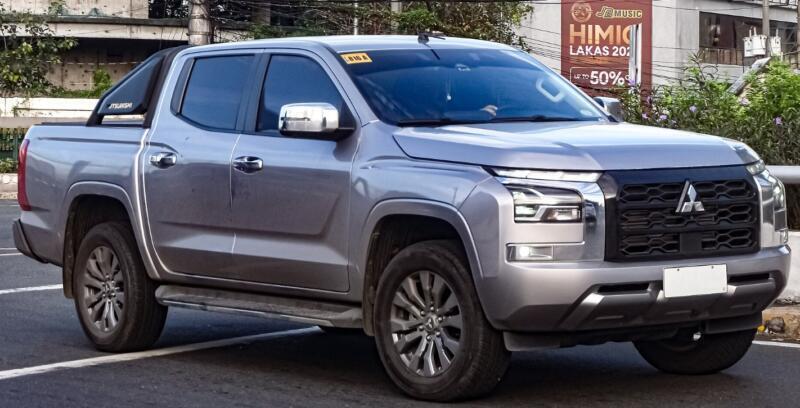
Search for Mitsubishi Triton vs Strada New Zealand, and it sounds like we are preparing for a proper ute showdown. Triton in one corner, Strada in the other, both ready to drag trailers, climb muddy tracks, and argue over who gets the best parking spot outside the hardware store.
There is only one problem: the Mitsubishi Triton and Mitsubishi Strada are not conventional rivals.
They are essentially different names used for Mitsubishi’s global midsize pickup. Depending on the country, generation, and year, the same family of ute has been marketed as the Triton, Strada, or L200. Mitsubishi’s own historical material refers to the model as the L200, Triton, and Strada, while the company’s Philippine division officially replaced the Strada name with Triton for the latest generation.
In New Zealand, the official name is Mitsubishi Triton. That means a new Mitsubishi Strada is not sitting in a separate corner of the local showroom waiting to compete against it.
Still, the comparison matters. Kiwi buyers regularly encounter imported Stradas, overseas reviews, used listings, replacement parts, and videos that use different names. A Strada may look almost identical to a Triton, yet differences in age, market specification, equipment, safety technology, drivetrain, and warranty support can make the ownership experience quite different.
Let us untangle the naming puzzle and work out which version makes more sense on New Zealand roads.
- Mitsubishi Triton vs Strada: The Quick Answer
- Why Does Mitsubishi Use Different Names?
- New Zealand Triton vs Imported Strada
- Exterior Design: Badge Engineering or Real Difference?
- Engine Comparison
- Transmission Differences
- Four-Wheel-Drive Capability
- Towing Capacity in New Zealand
- Ride Comfort and Everyday Driving
- Interior and Technology
- Safety Equipment
- Reliability: Is Triton Better Than Strada?
- Warranty and Dealer Support
- Parts Compatibility
- Running Costs
- Resale Value in New Zealand
- Which One Is Better for Work?
- Which One Is Better for Families?
- Which One Is Better Off-Road?
- New Triton vs Used Strada: Pros and Cons
- How to Choose the Right Vehicle
- Our Verdict: Mitsubishi Triton vs Strada New Zealand
- Conclusion
- Frequently Asked Questions
Mitsubishi Triton vs Strada: The Quick Answer
The simplest answer is this:
The Mitsubishi Triton and Mitsubishi Strada belong to the same pickup family.
“Strada” has historically been used in markets such as the Philippines, while “Triton” is the name New Zealand buyers know. The model has also been sold as the Mitsubishi L200 in many international markets. Mitsubishi describes the vehicle as a global pickup manufactured principally in Thailand and exported internationally.
Therefore, the useful comparison is not really:
- Triton versus an entirely separate Strada model
It is more accurately:
- New Zealand-new Triton versus overseas-market Strada
- Current-generation Triton versus an older Strada
- Local specifications versus imported specifications
- New-vehicle warranty support versus used-import ownership
- One trim level versus another trim level
Think of Triton and Strada as cousins wearing different name badges—or, in many cases, the same person carrying two passports.
Why Does Mitsubishi Use Different Names?
Vehicle naming is rarely as logical as we would like it to be. Manufacturers often change model names to suit regional brand recognition, language, dealer history, or marketing strategy.
Mitsubishi’s pickup has worn several badges during its long production history. The first generations were marketed under different identities around the world, while Triton became the familiar name in markets including New Zealand and Australia. The L200 badge remained prominent in Europe and other regions, and Strada became well known in parts of Asia.
For the newest Philippine-market model, Mitsubishi formally changed the name from Strada to Triton, describing the transition as part of the evolution of its pickup lineup.
That move reduces some confusion, but used vehicles and older online material will continue to carry the Strada name for years.
What Is the Ute Called in New Zealand?
In New Zealand, it is officially sold as the Mitsubishi Triton.
The latest generation reached the New Zealand market in 2024 and was introduced in several grades and body configurations. Depending on availability and model year, Kiwi buyers can find single-cab, club-cab, and double-cab versions aimed at everyone from tradespeople to families and recreational drivers.
Mitsubishi New Zealand’s current vehicle range continues to present it as the Triton rather than the Strada.
Where Was the Strada Name Used?
The Strada badge has been particularly associated with the Philippines. Older Philippine-market models, special editions, dealer listings, and promotional material continue to use the name.
However, Mitsubishi Philippines adopted the Triton name for the latest generation. The change means that even in one of the Strada badge’s best-known markets, Mitsubishi is now aligning the ute with its broader international identity.
Does Strada Mean a Completely Different Specification?
Not automatically.
A Strada badge tells us which market the vehicle was intended for, but it does not reveal every specification. Two Stradas from different model years may have different engines, transmissions, safety systems, suspension setups, or trim levels. Likewise, two New Zealand Tritons can differ substantially depending on whether they are work-focused 2WD models or highly equipped 4WD double cabs.
The badge starts the conversation. It does not finish it.
New Zealand Triton vs Imported Strada
This is where the comparison becomes genuinely useful.
A New Zealand-new Triton is built and specified for local sale through Mitsubishi’s official distribution and dealer network. An imported Strada may have been designed for a different country’s climate, road conditions, regulations, fuel standards, consumer expectations, and price structure.
Mechanically, the two vehicles may share a great deal. From an ownership perspective, however, they may feel like different propositions.
Key Differences Buyers Should Investigate
Before choosing between a locally delivered Triton and an imported Strada, we should check:
- Model year and generation
- Engine code and output
- Transmission type
- Two-wheel-drive or four-wheel-drive configuration
- Four-wheel-drive system
- Safety equipment
- Towing approval
- Payload and gross vehicle mass
- Infotainment language and radio compatibility
- Service history
- Parts compatibility
- Warranty status
- New Zealand registration and compliance history
- Rust or underbody condition
- Previous commercial or off-road use
An imported Strada may be excellent value. It may also require more homework than a locally supplied Triton.
Exterior Design: Badge Engineering or Real Difference?
Park comparable Triton and Strada models beside each other and the similarities can be striking. The cabin shape, tray, headlights, doors, wheel arches, and chassis proportions may all reveal their shared roots.
However, regional trims can create meaningful visual differences.
A Strada might have:
- Different grille detailing
- Unique alloy wheels
- Alternative bumper designs
- Market-specific decals
- Chrome exterior trim
- Different sports bars
- Smaller or larger wheels
- Different headlamp technology
- Unique Ralliart-inspired styling
- Alternative tray accessories
None of these necessarily makes one model better. They simply reflect the tastes and pricing strategy of the original market.
The Latest Triton’s Tougher Appearance
The newest Triton moved away from the softer curves of some earlier generations and adopted a squarer, more upright shape. It looks less like a lifestyle ute trying to appear elegant and more like a toolbox that has learned how to move.
That design suits the New Zealand market. A ute here may spend Monday crawling through traffic, Tuesday carrying tools, Friday towing a boat, and Sunday climbing a wet forestry track. It needs to look comfortable in muddy boots.
Engine Comparison
We cannot compare every Triton and Strada engine with one blanket answer because the specification depends heavily on the generation and destination market.
Older Stradas may use diesel engines that differ from the unit fitted to the current New Zealand Triton. Even where displacement is similar, turbocharging, emissions equipment, engine calibration, and outputs may vary.
The current New Zealand Triton is promoted with a 2.4-litre bi-turbo diesel engine and a six-speed automatic transmission in prominent 4WD specifications. New Zealand dealer information also lists a 3,500kg braked towing rating on qualifying versions.
Current Triton Performance Character
The bi-turbo diesel is designed to balance low-speed pulling power with smoother performance higher in the rev range. That matters more in the real world than a dramatic peak-power figure.
When towing uphill, merging onto a motorway, or crossing loose gravel, we want predictable torque rather than an engine that behaves like a light switch.
The Triton’s diesel character suits:
- Towing boats and trailers
- Carrying work equipment
- Rural driving
- Long-distance touring
- Gravel roads
- Recreational off-roading
- Daily urban use with occasional heavy work
Older Strada Engine Character
An older Strada can still be a capable workhorse, but it may feel noisier, slower, and less refined than the latest Triton. Turbo lag may be more noticeable, the transmission may use fewer ratios, and emissions technology may differ.
That is not always bad news. Some buyers prefer a simpler older diesel with fewer electronic layers. Others value the stronger performance, quieter operation, safety systems, and refinement of the newer ute.
Which Engine Is Better?
For most buyers seeking a current, all-round New Zealand ute, the newer Triton powertrain is the more polished choice.
For someone buying on a tighter budget who understands older diesels and can verify the vehicle’s condition, a well-maintained Strada may still make sense.
This content may interest you! Mitsubishi Triton vs Ford Ranger Wildtrak New Zealand: Which Ute Wins?
Condition beats reputation. A neglected Triton can be worse than a carefully maintained Strada.
Transmission Differences
The transmission is another area where names can mislead us.
A Strada may come with a manual gearbox or an automatic transmission that differs from New Zealand Triton specifications. Gear count, shift programming, towing behaviour, and low-range operation can all vary.
The current New Zealand-market Triton is commonly presented with a six-speed automatic in major 4WD variants.
Before buying an imported Strada, test it from cold and pay attention to:
- Delayed engagement into Drive or Reverse
- Harsh changes
- Slipping under acceleration
- Shuddering at low speed
- Unusual noises
- Transmission warning lights
- Fluid leaks
- Poor behaviour while towing
- Incomplete servicing records
A badge on the tailgate cannot tell us whether the gearbox has spent ten years gently commuting or dragging overloaded trailers through tropical heat.
Four-Wheel-Drive Capability
Mitsubishi has built much of the Triton’s appeal around useful four-wheel-drive technology. Higher-specification New Zealand models may feature Super Select 4WD II, while simpler versions may use a more conventional selectable system. Dealer specifications for current models also mention high and low range, a rear differential lock, and Super Select 4WD II on relevant variants.
Why Super Select Matters
Super Select is attractive because it can provide more flexibility than a basic part-time 4WD system. Depending on the version, drivers can select modes suited to sealed roads, loose surfaces, and difficult low-speed terrain.
That flexibility is valuable in New Zealand, where conditions can change as quickly as the weather:
- Dry motorway
- Wet rural road
- Loose gravel
- Muddy paddock
- Boat ramp
- Snowy access road
- Rocky trail
A more basic Strada 4WD may still perform well off-road, but we need to confirm exactly which transfer case and drive modes it has.
Triton or Strada for Serious Off-Roading?
If both vehicles are equivalent in generation and drivetrain, their underlying ability may be extremely similar. The deciding factors become tyres, suspension condition, ground clearance, driver skill, and recovery equipment.
For a used imported Strada, also inspect the underside carefully. Deep scratches, crushed steps, damaged bash plates, bent brackets, contaminated fluids, or mud packed into hidden cavities can reveal a harder life than the polished paint suggests.
Towing Capacity in New Zealand
Towing is one of the biggest reasons Kiwi buyers choose a ute, but overseas ratings should never be copied blindly.
Current qualifying New Zealand Triton models are marketed with a maximum braked towing capacity of up to 3,500kg.
That headline number does not mean every Triton or Strada can safely tow 3,500kg in every situation.
We must consider:
- Exact variant
- Towbar rating
- Trailer braking system
- Gross combined mass
- Vehicle payload
- Tow-ball download
- Passenger and cargo weight
- Tyre ratings
- Local certification
- Manufacturer documentation
Why an Imported Strada’s Overseas Rating Is Not Enough
An advertisement from another country may show an impressive towing figure, but New Zealand compliance and documentation still matter. A different engine, chassis specification, axle rating, cooling package, or certification standard can affect what is legally and safely possible here.
Before buying an imported Strada for towing, confirm the approved New Zealand rating rather than relying on a foreign brochure or social-media post.
The Payload Trap
A ute can reach its payload limit before the trailer reaches its maximum advertised weight.
Add four adults, luggage, a canopy, drawers, tools, a bull bar, a full fuel tank, and tow-ball load, and the arithmetic becomes crowded very quickly. Towing capacity is not a magic permission slip. It is one piece of a larger weight puzzle.
Ride Comfort and Everyday Driving
Older utes often rode like empty wheelbarrows when their trays were unladen. Modern pickups have become far more civilised, although a body-on-frame ute with a work-ready rear suspension will never float like a luxury crossover.
The latest Triton offers a more modern cabin, improved refinement, and a broader range of comfort and driver-assistance equipment than many older Stradas.
Around town, we are likely to notice:
- Lighter-feeling controls
- Better noise suppression
- More supportive seats
- Improved infotainment
- Clearer cameras
- Smoother transmission behaviour
- More safety alerts
- Better storage solutions
An older Strada may feel more mechanical and less insulated. Some drivers enjoy that honest, rugged character. Others will find it tiring during a long Auckland commute or a windy South Island road trip.
Interior and Technology
The generation gap matters more than the name badge.
A late-model Triton may include smartphone connectivity, multiple cameras, digital displays, modern climate controls, advanced safety features, and improved rear-seat accommodation. A lower-grade or older Strada may offer a much simpler interior.
That simplicity can be attractive for farm or trade use. Fewer glossy surfaces mean fewer worries about scratches, mud, wet clothing, and tools.
Imported Infotainment Concerns
With an imported Strada, check whether:
- The menus can be changed to English
- New Zealand radio frequencies work correctly
- Navigation maps support New Zealand
- Smartphone integration functions normally
- Voice commands recognise local settings
- Replacement head units affect vehicle controls
- Cameras display correctly
- Warning messages can be understood
An infotainment system that looks impressive in a listing photo can become a frustrating electronic ornament if half its functions are locked to another region.
Safety Equipment
Safety specifications may differ even between visually identical vehicles.
A New Zealand Triton could include systems that were optional, unavailable, or calibrated differently in an overseas Strada. Depending on model and grade, differences may involve:
- Autonomous emergency braking
- Blind-spot monitoring
- Rear cross-traffic alert
- Lane-departure warning
- Adaptive cruise control
- Driver-monitoring technology
- Parking sensors
- Surround-view cameras
- Airbag count
- Trailer stability assistance
Never assume that an imported Strada has a feature simply because a similar-looking Triton review mentions it.
Check the Exact Vehicle, Not the Brochure Photo
Online listings often reuse generic images and equipment descriptions. We should inspect the actual steering-wheel buttons, dashboard menus, mirrors, cameras, sensors, and vehicle identification details.
When safety matters, “probably included” is not good enough.
Reliability: Is Triton Better Than Strada?
Because the two names belong to the same broader vehicle family, neither badge guarantees greater reliability.
Reliability depends much more on:
- Generation
- Engine and transmission
- Service history
- Previous workload
- Modifications
- Towing history
- Off-road exposure
- Accident repairs
- Corrosion
- Quality of replacement parts
- Owner behaviour
A New Zealand-new Triton with complete dealer servicing offers a more transparent history than an imported Strada with missing records. That transparency has real value.
Used-Vehicle Inspection Priorities
For either model, inspect:
- Cold-start behaviour
- Exhaust smoke
- Turbocharger noise
- Cooling system
- Oil and coolant leaks
- Diesel particulate filter warnings
- AdBlue system warnings where fitted
- Transfer-case operation
- Differential noises
- Driveshaft vibration
- Suspension bushes
- Steering play
- Chassis corrosion
- Tray and towbar damage
- Electrical accessories
- Service documentation
A professional pre-purchase inspection is especially valuable for imported or modified utes.
Warranty and Dealer Support
This is one of the clearest advantages of buying a new or qualifying New Zealand-new Triton.
Mitsubishi New Zealand advertises its Diamond Advantage coverage with a five-year or 130,000km new-vehicle warranty and a ten-year or 160,000km powertrain warranty, subject to eligibility, servicing requirements, and other terms. The extended powertrain cover is described as non-transferable under the published conditions, so buyers should read the details rather than assuming every used vehicle retains the full benefit.
An imported Strada is unlikely to receive the same factory-backed New Zealand coverage.
Why Local Support Matters
Local dealer backing can make ownership easier when we need:
- Warranty assessment
- Software updates
- Recall work
- Technical diagnosis
- Correct parts identification
- Service scheduling
- Resale documentation
- Roadside assistance
An imported Strada may still be straightforward to maintain, especially if it shares common components with local Tritons. However, unusual trim parts, electronic modules, or market-specific components may take longer to source.
Parts Compatibility
Many mechanical parts may cross over between Triton and Strada versions, but we should never order solely by model name.
This content may interest you!Mitsubishi Triton Best Years New Zealand: Complete Used-Buyer GuideThe safest approach is to use:
- Vehicle identification number
- Engine code
- Transmission code
- Chassis code
- Production date
- Original market
- Part number
Small differences can matter. A filter, sensor, brake component, body panel, wiring loom, or control module may look correct while using a different connector, calibration, or mounting point.
“Looks the same” is an expensive parts strategy.
Running Costs
Running costs depend on age and condition more than whether the tailgate says Triton or Strada.
A newer Triton may cost more to purchase but provide:
- Better warranty protection
- More predictable servicing
- Newer tyres and brakes
- Fewer age-related repairs
- Easier finance
- Better safety
- Stronger resale appeal
An older Strada may offer:
- Lower purchase price
- Reduced depreciation in dollar terms
- Simpler equipment
- Affordable entry into ute ownership
- Familiar mechanical components
However, one neglected diesel system, transmission repair, or major suspension overhaul can erase the initial saving quickly.
Fuel Economy Expectations
Fuel use varies with configuration, tyres, load, terrain, accessories, driving style, and towing.
A canopy, roof rack, all-terrain tyres, suspension lift, bull bar, and permanently loaded tray can turn a reasonably efficient ute into something that drinks diesel like it has just crossed a desert.
When comparing listings, do not focus only on brochure consumption. Ask how the ute will actually be used.
Resale Value in New Zealand
The Triton badge is familiar to New Zealand buyers. That familiarity generally makes a locally supplied vehicle easier to explain and advertise.
A Strada may require the seller to answer immediate questions:
- Is it the same as a Triton?
- Where was it imported from?
- Can parts be sourced locally?
- What is its towing rating?
- Does it have a warranty?
- Are the kilometres genuine?
- Does the stereo work properly?
- Which safety features are fitted?
None of these questions makes the Strada a bad purchase. They simply create friction, and friction can affect resale demand.
A rare or well-specified Strada may attract an enthusiast. A mainstream buyer will usually find the Triton badge more reassuring.
Which One Is Better for Work?
For a business buyer, a New Zealand-new Triton is often the safer and simpler choice.
It provides clearer local specifications, stronger dealer support, easier parts identification, and more straightforward resale. Businesses also value predictable downtime, and local warranty support can matter more than a small saving at purchase.
An imported Strada may suit a buyer who:
- Has mechanical knowledge
- Knows the model’s history
- Needs a lower entry price
- Does not depend on factory warranty
- Has access to a trusted independent workshop
- Has verified payload and towing requirements
A work ute is a tool. A cheap tool that spends weeks waiting for a special-order part is not cheap anymore.
Which One Is Better for Families?
For mixed family and recreational use, the newer Triton usually has the advantage.
Modern safety technology, improved rear-seat comfort, updated infotainment, greater cabin refinement, and local support all make it easier to live with as an everyday vehicle.
Families should still test the rear seat carefully. Check child-seat installation, door opening, headroom, legroom, storage, and how easily everyone can climb aboard.
A double-cab ute can be versatile, but it remains a large commercial vehicle underneath. Parking, ride comfort, turning circle, and tray security deserve as much attention as the aggressive grille.
Which One Is Better Off-Road?
For comparable generations, the underlying answer may be “neither”—they can be extremely similar.
A newer 4WD Triton with Super Select 4WD II, low range, a rear differential lock, appropriate tyres, and modern traction systems offers a compelling package for New Zealand adventures.
An older Strada can also be highly capable, particularly if it is lighter, sensibly modified, and driven by someone who understands its limits.
The best off-road ute is not always the one with the longest accessory list. It is the one with reliable recovery points, suitable tyres, careful maintenance, sensible weight, and a driver who knows when to stop digging.
New Triton vs Used Strada: Pros and Cons
Advantages of a New Zealand Triton
- Official local-market specification
- Familiar Triton branding
- Dealer network access
- Published New Zealand towing information
- Modern safety technology
- Current-generation engine and cabin
- Potential Diamond Advantage warranty coverage
- Easier resale explanation
- Better access to local documentation
Disadvantages of a New Zealand Triton
- Higher purchase price
- Greater initial depreciation
- More complex electronics
- Potentially higher insurance value
- Newer emissions systems may require correct driving and servicing habits
Advantages of an Imported Strada
- Potentially lower purchase cost
- Access to unusual trim levels
- Familiar Mitsubishi mechanical foundation
- Possible value for knowledgeable buyers
- Older versions may be mechanically simpler
Disadvantages of an Imported Strada
- No equivalent new-car New Zealand warranty
- Uncertain specification
- Possible infotainment compatibility issues
- More complex parts identification
- Overseas towing figures may not apply locally
- Harder-to-confirm history
- Potentially weaker resale demand
- Safety equipment may differ
How to Choose the Right Vehicle
Instead of asking whether the Triton or Strada name is better, ask five more useful questions.
1. What Exact Generation Is It?
A current Triton and a ten-year-old Strada are not a badge comparison. They are vehicles from different technological eras.
2. Was It Sold New in New Zealand?
Local delivery usually makes specifications, history, recalls, parts, and resale easier to manage.
3. What Work Has It Done?
Look for evidence of heavy towing, commercial loading, off-road use, beach driving, or neglected maintenance.
4. Does It Meet Our Real Requirements?
Write down the actual payload, passenger, towing, tray, and off-road needs. Do not pay for capability that will only appear in daydreams.
5. Is the Price Difference Worth the Risk?
A cheaper Strada can be a bargain, but only after allowing for inspection, servicing, tyres, registration work, missing accessories, and possible repairs.
Our Verdict: Mitsubishi Triton vs Strada New Zealand
The Mitsubishi Triton wins for most New Zealand buyers—not because it is fundamentally a different ute from the Strada, but because it is the locally recognised and officially supported version.
A current or New Zealand-new Triton offers clearer specifications, easier dealer support, familiar branding, modern equipment, published local towing information, and potentially valuable factory warranty coverage.
The Strada remains worth considering in the used-import market. It can share much of the Triton’s mechanical DNA and may deliver excellent value. Yet it demands a more careful buyer. We need to verify its generation, original market, safety equipment, service history, drivetrain, local towing approval, parts compatibility, and compliance status.
So, is this a battle between two rival utes? Not really.
It is more like comparing two editions of the same book—one printed for New Zealand and the other produced for a different audience. The story may be familiar, but the details in the margins can change the whole ownership experience.
Conclusion
When we see the phrase Mitsubishi Triton vs Strada New Zealand, the main thing to remember is that Triton and Strada are regional names connected to Mitsubishi’s long-running midsize pickup family.
In New Zealand, Triton is the badge that matters. It is easier to research, service, insure, resell, and match with local manufacturer information. An imported Strada may still be a tough, practical, and affordable ute, but it should be judged as an individual vehicle rather than assumed to match a New Zealand Triton specification for specification.
Buy the history, condition, drivetrain, and support package—not just the badge.
A good Triton can become a dependable work partner. A good Strada can do much the same. But the wrong used ute, whichever name it carries, can swallow money faster than a muddy track swallows road tyres.
Frequently Asked Questions
1. Are the Mitsubishi Triton and Strada the same vehicle?
Yes, they belong to the same global Mitsubishi pickup family. Strada was used as the regional name in certain markets, while New Zealand uses Triton. Specifications can still differ by country, generation, and trim level.
2. Can we buy a new Mitsubishi Strada in New Zealand?
Mitsubishi’s official New Zealand model is sold as the Triton. A vehicle advertised locally as a Strada is more likely to be an imported or older overseas-market model rather than a separate new-vehicle line.
3. Are Triton parts compatible with a Strada?
Many components may be shared, but compatibility should be confirmed using the VIN, chassis code, engine code, production date, and part number. The model name alone is not precise enough.
4. Is an imported Strada good for towing in New Zealand?
It may be, but buyers must confirm the vehicle’s approved local towing rating, towbar rating, gross combined mass, payload, and registration documentation. An overseas brochure figure should not be treated as automatic New Zealand approval.
This content may interest you!Mitsubishi Triton Tyre Pressure: Complete PSI Guide5. Should we buy a Triton or an imported Strada?
A New Zealand-new Triton is the easier choice for most buyers because of local specifications, support, warranty possibilities, and resale familiarity. A Strada can offer good value when its history, condition, equipment, and compliance have been thoroughly verified.
Leave a Reply