
Mitsubishi Triton Tyre Pressure: Complete PSI Guide
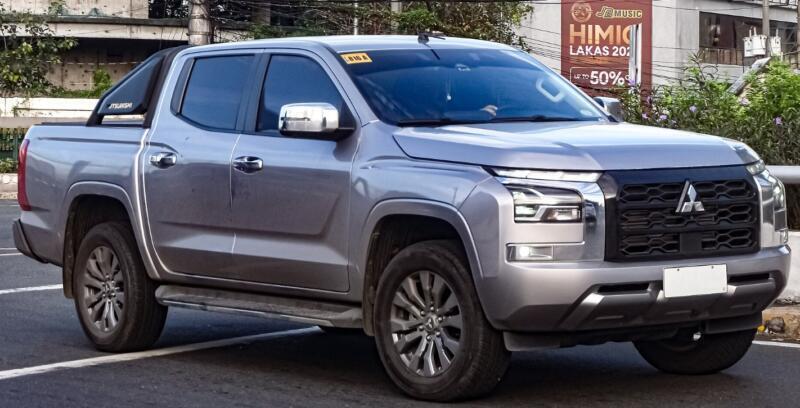
Finding the correct Mitsubishi Triton tyre pressure sounds simple—until we start looking at different model years, tyre sizes, loads, road surfaces, and driving conditions. One driver recommends 29 PSI, another swears by 36 PSI, and someone towing a caravan may run considerably more pressure in the rear tyres.
So, who is right?
Potentially, all of them.
The Mitsubishi Triton is not a lightweight city hatchback with one predictable job. It may spend Monday carrying tools, Friday towing a trailer, and Sunday crawling across sand. Tyre pressure must therefore match the vehicle, tyre, load, and terrain.
As a general reference, many Triton models use cold pressures somewhere around 29–32 PSI for ordinary road driving, but this is not a universal specification. For example, published placard information for some 2024 Triton models indicates 29 PSI, while certain 2020 and 2021 versions are listed at 32 PSI. The correct figure for an individual vehicle remains the number printed on its tyre placard.
In this guide, we will explain where to find that number, when to adjust it, how pressure changes with towing or off-road driving, and what tyre wear can reveal about our setup.
- What Is the Correct Mitsubishi Triton Tyre Pressure?
- Where to Find the Triton Tyre Pressure Placard
- Why Mitsubishi Triton Tyre Pressure Varies
- Mitsubishi Triton Tyre Pressure for Daily Driving
- What Does “Cold Tyre Pressure” Mean?
- Mitsubishi Triton Tyre Pressure When Fully Loaded
- Mitsubishi Triton Tyre Pressure for Towing
- Mitsubishi Triton Tyre Pressure for Gravel Roads
- Mitsubishi Triton Tyre Pressure for Corrugated Roads
- Mitsubishi Triton Tyre Pressure for Sand
- Mitsubishi Triton Tyre Pressure for Mud
- Mitsubishi Triton Tyre Pressure for Rocky Tracks
- How Temperature Changes Triton Tyre Pressure
- How Often Should We Check Triton Tyre Pressure?
- How to Check Mitsubishi Triton Tyre Pressure
- Understanding the Mitsubishi Triton TPMS
- Signs the Triton Tyres Are Underinflated
- Signs the Triton Tyres Are Overinflated
- What Tyre Wear Tells Us About Pressure
- Can We Use the 4 PSI Rule?
- Should Aftermarket Triton Tyres Use Factory Pressure?
- Common Mitsubishi Triton Tyre Pressure Mistakes
- A Practical Triton Tyre Pressure Routine
- Final Thoughts on Mitsubishi Triton Tyre Pressure
- Frequently Asked Questions
What Is the Correct Mitsubishi Triton Tyre Pressure?
The most accurate answer is:
Use the cold tyre pressure printed on the vehicle’s tyre placard.
On many Mitsubishi Triton models, the everyday recommendation is likely to fall within this general range:
| Driving condition | Typical starting range |
|---|---|
| Normal sealed-road driving | 29–32 PSI |
| Heavier everyday load | 32–36 PSI |
| Towing or carrying cargo | Placard load setting, often higher at rear |
| Gravel roads | Near road pressure or slightly reduced |
| Corrugated tracks | Approximately 24–30 PSI |
| Sand | Approximately 16–22 PSI |
| Mud or rocks | Approximately 18–26 PSI |
| Temporary spare tyre | Check spare label or sidewall guidance |
These figures are starting points, not official specifications for every Triton. Different generations, trims, wheels, tyres, body styles, payloads, and accessories can require different settings.
A Triton Single Cab with commercial tyres may not use the same pressure as a Double Cab GLS with larger wheels. Likewise, an unloaded ute should not automatically use the same rear pressure as one carrying several hundred kilograms.
Common Mitsubishi Triton Pressure Conversions
Tyre placards and inflators may display pressure in PSI, kPa, or bar. Here are several useful conversions:
| PSI | kPa | Bar |
|---|---|---|
| 20 PSI | 138 kPa | 1.38 bar |
| 22 PSI | 152 kPa | 1.52 bar |
| 24 PSI | 165 kPa | 1.65 bar |
| 26 PSI | 179 kPa | 1.79 bar |
| 28 PSI | 193 kPa | 1.93 bar |
| 29 PSI | 200 kPa | 2.00 bar |
| 30 PSI | 207 kPa | 2.07 bar |
| 32 PSI | 221 kPa | 2.21 bar |
| 34 PSI | 234 kPa | 2.34 bar |
| 36 PSI | 248 kPa | 2.48 bar |
| 38 PSI | 262 kPa | 2.62 bar |
| 40 PSI | 276 kPa | 2.76 bar |
When the placard says 220 kPa, for example, that is approximately 32 PSI or 2.2 bar.
Where to Find the Triton Tyre Pressure Placard
The tyre placard is usually attached to one of the following locations:
- The driver’s door opening
- The driver-side door pillar
- The lower section of the door frame
- Occasionally, inside the glovebox or fuel-filler area
- The owner’s manual
Open the driver’s door and inspect the painted frame surrounding the opening. We are looking for a label showing tyre sizes, load ratings, and recommended front and rear pressures.
The placard may give more than one set of numbers. One row may apply to normal use, while another applies to a fully loaded vehicle. Some versions may also separate front and rear recommendations.
Why the Door Placard Matters More Than the Tyre Sidewall
This distinction is crucial.
The figure moulded into a tyre’s sidewall is generally related to the tyre’s maximum load or inflation specification. It is not automatically the correct everyday operating pressure for the vehicle.
Think of it like the maximum capacity printed on a lift. It tells us the upper boundary under defined conditions—not the setting we should use every day.
The vehicle placard considers factors such as:
- Vehicle weight
- Weight distribution
- Suspension design
- Handling balance
- Original tyre size
- Expected passenger and cargo loads
- Ride comfort
- Braking behaviour
That is why we begin with the Mitsubishi placard rather than inflating every tyre to the highest number visible on its sidewall.
Why Mitsubishi Triton Tyre Pressure Varies
A single universal Triton pressure would be convenient, but it would also be misleading.
The Triton has existed across multiple generations and markets under different configurations. Depending on the country, it may also be closely associated with the Mitsubishi L200 name.
Pressure can vary because of several factors.
Model Year and Generation
An older Triton may use narrower tyres with taller sidewalls, while a newer model may have larger wheels, different suspension tuning, and a modern tyre-pressure monitoring system.
Published examples illustrate this variation: some 2024 Triton placards are associated with a 29 PSI minimum, while published figures for certain 2020 and 2021 models indicate 32 PSI.
We should therefore avoid copying a pressure recommendation from another Triton simply because the vehicles look similar.
Tyre Size and Construction
A 245/70 R16 tyre behaves differently from a lower-profile 18-inch tyre. Light-truck tyres may also use a tougher casing than passenger-construction tyres.
The following characteristics influence pressure requirements:
- Tyre width
- Sidewall height
- Wheel diameter
- Load index
- Speed rating
- Passenger or light-truck construction
- All-terrain, highway-terrain, or mud-terrain tread
- Sidewall stiffness
A heavily constructed all-terrain tyre can feel firm at a pressure that feels comfortable in a softer highway tyre.
This content may interest you! Mitsubishi Triton DPF Light Flashing: Causes, Fixes, and What to Do Next
Vehicle Load
Pressure supports load. As the vehicle becomes heavier, the tyres may require more air to control heat, deformation, and stability.
A lightly loaded rear axle may need less pressure than the same axle carrying:
- Camping equipment
- Tools
- Water tanks
- A canopy
- Drawer systems
- A rooftop tent
- Spare fuel
- A trailer’s tow-ball load
That is why a permanently modified touring Triton should not always be treated like an empty showroom vehicle.
Driving Speed and Surface
High-speed sealed-road travel creates different tyre demands from slow sand driving.
At road speed, we need stability, controlled flex, and heat management. On sand, we need a longer contact patch so the vehicle floats rather than digs.
One pressure cannot perform both jobs perfectly—just as hiking boots and running shoes cannot be expected to feel identical.
Mitsubishi Triton Tyre Pressure for Daily Driving
For ordinary driving on sealed roads, the placard’s cold recommendation is our safest starting point.
Many Tritons will fall around 29–32 PSI when cold, depending on model and specification. However, we should use the actual label fitted to the vehicle rather than treating this range as a replacement.
Mitsubishi advises checking and adjusting tyre pressure while the tyres are cold and recommends checking it regularly, generally at least monthly.
Front and Rear Pressures May Differ
Some owners automatically put the same pressure into all four tyres. That can work when the placard specifies equal pressure, but we should not assume it does.
A ute often carries more variable weight over the rear axle. When empty, its rear tyres may need one setting. When loaded, they may need another.
If the placard lists separate front and rear pressures, follow them.
Should We Use 29, 32, or 36 PSI?
Use:
- The placard pressure when the vehicle is cold.
- The loaded-pressure recommendation when carrying significant weight.
- A carefully monitored adjustment only when tyre type, load, wear, or professional advice justifies it.
Running 36 PSI simply because another Triton owner likes that number may make the ride sharper and reduce sidewall movement, but it could also be too firm for a lightly loaded vehicle.
Likewise, choosing 29 PSI without checking the placard could be too low for another model, tyre, or payload.
What Does “Cold Tyre Pressure” Mean?
Cold pressure does not mean the tyres must feel cold to the touch. It means they have not been significantly heated by driving.
Ideally, check them:
- Before driving in the morning
- After the vehicle has been parked for several hours
- Before travelling more than a few kilometres
- Away from strong direct sunlight when possible
As tyres roll, their sidewalls flex and generate heat. Warm air expands, so the gauge reading rises.
Should We Release Air From Hot Tyres?
Normally, no.
Suppose the placard calls for 32 PSI cold, but the tyres read 36 PSI after a long drive. That increase may be normal. Releasing air while they are hot could leave them underinflated once they cool.
When a hot tyre appears suspiciously low, we can add enough air to make it safe, then recheck and correct the pressure when the tyre is cold.
Mitsubishi Triton Tyre Pressure When Fully Loaded
A loaded ute asks much more of its tyres.
Cargo increases sidewall flex and heat. It can also make the rear feel vague, allow excessive tyre movement, and reduce stability during lane changes.
When loading the Triton:
- Read the high-load values on the tyre placard.
- Confirm that the tyres have the correct load rating.
- Distribute cargo safely.
- Increase pressure before beginning the trip.
- Recheck after the vehicle has cooled.
- Inspect for unusual bulging or heat.
Permanent Accessories Count as Load
We sometimes talk about a vehicle being “empty” even when it carries:
- A steel tray
- Bull bar
- Winch
- Underbody protection
- Canopy
- Drawers
- Fridge
- Auxiliary battery
- Long-range fuel tank
- Recovery equipment
Those accessories may add hundreds of kilograms. For a modified Triton, obtaining individual axle weights at a public weighbridge gives us far better information than guessing.
Why Rear Pressure Often Increases
The rear tyres normally carry much of the added payload. Increasing rear pressure in accordance with the placard helps them support that weight with less excessive flex.
However, more is not always better. Excessive pressure may reduce the contact patch and create a nervous, bouncy ride—especially on wet or rough roads.
Mitsubishi Triton Tyre Pressure for Towing
Towing adds more than the trailer’s total weight to the equation. The trailer places a downward load on the tow ball, which affects the Triton’s rear axle.
A current Australian Triton can be rated to tow up to 3.5 tonnes in eligible configurations, but towing capacity depends on the exact model, operating limits, towbar, trailer, loading, and applicable conditions.
This content may interest you!Mitsubishi Triton ABS and Traction Control Light On: Causes, Diagnosis, and FixesTyre pressure is only one part of towing safety, but it is an important one.
Before Towing, Check These Items
- Triton front tyre pressure
- Triton rear tyre pressure
- Trailer tyre pressure
- Spare tyres for both vehicle and trailer
- Tow-ball download
- Rear axle load
- Gross vehicle mass
- Gross combination mass
- Tyre load ratings
- Wheel-nut condition
- Tread depth and damage
Should Rear Tyres Be Inflated More for Towing?
Often, yes—but only according to the placard, load, tyre specifications, and professional guidance.
The trailer’s ball load pushes down on the rear of the vehicle. Additional rear pressure may help maintain casing stability and manage heat.
We should not arbitrarily jump from 30 PSI to 45 PSI. Instead, we should:
- Use the placard’s loaded setting.
- Verify actual axle weights where possible.
- Consult the tyre manufacturer or qualified tyre specialist.
- Stay below relevant tyre and wheel limits.
- Reassess handling and tread wear.
A stable towing setup should feel controlled, not like the rear tyres are rolling beneath the vehicle.
Mitsubishi Triton Tyre Pressure for Gravel Roads
Gravel creates a balancing act. We need enough pressure for stability and heat control, but excessive pressure can make the vehicle skate across loose stones.
For maintained gravel at moderate speed, many drivers remain close to road pressure or make only a small reduction.
A reasonable approach is:
- Begin with the placard pressure.
- Reduce slightly only when conditions demand it.
- Lower speed after reducing pressure.
- Watch for sharp rocks and sidewall impacts.
- Reinflate before sustained high-speed bitumen driving.
A pressure around 26–30 PSI may suit some Triton and tyre combinations on gravel, but this is not universal.
Why Speed Must Drop With Pressure
Lower pressure creates more sidewall flex. That can improve compliance and grip, but it also generates more heat.
The lower we go, the slower we should travel.
Ignoring this relationship is like running quickly in soft slippers: comfort improves at first, but control and durability soon suffer.
Mitsubishi Triton Tyre Pressure for Corrugated Roads
Corrugations can make a Triton feel as though it is bouncing across a giant washboard. Slightly lower tyre pressure may help the tyres absorb smaller impacts before the suspension has to deal with them.
Depending on load, speed, tyre construction, and road conditions, a starting range around 24–30 PSI may be considered.
We should make small changes rather than dropping dramatically:
- Reduce pressure by 2–4 PSI.
- Drive at a controlled speed.
- Assess steering and ride.
- Check tyre temperature.
- Reduce further only when necessary.
- Reinflate for highway travel.
Too much pressure may produce a harsh ride and reduced grip. Too little pressure may cause heat, sidewall damage, or tyre movement on the rim.
Mitsubishi Triton Tyre Pressure for Sand
Sand is where lower pressure can transform the Triton.
Reducing pressure lengthens the tyre’s footprint, helping the vehicle float across the surface. Instead of four tyres digging like narrow shovels, they behave more like broad snowshoes.
A common starting range is approximately:
- 18–22 PSI for firm sand
- 16–18 PSI for softer sand
- Below 16 PSI only with experience, very low speed, and suitable equipment
These are off-road guidelines rather than Mitsubishi road-pressure specifications.
How Low Is Too Low on Sand?
Risk rises as pressure falls.
At very low pressure, we may:
- Unseat a tyre bead
- Damage a sidewall
- Allow sand into the bead area
- Spin the tyre on the wheel
- Damage the rim
- Lose steering precision
- Overheat the casing if speed is excessive
Standard wheels without beadlocks require particular care.
The Golden Rule After Sand Driving
Reinflate before returning to normal road speed.
Driving down a highway at 18 PSI may generate dangerous heat and unstable handling. A portable compressor is therefore not a luxury for regular off-road travel; it is essential equipment.
Mitsubishi Triton Tyre Pressure for Mud
Mud pressure depends heavily on the surface.
In shallow mud with a firm base, moderate pressure may help the tread bite through the soft upper layer. In deeper terrain, a lower setting can enlarge the footprint and improve flotation.
A broad starting range of 18–26 PSI may work for many setups, but tyre construction and vehicle weight matter enormously.
Avoid reducing pressure blindly. If the tyres are already close to the rim or folding heavily during steering, we have probably gone too far.
Mitsubishi Triton Tyre Pressure for Rocky Tracks
Rocks reward flexibility, but they punish carelessness.
This content may interest you!Mitsubishi Triton DPF System Service Required: Causes, Fixes, and PreventionReducing pressure allows the tyre to wrap around obstacles, improving traction and softening impacts. A typical recreational range might sit around 20–26 PSI, with lower figures reserved for slow technical driving.
On rocks, our priorities should include:
- Slow vehicle speed
- Smooth steering
- Avoiding sharp sidewall contact
- Protecting the rim
- Watching tyre deflection
- Choosing a careful line
- Rechecking for cuts after the trail
Mud-terrain and light-truck all-terrain tyres may tolerate off-road deflection differently from softer passenger-construction tyres.
How Temperature Changes Triton Tyre Pressure
Air pressure changes with temperature. As conditions become colder, pressure falls. As tyres heat up, pressure rises.
A rough workshop rule is that pressure may change by about 1 PSI for every 5–6°C of temperature change, although actual results vary.
This means a Triton set correctly during a warm afternoon may read lower on a cold morning.
Seasonal Pressure Checks
We should recheck pressure when:
- Winter arrives
- Summer temperatures increase sharply
- Travelling to a colder region
- Driving from low altitude into the mountains
- The vehicle has been parked for weeks
- A tyre-pressure warning appears
Do not compensate for seasonal change by guessing. Use an accurate gauge and reset the tyres to the placard figure while cold.
How Often Should We Check Triton Tyre Pressure?
Check pressure at least once a month and before demanding journeys. Mitsubishi’s tyre-care guidance also recommends monthly cold-pressure checks.
A more practical routine is:
- Every two to four weeks
- Before towing
- Before carrying a major payload
- Before highway trips
- Before and after off-roading
- After a strong pothole impact
- When handling suddenly changes
- When fuel consumption rises
- When TPMS issues a warning
Tyres naturally lose air over time, even without a puncture. Michelin notes that tyres can lose roughly 0.1 bar, or about 1.45 PSI, per month.
Do Not Forget the Spare
A spare tyre is easy to ignore because it does no visible work—until we desperately need it.
Check it every time we inspect the other four tyres. A spare may require a different pressure, so follow its label, manual, or approved specification.
How to Check Mitsubishi Triton Tyre Pressure
The process takes only a few minutes.
Tools We Need
- Reliable digital or analogue pressure gauge
- Air compressor
- Valve-cap removal tool if required
- Tyre deflator for off-road use
- Notebook or phone for recording readings
Step-by-Step Method
- Park the Triton on level ground.
- Allow the tyres to cool.
- Find the placard pressure.
- Remove the first valve cap.
- Press the gauge firmly onto the valve.
- Record the reading.
- Add or release air as needed.
- Measure again.
- Repeat for all tyres.
- Check the spare.
- Refit every valve cap.
Use the same gauge whenever possible. Service-station gauges can be convenient, but heavy use and rough handling may affect accuracy.
Understanding the Mitsubishi Triton TPMS
Newer Triton variants may include a tyre-pressure monitoring system. Current Mitsubishi material describes a system capable of displaying individual tyre pressures and giving a warning when pressure falls below a user-set target.
TPMS is helpful, but it does not replace physical inspection.
The system may tell us pressure is low, but it cannot always show:
- A cut sidewall
- Uneven tread wear
- A bulge
- Embedded debris
- A damaged valve
- Incorrect tyre size
- Wheel damage
Why the TPMS Light May Stay On
Possible causes include:
- One or more tyres remain underinflated
- The spare is monitored and low
- Pressure was adjusted while tyres were hot
- The target pressure needs to be reset
- A sensor was damaged
- A wheel was replaced or rotated
- A sensor battery is weak
- The system has not completed its relearn cycle
Inflate every tyre correctly while cold, follow the owner’s manual reset procedure, and drive as directed. If the warning remains, arrange an inspection.
Signs the Triton Tyres Are Underinflated
Underinflation may cause:
- Heavy or vague steering
- Increased fuel consumption
- Excessive shoulder wear
- More sidewall movement
- Slower steering response
- Heat buildup
- Reduced stability under load
- A soft or squashed appearance
The danger is not simply that the tyre looks low. Excessive flex creates heat, and heat is one of a tyre’s greatest enemies.
A pressure difference of only a few PSI may not be obvious visually, so we should trust a gauge rather than our eyes.
Signs the Triton Tyres Are Overinflated
Overinflation may produce:
- A hard, jittery ride
- Reduced comfort on corrugations
- Centre tread wear
- Less grip on rough surfaces
- Increased sensitivity to bumps
- A smaller effective contact patch
- Nervous wet-road behaviour
- Reduced ability to absorb impacts
A ute with an empty rear tray can already feel firm. Adding excessive rear pressure may make it bounce like a basketball over broken pavement.
That does not mean higher pressure is always wrong. It means pressure must match load and use.
What Tyre Wear Tells Us About Pressure
Tyre wear acts like a diary. It records our pressure habits, alignment condition, driving style, and suspension health.
Wear on Both Outer Shoulders
Possible causes:
- Underinflation
- Heavy load
- Aggressive cornering
- Incorrect tyre construction for the vehicle
Wear Through the Centre
Possible causes:
- Excessive inflation
- Tyre too narrow for wheel
- Long-term mismatch between pressure and load
Wear on One Edge
More likely causes include:
This content may interest you! Ford Ranger Tyre Pressure: The Complete PSI and Bar Guide
- Wheel-alignment problems
- Worn suspension parts
- Bent components
- Incorrect camber or toe
Cupping or Scalloped Wear
This may suggest:
- Worn shock absorbers
- Wheel imbalance
- Loose suspension components
- Irregular rotation
- Repeated bouncing
Pressure is important, but it is not responsible for every unusual wear pattern.
Can We Use the 4 PSI Rule?
Some off-road and tyre specialists use the “4 PSI rule” as a rough diagnostic tool for sealed-road driving.
The process is:
- Set pressure while cold.
- Drive normally for 20–30 minutes.
- Measure pressure again.
- Compare the increase.
A rise of around 4 PSI has traditionally been treated as a rough indication that the starting pressure suits the load and tyre. Cooper Tires describes this as a reference method for sealed-road use, beginning from the placard pressure.
However, it is not a perfect law.
Pressure gain is influenced by:
- Ambient temperature
- Driving speed
- Road surface
- Tyre construction
- Vehicle load
- Sun exposure
- Braking and cornering
- Gauge accuracy
Use it as supporting information, not as a reason to ignore the placard or professional advice.
Should Aftermarket Triton Tyres Use Factory Pressure?
The factory placard remains the logical starting point, but aftermarket tyres may behave differently.
When we change from original highway tyres to heavy-duty light-truck all-terrain tyres, we alter:
- Casing stiffness
- Load capacity
- Sidewall flex
- Tread weight
- Heat generation
- Ride comfort
- Required pressure for a given load
A tyre specialist can use axle weights and the tyre manufacturer’s load-and-inflation data to recommend a suitable setting.
Never Use Internet Advice Alone
Forum recommendations may be useful for comparison, but they often omit critical information:
- Vehicle weight
- Tyre model
- Tyre size
- Load range
- Driving speed
- Road temperature
- Accessories
- Cargo
- Towing load
“Run 38 PSI” is not a complete recommendation unless we know the entire setup.
Common Mitsubishi Triton Tyre Pressure Mistakes
Using the Sidewall Maximum as the Daily Setting
The sidewall figure is not automatically the recommended operating pressure.
Checking Immediately After Driving
Warm readings are higher and cannot be compared directly with a cold placard figure.
Ignoring Rear Load
An empty tray and a fully loaded tray place completely different demands on the rear tyres.
Forgetting to Reinflate After Off-Roading
Low off-road pressures are unsuitable for sustained highway speed.
Assuming All Four Tyres Need Equal Pressure
The placard may specify different front and rear settings.
Trusting the TPMS Instead of a Gauge
TPMS is a warning system, not a complete tyre inspection.
Setting Pressure Once a Year
Air slowly escapes, and temperature changes affect pressure. Monthly checks are far safer.
Ignoring the Spare Tyre
A flat spare offers little comfort when we are stranded beyond mobile-phone coverage.
A Practical Triton Tyre Pressure Routine
For everyday ownership, we can keep things straightforward.
Before Normal Road Driving
- Check tyres cold.
- Use the placard pressure.
- Inspect tread and sidewalls.
- Confirm valve caps are fitted.
Before Carrying a Heavy Load
- Use the placard’s loaded setting.
- Confirm axle and vehicle limits.
- Secure the cargo.
- Inspect tyre load ratings.
Before Towing
- Check the Triton and trailer tyres.
- Account for tow-ball load.
- Inspect both spares.
- Verify pressures before departure.
Before Off-Road Driving
- Choose pressure for the terrain.
- Lower speed as pressure falls.
- Carry a compressor and gauge.
- Avoid sharp steering at very low pressure.
After Off-Road Driving
- Inspect every tyre.
- Remove trapped stones where appropriate.
- Check for cuts or bulges.
- Reinflate before highway speeds.
- Recheck when cold.
Final Thoughts on Mitsubishi Triton Tyre Pressure
There is no magical PSI that suits every Mitsubishi Triton, every tyre, and every journey.
For ordinary driving, the tyre placard is our foundation. Many Triton models may use a cold road pressure somewhere near 29–32 PSI, but model-specific recommendations vary. Load, towing, accessories, tyre construction, speed, temperature, and terrain may all change what the vehicle requires.
The sensible method is simple:
- Begin with the placard.
- Measure pressures cold.
- Adjust for load only using reliable guidance.
- Reduce pressure carefully off-road.
- Lower speed whenever pressure is reduced.
- Reinflate before returning to sealed-road speeds.
- Monitor tread wear and handling.
- Seek professional advice for modified or heavily loaded vehicles.
Tyres are the Triton’s only physical contact with the road. Each contact patch is barely larger than a hand, yet those four small areas must manage steering, braking, acceleration, payload, and towing.
Keeping them properly inflated is one of the easiest ways we can improve safety, tyre life, stability, and driving confidence.
Frequently Asked Questions
1. What PSI should Mitsubishi Triton tyres be?
Many Mitsubishi Triton models use a cold road pressure around 29–32 PSI, but the correct specification varies by model year, tyre size, body style, and load. Always use the tyre placard inside the driver’s door opening as the primary reference.
2. Should front and rear Triton tyres use the same pressure?
Not necessarily. Some Triton placards specify equal pressure, while others may provide different front and rear figures or separate settings for normal and fully loaded driving. Follow the configuration shown on your vehicle.
3. What tyre pressure should we use when towing with a Triton?
Begin with the placard’s loaded-pressure recommendation. Towing adds tow-ball load to the rear axle, so rear pressure may need to increase. Actual axle weights and advice from the tyre manufacturer or a qualified specialist provide the safest basis for adjustment.
This content may interest you! Driving a Ford Ranger Off-Road Safely
4. What Mitsubishi Triton tyre pressure works on sand?
A common starting point is around 18–22 PSI, with softer sand sometimes requiring 16–18 PSI. These are general off-road figures rather than factory road-pressure specifications. Drive slowly, avoid sharp steering, and reinflate before returning to highway speed.
5. Why does my Triton tyre-pressure warning stay on after inflation?
A tyre may still be low when cold, the target pressure may require resetting, or a TPMS sensor may need to relearn its position. Sensor damage or a weak sensor battery can also trigger a warning. Follow the owner’s manual procedure and arrange an inspection if the light remains illuminated.
Leave a Reply