
Mitsubishi Triton vs Strada New Zealand: Are They Actually Different?
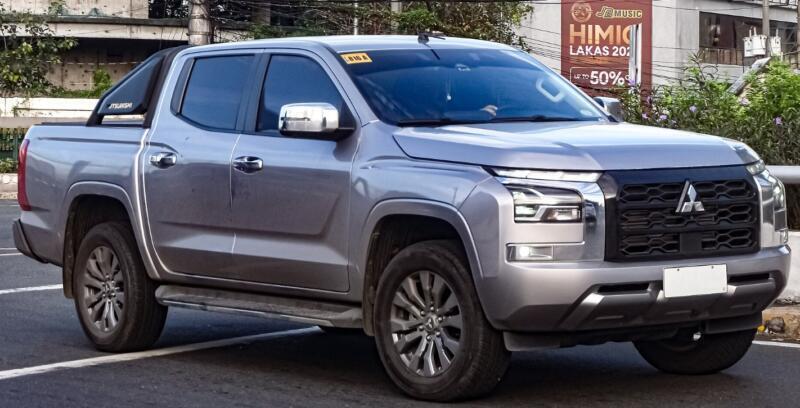
Search for Mitsubishi Triton vs Strada New Zealand, and it can look as though two closely matched utes are preparing for a head-to-head battle. One wears the Triton badge, the other carries the Strada name, and both appear to share the same Mitsubishi DNA.
Here is the twist: in most cases, the Triton and Strada are not genuine rivals.
They are essentially members of the same Mitsubishi pickup family, sold under different names depending on the country, period and distributor strategy. In New Zealand, Triton is the established local name, while Strada is more commonly associated with overseas markets, imported used vehicles and older model references.
So, comparing a Mitsubishi Triton with a Mitsubishi Strada is less like comparing a Hilux with a Ranger and more like comparing two editions of the same book. The cover may change, a few chapters may be revised, and the specifications can differ, but the underlying story remains closely connected.
That does not make the comparison pointless. Far from it. Kiwi buyers may encounter imported Stradas on used-car websites, dealer yards or private listings. Understanding the real differences can help us avoid buying the wrong specification, paying too much for a badge or assuming that parts and features are identical.
Let us clear the fog.
- Mitsubishi Triton vs Strada New Zealand at a Glance
- Are the Mitsubishi Triton and Strada the Same Ute?
- What Does Strada Mean in the New Zealand Market?
- New Zealand-New Triton vs Imported Strada
- Exterior Design: Badge Difference or Body Difference?
- Engine Performance and Diesel Power
- Transmission Differences
- Four-Wheel Drive and Off-Road Ability
- Towing Capacity
- Payload and Tray Practicality
- Cabin Comfort and Technology
- Safety Equipment
- Ride Quality on New Zealand Roads
- Fuel Economy
- Parts Availability and Servicing
- Reliability: Is the Triton Better Than the Strada?
- Warranty and Dealer Support
- Resale Value in New Zealand
- Insurance Considerations
- Which One Is Better for Farm Work?
- Which One Is Better for Family Use?
- Which One Is Better for Towing?
- Should We Buy a Mitsubishi Strada in New Zealand?
- Should We Buy a New Zealand-New Triton Instead?
- Mitsubishi Triton vs Strada Used-Buying Checklist
- Our Verdict: Mitsubishi Triton or Strada in New Zealand?
- Frequently Asked Questions
Mitsubishi Triton vs Strada New Zealand at a Glance
The quickest explanation is simple:
- Mitsubishi Triton: The official and familiar New Zealand-market name.
- Mitsubishi Strada: A name used for versions of the same pickup family in selected overseas markets.
- Mechanical relationship: Usually very close, although specifications depend on year and country.
- Best option for most Kiwi buyers: A New Zealand-new Triton with clear history and local support.
- Potential appeal of a Strada: Competitive used pricing, unusual specifications or a desirable imported trim.
- Main Strada risk: Uncertain history, market-specific equipment and more complicated parts identification.
The Triton name has been used in New Zealand since the second-generation Mitsubishi ute arrived locally in 1986. The broader pickup line has worn several badges internationally, including Forte, L200, Mighty Max and Strada.
Are the Mitsubishi Triton and Strada the Same Ute?
Broadly speaking, yes.
The Mitsubishi Strada is not an independently developed competitor to the Triton. It is another name applied to the same Mitsubishi pickup lineage in particular markets. Depending on the model year, two equivalent Triton and Strada variants may share:
- The same ladder-frame platform
- Similar diesel engines
- Comparable manual or automatic transmissions
- Related body panels
- Similar suspension architecture
- Mitsubishi four-wheel-drive hardware
- Major cabin components
- Common servicing principles
However, “the same ute” does not always mean “identical in every detail.”
A Strada produced for the Philippines, Thailand or another market may have different engine tuning, safety equipment, infotainment, emissions hardware, payload ratings, trim materials or suspension calibration from a New Zealand-new Triton.
That is where buyers can stumble. Two utes may look like twins parked side by side, yet one could have a different gearbox code, fewer airbags or a market-specific engine component hidden beneath the bonnet.
Why Mitsubishi Uses Different Names
Manufacturers rename vehicles for all sorts of reasons. Sometimes an existing badge already has strong recognition in a country. Sometimes the local distributor wants a tougher or more familiar identity. Occasionally, a name simply works better in one language than another.
Mitsubishi’s pickup has accumulated names like travel stamps on an old suitcase. The Triton badge became familiar in New Zealand and Australia, while L200 gained recognition in parts of Europe and the Strada name became established in several Asian markets.
The name changes reflect marketing geography rather than completely separate vehicle engineering.
What Does Strada Mean in the New Zealand Market?
A Strada advertised in New Zealand will often be one of three things.
An Imported Mitsubishi Pickup
The vehicle may have been originally registered in an overseas market where Mitsubishi used the Strada badge. It was then imported into New Zealand as a used vehicle.
This is the most important scenario for buyers because imported examples require closer inspection. The Strada may be perfectly good, but we should not assume it matches a locally delivered Triton specification.
A Seller Using an Overseas Model Name
Some owners, online parts sellers and informal listings use Triton and Strada interchangeably. The vehicle may actually be badged Triton, but the seller includes “Strada” to improve search visibility or describe the global model family.
An Older or Specialist Reference
Enthusiasts sometimes use Strada when discussing a particular generation, body style or foreign-market version. This can create the impression that Strada is a discontinued New Zealand model positioned below or above the Triton. Usually, it was not.
New Zealand-New Triton vs Imported Strada
This is the comparison that genuinely matters.
A New Zealand-new Triton was supplied through the official local network and specified for New Zealand sale. An imported Strada was originally built and equipped for another market before arriving here.
The mechanical bones may be similar, but ownership can feel different.
| Area | New Zealand-New Triton | Imported Strada |
|---|---|---|
| Original market | New Zealand | Overseas |
| Model recognition | High | More limited |
| Service information | Usually easier to verify | May require overseas records |
| Parts identification | Generally straightforward | VIN-specific checks may be needed |
| Safety specification | Designed for local sale | Depends on source market |
| Infotainment | Typically suitable for NZ use | Navigation or radio may need adjustment |
| Resale familiarity | Stronger | Can be more niche |
| Warranty prospects | Possible on qualifying vehicles | Usually limited or unavailable |
| Purchase price | Often higher | May be cheaper |
| Specification variety | Local trim range | Potentially unusual trims |
Exterior Design: Badge Difference or Body Difference?
When comparing equivalent generations, Triton and Strada exterior designs are usually very similar. The grille, doors, tray, cab structure and general proportions may be shared.
Differences can still appear through:
- Alternative grille finishes
- Market-specific decals
- Different alloy-wheel designs
- Sports bars or tray accessories
- Halogen rather than LED lighting
- Different side steps
- Alternative wheel-arch trim
- Chrome or black exterior packages
- Slightly different bumpers
- Different tyre specifications
We should compare the actual vehicles rather than relying on the badge.
A high-grade Strada may look more luxurious than a work-focused Triton GLX, but that does not mean Strada sits above Triton as a product line. We may simply be comparing different trim grades.
The Latest Triton Has Moved the Design Forward
The current New Zealand Triton has a broader, more squared-off appearance than its predecessor. It looks less like a rounded lifestyle ute and more like a tool carved from a solid block.
The modern design accompanies a ground-up generational update rather than a simple cosmetic facelift. New Zealand models are currently offered across work and lifestyle-focused configurations, including single-cab, club-cab, double-cab, cab-chassis and wellside options, depending on grade.
An older Strada import may therefore resemble a previous-generation Triton because that is effectively what it is—not because the Strada belongs to a cheaper parallel range.
Engine Performance and Diesel Power
Engine comparison must always begin with the model year and engine code.
Older Triton and Strada models have used several diesel engines across different generations and markets. Even when displacement appears identical, output, turbocharger arrangement, emissions equipment and software calibration may vary.
The current New Zealand Triton uses a 2.4-litre intercooled bi-turbo diesel, with published output of approximately 150kW and 470Nm. The engine is paired with a six-speed automatic in the current local range.
That combination gives the modern Triton strong low- and mid-range torque. It is not trying to behave like a sports car. Instead, the power arrives like a firm push between the shoulder blades—useful when climbing, towing or accelerating with equipment in the tray.
An imported Strada could have:
- A single-turbo version of a similar engine
- Different power and torque outputs
- A manual gearbox unavailable on an equivalent NZ model
- Older 2.5-litre diesel technology
- A petrol engine in some historical markets
- Different emissions-control equipment
- Alternative final-drive ratios
Do Not Compare Engine Size Alone
A 2.4-litre Triton and a 2.4-litre Strada are not automatically identical. We should check:
- Engine code
- Production year
- Turbocharger configuration
- Power output
- Torque output
- Transmission code
- Emissions equipment
- Source market
A badge tells us the family. The VIN and data plate tell us the truth.
Transmission Differences
Equivalent Triton and Strada versions may use similar manual or automatic transmissions, but market availability differs.
A six-speed automatic is standard across much of the current New Zealand Triton line-up. Older generations may feature five-speed or six-speed manuals and various automatic gearboxes.
During a used-vehicle inspection, we should look for:
- Smooth engagement from Park to Drive
- No excessive delay when selecting Reverse
- Clean shifts under moderate throttle
- No flare between gears
- No harsh downshifts
- Correct transmission-fluid servicing
- No warning lights
- No shudder while towing or climbing
A neglected transmission does not care whether the tailgate says Triton or Strada. Poor servicing will flatten either one like a wave hitting wet cardboard.
Four-Wheel Drive and Off-Road Ability
Four-wheel-drive hardware is one of Mitsubishi’s traditional strengths.
Selected Triton and Strada grades may use Mitsubishi’s Super Select or Super Select II system, while entry-level work models may have a simpler part-time arrangement. The exact setup varies by generation and grade.
This content may interest you! Mitsubishi Triton vs Strada New Zealand: Are They Actually Different?
Current New Zealand Triton 4WD models use Super Select II, providing flexibility across different surfaces and driving situations. Some grades also offer off-road modes and additional traction-management technology.
Why Super Select Matters in New Zealand
New Zealand roads can change character without warning. Smooth tarmac becomes loose gravel. A farm entrance turns into wet grass. A coastal track becomes soft sand. A mountain road may be dry in one section and slick in the next.
A sophisticated four-wheel-drive system can make the ute feel less nervous when conditions become unpredictable.
Still, tyres matter enormously. A capable 4WD ute wearing worn highway tyres can struggle where a basic model on suitable all-terrain rubber keeps moving.
Check What the Imported Strada Actually Has
Do not assume every Strada includes the premium Mitsubishi 4WD system. Some are:
- Two-wheel drive
- High-riding two-wheel-drive models
- Basic part-time 4WD
- Super Select-equipped higher grades
- Rear-differential-lock models
- Market-specific off-road editions
Test every drive mode and confirm that warning lamps illuminate and disappear correctly.
Towing Capacity
The current New Zealand Triton is rated to tow up to 3,500kg braked, subject to the precise model, loading conditions and legal requirements. Mitsubishi also promotes a payload of up to approximately 1,000kg across applicable configurations.
Those figures place it firmly in the mainstream one-tonne ute class.
A Strada should not automatically be assigned the same towing limit. Its legal rating may differ because of:
- Source-market certification
- Model year
- Chassis configuration
- Engine and transmission combination
- Brake package
- Gross combination mass
- Towbar approval
- Local registration documentation
Why the Compliance Plate Matters
The brochure figure is only part of the story. We need to check the vehicle’s certified limits, including:
- Gross vehicle mass
- Gross combination mass
- Maximum axle loads
- Towbar rating
- Maximum tow-ball load
- Payload remaining after passengers and accessories
A ute may advertise a 3.5-tonne towing capacity yet have limited usable payload once a heavy trailer is attached. Add passengers, a canopy, tools and camping gear, and the numbers can tighten like a belt after Christmas lunch.
Payload and Tray Practicality
The newest Triton has a widened tray and can offer around a one-tonne payload, depending on configuration.
For farmers, builders, technicians and recreational users, tray dimensions can matter more than engine output. We should ask whether the ute can carry the gear we use every week—not whether its brochure produces the most impressive number.
An imported Strada may have:
- A different wellside shape
- Alternative tie-down points
- A locally fitted flat deck
- Different tray-liner dimensions
- Lower or higher payload certification
- Accessories that reduce available carrying capacity
Accessories Quietly Consume Payload
Common additions such as bull bars, winches, canopies, roof tents, drawers, auxiliary batteries and long-range tanks all add weight.
A rugged-looking Strada loaded with accessories may have less legal payload remaining than a standard Triton. Style can become heavy surprisingly quickly.
Cabin Comfort and Technology
Cabin differences are usually determined by trim level and age, not the Triton or Strada name itself.
A higher-grade imported Strada may include leather-look trim, push-button start, upgraded climate control or decorative cabin finishes. A basic Triton cab-chassis may deliberately keep things simple.
Current higher-grade New Zealand Tritons can include features such as:
- A 9-inch infotainment display
- Wireless smartphone connectivity
- Dual-zone climate control
- Adaptive cruise control
- Multi-around-view camera
- Wireless phone charging
- Heated front seats on selected grades
- Digital driver information
- Keyless entry and push-button start
Equipment varies by model, so the official specification sheet should always win over a seller’s description.
Imported Infotainment Can Create Small Headaches
An overseas-market Strada may arrive with:
- Navigation that does not cover New Zealand
- A radio frequency range unsuitable for local stations
- Voice controls in another language
- Limited smartphone compatibility
- Different USB or connectivity software
- An aftermarket head unit hiding original wiring changes
None of these issues necessarily ruins the vehicle, but they should influence the price.
Safety Equipment
Safety is one area where assuming equivalence can be particularly risky.
Vehicles manufactured for different markets may have different numbers of airbags, driver-assistance systems and structural specifications, even when their exterior appearance is nearly identical.
The modern New Zealand Triton offers a broad driver-assistance package, with features varying by trim. Available technology includes forward collision mitigation, cross-traffic alerts, adaptive cruise control, multiple airbags and camera-based parking assistance.
An imported Strada may omit some of these features or use a different calibration.
Safety Features Worth Confirming
Before purchasing, check for:
- Autonomous emergency braking
- Lane-departure warning
- Blind-spot monitoring
- Rear cross-traffic alert
- Stability control
- Trailer stability assistance
- Side and curtain airbags
- Driver knee airbag
- Reversing camera
- Front and rear parking sensors
- Adaptive cruise control
Do not rely on steering-wheel buttons or blank dashboard panels. Confirm that the system is fitted and operational.
Ride Quality on New Zealand Roads
Utes must serve several masters. They need to carry weight, survive rough access roads, remain stable while towing and still feel civilised during the school run.
The latest Triton has received praise for smoother torque delivery, controlled body movement and improved road manners. Mitsubishi’s 2026 New Zealand updates also revised front spring rates and shock-absorber valving to improve ride and handling across the range.
An older Strada can feel noticeably different because of:
- Shorter or longer wheelbase
- Heavy-duty rear springs
- Smaller wheels with taller tyre sidewalls
- Different shock absorbers
- Wear in suspension bushes
- Aftermarket lift kits
- Incorrect tyre pressures
- Empty-tray bounce
A modified suspension is not automatically an upgrade. A poorly matched lift kit can turn a stable ute into a pogo stick wearing hiking boots.
Fuel Economy
Real-world diesel consumption depends on far more than the badge. Load, tyres, accessories, wind, terrain, driving speed and servicing condition all matter.
Some current Triton configurations have published combined consumption around the mid-eight-litre-per-100km range, although actual results can vary significantly.
An older Strada may use more fuel because of:
- Less efficient engine technology
- Different gearing
- A blocked intake or dirty sensors
- Larger all-terrain tyres
- Roof-mounted accessories
- Heavy steel protection
- Frequent short trips
- Diesel particulate filter issues
- Injector wear
For a fair comparison, calculate consumption over several full tanks rather than trusting the dashboard display after one gentle motorway trip.
Parts Availability and Servicing
A New Zealand-new Triton normally has the advantage here.
Local dealers and independent workshops are familiar with the Triton name, its common engine families and its service requirements. Registration records, service schedules and compatible parts are usually easier to trace.
Strada parts may still be readily available because many components overlap with the Triton. The challenge is identifying which exact component fits.
Parts That May Require Extra Checking
Part-number differences can arise with:
- Brake components
- Engine-management sensors
- Turbocharger hardware
- Emissions components
- Suspension springs
- Steering racks
- Body panels
- Headlights and taillights
- Infotainment units
- Wiring harnesses
- Air-conditioning parts
- Automatic transmissions
When ordering parts, use the chassis number rather than saying, “It is basically a Triton.”
“Basically” is not a part number.
Reliability: Is the Triton Better Than the Strada?
Neither name is inherently more reliable.
Reliability depends on the generation, engine, maintenance, operating conditions and previous owner. A carefully maintained imported Strada may be a much better purchase than a neglected New Zealand-new Triton.
This content may interest you! Kia Cerato vs Kia Forte New Zealand: Are They Actually Different?
We should judge the individual ute.
Used-Ute Warning Signs
Look carefully for:
- Difficult cold starting
- Excessive diesel smoke
- Turbo whistle or oil leakage
- Cooling-system pressure
- Contaminated coolant
- Injector noise
- Uneven idle
- Transmission hesitation
- 4WD warning lights
- Differential noise
- Chassis corrosion
- Cracked body mounts
- Uneven tyre wear
- Evidence of heavy towing
- Mud packed into hidden areas
- Poorly installed electrical accessories
- Incomplete service records
Farm and Work Use Is Not Automatically Bad
A work ute may have high kilometres but excellent servicing. A shiny urban ute may have skipped maintenance and spent its life making short, cold trips.
Condition and documentation beat assumptions.
Warranty and Dealer Support
A newer New Zealand-new Triton may retain manufacturer or dealer-backed warranty coverage, provided eligibility conditions are met.
An imported Strada is less likely to receive equivalent factory support in New Zealand. Even when the vehicle is relatively new, an overseas warranty may not transfer.
Before purchasing, ask:
- Is any manufacturer warranty active?
- Is the vehicle New Zealand-new?
- Does a dealer warranty apply?
- What is excluded?
- Are commercial-use claims restricted?
- Is roadside assistance included?
- Does the warranty require scheduled servicing at specific workshops?
A lower purchase price can lose its shine quickly when the first major repair arrives without support.
Resale Value in New Zealand
The Triton badge is easier for most Kiwi buyers to understand.
That familiarity may support resale because buyers can compare trim grades, pricing and specifications more easily. A Strada can still sell well, particularly if it is tidy and attractively priced, but the seller may need to explain its origin.
Imported vehicles can face questions about:
- Replacement parts
- Safety equipment
- Odometer verification
- Service records
- Insurance classification
- Previous climate and road conditions
- Language settings
- Resale demand
The Strada badge is not necessarily a financial red flag. It simply asks for more homework.
Insurance Considerations
Before buying an imported Strada, contact the insurer with the exact registration or VIN.
Some insurers may treat the ute like an equivalent Triton. Others may classify it as an import and request additional information. Premiums can depend on value, modifications, security equipment, intended use and repair-part availability.
Declare modifications such as:
- Suspension lifts
- Oversized wheels
- Bull bars
- Winches
- Engine tuning
- Canopies
- Commercial racks
- Aftermarket lighting
- Snorkels
- Modified trays
An undeclared modification can create trouble when we need the policy most.
Which One Is Better for Farm Work?
For farm work, we would usually favour the vehicle with:
- Verified maintenance
- Suitable tyres
- Low-range four-wheel drive
- A rear differential lock where needed
- A practical tray
- Minimal unnecessary electronics
- Good ground clearance
- Local parts support
- A clean chassis
- Sensible gearing
That could be a Triton or a Strada.
However, a New Zealand-new Triton offers a simpler ownership path. Local specification, easier parts identification and stronger resale familiarity make it the safer default.
A Strada may make sense when it is meaningfully cheaper and its exact specification suits the job.
Which One Is Better for Family Use?
For family duties, safety and cabin equipment move higher up the priority list.
A late-model Triton in GLXR or VRX specification will generally be easier to evaluate because local equipment lists are available. Current higher grades combine ute capability with modern infotainment, active safety systems and improved cabin comfort.
An imported Strada could offer excellent equipment, but we need to verify every feature rather than assuming overseas trim names match New Zealand grades.
For regular family use, prioritise:
- Curtain airbags
- Autonomous emergency braking
- Child-seat anchor points
- Rear-seat space
- Reversing camera
- Blind-spot monitoring
- Comfortable suspension
- Quiet highway behaviour
- Reliable smartphone connectivity
Which One Is Better for Towing?
For towing, choose the vehicle with clearly documented ratings and sufficient gross combination capacity.
A current New Zealand Triton provides a straightforward proposition, with a published maximum braked towing capacity of 3.5 tonnes on applicable models.
A Strada can also be a capable tow vehicle, but its imported specifications must be checked individually.
Never base a towing decision on visual similarity.
Should We Buy a Mitsubishi Strada in New Zealand?
A Strada can be worth buying when:
- The purchase price is attractive
- The service history is complete
- The vehicle passes an independent inspection
- The VIN confirms parts compatibility
- Safety equipment meets our needs
- The towing and payload ratings are documented
- Insurance is affordable
- The specification offers something useful
- The condition is better than comparable Tritons
We should walk away when:
- The seller cannot explain its origin
- The odometer history is unclear
- Warning lights have been concealed
- Parts identification becomes uncertain
- The vehicle has undocumented modifications
- The 4WD system does not operate correctly
- Rust or previous structural damage is present
- The price is close to a better-supported Triton
Should We Buy a New Zealand-New Triton Instead?
For most buyers, yes.
The Triton offers the same fundamental Mitsubishi ute lineage without the extra questions attached to an overseas-market badge. Local specifications are easier to research, dealers recognise the variants, and resale buyers understand what they are viewing.
As of 2026, the New Zealand Triton range spans numerous cab, tray, drivetrain and equipment combinations. Reported list prices before on-road costs run from the low-$40,000 range to just under $60,000, although promotions and dealer pricing can change.
That broad range means buyers can select a workhorse, family double cab or better-equipped 4WD without leaving the official Triton line-up.
Mitsubishi Triton vs Strada Used-Buying Checklist
Before committing to either vehicle, complete these checks:
- Confirm the VIN and original market.
- Identify the exact engine and transmission codes.
- Check whether it is New Zealand-new or imported.
- Review the complete service history.
- Verify the odometer record.
- Inspect the chassis for rust and impact damage.
- Test every 4WD mode.
- Check towing and payload documentation.
- Confirm airbag and driver-assistance equipment.
- Scan the vehicle for stored fault codes.
- Inspect for diesel leaks and cooling-system problems.
- Test the transmission from cold and hot.
- Check for uneven tyre wear.
- Confirm local availability of market-specific parts.
- Obtain an insurance quote before purchase.
- Arrange an independent pre-purchase inspection.
Our Verdict: Mitsubishi Triton or Strada in New Zealand?
The Mitsubishi Triton wins for most New Zealand buyers, but not because it is fundamentally a better-designed vehicle than the Strada.
It wins because it is the locally recognised version of the same Mitsubishi ute family.
A New Zealand-new Triton usually provides clearer specifications, easier servicing, stronger dealer familiarity and a simpler resale story. It is the path with fewer loose stones underfoot.
The Strada remains worth considering. A well-maintained example can deliver the same basic toughness and practicality, sometimes at a lower price or with an interesting specification. Yet it demands a more careful buyer. We must inspect the vehicle behind the badge, confirm its original market and resist assuming that every part or rating matches an equivalent Triton.
Ultimately, Triton vs Strada is not a traditional vehicle rivalry. It is a question of local delivery versus overseas specification, familiarity versus novelty, and convenience versus potential value.
Choose the ute with the strongest history, best condition and correct specification for the work ahead. A badge is only a badge. The machinery—and the way it has been treated—matters far more.
Frequently Asked Questions
Is the Mitsubishi Strada sold new in New Zealand?
The official Mitsubishi pickup sold new in New Zealand is called the Triton. Strada is primarily an overseas-market name, although imported Strada models may appear in the local used-vehicle market.
Is a Mitsubishi Strada mechanically identical to a Triton?
It can be closely related or nearly identical to an equivalent Triton, but specifications vary by country, year and trim. Engine tuning, safety features, emissions equipment, suspension and infotainment may differ.
Can Triton parts fit a Mitsubishi Strada?
Many mechanical and body components may be shared, especially between equivalent generations. However, parts should always be ordered using the VIN or chassis code because market-specific differences can affect compatibility.
This content may interest you!Mitsubishi Triton vs Nissan Navara New Zealand: Which Ute Wins?Is an imported Strada cheaper than a Triton in New Zealand?
It may be cheaper, but price depends on age, condition, kilometres, specification and import history. Any saving should be weighed against possible differences in warranty, parts availability, safety equipment and resale demand.
Which is the safer purchase: Triton or Strada?
A New Zealand-new Triton is generally the safer and simpler purchase because its specifications and service support are easier to verify. A Strada can still be a good buy when it has documented history and passes a thorough independent inspection.
Leave a Reply