
Ford Ranger Fuel Economy New Zealand: Real-World Guide
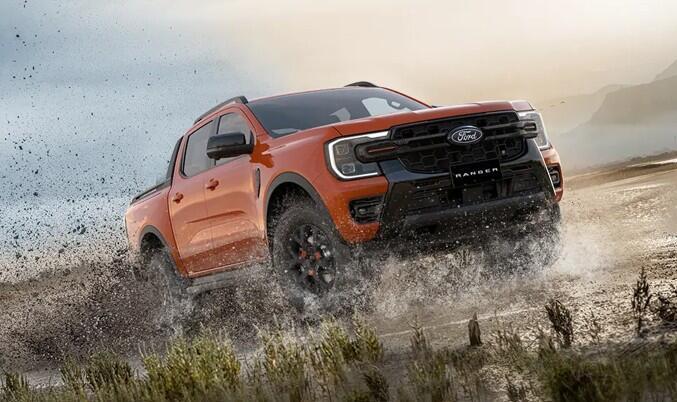
The Ford Ranger has become almost as familiar on New Zealand roads as road cones, rugby jerseys, and unpredictable weather. We see Rangers working on farms, hauling trailers between towns, carrying tools through Auckland traffic, and towing boats toward the nearest launch ramp.
Yet one question matters to nearly every prospective owner: What is the Ford Ranger fuel economy in New Zealand?
The answer is not as simple as quoting one figure from a brochure. The New Zealand Ranger range includes different engines, drivetrains, body styles, tyres, trim levels, and now plug-in hybrid technology. A rear-wheel-drive work ute will not consume fuel like a V6 Wildtrak, while a petrol Ranger Raptor belongs in an entirely different postcode when the fuel bill arrives.
Driving conditions matter just as much. Wellington hills, Auckland congestion, gravel roads, winter temperatures, roof racks, trailers, and heavy payloads can all push consumption above the official rating.
In this guide, we will break down Ford Ranger fuel economy for New Zealand drivers, explain what the numbers really mean, estimate running costs, and show how we can squeeze more kilometres from every litre.
- Ford Ranger Fuel Economy in New Zealand at a Glance
- Why Ford Ranger Fuel Consumption Varies So Much
- Ford Ranger 2.0L Single-Turbo Fuel Economy
- Ford Ranger 2.0L Bi-Turbo Fuel Economy
- Ford Ranger 3.0L V6 Diesel Fuel Economy
- Ford Ranger Raptor Fuel Economy in New Zealand
- Ford Ranger Plug-in Hybrid Fuel Economy
- Official Fuel Economy Versus Real-World Economy
- Ford Ranger Fuel Cost Calculator for New Zealand
- Do Not Forget Road User Charges
- How Towing Affects Ford Ranger Fuel Economy
- Payload and Accessory Weight
- Tyres and Fuel Consumption
- Driving Techniques That Improve Ranger Economy
- Maintenance and Fuel Consumption
- How to Calculate Ranger Fuel Economy Manually
- Which Ford Ranger Is Most Fuel-Efficient?
- Buying a Used Ranger: Economy Checks
- Is Ford Ranger Fuel Economy Good for a Ute?
- Final Thoughts on Ford Ranger Fuel Economy in New Zealand
- Frequently Asked Questions
Ford Ranger Fuel Economy in New Zealand at a Glance
Most current diesel Ford Ranger variants can generally be expected to use roughly 7.5 to 10.5 litres per 100 kilometres, depending on the engine, drivetrain, configuration, load, and driving environment.
The high-performance petrol Ranger Raptor is considerably thirstier. Its official combined consumption has been reported at approximately 11.5L/100km, although New Zealand road tests have recorded averages above 14L/100km when the vehicle is driven enthusiastically or used off-road.
At the opposite end of the spectrum, the Ranger Plug-in Hybrid has an advertised combined average of 2.8L/100km. That impressive figure depends heavily on regular charging and completing a meaningful share of each journey with electric power.
Here is a practical overview:
| Ranger version | Approximate combined consumption |
|---|---|
| 2.0L single-turbo diesel | 7.5–8.5L/100km |
| 2.0L bi-turbo diesel | 7.8–9.5L/100km |
| 3.0L V6 turbo-diesel | 8.5–10.5L/100km |
| Ranger Raptor petrol V6 | 11.5–15.0L/100km |
| Ranger Plug-in Hybrid | 2.8L/100km advertised when charged regularly |
These figures should be treated as a guide rather than a promise. The exact certified number depends on the model year and variant shown on the vehicle’s New Zealand fuel-economy label.
Why Ford Ranger Fuel Consumption Varies So Much
A Ranger is not one single vehicle wearing different badges. The lineup covers everything from practical cab-chassis workhorses to highly equipped lifestyle utes and specialised performance models.
Ford’s New Zealand range has included XL, XLT, Sport, Wildtrak, and Raptor variants, along with several body configurations and both two-wheel-drive and four-wheel-drive systems. Available powertrains have included single-turbo and bi-turbo 2.0-litre diesels, a 3.0-litre V6 turbo-diesel, and a twin-turbo petrol V6 for the Raptor.
That variety creates significant differences in fuel use.
Engine Choice
A smaller diesel engine normally consumes less fuel during light-duty driving. However, an engine constantly working near its limit may not be economical when towing or carrying a heavy load.
The 3.0-litre V6 diesel tends to use more fuel in ordinary conditions, but it provides effortless torque. Under a heavy towing load, the difference between the V6 and a smaller engine may narrow because the larger engine does not need to work as aggressively.
Two-Wheel Drive Versus Four-Wheel Drive
A 4x4 Ranger carries extra drivetrain components and usually weighs more than an equivalent 4x2 model. That additional mass and mechanical resistance can increase consumption.
For drivers who stay mainly on sealed urban roads, a 4x2 may be the economical choice. Farmers, tradies, boat owners, and rural motorists may consider the additional capability of 4x4 worth the fuel penalty.
Cab and Body Style
A single-cab chassis, super cab, and double-cab pickup do not share identical weight or aerodynamics. Accessories fitted to the body can also make a meaningful difference.
A Ranger carrying a flat deck, canopy, roof rack, bull bar, winch, drawers, spare equipment, and all-terrain tyres may consume noticeably more fuel than an unmodified showroom vehicle.
Ford Ranger 2.0L Single-Turbo Fuel Economy
The 2.0-litre single-turbo diesel is usually the economy-focused choice in the Ranger family. It is commonly associated with practical work variants rather than premium or performance-focused models.
Under mixed conditions, we may see consumption around 7.5 to 8.5L/100km when the vehicle is lightly loaded and driven smoothly.
Where the Single-Turbo Engine Works Best
This engine suits drivers who:
- Travel long distances without towing heavy trailers
- Use the Ranger as a fleet or service vehicle
- Carry moderate rather than maximum payloads
- Prioritise operating cost over outright performance
- Spend significant time on open roads
On a steady run across relatively flat sections of State Highway 1, the single-turbo diesel can be impressively restrained. Put it into stop-start traffic with a loaded tray, though, and the advantage can shrink quickly.
Possible Real-World Consumption
A careful open-road driver may achieve figures near the lower end of the range. Mixed urban and rural use may push consumption into the low-to-mid eights, while short trips, steep terrain, and heavy loads can move it closer to 9L/100km or beyond.
The dashboard average is useful, but calculating consumption manually provides a better reality check.
Ford Ranger 2.0L Bi-Turbo Fuel Economy
The 2.0-litre bi-turbo diesel aims to balance performance and efficiency. It delivers stronger acceleration and broader torque than the single-turbo engine without carrying the full appetite of the V6.
A reasonable real-world expectation is approximately 7.8 to 9.5L/100km, although accessories, tyres, traffic, and driving style can shift that number.
Why the Bi-Turbo Is a Popular Middle Ground
The bi-turbo engine feels less strained when overtaking, climbing hills, or moving a loaded ute. It offers enough strength for serious work while still returning respectable diesel consumption.
Think of it as the middle lane in the Ranger family. It is not the absolute fuel miser, nor is it the heavyweight bruiser. For many New Zealand buyers, that balance makes it the sensible everyday option.
Fuel Economy Around Town
Urban consumption can easily rise above the combined official rating. A diesel engine is generally at its most efficient once warmed up and travelling steadily. Repeated cold starts, short school runs, queues, and traffic lights are like tiny leaks in the fuel tank—not literal leaks, thankfully, but they quietly drain efficiency.
In Auckland traffic, a bi-turbo Ranger may move into the 9–11L/100km region, particularly if fitted with off-road accessories.
Fuel Economy on the Open Road
At a steady legal speed, with sensible tyre pressure and no trailer, the bi-turbo can produce much better results. Depending on terrain and weather, figures in the high sevens or low eights may be achievable.
Passing manoeuvres, strong headwinds, roof-mounted equipment, and frequent hill climbs will increase consumption.
Ford Ranger 3.0L V6 Diesel Fuel Economy
The 3.0-litre V6 turbo-diesel is designed for drivers who want strong torque, relaxed towing, and effortless performance. It is smooth, muscular, and wonderfully easy to enjoy—but additional cylinders rarely work for free.
We can generally expect approximately 8.5 to 10.5L/100km in mixed real-world use.
Is the V6 Diesel Inefficient?
Not necessarily. Efficiency must be judged against the work being performed.
An empty V6 Ranger driven through city traffic will usually consume more than a smaller diesel. When both vehicles are towing a large caravan through hilly terrain, however, the V6 may operate with less effort and fewer aggressive transmission shifts.
It may still use more fuel, but the gap may be smaller than expected.
Who Should Choose the V6?
The V6 makes sense for motorists who regularly:
- Tow boats, horse floats, caravans, or machinery
- Carry substantial payloads
- Drive through steep or demanding terrain
- Want stronger overtaking performance
- Prefer effortless power over minimum fuel use
Buying the V6 purely for short urban trips is a little like wearing hiking boots to walk through a shopping centre. It works perfectly, but we are not using the equipment where it shines.
Ford Ranger Raptor Fuel Economy in New Zealand
The Ranger Raptor is not built to win an economy competition. It is a specialised performance ute with aggressive tyres, sophisticated suspension, four-wheel drive, and a powerful twin-turbo petrol V6.
The official combined figure has been cited at around 11.5L/100km, but real-world consumption can be substantially higher. A New Zealand test reported an average of 14.4L/100km, while another test suggested that reaching the official figure would require restrained driving.
What Raptor Owners May Actually See
Depending on use, consumption may look like this:
- Gentle open-road driving: around 11.5–13L/100km
- Mixed everyday driving: around 13–15L/100km
- Heavy urban or enthusiastic driving: 15–18L/100km
- Demanding off-road use: potentially higher
The Raptor’s 3.0-litre twin-turbo EcoBoost engine produces substantial power and requires premium petrol to deliver its specified peak performance.
Performance Comes With a Price
The Raptor rewards its driver with acceleration, handling, off-road ability, and personality. Asking it to sip fuel like a fleet diesel is unfair. We do not order a large dessert and then act surprised by the calories.
Buyers should budget for the fuel consumption they are likely to achieve, not the best result imaginable on a perfect road with a feather-light accelerator.
Ford Ranger Plug-in Hybrid Fuel Economy
The arrival of the Ranger Plug-in Hybrid changes the conversation completely. Ford New Zealand advertises combined fuel consumption of 2.8L/100km, thanks to the combination of petrol and electric driving.
This content may interest you! Ford Ranger Fuel Tank Size: Capacity by Model, Year, and Market
That figure sounds extraordinary for a Ranger, but plug-in hybrid economy needs careful interpretation.
How the PHEV Achieves 2.8L/100km
A laboratory combined figure assumes that the battery begins charged and that part of the test is completed using electricity.
A driver who charges every night and completes short daily trips may use very little petrol. Someone who rarely plugs in and drives long motorway distances will rely much more heavily on the petrol engine.
In other words, the charging cable is not an optional decoration. It is the key to unlocking the PHEV’s economy.
Best Use Case for the Ranger Hybrid
The PHEV may suit a driver who:
- Can charge at home or work
- Travels a predictable daily route
- Makes frequent short or medium-distance journeys
- Still needs ute capability
- Wants to reduce petrol use without moving to a fully electric vehicle
The hybrid also retains serious utility credentials, including substantial towing capability, while offering onboard power features that can support tools or equipment. Ford’s New Zealand Ranger Hybrid material positions it as a practical fleet and work vehicle rather than merely an urban novelty.
When the Hybrid May Disappoint
The advertised figure may be difficult to approach when:
- The battery is rarely charged
- Most journeys exceed the electric range
- The vehicle constantly carries heavy loads
- It tows regularly over long distances
- It is driven aggressively
- Cold weather increases energy demand
A plug-in hybrid rewards routine. Charge it, use the electric range, and the savings can be meaningful. Ignore the plug, and we carry hybrid hardware without fully enjoying its main benefit.
Official Fuel Economy Versus Real-World Economy
Official fuel-consumption testing allows shoppers to compare vehicles under standardised conditions. It does not perfectly reproduce every Kiwi road or driving habit.
Real-world consumption can differ because of:
- Traffic density
- Road gradient
- Average speed
- Weather
- Payload
- Towing
- Tyre type
- Accessory weight
- Driver behaviour
- Trip length
- Vehicle maintenance
This does not make the official figure useless. It simply means we should treat it as a comparison benchmark rather than a guaranteed personal result.
Why Short Trips Hurt Economy
Engines use more fuel during warm-up. A five-kilometre journey may end before the diesel powertrain reaches its most efficient operating temperature.
If a Ranger records 10L/100km on repeated short trips but 8L/100km during a long highway run, nothing may be wrong. The vehicle is simply operating in two very different environments.
Why Hills Matter in New Zealand
New Zealand may look small on a map, but it rarely feels flat from behind a steering wheel.
Routes around Wellington, the Coromandel Peninsula, Central Otago, and numerous rural districts require frequent climbing. The engine must produce more power uphill, while downhill coasting or regenerative braking cannot always recover all the energy used during the climb.
Ford Ranger Fuel Cost Calculator for New Zealand
Fuel economy becomes much easier to understand when we translate litres into dollars.
The basic formula is:
Annual fuel cost = Annual kilometres ÷ 100 × L/100km × Fuel price
Suppose we drive 20,000km per year and diesel costs NZ$2.20 per litre.
Example: Efficient Diesel Ranger
At 8L/100km:
20,000 ÷ 100 × 8 × NZ$2.20 = NZ$3,520 per year
Example: V6 Diesel Ranger
At 10L/100km:
20,000 ÷ 100 × 10 × NZ$2.20 = NZ$4,400 per year
The 2L/100km difference costs approximately NZ$880 annually at that mileage and fuel price.
Example: Petrol Ranger Raptor
Suppose premium petrol costs NZ$2.80 per litre and the Raptor averages 14L/100km:
20,000 ÷ 100 × 14 × NZ$2.80 = NZ$7,840 per year
That is more than double the fuel bill of the 8L/100km diesel example.
These are illustrative calculations. Actual pump prices change frequently, and diesel owners must also account for New Zealand Road User Charges when comparing total operating costs.
Do Not Forget Road User Charges
Diesel is often cheaper at the pump than petrol, but the pump price does not tell the entire story in New Zealand.
Diesel vehicles are generally subject to Road User Charges. Therefore, we should not compare a diesel Ranger and petrol Ranger using fuel prices alone.
A fair ownership comparison should include:
- Fuel used
- Road User Charges
- Servicing
- Registration and insurance
- Purchase price
- Depreciation
- Financing costs
- Electricity costs for a PHEV
- Expected annual distance
- Resale value
The most fuel-efficient Ranger is not automatically the cheapest Ranger to own. A more expensive hybrid may save fuel but take time to recover its higher purchase price. A cheaper diesel may consume slightly more yet remain economical over the ownership period.
How Towing Affects Ford Ranger Fuel Economy
Towing can dramatically increase consumption. The size and aerodynamic shape of the trailer often matter as much as its weight.
A low trailer carrying compact machinery may create less drag than a tall caravan, even when their weights are similar.
Expected Consumption While Towing
A diesel Ranger that normally uses 8.5L/100km could rise to:
- 10–12L/100km with a light trailer
- 12–15L/100km with a large caravan or boat
- Higher figures in mountainous terrain or strong wind
These are broad examples, not certified ratings. Trailer weight, speed, tyres, transmission behaviour, and road conditions all influence the result.
Why Speed Matters So Much
Aerodynamic drag rises rapidly as speed increases. A tall caravan moving through the air is like pushing a wardrobe through a swimming pool: every extra bit of speed demands more effort.
Reducing cruising speed slightly can produce a noticeable fuel saving while also improving towing stability and safety.
Payload and Accessory Weight
Every kilogram matters, even when the Ranger is capable of carrying it.
Toolboxes, drawers, canopies, underbody protection, auxiliary batteries, tow bars, bull bars, winches, camping equipment, and larger spare wheels may remain on the vehicle every day.
Individually, each item can seem harmless. Together, they may add the weight of several passengers.
Aerodynamic Accessories
Roof-mounted equipment can be particularly costly because it adds both weight and air resistance.
Common economy reducers include:
- Roof-top tents
- Roof baskets
- Awning systems
- Permanently mounted ladders
- Large spotlights
- High canopies
- Kayaks and paddleboards
Removing unused roof equipment is one of the simplest ways to improve motorway fuel economy.
Tyres and Fuel Consumption
Tyres connect every litre of fuel to the road. Their size, construction, pressure, tread, and alignment all influence efficiency.
Aggressive mud-terrain tyres create more rolling resistance than road-focused tyres. They may also be heavier and alter the effective gearing of the vehicle.
Correct Tyre Pressure
Underinflated tyres flex more and create additional resistance. This makes the engine work harder and can cause uneven wear.
This content may interest you! Mitsubishi Triton Long Range Fuel Tank: The Complete Upgrade Guide
We should use the tyre-pressure information specified for the vehicle and adjust for load where required. The number moulded onto the tyre sidewall is generally a maximum tyre rating, not the recommended everyday vehicle pressure.
Larger Wheels Are Not Free
Oversized wheels and tyres may improve appearance or off-road clearance, but they can:
- Increase rotating mass
- Add rolling resistance
- Affect acceleration
- Alter speedometer accuracy
- Increase fuel consumption
- Place additional strain on components
A modification that looks fantastic in a car park may quietly demand payment at every fuel stop.
Driving Techniques That Improve Ranger Economy
We do not need to crawl everywhere or remove all enjoyment from driving. Small, consistent changes often produce better results than dramatic eco-driving experiments.
Accelerate Smoothly
A turbocharged engine can consume fuel quickly under heavy acceleration. Build speed progressively and allow the automatic transmission to shift without repeated throttle surges.
Look Further Ahead
Anticipating traffic allows us to ease off earlier rather than accelerating toward a red light and braking hard.
Every unnecessary burst of speed converts fuel into heat at the brakes.
Use Cruise Control Selectively
Cruise control can maintain a steady speed on flat roads. On rolling terrain, however, it may apply more throttle than a careful driver would use to hold an exact speed uphill.
Allowing a small, safe variation in speed may sometimes save fuel.
Avoid Excessive Idling
A stationary Ranger achieves exactly zero kilometres per litre. Modern engines generally do not need lengthy warm-up periods before ordinary driving.
Combine Short Journeys
Completing several errands in one warmed-up trip is usually more efficient than allowing the engine to cool between multiple short journeys.
Use the Appropriate Drive Mode
Four-wheel-drive systems and terrain modes should be used when conditions require them. Selecting unnecessary off-road settings on sealed roads may alter throttle response, transmission behaviour, or drivetrain operation in ways that do not favour economy.
Maintenance and Fuel Consumption
A Ranger in poor mechanical condition can consume more fuel without displaying a dramatic warning.
Potential causes include:
- Dirty air filters
- Incorrect engine oil
- Faulty sensors
- Dragging brakes
- Poor wheel alignment
- Underinflated tyres
- Injector problems
- Restricted diesel particulate filters
- Delayed servicing
Following the correct maintenance schedule protects both reliability and economy.
Watch for Sudden Changes
A gradual seasonal variation is normal. A sudden increase of 2–3L/100km without a change in use deserves attention.
First, check tyre pressure, driving conditions, recent accessories, and dashboard settings. If no obvious cause appears, a professional inspection may prevent a small problem from becoming an expensive one.
How to Calculate Ranger Fuel Economy Manually
Dashboard computers are convenient, but they may not be perfectly accurate.
Use the full-tank method:
- Fill the tank completely.
- Reset the trip meter.
- Drive normally.
- Refill the tank to a similar level.
- Record the litres added.
- Record the kilometres travelled.
- Divide litres by kilometres.
- Multiply the result by 100.
For example:
62 litres ÷ 720km × 100 = 8.61L/100km
Repeat the calculation over several tanks. One fill can be distorted by pump angle, towing, weather, or an unusual journey. A three-to-five-tank average provides a clearer picture.
Which Ford Ranger Is Most Fuel-Efficient?
For a driver who charges regularly and completes suitable daily journeys, the Ranger Plug-in Hybrid has the lowest advertised petrol consumption at 2.8L/100km.
Among conventional diesel models, a lighter 2.0-litre configuration—particularly a two-wheel-drive work variant—is likely to offer the lowest fuel consumption.
However, the best choice depends on the job.
Best for Urban and Short-Distance Use
The PHEV can be compelling when home or workplace charging is available.
Best for Long-Distance Economy
A 2.0-litre diesel may suit drivers covering substantial open-road kilometres without extreme towing demands.
Best for Regular Heavy Towing
The V6 diesel may justify its higher consumption through stronger, more relaxed performance.
Best for Performance
The Raptor wins the grin-per-kilometre contest, not the kilometres-per-litre contest.
Buying a Used Ranger: Economy Checks
A used Ranger’s displayed average can reveal something, but not everything. The previous owner may have reset it recently or driven under conditions completely different from ours.
During an inspection, consider:
- Service history
- Tyre type and size
- Wheel alignment
- Aftermarket suspension
- Roof accessories
- Bull bars and winches
- Towing history
- Warning lights
- Exhaust smoke
- Engine temperature
- Transmission behaviour
- Diesel particulate filter condition
A heavily modified Ranger may still be an excellent vehicle, but its economy is unlikely to match a standard factory example.
Is Ford Ranger Fuel Economy Good for a Ute?
Yes, particularly among the diesel versions, Ranger fuel economy can be reasonable for a large, capable ute.
We must compare like with like. Comparing a double-cab 4x4 Ranger with a small hybrid hatchback tells us little. The Ranger carries cargo, handles rough roads, and can tow substantial loads. That ability requires weight, ground clearance, robust components, and a large frontal area.
The better question is whether its consumption is appropriate for the work we need it to perform.
A lightly used Ranger bought mainly for commuting may feel expensive. A Ranger earning money, carrying equipment, or replacing the need for a second specialist vehicle may be entirely economical.
Final Thoughts on Ford Ranger Fuel Economy in New Zealand
Ford Ranger fuel economy in New Zealand stretches across a remarkably wide range.
A careful driver in a lighter diesel may achieve figures near 8L/100km. A V6 diesel used for towing may operate around 10L/100km or higher. A petrol Raptor can move well beyond 14L/100km in enthusiastic real-world use, while a regularly charged Ranger Plug-in Hybrid may complete daily journeys using very little petrol.
The badge on the tailgate matters, but our habits matter more than many of us realise.
Tyres, speed, payload, roof equipment, traffic, hills, towing, maintenance, and charging behaviour can transform the ownership experience. Two neighbours can own almost identical Rangers and record completely different consumption.
Before buying, we should start with three questions: What will we carry? What will we tow? Where will we drive?
Answer those honestly, and the right Ranger becomes much easier to identify. The cheapest model at the pump is not always the best workhorse, and the most powerful model is not always the smartest daily companion. The sweet spot is the Ranger that performs our real job without carrying unnecessary appetite.
Frequently Asked Questions
1. What is the average Ford Ranger fuel economy in New Zealand?
Most diesel Ford Ranger models can be expected to consume approximately 7.5–10.5L/100km, depending on engine, drivetrain, payload, tyres, traffic, and driving style. Petrol Raptor models typically use considerably more.
2. Which Ford Ranger engine uses the least fuel?
Among conventional models, a 2.0-litre diesel in a lighter two-wheel-drive configuration will generally be the most economical. The Ranger Plug-in Hybrid has the lowest advertised petrol consumption when it is charged regularly.
3. How economical is the Ford Ranger PHEV?
Ford New Zealand advertises a combined average of 2.8L/100km. Actual consumption depends heavily on charging frequency, journey length, battery use, load, and driving conditions.
4. Why is my Ford Ranger using more fuel than advertised?
Common reasons include short trips, traffic, towing, heavy payloads, low tyre pressure, aggressive tyres, roof accessories, cold weather, steep roads, fast acceleration, or mechanical issues. Official ratings are standardised comparison figures rather than guaranteed real-world results.
5. Is the Ford Ranger Raptor expensive to run in New Zealand?
It can be. Its petrol V6, performance tuning, four-wheel drive, and off-road tyres result in significantly higher consumption than diesel Ranger models. Real-world New Zealand tests have reported figures around 14L/100km or more, depending on driving style.
This content may interest you!Mitsubishi Triton vs Ford Ranger Wildtrak New Zealand: Which Ute Wins?
Leave a Reply