
Mitsubishi Triton Fuel Consumption New Zealand: Real-World Economy Guide
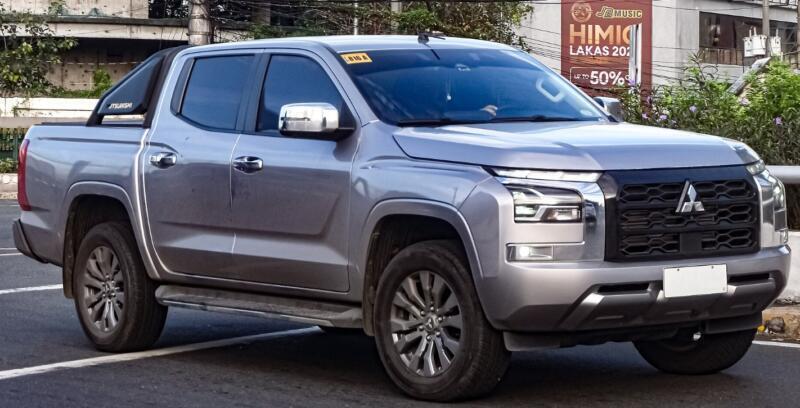
The Mitsubishi Triton fuel consumption in New Zealand is generally competitive for a diesel ute, but the number printed on a specification sheet tells only part of the story. A lightly loaded Triton cruising across the Canterbury Plains can sip fuel steadily, while the same ute towing a caravan through the Kaimai Range may drink like it has just crossed a desert.
So, what fuel economy should we genuinely expect?
Depending on the model, drivetrain, body configuration, road conditions, accessories and workload, recent New Zealand-listed Mitsubishi Triton variants sit around the high-eight to low-nine-litre-per-100-kilometre range in official combined figures. Rightcar listings, for example, show figures of approximately 8.6 L/100 km for one Triton variant and 9.3 L/100 km for another.
Real-world consumption can be lower on gentle open-road journeys or considerably higher when towing, carrying heavy equipment, driving in cities or exploring unsealed tracks.
In this guide, we will unpack the official numbers, explain what Kiwi owners may experience in everyday use and calculate how much diesel a Triton could use each year.
- Mitsubishi Triton Fuel Consumption at a Glance
- What Is the Official Mitsubishi Triton Fuel Economy in New Zealand?
- Understanding Litres per 100 Kilometres
- Real-World Mitsubishi Triton Fuel Consumption
- Mitsubishi Triton Urban Fuel Consumption
- Fuel Consumption When Towing
- Triton Fuel Consumption With a Heavy Payload
- Two-Wheel Drive Versus Four-Wheel Drive Consumption
- Automatic Versus Manual Triton Fuel Economy
- How New Zealand Terrain Affects Triton Consumption
- How Tyres Influence Mitsubishi Triton Fuel Economy
- Accessories That Increase Fuel Consumption
- Diesel Particulate Filter Regeneration and Fuel Use
- How to Measure Your Triton’s Actual Consumption
- Estimated Annual Triton Diesel Use
- How Road User Charges Affect Running Costs
- How to Improve Mitsubishi Triton Fuel Consumption
- Common Reasons for Suddenly Poor Fuel Economy
- Is the Mitsubishi Triton Economical for a Ute?
- Buying a Used Triton: Why Fuel Records Matter
- Final Verdict
- Frequently Asked Questions
Mitsubishi Triton Fuel Consumption at a Glance
For most modern diesel Tritons in New Zealand, a sensible real-world expectation is:
| Driving situation | Approximate fuel consumption |
|---|---|
| Flat open-road driving | 7.5–8.5 L/100 km |
| Normal mixed driving | 8.5–10.0 L/100 km |
| Mainly urban driving | 9.5–11.5 L/100 km |
| Carrying a moderate load | 10.0–12.0 L/100 km |
| Towing a medium trailer | 11.0–14.0 L/100 km |
| Towing a large caravan or boat | 13.0–17.0+ L/100 km |
| Slow off-road driving | 12.0–18.0+ L/100 km |
These are practical estimates rather than guaranteed figures. Two owners can drive apparently identical Tritons and record surprisingly different results.
Why? Because fuel economy behaves like the weather around Cook Strait: broadly predictable, yet highly sensitive to changing conditions.
What Is the Official Mitsubishi Triton Fuel Economy in New Zealand?
Recent New Zealand environmental listings show that Mitsubishi Triton consumption varies by exact version. Differences in cab style, transmission, drivetrain, weight and equipment can all influence the official result.
Current Rightcar examples include:
- Approximately 8.6 L/100 km for one listed Triton
- Approximately 9.3 L/100 km for another listed Triton
- Estimated annual on-road fuel costs above NZ$3,000, including Road User Charges, based on 14,000 kilometres of yearly driving and the fuel-price assumptions used by Rightcar
That spread matters. A difference of 0.7 L/100 km may sound tiny, almost like losing a few drops from the nozzle. Across 20,000 kilometres, however, it represents 140 litres of diesel.
At NZ$2.00 per litre, that becomes NZ$280 before we even consider Road User Charges.
Why Different Triton Models Use Different Amounts of Fuel
Not every Triton is carrying the same mechanical backpack. A lighter two-wheel-drive work ute does not face exactly the same resistance as a heavily equipped four-wheel-drive double cab.
Fuel economy may change according to:
- Two-wheel drive or four-wheel drive
- Single cab, club cab or double cab body
- Manual or automatic transmission
- Vehicle kerb weight
- Wheel and tyre size
- Final-drive gearing
- Tray, canopy or service-body installation
- Standard or all-terrain tyres
- Engine output and calibration
Even optional accessories can nudge the number upward.
A steel bull bar, roof rack, canopy, larger tyres and underbody protection may each have a modest individual effect. Stack them together and the Triton begins pushing through the air and rolling along the road with noticeably more resistance.
Understanding Litres per 100 Kilometres
New Zealand fuel consumption is normally expressed in litres per 100 kilometres, written as L/100 km.
The lower the number, the better the efficiency.
For example:
- 8 L/100 km means the vehicle uses 8 litres to travel 100 kilometres
- 10 L/100 km means it uses 10 litres over the same distance
- 15 L/100 km means it consumes 15 litres per 100 kilometres
We can calculate fuel consumption with this formula:
Litres used ÷ kilometres travelled × 100
Suppose our Triton uses 72 litres over 800 kilometres:
72 ÷ 800 × 100 = 9 L/100 km
That calculation is often more reliable than depending entirely on the dashboard display.
Converting Triton Economy to Kilometres per Litre
Some drivers find kilometres per litre easier to visualise.
To convert L/100 km into kilometres per litre, divide 100 by the consumption figure.
| Fuel consumption | Kilometres per litre |
|---|---|
| 8 L/100 km | 12.5 km/L |
| 9 L/100 km | 11.1 km/L |
| 10 L/100 km | 10 km/L |
| 12 L/100 km | 8.3 km/L |
| 15 L/100 km | 6.7 km/L |
A Triton averaging 9 L/100 km therefore travels roughly 11.1 kilometres per litre.
Real-World Mitsubishi Triton Fuel Consumption
Official laboratory figures give us a consistent comparison point, but roads are not laboratories.
New Zealand driving introduces hills, wind, cold mornings, gravel, wet roads, construction traffic and trailers that seem to grow heavier every time we pack them.
For ordinary mixed use, many drivers should consider 8.5 to 10.0 L/100 km a realistic target for a modern Triton in standard condition.
A driver with a gentle right foot and long open-road commutes might see numbers beginning with seven or eight. Another owner making short urban trips with a roof rack, all-terrain tyres and tools in the tray may remain above ten.
This content may interest you! Mitsubishi Triton Km per Liter: Real Fuel Economy Guide
Both results can be normal.
Open-Road Fuel Consumption
The Triton generally performs best on steady open roads where the engine can settle into a high gear.
On relatively flat routes, we may see:
Approximately 7.5 to 8.5 L/100 km
Several conditions help:
- Steady speed
- Minimal braking
- Light payload
- Proper tyre pressure
- Limited headwind
- No roof-mounted cargo
- Warm engine and drivetrain
A smooth trip between Christchurch and Ashburton may produce a far better result than a winding run across steep terrain.
Is 100 km/h Always the Most Efficient Speed?
Not necessarily.
As speed rises, aerodynamic drag increases sharply. A ute has the elegance of a toolbox compared with a streamlined hatchback, so pushing it faster through the air requires additional energy.
Many diesel utes feel particularly comfortable between roughly 80 and 95 km/h where legally and safely appropriate. At 100 km/h, the Triton can still be efficient, but strong wind, large tyres and accessories may magnify fuel use.
Mitsubishi Triton Urban Fuel Consumption
City driving is harder on fuel economy because the Triton repeatedly accelerates a substantial mass from low speed.
In Auckland, Wellington or central Christchurch traffic, a realistic figure may be:
Approximately 9.5 to 11.5 L/100 km
Heavy congestion can push it higher.
The engine may be idling while the odometer barely moves. Fuel continues flowing, yet the distance travelled remains close to zero. That is why urban consumption can climb like a hiker on the Tongariro Crossing.
Short Trips Are Particularly Inefficient
A diesel engine works best once it reaches operating temperature. Repeated journeys of only a few kilometres leave the engine, oil and transmission relatively cold.
Short-trip use may cause:
- Higher average consumption
- More frequent cold starts
- Increased diesel particulate filter challenges
- Greater moisture accumulation in the exhaust
- Faster battery discharge
- More stop-start operation
A Triton used for school runs and short errands may therefore consume significantly more fuel than one covering the same weekly distance in longer journeys.
Fuel Consumption When Towing
Towing is where the calm little dashboard number can turn into a runaway horse.
A trailer adds weight, rolling resistance and often a large aerodynamic wall behind the vehicle. The Triton must work harder when accelerating, climbing and maintaining speed into the wind.
Typical towing consumption may sit around:
- 11–13 L/100 km with a light or aerodynamic trailer
- 12–15 L/100 km with a medium caravan or boat
- 14–17+ L/100 km with a large, heavy or box-shaped trailer
The exact result depends on much more than trailer weight.
Why Trailer Shape Matters So Much
A tall caravan can use more fuel than a lower trailer of similar weight because aerodynamic drag becomes a major force at open-road speeds.
Imagine carrying a sheet of plywood into a Wellington southerly. The weight is manageable, but the wind turns it into a sail.
A high caravan behaves similarly behind a ute.
Headwinds Can Transform the Result
A strong headwind may increase consumption even if our speed, route and trailer remain unchanged.
A Triton towing at 90 km/h into a 30 km/h headwind effectively faces airflow similar to travelling at around 120 km/h in still air. That does not produce an exact one-to-one fuel penalty, but it illustrates why consumption can deteriorate dramatically.
Triton Fuel Consumption With a Heavy Payload
Loading the tray also increases energy demand, particularly during acceleration and hill climbing.
A moderate payload might raise consumption by roughly 0.5 to 1.5 L/100 km. A near-maximum working load, especially in urban or hilly conditions, can add more.
The effect is usually smaller on flat, steady roads than during repeated stop-start driving.
Permanent Weight Versus Occasional Weight
We should distinguish between a payload carried occasionally and equipment that never leaves the vehicle.
Permanent additions may include:
This content may interest you! Kia Cerato Fuel Consumption: Real-World MPG, L/100 km, and Efficiency Guide
- Toolboxes
- Drawer systems
- Steel trays
- Canopies
- Auxiliary batteries
- Recovery equipment
- Water tanks
- Camping gear
- Tow bars
- Bull bars
Carrying 250 kilograms of equipment every day means paying to accelerate that weight every day.
A good question is not simply, “Could we need this equipment?”
It is, “Do we need to transport it on every journey?”
Two-Wheel Drive Versus Four-Wheel Drive Consumption
A two-wheel-drive Triton will often have a modest efficiency advantage because it can be lighter and mechanically simpler.
A four-wheel-drive model may carry extra components such as:
- Front differential
- Transfer case
- Front driveshafts
- Additional protection
- Larger wheels or tyres
However, the difference is not always dramatic in everyday use.
Most part-time four-wheel-drive utes operate in two-wheel drive on sealed roads. The additional hardware still adds mass, but the front axle is not necessarily receiving engine power during normal dry-road driving.
Does Driving in 4WD Use More Diesel?
Generally, yes.
Engaging four-wheel drive can increase mechanical losses and may encourage slower driving over surfaces that already create substantial resistance.
Mud, sand, loose gravel and steep tracks can send consumption soaring, not only because four-wheel drive is engaged but because the engine is constantly overcoming wheel slip, soft ground and elevation changes.
Automatic Versus Manual Triton Fuel Economy
The old assumption that a manual transmission always saves fuel is no longer reliable.
Modern automatic transmissions can hold the engine in an efficient operating range and change gears consistently. A skilled manual driver may still achieve excellent economy, but an automatic can match or outperform a manual in some situations.
The practical difference depends on:
- Gear ratios
- Number of gears
- Torque-converter behaviour
- Driving environment
- Driver technique
- Vehicle load
- Towing frequency
In urban traffic, an automatic may use slightly more fuel if it spends time slipping the torque converter or selecting lower gears. On the open road, the difference may be negligible.
Which Transmission Is Better for Towing Economy?
An automatic can reduce unnecessary gear hunting when driven correctly, although steep or rolling terrain may require manual gear selection.
Allowing the transmission to repeatedly shift up and down generates heat and can waste fuel. Selecting an appropriate lower gear before a long climb may help the engine operate more comfortably.
We should not force the highest possible gear at all costs. An engine labouring at very low revolutions can consume more fuel and place additional strain on the drivetrain.
How New Zealand Terrain Affects Triton Consumption
New Zealand roads can be deceptively demanding.
A route may look short on the map yet include:
- Long climbs
- Sharp bends
- Frequent braking zones
- Rough chipseal
- Coastal winds
- Narrow passing opportunities
- Rapid elevation changes
Driving from Nelson toward the West Coast presents a different fuel challenge from travelling across flatter parts of Canterbury.
Hill Driving
Climbing increases consumption because the engine must raise the vehicle’s mass against gravity.
Descending can recover part of that loss through fuel cut-off and engine braking, but it rarely cancels the entire penalty. Braking, cornering and renewed acceleration consume additional energy.
Driving Technique on Hills
For better hill economy:
- Build momentum safely before the climb.
- Avoid sudden full-throttle acceleration.
- Let the transmission select an effective gear.
- Do not lug the engine in an excessively high gear.
- Maintain a stable speed instead of repeatedly accelerating and slowing.
- Use engine braking on descents.
- Leave enough following distance to preserve momentum safely.
The aim is smoothness, not slowness for its own sake.
How Tyres Influence Mitsubishi Triton Fuel Economy
Tyres are among the biggest variables we can change.
Aggressive mud-terrain tyres look ready to wrestle a mountain, but their weight and tread design usually increase rolling resistance. Larger tyres may also alter gearing, aerodynamics and the accuracy of the speedometer or trip computer.
A move from standard highway tyres to heavy off-road tyres may add roughly 0.5 to 2.0 L/100 km depending on size, construction and driving conditions.
Tyre Pressure Matters
Underinflated tyres flex more as they roll, converting additional energy into heat.
We should check tyre pressure:
- When the tyres are cold
- Before long trips
- Before towing
- After changing payload
- At least monthly
- Whenever consumption rises unexpectedly
The correct pressure depends on the model, tyre size and load. We should follow the vehicle placard and owner’s manual rather than copying another driver’s pressure.
Can Higher Pressure Improve Economy?
A modest load-appropriate increase may reduce rolling resistance, but excessive inflation is not a free efficiency upgrade.
This content may interest you! Driving a Toyota RAV4 on New Zealand Mountain Roads
Too much pressure can reduce grip, affect braking, worsen ride quality and cause uneven wear. The safest target is the manufacturer’s recommendation for the operating load.
Accessories That Increase Fuel Consumption
Some ute accessories influence economy more than their weight suggests.
Roof Racks and Roof Tents
Roof-mounted equipment sits directly in fast-moving air. Even an empty roof rack can create turbulence, while a roof tent presents a larger frontal area.
Removing unused roof accessories can improve open-road economy.
Canopies and Tray Covers
A well-designed canopy may have a modest effect, but shape and height matter. A tall service body can increase drag, while a smooth tonneau cover may help manage airflow over the tray.
We should avoid assuming that every tray cover automatically creates a major saving. Real-world results depend on design and driving speed.
Bull Bars and Underbody Equipment
A bull bar adds weight and may alter airflow around the front of the vehicle. Bash plates, winches and recovery points add further mass.
One accessory rarely destroys fuel economy. The cumulative package can.
Diesel Particulate Filter Regeneration and Fuel Use
Modern diesel Tritons use emissions-control systems that may include a diesel particulate filter.
During regeneration, the vehicle raises exhaust temperature to burn accumulated soot. This process can temporarily increase fuel use.
A driver may notice:
- Slightly higher idle speed
- Different engine sound
- Increased instantaneous consumption
- Hot exhaust smell
- Cooling fans operating
- Stop-start behaviour changing, where fitted
An occasional rise is not necessarily a problem.
However, frequent interrupted regeneration cycles may contribute to poor average economy. Vehicles used primarily for short journeys may struggle to complete the process as smoothly as vehicles receiving regular longer drives.
How to Measure Your Triton’s Actual Consumption
The dashboard computer is useful for monitoring trends, but the tank-to-tank method provides a stronger calculation.
The Full-Tank Method
- Fill the tank completely.
- Reset the trip meter.
- Drive normally.
- Refill at the same station or on similarly level ground.
- Record the litres added.
- Record the distance travelled.
- Divide litres by kilometres.
- Multiply the result by 100.
For example:
- Fuel added: 68 litres
- Distance travelled: 720 kilometres
68 ÷ 720 × 100 = 9.44 L/100 km
Why One Tank Is Not Enough
A single tank can be distorted by:
- Different pump shut-off points
- Vehicle angle
- Wind
- Towing
- Unusual traffic
- Regeneration events
- Temperature
- Driver changes
Track at least three to five tanks before judging the result.
A long-term average is like a wide-angle photograph; it shows the whole journey rather than one strange moment.
Estimated Annual Triton Diesel Use
Let us assume three average-consumption scenarios.
At 8.5 L/100 km
| Annual distance | Diesel used |
|---|---|
| 10,000 km | 850 litres |
| 15,000 km | 1,275 litres |
| 20,000 km | 1,700 litres |
| 30,000 km | 2,550 litres |
At 10 L/100 km
| Annual distance | Diesel used |
|---|---|
| 10,000 km | 1,000 litres |
| 15,000 km | 1,500 litres |
| 20,000 km | 2,000 litres |
| 30,000 km | 3,000 litres |
At 13 L/100 km
This figure may represent regular towing, heavy loads or demanding terrain.
| Annual distance | Diesel used |
|---|---|
| 10,000 km | 1,300 litres |
| 15,000 km | 1,950 litres |
| 20,000 km | 2,600 litres |
| 30,000 km | 3,900 litres |
The difference between 8.5 and 13 L/100 km across 20,000 kilometres is 900 litres.
That is not a rounding error. It is a serious operating expense.
How Road User Charges Affect Running Costs
Diesel vehicles in New Zealand face Road User Charges, so fuel price alone does not represent the full kilometre cost.
Rightcar’s on-road fuel-cost estimates include RUC and use a standard annual-distance assumption, which is why its displayed yearly cost may look higher than a simple diesel-price calculation. Its published examples for Triton variants exceed NZ$3,000 per year under the assumptions shown on the listings.
When comparing a diesel Triton with a petrol, hybrid or electric vehicle, we should compare:
- Fuel or electricity cost
- Road User Charges
- Registration
- Servicing
- Tyres
- Insurance
- Depreciation
- Finance costs
- Towing suitability
- Payload capability
A diesel ute may not win a simple fuel-price contest, yet it may remain the more practical tool for towing or commercial work.
How to Improve Mitsubishi Triton Fuel Consumption
We do not need to drive like a rolling roadblock. Small, repeatable habits matter more than extreme tactics.
Use Gentle Acceleration
Hard acceleration demands a large injection of fuel. Build speed progressively and allow the diesel torque to do the work.
Look Further Ahead
Anticipating traffic helps us avoid the wasteful cycle of acceleration, braking and acceleration again.
Maintain a Stable Speed
Cruise control can help on flat roads, but it may command aggressive throttle on steep hills. In rolling terrain, a skilled driver may allow a small speed variation rather than forcing the exact set speed.
This content may interest you! Ford Ranger Fuel Economy New Zealand: Real-World Guide
Remove Unnecessary Weight
Empty the tray when heavy equipment is not required.
Remove Unused Roof Accessories
Roof racks, baskets and tents create the greatest aerodynamic penalty at higher speeds.
Check Tyre Pressure
Correct pressure supports efficiency, handling and tyre life.
Service the Vehicle Properly
Dirty filters, incorrect oil, dragging brakes, alignment problems and sensor faults can all harm economy.
Use the Correct Engine Oil
Oil viscosity and specification matter. We should use the grade and standard listed in the owner’s manual.
Avoid Excessive Idling
A diesel engine idling in a driveway achieves zero kilometres per litre.
Plan Trips
Combining errands reduces repeated cold starts and unnecessary kilometres.
Common Reasons for Suddenly Poor Fuel Economy
A gradual change may relate to driving conditions or accessories. A sudden increase deserves attention.
Potential causes include:
- Low tyre pressure
- Wheel-alignment problems
- Binding brake caliper
- Dirty air filter
- Faulty airflow sensor
- Injector issue
- Boost leak
- Exhaust-system fault
- Frequent DPF regeneration
- Incorrect engine oil
- Added roof equipment
- Heavier-than-usual load
- Trailer brake drag
- Poor-quality fuel
- Change in route or driving style
When Should We Visit a Workshop?
Arrange a diagnostic inspection when poor economy appears with:
- Warning lights
- Loss of power
- Excessive smoke
- Rough running
- Difficult starting
- Strong fuel smell
- Abnormal regeneration frequency
- Rising oil level
- Unusual turbo noise
- Consumption that changes dramatically without explanation
A scan tool and physical inspection are more valuable than replacing parts based on guesses.
Is the Mitsubishi Triton Economical for a Ute?
For a ladder-frame diesel ute with towing, payload and four-wheel-drive capability, the Triton can be reasonably economical.
A mixed figure around 8.5 to 10 L/100 km is respectable for everyday use. However, we should not compare it directly with a small hybrid hatchback and conclude that the ute is inefficient. They perform entirely different jobs.
The more meaningful question is:
How economical is the Triton compared with other vehicles capable of doing the same work?
When the comparison includes towing capacity, tray space, off-road ability and payload, the Triton’s consumption becomes easier to justify.
Who Is Most Likely to Achieve Good Economy?
The best results will generally come from an owner who:
- Drives longer open-road distances
- Keeps the vehicle close to standard
- Carries light loads
- Uses road-focused tyres
- Maintains correct tyre pressure
- Accelerates smoothly
- Services the vehicle on schedule
- Avoids unnecessary roof equipment
Who Is Likely to Use More Fuel?
Higher consumption is likely for an owner who:
- Tows frequently
- Drives mainly in town
- Carries tools permanently
- Uses large mud-terrain tyres
- Has a roof tent or basket
- Drives steep rural routes
- Makes repeated short trips
- Accelerates aggressively
- Spends significant time off-road
Neither use case is wrong. We simply need realistic expectations.
Buying a Used Triton: Why Fuel Records Matter
When shopping for a used Mitsubishi Triton, ask the seller about long-term consumption.
A carefully recorded average can reveal useful information about:
- Vehicle condition
- Typical use
- Towing history
- Driver habits
- Tyre changes
- Accessory effects
- Possible mechanical faults
Do not reject a ute merely because its average display reads 12 L/100 km. It may have spent its life towing.
Likewise, do not automatically celebrate a reading of 7.5 L/100 km. The computer may have been reset shortly before the test drive.
Questions to Ask the Seller
- What type of driving produced the displayed average?
- Does the vehicle tow regularly?
- Are the tyres standard size?
- Has the ute been modified?
- When was it last serviced?
- Has it had DPF or injector work?
- Does the average change unexpectedly?
- Are maintenance receipts available?
Final Verdict
The Mitsubishi Triton fuel consumption in New Zealand typically falls around 8.5 to 10 L/100 km in balanced real-world driving, while current official listings for specific variants include figures around 8.6 and 9.3 L/100 km.
Open-road drivers may do better. Urban commuters, tradies carrying permanent loads and owners towing large trailers should expect more.
The Triton is not a tiny commuter wearing work boots. It is a genuine ute built to carry, tow and travel beyond smooth city streets. Expecting hybrid-hatchback economy would be unfair. Expecting sensible diesel efficiency, however, is completely reasonable.
Keep the tyres properly inflated, remove unused equipment, drive smoothly and calculate consumption over several full tanks. Those habits will tell us far more than one optimistic dashboard reading.
Ultimately, good fuel economy is not created by one magical trick. It comes from dozens of small decisions flowing in the same direction—like streams joining a river.
Frequently Asked Questions
1. What is the Mitsubishi Triton fuel consumption in New Zealand?
Recent official New Zealand listings show approximately 8.6 to 9.3 L/100 km for selected Triton variants. Real-world mixed driving commonly falls around 8.5 to 10 L/100 km, depending on configuration, load, accessories and driving conditions.
2. How much fuel does a Mitsubishi Triton use when towing?
A Triton may use around 11 to 14 L/100 km with a moderate trailer. A large caravan, boat or heavy box-shaped trailer can raise consumption to 14–17 L/100 km or more, especially in hills or strong headwinds.
3. Why is my Mitsubishi Triton using so much diesel?
Common reasons include urban driving, short trips, low tyre pressure, heavy accessories, oversized tyres, towing, frequent DPF regeneration, wheel-alignment problems or mechanical faults. A sudden unexplained change should be inspected.
This content may interest you! Nissan Murano Tank Size: Capacity, Range, and Refueling Guide
4. Can a Mitsubishi Triton achieve under 8 L/100 km?
It may be possible during gentle, lightly loaded open-road driving in favourable conditions. However, an average below 8 L/100 km is less likely during mixed urban use, towing or driving with off-road accessories.
5. How can I calculate my Triton’s real fuel consumption?
Fill the tank, reset the trip meter and drive normally. At the next fill, divide the litres added by the kilometres travelled and multiply by 100. Repeat the process across several tanks for a reliable average.
Leave a Reply