
Mitsubishi Triton Km per Liter: Real Fuel Economy Guide
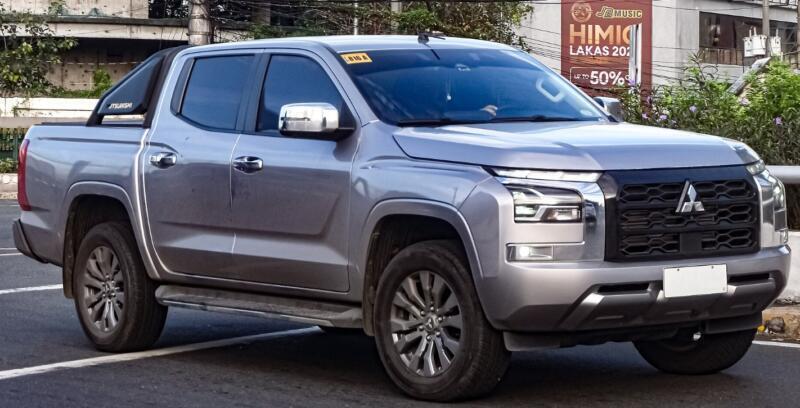
The Mitsubishi Triton km per liter figure is not one fixed number printed in permanent ink. It changes with the generation, engine, transmission, body style, drivetrain, road surface, payload, tyres, weather, and—perhaps most importantly—the person behind the wheel.
A lightly loaded diesel Triton cruising steadily on an open highway may return surprisingly respectable economy. Take that same truck, add four-wheel drive, oversized all-terrain tyres, a roof rack, a trailer, and heavy city traffic, and its thirst can grow like a small stream after a storm.
So, how many kilometres per litre does a Mitsubishi Triton actually deliver?
Across all generations, most diesel Mitsubishi Tritons generally return around 8 to 13.5 km/L, depending on their age and configuration. Older petrol models may fall closer to 5 to 8 km/L, while modern diesel versions can exceed 13 km/L under favourable test or highway conditions.
Those numbers are useful starting points, but they do not tell the whole story. In this guide, we will compare Triton generations, convert official L/100 km ratings into km/L, examine real-world consumption, and explain how to calculate the economy of your own truck accurately.
- What Does Mitsubishi Triton Km per Liter Mean?
- How to Convert L/100 Km into Km per Liter
- Mitsubishi Triton Fuel Economy by Generation
- Fifth-Generation Mitsubishi Triton Fuel Economy
- Sixth-Generation Mitsubishi Triton Km per Liter
- Diesel vs Petrol Mitsubishi Triton Economy
- 2WD vs 4WD Triton Fuel Consumption
- How Much Fuel Does a Triton Use in the City?
- Mitsubishi Triton Highway Km per Liter
- Mitsubishi Triton Fuel Consumption While Towing
- How Payload Changes Triton Km per Liter
- How Tyres Affect Mitsubishi Triton Fuel Economy
- Why Your Triton Uses More Fuel Than Expected
- DPF Regeneration and Diesel Consumption
- How to Calculate Your Triton’s Real Km per Liter
- How Far Can a Triton Travel on One Tank?
- How to Improve Mitsubishi Triton Fuel Economy
- Is the Mitsubishi Triton Fuel-Efficient?
- What Is a Good Km/L Figure for a Mitsubishi Triton?
- Conclusion
- Frequently Asked Questions
What Does Mitsubishi Triton Km per Liter Mean?
Kilometres per litre, normally written as km/L, tells us how far a vehicle can travel using one litre of fuel.
A Triton returning 10 km/L should theoretically travel 10 kilometres for every litre consumed. If its tank holds 75 litres, its mathematical range would be:
10 km/L × 75 litres = 750 kilometres
That does not mean we should expect exactly 750 kilometres before stopping. Fuel gauges are not laboratory instruments, tanks should not routinely be run completely dry, and real journeys include idling, traffic, hills, detours, and changing road conditions.
Still, km/L is an intuitive measurement. A higher number means better efficiency:
- 7 km/L: relatively heavy fuel consumption
- 9 km/L: typical for an older or heavily worked pickup
- 11 km/L: reasonable mixed-driving economy
- 13 km/L: strong economy for a diesel pickup
- 14 km/L or more: generally achievable only by efficient variants or under favourable conditions
Mitsubishi and many vehicle authorities commonly publish consumption in litres per 100 kilometres rather than km/L. Mitsubishi explains that L/100 km represents the estimated number of litres required to cover 100 kilometres; in that format, a lower figure is better.
How to Convert L/100 Km into Km per Liter
The conversion is simple:
Km/L = 100 ÷ L/100 km
For example, if a Triton has an official combined figure of 7.7 L/100 km:
100 ÷ 7.7 = 12.99 km/L
Rounded sensibly, that is approximately 13 km/L.
Here are several useful conversions:
| Fuel consumption | Equivalent efficiency |
|---|---|
| 7.4 L/100 km | 13.5 km/L |
| 7.6 L/100 km | 13.2 km/L |
| 7.7 L/100 km | 13.0 km/L |
| 8.0 L/100 km | 12.5 km/L |
| 8.5 L/100 km | 11.8 km/L |
| 9.0 L/100 km | 11.1 km/L |
| 9.5 L/100 km | 10.5 km/L |
| 10.0 L/100 km | 10.0 km/L |
| 11.0 L/100 km | 9.1 km/L |
| 12.0 L/100 km | 8.3 km/L |
| 14.0 L/100 km | 7.1 km/L |
This conversion lets us compare Tritons sold in different countries, even when manufacturers use different measurement formats.
Mitsubishi Triton Fuel Economy by Generation
The Triton has been sold under several names, including Mitsubishi L200, Strada, Forte, Mighty Max, and Dodge Ram 50, depending on the country and period.
Because engines and specifications varied considerably between markets, no generation has one universal fuel figure. The ranges below should be treated as practical estimates rather than promises for every trim.
| Triton generation | Approximate period | Typical real-world range |
|---|---|---|
| First generation | 1978–1986 | 6–10 km/L |
| Second generation | 1986–1996 | 6.5–10.5 km/L |
| Third generation | 1996–2005 | 7–11 km/L |
| Fourth generation | 2005–2015 | 7.5–11.5 km/L |
| Fifth generation | 2015–2023/24 | 9–13 km/L |
| Sixth generation | 2023 onward | 9.5–13.5 km/L |
These broad figures include petrol and diesel models, two-wheel-drive and four-wheel-drive layouts, manual and automatic transmissions, and everything from simple single-cab workhorses to heavily equipped double-cab models.
First-Generation Triton Km per Liter
The first-generation Mitsubishi pickup was simple, mechanical, and relatively light. However, early engine technology, carburettors, limited gearing, and less sophisticated fuel management prevented it from matching the efficiency of a modern common-rail diesel.
A well-maintained early diesel may produce approximately 8 to 10 km/L during gentle driving. Petrol versions can be considerably thirstier, often returning roughly 6 to 8 km/L, especially in urban use.
These trucks are now several decades old, so mechanical condition matters more than the original brochure figure. Compression loss, worn carburettors, dirty injectors, incorrect ignition timing, dragging brakes, and unsuitable tyres can all reduce efficiency.
Why Old Tritons Vary So Much
Two apparently identical classic Tritons may deliver completely different numbers. One may have a recently rebuilt engine and standard wheels, while another may be carrying a steel tray, suspension lift, and decades of mechanical wear.
When assessing an early Triton, we should treat fuel consumption as a health indicator. A sudden decline may tell us that something needs attention.
Second-Generation Triton Km per Liter
The second generation expanded the truck’s international presence and offered a broad collection of petrol and diesel engines.
Typical consumption may sit near:
- Petrol models: approximately 6 to 8.5 km/L
- Naturally aspirated diesels: approximately 8 to 10.5 km/L
- Turbo-diesel models: approximately 8.5 to 10.5 km/L
Highway driving usually gives these trucks their best chance of reaching double-digit economy. In dense traffic, however, older diesels may spend much of their time accelerating through short gears, making them less efficient than their engine size might suggest.
Third-Generation Triton Km per Liter
Third-generation Tritons brought more comfort, refinement, and equipment. They also became larger and heavier, creating a tug-of-war between improved engine technology and increased mass.
A typical 2.5- or 2.8-litre diesel model may achieve around 8 to 11 km/L, depending on the transmission and use. Petrol V6 versions commonly use significantly more fuel and may deliver approximately 5.5 to 8 km/L.
On long, steady journeys, a healthy manual diesel can be relatively economical. In city traffic or under load, the same truck may drop below 9 km/L.
The Petrol V6 Difference
A petrol V6 Triton can feel smoother and more responsive than an older diesel, but fuel economy is rarely its strongest card. It is like choosing a comfortable pair of heavy boots: pleasant in the right setting, though not designed to win a lightweight contest.
Buyers attracted by the lower purchase price of an older petrol Triton should consider the ongoing fuel cost, not merely the initial saving.
Fourth-Generation Triton Km per Liter
The fourth generation is easily recognised by its curved cabin design. Depending on the market, it used engines such as the 2.5-litre and 3.2-litre turbo diesels, alongside certain petrol options.
Diesel economy generally falls around:
- Open-road driving: 10 to 12 km/L
- Mixed use: 8.5 to 10.5 km/L
- Urban or heavy-duty use: 7.5 to 9.5 km/L
- Towing: commonly 6 to 9 km/L
The 3.2-litre diesel can be durable and strong, but we should not expect a heavily loaded automatic 4x4 to sip fuel like a compact hatchback. It carries a ladder frame, substantial driveline components, and the aerodynamics of a garden shed wearing hiking boots.
The smaller diesel engines can perform better when lightly loaded, although working them hard may erase much of that advantage.
Fifth-Generation Mitsubishi Triton Fuel Economy
The fifth-generation Triton marked a significant step in diesel refinement. Many markets received a 2.4-litre MIVEC turbo-diesel with common-rail injection, improved transmissions, and reduced engine weight.
Depending on the variant and testing system, official figures for fifth-generation models often fall roughly between 7.6 and 9.8 L/100 km, equivalent to around 10.2 to 13.2 km/L.
One specification sheet for a 2.4-litre diesel listed combined figures of 7.6 L/100 km for a manual and 8.3 L/100 km for an automatic. Those figures convert to approximately 13.2 km/L and 12.0 km/L, respectively.
A 2020 Australian brochure showed consumption figures ranging from 7.8 to 8.6 L/100 km for several diesel configurations, while a petrol entry was listed at 11.4 L/100 km. That represents approximately 11.6 to 12.8 km/L for the diesels and 8.8 km/L for the petrol version under the stated test conditions.
Real-World Fifth-Generation Consumption
In everyday use, many owners should expect something closer to:
- Light highway driving: 11.5–13.5 km/L
- Normal mixed driving: 9.5–12 km/L
- Urban driving: 8.5–10.5 km/L
- Heavy payload or towing: 6.5–9 km/L
Why the gap between the brochure and the road? Laboratory testing creates consistency, but it cannot reproduce every hill, traffic jam, headwind, trailer, roof rack, or enthusiastic right foot.
A New Zealand MY23 brochure, for example, quoted figures between 9.5 and 9.8 L/100 km across its range, equal to approximately 10.2 to 10.5 km/L. This illustrates how the same basic vehicle may carry different published numbers due to specifications, markets, and test procedures.
Manual vs Automatic Fifth-Generation Triton
A manual Triton can be slightly more economical when driven skilfully, especially on open roads. However, the driver must select gears appropriately and avoid labouring the engine.
Modern automatic versions narrow the difference. They may even perform better in certain real-world situations because the transmission can keep the engine closer to an efficient operating range.
We should therefore avoid assuming that every manual is economical or every automatic is thirsty. The specific gearbox, axle ratio, body style, and driving environment all matter.
Sixth-Generation Mitsubishi Triton Km per Liter
The sixth-generation Triton introduced a redesigned platform and a 2.4-litre diesel engine in different states of tune, including a bi-turbo configuration in certain markets.
Australian 2025 model information lists official combined figures of approximately 7.4 to 7.7 L/100 km, depending on the body and drivetrain. That equals roughly 13.0 to 13.5 km/L.
Mitsubishi Australia separately advertises fuel efficiency of approximately 7.6 L/100 km for certain double-cab and single-cab variants and 7.7 L/100 km for some club-cab models.
However, specifications differ by region. A New Zealand brochure for a newer bi-turbo Triton states 8.6 L/100 km, or approximately 11.6 km/L.
Neither figure is necessarily wrong. Variations may reflect trim, equipment, emissions calibration, tyres, drive configuration, testing rules, or regional specifications.
Expected Real-World Sixth-Generation Economy
A realistic expectation could look like this:
| Driving situation | Likely economy |
|---|---|
| Gentle open-road driving | 12–14 km/L |
| Normal combined use | 10–12.5 km/L |
| Congested city driving | 8.5–10.5 km/L |
| Off-road driving | 6.5–9.5 km/L |
| Towing a substantial trailer | 5.5–9 km/L |
These are practical ranges, not guaranteed outcomes. A new Triton pulling a caravan into a headwind will not reproduce its laboratory combined figure, regardless of how sophisticated the engine may be.
Diesel vs Petrol Mitsubishi Triton Economy
Diesel Tritons generally travel farther per litre than comparable petrol versions. Diesel engines produce strong low-speed torque, which suits a pickup carrying weight or towing.
Typical Diesel Triton Economy
Depending on generation and use, diesel models generally return:
- Older diesels: 7.5–10.5 km/L
- Mid-generation turbo diesels: 8–11.5 km/L
- Modern common-rail diesels: 9.5–13.5 km/L
- Best-case highway figures: occasionally around 14 km/L
Typical Petrol Triton Economy
Petrol models may return:
- Older four-cylinder versions: 6.5–9 km/L
- Petrol V6 models: 5.5–8 km/L
- Urban or loaded operation: sometimes below 6 km/L
- Light highway operation: potentially 8–10 km/L in favourable cases
Fuel price, annual distance, maintenance costs, emissions equipment, and the way the truck is used should all influence the choice. Better km/L does not automatically make a diesel cheaper in every ownership scenario.
This content may interest you! Mitsubishi Triton Fuel Consumption New Zealand: Real-World Economy Guide
2WD vs 4WD Triton Fuel Consumption
A two-wheel-drive Triton will normally be lighter and mechanically simpler than an equivalent four-wheel-drive version. That can translate into better fuel economy.
A 4WD model carries additional components such as a transfer case, front differential, driveshafts, and related hardware. Aggressive tyres and increased ride height may add further resistance.
The difference might be modest during steady highway driving, but it can become more noticeable in urban use.
As a broad expectation:
- A comparable 2WD Triton may use approximately 0.3 to 1.0 L/100 km less.
- A 4WD Triton with road tyres may remain relatively efficient in two-wheel-drive mode.
- A modified 4WD may consume substantially more than a standard model.
- Engaging low-range four-wheel drive off-road will reduce km/L sharply.
We should buy the drivetrain that suits the work. Saving a little fuel is no victory if the vehicle cannot safely reach the places we need to visit.
How Much Fuel Does a Triton Use in the City?
City driving is usually the enemy of pickup efficiency.
The engine repeatedly moves a heavy vehicle from rest, the transmission spends more time in lower gears, and fuel is consumed while the truck is stationary. Short journeys may end before the engine reaches its ideal operating temperature.
Typical urban figures may be:
- Modern diesel: 8.5–10.5 km/L
- Older diesel: 7–9.5 km/L
- Petrol four-cylinder: 6–8 km/L
- Petrol V6: 5–7 km/L
Extremely congested traffic can push these figures lower. A dashboard average calculated during a short trip may also exaggerate consumption, so it is better to assess several full tanks.
Mitsubishi Triton Highway Km per Liter
The open road is where the Triton can stretch its legs and show its most attractive fuel figures.
At a steady moderate speed, a modern diesel may return approximately 11.5 to 14 km/L. Older turbo-diesel models may achieve 9.5 to 12 km/L, while petrol trucks might return 7 to 10 km/L.
Speed makes a major difference. Air resistance rises rapidly as velocity increases. A pickup already presents a tall, broad shape to the wind, and accessories can worsen the situation.
Driving at 90 km/h may be notably more economical than driving at 110 or 120 km/h. The time saved by travelling faster can sometimes be bought with a surprisingly large amount of diesel.
Why Roof Accessories Matter
Roof racks, rooftop tents, awnings, ladders, canopies, and light bars disturb airflow. Each accessory may seem harmless, but together they can turn the vehicle into a parachute with number plates.
Removing unnecessary exterior equipment before a long road journey may improve both fuel economy and wind noise.
Mitsubishi Triton Fuel Consumption While Towing
Towing can reduce fuel economy more dramatically than almost any other factor.
A trailer adds:
- Extra mass during acceleration
- Greater rolling resistance
- More aerodynamic drag
- Additional load on the engine
- More frequent gear changes
- Higher cooling demands
A Triton that normally returns 11 km/L may fall to 7 or 8 km/L with a large caravan. Under severe conditions, including steep hills, high speed, or strong headwinds, consumption may drop closer to 5 or 6 km/L.
The shape of the trailer matters as much as its weight. A tall caravan can create more aerodynamic drag than a lower, heavier trailer.
A Sensible Towing Expectation
When planning fuel stops, we should not use the unloaded brochure figure. A safer approach is to reduce the normal range estimate by 25% to 40%, then adjust it after measuring actual consumption.
How Payload Changes Triton Km per Liter
A few tools in the tray may barely affect consumption. Several hundred kilograms of equipment, however, will force the engine to work harder during acceleration and climbing.
Permanent loads deserve particular attention. Some work trucks carry drawers, steel canopies, bull bars, winches, auxiliary batteries, water tanks, and recovery equipment every day. Individually, each item appears manageable. Together, they may equal the weight of several passengers.
Removing unused cargo is one of the simplest fuel-saving measures because it costs nothing.
How Tyres Affect Mitsubishi Triton Fuel Economy
Tyres influence fuel economy through weight, rolling resistance, tread design, width, diameter, and pressure.
Large mud-terrain tyres can reduce economy because they are heavier and create greater resistance. Increasing tyre diameter may also alter the accuracy of the speedometer, odometer, and dashboard consumption display.
Common tyre-related causes of poor economy include:
- Pressure below the recommended level
- Aggressive off-road tread
- Oversized wheels and tyres
- Poor wheel alignment
- Uneven wear
- Heavy steel wheels
- Incorrect load-rated pressure
We should follow the pressure recommendations suitable for the vehicle, tyre, and load. Inflating tyres far beyond a safe specification merely to chase economy can reduce grip and compromise ride quality.
Why Your Triton Uses More Fuel Than Expected
Poor consumption does not automatically mean the engine is failing. Sometimes the explanation is simple.
Common Causes of High Triton Fuel Consumption
- Frequent short journeys: The engine spends more time warming up.
- Heavy acceleration: Turbo boost and rapid acceleration demand more fuel.
- Excessive idling: Fuel is burned while no distance is covered.
- Low tyre pressure: Rolling resistance increases.
- Roof racks or rooftop tents: Aerodynamic drag rises.
- Heavy payload: The engine must move more mass.
- Towing: Weight and drag increase dramatically.
- Blocked air filter: Airflow may be restricted.
- Dirty injectors: Combustion quality may deteriorate.
- Faulty sensors: Incorrect engine data can affect fuelling.
- Dragging brakes: The engine fights unnecessary resistance.
- Poor wheel alignment: Tyres scrub against the road.
- Incorrect oil: Unsuitable viscosity can increase friction.
- DPF regeneration: Regeneration events may temporarily increase consumption.
- Four-wheel-drive use: Off-road conditions and driveline loads consume more fuel.
A gradual change may result from tyres, driving patterns, or accumulated maintenance needs. A sudden and significant increase deserves investigation.
DPF Regeneration and Diesel Consumption
Modern diesel Tritons may use a diesel particulate filter. The filter captures soot and periodically needs to burn accumulated material through regeneration.
During active regeneration, the engine may use additional fuel and idle differently. Cooling fans may continue operating, the exhaust may become hotter, and the instantaneous consumption reading may worsen.
Occasional regeneration is normal. Repeated or interrupted regeneration may indicate that the vehicle is completing too many short journeys or that the emissions system needs assessment.
We should not diagnose a DPF problem from fuel consumption alone, but unexplained high consumption combined with warning lights, frequent fan operation, or unusual idle behaviour warrants professional inspection.
How to Calculate Your Triton’s Real Km per Liter
The full-tank method is more dependable than relying entirely on the dashboard.
Full-Tank Calculation Method
- Fill the tank until the pump stops automatically.
- Reset the trip meter.
- Drive normally for several hundred kilometres.
- Return to a fuel station.
- Refill the tank in the same way.
- Record the litres added.
- Divide the kilometres travelled by the litres used.
The formula is:
Distance travelled ÷ litres added = km/L
For example:
- Distance: 620 km
- Fuel added: 58 litres
- Calculation: 620 ÷ 58
- Result: 10.69 km/L
That is the vehicle’s measured economy for that tank.
Why One Tank Is Not Enough
One refill can be distorted by:
- A different pump shut-off point
- The vehicle’s angle at the station
- Traffic conditions
- Weather
- A towing journey
- Extended idling
- An incomplete refill
Track at least three to five tanks and calculate an average. Better still, separate city, highway, towing, and off-road use.
How Far Can a Triton Travel on One Tank?
Tank size varies by model and market, although many Tritons use a tank near 75 litres. Theoretical range can be calculated by multiplying tank capacity by km/L.
| Economy | Theoretical range with 75 litres |
|---|---|
| 7 km/L | 525 km |
| 8 km/L | 600 km |
| 9 km/L | 675 km |
| 10 km/L | 750 km |
| 11 km/L | 825 km |
| 12 km/L | 900 km |
| 13 km/L | 975 km |
Mitsubishi’s current Australian information lists consumption near 7.7 L/100 km for some versions, while an automotive reference estimates a theoretical range of about 970 kilometres from a 75-litre tank at that consumption rate.
Actual usable range will be lower. We should retain a sensible reserve rather than treating the last drop as part of the journey plan.
How to Improve Mitsubishi Triton Fuel Economy
There is no magic switch, but several modest improvements can combine into a meaningful result.
Practical Fuel-Saving Tips
- Accelerate smoothly rather than aggressively.
- Maintain a steady speed where conditions permit.
- Look ahead and avoid unnecessary braking.
- Reduce long periods of idling.
- Keep tyres properly inflated.
- Remove unnecessary cargo.
- Remove unused roof racks or accessories.
- Service the engine at the correct intervals.
- Use the recommended engine oil.
- Replace dirty air and fuel filters.
- Investigate warning lights promptly.
- Keep wheel alignment within specification.
- Avoid excessive highway speed.
- Use cruise control selectively on suitable roads.
- Plan journeys to avoid repeated short trips.
The objective is not to drive painfully slowly. Smoothness matters more. Imagine carrying a full cup of coffee without a lid: gentle inputs help the truck maintain momentum without constant bursts of fuel.
Is the Mitsubishi Triton Fuel-Efficient?
For a body-on-frame pickup designed to carry loads, travel off-road, and tow substantial weight, modern diesel Tritons can be considered reasonably fuel-efficient.
A current official figure around 7.4 to 7.7 L/100 km—approximately 13 to 13.5 km/L—is competitive on paper for this type of vehicle. Real-world results will often be lower, particularly for automatic 4WD double-cab models carrying accessories or cargo.
Older Tritons should be judged within the context of their period. A 25-year-old diesel returning 9 km/L may be performing normally, even though a newer truck can travel considerably farther on each litre.
The real question is not simply, “Is the Triton economical?” It is, “Is this particular Triton economical for its engine, generation, configuration, condition, and workload?”
What Is a Good Km/L Figure for a Mitsubishi Triton?
As a practical benchmark:
- Below 6 km/L: heavy towing, severe conditions, petrol V6 use, or a possible issue
- 6–8 km/L: older petrol, heavy urban work, off-roading, or towing
- 8–10 km/L: normal for many older diesels and heavily used modern trucks
- 10–12 km/L: healthy mixed economy for many diesel Tritons
- 12–13.5 km/L: strong result, usually modern diesel or highway use
- Above 13.5 km/L: excellent, but more likely under favourable conditions
We should compare like with like. Measuring a lifted four-wheel-drive Triton with mud tyres against a standard 2WD brochure figure is like comparing hiking pace with a treadmill record. Both involve movement, but the conditions are not remotely equal.
Conclusion
The honest answer to the Mitsubishi Triton km per liter question is a range rather than a single figure.
Across all generations, diesel Tritons commonly deliver approximately 8 to 13.5 km/L, while petrol versions often sit around 5 to 9 km/L. Modern diesel models are generally the most efficient, with certain official ratings translating to roughly 13 to 13.5 km/L. Older diesels may average around 8 to 11 km/L, depending on condition and use.
Highway travel, light loads, standard tyres, and smooth driving improve the result. City congestion, towing, off-road tyres, roof accessories, and heavy payloads pull it in the opposite direction.
Most importantly, we should calculate consumption at the pump over several tanks. The brochure provides a reference; our own fuel receipts reveal the truth.
Frequently Asked Questions
1. How many kilometres per litre does a Mitsubishi Triton get?
Most diesel Mitsubishi Tritons return approximately 8 to 13.5 km/L. Older or heavily loaded vehicles may sit near the bottom of that range, while modern diesels driven gently on highways may reach the upper end. Petrol Tritons commonly return around 5 to 9 km/L.
2. What is the fuel economy of a 2.4 diesel Triton?
A 2.4-litre diesel Triton may achieve approximately 9.5 to 13.5 km/L, depending on its generation, gearbox, drivetrain, body style, and driving conditions. Official figures can exceed 13 km/L, but mixed real-world use is often closer to 10–12 km/L.
3. Is a manual Triton more economical than an automatic?
A manual can be slightly more economical in certain versions, particularly when driven smoothly. However, modern automatic transmissions are efficient and may outperform a poorly driven manual. The difference is usually less important than speed, load, traffic, tyres, and driving style.
4. Why is my Mitsubishi Triton using too much diesel?
Possible causes include city traffic, short journeys, towing, low tyre pressure, oversized tyres, heavy accessories, frequent DPF regeneration, dirty filters, injector problems, faulty sensors, brake drag, or aggressive driving. Compare several full-tank calculations before assuming a fault.
This content may interest you! Kia Cerato Fuel Consumption: Real-World MPG, L/100 km, and Efficiency Guide
5. How can I calculate my Triton’s km per litre?
Fill the tank, reset the trip meter, drive normally, and refill it. Divide the kilometres travelled by the litres required to refill the tank. For example, 600 kilometres divided by 60 litres equals 10 km/L.
Leave a Reply