
Kia Cerato Fuel Consumption: Real-World MPG, L/100 km, and Efficiency Guide
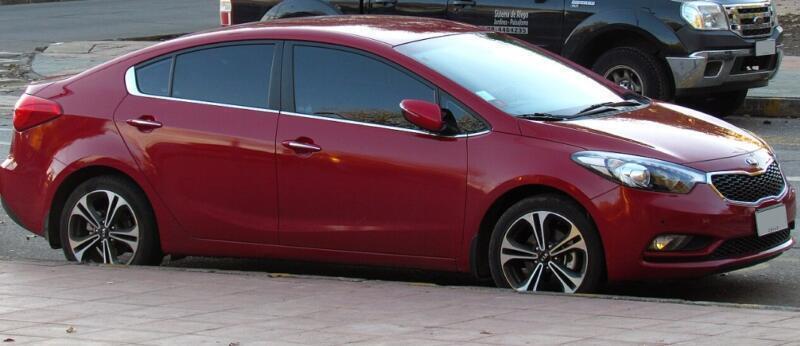
When we look at Kia Cerato fuel consumption, the numbers can seem wonderfully simple on paper. A brochure gives us a neat figure, perhaps somewhere around 7 L/100 km, and we imagine every tank will behave exactly the same way.
Then real life arrives.
Traffic lights multiply. Air conditioning runs all afternoon. We load the boot, climb hills, sit in traffic, accelerate a little harder than planned, and suddenly the fuel gauge drops faster than expected.
So, how economical is the Kia Cerato really?
The short answer is that most petrol-powered Cerato models are reasonably fuel-efficient for a compact sedan or hatchback. Depending on the generation, engine, transmission, driving environment, and market specification, many versions typically operate somewhere around 6.5 to 8.5 L/100 km in mixed driving, while highway driving can produce noticeably better figures.
But those numbers only tell part of the story.
In this guide, we'll explore Kia Cerato fuel economy in everyday conditions, compare engines and driving environments, convert consumption into MPG, explain why your Cerato may use more fuel than expected, and share practical ways to squeeze more kilometres from every litre.
- What Is the Average Kia Cerato Fuel Consumption?
- Kia Cerato Fuel Consumption in L/100 km Explained
- Kia Cerato Fuel Consumption in MPG
- Kia Cerato City Fuel Consumption
- Kia Cerato Highway Fuel Consumption
- Kia Cerato 1.6 Fuel Consumption
- Kia Cerato 2.0 Fuel Consumption
- Kia Cerato GT Fuel Consumption
- Automatic vs Manual Kia Cerato Fuel Consumption
- Why Is My Kia Cerato Using Too Much Fuel?
- How Driving Style Changes Cerato Fuel Economy
- How to Improve Kia Cerato Fuel Consumption
- Does Eco Driving Really Make a Difference?
- Why Official Kia Cerato Fuel Consumption May Differ From Reality
- How Weather Affects Kia Cerato Fuel Economy
- Does Air Conditioning Use Much More Fuel?
- Kia Cerato Fuel Consumption With Passengers and Luggage
- Kia Cerato Fuel Consumption at Idle
- How to Calculate Your Cerato's Real Fuel Consumption
- Why Your Fuel Economy Display Keeps Changing
- Kia Cerato Fuel Economy Compared With Larger Vehicles
- Is the Kia Cerato Fuel Efficient?
- Cerato Fuel Consumption vs Hybrid Cars
- What Kia Cerato Fuel Consumption Is Considered Too High?
- Can Old Engine Oil Increase Fuel Consumption?
- Does Fuel Quality Affect Cerato Consumption?
- How Far Can a Kia Cerato Travel on One Tank?
- Best Conditions for Maximum Kia Cerato Fuel Economy
- Final Thoughts on Kia Cerato Fuel Consumption
- Frequently Asked Questions About Kia Cerato Fuel Consumption
What Is the Average Kia Cerato Fuel Consumption?
For many Kia Cerato petrol models, combined fuel consumption generally falls within roughly 6.5-8.5 litres per 100 kilometres.
That translates to approximately:
- 35-43 mpg UK
- 28-36 mpg US
- Around 12-15 km per litre
Those figures should be treated as broad real-world reference points rather than guarantees because the Cerato has been sold with several engines, transmissions, generations, and regional specifications.
A naturally aspirated 2.0-litre Cerato driven through heavy city traffic will obviously behave differently from a smaller-engine version cruising steadily along a motorway.
Even two identical cars can produce surprisingly different results depending on who sits behind the wheel.
Typical Kia Cerato Fuel Economy by Driving Type
As a practical rule of thumb, we might see something like this:
| Driving Condition | Approximate Fuel Consumption |
|---|---|
| Highway cruising | 5.5-7.0 L/100 km |
| Mixed driving | 6.5-8.5 L/100 km |
| Normal city driving | 8.0-10.5 L/100 km |
| Heavy traffic | 10.0-13.0+ L/100 km |
These are general real-world ranges rather than official figures for every Cerato.
And that's important.
If our Cerato shows 9.5 L/100 km while crawling through rush-hour traffic, it doesn't automatically mean something is wrong.
Context matters enormously.
Kia Cerato Fuel Consumption in L/100 km Explained
Fuel consumption measured in L/100 km tells us how many litres of fuel the car needs to travel 100 kilometres.
Lower is better.
For example:
- 6 L/100 km = relatively efficient
- 8 L/100 km = moderate consumption
- 10 L/100 km = fairly high for a compact car
- 12 L/100 km or more = usually heavy urban use, aggressive driving, mechanical issues, or unusual operating conditions
Think of L/100 km like the size of the spoon your Cerato uses to drink fuel.
The smaller the spoon, the better.
What Does 7 L/100 km Mean?
If our Cerato averages 7 L/100 km, we'll consume approximately 7 litres for every 100 kilometres travelled.
Over 500 km:
7 × 5 = 35 litres
Over 1,000 km:
7 × 10 = 70 litres
This makes L/100 km particularly useful when planning running costs.
Is 8 L/100 km Good for a Kia Cerato?
Yes.
For a petrol-powered compact sedan or hatchback, around 8 L/100 km in mixed everyday driving is perfectly reasonable.
We might achieve less on open roads and considerably more during short urban journeys.
Kia Cerato Fuel Consumption in MPG
Some owners prefer miles per gallon rather than litres per 100 kilometres.
The complication?
There are two MPG systems.
The UK imperial gallon is larger than the US gallon, so UK MPG figures always appear higher for the same fuel consumption.
Approximate Cerato L/100 km to MPG Conversion
| L/100 km | MPG US | MPG UK |
| 5.5 | 42.8 | 51.4 |
| 6.0 | 39.2 | 47.1 |
| 6.5 | 36.2 | 43.5 |
| 7.0 | 33.6 | 40.4 |
| 7.5 | 31.4 | 37.7 |
| 8.0 | 29.4 | 35.3 |
| 9.0 | 26.1 | 31.4 |
| 10.0 | 23.5 | 28.2 |
So if our Cerato dashboard displays around 7 L/100 km, we're effectively getting roughly 34 mpg US or 40 mpg UK.
Kia Cerato City Fuel Consumption
Urban driving is where fuel economy usually suffers most.
Why?
Because engines love rhythm.
City traffic destroys that rhythm.
We accelerate, stop, idle, move 50 metres, brake again, and repeat the process until the fuel tank feels like it has developed a leak.
Expected Cerato Fuel Consumption Around Town
A Cerato might return approximately 8-10.5 L/100 km in ordinary city driving.
In particularly congested conditions, consumption can rise beyond 11 or 12 L/100 km.
Short journeys make matters worse because the engine spends more time operating before reaching its ideal temperature.
Why Short Trips Hurt Fuel Economy
Imagine driving only three kilometres at a time.
The engine starts cold.
Fuel enrichment may be higher during warm-up.
The transmission and lubricants are colder.
Then, just as everything reaches efficient operating temperature, we arrive and switch the car off.
Repeat that several times each day and fuel consumption climbs dramatically.
Kia Cerato Highway Fuel Consumption
The highway is normally where the Cerato shines.
With steady throttle input and minimal braking, many Cerato variants can achieve approximately 5.5-7 L/100 km, depending on speed and specification.
That's when the car settles into its stride like a runner finding a comfortable pace.
Why Highway Driving Uses Less Fuel
At a constant speed, we avoid repeatedly converting fuel into acceleration.
The transmission can remain in a taller gear, engine revs remain relatively low, and momentum does much of the work.
However, there's a catch.
Speed Has a Bigger Effect Than We Think
Driving at 90-100 km/h may produce noticeably better consumption than travelling at 120-130 km/h.
Air resistance rises rapidly with speed.
So although the engine may seem relaxed, it's fighting an increasingly powerful invisible wall.
If we want maximum Cerato highway fuel economy, moderate cruising speeds usually win.
Kia Cerato 1.6 Fuel Consumption
The 1.6-litre Cerato has appeared in numerous markets and configurations over the years.
Generally, the smaller engine offers respectable economy when driven sensibly.
Depending on generation, transmission, and driving style, many 1.6-litre Cerato variants may operate around:
6-8 L/100 km in mixed driving.
Highway consumption can fall closer to the lower end of that range, while congested urban driving can push it considerably higher.
Does the 1.6 Cerato Save Much Fuel?
Potentially.
But engine size alone doesn't decide consumption.
A smaller engine driven aggressively can consume more fuel than a larger engine driven gently.
That catches many drivers by surprise.
Kia Cerato 2.0 Fuel Consumption
The 2.0-litre petrol engine is one of the most familiar Cerato configurations in markets such as Australia and elsewhere.
Its appeal is straightforward: reasonable performance without entering genuinely thirsty territory.
Many 2.0-litre Ceratos typically return around 7-9 L/100 km in mixed real-world driving, depending on generation and conditions.
Cerato 2.0 Highway Economy
On longer journeys, consumption may fall toward approximately 6-7 L/100 km.
Cerato 2.0 City Economy
Urban conditions can push fuel use toward approximately 9-11 L/100 km, particularly where traffic is heavy.
Is the 2.0-Litre Cerato Economical?
We'd call it reasonably economical rather than exceptionally frugal.
It balances economy and usable everyday performance fairly well.
Drivers coming from a larger SUV may consider it impressively efficient.
Someone moving from a small hybrid?
Probably not.
Kia Cerato GT Fuel Consumption
The Cerato GT changes the personality of the car.
With turbocharged performance and stronger acceleration, efficiency becomes slightly less predictable because driving style matters even more.
Drive it calmly and fuel economy can remain respectable.
Use the turbo enthusiastically and the numbers can climb quickly.
That's the nature of performance.
More air enters the engine, more fuel follows, and suddenly that exciting burst of acceleration isn't free anymore.
Does Turbocharging Increase Fuel Consumption?
Not automatically.
A turbo engine can operate efficiently under light load.
The difference appears when we frequently request boost.
Repeated hard acceleration is essentially an invitation for the engine to burn more fuel.
Automatic vs Manual Kia Cerato Fuel Consumption
Older Cerato generations were available with both manual and automatic transmissions in certain markets.
Traditionally, manuals often held a small fuel-economy advantage.
Modern automatic transmissions have narrowed or even eliminated that difference.
Automatic Transmission
Automatic Ceratos can maintain efficient gear selection without requiring driver intervention.
However, heavy acceleration can cause frequent downshifts and higher engine speeds.
Manual Transmission
A skilled manual driver can achieve excellent fuel economy.
A driver who holds lower gears unnecessarily?
Not so much.
Fuel efficiency ultimately depends more on behaviour than the presence of a clutch pedal.
Why Is My Kia Cerato Using Too Much Fuel?
This is one of the most common questions owners ask.
Fuel consumption can rise gradually enough that we barely notice until we're suddenly visiting the petrol station far more often.
Several causes may be responsible.
1. Low Tyre Pressure
Underinflated tyres create additional rolling resistance.
Imagine trying to push a bicycle with soft tyres.
Same principle.
The engine must work harder to move the car.
2. Aggressive Acceleration
Hard acceleration sends fuel consumption soaring.
The occasional quick launch won't destroy our average, but doing it at every traffic light certainly can.
3. Heavy Stop-and-Go Traffic
Constant acceleration combined with long periods of idling is one of the fastest ways to worsen Cerato fuel consumption.
4. Dirty Air Filter
A severely restricted air filter can interfere with proper engine breathing.
Regular maintenance prevents this from becoming an issue.
5. Worn Spark Plugs
Poor ignition performance can reduce combustion efficiency and may contribute to increased fuel use.
6. Faulty Oxygen Sensor
An inaccurate oxygen sensor can interfere with the engine management system's ability to control the air-fuel mixture correctly.
7. Fuel Injector Problems
Dirty or malfunctioning injectors can affect fuel delivery and combustion quality.
8. Wheel Alignment Issues
Incorrect alignment increases tyre drag.
The difference may be subtle, but over thousands of kilometres it matters.
9. Excessive Vehicle Weight
Driving around permanently carrying heavy tools, equipment, or luggage makes the engine work harder.
10. Air Conditioning
Air conditioning requires energy from the engine.
The impact varies depending on temperature, vehicle speed, and system demand, but fuel consumption generally increases.
How Driving Style Changes Cerato Fuel Economy
Our right foot is one of the most powerful fuel-saving technologies fitted to the car.
No software update required.
Accelerate Smoothly
Moderate acceleration allows the transmission to move through gears efficiently.
Flooring the accelerator every time we're given five metres of empty road simply turns petrol into noise.
Look Ahead
Anticipating traffic allows us to reduce unnecessary braking and acceleration.
If a red light is visible 300 metres away, racing toward it accomplishes very little.
Maintain Momentum
Smooth driving is economical driving.
Every time we unnecessarily lose speed, we'll eventually have to burn fuel to regain it.
How to Improve Kia Cerato Fuel Consumption
We don't need extreme hypermiling techniques.
A handful of sensible habits can make a measurable difference:
- Maintain correct tyre pressures.
- Avoid excessive idling.
- Accelerate progressively rather than aggressively.
- Keep the engine properly serviced.
- Remove unnecessary heavy items from the car.
- Use cruise control where road conditions allow.
- Combine short errands into longer journeys.
- Avoid carrying roof racks or boxes unnecessarily.
- Maintain steady highway speeds.
- Investigate sudden changes in fuel consumption.
Consistency matters more than perfection.
Saving 0.5 L/100 km might sound insignificant, but over tens of thousands of kilometres, it adds up.
Does Eco Driving Really Make a Difference?
Absolutely.
Suppose our normal average is 8.5 L/100 km.
With smoother driving, perhaps we reduce it to 7.5 L/100 km.
Over 10,000 km:
At 8.5 L/100 km = 850 litres
At 7.5 L/100 km = 750 litres
That's 100 litres saved.
Suddenly those gentle accelerations don't look so boring.
Why Official Kia Cerato Fuel Consumption May Differ From Reality
Official laboratory tests exist to provide standardized comparisons.
They're useful.
But they aren't fortune tellers.
Real roads contain hills, traffic, wind, passengers, roadworks, weather, potholes, and drivers who occasionally feel tempted by an empty stretch of asphalt.
Factors Missing From a Perfect Laboratory Scenario
Real-world consumption may be influenced by:
- Road gradient
- Ambient temperature
- Wind direction
- Traffic congestion
- Vehicle load
- Driving speed
- Tyre pressure
- Air-conditioning use
- Fuel quality
- Maintenance condition
This explains why two Cerato owners can report completely different numbers without either person necessarily being wrong.
How Weather Affects Kia Cerato Fuel Economy
Temperature influences fuel economy more than many people realise.
Cold Weather
Cold engines take longer to reach optimal operating temperature.
Lubricants are thicker.
Tyre pressures can fall.
Cabin heating and electrical systems may place additional demand on the vehicle.
Hot Weather
Hot conditions encourage heavy air-conditioning use.
The compressor adds load, particularly during low-speed driving.
Neither extreme is ideal.
Does Air Conditioning Use Much More Fuel?
Usually, yes, although the exact penalty varies.
At lower speeds, air conditioning can noticeably increase fuel consumption.
At highway speeds, switching off the AC and opening every window isn't necessarily better because open windows increase aerodynamic drag.
So there's no need to suffer through summer like we're proving a point.
Use the AC sensibly.
Kia Cerato Fuel Consumption With Passengers and Luggage
Weight requires energy to move.
Add four adults, luggage, and a full boot, and our Cerato must work harder during acceleration and hill climbing.
The difference won't necessarily be dramatic during steady cruising, but it becomes more visible during stop-start driving.
Roof Boxes Can Be Worse Than Boot Weight
A roof box adds both mass and aerodynamic resistance.
At motorway speeds, aerodynamic drag can have a significant effect.
If we aren't using the roof box, removing it is one of the easiest fuel-saving moves available.
Kia Cerato Fuel Consumption at Idle
A stationary vehicle produces exactly zero kilometres per litre.
The engine is consuming fuel without moving us anywhere.
Short periods of idling aren't worth obsessing over.
But sitting for 20 or 30 minutes every day eventually becomes meaningful.
Should We Warm Up the Cerato Before Driving?
Modern petrol engines generally don't need extended stationary warm-ups under normal conditions.
Gentle driving after startup usually brings the engine toward operating temperature efficiently.
How to Calculate Your Cerato's Real Fuel Consumption
The dashboard computer is convenient, but calculating consumption manually gives us an excellent reference point.
Step 1: Fill the Tank
Fill the fuel tank until the pump automatically stops.
Step 2: Reset the Trip Meter
Set the trip reading to zero.
Step 3: Drive Normally
Use at least a substantial portion of the tank.
A longer sample gives us a more representative figure.
Step 4: Refill the Tank
Return to a similar fuel level.
Record how many litres were required.
Step 5: Calculate
Use:
Litres used ÷ kilometres travelled × 100
For example:
We travel 600 km and refill with 42 litres.
42 ÷ 600 × 100 = 7.0 L/100 km
Simple.
And often more revealing than obsessively watching the instant-consumption display every five seconds.
Why Your Fuel Economy Display Keeps Changing
Instant fuel consumption can jump wildly.
Accelerate uphill and we may briefly see an alarming number.
Coast downhill and the display may approach zero.
Neither represents average efficiency.
Focus on Long-Term Average Consumption
A better measurement comes from:
- Several hundred kilometres
- Multiple journeys
- Similar seasonal conditions
- Several full tanks
Fuel economy is a trend, not a snapshot.
Kia Cerato Fuel Economy Compared With Larger Vehicles
One reason the Cerato remains attractive is its relatively modest running cost compared with larger vehicles.
A midsize petrol SUV might consume 9-12 L/100 km in conditions where a Cerato could return somewhere around 7-9 L/100 km.
That difference compounds over time.
If we drive 20,000 km annually, even a 2 L/100 km advantage means saving approximately 400 litres of fuel each year.
Not bad for simply choosing a smaller car.
Is the Kia Cerato Fuel Efficient?
For a conventional petrol compact car, yes.
The Cerato isn't usually trying to beat hybrids at their own game.
Instead, it offers a practical middle ground.
We get:
- Reasonable fuel economy
- Straightforward petrol powertrains
- Useful cabin space
- Practical boot capacity
- Comfortable highway performance
- Manageable running costs
That combination explains much of the model's popularity.
Cerato Fuel Consumption vs Hybrid Cars
Hybrid vehicles have a major advantage in urban traffic because they can recover braking energy and reduce engine operation at low speeds.
A conventional Cerato cannot perform the same trick.
Consequently, the efficiency difference is often largest around town.
On the highway, however, the gap may shrink because conventional petrol engines operate efficiently under steady loads.
Should Fuel Economy Alone Decide Which Car We Buy?
Probably not.
Purchase price, maintenance costs, reliability, insurance, depreciation, available charging or servicing infrastructure, and expected annual mileage all matter.
A vehicle saving one litre per 100 km isn't automatically cheaper overall if it costs thousands more to purchase.
What Kia Cerato Fuel Consumption Is Considered Too High?
There's no universal threshold.
But suppose a well-maintained Cerato previously averaged 7.5 L/100 km and suddenly begins averaging 11 L/100 km under identical conditions.
That's worth investigating.
Watch for Sudden Changes
Potential warning signs include:
- Consumption rising dramatically
- Rough idle
- Check-engine light
- Poor acceleration
- Strong fuel smell
- Black exhaust smoke
- Difficulty starting
- Misfiring
High fuel consumption combined with other symptoms deserves mechanical diagnosis.
Can Old Engine Oil Increase Fuel Consumption?
Poorly maintained oil can contribute to increased mechanical resistance and reduced efficiency.
The effect isn't normally enormous in isolation, but maintenance issues rarely travel alone.
A neglected Cerato might simultaneously have:
- Old oil
- Dirty filters
- Low tyre pressure
- Worn spark plugs
- Poor wheel alignment
Individually, each issue may seem minor.
Together, they're like tiny holes in a bucket.
Does Fuel Quality Affect Cerato Consumption?
The correct fuel specification matters.
Using fuel with an octane rating appropriate for the engine helps ensure proper operation.
Higher octane fuel doesn't automatically provide better economy if the engine wasn't designed to benefit from it.
In other words, expensive fuel isn't magic potion.
Follow the owner's manual for the specific engine and market.
How Far Can a Kia Cerato Travel on One Tank?
Driving range depends on fuel-tank capacity and consumption.
Suppose a Cerato has roughly 50 litres of usable fuel and averages 7 L/100 km.
Theoretical range:
50 ÷ 7 × 100 = approximately 714 km
Realistically, we shouldn't plan to use every last drop.
Traffic, detours, weather, hills, and reserve capacity can all shorten practical range.
Example Driving Range
At 6 L/100 km:
Approximately 833 km per 50 litres
At 7 L/100 km:
Approximately 714 km
At 8 L/100 km:
Approximately 625 km
At 10 L/100 km:
Approximately 500 km
That's why improving fuel economy by even one litre per 100 km can noticeably extend the time between fuel stops.
Best Conditions for Maximum Kia Cerato Fuel Economy
Want the Cerato to produce its best numbers?
The ideal recipe looks something like this:
A warm engine, moderate temperature, correctly inflated tyres, flat road, minimal traffic, light vehicle load, steady speed, gentle acceleration, and little wind.
Of course, reality rarely serves us that perfect cocktail.
So rather than chasing an unrealistic number, compare the vehicle against its own long-term average.
That's far more useful.
Final Thoughts on Kia Cerato Fuel Consumption
The Kia Cerato fuel consumption figures make it a sensible everyday petrol car for drivers who want reasonable efficiency without moving into a hybrid or tiny city car.
Most versions can deliver respectable consumption when maintained correctly and driven smoothly. Highway journeys are generally where the Cerato performs best, while heavy city traffic naturally pushes consumption higher.
Rather than becoming obsessed with achieving one magic number, we should pay attention to trends.
If our Cerato consistently averages around 6.5-8.5 L/100 km during mixed driving, we're generally within a believable range for many versions. Urban consumption can be higher, while relaxed highway driving can pull the number downward.
And remember: fuel economy isn't controlled by the engine alone.
Our tyres, route, traffic, weather, maintenance habits, air-conditioning use, vehicle load, and right foot all join the conversation.
Treat the accelerator like a volume control rather than an on/off switch, keep the Cerato properly maintained, and the fuel tank will usually reward us by stretching those kilometres a little farther.
Frequently Asked Questions About Kia Cerato Fuel Consumption
1. What is the average fuel consumption of a Kia Cerato?
Many Kia Cerato petrol models typically consume around 6.5-8.5 L/100 km in mixed real-world driving, although the exact figure depends on engine, model year, transmission, traffic, climate, and driving style.
2. Is 7 L/100 km good for a Kia Cerato?
Yes. Around 7 L/100 km is a good consumption figure for a conventional petrol Cerato, particularly during mixed or highway-heavy driving. It equals approximately 33.6 mpg US or 40.4 mpg UK.
3. Why is my Kia Cerato using so much petrol?
Heavy traffic, short trips, low tyre pressure, aggressive acceleration, air-conditioning use, excess weight, worn spark plugs, sensor problems, poor alignment, or maintenance issues can all increase consumption. A sudden unexplained increase should be investigated.
4. How can I reduce Kia Cerato fuel consumption?
Maintain correct tyre pressures, accelerate smoothly, avoid unnecessary idling, keep the engine serviced, remove excess weight, combine short journeys, maintain steady highway speeds, and avoid repeated hard acceleration.
5. Is the Kia Cerato economical for long-distance driving?
Generally, yes. Highway driving is often where the Cerato achieves its best efficiency, with some versions capable of approximately 5.5-7 L/100 km under favourable conditions.
This content may interest you! Mitsubishi Triton Fuel Consumption New Zealand: Real-World Economy Guide
Leave a Reply