
Ford Ranger Fuel Tank Size: Capacity by Model, Year, and Market
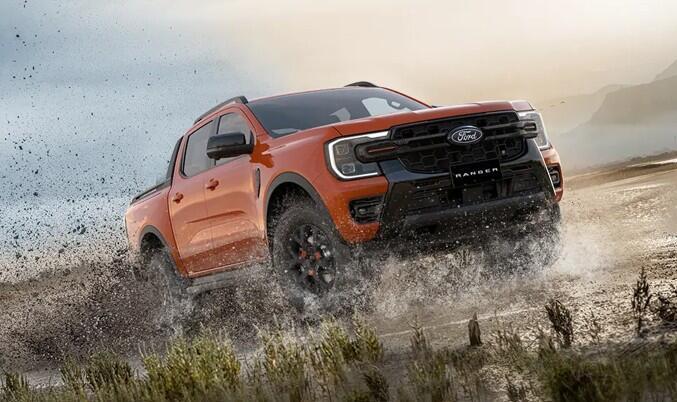
The Ford Ranger fuel tank size is not one fixed number shared by every Ranger ever built. Depending on the country, generation, engine, trim, and powertrain, capacity can range from about 70 litres to 130 litres, while current American models generally carry between 18.7 and 20.3 US gallons.
That is quite a spread, isn’t it?
A standard diesel Ranger sold in the United Kingdom, Australia, or New Zealand commonly uses an 80-litre tank. The plug-in hybrid Ranger has a smaller 70-litre petrol tank, while the heavy-duty Ranger Super Duty available in Australia steps up to a huge 130-litre long-range tank. In the United States, the 2026 Ranger uses an 18.7-gallon tank with the regular engines and a 20.3-gallon tank in Ranger Raptor form.
So, before planning a road trip or calculating fuel costs, we need to know exactly which Ranger we are dealing with. Let’s break everything down without turning the subject into a mechanical textbook.
- Quick Ford Ranger Fuel Tank Size Overview
- What Is the Standard Ford Ranger Fuel Tank Capacity?
- Ford Ranger Fuel Tank Size in Litres
- Ford Ranger Fuel Tank Size in Gallons
- 2026 Ford Ranger Fuel Tank Size in the United States
- Ford Ranger Fuel Tank Size in the United Kingdom
- Ford Ranger Fuel Tank Size in Australia
- Ford Ranger Fuel Tank Size in New Zealand
- Ford Ranger Raptor Fuel Tank Capacity
- Ford Ranger PHEV Fuel Tank Size
- Ford Ranger Fuel Tank Size by Generation
- How Far Can a Ford Ranger Travel on One Tank?
- What Reduces Ford Ranger Driving Range?
- Why Can’t We Refill the Full Advertised Capacity?
- How Much Does a Full Ranger Tank Weigh?
- Does the Ford Ranger Have a Fuel Reserve?
- Can We Install a Larger Ford Ranger Fuel Tank?
- How to Find Your Exact Ford Ranger Tank Size
- Fuel Tank Size Versus Usable Capacity
- Common Ford Ranger Fuel Tank Problems
- Is a Bigger Ranger Fuel Tank More Economical?
- Tips for Getting More Range From a Ranger Tank
- Ford Ranger Fuel Tank Size: Final Thoughts
- Frequently Asked Questions
Quick Ford Ranger Fuel Tank Size Overview
Here are the most useful current figures at a glance:
| Ford Ranger version | Fuel tank capacity |
|---|---|
| Standard global diesel Ranger | Approximately 80 litres |
| Ford Ranger PHEV/Hybrid | 70 litres |
| 2026 US Ranger 2.3L EcoBoost | 18.7 US gallons |
| 2026 US Ranger 2.7L EcoBoost V6 | 18.7 US gallons |
| 2026 US Ranger Raptor 3.0L V6 | 20.3 US gallons |
| Australian Ranger Super Duty | 130 litres |
| Many previous-generation Rangers | Approximately 80 litres |
Ford’s official 2026 US specifications list 18.7 gallons for Rangers fitted with the 2.3-litre or 2.7-litre EcoBoost engines and 20.3 gallons for the 3.0-litre Ranger Raptor. Ford documentation for conventional UK-market Rangers lists an 80-litre diesel tank, while the New Zealand Ranger Hybrid brochure specifies 70 litres.
These figures are nominal capacities. The amount we can physically add at a petrol station may be slightly different because fuel can remain in the tank, filler neck, lines, and reserve area.
What Is the Standard Ford Ranger Fuel Tank Capacity?
For many international Ranger models, especially diesel versions sold across the United Kingdom, Australia, New Zealand, South Africa, Europe, and parts of Asia, the familiar answer is:
80 litres, or roughly 21.1 US gallons
Ford’s UK specifications have repeatedly listed an 80-litre diesel fuel tank for conventional Ranger variants. Earlier New Zealand specifications also show 80 litres across multiple Ranger configurations, reinforcing why this number appears so frequently in owner discussions and used-vehicle listings.
However, we should not automatically apply that number to every model. North American Rangers, hybrid versions, and heavy-duty editions can be substantially different.
Think of “80 litres” as the Ranger’s common global baseline, not an iron rule carved into the chassis.
Ford Ranger Fuel Tank Size in Litres
Most countries outside the United States describe vehicle capacity in litres. The most common Ranger capacities are:
- 70 litres: Ranger plug-in hybrid models
- 80 litres: Many standard diesel and petrol Rangers
- Approximately 71–77 litres: Certain North American versions after converting from US gallons
- 130 litres: Australian Ranger Super Duty
An 18.7-US-gallon tank converts to approximately 70.8 litres, while 20.3 US gallons equals roughly 76.8 litres.
This explains an apparent contradiction we often see online. One website may say that a new Ranger holds 18.7 gallons, while another says it holds 80 litres. Both can be correct because they may describe vehicles from different markets.
Ford Ranger Fuel Tank Size in Gallons
Gallons create another layer of confusion because a US gallon and an imperial gallon are not the same.
Common conversions
| Capacity in litres | US gallons | Imperial gallons |
|---|---|---|
| 70 L | 18.5 US gal | 15.4 Imp gal |
| 80 L | 21.1 US gal | 17.6 Imp gal |
| 130 L | 34.3 US gal | 28.6 Imp gal |
The distinction matters. An owner in Britain may casually refer to gallons while thinking in imperial units, whereas an American specification always uses US gallons.
US gallon versus imperial gallon
One US gallon equals approximately 3.785 litres. One imperial gallon equals approximately 4.546 litres.
That difference is large enough to throw a driving-range calculation off course. It is like using miles in one half of a journey and kilometres in the other—the numbers may look familiar, but they are not speaking the same language.
2026 Ford Ranger Fuel Tank Size in the United States
The 2026 American Ranger lineup separates fuel capacity by engine.
2.3L EcoBoost Ford Ranger
The 2.3-litre four-cylinder Ranger has an 18.7-US-gallon fuel tank, equal to approximately 70.8 litres.
2.7L EcoBoost V6 Ford Ranger
The available 2.7-litre EcoBoost V6 also uses an 18.7-US-gallon tank.
3.0L Ford Ranger Raptor
The Ranger Raptor receives the largest tank in the US lineup at 20.3 US gallons, or approximately 76.8 litres.
These figures come directly from Ford’s technical specifications for the 2026 Ranger.
Why does the Raptor get more? Its powerful twin-turbocharged engine, all-terrain tyres, wider body, and performance-focused configuration can consume fuel more rapidly. The additional capacity helps protect usable driving range, although it does not turn the Raptor into an economy champion.
Ford Ranger Fuel Tank Size in the United Kingdom
Conventional UK Ford Ranger models have commonly been equipped with an 80-litre diesel tank. This applies broadly to familiar versions such as XL, XLT, Wildtrak, Limited, and several double-cab configurations, although exact equipment depends on model year. Ford’s published Ranger documentation explicitly lists the diesel tank at 80 litres.
For UK buyers, this is particularly useful because an 80-litre tank gives the Ranger respectable motorway range. Yet filling from almost empty can be painful when diesel prices rise. The tank feels generous on a long journey and enormous when we reach the payment screen.
UK Ranger plug-in hybrid capacity
The Ranger PHEV changes the formula. Because the hybrid system can cover some trips using electricity, it does not require the same conventional fuel capacity as a diesel-only version.
Hybrid specifications in markets such as New Zealand show a 70-litre petrol tank, and Ranger PHEV configurations in other markets follow the same basic powertrain concept. Exact UK specifications should still be checked against the current brochure or owner’s manual because Ford can revise market equipment.
Ford Ranger Fuel Tank Size in Australia
For many Australian Ranger variants, the widely recognised standard is an 80-litre tank. This is a practical fit for a ute that may travel far beyond urban fuel stations.
Australia also receives one of the most interesting exceptions.
Ford Ranger Super Duty 130-litre tank
The Australian Ranger Super Duty has a 130-litre long-range fuel tank. Ford presents this as part of the vehicle’s heavy-duty and remote-area capability, alongside features designed for demanding loads, towing, and difficult terrain.
A 130-litre tank is not merely an enlarged version of the usual Ranger setup. It changes how we can plan remote travel. With sensible fuel consumption, it can add hundreds of kilometres between stops.
Of course, more fuel also means more weight. Diesel weighs approximately 0.83 to 0.85 kilograms per litre, so filling a 130-litre tank can add more than 100 kilograms of fuel. That weight must be considered when calculating payload, accessories, occupants, and trailer ball load.
Ford Ranger Fuel Tank Size in New Zealand
Previous-generation New Zealand Rangers commonly used an 80-litre fuel tank. Ford’s 2019 model-year specification sheet, for example, lists 80 litres across several Ranger variants.
The newer Ranger Hybrid is different.
New Zealand Ford Ranger Hybrid tank size
Ford New Zealand specifies a 70-litre petrol tank for the 2025.50 model-year Ranger Hybrid in XLT, Wildtrak, and Stormtrak forms. The same brochure lists an estimated electric driving range of 43 kilometres under its test conditions.
That smaller tank should not automatically be interpreted as reduced practicality. A plug-in hybrid can complete some journeys using stored electrical energy, so petrol capacity represents only one half of its energy picture.
Ford Ranger Raptor Fuel Tank Capacity
The answer depends heavily on where the Raptor is sold.
US Ranger Raptor
The 2026 US Ranger Raptor holds 20.3 US gallons, equivalent to approximately 76.8 litres.
International Ranger Raptor
Some international Ranger Raptor generations and configurations have used an 80-litre tank. However, specifications can differ between petrol and diesel Raptors, as well as between markets and model years.
This is one area where assumptions can become expensive. A driver calculating range from an 80-litre figure when the vehicle actually carries around 77 litres may expect another 20 or 30 kilometres that simply are not there.
Always check the manual for the exact vehicle rather than trusting a generic Ranger Raptor figure.
Ford Ranger PHEV Fuel Tank Size
The plug-in hybrid Ranger uses a 70-litre petrol tank in the published New Zealand specification. It combines a 2.3-litre EcoBoost petrol engine, an electric motor, and an 11.8-kWh usable battery.
At first glance, 70 litres may not seem dramatically smaller than an 80-litre diesel tank. The real difference appears in everyday use.
When we charge regularly and complete shorter journeys in electric mode, the petrol engine may stay off for significant portions of the week. That means the distance between fuel-station visits can be far greater than a simple tank-size comparison suggests.
Why the hybrid has a smaller tank
Packaging plays a major role. The battery, electric motor, charging equipment, fuel system, exhaust, four-wheel-drive hardware, and spare-wheel area all compete for space under the vehicle.
Vehicle design is a game of three-dimensional chess. Add a battery in one area and something else may need to shrink, move, or disappear.
Ford Ranger Fuel Tank Size by Generation
Exact capacities can vary within a generation, but several broad patterns help us understand the Ranger’s history.
Older compact Rangers
Early compact Rangers, particularly US-market trucks from the 1980s, 1990s, and 2000s, used different tank sizes depending on cab, wheelbase, drivetrain, and whether an auxiliary tank was fitted.
Some models could be ordered with dual-tank arrangements. As a result, old Ranger capacity should never be guessed from the badge alone.
T6 Ranger generation
The globally successful T6 Ranger commonly used an 80-litre tank in many markets. This includes numerous 2.2-litre, 3.2-litre, and 2.0-litre diesel models.
The 80-litre figure became so closely associated with the Ranger that many owners still treat it as universal.
Current-generation Ranger
The current Ranger family is more diverse:
- US mainstream models: 18.7 US gallons
- US Raptor: 20.3 US gallons
- Many global diesel versions: around 80 litres
- Ranger PHEV: 70 litres
- Australian Super Duty: 130 litres
Today’s Ranger is less like one global truck and more like a family sharing the same surname.
How Far Can a Ford Ranger Travel on One Tank?
Tank capacity tells us how much fuel the vehicle carries. Fuel consumption tells us how far that fuel may take us.
The basic calculation is:
Estimated range = tank capacity ÷ fuel consumption × 100
Suppose our diesel Ranger holds 80 litres and averages 9.0 L/100 km:
80 ÷ 9.0 × 100 = approximately 889 km
That is the theoretical figure. In practice, we should not plan to use every final drop.
Example Ranger driving ranges
| Tank and consumption | Theoretical range |
|---|---|
| 80 L at 8 L/100 km | 1,000 km |
| 80 L at 10 L/100 km | 800 km |
| 80 L at 12 L/100 km | 667 km |
| 70 L at 9 L/100 km | 778 km |
| 130 L at 12 L/100 km | 1,083 km |
These are mathematical examples, not guaranteed official driving ranges.
A realistic planning figure is usually lower because we need to allow for traffic, hills, weather, towing, idling, detours, and the fuel reserve.
What Reduces Ford Ranger Driving Range?
A Ranger can empty its tank surprisingly quickly when working hard. Common range-reducing factors include:
- Heavy towing
- Roof racks and bulky accessories
- Oversized all-terrain or mud-terrain tyres
- Low tyre pressure
- Strong headwinds
- Frequent short journeys
- Off-road driving in low-range gearing
- Long periods of idling
- Aggressive acceleration
- Heavy payloads
- Regeneration activity on diesel models
- Cold weather
- High-speed motorway driving
Towing is often the biggest shock. A Ranger that feels reasonably economical when unladen can become thirsty once it is pulling a large caravan or trailer. Aerodynamic drag rises like an invisible wall, especially at motorway speeds.
Range while towing
When towing, it is safer to calculate range using actual towing consumption from previous trips, not the dashboard’s unladen average.
For example, an 80-litre Ranger using 15 L/100 km while towing has a theoretical range of approximately 533 kilometres. Allowing a sensible reserve may reduce the practical refuelling interval to around 430–470 kilometres.
That margin matters when stations are far apart.
Why Can’t We Refill the Full Advertised Capacity?
Owners sometimes become concerned when an “80-litre” Ranger accepts only 68 or 72 litres after the low-fuel warning appears.
Usually, nothing is wrong.
The low-fuel light does not mean empty
Manufacturers design a reserve into the system. When the warning appears, several litres may remain.
Fuel remains in the tank and lines
Unless the engine has run completely dry—which we should avoid—the tank still contains fuel.
The advertised figure is nominal
A published capacity is not a promise that exactly that amount will enter during every fill.
Pump shut-off varies
Fuel-pump nozzles react to vapour and splashback. One nozzle may stop earlier than another, especially if fuel is flowing quickly.
Do not repeatedly top off
Once the pump clicks off, repeatedly forcing in more fuel is not a good habit. Overfilling can affect the vapour-control system on petrol models and may cause spills when the fuel expands.
How Much Does a Full Ranger Tank Weigh?
Fuel has meaningful mass.
Approximate values are:
- Petrol: around 0.74 kg per litre
- Diesel: around 0.83–0.85 kg per litre
Using approximate figures:
| Tank | Approximate fuel weight |
|---|---|
| 70 L petrol | 52 kg |
| 80 L diesel | 66–68 kg |
| 130 L diesel | 108–111 kg |
This matters because fuel is included in operating weight calculations. A large aftermarket tank may increase travel range but can reduce the payload available for tools, passengers, camping equipment, or trailer ball weight.
A long-range tank is like carrying an extra passenger made entirely of diesel.
Does the Ford Ranger Have a Fuel Reserve?
Yes, but the exact usable reserve varies by model, calibration, driving angle, and operating conditions.
We should not treat the reserve as bonus fuel. It is a safety buffer.
Driving repeatedly with the level extremely low can create several problems:
- The vehicle may run out sooner on hills or steep tracks
- Fuel can move away from the pickup during sharp inclines
- The fuel pump may receive less cooling on some petrol systems
- Air can enter a diesel fuel system if the tank runs dry
- Sediment or contamination may become more likely to reach the pickup
Modern Rangers estimate distance to empty using recent consumption. If we suddenly attach a trailer or begin climbing steep terrain, the remaining-range figure can fall much faster than expected.
Can We Install a Larger Ford Ranger Fuel Tank?
Aftermarket long-range tanks are popular among touring, farming, mining, and overlanding owners. Depending on the model, replacement tanks may provide significantly more capacity than the factory unit.
However, bigger is not automatically better.
Benefits of a long-range tank
- Fewer fuel stops
- Better remote-area flexibility
- Ability to avoid expensive isolated stations
- Greater towing confidence
- Reduced need for loose fuel containers
Possible disadvantages
- Additional weight
- Reduced payload
- Installation cost
- Compatibility issues with exhaust or suspension components
- Changes to ground clearance
- Inaccurate fuel-gauge readings if poorly calibrated
- Legal or inspection requirements
- Potential warranty complications
Check compatibility carefully
The tank must suit the exact cab, wheelbase, engine, exhaust system, drivetrain, and model year. A tank designed for a double-cab diesel may not fit a petrol Raptor, PHEV, cab-chassis model, or vehicle with a particular spare-wheel arrangement.
Professional installation is usually worth the expense. Fuel systems are not the place for improvisation.
How to Find Your Exact Ford Ranger Tank Size
The safest method is to check information tied to the individual vehicle.
1. Read the owner’s manual
Look under:
- Capacities and specifications
- Fuel and refuelling
- Technical specifications
- Maintenance information
Ford itself recommends checking the owner’s manual for older vehicles because capacity varies by model and year.
2. Use the VIN
A Ford dealer can identify the original factory configuration from the vehicle identification number.
3. Check the model-year brochure
Make sure the brochure matches the country and model year. A 2026 American Ranger brochure is not reliable evidence for a 2026 Australian Ranger.
4. Inspect the vehicle history
Used Rangers may have aftermarket replacement or auxiliary tanks.
5. Do not rely solely on registration year
A vehicle registered in one year may belong to the previous model year. Manufacturers also introduce running changes within a production cycle.
Fuel Tank Size Versus Usable Capacity
The words “tank capacity” and “usable fuel” are often treated as identical, but they are not always perfectly interchangeable.
Nominal tank capacity refers to the tank’s designed volume. Usable capacity is the quantity the vehicle can reliably draw under normal conditions.
Space may be left for fuel expansion, vapour control, manufacturing tolerances, and safe operation. This is why filling an apparently empty tank does not always match the brochure down to the final decimal point.
The difference is usually not a reason for concern unless the vehicle consistently accepts far less fuel than expected and also displays inaccurate gauge readings or unusually short range.
Common Ford Ranger Fuel Tank Problems
The tank itself is generally straightforward, but related components can cause trouble.
Fuel gauge reading incorrectly
A failing sender unit, wiring fault, software issue, or float obstruction may cause the gauge to stick or move unpredictably.
Tank difficult to fill
If the pump repeatedly clicks off, possible causes include:
- A blocked vent
- A damaged filler neck
- Incorrect nozzle position
- Fuel foaming
- A vapour-system fault
- An aftermarket tank installation issue
Fuel smell
A persistent petrol or diesel smell deserves immediate attention. Possible sources include the filler neck, capless-filler seal, hoses, tank, injectors, or fuel lines.
Fuel leaking underneath
Do not drive a Ranger with an active fuel leak. Turn off the engine, keep ignition sources away, and arrange professional inspection.
Is a Bigger Ranger Fuel Tank More Economical?
Not directly.
A larger tank does not make the engine use less fuel. Carrying additional fuel actually increases vehicle weight, although the effect on consumption may be modest during ordinary driving.
The financial advantage comes from flexibility. With more capacity, we may fill up where fuel is cheaper instead of being forced to buy at an isolated station.
Still, carrying 40 or 50 unnecessary litres around town every day makes little sense for many drivers. Range is valuable only when we actually need it.
Tips for Getting More Range From a Ranger Tank
A few simple habits can stretch the distance between fuel stops:
- Maintain the recommended tyre pressures.
- Remove unnecessary cargo.
- Avoid carrying unused roof racks or rooftop equipment.
- Accelerate smoothly.
- Reduce cruising speed when practical.
- Plan fuel stops before entering remote areas.
- Keep the engine properly serviced.
- Use the correct engine oil.
- Check wheel alignment if tyres wear unevenly.
- Record real-world towing consumption.
The greatest gains usually come from speed, load, tyre choice, and aerodynamic drag—not from tiny driving tricks.
Ford Ranger Fuel Tank Size: Final Thoughts
The most common Ford Ranger fuel tank size is approximately 80 litres, particularly among global diesel models. But that number is only the beginning.
Current US Rangers use an 18.7-gallon tank, while the US Ranger Raptor carries 20.3 gallons. The Ranger plug-in hybrid uses a 70-litre petrol tank, and Australia’s Ranger Super Duty pushes capacity to an impressive 130 litres.
The lesson is simple: model name alone is not enough. Check the year, market, engine, trim, cab style, and vehicle history before relying on any capacity figure.
Once we know the real tank size, we can calculate range intelligently, plan safer towing trips, estimate fuel costs, and avoid that uneasy moment when the nearest station is a tiny dot somewhere beyond the horizon.
Frequently Asked Questions
1. How many litres does a Ford Ranger fuel tank hold?
Many international diesel Ford Rangers hold approximately 80 litres. The Ranger PHEV uses a 70-litre petrol tank, while the Australian Ranger Super Duty carries 130 litres. Exact capacity depends on the model year and market.
2. How many gallons does a Ford Ranger hold?
The 2026 US Ford Ranger holds 18.7 US gallons with the 2.3L and 2.7L engines. The Ranger Raptor holds 20.3 US gallons. An 80-litre international tank equals approximately 21.1 US gallons.
3. How far can a Ford Ranger travel on a full tank?
An 80-litre Ranger averaging 9 L/100 km has a theoretical range of roughly 889 km. Actual range will be lower or higher depending on towing, traffic, speed, terrain, tyres, weather, and payload.
4. Why does my 80-litre Ranger take less than 80 litres?
The low-fuel warning normally appears while fuel is still in the tank. Fuel also remains in the lines and reserve area, while pump nozzles may shut off before the tank reaches its nominal maximum.
5. Does the Ford Ranger Raptor have a larger fuel tank?
In the United States, yes. The 2026 Ranger Raptor holds 20.3 gallons, compared with 18.7 gallons for Rangers equipped with the 2.3L or 2.7L engines. International specifications may differ.
This content may interest you! Kia Cerato Fuel Tank Capacity: Size, Range, and Refueling Guide
Leave a Reply