
Kia Cerato Fuel Tank Capacity: Size, Range, and Refueling Guide
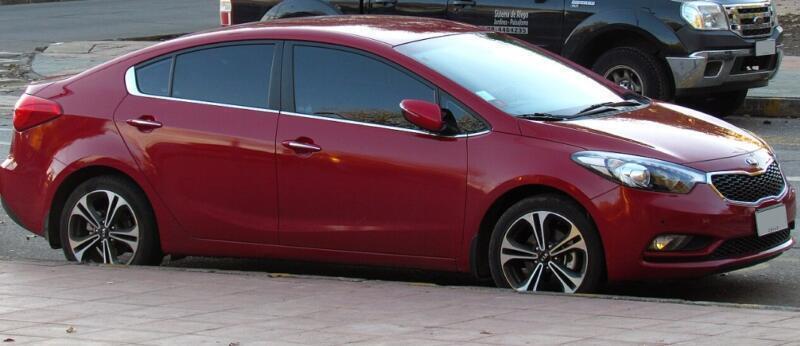
The Kia Cerato fuel tank capacity is one of those specifications that seems simple until we actually start comparing model years, engines, fuel economy figures, and real-world driving range. How much petrol does a Cerato hold? Is 50 litres standard across every generation? How far can we realistically travel before needing another fill-up?
For many Kia Cerato models, particularly recent petrol-powered versions, the answer is pleasantly straightforward: the fuel tank holds approximately 50 litres, equivalent to around 13.2 US gallons or 11 UK gallons. Kia's published specifications for the Cerato 2.0 MPI, for example, list a 50-litre fuel tank.
Still, tank size only tells half the story. A 50-litre tank can feel surprisingly generous on an efficient highway journey and rather small when we spend every morning crawling through congested city traffic. Fuel consumption, driving style, engine choice, tire pressure, weather, payload, and even air-conditioning use can significantly influence the distance we cover between petrol stations.
In this guide, we'll examine the Kia Cerato fuel tank size, gallons conversion, estimated driving range, differences between generations, reserve-fuel behavior, refueling habits, and the factors that determine how far a full tank actually takes us.
- What Is the Kia Cerato Fuel Tank Capacity?
- Does Every Kia Cerato Have a 50-Litre Fuel Tank?
- How Far Can a Kia Cerato Travel on a Full Tank?
- How Much Fuel Is Left When the Kia Cerato Fuel Light Comes On?
- Why Does the Fuel Pump Stop Before 50 Litres?
- Should We Top Off a Kia Cerato After the Pump Clicks?
- How Much Does It Cost to Fill a Kia Cerato?
- What Affects Kia Cerato Fuel Range?
- Kia Cerato 1.6 vs 2.0 Fuel Range
- Kia Cerato Highway Fuel Range
- How to Calculate Your Cerato's Actual Fuel Consumption
- How to Get More Distance From a 50-Litre Tank
- Is a 50-Litre Tank Good for a Compact Sedan?
- Why Your Cerato's Distance-to-Empty Changes So Quickly
- Is It Bad to Run a Kia Cerato Nearly Empty?
- Kia Cerato Fuel Tank Capacity and Road Trips
- What If Your Cerato Accepts More Than 50 Litres?
- Kia Cerato Fuel Tank Capacity: Key Numbers at a Glance
- Final Thoughts on Kia Cerato Fuel Tank Capacity
- Frequently Asked Questions
What Is the Kia Cerato Fuel Tank Capacity?
The Kia Cerato fuel tank capacity is generally 50 litres on many of the model generations commonly found around the world.
That equals approximately:
- 50 litres
- 13.2 US gallons
- 11.0 Imperial gallons
Kia's specification information for the 2.0 MPI Cerato confirms a 50-litre tank, making this a useful reference figure for modern versions of the sedan.
However, we shouldn't automatically assume that every Cerato ever produced has precisely the same usable capacity. Specifications can vary slightly according to the model year, body style, country, engine, emissions equipment, and regional homologation.
Whenever exact capacity matters—for example, when diagnosing an unusual refill quantity—the owner's manual or specification sheet for our particular vehicle should take priority.
Kia Cerato Fuel Tank Capacity in Litres
For the typical modern Cerato:
| Measurement | Approximate Capacity |
|---|---|
| Fuel tank | 50 L |
| US gallons | 13.2 gal |
| UK gallons | 11.0 gal |
| Approximate fuel weight when full | 35–38 kg |
That 50-litre figure puts the Cerato squarely in familiar compact-sedan territory. It isn't carrying an enormous reservoir around underneath the rear seats, yet the tank is large enough to provide respectable touring range without adding unnecessary vehicle weight.
Kia Cerato Fuel Tank Capacity in Gallons
Drivers in countries where gallons are more familiar may find the metric specification slightly abstract.
A 50-litre Kia Cerato fuel tank equals roughly 13.2 US gallons.
The Imperial gallon used historically in the UK is larger than the US gallon, so the same tank works out at approximately 11 UK gallons.
That distinction matters when comparing fuel-economy figures. A vehicle returning 35 mpg in the United States is not performing identically to one advertised at 35 mpg using Imperial gallons.
Does Every Kia Cerato Have a 50-Litre Fuel Tank?
Many do, but we'd avoid treating 50 litres as a universal specification for every Cerato produced.
The Cerato has been sold across numerous markets and generations, sometimes under closely related names such as the Kia Forte. Engines, body styles, emissions hardware, and regional specifications have changed along the way.
Nevertheless, 50 litres has been an especially common figure.
Kia Cerato Fuel Tank Capacity by Generation
A practical overview looks something like this:
| Cerato era | Typical tank capacity | Notes |
| Early Cerato models | Around 50–55 L depending on version | Regional variation matters |
| Cerato/Forte 2009–2013 | Commonly around 50 L | Check exact market specification |
| Cerato 2013–2018 | Generally around 50 L | Engine and country can affect specifications |
| Cerato 2019 onward | Commonly 50 L | 2.0 MPI specification lists 50 L |
| Latest market-specific Cerato versions | Around 50 L | Verify VIN/model-year specifications |
The lesson is simple: 50 litres is a strong general answer, but the specific model year always wins.
Why Specifications Can Differ Between Countries
Manufacturers don't necessarily sell identical vehicles everywhere.
A Cerato delivered to Australia might have a slightly different equipment package from a car sold in South Korea, New Zealand, Latin America, or the Middle East. Even when the badge and engine displacement appear identical, regional emissions rules and production changes can create small technical differences.
That's why we should use broad capacity tables as guidance rather than treating them like immutable laws of physics.
How Far Can a Kia Cerato Travel on a Full Tank?
Here's where things become much more interesting.
A 50-litre tank does not automatically equal a fixed number of kilometres. Fuel range depends heavily on consumption.
The basic calculation is:
Driving range = fuel capacity ÷ fuel consumption × 100
Suppose our Cerato consumes 7.0 L/100 km.
With a 50-litre tank:
50 ÷ 7 × 100 = approximately 714 km
That's the mathematical maximum based on the consumption figure. In everyday use, we'd normally refuel before consuming absolutely every litre.
Estimated Kia Cerato Full-Tank Range
Consider several possible fuel-consumption scenarios:
| Average consumption | Theoretical range with 50 L |
| 5.5 L/100 km | 909 km |
| 6.0 L/100 km | 833 km |
| 6.5 L/100 km | 769 km |
| 7.0 L/100 km | 714 km |
| 7.5 L/100 km | 667 km |
| 8.0 L/100 km | 625 km |
| 9.0 L/100 km | 556 km |
| 10.0 L/100 km | 500 km |
| 11.0 L/100 km | 455 km |
These figures illustrate why two Cerato owners can report dramatically different range despite having essentially the same fuel tank.
Kia has listed combined consumption of around 7.6 L/100 km for one 2.0 MPI Cerato specification, although consumption ratings vary by market and testing procedure.
At 7.6 L/100 km, a theoretical 50-litre calculation gives us roughly 658 km.
Real-World Kia Cerato Range
Real life rarely follows laboratory arithmetic perfectly.
We might see:
City driving: roughly 400–550 km per tank.
Mixed driving: roughly 500–650 km.
Steady highway driving: potentially 600–750 km or more under favorable conditions.
Those are illustrative ranges rather than guarantees. Heavy congestion can chew through fuel like a hole in a bucket, whereas long stretches of steady-speed highway driving allow the engine to work far more efficiently.
How Much Fuel Is Left When the Kia Cerato Fuel Light Comes On?
This is one of the most common questions Cerato drivers ask.
Unfortunately, there isn't one perfectly reliable number for every generation.
The low-fuel warning is designed to tell us that refueling should happen soon—not to transform the dashboard into a laboratory-grade measurement device.
Some estimates for Cerato models put remaining fuel after the warning at several litres, but the precise amount can vary according to model and calibration.
Does the Kia Cerato Have a Separate Reserve Tank?
Not in the way many people imagine.
When drivers say a car has "five litres of reserve," they sometimes picture a hidden second chamber waiting to save us.
Modern vehicles generally don't work like that.
The reserve is simply the portion of the regular tank remaining when the low-fuel warning appears. The dashboard system estimates fuel level and warns us before the tank becomes dangerously empty.
So if a Cerato has a nominal 50-litre tank, the reserve isn't normally 50 litres plus another secret tank.
It's part of that overall capacity.
This content may interest you! Kia Cerato Tyre Pressure Warning Light: Causes, Reset Guide, and Fixes
How Far Can We Drive After the Fuel Light?
We shouldn't turn the warning light into a challenge.
Depending on consumption and remaining fuel, the car might theoretically continue for dozens of kilometres. But calculated range and guaranteed range are two very different things.
Slopes, cornering, traffic, temperature, fuel sloshing, and sensor calibration can all affect what happens near empty.
A sensible approach is simple: once the fuel light illuminates, start planning the next convenient fuel stop rather than testing the limit.
Why Does the Fuel Pump Stop Before 50 Litres?
Imagine our Cerato is almost empty.
We arrive at a petrol station, fill the tank, and the pump clicks off after only 42 litres.
Does this mean the tank isn't actually 50 litres?
Usually, no.
Several factors explain the difference.
There Was Still Fuel in the Tank
If 7 or 8 litres remained when we arrived and we added 42 litres, the arithmetic already puts us near the nominal 50-litre capacity.
The gauge saying "empty" rarely means physically bone-dry.
Automatic Pump Shutoff Happens Before the Tank Is Brimmed
Fuel nozzles detect changes in airflow and pressure near the filler neck.
When fuel reaches the appropriate level, the nozzle automatically stops.
Different pumps, filling speeds, vehicle angles, and nozzle positions can create modest variations in the amount dispensed before automatic shutoff.
Nominal Capacity Is Not a Refueling Target
The manufacturer's listed fuel capacity is a design specification.
It isn't an instruction telling us to force exactly 50.000 litres into the car every time.
Trying repeatedly to squeeze additional fuel into the filler neck after the automatic nozzle has stopped isn't a good routine.
Should We Top Off a Kia Cerato After the Pump Clicks?
Generally, we should stop around the automatic cutoff rather than repeatedly topping off.
Modern petrol vehicles use an evaporative-emissions system designed to manage fuel vapors. Excessive topping off can send liquid fuel where vapor is supposed to go.
Think of it like filling a glass right to the lip and then trying to balance it while walking across the room. The last tiny bit simply isn't worth the inconvenience or potential trouble.
Better Refueling Practice
A practical approach is:
- Insert the nozzle correctly.
- Fill normally.
- Allow automatic cutoff to occur.
- Avoid repeatedly forcing extra fuel into the filler neck.
- Replace the fuel cap securely if the vehicle uses one.
- Reset the trip meter if we monitor real-world economy.
That last point is especially useful.
Tracking kilometres traveled and litres added gives us a clearer picture of our Cerato's health than staring obsessively at the dashboard fuel gauge.
How Much Does It Cost to Fill a Kia Cerato?
The calculation is wonderfully simple:
Tank capacity × fuel price per litre = theoretical full-tank cost
If fuel costs $1.80 per litre:
50 × $1.80 = $90
If petrol costs $2.00 per litre:
50 × $2.00 = $100
Of course, we rarely put a complete 50 litres into the tank because there is usually fuel remaining.
Quick Fuel-Cost Table
| Fuel price per litre | Cost of 50 litres |
| $1.50 | $75 |
| $1.60 | $80 |
| $1.70 | $85 |
| $1.80 | $90 |
| $1.90 | $95 |
| $2.00 | $100 |
| $2.20 | $110 |
| $2.50 | $125 |
This is also where fuel economy becomes financially meaningful.
A reduction from 9 L/100 km to 7 L/100 km might look small on a dashboard, but across thousands of kilometres each year, those two litres begin to add up.
What Affects Kia Cerato Fuel Range?
Tank capacity stays roughly constant.
Efficiency doesn't.
That's the critical distinction.
City Traffic
Stop-start traffic is one of the biggest enemies of range.
We accelerate a heavy object, brake, stop, and repeat. Energy that could have carried the car forward becomes heat through the brakes.
A Cerato spending its life on open highways will usually stretch each tank considerably farther than the same car fighting dense urban traffic.
Driving Style
Hard acceleration doesn't magically disappear from the fuel bill.
The throttle is almost like a tap. Open it aggressively every few seconds, and we shouldn't be surprised when the tank empties sooner.
Smooth acceleration and anticipating traffic can make a noticeable difference.
Highway Speed
Highway driving is efficient—up to a point.
As speed rises, aerodynamic resistance increases substantially.
So while cruising steadily is usually economical, driving significantly faster can reduce range even if we're never touching the brakes.
Tire Pressure
Underinflated tires increase rolling resistance.
It's like trying to cycle with slightly soft tires: everything still works, but we need more effort to maintain speed.
Checking pressures regularly is one of the simplest ways to protect fuel economy and tire life simultaneously.
Air Conditioning
Air conditioning places additional demand on the engine.
The effect is often modest during normal driving, but in hot weather combined with slow traffic, it can contribute to higher consumption.
Vehicle Load
Five passengers plus luggage require more energy to move than one driver carrying nothing but a backpack.
The difference isn't always dramatic, but it becomes noticeable across repeated acceleration or hilly terrain.
This content may interest you! Audi A3 Tire Pressure: The Complete Guide to PSI, TPMS, and Proper Inflation
Roof Racks and External Accessories
Aerodynamics matter too.
An unused roof box or rack can create additional drag at highway speeds.
Our Cerato may be reasonably aerodynamic from the factory, but attaching bulky equipment to the roof is rather like asking it to run while holding an umbrella.
Kia Cerato 1.6 vs 2.0 Fuel Range
Tank capacity may remain similar even when engine sizes change.
That does not mean range stays identical.
1.6-Litre Cerato
A smaller engine can offer excellent economy when driven sensibly, particularly in lighter configurations.
If average consumption were 6.5 L/100 km, a 50-litre theoretical range would be approximately:
769 km
2.0-Litre Cerato
A 2.0-litre Cerato may use more fuel depending on transmission, traffic, driving style, and model generation.
At 7.6 L/100 km, for example:
50 ÷ 7.6 × 100 = about 658 km
Again, those numbers are mathematical illustrations rather than promises.
The person behind the wheel often influences fuel consumption almost as much as the number printed on the engine cover.
Kia Cerato Highway Fuel Range
Long-distance driving is where the 50-litre tank can really shine.
Once we're cruising steadily and avoiding repeated acceleration, fuel efficiency improves.
Imagine achieving 6.0 L/100 km.
A theoretical tank calculation becomes:
50 ÷ 6 × 100 = 833 km
We shouldn't plan a journey around draining every last drop, but the example shows why owners occasionally report impressive highway range.
Can a Kia Cerato Travel 700 km on One Tank?
Yes, under suitable conditions, that is entirely plausible.
To travel 700 km using 50 litres, average consumption would need to be approximately:
7.14 L/100 km
That level of economy is achievable for various Cerato configurations during suitable mixed or highway driving.
Can a Kia Cerato Travel 800 km on One Tank?
Potentially, but we'd need stronger fuel economy.
Covering 800 km on 50 litres requires average consumption of:
6.25 L/100 km
That could be possible under favorable highway conditions in an efficient configuration, but it isn't what every Cerato owner should expect from everyday driving.
How to Calculate Your Cerato's Actual Fuel Consumption
Dashboard estimates are convenient, but there's an old-school method that remains extremely useful.
The Full-Tank Method
Fill the tank until the pump automatically stops.
Reset the trip meter.
Drive normally.
At the next fill-up, record:
- kilometres traveled
- litres required to refill the tank
Then calculate:
Litres used ÷ kilometres traveled × 100
For example:
We drive 620 km and refill 44 litres.
44 ÷ 620 × 100 = 7.1 L/100 km
That's our approximate real-world consumption for that tank.
Why One Tank Isn't Enough
Fuel measurements contain little inconsistencies.
Maybe the vehicle sat on a slight incline. Perhaps one pump clicked off sooner than another. Maybe traffic was unusually light.
For better accuracy, track five or ten fill-ups and calculate the average.
Patterns tell us more than isolated numbers.
How to Get More Distance From a 50-Litre Tank
We don't need bizarre hypermiling techniques.
The fundamentals work remarkably well.
Keep tires properly inflated, accelerate progressively, avoid unnecessary idling, maintain sensible highway speeds, remove unnecessary external cargo accessories, service the engine on schedule, and avoid carrying heavy objects that serve no purpose.
Most importantly, drive predictably.
If we can see traffic stopping 200 metres ahead, racing toward it only to brake hard won't get us there faster. It simply converts petrol into heat.
Maintenance Matters More Than We Think
Fuel economy can deteriorate when the vehicle isn't working properly.
Potential contributors include:
- incorrect tire pressures
- worn spark plugs
- dirty intake components
- malfunctioning sensors
- dragging brakes
- incorrect engine oil
- poor wheel alignment
- neglected maintenance
A sudden, unexplained decline in fuel range deserves investigation rather than being dismissed as "just the car getting older."
Is a 50-Litre Tank Good for a Compact Sedan?
Yes.
This content may interest you!Audi A3 Service Reset: Complete Step-by-Step GuideIt strikes a sensible balance.
A dramatically larger tank would add weight and occupy valuable packaging space. A much smaller one would require more frequent petrol-station visits.
For a compact sedan, approximately 50 litres provides enough capacity for commuting, weekend journeys, and reasonably long highway stretches without turning the vehicle into a rolling fuel tanker.
Kia Cerato Fuel Capacity vs Daily Driving
Suppose we commute 40 km per day.
At 8 L/100 km, daily fuel use is approximately:
3.2 litres
A theoretical 50-litre supply could therefore support around 15 days of that driving, although we'd naturally refill before running completely empty.
For someone driving only 15 km per day, petrol-station visits could be considerably less frequent.
This is why tank capacity is best understood alongside individual driving habits.
Why Your Cerato's Distance-to-Empty Changes So Quickly
Have you ever filled the tank, seen a wonderful range estimate, driven into traffic, and watched the number collapse?
Nothing is necessarily wrong.
Distance-to-empty is an estimate based partly on recent fuel consumption.
If the car thinks we've been driving efficiently, it may predict a generous range. Introduce steep hills, traffic, air conditioning, or aggressive acceleration, and the calculation adapts.
It's essentially the car saying, "Based on what you're doing now, I've changed my expectations."
Don't Treat Distance-to-Empty as a Promise
A dashboard saying 70 km remaining doesn't guarantee we'll travel exactly 70 km.
Use it as guidance.
The closer we get to empty, the less margin we have for unpredictable conditions.
Is It Bad to Run a Kia Cerato Nearly Empty?
Doing it occasionally isn't automatically catastrophic, but making a habit of running extremely low isn't especially useful.
We gain almost nothing by squeezing the final kilometres out of every tank.
Refueling with reasonable margin:
- reduces the chance of becoming stranded
- gives us flexibility if a station is closed
- avoids relying excessively on range estimates
- makes long trips less stressful
There's no medal waiting for us at zero kilometres remaining.
Kia Cerato Fuel Tank Capacity and Road Trips
For road trips, tank size becomes more meaningful.
A 50-litre capacity combined with respectable fuel economy gives the Cerato practical long-distance ability.
Let's imagine a 600 km journey.
If the car averages 7 L/100 km:
600 × 7 ÷ 100 = 42 litres
In theory, we could complete the trip without refueling.
But we'd still want to consider terrain, weather, detours, traffic, and petrol-station availability.
Planning Fuel Stops
Rather than planning around maximum range, plan around comfortable range.
If our Cerato normally achieves 600 km between fills, scheduling a stop around 450–500 km gives us plenty of margin.
It's less stressful and leaves room for the unexpected.
What If Your Cerato Accepts More Than 50 Litres?
First, verify the exact capacity specified for your model.
If the documentation says 50 litres but a pump records meaningfully more than expected, consider:
- how empty the vehicle actually was
- whether the nozzle was repeatedly topped off
- filler-neck volume
- vehicle angle
- pump calibration
- the exact manufacturer specification
A small discrepancy isn't automatically alarming.
A very large, repeatable discrepancy deserves more scrutiny.
What If It Accepts Much Less Than Expected?
Again, fuel remaining in the tank is usually the answer.
A gauge near "E" doesn't necessarily mean nothing remains.
Suppose 8 litres are still inside.
A refill of roughly 42 litres would bring the total close to the nominal 50-litre capacity.
Nothing mysterious happened—the dashboard simply warned us before complete depletion, exactly as it was designed to do.
Kia Cerato Fuel Tank Capacity: Key Numbers at a Glance
For many popular Kia Cerato versions, the important figures are easy to remember:
- Typical fuel tank capacity: 50 litres
- US equivalent: approximately 13.2 gallons
- Imperial equivalent: approximately 11 gallons
- Possible everyday range: roughly 450–700+ km depending on conditions
- Efficient highway range: potentially 700 km or more
- Official modern 2.0 MPI example: 50-litre tank
Those figures offer a much more useful picture than tank size alone.
Final Thoughts on Kia Cerato Fuel Tank Capacity
The Kia Cerato fuel tank capacity is typically around 50 litres, or roughly 13.2 US gallons, for many commonly encountered models. That might sound like an ordinary number, but combined with the Cerato's relatively efficient engines, it gives the sedan genuinely useful everyday range. Kia's specifications for a modern 2.0 MPI Cerato explicitly confirm a 50-litre fuel tank.
Depending on fuel consumption, we might travel around 500 km in demanding urban conditions, 600–700 km during mixed use, or potentially farther when cruising efficiently on the highway.
But tank capacity isn't the whole equation.
Driving style, engine choice, tire pressure, traffic, weather, speed, maintenance, passenger load, and terrain can transform the same 50 litres into very different journeys.
So rather than obsessing over how many litres fit inside the tank, it's often more useful to ask another question: how efficiently are we using them?
Keep the Cerato maintained, monitor real-world consumption over several fill-ups, refill before the tank becomes critically low, and that modest 50-litre reservoir can carry us surprisingly far.
Frequently Asked Questions
1. What is the Kia Cerato fuel tank capacity?
Most commonly encountered Kia Cerato models have a fuel tank capacity of approximately 50 litres. Kia's specifications for the Cerato 2.0 MPI list a 50-litre tank. Exact figures should still be checked against the owner's manual for the specific year and market.
2. How many gallons does a Kia Cerato hold?
A 50-litre Kia Cerato tank holds approximately 13.2 US gallons or about 11 Imperial gallons.
3. How far can a Kia Cerato go on a full tank?
Depending on fuel economy and driving conditions, a Cerato with a 50-litre tank could typically cover roughly 450 to 700 km or more. Efficient highway driving may produce a longer range, while congested city use normally reduces it.
This content may interest you! Mitsubishi Triton Long Range Fuel Tank: The Complete Upgrade Guide
4. How much fuel is left when the Kia Cerato fuel light comes on?
The exact quantity varies by generation and calibration. The warning generally appears while several litres remain, but drivers shouldn't assume a fixed reserve distance. Refueling soon after the warning is the safest approach.
5. Can a Kia Cerato travel 700 km on one tank?
Yes. A Cerato would need to average roughly 7.1 L/100 km to cover 700 km using 50 litres. That's plausible for some models and driving conditions, particularly during efficient mixed or highway use.
Leave a Reply