
Ford Ranger vs F-150: Which Ford Truck Should We Buy?
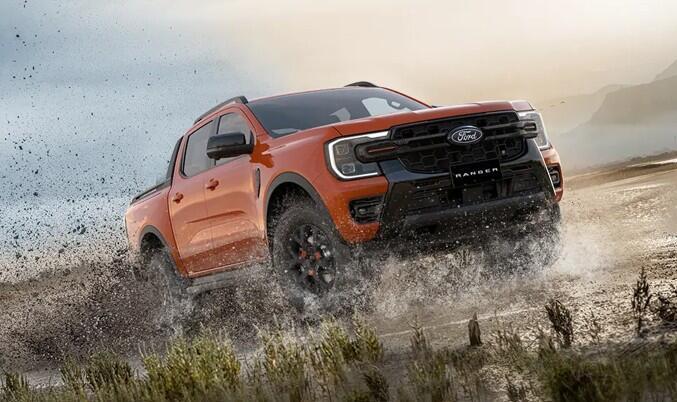
Choosing between the Ford Ranger and Ford F-150 looks simple until we start comparing what these trucks are actually designed to do. Both wear the Blue Oval badge. Both can tow trailers, carry dirty equipment, tackle rough roads, and handle the daily commute. Yet they occupy very different spaces in Ford’s truck family.
The Ranger is the midsize adventurer. It feels manageable, nimble, and practical—like a sturdy hiking boot that we can wear almost anywhere. The F-150 is the full-size workhorse. It offers more engines, more configurations, more interior room, and significantly greater maximum capability. It is less like a hiking boot and more like a fully stocked tool shed on wheels.
So, which truck makes more sense?
That depends on whether we need maximum muscle or simply enough capability without the bulk. In this Ford Ranger vs F-150 comparison, we will examine performance, towing, payload, dimensions, comfort, off-road ability, fuel economy, ownership costs, and everyday usability.
- Ford Ranger vs F-150 at a Glance
- What Is the Main Difference Between the Ford Ranger and F-150?
- Ford Ranger vs F-150 Size Comparison
- Ford Ranger vs F-150 Engine Performance
- Ford Ranger vs F-150 Towing Capacity
- Ford Ranger vs F-150 Payload Capacity
- Ford Ranger vs F-150 Bed Size
- Ford Ranger vs F-150 Fuel Economy
- Ford Ranger vs F-150 Comfort and Ride Quality
- Ford Ranger vs F-150 Off-Road Capability
- Ford Ranger vs F-150 Technology
- Ford Ranger vs F-150 Reliability
- Ford Ranger vs F-150 Maintenance Costs
- Ford Ranger vs F-150 Price and Value
- Ford Ranger vs F-150 for Work
- Ford Ranger vs F-150 for Families
- Ford Ranger vs F-150 for First-Time Truck Buyers
- Pros and Cons of the Ford Ranger
- Pros and Cons of the Ford F-150
- Ford Ranger vs F-150: Which Truck Should We Choose?
- Final Verdict: Ranger Practicality or F-150 Power?
- Frequently Asked Questions
Ford Ranger vs F-150 at a Glance
Before diving into the details, here is the central difference:
- The Ford Ranger is easier to drive, park, maneuver, and use as an everyday vehicle.
- The Ford F-150 offers greater towing capacity, higher payload potential, more cabin and bed choices, and a broader selection of engines.
- The Ranger generally suits recreational users, commuters, and midsize-truck buyers.
- The F-150 better suits frequent towing, heavy hauling, commercial work, and buyers who need full-size space.
For the 2026 model year, Ford lists a maximum available towing capacity of 7,500 pounds and maximum available payload of 1,767 pounds for the Ranger. The 2026 F-150 can tow up to 12,800 pounds, while Ford advertises maximum payload figures above 2,200 pounds, depending on configuration.
Those numbers reveal the basic hierarchy. The Ranger is capable. The F-150 is built for heavier assignments.
What Is the Main Difference Between the Ford Ranger and F-150?
The biggest difference is size.
The Ford Ranger belongs to the midsize pickup segment, while the F-150 competes in the full-size half-ton category. That distinction influences almost everything: cabin width, turning behavior, bed options, towing capacity, engine availability, passenger space, purchase price, and operating costs.
The Ranger is not simply a smaller F-150. It has its own personality.
It is designed for buyers who want genuine truck capability without feeling as though they are steering a small building through traffic. The F-150, meanwhile, is designed to cover an enormous range of jobs, from basic fleet duty to luxury family travel, serious towing, off-road recreation, and mobile-worksite use.
Ranger: The Manageable Midsize Choice
The Ranger makes sense when we want:
- A truck that fits more comfortably in urban parking spaces
- Useful towing without full-size dimensions
- A practical crew-cab layout
- Strong off-road potential
- Lower weight and easier maneuverability
- A pickup that can double as a daily driver
F-150: The Full-Size Capability Leader
The F-150 becomes more attractive when we need:
- Greater towing capacity
- Higher payload potential
- More bed lengths and cab configurations
- A wider engine selection
- More rear-seat room
- Commercial-grade versatility
- Premium comfort and technology options
Ford Ranger vs F-150 Size Comparison
Size affects the ownership experience every single day.
A larger truck may provide more room and stability, but it also demands more space. We notice that difference at parking garages, narrow drive-throughs, crowded fuel stations, old city streets, and compact residential driveways.
The Ranger is generally easier to position. Its shorter body and narrower footprint make it feel more approachable for drivers moving up from a crossover or sedan.
The F-150 feels broader and more substantial. That size can be reassuring on highways and while towing, but it may become inconvenient in tight surroundings.
Which Truck Is Easier to Park?
The Ranger wins.
Although cameras, parking sensors, and 360-degree viewing systems can make a full-size truck easier to manage, technology cannot physically shrink the vehicle. The Ranger requires less room for turning and usually leaves more breathing space between the doors and nearby vehicles.
That matters more than we might expect.
A truck can have spectacular towing numbers, but if we hesitate to drive it to the grocery store because the parking lot feels like an obstacle course, we may have purchased more vehicle than we truly need.
Which Truck Has More Interior Space?
The F-150 wins, particularly in crew-cab form.
Its wider cabin provides more shoulder room, greater separation between front occupants, and a more spacious rear seating area. Families carrying adults or teenagers in the second row will generally appreciate the F-150’s extra room.
The Ranger’s crew cab remains usable and comfortable, but it feels more compact. The rear seat is better suited to children, shorter trips, or occasional adult passengers than the expansive back row of a full-size F-150 SuperCrew.
Ford Ranger vs F-150 Engine Performance
Another major difference is powertrain variety.
The Ranger offers fewer engine choices, but its available engines provide strong performance for a midsize pickup. The F-150 has a much broader powertrain menu, allowing buyers to prioritize fuel economy, towing, traditional V8 character, hybrid capability, or high-performance output.
For 2026, Ford advertises Ranger configurations with up to 315 horsepower and 400 pound-feet of torque, while the Ranger Raptor occupies the performance-focused end of the lineup.
The F-150 lineup offers several engine families, including EcoBoost V6 options, an available 5.0-liter V8, hybrid technology, and specialized high-output engines in performance trims. Ford identifies the 2.7-liter EcoBoost V6 and 5.0-liter V8 among the available 2026 F-150 STX powertrains.
How the Ranger Feels on the Road
The Ranger feels responsive because it carries less bulk than the F-150. Acceleration can be brisk, and the truck changes direction with less effort.
Its turbocharged torque suits everyday driving. We do not need to push the engine aggressively to merge, climb hills, or pass slower traffic.
The Ranger’s more compact dimensions also create a livelier personality. It feels like a vehicle we drive rather than equipment we operate.
How the F-150 Feels on the Road
The F-150 feels more substantial.
Its longer wheelbase and wider stance can create a settled, confident highway ride. With the right engine, acceleration is effortless, even when the bed is loaded or a trailer is attached.
The F-150 also gives us more freedom to match the engine to the job. Someone who mostly commutes may choose differently from a contractor hauling equipment or a camper towing a large travel trailer.
Which One Is Faster?
That depends on the trim.
This content may interest you! Ford Ranger vs Isuzu D-Max: Which Pickup Is Better?
A standard Ranger can feel quicker and more agile than an entry-level F-150 because it is smaller and lighter. However, high-output F-150 variants can deliver far more power than ordinary Ranger models.
The Ranger Raptor and F-150 Raptor complicate the question further. Both emphasize performance, but they serve different scales of adventure. The Ranger Raptor is the more compact trail weapon. The F-150 Raptor is the larger, more powerful desert-running machine.
Ford Ranger vs F-150 Towing Capacity
Towing is where the F-150 creates meaningful distance between itself and the Ranger.
The 2026 Ranger can tow up to 7,500 pounds when properly configured. That is enough for many recreational trailers, small campers, utility trailers, boats, and powersports equipment.
The 2026 F-150 can reach a maximum available towing capacity of 12,800 pounds in the appropriate configuration.
That does not mean every F-150 can tow 12,800 pounds, just as not every Ranger can tow 7,500 pounds. Actual capacity depends on the engine, drivetrain, axle ratio, body configuration, equipment packages, cargo, passengers, and accessories.
Ford recommends checking the vehicle-specific capacity because towing limits vary by configuration and installed equipment.
When Is the Ranger Enough for Towing?
The Ranger is often enough when we tow:
- A small fishing boat
- A lightweight travel trailer
- A pair of motorcycles
- Personal watercraft
- A utility trailer
- Landscaping equipment
- A compact car on a lightweight setup, where ratings permit
- Camping and recreational gear
For occasional recreational towing, the Ranger may offer the sweet spot. We receive respectable capability without carrying full-size dimensions every day.
When Do We Need the F-150?
The F-150 is the wiser choice when we tow:
- Larger travel trailers
- Heavier boats
- Enclosed equipment trailers
- Construction machinery
- Livestock or horse trailers
- Heavily loaded utility trailers
- Trailers requiring more payload for tongue weight
Towing is not only about whether a truck can move the trailer. Stability, payload, braking, cooling, wheelbase, and reserve capacity matter too.
A Ranger operating near its maximum rating may technically handle a job, but an appropriately configured F-150 could perform the same task with more margin. That additional breathing room can make the experience calmer and more comfortable.
Ford Ranger vs F-150 Payload Capacity
Payload includes everything we add to the truck: passengers, tools, cargo, aftermarket equipment, and trailer tongue weight.
This is where many buyers make mistakes.
They focus on towing capacity while ignoring the payload sticker on the driver-side doorjamb. A large trailer can place substantial tongue weight on the truck, consuming payload before we load coolers, passengers, luggage, or tools.
Ford lists maximum available Ranger payload at 1,767 pounds. The 2026 F-150 can exceed 2,200 pounds in certain configurations, though the exact published maximum varies with body style and equipment.
Which Truck Is Better for Heavy Bed Loads?
The F-150 generally wins.
Its higher payload ceiling and broader configuration range make it better suited to dense construction materials, commercial tools, heavy equipment, and substantial trailer tongue weight.
The Ranger can still carry meaningful loads, but it reaches its limits sooner.
Think of the Ranger as a strong backpack and the F-150 as a pickup-sized cargo platform. Both carry plenty, but one gives us more room before the straps begin to strain.
Ford Ranger vs F-150 Bed Size
The Ranger is commonly offered with a crew cab and a bed measuring approximately five feet long. Ford lists a 59.6-inch bed floor length for the 2026 Ranger.
The F-150 offers more bed flexibility. Depending on cab configuration, buyers can choose among multiple box lengths, creating a better match for tools, building materials, recreational equipment, or commercial needs.
Which Bed Is Better for Everyday Use?
The Ranger’s bed is easier to access.
Its lower overall scale makes loading bicycles, camping boxes, gardening supplies, and household purchases relatively convenient. It gives us real truck utility without the feeling of climbing onto a loading dock.
The F-150 bed offers greater volume, particularly with longer-box configurations. It is more useful for full sheets of material, long tools, larger cargo loads, and bulky work equipment.
Does the F-150 Offer Better Bed Technology?
Generally, yes.
Depending on trim and equipment, the F-150 can be configured with features designed to turn the bed and tailgate into a more useful workplace. Ford also promotes available cabin storage, interior work surfaces, power features, and specialized tailgate solutions across the F-150 range.
The Ranger offers useful technology too, but the F-150 has a broader catalog of work-oriented features because it serves a larger commercial and recreational audience.
Ford Ranger vs F-150 Fuel Economy
Fuel economy varies widely by engine, drivetrain, tires, axle ratio, trim, payload, weather, and driving style.
In general, we might expect the smaller Ranger to consume less fuel than a similarly used full-size F-150. However, the comparison is not always straightforward.
A heavily loaded Ranger working near its limit may consume more fuel than expected. Meanwhile, an efficiently configured F-150 driven gently on the highway can perform surprisingly well for its size.
Why the Ranger Usually Costs Less to Fuel
The Ranger typically benefits from:
- Lower curb weight
- Smaller frontal area
- Smaller engines
- Less rolling resistance
- Reduced energy demand during acceleration
For daily commuting and light recreational use, the Ranger is likely to be the more economical choice.
Can the F-150 Still Be Fuel-Efficient?
Relatively speaking, yes.
The F-150’s available turbocharged and hybrid powertrains can provide useful efficiency for a full-size truck. Yet we should keep expectations realistic. A large pickup still pushes more air, carries more mass, and usually wears larger components than a midsize model.
This content may interest you!Ford Ranger vs Nissan Navara: Which Pickup Is Better?The best approach is to compare the exact engines and configurations we intend to buy rather than relying on the truck names alone.
Ford Ranger vs F-150 Comfort and Ride Quality
The F-150 generally offers the more spacious and refined cabin, particularly in upper trims.
Its wide body creates room for broad seats, large storage compartments, and generous rear passenger space. Premium versions can feel closer to luxury SUVs than traditional work trucks.
The Ranger’s cabin feels tighter but easier to navigate. Controls are within reach, the hood is easier to see around, and the truck feels less intimidating from behind the wheel.
Which Truck Is Better for Long Road Trips?
For four or five passengers, the F-150 usually wins.
Its rear-seat space, wider cabin, and relaxed highway character make it a stronger family road-trip vehicle. Passengers can spread out instead of sitting shoulder-to-shoulder.
For one or two adults, however, the Ranger may be perfectly comfortable. It can travel long distances while remaining easier to park at restaurants, hotels, trailheads, and tourist attractions.
Which Truck Has the Better Daily-Driving Experience?
The Ranger wins for many urban and suburban drivers.
It is easier to place within a lane, less stressful in narrow parking areas, and more natural for buyers coming from conventional passenger vehicles.
The F-150 can be very comfortable, but we are always aware of its width. It dominates the road like a sofa with headlights—pleasant once moving, yet demanding when space becomes scarce.
Ford Ranger vs F-150 Off-Road Capability
Both trucks can be equipped for serious off-road driving.
The Ranger benefits from its smaller footprint. On narrow trails, between trees, around rocks, and through tight switchbacks, compact dimensions are a genuine advantage.
The F-150 offers greater power and a planted stance, but its width can become a limitation when the trail closes in.
Why the Ranger Works So Well Off-Road
The Ranger offers several natural advantages:
- Easier maneuvering on narrow trails
- Less bodywork extending into obstacles
- Reduced weight
- Shorter overall length
- Strong turbocharged torque
- Dedicated off-road trims and equipment
The Ranger Raptor pushes that formula further with specialized suspension and performance hardware, though its maximum towing capacity is lower than that of some regular Ranger configurations. Ford lists a 5,510-pound towing figure for the 2026 Ranger Raptor page.
Why We Might Prefer an F-150 Off-Road
The F-150 makes sense when off-road trips involve:
- More passengers
- Large quantities of camping equipment
- Long-distance desert travel
- Heavy trailers
- Larger rooftop or bed-mounted systems
- A need for greater cabin and cargo capacity
The F-150 Tremor and Raptor families provide formidable capability, but they remain physically large. In open terrain, that size can feel powerful and stable. In dense forests, it can feel like threading a needle with boxing gloves.
Ford Ranger vs F-150 Technology
Both trucks offer modern connectivity, digital displays, driver-assistance systems, and towing-related technology. The F-150 generally provides a wider menu because of its larger trim range and higher pricing ceiling.
The 2026 F-150 lineup includes a 12-inch touchscreen even on the XL according to Ford’s model page, illustrating how technology once reserved for premium trucks has moved deeper into the range.
Useful Ranger Technology
Depending on trim and package, Ranger technology may include:
- Large touchscreen interfaces
- Smartphone integration
- Digital driver displays
- Trailer assistance
- Multiple camera views
- Blind-spot monitoring
- Terrain-management systems
- Off-road information screens
Useful F-150 Technology
Depending on configuration, the F-150 may add:
- Advanced trailer-assistance tools
- Larger digital displays
- Hands-free driving capability on compatible roads
- Onboard power options
- Interior work surfaces
- Expanded camera systems
- Premium audio
- More sophisticated luxury and convenience features
The important question is not which truck has the longest feature list. It is which features we will actually use.
Paying for an onboard mobile office makes sense for a contractor. It may be unnecessary for someone whose most demanding task is transporting mountain bikes on weekends.
Ford Ranger vs F-150 Reliability
Reliability depends on more than the model badge.
Engine choice, maintenance history, production year, usage, modifications, climate, towing habits, and previous ownership can all influence long-term durability.
A simpler truck that receives regular maintenance may outlast a more expensive configuration that has been neglected or repeatedly overloaded.
Factors That Can Affect Ranger Reliability
When buying a Ranger, we should examine:
- Turbocharger performance
- Transmission behavior
- Cooling-system condition
- Four-wheel-drive operation
- Suspension wear
- Signs of hard off-road use
- Trailer wiring and hitch condition
- Complete maintenance records
Factors That Can Affect F-150 Reliability
When buying an F-150, we should inspect:
- The specific engine and its service history
- Transmission shifting quality
- Four-wheel-drive components
- Differential and transfer-case condition
- Electronics and powered accessories
- Evidence of commercial use
- Bed and frame wear
- Towing history
The F-150 offers more engine and equipment combinations, which is wonderful for choice but makes research more complicated. “Is the F-150 reliable?” is too broad a question. We need to ask whether a particular model year, engine, drivetrain, and trim have a strong ownership record.
Ford Ranger vs F-150 Maintenance Costs
The Ranger will often cost less to maintain because it uses smaller tires, smaller brakes, less fluid, and generally less expensive components.
The F-150 may cost more per service, especially in premium trims with large wheels, advanced suspension, complex powertrains, or extensive electronics.
However, actual ownership costs depend heavily on usage.
A Ranger constantly operating near its payload and towing limits may experience accelerated wear. An F-150 doing the same job with greater reserve capacity could potentially feel less strained.
Typical Expenses to Compare
Before buying either truck, we should compare:
- Insurance premiums
- Tire replacement costs
- Brake service costs
- Fuel consumption
- Registration fees
- Scheduled maintenance
- Repair complexity
- Depreciation
- Financing rates
- Expected annual mileage
Purchase price is only the opening scene. The ownership story continues for years.
This content may interest you!Ford Ranger vs Maverick: Which Ford Truck Fits Your Life?Ford Ranger vs F-150 Price and Value
The Ranger typically provides the lower entry point.
That makes it attractive to buyers who need a capable pickup but do not require the F-150’s maximum ratings or enormous configuration range.
The F-150 can become expensive quickly as we add four-wheel drive, premium trims, towing packages, luxury features, larger engines, and specialized equipment. Yet it may offer better value when its additional capability replaces the need for another vehicle or prevents us from outgrowing the truck.
When the Ranger Offers Better Value
The Ranger is likely the smarter value when:
- We rarely tow above midsize-truck limits
- We mostly drive in cities or suburbs
- We want lower running costs
- We do not need multiple bed lengths
- We carry moderate cargo
- We value maneuverability
- We want a recreational truck that still works during the week
When the F-150 Offers Better Value
The F-150 may justify its price when:
- We tow heavy trailers regularly
- We carry substantial payload
- We need generous rear-seat space
- We use the truck commercially
- We require a longer bed
- We want onboard power or workplace features
- We expect our capability needs to grow
Ford Ranger vs F-150 for Work
For light-duty business use, the Ranger is a compelling tool.
It can transport technicians, inspection equipment, landscaping tools, repair supplies, or small trailers without becoming cumbersome in crowded work areas.
For construction, agriculture, heavy service work, or frequent towing, the F-150 is usually the stronger platform. Its extra payload, bed choices, towing capacity, and configuration variety make it easier to tailor to specialized jobs.
Best Work Truck for Urban Businesses
The Ranger often wins.
Electricians, property inspectors, maintenance technicians, and small service companies may appreciate a truck that fits into garages and narrow customer driveways.
Best Work Truck for Heavy-Duty Tasks
The F-150 wins.
Its higher capability ceiling makes it better suited to heavier materials, larger trailers, and equipment-intensive work.
Ford Ranger vs F-150 for Families
The F-150 is the better family vehicle when passenger space is a priority.
A SuperCrew cabin provides generous room for child seats, teenagers, adults, luggage, and road-trip supplies. The broad cabin also creates useful interior storage.
The Ranger can serve a small family well, especially when children occupy the rear seat. However, adults may find the second row less spacious on long journeys.
We should also consider parking at school, fitting inside the garage, and navigating shopping areas. The F-150 offers more space inside but demands more space outside.
Ford Ranger vs F-150 for First-Time Truck Buyers
The Ranger is generally the easier introduction to pickup ownership.
Its driving position gives us the commanding feel of a truck without the full bulk of an F-150. It is easier to learn where the corners are, easier to reverse, and less stressful on crowded roads.
The F-150 is not difficult to drive, especially with modern cameras and sensors, but its dimensions require adjustment.
A first-time truck buyer should test both vehicles on familiar roads. Drive through a parking lot. Reverse into a normal space. Turn around on a narrow street. The ideal truck should feel useful, not intimidating.
Pros and Cons of the Ford Ranger
Ford Ranger Advantages
- Easier to park and maneuver
- Lower potential purchase price
- Strong midsize towing capacity
- Useful payload
- Better suited to narrow trails
- More natural as a daily commuter
- Lower expected fuel and maintenance costs
- Capable off-road variants
- Less difficult to fit in a garage
Ford Ranger Disadvantages
- Lower towing ceiling
- Less rear-seat space
- Fewer bed and cab combinations
- Smaller cargo box
- Less engine variety
- Lower maximum payload
- May feel strained during heavy, frequent towing
Pros and Cons of the Ford F-150
Ford F-150 Advantages
- Much greater maximum towing capacity
- Higher payload potential
- More engine choices
- Multiple cab and bed configurations
- Spacious crew-cab interior
- Strong workplace technology
- Better suited to heavy trailers
- Wide range of trims
- Greater long-term flexibility
Ford F-150 Disadvantages
- Harder to park
- Higher potential purchase price
- Greater fuel consumption
- More expensive tires and maintenance
- Wide body can be awkward on trails
- May not fit smaller garages
- Easy to buy more capability than we need
Ford Ranger vs F-150: Which Truck Should We Choose?
Choose the Ford Ranger when our lifestyle needs a truck but not necessarily a full-size truck.
It is ideal for commuters, outdoor enthusiasts, small families, occasional towers, and buyers who value maneuverability. It provides enough capability for many real-world jobs while remaining approachable in everyday traffic.
Choose the Ford F-150 when capability, passenger space, and configuration flexibility matter more than compactness.
It is the better choice for frequent towing, heavy cargo, commercial work, large families, and buyers who want a truck that can adapt to more demanding future needs.
Choose the Ranger If We Want:
- Easier everyday driving
- Lower operating costs
- Midsize dimensions
- Occasional recreational towing
- Strong trail maneuverability
- Practical capability without unnecessary bulk
Choose the F-150 If We Want:
- Maximum towing and payload
- More passenger room
- More engine options
- Longer bed choices
- Advanced work features
- Greater capability reserve
Final Verdict: Ranger Practicality or F-150 Power?
The Ford Ranger vs F-150 debate is not about identifying one universally superior truck. It is about matching the machine to the mission.
The Ranger is the smarter tool for buyers who want capability in a manageable package. It is easier to live with, simpler to park, and strong enough for most light-duty recreational and household tasks.
The F-150 is the more capable and versatile platform. It tows more, carries more, offers more interior room, and can be configured for almost any purpose. Yet that versatility arrives with greater size, expense, and complexity.
We should avoid buying based solely on the largest number in a brochure. Maximum capability sounds impressive, but unused capability is still something we pay to purchase, fuel, insure, and park.
The best truck is the one that handles our hardest regular task comfortably—not the unlikely task we imagine performing once every five years.
For many drivers, that makes the Ranger the balanced choice. For serious towers, growing families, and demanding businesses, the F-150 remains difficult to beat.
Frequently Asked Questions
1. Is the Ford Ranger cheaper than the F-150?
The Ranger generally has a lower starting price and may also cost less to fuel, insure, maintain, and equip. Final prices depend on the trim, drivetrain, packages, incentives, and location.
2. Can a Ford Ranger tow as much as an F-150?
No. The 2026 Ranger has a maximum available towing capacity of 7,500 pounds, while an appropriately configured 2026 F-150 can tow up to 12,800 pounds. Actual capacity varies by vehicle configuration.
3. Is the Ford Ranger easier to drive than the F-150?
For most drivers, yes. Its smaller dimensions make it easier to park, turn, position on narrow roads, and maneuver through crowded urban areas.
4. Which truck is better for off-roading?
The Ranger is often better on tight trails because of its smaller footprint. The F-150 may be preferable in open terrain where power, stability, passenger space, and cargo capacity matter more.
5. Is the F-150 worth buying over the Ranger?
The F-150 is worth the additional size and cost when we regularly need its extra towing capacity, payload, passenger room, bed flexibility, or workplace features. Otherwise, the Ranger may provide better everyday value.
This content may interest you!Ford Ranger vs Raptor: Which Pickup Should We Buy?
Leave a Reply