
Audi A3 or Q2 New Zealand: Which Audi Should You Buy?
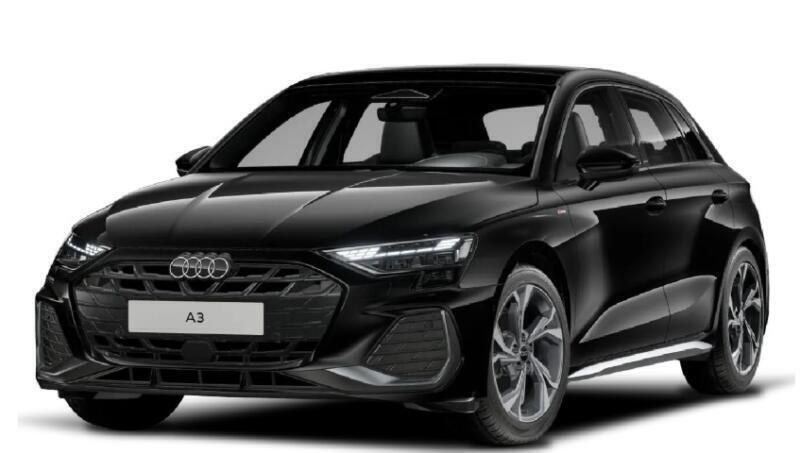
Choosing between the Audi A3 or Q2 in New Zealand looks straightforward until we actually start comparing them. One is a polished compact hatchback with a lower, sportier stance. The other wraps much of Audi's compact-car appeal in a small SUV body with a little more height and practicality.
On paper, they sit surprisingly close together. In real life, however, they have different personalities.
The A3 feels like the car we choose because we enjoy driving. The Q2 feels like the car we choose because everyday life keeps reminding us that visibility, easy access and boot space matter.
There is another interesting wrinkle for New Zealand buyers in 2026: Audi NZ currently advertises the A3 Sportback 35 TFSI S line from MRP NZ$74,490, while Q2 Dynamic Black run-out pricing starts at NZ$65,990, subject to availability and excluding on-road costs. That can make the Q2 unexpectedly attractive on price despite its SUV positioning.
So, should we buy the newer-feeling A3, or take advantage of the compact SUV practicality and current value offered by the Q2?
Let's dig in.
- Audi A3 vs Q2: The Quick Answer
- Audi A3 or Q2 New Zealand Comparison at a Glance
- What Is the Main Difference Between the Audi A3 and Q2?
- Which Looks Better: Audi A3 or Q2?
- Interior Quality: Does the A3 Feel More Premium?
- Audi A3 vs Q2 Boot Space
- Rear-Seat Space and Family Use
- Driving Experience: Audi A3 or Q2?
- City Driving in Auckland, Wellington and Christchurch
- Fuel Economy: Which Audi Should Cost Less to Run?
- A3 TFSI e Changes the Equation
- Audi Q2 quattro: A Reason to Choose the SUV
- Ride Comfort: Which One Feels Better?
- Technology: The A3 Has the Upper Hand
- Ownership Package in New Zealand
- Audi A3 or Q2 Price in New Zealand
- What About Depreciation?
- Should We Buy an Audi A3 or Q2 Used?
- Who Should Buy the Audi A3?
- Who Should Buy the Audi Q2?
- A3 vs Q2 for Long-Distance New Zealand Driving
- Audi A3 or Q2 for Older Drivers
- Which One Feels More Expensive?
- Our Verdict: Audi A3 or Q2 in New Zealand?
- Frequently Asked Questions
- Closing Thoughts
Audi A3 vs Q2: The Quick Answer
If we want the shortest possible answer, the Audi A3 is generally the better choice for driving refinement, modern technology, fuel efficiency and a more contemporary premium-car experience.
The Audi Q2 makes more sense if we value the higher seating position, easier access, slightly larger boot with the seats upright and the SUV shape. Current New Zealand run-out pricing can make the Q2 particularly compelling as a value purchase.
Think of them like two pairs of expensive shoes. The A3 is the sleek leather sneaker that looks sharper and feels lighter on its feet. The Q2 is the premium walking shoe: slightly chunkier, easier to live with and ready for more everyday abuse.
Neither is automatically better. The right one depends on how we actually use the car.
Audi A3 or Q2 New Zealand Comparison at a Glance
The main differences worth remembering are:
- Choose the A3 if we prioritise road manners, newer cabin technology, efficiency and a lower sporty driving position.
- Choose the Q2 if we want easier entry and exit, an SUV seating position and a more upright body.
- The A3 Sportback provides 380 litres of luggage space, expanding to 1,200 litres with the rear seats folded.
- The Q2 provides 405 litres, expanding to 1,050 litres with its rear seats folded.
- Audi NZ currently lists the A3 Sportback 35 TFSI S line from NZ$74,490 MRP, excluding on-road costs.
- Audi NZ is currently promoting Q2 Dynamic Black run-out editions, including a 35 TFSI version at NZ$65,990 MSP, while availability lasts.
- Both models can work well as urban cars, but they approach the job differently.
That gives us the outline. Now let's look at what actually matters behind the wheel.
What Is the Main Difference Between the Audi A3 and Q2?
The biggest difference isn't horsepower, badges or infotainment.
It's body philosophy.
The Audi A3 Sportback is fundamentally a compact premium hatchback. Its driving position is relatively low, its proportions are sleek and its entire character leans toward road-car refinement.
The Q2 is a compact crossover SUV. It gives us a taller body, more upright seating and the visual attitude that has made SUVs so popular.
That distinction affects almost everything else.
Drop into an A3 and the environment feels relatively cockpit-like. We sit lower in the vehicle, the road feels closer and the car tends to communicate its movements more clearly.
Audi's current A3 also benefits from a newer design language and updated technology. The New Zealand model includes Audi's digital cockpit environment, while Audi highlights features such as drive select, S tronic transmission and mild-hybrid assistance on the latest Sportback.
If we enjoy a car that feels neat, planted and polished, the A3 immediately makes sense.
The Q2 Feels More Like a Small SUV
The Q2 gives us a more upright view of the world.
We're not suddenly towering over Ranger utes at the traffic lights, of course. This is still a compact crossover. But getting in, sitting down and looking outward feels noticeably more SUV-like.
For buyers who dislike dropping into a low car, that difference alone can decide the argument.
Why Seating Height Matters More Than We Think
A slightly higher hip point can make everyday driving easier.
Parents fastening children into seats may appreciate it. Older drivers can appreciate easier entry. People regularly jumping in and out of the vehicle during the workday may notice the difference too.
It isn't glamorous, but convenience rarely is. We usually discover its value after living with the vehicle for six months.
Which Looks Better: Audi A3 or Q2?
Style is subjective, yet the two models make very different statements.
The current A3 has a sharper, cleaner appearance. Audi redesigned its front treatment with a frameless Singleframe grille, revised lighting and more aggressive detailing.
It looks low, wide and deliberate.
The Q2 takes another route. Its styling is more geometric and playful, using a taller body and stronger SUV visual cues. Audi itself positions it as an urban SUV with bold, characterful styling.
A3: Cleaner and More Sophisticated
We'd give the A3 the advantage if the goal is understated European sophistication.
It slips into a corporate car park without shouting. It looks appropriate outside a restaurant, an office or a suburban home.
There is something timeless about a compact Audi hatchback when its proportions are right.
Q2: More Distinctive and More Casual
The Q2 has more visual attitude.
It looks younger in spirit, even though the underlying model has been around longer than the current A3 generation.
Its chunky proportions make it easier to distinguish from an ordinary hatchback, and buyers who specifically want an SUV appearance may prefer it immediately.
This is one of the strongest arguments for choosing the A3.
Its interior presentation feels more contemporary, particularly when we compare the dashboard layouts and digital interfaces.
Audi says the current A3 Sportback offers a 12.3-inch Audi virtual cockpit plus, configurable display modes, ambient lighting and connected functionality through its MMI system and myAudi services.
The Q2 can also offer Audi's 12.3-inch virtual cockpit and a high-quality premium environment, but its overall cabin architecture reflects an older design generation.
Audi A3 Interior
The A3 makes a stronger first impression.
There are sharper surfaces, more integrated technology and a dashboard design that feels closer to Audi's newer products.
That matters if we're spending NZ$70,000-plus on a compact car. At this price, buyers aren't simply paying for transportation. We expect the interior to remind us why four rings are sitting on the steering wheel.
Audi Q2 Interior
The Q2 cabin remains functional and unmistakably Audi, but it can feel less futuristic beside the latest A3.
Oddly, some people may prefer that.
This content may interest you! Audi A3 or A5 New Zealand: Which Audi Is the Better Buy?
Not everyone wants every control buried under layers of digital menus. A familiar, straightforward layout can age gracefully because we don't have to relearn it every time we adjust something.
Which Cabin Will Age Better?
There's an interesting distinction between looking old and ageing badly.
The Q2 architecture may already appear less modern, but conventional layouts sometimes age gently.
The A3 looks more impressive today. Whether all of its digital elements feel equally fresh in eight or ten years is another question.
For a new-car buyer, though, we'd still give the A3 the cabin advantage.
Audi A3 vs Q2 Boot Space
Here's where expectations become interesting.
Because the Q2 is an SUV, we'd probably assume it crushes the A3 for cargo capacity.
It doesn't.
Audi NZ quotes 405 litres of luggage space in the Q2, while the A3 Sportback provides 380 litres. That gives the Q2 a modest 25-litre advantage with the rear seats in use.
Fold those seats down, however, and the result reverses.
The A3 expands to 1,200 litres, while the Q2 reaches 1,050 litres.
Why the Q2 Boot Can Still Feel More Practical
Raw litres aren't everything.
A taller, more upright cargo opening can sometimes make bulky objects easier to load. Think suitcases, boxes, shopping bags, a folded stroller or all the mysterious equipment that appears whenever children are involved.
Twenty-five extra litres won't transform our life, but the shape of the load area may.
Why the A3 Is Surprisingly Versatile
The A3 fights back when the rear seats are folded.
Its 1,200-litre maximum capacity demonstrates why we shouldn't automatically assume hatchbacks have become irrelevant in an SUV world.
For occasional large loads, the A3 Sportback can actually be the more flexible machine.
Rear-Seat Space and Family Use
Neither vehicle is intended to replace a Q5.
Two adults in front and two children behind? Easy enough.
Four tall adults heading from Auckland to Wellington? We'd want everyone to sit in the cars before signing anything.
The Q2's more upright body can create a sense of space and may make rear access more convenient. The A3, meanwhile, feels more like a traditional compact hatchback.
Which One Is Better With Children?
We'd lean toward the Q2 for parents with younger children.
The advantage isn't dramatic cargo volume. It's ergonomics.
When we're leaning into the rear seat to buckle a child into a restraint, a few extra centimetres of body height can feel like a gift from the automotive gods.
Once children are old enough to climb in themselves, that benefit becomes less important.
Driving Experience: Audi A3 or Q2?
If driving enjoyment ranks near the top of our list, we'd start with the A3.
The reason is simple: physics never takes a day off.
A lower passenger car generally has an easier job controlling body movement than a taller crossover built for a more elevated driving position.
Audi equips the current A3 Sportback with drive select and S tronic transmission, while the 1.5-litre TFSI uses mild-hybrid technology to recover energy and assist the combustion engine under certain conditions.
Audi A3 on New Zealand Roads
The A3 feels well suited to our mix of urban roads, motorways and winding highways.
On a flowing road outside the city, a lower hatchback begins to make its case. It changes direction naturally and feels more tied to the tarmac.
We don't need to drive fast to notice it.
That's the beauty of a well-sorted compact car. It can make 80 km/h feel interesting without making 80 km/h feel irresponsible.
Audi Q2 on New Zealand Roads
The Q2 isn't meant to be a wallowing old-school SUV.
Audi specifically highlights progressive steering, and some versions add quattro all-wheel drive. The current New Zealand inventory includes 40 TFSI quattro S line examples as well as front-driven 35 TFSI models.
It can therefore deliver plenty of grip and confidence.
The difference is character.
The Q2 makes us feel slightly more removed from the road. Some drivers will call that less engaging. Others will call it relaxing.
Both are right.
Which Is Better on Winding Roads?
The A3.
If Sunday drives through twisting roads are part of the ownership fantasy, the A3 is where we'd put our money.
The Q2 can be entertaining, particularly in stronger quattro specification, but the A3's basic shape gives it the more natural sporting foundation.
City Driving in Auckland, Wellington and Christchurch
Compact dimensions make both cars sensible urban Audis.
The Q2's higher seating position helps us see surrounding traffic, while its compact footprint keeps it manageable in parking buildings and tighter streets.
The A3 counters with its lower, more car-like feel and tidy manoeuvrability.
This content may interest you!Audi A3 vs Mercedes A-Class New Zealand: Which Premium Compact Is Better?Which Is Easier to Park?
There isn't enough separating them to make parking the deciding factor for most buyers.
Driver-assistance equipment and parking technology also vary by specification, so we'd check the individual car rather than assume every A3 or Q2 has identical equipment.
The current A3 can offer technologies including park assist, parking system plus, rear cross-traffic assistance and side assist, depending on specification.
The Wellington Factor
Anyone navigating steep streets and awkward driveways may instinctively prefer the Q2.
Not because it is an off-roader—it isn't—but because a crossover body simply feels more natural when the road seems determined to become a staircase.
For motorway commuting, we'd swing back toward the A3.
Fuel Economy: Which Audi Should Cost Less to Run?
Comparing fuel consumption becomes tricky because A3 and Q2 figures vary by engine and specification.
For the currently advertised A3 Sportback petrol model in New Zealand, Audi's A3 offer lists a 1.5-litre TFSI and a WLTP fuel-consumption figure of 5.4 L/100 km.
That makes the A3 particularly attractive for buyers covering substantial annual mileage.
The Q2 is available in different configurations, including 1.5-litre 35 TFSI and more powerful 2.0-litre 40 TFSI quattro versions, so fuel consumption can vary meaningfully.
Why the A3 Has an Efficiency Advantage
A lower, more aerodynamic hatchback has physics on its side.
Its mild-hybrid technology is another small helping hand. Audi says the A3 system can recover energy and assist during acceleration from low engine speeds.
Over thousands of kilometres, small efficiency differences begin turning into real money.
What If We Mostly Drive Short Distances?
Then fuel economy matters less than we sometimes imagine.
If we're only doing 7,000 or 8,000 kilometres a year, buying the vehicle we prefer may be more rational than obsessing over tenths of a litre per 100 kilometres.
Depreciation, insurance, tyres and servicing can easily overshadow a modest fuel difference.
A3 TFSI e Changes the Equation
New Zealand buyers now have another interesting A3 option: the A3 Sportback TFSI e plug-in hybrid.
Audi NZ currently advertises it from NZ$79,990 MRP and quotes 126–143 km of electric range, although Audi notes New Zealand specification values remain subject to confirmation.
That makes the comparison much more interesting for drivers who can charge at home.
Could We Commute Mostly on Electricity?
For many urban New Zealand commutes, potentially yes.
A theoretical electric range exceeding 100 km means plenty of owners could cover typical weekday driving without regularly firing up the petrol engine, depending on real-world conditions and charging habits. The official WLTP figure should still be treated as a comparison benchmark rather than a guarantee of actual driving range.
Audi also says the A3 TFSI e supports DC charging up to 50 kW, with a quoted 10-to-80-percent charging time of less than 30 minutes under suitable conditions.
There is no equivalent plug-in Q2 in the current New Zealand range shown by Audi NZ.
For buyers thinking seriously about electrified driving, that pushes the A3 ahead.
Audi Q2 quattro: A Reason to Choose the SUV
We shouldn't dismiss the Q2 too quickly.
One of its strongest cards is the availability of 40 TFSI quattro variants in New Zealand inventory. Audi NZ currently lists new 2026 Q2 40 TFSI quattro S line examples with a 1,984 cc petrol engine.
For buyers regularly travelling to ski areas, tackling wet rural roads or simply preferring the reassurance of all-wheel drive, quattro may be persuasive.
Is quattro Necessary in New Zealand?
For most urban drivers? Probably not.
For some drivers? Absolutely useful.
Our climate and geography vary enormously. Someone commuting around central Auckland has different needs from someone frequently heading toward alpine roads.
We should buy for the 95% of driving we actually do, not the 5% we imagine ourselves doing in an Audi advertisement.
Ride Comfort: Which One Feels Better?
The answer depends heavily on wheel size and specification.
Large wheels look fantastic in dealership lighting. Rough New Zealand chipseal has a wonderful habit of reminding us that wheels are supposed to carry tyres.
The A3's lower body can feel controlled and sophisticated, while the Q2 gives us the psychological comfort of an SUV stance.
Neither should be confused with a soft luxury cruiser.
Watch the Wheel Size
Current Q2 Dynamic Black run-out editions can feature 19-inch Audi Sport wheels, while the A3 S line offer references 18-inch wheels.
Larger wheels can sharpen appearance and steering response, but lower-profile tyres may transmit more road texture.
A test drive should therefore include the roughest road we regularly use—not just the freshly paved road conveniently located beside the dealership.
Technology: The A3 Has the Upper Hand
Technology is an area where the A3's newer design becomes obvious.
Audi highlights its connected MMI experience, myAudi integration, Audi virtual cockpit plus and available advanced driver-assistance systems.
The Q2 isn't technologically primitive. Audi NZ lists virtual cockpit technology and available assistance such as adaptive cruise assist.
But placed side by side, the A3 feels like the more current product.
Does That Matter for Used Buyers?
Yes, particularly if we plan to keep the car for many years.
A cabin that already feels newer today is less likely to feel ancient in three or four years.
That said, simpler interfaces can sometimes be easier to live with. Technology is helpful right up until it demands our attention for something that once required one button.
This content may interest you!Audi A3 or Golf New Zealand: Which Is the Better Buy?Ownership Package in New Zealand
For buyers purchasing new through Audi New Zealand, both models benefit from Audi's current ownership package.
Audi states that new vehicles include a five-year warranty, three-year motoring plan and five-year roadside assistance.
That improves the ownership equation compared with judging a premium European car purely on potential maintenance costs.
What Happens After the Included Coverage?
That's when we need to think more carefully.
Premium-car parts, specialist servicing, larger wheels and sophisticated electronics can cost more than equivalent mainstream-car items.
Anyone buying a used A3 or Q2 outside comprehensive coverage should therefore prioritise service history and condition over a bargain purchase price.
A cheap neglected premium car has an extraordinary ability to become an expensive premium car.
Audi A3 or Q2 Price in New Zealand
Pricing makes this comparison particularly unusual right now.
The latest A3 Sportback 35 TFSI S line is advertised by Audi NZ from NZ$74,490 MRP plus on-road costs.
Meanwhile, Audi NZ's Q2 page is promoting a Dynamic Black Runout Edition at NZ$65,990 MSP, while stocks last, with the Q2 40 TFSI quattro Dynamic Black Runout Edition listed at NZ$77,990 MSP.
Those run-out prices change the normal logic.
Q2 Can Be the Value Choice
We'd normally expect an SUV-shaped premium car to command the higher price.
Here, promotional run-out pricing can make a Q2 considerably cheaper than an A3.
If we can purchase a well-equipped new Q2 at an attractive run-out price, accepting the older cabin design becomes much easier.
Money has a remarkable ability to improve dashboard graphics.
A3 Is the Newer Long-Term Choice
The A3 costs more at entry level under those advertised figures, but we're paying for a newer-feeling product with modern technology, better claimed efficiency and a platform that feels more relevant to Audi's current direction.
If we're keeping the car for five to seven years, that may matter more than saving money on the purchase.
What About Depreciation?
Depreciation is difficult to predict accurately because it depends on purchase price, specification, mileage, condition, future demand and changes in the market.
Run-out discounts complicate things further.
Buying a discounted Q2 means the original sticker price isn't necessarily the number that should frame our depreciation expectations. What matters is what we actually pay.
Could the A3 Be Easier to Sell Later?
Possibly.
The A3 nameplate has a long-established position in the premium compact market, while hatchbacks still appeal to buyers who don't necessarily want an SUV.
However, compact SUVs remain extremely attractive to many used-car buyers.
Rather than trying to forecast the market perfectly, we'd focus on buying a desirable specification at a sensible transaction price and maintaining it properly.
Should We Buy an Audi A3 or Q2 Used?
Used examples make the comparison even more interesting.
Once depreciation has taken its first big bite, either model can offer a lot of premium car for the money.
But we'd become more demanding about history.
Used Audi A3 Checklist
Service records matter more than shiny paint.
We'd verify scheduled maintenance, transmission servicing where applicable, tyre condition, warning lights, electrical equipment and evidence of accident repairs.
We'd also make sure the exact engine and transmission combination suits our usage rather than assuming every A3 is mechanically identical.
Used Audi Q2 Checklist
The same principles apply.
With a Q2, we'd also pay attention to expensive wheel and tyre damage, suspension noises, electronic systems and the operation of quattro-related components on AWD versions.
A pre-purchase inspection by someone familiar with Volkswagen Group vehicles can be money well spent.
New vs Used: Which Makes More Sense?
Current Q2 run-out offers blur the distinction.
Audi NZ inventory has recently shown heavily discounted or demonstrator Q2 examples alongside new stock, which means a nearly-new or run-out vehicle can sometimes overlap with traditional used-car pricing.
Compare actual drive-away prices, not merely model years.
Who Should Buy the Audi A3?
The A3 is our pick for drivers who see the vehicle as more than a mobility appliance.
It suits commuters, couples, smaller families and buyers who want premium quality without moving into SUV territory.
We'd choose it if our typical week involves city commuting, motorway travel, weekend road trips and relatively little need for an elevated seating position.
It is particularly attractive if fuel efficiency matters or if the plug-in hybrid A3 TFSI e fits our charging setup.
The Ideal A3 Buyer
Imagine someone who drives from a suburb into the city during the week, occasionally heads away for a weekend, wants enough boot space for normal life and still enjoys a winding road.
That's A3 territory.
It doesn't pretend to be an adventure vehicle.
It simply tries to be a really good compact road car.
Who Should Buy the Audi Q2?
The Q2 is better for buyers who like compact dimensions but don't want a low hatchback.
This content may interest you!Audi A3 and Q3 New Zealand: Which Audi Should You Buy?Its 405-litre boot, higher body and SUV styling make it easy to understand.
Current run-out pricing gives it another powerful argument.
If we can buy the Q2 substantially below an equivalent A3 and we aren't bothered by its older cabin architecture, the value equation becomes difficult to ignore.
The Ideal Q2 Buyer
Think urban driver, small family, older couple or anyone who regularly loads passengers and shopping but doesn't want a large SUV.
The Q2 isn't a miniature Q7.
That's exactly why it works.
It gives us some SUV convenience without forcing us to navigate New Zealand parking buildings in something the size of a small apartment.
A3 vs Q2 for Long-Distance New Zealand Driving
For frequent open-road travel, we'd favour the A3.
Its lower stance and passenger-car nature make it feel at home at motorway speeds and through long sweeping bends.
Its current 35 TFSI configuration also carries a strong official efficiency claim.
The Q2 counters with its elevated visibility and, in quattro specification, extra traction.
Which Would We Take Auckland to Wellington?
A3.
Which Would We Take Toward the Ski Fields?
Q2 40 TFSI quattro.
There. Sometimes car comparisons don't require a spreadsheet.
Audi A3 or Q2 for Older Drivers
The Q2 deserves serious consideration here.
Getting into a low car becomes less enjoyable for some drivers over time. The Q2's crossover shape provides more straightforward access without requiring us to buy a significantly larger SUV.
That can be worth more than sharper steering or a prettier digital dashboard.
Comfort Is Personal
This is why we always recommend physically sitting in both cars.
Seat height, thigh support, visibility and steering-wheel reach affect people differently.
Twenty minutes in a showroom can reveal something 20 online reviews never will.
Which One Feels More Expensive?
At first glance, probably the A3.
Its fresher interior and newer technology create a stronger modern-luxury impression.
But perceived value isn't just about appearance.
If we buy a discounted Q2 and receive heated seats, large wheels, adaptive driver assistance and other desirable equipment as part of a run-out package, the Q2 can feel like we're getting more physical equipment for our money. Audi NZ's current Dynamic Black promotion includes several such added features.
That's the difference between looking newer and being better value.
Our Verdict: Audi A3 or Q2 in New Zealand?
If both cars cost exactly the same and had comparable equipment, we would choose the Audi A3.
It's the more modern-feeling vehicle. It has a stronger interior, better road-car character, impressive practicality and an efficient 1.5-litre mild-hybrid powertrain in the current 35 TFSI specification. Buyers also have the option of the A3 Sportback TFSI e plug-in hybrid.
But that's not the entire story in New Zealand.
Current Q2 run-out offers mean the Q2 can cost materially less than the latest A3 while still providing premium equipment, an SUV seating position and useful everyday practicality.
At NZ$65,990 MSP for the advertised Q2 35 TFSI Dynamic Black Runout Edition, we'd absolutely consider it before automatically paying more for an A3.
So our verdict looks like this:
Buy the A3 because it's the better car for drivers who prioritise modernity, efficiency and road manners.
Buy the Q2 because it can currently be the smarter deal for buyers who prioritise SUV ergonomics, practicality and purchase value.
The decision ultimately comes down to one question: do we want the better hatchback experience or the easier compact-SUV experience?
Once we answer that, the badge on the bonnet is almost beside the point.
Frequently Asked Questions
Is the Audi Q2 bigger than the Audi A3?
The Q2 feels taller and more SUV-like, but that doesn't mean it dominates the A3 for usable space. Audi quotes 405 litres of boot capacity for the Q2 compared with 380 litres for the A3 Sportback. With the rear seats folded, however, the A3 expands to 1,200 litres versus 1,050 litres for the Q2.
Is the Audi A3 cheaper than the Q2 in New Zealand?
Not necessarily. As of August 2026, Audi NZ advertises the A3 Sportback 35 TFSI S line from NZ$74,490 MRP, while a Q2 35 TFSI Dynamic Black Runout Edition is advertised at NZ$65,990 MSP while stocks last. Prices exclude applicable on-road costs and can change.
Which is better for a family, Audi A3 or Q2?
For families with young children, we'd lean toward the Q2 because its taller body and more upright seating can make passenger access easier. The A3 remains surprisingly practical, however, particularly when the rear seats are folded.
Which is better to drive, Audi A3 or Audi Q2?
We'd choose the A3. Its lower hatchback architecture produces a more traditional passenger-car driving experience, while the Q2 prioritises the higher seating position and feel of a compact SUV.
Should I buy an Audi A3 or Q2 in New Zealand?
Choose the Audi A3 if you want the fresher cabin, more contemporary technology, efficient road manners and optional plug-in hybrid powertrain. Choose the Q2 if you prefer SUV-style seating, a slightly larger boot with all seats raised, available quattro variants and potentially attractive run-out pricing in the current New Zealand market.
Closing Thoughts
The Audi A3 vs Q2 debate proves why shopping by vehicle category alone can be misleading.
The Q2 looks more practical because it's an SUV, yet the A3 actually offers more maximum luggage capacity with its seats folded. The A3 seems like it should be cheaper because it's a hatchback, yet current Q2 run-out pricing can make the SUV the less expensive option.
That's what makes this comparison interesting.
For us, the A3 is the stronger all-round car. It feels newer, drives with greater polish and offers technology that should remain relevant for longer.
The Q2 is the opportunity buy. If its higher driving position suits us and we can secure one of the attractive New Zealand run-out deals, we may get a surprisingly well-equipped compact premium SUV without stretching to the price of Audi's larger models.
This content may interest you! Kia Cerato vs Kia Stonic New Zealand: Which Kia Makes More Sense?
Don't choose based purely on which one looks better in photographs.
Drive both. Load the boot. Sit in the rear. Take them over a rough road. Park them.
The right Audi usually becomes obvious once we stop comparing numbers and start imagining Monday morning.
Leave a Reply