
Kia Cerato vs Kia Stonic New Zealand: Which Kia Makes More Sense?
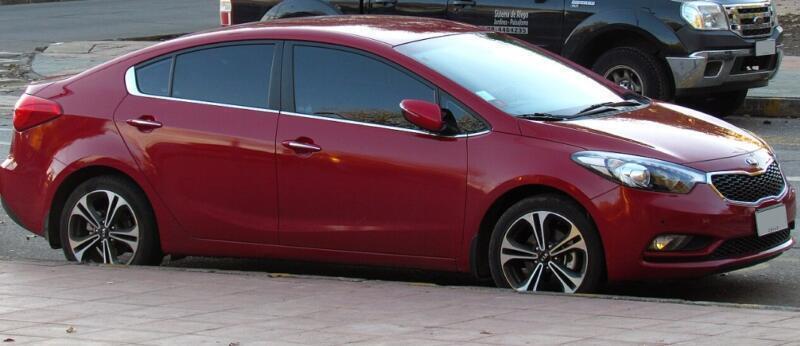
Choosing between the Kia Cerato vs Kia Stonic in New Zealand looks straightforward until we actually start comparing how these two cars fit into everyday Kiwi life. One is a traditional passenger car with a longer, lower body and noticeably stronger performance in many versions. The other is a compact crossover that puts seating height, efficiency, city-friendly dimensions, and SUV styling ahead of outright size.
There is another important difference for New Zealand buyers in 2026. The Stonic remains part of Kia New Zealand's current new-vehicle range, while the Cerato is no longer included among Kia NZ's current new models. In practical terms, that means many people making this comparison are really choosing between a brand-new Kia Stonic and a used Kia Cerato.
And that changes the conversation completely.
We cannot simply ask, "Which car is better?" We need to ask which one makes more sense for our budget, driving habits, passengers, luggage, roads, and expectations.
Let's dig in.
- Kia Cerato vs Kia Stonic New Zealand at a Glance
- Is the Kia Cerato Still Sold New in New Zealand?
- New Kia Stonic Pricing in New Zealand
- Kia Cerato Used Prices: Why the Comparison Gets Interesting
- Kia Cerato vs Kia Stonic Engine Performance
- Fuel Economy: Stonic Strikes Back
- Kia Cerato vs Kia Stonic Size
- Interior Space: Cerato Has the Upper Hand
- Boot Space: Cerato vs Stonic
- Driving Position: SUV Height vs Car-Like Feel
- Ground Clearance and New Zealand Roads
- Kia Stonic vs Cerato for Auckland Driving
- Which Is Better for Wellington?
- Which Kia Is Better for South Island Road Trips?
- Safety Technology
- Stonic LX vs GT-Line
- Reliability: New Stonic or Used Cerato?
- Maintenance Costs
- Kia Cerato vs Kia Stonic for Families
- Which Is Better for First-Time Buyers?
- Resale Value and Depreciation
- Kia Cerato vs Kia Stonic: Advantages and Disadvantages
- Kia Cerato vs Kia Stonic New Zealand: Our Verdict
- Conclusion
- Frequently Asked Questions
Kia Cerato vs Kia Stonic New Zealand at a Glance
The Cerato and Stonic wear the same Kia badge, but they approach motoring from different directions.
The Cerato was Kia's conventional small-family-car offering in New Zealand, sold in sedan and hatch/liftback configurations depending on model year. Recent NZ-market versions typically used a naturally aspirated 2.0-litre petrol engine, while the sportier Cerato GT stepped things up significantly with a turbocharged 1.6-litre engine.
The current New Zealand Stonic is a much smaller crossover. Both LX and GT-Line variants use a 998cc turbocharged petrol engine producing 74kW and 172Nm, paired with a seven-speed dual-clutch transmission and front-wheel drive. Kia NZ lists combined consumption at 5.4L/100km under the 3P-WLTP standard.
Here's the basic personality split:
- Choose the Cerato if we prioritise passenger space, cargo room, highway comfort and potentially stronger performance.
- Choose the Stonic if we want a new Kia, lower fuel consumption, compact dimensions, a higher crossover-style seating position and a current factory warranty.
- Consider the Cerato GT if performance matters significantly more than fuel economy.
- Consider the Stonic GT-Line if modern equipment and SUV-inspired styling matter more than extra cabin size.
Neither approach is inherently superior. They're simply different tools.
A Cerato is a comfortable pair of trainers. A Stonic is more like a compact hiking shoe: shorter, slightly taller and designed to look ready for whatever appears around the corner.
Is the Kia Cerato Still Sold New in New Zealand?
This is where older comparison articles can become misleading.
As of August 2026, Kia New Zealand's current passenger-vehicle listings include models such as the Picanto, Stonic, Seltos and numerous larger SUVs and electrified models, but the Cerato is not included in the current new-car range.
That does not mean Ceratos have disappeared from New Zealand roads. Far from it. Plenty remain available through used-car dealers and private sellers.
Recent-generation Ceratos are particularly interesting because they still feel contemporary.
When Kia introduced the MY22 Cerato in New Zealand, the regular versions used a 2.0-litre petrol engine producing 112kW and 192Nm. The GT instead used a 1.6-litre turbocharged petrol engine producing 150kW and was paired with a seven-speed dual-clutch transmission.
That gives the used Cerato an unusual advantage: depending on the price of the example we're considering, we may get significantly more car and significantly more power for our money than with a brand-new Stonic.
The trade-off? Age, mileage and vehicle history suddenly enter the equation.
New Kia Stonic Pricing in New Zealand
Kia NZ currently lists two main Stonic grades.
The Stonic LX 1.0 Turbo GDI starts at NZ$29,990 plus on-road costs, while the Stonic GT-Line 1.0 Turbo GDI is listed at NZ$35,990 plus on-road costs. Those prices are shown by Kia New Zealand during its current July 1 to September 30, 2026 campaign period, so shoppers should recheck pricing if purchasing outside that window.
That places the Stonic in an interesting position.
It isn't bargain-basement transport, but it remains one of the more accessible ways into a new Kia crossover.
We also know exactly what we're buying. There is no mysterious former owner, questionable service history or worn suspension lurking beneath a shiny coat of detailing spray.
For buyers who value predictability, that matters.
Kia Cerato Used Prices: Why the Comparison Gets Interesting
Used Cerato prices vary too much for us to quote one meaningful number without specifying year, mileage and trim. That's exactly why this matchup becomes compelling.
A used Cerato may cost considerably less than a new Stonic while delivering:
greater interior space, a larger engine, more power and, depending on specification, a richer equipment list.
However, the sticker price tells only half the story.
What We Should Check on a Used Cerato
Before comparing a used Cerato directly with a new Stonic, we should look at:
- Registration year
- Odometer reading
- Complete service history
- Previous ownership
- Tyre condition
- Brake wear
- Remaining warranty coverage, if applicable
- Accident or insurance history
- Transmission operation
- Whether recalls or service campaigns have been completed
A cheap Cerato with neglected servicing isn't necessarily better value than a new Stonic. Cheap cars can sometimes behave like cheap hotel rooms: the bargain disappears once we discover what's broken.
Kia Cerato vs Kia Stonic Engine Performance
This is one of the clearest differences between the two.
Current Kia Stonic Engine
The New Zealand Stonic uses a 1.0-litre turbocharged three-cylinder petrol engine generating:
74kW of power and 172Nm of torque.
It sends that output to the front wheels through a seven-speed dual-clutch transmission.
Those numbers aren't going to make anyone mistake the Stonic for a performance SUV.
But that isn't its job.
Its relatively strong low-rpm torque is useful around town, while the compact dimensions suit Auckland traffic, Wellington's tight streets or supermarket car parks where every centimetre suddenly feels valuable.
Kia Cerato 2.0-Litre Engine
The MY22 New Zealand Cerato's mainstream engine produced:
112kW and 192Nm.
That's considerably more power than the Stonic.
We notice that difference most when overtaking, climbing longer hills or accelerating with passengers and luggage onboard.
The Cerato 2.0 doesn't need to pretend it's sporty. It simply has more engine beneath our right foot.
Kia Cerato GT Performance
Then there is the Cerato GT.
Its 1.6-litre turbocharged engine produced 150kW, paired with a seven-speed dual-clutch transmission. The NZ-market GT also received sport-oriented suspension and 18-inch wheels.
Comparing that Cerato with the Stonic purely on performance is hardly fair.
The Cerato GT wins.
Easily.
Which Engine Would We Rather Have?
For relaxed urban commuting, the Stonic's 1.0 turbo makes sense.
For regular open-road driving, a 2.0-litre Cerato feels more effortless.
For drivers who actually enjoy attacking a winding road, the Cerato GT is in another league.
Fuel Economy: Stonic Strikes Back
Power isn't everything, particularly when we're paying to fill the tank.
The current Stonic's official New Zealand combined fuel-consumption figure is 5.4L/100km, with Kia specifying minimum 95-octane fuel. The Stonic also uses a 45-litre fuel tank.
That's one of its strongest arguments.
A smaller turbo engine in a relatively compact vehicle means the Stonic can be inexpensive to run compared with a larger-engined Cerato, particularly for commuting and lighter everyday driving.
Of course, official consumption and real-world fuel economy aren't identical twins. Traffic, hills, temperature, tyre pressure, passenger load and driving style all affect what we actually see.
Still, if fuel consumption sits near the top of our priority list, the Stonic has the stronger starting point.
Kia Cerato vs Kia Stonic Size
Here's where their silhouettes tell the truth.
The Stonic is genuinely compact.
Kia New Zealand lists the current model at:
4,165mm long, 1,760mm wide and between 1,500mm and 1,520mm high, depending on version. Its wheelbase is 2,580mm.
Those dimensions make the Stonic refreshingly manageable in the city.
The Cerato is the larger-feeling vehicle, particularly in length and cabin utilisation. That extra footprint benefits passengers and luggage, but we pay for it when squeezing into a tight parking space.
Which Is Easier to Park?
Stonic.
No dramatic debate needed.
Its shorter body makes parallel parking and navigating cramped urban car parks easier.
The current Stonic also includes front and rear parking sensors plus a reversing camera with dynamic guidelines across the NZ range.
For city dwellers, that convenience accumulates every single day.
Interior Space: Cerato Has the Upper Hand
The Stonic may look like an SUV, but the badge doesn't magically stretch its cabin.
Compact crossovers often create an impression of spaciousness because we sit more upright. In actual usable room, however, a longer conventional passenger car can offer more breathing space.
That's where the Cerato shines.
Kia described the Cerato's cabin as especially roomy when introducing previous NZ versions, with the hatchback's long wheelbase helping create generous passenger and luggage accommodation.
For couples or solo drivers, the Stonic should be perfectly workable.
For a household regularly carrying four adults, teenagers or bulky child seats, the Cerato's extra room becomes more valuable.
Boot Space: Cerato vs Stonic
The current Stonic provides 332 litres of luggage capacity with the rear seats upright and 1,135 litres with them folded, measured using the VDA standard.
That's respectable for such a compact crossover.
But the Cerato hatch was designed with luggage capacity as one of its strengths.
Kia NZ quoted 428 litres for an earlier Cerato hatch with the seats up, while the MY22 liftback was quoted at up to 1,335 litres with the rear seats folded.
Numbers aren't perfectly comparable across every year and body style, so we should check the exact Cerato we're considering.
Still, the broader message stands:
Cerato for Bulk, Stonic for Convenience
The Cerato generally gives us more overall carrying potential.
The Stonic gives us a small vehicle with a useful hatch opening and folding rear seats.
Think of the Cerato as the bigger suitcase and the Stonic as the easier suitcase to carry.
Driving Position: SUV Height vs Car-Like Feel
One reason compact crossovers sell so well has little to do with four-wheel-drive capability.
People simply like sitting higher.
The Stonic gives us that slightly elevated crossover sensation. Getting in and out can feel easier, and some drivers enjoy the more commanding perspective in urban traffic.
The Cerato sits lower.
That creates a more traditional passenger-car driving position and, for enthusiastic drivers, often a stronger feeling of connection with the road.
Neither is automatically more comfortable.
It depends on us.
If climbing down into a low car annoys us, the Stonic has immediate appeal.
If we prefer feeling planted rather than perched, the Cerato wins.
Ground Clearance and New Zealand Roads
The Stonic LX has 165mm of minimum ground clearance, while Kia lists 183mm for the GT-Line.
That extra height can be reassuring around steep driveways, rough entrances and mildly uneven roads.
But we should keep perspective.
The Stonic is front-wheel drive, not a rugged off-roader. Its SUV styling doesn't transform gravel tracks into highways.
For normal sealed roads and well-maintained gravel, either car can work perfectly well with appropriate tyres and sensible driving.
The Stonic simply gives us a little extra margin underneath.
Kia Stonic vs Cerato for Auckland Driving
For Auckland commuters, the Stonic has a compelling argument.
Why?
It's short, economical and easy to manoeuvre.
When our driving consists mainly of suburban streets, motorway congestion and shopping-centre parking, 150kW starts looking far less important than fuel consumption and easy parking.
The Stonic's 5.2-metre minimum turning radius further supports its city-car credentials.
The Cerato remains comfortable and perfectly usable around Auckland, but the Stonic feels more tailored to dense urban life.
Which Is Better for Wellington?
Wellington adds hills, narrow streets and tight parking into the equation.
Again, the Stonic's compact footprint helps.
Its turbo engine produces maximum 172Nm torque from 1,500 to 4,000rpm, so we don't necessarily need a large engine to deal comfortably with ordinary slopes.
That said, a 2.0-litre Cerato gives us more outright power.
If most of our driving involves city streets, Stonic.
If Wellington is simply where we live but our weekends involve frequent open-road trips, the Cerato deserves another look.
Which Kia Is Better for South Island Road Trips?
Now the balance starts leaning toward the Cerato.
Longer journeys reward power, cabin space and effortless cruising.
Throw suitcases into the boot, add several passengers, point the nose toward Queenstown or Christchurch, and the larger Cerato begins making more sense.
The Stonic can absolutely tour New Zealand. Its fuel efficiency may even make those journeys cheaper.
It simply won't feel as substantial or powerful when fully loaded.
What About Mountain Roads?
For climbing, overtaking and accelerating out of bends, the additional output of a Cerato 2.0 or particularly a Cerato GT is attractive.
The Stonic is more about efficiency than urgency.
That's the simplest way to frame it.
Safety Technology
Safety equipment depends heavily on the exact Cerato model year and trim, which is why used-car buyers must compare individual specifications rather than assuming every Cerato is identical.
The MY22 Cerato range offered a comprehensive driver-assistance suite in New Zealand, including forward collision avoidance, lane keeping assistance, lane following assistance, blind-spot collision avoidance and rear cross-traffic collision avoidance. Kia also stated that the range carried a five-star ANCAP rating at the time.
The current Stonic includes forward collision avoidance, lane keeping and lane following systems, multi-collision braking, front and rear parking sensors and multiple airbags. The GT-Line additionally receives blind-spot collision avoidance and rear cross-traffic collision avoidance according to Kia NZ's current specification table. Kia currently lists the Stonic's ANCAP field as unrated.
That's an important distinction.
We should never compare safety purely by the number of acronyms in the brochure. Exact model, build date, crash-test applicability and equipment matter.
Stonic LX vs GT-Line
If we choose the Stonic, there's another question waiting.
Do we need the GT-Line?
Mechanically, both current NZ versions share the 1.0-litre turbo engine, seven-speed DCT and front-wheel-drive layout.
The GT-Line therefore isn't about buying vastly more performance.
It's primarily about equipment, styling and additional features.
The GT-Line adds items such as blind-spot collision avoidance and rear cross-traffic collision avoidance, while exterior differences include larger 17-inch wheels compared with the LX's 16-inch alloys.
Which Stonic Gives Better Value?
For pure value, we'd start with the LX.
If we care strongly about additional safety assistance and visual polish, the GT-Line deserves consideration.
But because the price difference is meaningful, we shouldn't assume "higher trim = smarter purchase."
Sometimes the base car does 95% of what we need.
Reliability: New Stonic or Used Cerato?
This question isn't as simple as comparing model names.
A new Stonic arrives without years of previous use. That alone removes several uncertainties surrounding worn components, neglected servicing and unknown driving history.
Kia New Zealand currently advertises a five-year/150,000km warranty programme for new Kia passenger vehicles, whichever limit comes first.
A used Cerato may still be extremely dependable, particularly if serviced properly, but its condition matters more than the reputation of the badge.
A beautifully maintained Cerato with documented servicing could be a far better purchase than a newer but neglected example.
When buying used, condition beats mythology.
Every time.
Maintenance Costs
The Stonic's advantage is predictability.
We begin with a new vehicle, current warranty coverage and no accumulated wear from previous ownership.
A used Cerato introduces more variables.
Tyres may be halfway finished. Brake pads may need replacement. The battery may be ageing. Suspension components may have endured years of potholes and speed bumps.
None of those things automatically make the Cerato expensive.
But we should build them into our purchasing budget.
A Useful Used-Car Rule
If our entire budget is NZ$20,000, spending exactly NZ$20,000 on the used car isn't always wise.
Keeping a maintenance reserve gives us breathing room.
Cars enjoy producing surprise bills at inconvenient moments.
Kia Cerato vs Kia Stonic for Families
For small families, both can work.
The Stonic makes sense when the children are young, city driving dominates and the household values compact dimensions.
The Cerato becomes increasingly appealing when passengers get taller and luggage multiplies.
Pushchairs, school bags, sports equipment and holiday luggage have an incredible ability to consume boot space like water disappearing down a drain.
That's why families should physically test the vehicles.
Bring the child seat.
Bring the pushchair.
Sit behind the driver's normal seating position.
A specification sheet cannot tell us whether our actual belongings fit.
Which Is Better for First-Time Buyers?
This one depends heavily on budget.
A used Cerato can provide a remarkable amount of car for the money.
Meanwhile, a new Stonic offers a different kind of value: certainty.
For inexperienced buyers who don't want to evaluate used-car condition, warranty coverage and service records, the new Stonic simplifies ownership.
For someone confident buying used—or willing to pay for a professional pre-purchase inspection—the Cerato may stretch the dollar further.
Resale Value and Depreciation
New and used cars sit at different points on the depreciation curve.
A brand-new Stonic begins depreciating from its new-car purchase price.
A several-year-old Cerato has already absorbed some of its initial depreciation.
That can benefit used buyers.
However, resale value also depends on mileage, condition, service records, fuel prices, market demand and how long we keep the vehicle.
So instead of asking which one "holds value better," we prefer another question:
How much will owning this specific car cost us between the day we buy it and the day we sell it?
That's the number that matters.
Kia Cerato vs Kia Stonic: Advantages and Disadvantages
Reasons to Choose the Kia Cerato
The Cerato makes sense if we want:
- More interior room
- Stronger engine performance
- Better suitability for regular highway journeys
- Generous hatch/liftback cargo capacity
- Potentially excellent used-car value
- A lower, more traditional car driving position
- Access to the much quicker Cerato GT
Reasons to Choose the Kia Stonic
The Stonic makes sense if we want:
- A brand-new Kia currently sold in New Zealand
- Manufacturer warranty coverage
- Compact exterior dimensions
- SUV-inspired styling
- A slightly higher seating position
- Official combined fuel consumption of 5.4L/100km
- Easy urban manoeuvrability
- Modern standard driver-assistance technology
Kia Cerato vs Kia Stonic New Zealand: Our Verdict
So, which should we buy?
If both vehicles were sitting outside with identical prices, age and condition, we'd probably choose the Cerato for space and performance and the Stonic for urban convenience and economy.
But that's not the real New Zealand market in 2026.
The more realistic comparison is a used Kia Cerato versus a new Kia Stonic.
And that changes everything.
The Cerato is the value play.
For the right price, a well-maintained Cerato gives us a bigger cabin, substantial luggage room and considerably stronger performance from its mainstream 2.0-litre engine. Find a good Cerato GT and the performance gap grows into a canyon.
The Stonic is the peace-of-mind play.
We're buying a current model from Kia NZ with new-car warranty coverage, modern technology, excellent compact dimensions and strong claimed fuel efficiency. We know where the car has been because, essentially, it hasn't been anywhere yet.
For commuters, couples, city dwellers and buyers who simply want easy new-car ownership, we'd lean toward the Stonic.
For larger households, regular road-trippers or anyone seeking maximum car for a fixed used-car budget, we'd seriously consider the Cerato.
The better Kia isn't the taller one or the faster one.
It's the one whose compromises we barely notice.
Conclusion
The Kia Cerato vs Kia Stonic New Zealand comparison demonstrates exactly why vehicle shopping cannot be reduced to one specification table.
The Stonic is smaller yet newer. Less powerful yet more efficient. Less spacious yet easier to manoeuvre.
The Cerato is older on today's used market yet often larger, quicker and potentially cheaper to purchase.
If we want a new urban crossover with warranty protection and low official fuel consumption, the Kia Stonic is the logical choice.
If we're comfortable buying used and value passenger space, luggage capacity and stronger performance, a carefully selected Kia Cerato can represent excellent value.
Our final advice?
Drive both.
Specifications introduce cars.
The test drive tells us which one we'd actually want to live with.
Frequently Asked Questions
1. Is the Kia Cerato still available new in New Zealand?
Kia New Zealand's current 2026 new-vehicle lineup does not list the Cerato, while the Stonic remains a current model. Ceratos are therefore predominantly a used-car proposition in NZ today.
2. Is a Kia Stonic bigger than a Kia Cerato?
Not in overall usable-car terms. The Stonic is a compact crossover measuring 4,165mm long and 1,760mm wide, while recent Ceratos are longer passenger cars and generally offer more interior and luggage space. The Stonic feels taller because of its crossover body style.
3. Which is more fuel efficient, the Kia Cerato or Kia Stonic?
The current NZ Kia Stonic has an official combined figure of 5.4L/100km under the 3P-WLTP standard. Used Cerato consumption varies by engine, model year and driving conditions, but its larger engines generally make the Stonic the more economy-focused choice.
4. Which is faster, Kia Cerato or Kia Stonic?
The Cerato wins on outright performance. The current Stonic produces 74kW and 172Nm, whereas the NZ MY22 Cerato 2.0 produced 112kW and 192Nm. The Cerato GT went further with a 150kW 1.6-litre turbo engine.
5. Should I buy a used Kia Cerato or a new Kia Stonic in NZ?
Choose the Cerato if space, stronger performance and used-car value are priorities. Choose the Stonic if you prefer new-car warranty coverage, compact dimensions, fuel efficiency and easier city driving. For a used Cerato, always evaluate the specific vehicle's mileage, service record and mechanical condition rather than judging by model name alone.
This content may interest you! Kia Cerato or Similar New Zealand: What Car Will You Actually Get?
Leave a Reply