
Tesla Model Y Battery Degradation Explained
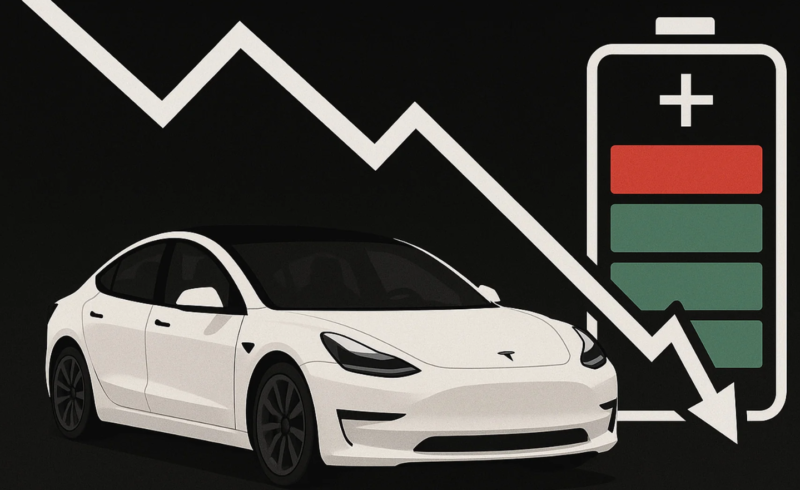
Understanding battery degradation is crucial for any Tesla Model Y owner, as it directly impacts vehicle performance, range, and resale value. While early fears of rapid battery wear have largely been mitigated by Tesla’s advanced thermal management and battery chemistry, gradual capacity loss is inevitable over time.
This article explores the scientific factors behind degradation, including charging habits, temperature extremes, and cycle count. It also explains Tesla’s battery warranty, real-world data from fleet studies, and practical tips to minimize decline such as avoiding frequent full charges or frequent deep discharges.
By demystifying the process, this guide helps owners make informed decisions to extend their Model Y’s battery life and maximize long-term value.
- Tesla Model Y Battery Degradation Explained
- Understanding the Core Factors Behind Tesla Model Y Battery Degradation
- How Charging Habits (Supercharging vs. Slow AC) Affect Degradation
- The Impact of Temperature Extremes on Tesla Model Y Battery Health
- State of Charge (SOC) Management and Its Role in Longevity
- Battery Degradation Data: What Real-World Owners Report
- Software Updates and Battery Management Algorithms Impact
- Frequently Asked Questions
Tesla Model Y Battery Degradation Explained
Battery degradation refers to the gradual loss of a battery's capacity to hold a charge over time, which is a natural phenomenon in all lithium-ion batteries used in electric vehicles like the Tesla Model Y. This process depends on factors such as charging habits, temperature exposure, and the number of charge cycles.
Typically, Tesla batteries lose about 5% to 10% of their capacity in the first 100,000 miles, after which degradation slows significantly. Understanding how to manage these factors can help extend the battery's lifespan and maintain consistent range.
What Causes Battery Degradation in the Tesla Model Y?
The primary causes of battery degradation in the Tesla Model Y include high temperatures, frequent fast charging, and consistently charging to 100% state of charge. Heat accelerates chemical reactions inside the battery, leading to faster capacity loss, while fast charging generates more heat than slower methods.
Additionally, keeping the battery at extreme low or high states of charge for extended periods stresses the cells. Tesla's Battery Management System helps mitigate some effects, but user habits like using Superchargers daily or parking in direct sunlight can worsen degradation.
How Much Degradation Is Normal for a Tesla Model Y?
For most Tesla Model Y owners, normal degradation ranges from 5% to 12% after 200,000 miles of driving, based on data from fleet studies and user reports. The largest drop typically happens in the first 30,000 miles (around 5%), then tapers off to about 1% per 30,000 miles thereafter.
Factors like climate, driving style, and charging routine can cause variations, but Tesla's battery and motor warranty covers capacity loss exceeding 30% within 8 years or 120,000 miles (for Long Range models), offering peace of mind.
Tips to Reduce Battery Degradation in a Tesla Model Y
To minimize battery degradation, follow these best practices: keep the battery between 20% and 80% state of charge for daily use, avoid frequent Supercharging unless necessary, and park in shaded or temperature-controlled areas whenever possible.
Using Tesla's scheduled charging feature to charge overnight at lower power levels helps reduce heat stress. Also, enabling range mode and limiting deep discharges can further extend the battery's life, ensuring your Tesla Model Y retains more capacity over time.
| Year | Miles Driven | Average Degradation % |
|---|---|---|
| 1st Year | 0 - 30,000 | 5% |
| 2nd Year | 30,000 - 60,000 | 2% |
| 3rd Year | 60,000 - 90,000 | 1% |
| 5th Year | 100,000 - 150,000 | 1% per 30,000 miles |
Understanding the Core Factors Behind Tesla Model Y Battery Degradation
Battery degradation in the Tesla Model Y is an inevitable electrochemical process where the lithium-ion cells gradually lose their ability to hold a full charge over time and usage.
This phenomenon is primarily driven by cycle aging (charge/discharge cycles) and calendar aging (time and temperature), with Tesla's NCA (Nickel-Cobalt-Aluminum) and newer LFP (Lithium Iron Phosphate) chemistries exhibiting distinct degradation curves.
Typically, owners see the most rapid capacity loss in the first 30,000 to 50,000 miles, which often stabilizes around 90% capacity retention, making understanding these factors critical for long-term ownership.
How Charging Habits (Supercharging vs. Slow AC) Affect Degradation
Frequent Supercharging at high DC fast-charging rates can accelerate battery wear due to increased internal resistance and heat generation, while regular Level 2 AC charging is significantly gentler on the cells.
Tesla's Battery Management System (BMS) actively mitigates this by throttling charging speeds at high states of charge (above 80%), but consistent reliance on supercharging may still lead to slightly faster capacity loss over thousands of miles compared to slower, overnight charging.
The Impact of Temperature Extremes on Tesla Model Y Battery Health
High ambient temperatures are a primary accelerator of calendar aging, as prolonged exposure above 35°C (95°F) degrades the electrolyte and passivation layer on the anode. Conversely, extremely cold conditions temporarily reduce usable capacity and increase internal resistance, but they cause less permanent damage.
Tesla's thermal management system (preconditioning) helps mitigate these effects by keeping the battery within an optimal temperature range, especially when the vehicle is plugged in.
State of Charge (SOC) Management and Its Role in Longevity
Keeping the battery at extremely high states of charge (90-100%) or very low states (below 10%) for extended periods stresses the cathode structure and causes faster lithium inventory loss. Tesla recommends a daily charge limit of 80-90% for Long Range (NCA) batteries and 100% for LFP batteries (as they have a flatter voltage curve and tolerate full charge better).
Avoiding prolonged idling at full or empty charge is crucial for minimizing degradation.
Battery Degradation Data: What Real-World Owners Report
Real-world data from Tesla owners and fleet studies show that the Model Y's battery typically degrades 5-10% in the first 100,000 miles (160,000 km), with the steepest drop occurring in the first 30,000 miles. After this initial phase, the degradation curve flattens significantly, often showing only 1-2% further loss per 50,000 miles.
Factors like driving style, climate, and charging consistency contribute heavily to individual variance, with many Long Range models retaining about 90% capacity at 150,000 miles.
Software Updates and Battery Management Algorithms Impact
Tesla's over-the-air (OTA) software updates can both improve and, in rare cases, temporarily alter reported battery degradation by recalibrating the BMS estimation algorithms. Updates often refine thermal management, charging curves, and voltage balancing, which can optimize battery longevity.
However, some updates may cause temporary "phantom loss" that corrects after a few full charge cycles, highlighting the importance of understanding that reported degradation is an estimate that can be influenced by software rather than true physical damage.
Frequently Asked Questions
What is the average degradation rate for a Tesla Model Y battery?
Tesla Model Y batteries typically degrade about 5-10% over the first 100,000 miles, with the most significant loss occurring early on. After that, degradation slows considerably, averaging roughly 1% per 20,000-30,000 miles. This means after 200,000 miles, you might see around 10-15% total capacity loss under normal driving and charging conditions.
What factors accelerate Tesla Model Y battery degradation?
Key factors include frequent use of rapid Supercharging, regularly charging to 100% or draining to 0%, and exposing the battery to extreme temperatures. Additionally, aggressive driving patterns and storing the vehicle at high state-of-charge for long periods can accelerate degradation. Following Tesla's recommended charging practices helps minimize these effects.
How does the Tesla Model Y battery chemistry affect long-term degradation?
The Model Y uses lithium-ion batteries with nickel-rich NCA or NMC chemistries, which offer high energy density but are sensitive to high voltage and temperature. This chemistry degrades faster at the top and bottom charge extremes compared to LFP batteries found in some base models. Tesla's battery management system actively manages voltage and temperature to balance longevity.
Does warranty cover Tesla Model Y battery degradation?
Yes, Tesla includes an 8-year/120,000-mile warranty for Model Y batteries, guaranteeing at least 70% capacity retention over that period. If capacity drops below 70% due to a defect, Tesla will repair or replace the battery at no cost. Normal degradation above this threshold, however, is not covered. Always check your specific warranty terms for exact coverage details.
This content may interest you! How to Keep Your Hybrid Battery Healthy
Leave a Reply