
Kia Cerato Won’t Start: Causes, Diagnosis, and Fixes
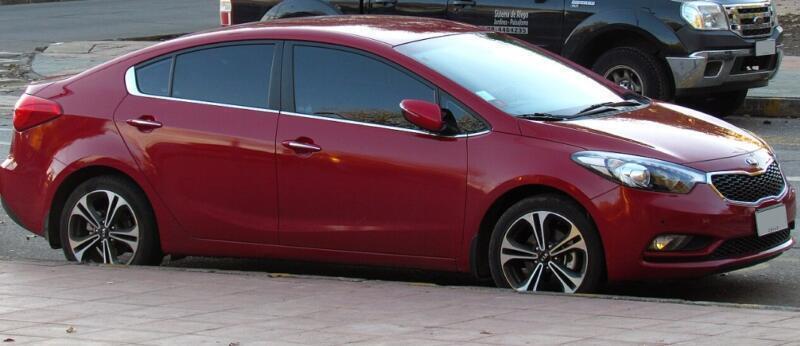
Few things ruin the start of a day faster than turning the key—or pressing the start button—only to discover that our Kia Cerato won’t start. Maybe we hear a rapid clicking noise. Perhaps the engine cranks normally but refuses to fire. Or worse, absolutely nothing happens.
At first, it can feel like the car has suddenly decided to take the day off.
Fortunately, a Kia Cerato that refuses to start does not automatically mean the engine has suffered a catastrophic failure. In many cases, the culprit is something relatively ordinary: a weak battery, corroded terminals, a faulty starter motor, an immobilizer issue, low fuel pressure, or a sensor that has stopped communicating correctly with the engine computer.
The trick is understanding what the car is doing when we try to start it.
That one observation can dramatically narrow the search.
In this guide, we’ll walk through the most common reasons a Kia Cerato won’t start, explain the symptoms associated with each problem, and show how we can approach diagnosis logically rather than randomly replacing parts.
- Why Won’t My Kia Cerato Start?
- Kia Cerato Won’t Start but Lights Work
- Weak or Dead Battery
- Can You Jump-Start a Kia Cerato?
- Corroded or Loose Battery Terminals
- Kia Cerato Won’t Start but Battery Is Good
- Kia Cerato Cranks but Won’t Start
- Fuel Pump Failure
- Fuel Pump Fuse or Relay
- Running Out of Fuel
- Crankshaft Position Sensor Failure
- Camshaft Position Sensor Problems
- Kia Cerato Starter Motor Problems
- Kia Cerato Won’t Start With Push Button
- Kia Cerato Immobilizer Problems
- Brake Pedal Switch Failure
- Kia Cerato Won’t Start in Park
- Manual Kia Cerato Won’t Start
- Kia Cerato Won’t Start After Sitting Overnight
- Kia Cerato Won’t Start When Hot
- Spark Plug and Ignition Coil Problems
- Could the Timing Chain Cause a No-Start?
- Low Engine Compression
- Kia Cerato Won’t Start After Battery Replacement
- Could the Alternator Stop the Kia Cerato Starting?
- Kia Cerato Starts Then Immediately Dies
- Check Engine Light and Diagnostic Codes
- Step-by-Step Diagnosis When a Kia Cerato Won’t Start
- Common Kia Cerato No-Start Symptoms Explained
- What Not to Do When the Cerato Won’t Start
- How Much Does a Kia Cerato No-Start Repair Cost?
- Can We Prevent Starting Problems?
- When Should You Call a Mechanic?
- Is a Kia Cerato That Won’t Start Usually Serious?
- Conclusion: Diagnosing a Kia Cerato That Won’t Start
- Frequently Asked Questions
Why Won’t My Kia Cerato Start?
A Cerato requires several systems to cooperate before the engine starts.
We need:
- Enough battery voltage
- A functioning starter motor
- Fuel reaching the engine
- A usable ignition spark
- Correct engine timing
- Working crankshaft and camshaft sensors
- Authorization from the immobilizer system
- Proper communication between electronic modules
Remove just one piece of that puzzle and the car may sit silently in the driveway.
The first thing we should therefore determine is whether the engine does not crank at all or cranks but does not start.
These two situations point toward very different faults.
Kia Cerato Won’t Start but Lights Work
One of the most confusing situations happens when the dashboard lights, radio, and headlights still work.
It is tempting to assume the battery must therefore be healthy.
Not necessarily.
Accessories require considerably less electrical current than the starter motor. A battery may have enough energy to illuminate the dashboard while still being too weak to crank the engine.
Think of it like someone strong enough to lift a grocery bag but not strong enough to lift a refrigerator.
If the lights work but the Cerato will not start, likely causes include:
- Weak battery
- Poor battery-terminal connection
- Starter motor failure
- Starter solenoid failure
- Neutral safety switch or clutch switch problem
- Immobilizer malfunction
- Starter relay or fuse issue
Check What Happens When You Turn the Key
The sound the car makes provides valuable clues.
Rapid Clicking
Repeated clicking usually points toward insufficient battery voltage.
The starter solenoid repeatedly engages and releases because the battery cannot maintain enough voltage.
One Solid Click
A single click may indicate:
- Starter motor failure
- Starter solenoid trouble
- Poor battery cable connection
- Weak battery
- Engine grounding problem
Complete Silence
If absolutely nothing happens, investigate:
- Battery condition
- Ignition switch
- Starter relay
- Transmission range switch
- Clutch safety switch
- Immobilizer
- Wiring
Weak or Dead Battery
The battery is probably the most common starting point whenever a Kia Cerato refuses to start.
Car batteries gradually lose their ability to hold charge, particularly after several years of use. Hot climates, cold mornings, short journeys, electrical accessories, and long periods of inactivity can accelerate deterioration.
Symptoms of a Weak Battery
Typical signs include:
- Starter turns slowly
- Rapid clicking
- Dashboard lights dim while cranking
- Interior electronics reset
- Clock loses its settings
- Car starts after a jump-start
- Headlights dim dramatically during attempted startup
A healthy resting battery typically sits around 12.6 volts, although voltage alone cannot completely determine battery condition.
During cranking, voltage should generally remain above roughly 9.6–10 volts.
A battery can show acceptable voltage while having insufficient cold-cranking capacity.
Can You Jump-Start a Kia Cerato?
Yes, assuming the problem is simply a discharged conventional 12-volt battery and the vehicle manufacturer’s jump-start procedure is followed.
If the Cerato starts immediately after receiving external power, the battery deserves closer inspection.
But we should not automatically blame the battery.
The charging system could be responsible.
After starting the engine, the alternator should replenish the battery. If the alternator is failing, the new charge disappears and the car may refuse to start again later.
If the Cerato Starts With Jumper Cables
Check:
- Battery condition
- Battery age
- Alternator output
- Battery terminals
- Ground cables
- Parasitic electrical drain
Replacing a battery without checking the charging system can turn into an expensive guessing game.
Corroded or Loose Battery Terminals
Sometimes the battery itself is perfectly usable, but electricity cannot travel efficiently through the connections.
Corrosion often appears as white, blue, or greenish material around battery terminals.
Loose terminals can create similar symptoms.
We may notice:
- Intermittent starting
- Clicking
- Lights flickering
- Electronics resetting
- Starter operating sometimes but not others
Inspect both battery terminals and the ground connection between the battery, body, and engine.
Connections should be clean and secure.
Why Ground Connections Matter
Electricity needs a complete circuit.
The starter may receive power through the positive cable, but if the engine ground is poor, the circuit becomes restricted.
A bad ground strap can imitate a failing battery or starter motor almost perfectly.
Kia Cerato Won’t Start but Battery Is Good
Suppose the battery has been tested and is definitely healthy.
What next?
Our attention moves toward the starter circuit and engine-management system.
Possible causes include:
- Starter motor
- Starter relay
- Starter fuse
- Ignition switch
- Neutral safety switch
- Immobilizer
- Crankshaft sensor
- Fuel pump
- Engine control system
How the engine behaves remains critical.
If it does not rotate, investigate the starter circuit.
If it rotates normally but does not fire, look toward fuel, spark, sensors, and immobilizer control.
Kia Cerato Cranks but Won’t Start
This situation changes the diagnostic direction considerably.
If the engine turns over strongly, the starter motor and battery are probably doing their jobs.
Now the engine is missing something necessary for combustion.
That usually means one of four things:
- Fuel
- Spark
- Compression
- Correct engine timing or electronic input
Modern Ceratos rely heavily on sensors and electronic control. A tiny sensor buried near the engine can stop an otherwise mechanically healthy car from starting.
Fuel Pump Failure
The fuel pump transfers fuel from the tank toward the engine.
If it stops operating, the engine may crank indefinitely without starting.
Some Cerato models allow us to hear the pump briefly when the ignition is switched on.
We might hear a short humming sound coming from the rear of the vehicle.
No sound does not automatically prove the pump is defective, but it provides a useful clue.
Symptoms of a Failing Fuel Pump
A deteriorating fuel pump may cause:
- Long cranking
- Difficulty starting when hot
- Intermittent no-start condition
- Hesitation during acceleration
- Loss of power
- Engine stalling
- Cranking without ignition
Fuel pressure should ideally be checked with appropriate diagnostic equipment before replacing the pump.
Fuel Pump Fuse or Relay
Before condemning an expensive pump, check the simpler components supplying electricity to it.
A blown fuse or faulty relay can produce exactly the same no-start condition.
Relays can also fail intermittently.
That is why a Cerato may start perfectly one morning and behave like a brick the next.
Where applicable, technicians can test the relay, check voltage at the pump, and verify whether the engine control module is commanding pump operation.
Running Out of Fuel
Yes, this sounds almost embarrassingly obvious.
Still, fuel gauges and fuel-level sensors can occasionally provide misleading readings.
If the Cerato suddenly stopped starting shortly after the fuel level became very low, adding a reasonable quantity of fuel can eliminate uncertainty.
This is especially worth considering when the gauge behaves strangely.
Crankshaft Position Sensor Failure
The crankshaft position sensor tells the engine computer how quickly the crankshaft is rotating and where it is positioned.
Without this information, the computer may not know when to inject fuel or trigger ignition.
Result?
This content may interest you! Toyota Voxy Not Starting: Causes, Checks, and Fixes
The engine spins but refuses to come alive.
Common Crank Sensor Symptoms
A faulty crankshaft sensor may cause:
- Intermittent starting problems
- Cranking without starting
- Sudden engine stalling
- Check-engine light
- Tachometer behaving strangely during cranking
- Engine restarting after cooling down
Heat-related sensor failures can be particularly frustrating.
The Cerato might start perfectly when cold, stop after warming up, refuse to restart, then magically behave normally 30 minutes later.
Cars have a talent for making us question reality.
Camshaft Position Sensor Problems
The camshaft sensor works alongside the crankshaft sensor to help the engine computer determine valve position and cylinder timing.
Some engines can continue operating with a compromised cam sensor, but starting may become difficult or impossible depending on the fault.
Symptoms may include:
- Extended cranking
- Rough running
- Reduced engine performance
- Check-engine light
- Intermittent starting problems
A diagnostic scan can reveal relevant fault codes.
Kia Cerato Starter Motor Problems
If the engine does not crank despite a healthy battery, the starter motor becomes a prime suspect.
The starter motor experiences enormous electrical and mechanical stress every time we start the vehicle.
Eventually, internal brushes, bearings, contacts, or the solenoid can wear.
Signs of a Bad Starter Motor
Watch for:
- Single clicking noise
- Starter works intermittently
- No crank despite strong battery voltage
- Grinding noises
- Starter turning slowly
- Burning smell in severe cases
Sometimes a failing starter works when cold but struggles after becoming hot.
Other starters fail gradually, giving us several warnings before quitting entirely.
Starter Motor or Battery?
The two problems can feel almost identical.
| Symptom | Battery More Likely | Starter More Likely |
|---|---|---|
| Rapid clicking | Yes | Sometimes |
| Slow cranking | Yes | Yes |
| Starts with jump | Yes | Less likely |
| One heavy click | Possible | Yes |
| Lights remain bright | Less likely | Yes |
| Intermittent no crank | Possible | Yes |
| Battery repeatedly goes flat | Yes | No |
Testing electrical voltage drop during cranking can help identify whether the starter, battery cables, or ground connection is responsible.
Cerato models equipped with push-button starting introduce another layer of electronics.
The system must recognize the key before authorizing the engine to start.
Problems may involve:
- Weak key-fob battery
- Key recognition failure
- Brake pedal switch
- Start button
- Immobilizer
- Vehicle battery
- Smart-key antenna system
Try the Spare Key
If available, try the second key.
If the vehicle starts normally with one key but not the other, the problem may lie within the original key or its battery.
Some vehicles also allow the smart key to be placed directly against or near the start button when the fob battery is weak.
Consult the owner’s manual for the exact procedure applicable to your Cerato generation.
Kia Cerato Immobilizer Problems
The immobilizer is an anti-theft system designed to prevent unauthorized starting.
Normally, the vehicle recognizes the coded key and permits ignition.
If recognition fails, the starter may operate while the engine refuses to run—or the starting sequence may be blocked entirely.
Potential causes include:
- Damaged key transponder
- Weak smart-key battery
- Communication fault
- Immobilizer antenna fault
- Electrical system problem
- Control-module fault
Watch the Immobilizer Warning Light
An unusual security or key symbol on the dashboard can provide an important clue.
If the indicator flashes unexpectedly or remains illuminated, the car may not be recognizing the key correctly.
Trying the spare key is one of the simplest diagnostic steps.
Brake Pedal Switch Failure
Push-button Ceratos usually require the brake pedal to be pressed before starting.
The vehicle determines whether we are pressing the pedal through a brake-light switch.
If that switch fails, the car may behave as though the brake pedal is untouched.
Check whether the brake lights illuminate normally.
If they do not, the brake switch or associated fuse may require investigation.
Kia Cerato Won’t Start in Park
Automatic transmissions include a safety system preventing the starter from operating unless the selector is in Park or Neutral.
A faulty transmission range sensor—sometimes called a neutral safety switch—can stop the car from recognizing Park.
Try starting the vehicle in Neutral.
If it starts in Neutral but not Park, the transmission range switch or selector adjustment deserves attention.
Do not treat this as a permanent workaround. Have the problem diagnosed.
Manual Kia Cerato Won’t Start
Manual-transmission models often require the clutch pedal to be fully depressed before the starter is enabled.
A faulty clutch-position switch can therefore prevent starting.
Symptoms may include:
- No starter response
- Starting only when the clutch is pressed unusually hard
- Intermittent starting
- Starter activation after repeated pedal movement
A technician can test the switch and electrical circuit.
Kia Cerato Won’t Start After Sitting Overnight
If the battery repeatedly goes flat overnight, the problem may not be the battery itself.
Something could be drawing electricity while the vehicle is switched off.
This is known as a parasitic battery drain.
Possible sources include:
- Interior light remaining on
- Glovebox or boot light
- Aftermarket stereo
- Dash camera
- Alarm system
- Faulty control module
- USB accessory
- Wiring fault
A technician can measure the current draw after the car's electronics enter sleep mode.
If the draw remains excessive, individual circuits can be isolated until the source is found.
Kia Cerato Won’t Start When Hot
Heat-related starting trouble often points toward electrical components whose internal resistance changes with temperature.
Potential suspects include:
- Crankshaft position sensor
- Starter motor
- Fuel pump
- Ignition components
- Electrical connections
A car that starts beautifully first thing in the morning but refuses after a 30-minute drive is providing a valuable diagnostic clue.
Mention that pattern when speaking with a technician.
Spark Plug and Ignition Coil Problems
Gasoline engines require a spark strong enough to ignite the compressed air-fuel mixture.
One failed ignition coil normally causes rough running rather than a complete no-start condition because the other cylinders still operate.
However, broader ignition-system faults can prevent starting.
Potential causes include:
- Failed ignition circuit
- Multiple ignition coil issues
- Damaged wiring
- Crankshaft sensor failure
- Engine control fault
Worn spark plugs are more likely to cause poor starting rather than an instant total failure.
Signs of Ignition Problems
Look for:
- Rough idle before the no-start condition
- Misfires
- Poor acceleration
- Increased fuel consumption
- Check-engine light
- Strong fuel smell after repeated cranking
Repeatedly cranking an engine that is receiving fuel but producing no spark can flood the cylinders.
Could the Timing Chain Cause a No-Start?
Yes, although this is much less common than a battery or starter problem.
If mechanical engine timing becomes severely incorrect, the engine may crank without starting.
Warning signs before failure can include:
- Metallic rattling
- Poor performance
- Engine fault codes
- Rough running
- Difficult starting
A major timing fault can cause serious internal engine damage in some engines.
If the engine suddenly sounds unusually fast or uneven while cranking, stop repeated attempts and have the vehicle inspected.
Low Engine Compression
Engines require adequate compression to burn fuel effectively.
Loss of compression across multiple cylinders can prevent starting.
Potential causes include:
- Incorrect valve timing
- Internal engine damage
- Head-gasket failure
- Valve problems
- Cylinder wear
Fortunately, this sits much farther down the probability list than a discharged battery.
We should investigate simpler electrical and fuel-related causes first unless other symptoms strongly indicate mechanical damage.
Kia Cerato Won’t Start After Battery Replacement
A new battery does not guarantee immediate success.
Problems after battery replacement can include:
- Loose terminals
- Battery installed incorrectly
- Insufficiently charged replacement battery
- Poor ground connection
- Blown fuse
- Smart-key recognition problem
- Pre-existing starter failure
Double-check both battery connections.
This content may interest you! Mitsubishi Triton Not Starting: Causes, Checks, and Fixes
They should be tight enough that they cannot rotate by hand.
Also remember that replacing a discharged battery does not repair an alternator that caused the discharge in the first place.
Could the Alternator Stop the Kia Cerato Starting?
Technically, the starter uses battery power rather than alternator output.
However, the alternator keeps that battery charged while the engine runs.
A failing alternator therefore often creates the following sequence:
- Alternator stops charging properly.
- Battery gradually loses energy.
- Dashboard warning lights may appear.
- Electronics begin behaving strangely.
- Engine eventually stalls or is switched off.
- Battery no longer has enough energy for another start.
So while the alternator may not directly crank the engine, it can absolutely leave us with a Cerato that will not restart.
Kia Cerato Starts Then Immediately Dies
This symptom differs slightly from a simple no-start condition.
If the engine fires briefly and then shuts down, consider:
- Immobilizer problem
- Fuel-pressure loss
- Air-intake issue
- Crankshaft sensor
- Engine-management fault
- Severe vacuum leak
The immobilizer deserves particular attention when the engine runs for only a second or two before cutting out.
Check Engine Light and Diagnostic Codes
Modern vehicles constantly monitor their electronic systems.
When something goes wrong, the engine computer may store diagnostic trouble codes even when the check-engine light is not continuously illuminated.
An OBD-II scan can dramatically shorten the diagnostic process.
Possible starting-related codes might indicate faults involving:
- Crankshaft position sensor
- Camshaft position sensor
- Immobilizer
- Fuel system
- Throttle system
- Engine control circuits
However, a code identifies the system detecting the problem—not necessarily the exact component that must be replaced.
For example, a sensor code could result from damaged wiring rather than a defective sensor.
Step-by-Step Diagnosis When a Kia Cerato Won’t Start
Instead of randomly changing parts, we can approach the problem logically.
Step 1: Observe the Dashboard
Turn the ignition on.
Do warning lights illuminate normally?
If the dashboard is completely dead, start with the battery and main electrical supply.
Step 2: Listen Carefully
When starting, does the vehicle:
- Do absolutely nothing?
- Click once?
- Click repeatedly?
- Crank slowly?
- Crank normally?
- Start and immediately stall?
Each behavior points us toward different systems.
Step 3: Test the Battery
Check:
- Resting voltage
- Voltage during cranking
- Battery age
- Terminal condition
If possible, have the battery load-tested.
Step 4: Inspect Battery Connections
Look for:
- Corrosion
- Loose clamps
- Damaged cables
- Poor ground connections
Step 5: Try Neutral
For automatic Ceratos, try starting in Neutral.
Success may indicate a transmission-range sensor problem.
Step 6: Try the Spare Key
If the Cerato uses an immobilizer or smart-key system, a second key can quickly rule out a key-related issue.
Step 7: Scan for Fault Codes
An OBD-II scanner may reveal sensor or engine-management problems.
Step 8: Check Fuel Delivery
If the engine cranks normally, verify whether adequate fuel pressure reaches the engine.
Step 9: Check Ignition Spark
If fuel pressure is present, ignition operation becomes the next logical check.
Step 10: Investigate Mechanical Timing
Only after electrical, fuel, sensor, and ignition issues have been considered should we move toward major mechanical faults unless the symptoms clearly suggest otherwise.
Common Kia Cerato No-Start Symptoms Explained
Here is a quick diagnostic overview.
| What the Cerato Does | Likely Causes |
| No lights and no crank | Dead battery, loose terminal, main fuse |
| Lights work but no crank | Starter, relay, safety switch, immobilizer |
| Rapid clicking | Weak battery or poor connection |
| One click | Starter, solenoid, cable connection |
| Slow cranking | Weak battery, starter, poor cables |
| Cranks normally but won't start | Fuel, spark, sensor, immobilizer |
| Starts then dies | Immobilizer, fuel pressure, sensor |
| Starts after jump | Battery or charging-system issue |
| Starts in Neutral only | Range/neutral safety switch |
| Starts when cold but not hot | Starter, sensor, fuel-pump issue |
What Not to Do When the Cerato Won’t Start
When a car refuses to cooperate, frustration encourages experimentation.
But a few habits can make things worse.
Avoid repeatedly cranking the engine for long periods.
Extended starting attempts can:
- Drain the battery
- Overheat the starter
- Flood a gasoline engine
- Place unnecessary stress on wiring
We should also avoid blindly replacing expensive components based solely on internet symptoms.
A dead battery, bad starter, defective fuel pump, and poor electrical ground can overlap surprisingly well in the way they present themselves.
Testing beats guessing.
How Much Does a Kia Cerato No-Start Repair Cost?
There is no single answer because a no-start condition can range from almost trivial to mechanically serious.
Relatively inexpensive repairs might include:
- Key-fob battery
- Fuse
- Relay
- Battery terminal cleaning
- Brake switch
Moderate-cost repairs may include:
- 12-volt battery
- Crankshaft sensor
- Camshaft sensor
- Starter motor
- Ignition components
More expensive possibilities include:
- Fuel pump
- Immobilizer modules
- Electrical control modules
- Timing-system repairs
- Internal engine work
Labor rates and parts pricing vary significantly by country, generation, engine, and workshop.
A proper diagnosis before approving repairs can easily save more money than the diagnostic fee itself.
Can We Prevent Starting Problems?
Not every failure can be predicted, but preventive maintenance dramatically improves our odds.
Keep the Battery Healthy
Have an aging battery tested periodically, especially before extreme seasonal temperatures.
Drive the Car Regularly
Repeated short journeys may prevent the alternator from fully replenishing the battery.
Respond to Slow Cranking
A starter that suddenly sounds sluggish is asking for attention.
Ignoring the warning can leave us stranded later.
Investigate Warning Lights
Engine-management warnings are not decorative dashboard ornaments.
If a warning appears alongside starting difficulties, scan the car before the fault gets worse.
Avoid Running the Fuel Tank Extremely Low
Fuel pumps rely partly on surrounding fuel for cooling.
Habitually driving with almost no fuel may contribute to premature pump wear.
When Should You Call a Mechanic?
Simple battery checks are manageable for many owners.
But professional diagnosis becomes wise when:
- The engine cranks but repeatedly refuses to start
- The starter receives power but does not operate
- Fuel-pressure testing is required
- Immobilizer faults are suspected
- Wiring problems appear likely
- The engine produces unusual mechanical noises
- Diagnostic codes point toward timing problems
Electrical troubleshooting can become a maze quickly.
Modern cars contain interconnected computers, sensors, relays, and communication networks. Sometimes the fastest route home is not another experiment—it is a technician with a multimeter and proper diagnostic equipment.
Is a Kia Cerato That Won’t Start Usually Serious?
Usually, no.
The dramatic symptom makes the situation feel worse than it often is.
A completely lifeless vehicle might need nothing more than a battery.
A car that cranks endlessly could have a relatively inexpensive sensor problem.
However, we should never assume.
The goal is to identify the exact symptom, test the likely systems, and move from simple possibilities toward complex ones.
It is the automotive version of following breadcrumbs instead of sprinting blindly into the forest.
Conclusion: Diagnosing a Kia Cerato That Won’t Start
When our Kia Cerato won’t start, the smartest first step is not ordering parts—it is observing exactly what happens when we attempt to start the engine.
If there is no crank, concentrate on the battery, battery terminals, starter motor, relays, safety switches, and immobilizer system.
If the engine cranks normally but does not start, shift attention toward fuel pressure, crankshaft and camshaft sensors, ignition, immobilizer authorization, and engine timing.
A Cerato that starts with jumper cables strongly suggests a battery or charging-system problem, while one that starts only in Neutral may point toward the transmission-range switch. Meanwhile, intermittent hot-start problems should make us suspicious of components such as the starter motor, fuel pump, or crankshaft position sensor.
Above all, resist the urge to throw parts at the problem.
Modern vehicles communicate through symptoms, sounds, warning lights, voltage readings, and diagnostic codes. Once we listen carefully, the mysterious no-start condition becomes much easier to untangle.
The car may appear completely dead, but often the solution is hiding behind one weak connection, tired battery, faulty sensor, or stubborn relay.
Frequently Asked Questions
1. Why does my Kia Cerato click but not start?
Rapid clicking usually indicates a weak battery or poor battery connection. A single heavy click can also point toward a faulty starter motor or starter solenoid. Battery voltage and terminal condition should be tested before replacing the starter.
2. Why does my Kia Cerato crank but not start?
If the starter turns the engine normally, possible causes include insufficient fuel pressure, a failed crankshaft or camshaft sensor, ignition problems, immobilizer faults, or incorrect engine timing. An OBD-II scan and fuel-pressure test can help narrow the diagnosis.
3. Can a bad key fob stop a Kia Cerato from starting?
Yes. On Cerato models equipped with smart-key or immobilizer technology, the vehicle must recognize the key before allowing the engine to start. A weak fob battery, damaged transponder, or immobilizer fault can prevent starting.
This content may interest you! Ford Ranger Battery Replacement: Complete DIY Guide
4. Why will my Kia Cerato start with jumper cables but not by itself?
The battery may be discharged, deteriorated, or unable to provide sufficient cranking current. However, the alternator should also be checked because a charging-system problem may have caused the battery to lose its charge.
5. Why does my Kia Cerato sometimes start and sometimes not?
Intermittent starting can result from a failing starter motor, weak battery connection, crankshaft sensor, fuel-pump relay, ignition switch, immobilizer issue, or transmission-range switch. Recording whether the engine cranks during each failure can make diagnosis much easier.
Leave a Reply