
Nissan Murano VDC Off Light Stays On: Causes, Diagnosis, and Fixes
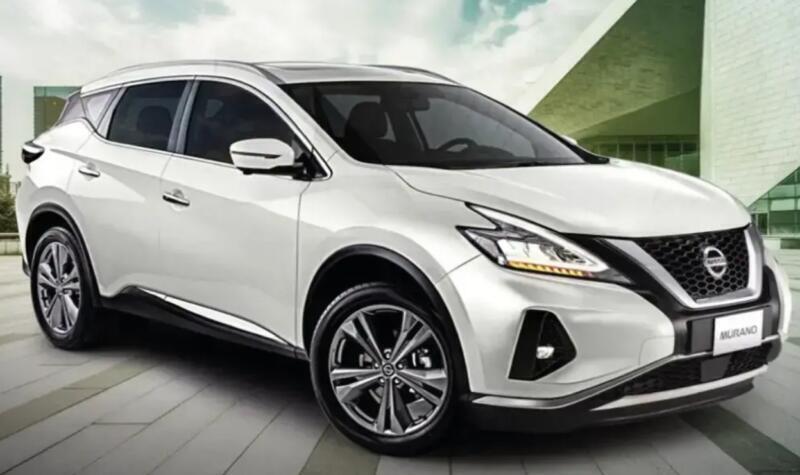
When the Nissan Murano VDC OFF light stays on, it can turn an otherwise normal drive into a guessing game. The Murano may still start, accelerate, steer, and brake normally, yet that glowing dashboard warning quietly tells us that one of the SUV's important stability systems may not be operating as intended.
VDC stands for Vehicle Dynamic Control. Nissan designed this system to help maintain vehicle stability when the tires begin losing traction or when the vehicle starts moving differently from the direction we're asking it to go. Think of it as an electronic helping hand working behind the scenes.
If the VDC OFF light remains illuminated after starting the vehicle, however, we shouldn't automatically assume the VDC system itself has failed. The cause can range from something as simple as accidentally pressing the VDC OFF button to a faulty wheel-speed sensor, steering-angle calibration problem, low battery voltage, or another engine or ABS-related fault.
So, what should we check first? Let's work through the possibilities without turning dashboard diagnosis into rocket science.
- What Does VDC Mean on a Nissan Murano?
- Why Does the Nissan Murano VDC OFF Light Stay On?
- 1. The VDC OFF Button Has Been Pressed
- 2. A Bad Wheel-Speed Sensor
- 3. Dirty or Damaged Wheel-Speed Sensor Components
- 4. Steering-Angle Sensor Issues
- 5. ABS System Problems
- 6. Low Battery Voltage
- 7. Brake-Light Switch Problems
- 8. Tire Pressure or Mismatched Tires
- 9. Engine Problems Can Trigger the VDC OFF Light
- 10. Throttle or Accelerator-Related Faults
- 11. Faulty Yaw-Rate or G-Sensor Information
- 12. Wiring or Connector Problems
- What Does the Nissan Murano SLIP Light Mean?
- Can We Drive a Nissan Murano With the VDC OFF Light On?
- How to Reset the Nissan Murano VDC OFF Light
- How to Diagnose a VDC OFF Light Properly
- How Much Can a VDC OFF Repair Cost?
- Can a Wheel Alignment Fix the VDC Light?
- Can a Bad Wheel Bearing Cause the VDC OFF Light?
- Why Does My VDC OFF Light Come On Only Sometimes?
- Nissan Murano VDC OFF Light After Battery Replacement
- Nissan Murano VDC OFF and Check Engine Light Together
- How to Prevent VDC Problems on a Nissan Murano
- Should We Buy a Used Murano With the VDC OFF Light On?
- Common Mistakes When Troubleshooting the VDC OFF Light
- A Practical Nissan Murano VDC Troubleshooting Order
- Conclusion: Don't Ignore a Nissan Murano VDC OFF Light That Stays On
- Frequently Asked Questions
What Does VDC Mean on a Nissan Murano?
Nissan's Vehicle Dynamic Control system is essentially an electronic stability-control system. It continuously compares what the driver wants the Murano to do with what the vehicle is actually doing.
Several sensors feed information into the system. Depending on the Murano's generation and equipment, these can include:
- Wheel-speed sensors
- Steering-angle sensor
- Brake-related sensors
- Yaw-rate and acceleration sensors
- Engine-management information
- ABS components
Imagine taking a wet motorway exit slightly faster than expected. We turn the steering wheel, but the vehicle begins pushing toward the outside of the corner.
The VDC system can recognize that difference.
It may reduce engine torque and individually apply braking force to certain wheels to help bring the Murano back toward the intended path. Normally, the driver barely notices the technology working.
What Does the VDC OFF Light Mean?
The words VDC OFF mean exactly what they suggest: Vehicle Dynamic Control has been switched off or the system has become unavailable.
There are two broad situations.
First, we may have deliberately disabled VDC using the dashboard switch.
Second, the vehicle may have detected a problem that prevents the system from functioning normally.
That distinction matters.
If we pressed the VDC OFF button intentionally, there may be nothing wrong with the car. If the light appears unexpectedly or refuses to disappear, further diagnosis makes sense.
Why Does the Nissan Murano VDC OFF Light Stay On?
There isn't one universal reason.
The VDC system communicates with several other electronic systems, particularly ABS and engine management. Consequently, a fault somewhere else can cause the Murano to deactivate stability control as a precaution.
It's a little like an orchestra. One musician missing a beat can throw several sections out of sync.
Common causes include a pressed VDC switch, wheel-speed sensor failure, ABS faults, steering-angle sensor problems, brake-switch issues, weak electrical voltage, tire-related problems, or stored engine trouble codes.
Let's examine each possibility.
Before grabbing a diagnostic scanner or worrying about expensive repairs, check the simplest explanation.
Someone may have pressed the VDC OFF switch.
It can happen while cleaning the dashboard, reaching for another control, or simply experimenting with unfamiliar buttons.
With the engine running, press the VDC button again and watch the instrument cluster.
If the warning disappears, the mystery may already be solved.
When Would We Intentionally Turn VDC Off?
Most of the time, we want VDC operating.
There are occasional situations where temporarily reducing electronic intervention may help, particularly when trying to free a vehicle stuck in:
- Deep snow
- Loose sand
- Mud
- Certain slippery surfaces
Wheelspin can sometimes help the tires dig their way out. Once we're back on a normal road, though, VDC should generally be switched back on.
2. A Bad Wheel-Speed Sensor
A faulty ABS wheel-speed sensor is one of the more important possibilities when the Nissan Murano VDC OFF light stays on.
Each wheel has a sensor that helps the vehicle determine how quickly it is rotating.
Why does VDC care?
Because differences in wheel speed provide valuable clues about tire slip, braking behavior, and vehicle stability.
If one sensor suddenly reports nonsense—perhaps one wheel appears stationary while the Murano is moving—the control module can no longer trust the data.
VDC may then be disabled.
Symptoms of a Wheel-Speed Sensor Problem
We may see several warnings together rather than just one.
Possible symptoms include:
- VDC OFF light
- SLIP indicator
- ABS warning light
- Traction-control warning
- Intermittent stability-control operation
- Warning lights appearing after driving begins
This combination provides an important clue.
Rather than replacing parts randomly, an ABS-capable diagnostic scanner should be used to identify which wheel or circuit is reporting a fault.
3. Dirty or Damaged Wheel-Speed Sensor Components
The sensor itself isn't always defective.
This content may interest you! Nissan Murano Not Starting: Causes, Diagnosis, and Fixes
Its wiring, connector, mounting point, or related tone ring can create inaccurate readings.
Road grime, corrosion, physical damage, broken wiring, and debris can all interfere with the signal.
This is particularly worth considering if the warning appeared after:
- Suspension repairs
- Wheel-bearing replacement
- Brake work
- Driving through heavy mud
- Hitting a pothole
- Work around a wheel hub
If the problem began immediately after another repair, that timing shouldn't be ignored.
4. Steering-Angle Sensor Issues
The Murano needs to know which direction we're requesting through the steering wheel.
That's where the steering-angle sensor comes in.
Suppose we're steering sharply left but the sensor incorrectly reports that the wheel is centered. VDC calculations can become unreliable.
When the control module can't confidently determine steering intention, it may disable stability assistance and illuminate warning lamps.
When Can Steering-Angle Calibration Be Lost?
Calibration issues can occasionally appear after work involving:
- Wheel alignment
- Steering components
- Steering-wheel removal
- Battery disconnection
- Suspension repairs
- Certain electrical repairs
The solution isn't necessarily replacing the sensor.
Sometimes the system simply needs proper recalibration using suitable diagnostic equipment.
Don't Replace the Sensor Before Testing It
This point deserves emphasis.
Dashboard warnings can tempt us into assuming the component named in a diagnostic code must be replaced.
But codes frequently identify the system or signal experiencing a problem—not automatically the failed physical part.
Proper diagnosis can save us from buying an expensive sensor unnecessarily.
5. ABS System Problems
VDC and ABS are closely related.
The Anti-lock Braking System can rapidly control braking force at individual wheels. Stability control relies heavily on that capability when correcting a skid.
If the ABS system develops a serious fault, VDC functionality may also become unavailable.
That's why drivers sometimes notice several warning lights at once.
ABS and VDC Lights On Together
If the Nissan Murano displays:
ABS + VDC OFF + SLIP
we should pay more attention than we would to the VDC OFF lamp alone.
Possible causes can involve:
- Wheel-speed sensors
- Sensor wiring
- Wheel hubs
- ABS control components
- Electrical supply problems
- Damaged connectors
A scan tool capable of reading the ABS/VDC module, rather than only basic engine codes, becomes especially valuable here.
6. Low Battery Voltage
Modern vehicles behave strangely when voltage drops.
A tired battery isn't always polite enough to simply leave us with a car that won't start. Instead, it can produce a small Christmas tree of warning lights.
Electronic control modules require stable voltage.
During startup, a weak battery can cause voltage to dip enough that modules temporarily lose communication or record faults.
The result may include VDC, ABS, airbag, or other warning messages.
Signs Battery Voltage May Be Involved
Consider checking the battery if we also notice:
- Slower-than-normal cranking
- Dashboard lights dimming during startup
- Multiple unrelated warnings
- Problems appearing after the vehicle sits overnight
- Recent battery discharge
- Electrical settings resetting
Battery condition, charging-system performance, and electrical connections should all be considered.
A healthy-looking battery isn't necessarily a healthy battery.
7. Brake-Light Switch Problems
Here's one many drivers wouldn't immediately connect with stability control.
The brake-light switch tells the vehicle when we press the brake pedal.
That information can be shared with multiple systems, including ABS, stability control, cruise control, and transmission-related electronics.
If the signal becomes inconsistent, VDC may detect a problem.
Simple Brake-Light Check
With another person standing behind the Murano, press and release the brake pedal several times.
Do the brake lights respond instantly?
Do they remain illuminated after releasing the pedal?
This content may interest you!Nissan Murano Key Fob Not Working: Causes, Fixes, and TroubleshootingDo they occasionally fail?
Abnormal brake-light behavior deserves investigation.
Of course, brake lights working normally doesn't completely eliminate the switch as a possibility, because some switches contain multiple circuits.
8. Tire Pressure or Mismatched Tires
The VDC system pays close attention to wheel behavior.
That means tire condition matters more than we might think.
Imagine wearing one running shoe and one hiking boot. We could still walk, but our movement wouldn't be perfectly balanced.
The same principle applies to vehicles.
Significantly different tire circumferences can produce variations in wheel speed that may confuse traction-related systems.
Problems are more likely when we have:
- Incorrect tire sizes
- One significantly underinflated tire
- Uneven tire wear
- Different tire diameters front to rear
- A temporary spare installed
- Mismatched replacement tires
Check All Four Tires
We should confirm that all tires have compatible dimensions and appropriate inflation.
Check the tire-information placard rather than simply guessing at pressure from the tire sidewall.
If the warning appeared immediately after replacing one or two tires, tire compatibility deserves particular attention.
9. Engine Problems Can Trigger the VDC OFF Light
This surprises many Murano owners.
Why would an engine fault affect stability control?
Because VDC sometimes needs the engine computer to reduce torque quickly during traction loss.
If the engine-management system has a fault that makes precise torque control unreliable, the vehicle may temporarily disable VDC.
That means we can sometimes see:
Check Engine + VDC OFF + SLIP
without the VDC system itself being defective.
Check Engine Light Plus VDC OFF Light
When these warnings appear together, scanning the engine computer becomes an important first step.
Possible engine-management problems range widely, so guessing isn't useful.
The trouble codes are our breadcrumbs.
They won't always tell us exactly which part to replace, but they'll point us toward the system requiring investigation.
Electronic throttle control plays an important role in modern stability systems.
When VDC needs to reduce power, it may request a change in engine torque.
A throttle-control fault can therefore interfere with the system's ability to manage traction.
Possible symptoms could include:
- Reduced engine power
- Hesitation
- Poor throttle response
- Check Engine light
- VDC OFF warning
- SLIP indicator
When drivability symptoms accompany the warning lights, the engine-management system deserves immediate attention.
11. Faulty Yaw-Rate or G-Sensor Information
The VDC system needs to understand how the Murano is actually moving across the road.
Sensors measuring rotation and acceleration help accomplish this.
A yaw sensor essentially helps determine whether the vehicle is rotating around its vertical axis.
In normal language: is the SUV turning the way it should?
If this information becomes inaccurate or unavailable, VDC loses an important reference.
These sensors aren't necessarily the first components we'd suspect, but they can become relevant after more common causes have been eliminated.
12. Wiring or Connector Problems
Today's Nissan Murano is a network of computers connected by wires, connectors, sensors, and communication circuits.
A sensor can be perfectly healthy while damaged wiring prevents its signal from reaching the control module.
Electrical faults might result from:
- Corrosion
- Water intrusion
- Road debris
- Rodent damage
- Previous accident repairs
- Improper aftermarket modifications
- Loose connectors
- Wiring stretched during suspension work
Intermittent electrical faults are particularly frustrating because the warning may disappear before the vehicle reaches a workshop.
That doesn't mean the fault isn't real.
This content may interest you! Toyota RAV4 Hybrid Battery Problems Explained
Stored diagnostic codes may still reveal what happened.
What Does the Nissan Murano SLIP Light Mean?
The SLIP indicator is closely related to traction and stability control.
During genuine wheelspin, the light may flash while the system actively intervenes.
That's normal.
If the SLIP light remains illuminated along with VDC OFF, however, the system may have detected a fault or disabled traction-related functions.
The combination of warning lights is often more informative than any single warning by itself.
VDC OFF Light vs SLIP Light
We can think of them this way.
The VDC OFF light tells us that Vehicle Dynamic Control isn't currently available or has been manually disabled.
The SLIP light can indicate active traction intervention when flashing, while persistent illumination can accompany a system problem depending on the model and fault condition.
Reading the owner's manual for the specific Murano model year is always worthwhile because dashboard behavior can vary slightly between generations.
Can We Drive a Nissan Murano With the VDC OFF Light On?
Possibly—but this requires judgment.
If the Murano otherwise drives and brakes normally and only the VDC OFF indicator is illuminated, basic mechanical driving functions may still be available.
However, stability and traction assistance may not work normally.
That matters most during:
- Heavy rain
- Snow
- Ice
- Emergency steering
- Fast cornering
- Loose surfaces
Without VDC assistance, recovering from a loss of traction may become more difficult.
When Should We Stop Driving?
Don't treat every VDC warning as automatically catastrophic, but don't ignore additional warning signs.
We should consider stopping and obtaining professional assistance if there are serious symptoms such as unusual braking behavior, major steering problems, loss of engine power, severe drivetrain symptoms, or red safety-critical warning lamps.
Dashboard lights are information. Context determines urgency.
How to Reset the Nissan Murano VDC OFF Light
There's an important distinction between resetting a warning and fixing the cause.
If VDC was manually switched off, pressing the switch may restore the system.
If an electronic module experienced a temporary glitch, switching the vehicle off and restarting it may occasionally clear the warning.
But if the light returns, we haven't solved anything.
Try This Basic Check
Before visiting a workshop, we can perform several simple checks:
- Park safely and switch off the engine.
- Restart the Murano.
- Confirm whether the VDC OFF button has been pressed.
- Inspect tire pressures.
- Check that all four tires are appropriate sizes.
- Look for ABS, Check Engine, or SLIP warning lights.
- Check brake-light operation.
- Consider whether the battery has recently gone flat.
- Note whether repairs were recently performed around the wheels, suspension, battery, or steering.
These observations can dramatically shorten diagnosis later.
Will Disconnecting the Battery Reset VDC?
Disconnecting the battery isn't our favorite diagnostic strategy.
It may clear certain temporary data, but it can also reset settings and erase information that could help identify the original problem.
More importantly, if a wheel sensor, wiring circuit, ABS component, or engine fault remains, the warning will simply return.
Fix first. Clear codes afterward.
That's the better order.
How to Diagnose a VDC OFF Light Properly
A quality diagnostic process begins with fault codes.
But there's a catch.
A basic inexpensive OBD-II reader may only access engine codes. VDC faults can be stored in the ABS or chassis-control system.
We ideally want a scanner capable of communicating with multiple Nissan modules.
Step 1: Read All Relevant Codes
Scan:
- Engine control module
- ABS/VDC system
- Transmission-related modules when relevant
- Other related control modules
Record the codes before clearing anything.
Step 2: Look at Live Sensor Data
Fault codes are only half the story.
Live data can reveal whether all four wheel-speed sensors report similar speeds while driving straight.
If three show 30 mph and one reports zero, we've found an excellent direction for investigation.
The same logic applies to steering-angle and brake-switch data.
This content may interest you! Audi A3 ESP Fault: Causes, Symptoms, Diagnosis, and Fixes
Step 3: Inspect the Physical Components
Electronic diagnostics should be supported by physical inspection.
Check sensor wiring, connectors, wheel hubs, battery terminals, and relevant components.
Computers are clever, but a pair of human eyes still catches plenty.
Step 4: Repair the Actual Cause
Replace or repair only what testing supports.
The objective isn't to throw parts at the dashboard until the light disappears.
That's expensive roulette.
Step 5: Clear Codes and Road-Test the Murano
After repairs, clear the appropriate faults and drive the vehicle under suitable conditions.
Confirm:
- Warning lights remain off
- Wheel-speed data is normal
- Steering-angle data behaves correctly
- ABS operates normally
- VDC is available
- No related fault codes return
That's how we know the repair worked rather than simply silencing the dashboard temporarily.
How Much Can a VDC OFF Repair Cost?
Costs vary enormously because VDC OFF is a symptom rather than a specific repair.
A simple switch mistake costs nothing.
A damaged wire might require relatively modest labor.
A wheel-speed sensor can be more involved, while a hub assembly, control module, specialized sensor, or complicated wiring problem can cost considerably more.
This is why diagnosis is so valuable.
Paying for proper testing can be cheaper than replacing three perfectly good components.
Can a Wheel Alignment Fix the VDC Light?
Sometimes alignment and steering-angle calibration are related, but alignment itself isn't a universal VDC repair.
If the steering wheel sits off-center after suspension work, or if the steering-angle sensor needs recalibration, addressing those issues can help.
However, we shouldn't order an alignment simply because VDC OFF appears.
First determine why the system is unhappy.
Can a Bad Wheel Bearing Cause the VDC OFF Light?
Potentially, yes.
On some vehicles, wheel-speed sensor operation is closely associated with the hub or bearing assembly.
Excessive bearing movement, damaged encoder components, sensor mounting issues, or related wiring problems may interfere with speed readings.
Possible clues include:
- Humming from one wheel
- ABS light
- VDC OFF light
- SLIP light
- Speed-sensor trouble codes
Again, test rather than guess.
Why Does My VDC OFF Light Come On Only Sometimes?
Intermittent problems often point toward conditions that change with movement, temperature, voltage, or vibration.
For example:
A cracked wire might make contact while parked but lose connection when the suspension moves.
A weak battery may trigger warnings only during cold starts.
A wheel sensor may behave normally at low speed but drop its signal at higher speeds.
Moisture may affect a connector only after heavy rain.
Intermittent doesn't mean imaginary. It simply makes diagnosis more interesting.
Pay Attention to When It Happens
Useful clues include whether the warning appears:
- Immediately after startup
- After driving several metres
- During turns
- Over bumps
- During rain
- During hard braking
- After highway driving
- Only when the engine is cold
Patterns can turn a vague complaint into a focused diagnosis.
Nissan Murano VDC OFF Light After Battery Replacement
If the warning appears after battery work, electrical voltage and calibration should be considered.
First verify that the new battery is properly connected and suitable for the vehicle.
Then check whether the warning disappears after normal driving.
If it remains, diagnostic scanning may reveal a stored voltage or sensor-calibration code.
Avoid assuming the newly installed battery is defective simply because the warning appeared afterward.
Timing provides clues, not proof.
This content may interest you! Mitsubishi Triton ABS and Traction Control Light On: Causes, Diagnosis, and Fixes
Nissan Murano VDC OFF and Check Engine Light Together
This combination deserves a scan before focusing solely on stability-control components.
The engine control unit and VDC system exchange information.
If engine torque can't be reliably controlled because of a management fault, VDC may become unavailable.
We should therefore diagnose the Check Engine light and VDC warning together, not as unrelated mysteries.
That approach often saves time.
How to Prevent VDC Problems on a Nissan Murano
We can't prevent every electronic fault, but sensible maintenance reduces the odds of problems.
Keep tires properly inflated and replace them with appropriately matched sizes.
Don't ignore noisy wheel bearings.
Maintain the battery and charging system.
Repair damaged ABS wiring promptly.
Have steering and suspension work performed carefully.
And when dashboard warnings appear, diagnose them before small faults grow roots.
Modern vehicles reward preventative maintenance far more than they reward wishful thinking.
Should We Buy a Used Murano With the VDC OFF Light On?
We wouldn't automatically reject the vehicle, but we also wouldn't accept the seller's favorite phrase:
"It's probably just a sensor."
Maybe it is.
Maybe it isn't.
Before buying, arrange a professional diagnostic scan and inspection.
Determine exactly which fault codes are stored and obtain an estimate for repair.
A $100 problem and a $1,500 problem can produce remarkably similar dashboard lights.
If the seller won't allow diagnosis, that's information too.
Common Mistakes When Troubleshooting the VDC OFF Light
The biggest mistake is replacing components based solely on assumptions.
Another is clearing diagnostic codes before recording them.
We should also avoid assuming VDC OFF always means the same thing across every Murano year.
Perhaps most importantly, don't overlook the relationship between systems. A warning labeled VDC doesn't necessarily mean the VDC module itself has failed.
Cars speak in clues, not complete sentences.
Our job is to connect them.
A Practical Nissan Murano VDC Troubleshooting Order
When the Nissan Murano VDC OFF light stays on, we can follow this sensible sequence:
- Check whether VDC was manually switched off.
- Restart the vehicle once.
- Inspect all dashboard warning lights.
- Check tire pressures and tire-size consistency.
- Verify brake-light operation.
- Consider battery condition and recent electrical issues.
- Scan engine and ABS/VDC modules.
- Review live wheel-speed sensor readings.
- Inspect suspect sensors, hubs, wiring, and connectors.
- Check steering-angle sensor readings and calibration.
- Repair the confirmed cause.
- Clear codes and complete a road test.
Following a logical order keeps diagnosis efficient and prevents us from emptying our wallet into the parts bin.
Conclusion: Don't Ignore a Nissan Murano VDC OFF Light That Stays On
When the Nissan Murano VDC OFF light stays on, the vehicle is telling us that its stability-control system has either been deliberately disabled or can't operate normally.
Sometimes the explanation is wonderfully boring—a button was pressed.
Other times, the cause may involve a wheel-speed sensor, ABS system, steering-angle sensor, battery voltage, tire mismatch, brake switch, engine-management issue, wiring fault, or related component.
The key is resisting the temptation to guess.
Start with the simple checks, notice which other warning lights appear, and use a diagnostic scanner capable of accessing the ABS/VDC system when the problem persists.
The Murano's electronics can seem like a maze, but every maze becomes easier once we stop running randomly and follow the signs.
Frequently Asked Questions
1. Why is my Nissan Murano VDC OFF light staying on?
The light can remain on because VDC was manually disabled or because the vehicle detected a fault affecting stability control. Common possibilities include wheel-speed sensor problems, ABS faults, steering-angle sensor issues, battery-voltage problems, tire mismatches, brake-switch faults, wiring problems, or engine-management errors. A diagnostic scan is the best way to narrow down the cause.
2. Can I drive my Nissan Murano with the VDC OFF light on?
The vehicle may still drive normally, but stability and traction assistance might not be available. That becomes especially important on wet, icy, snowy, or loose roads. If additional warning lights or serious braking, steering, or engine symptoms appear, have the vehicle inspected promptly.
3. Will a bad ABS sensor cause the VDC OFF light?
Yes. VDC relies heavily on individual wheel-speed information supplied through the ABS system. A faulty sensor, damaged wiring, dirty connector, or related hub problem can cause inaccurate wheel-speed readings and disable VDC.
4. Why are the VDC OFF, SLIP, and Check Engine lights on together?
These systems communicate with each other. An engine-management fault can sometimes prevent the VDC system from controlling engine torque correctly, while ABS-related faults can disable stability control directly. Scan both the engine and ABS/VDC systems rather than assuming three separate problems exist.
This content may interest you! Kia Cerato Warning Lights: Complete Dashboard Guide
5. How do I turn the VDC light off on a Nissan Murano?
If VDC was intentionally disabled, pressing the VDC OFF switch again may restore the system. If the warning remains illuminated, the underlying fault must be diagnosed and repaired. Simply disconnecting the battery or clearing codes usually won't permanently solve a genuine sensor, wiring, ABS, or engine-related problem.
Leave a Reply