
Kia Cerato Warning Lights: Complete Dashboard Guide
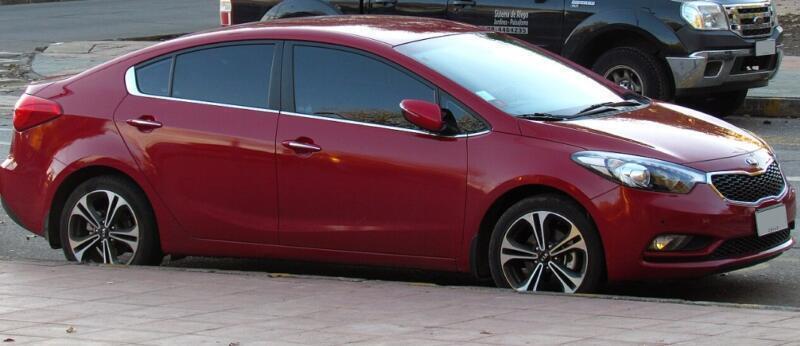
Seeing a warning light appear on the dashboard of a Kia Cerato can turn an ordinary drive into a guessing game. One moment everything seems normal; the next, a yellow engine symbol, red battery icon, or mysterious steering-wheel light appears in front of us.
The good news? Kia Cerato warning lights are designed to communicate with us before a minor issue grows into an expensive repair. Think of the dashboard as the car's own language. Some lights simply say, “Hey, check this when you have a moment,” while others are practically shouting, “Stop driving now.”
In this guide, we'll walk through the most important Kia Cerato dashboard warning lights, explain what their colors mean, explore common causes, and discuss what we should do when they appear.
Exact symbols and features can vary between Cerato generations, model years, engines, and markets, so the owner's manual remains the final reference for a particular vehicle. Still, the basic warning-light logic is remarkably consistent.
- What Do Kia Cerato Warning Lights Mean?
- Kia Cerato Dashboard Warning Light Colors Explained
- Kia Cerato Check Engine Warning Light
- Kia Cerato Oil Pressure Warning Light
- Kia Cerato Battery Warning Light
- Kia Cerato Engine Temperature Warning Light
- Kia Cerato ABS Warning Light
- Kia Cerato Brake Warning Light
- Kia Cerato Airbag Warning Light
- Kia Cerato Power Steering Warning Light
- Kia Cerato ESC Warning Light
- Kia Cerato ESC OFF Light
- Kia Cerato TPMS Warning Light
- Kia Cerato Low Fuel Warning Light
- Kia Cerato Master Warning Light
- Kia Cerato Immobilizer or Key Warning Light
- Kia Cerato EPS, ABS and ESC Lights Coming On Together
- Kia Cerato Transmission Warning Signs
- Kia Cerato Door and Trunk Warning Lights
- Kia Cerato Seat Belt Warning Light
- Kia Cerato Washer Fluid Warning Light
- What Should We Do When a Kia Cerato Warning Light Appears?
- Can Disconnecting the Battery Reset Kia Cerato Warning Lights?
- Why Kia Cerato Warning Lights Sometimes Appear After a Battery Change
- Why Warning Lights Come On and Then Disappear
- Can We Drive With Kia Cerato Warning Lights On?
- How to Prevent Kia Cerato Dashboard Warning Lights
- Are Kia Cerato Warning Lights the Same on Every Generation?
- Kia Cerato Warning Lights After Starting
- When Should We Take the Kia Cerato to a Mechanic?
- Final Thoughts on Kia Cerato Warning Lights
- Frequently Asked Questions About Kia Cerato Warning Lights
What Do Kia Cerato Warning Lights Mean?
Dashboard warning lights monitor dozens of systems throughout the Kia Cerato. Depending on the model, these systems can include the engine, transmission, airbags, ABS, stability control, electric power steering, tire-pressure monitoring, emissions equipment, charging system, and driver-assistance technology.
Most lights fall into three broad categories:
- Red warning lights: Usually indicate a serious problem or condition requiring immediate attention.
- Yellow or amber lights: Generally indicate a fault that should be investigated soon.
- Green or blue lights: Usually confirm that a feature or system is operating.
That color system is our first clue.
A green headlight symbol is normally nothing to worry about. A red oil-pressure light, however, deserves immediate attention.
Kia Cerato Dashboard Warning Light Colors Explained
Red Kia Cerato Warning Lights
Red dashboard lights normally have the highest priority.
They may relate to:
- Engine oil pressure
- Brake system problems
- Battery charging faults
- Excessive engine temperature
- Seat belts
- Airbags on certain models
- Electric power steering faults
We shouldn't automatically panic whenever a red symbol appears. For example, the parking-brake light is expected when the parking brake is engaged.
But if a red warning remains illuminated after starting or appears while driving, we should take it seriously.
Yellow and Amber Warning Lights
Yellow or amber lights usually mean that something requires inspection, but the car may still be driveable.
Typical examples include:
- Check engine light
- ABS warning
- Electronic stability control warning
- TPMS warning
- Low fuel warning
- Master warning light
- Power steering warning on some versions
Think of amber as the Cerato saying, “Something isn't quite right. Please don't ignore me.”
Green and Blue Dashboard Lights
Green and blue indicators normally provide information rather than warnings.
Examples include:
- Turn signals
- Cruise-control indicator
- High-beam indicator
- Exterior lighting indicators
- Driving-mode indicators
These lights generally tell us that a feature has been activated.
Kia Cerato Check Engine Warning Light
The check engine light, often shaped like a small engine, is one of the most recognizable Kia Cerato warning lights.
It is also one of the most misunderstood.
The engine control unit monitors sensors and components related to combustion, emissions, ignition, air intake, and fuel delivery. When it detects a fault, the check engine light may illuminate.
Possible causes include:
- Faulty oxygen sensor
- Ignition coil problem
- Worn spark plugs
- Fuel-system issue
- Air-intake leak
- Emissions-control fault
- Catalytic-converter problem
- Sensor malfunction
- Loose or improperly sealed fuel cap on applicable models
Solid Check Engine Light
A steady check engine light usually means the engine-management system has stored a fault.
If the car drives normally, we can generally arrange a diagnostic scan rather than immediately stopping.
However, we shouldn't simply ignore the light for weeks.
An emissions or fuel-control problem can sometimes increase fuel consumption and damage other components over time.
Flashing Check Engine Light
A flashing check engine light is much more serious.
It can indicate severe engine misfiring, which may allow unburned fuel to enter the exhaust and overheat the catalytic converter.
If the check engine light flashes and the Cerato is shaking, losing power, or running roughly, we should reduce speed and stop driving as soon as it's safe.
Can We Keep Driving With the Engine Light On?
That depends on how the vehicle behaves.
If the light is steady and the Cerato drives normally, a short journey to a workshop may be reasonable.
If the light flashes or is accompanied by:
- Heavy shaking
- Major loss of power
- Strange noises
- Smoke
- Strong fuel smell
- High engine temperature
we should avoid continuing the journey.
Kia Cerato Oil Pressure Warning Light
The red oil-can symbol is one of the most important warning lights on any car.
It normally indicates low engine oil pressure, not simply low oil quantity.
Proper oil pressure allows lubricant to circulate through bearings, camshafts, timing components, and other moving engine parts.
Without sufficient pressure, internal engine damage can happen surprisingly quickly.
What Should We Do If the Oil Light Comes On?
If the oil-pressure warning appears while driving:
- Move somewhere safe.
- Switch off the engine.
- Allow the engine to settle.
- Check the oil level if it's safe and practical.
- Add the correct oil only if the level is genuinely low.
- Do not continue driving if the warning remains illuminated.
Even when the oil level looks correct, low pressure could result from a faulty oil pump, blocked oil pickup, pressure-sensor problem, internal engine wear, or another lubrication-system fault.
Driving with genuine low oil pressure is like running on a treadmill without lubrication in the bearings. Friction quickly becomes the enemy.
Kia Cerato Battery Warning Light
The battery symbol doesn't necessarily mean the battery itself has failed.
Instead, it normally indicates a charging-system problem.
While the engine is running, the alternator should provide electricity to the vehicle and recharge the battery.
If the battery warning appears, possible causes include:
- Alternator failure
- Loose or broken accessory belt
- Wiring problem
- Poor battery connection
- Faulty voltage regulator
- Charging-system fault
What Happens If We Keep Driving?
The Cerato may continue running temporarily using electricity stored in the battery.
Eventually, however, the battery voltage can fall until electronic systems begin shutting down and the engine stalls.
If the battery light appears while driving, switch off unnecessary electrical equipment such as heated windows or accessories and arrange assistance or inspection.
If the steering suddenly becomes heavier at the same time, a belt problem may be involved on applicable engine designs.
Kia Cerato Engine Temperature Warning Light
An engine-temperature warning means the cooling system may no longer be controlling engine heat properly.
Common causes include:
- Low coolant
- Coolant leak
- Failed radiator fan
- Thermostat problem
- Water-pump failure
- Blocked radiator
- Cooling-system air pocket
If the temperature warning turns red or the temperature gauge rises into the hot zone, we should stop safely and shut the engine down.
Continuing to drive an overheating engine can turn a relatively manageable cooling-system repair into cylinder-head or head-gasket damage.
Never Open a Hot Cooling System
A hot cooling system can be pressurized.
Removing the radiator or coolant-cap while the engine is extremely hot can release boiling coolant and steam.
Allow the engine to cool before inspecting the reservoir.
Kia Cerato ABS Warning Light
The ABS light relates to the anti-lock braking system.
ABS prevents the wheels from locking during hard braking, allowing us to maintain more steering control.
If the ABS warning stays illuminated, the normal hydraulic brakes may still function, but anti-lock assistance may be disabled.
Common causes include:
- Dirty or damaged wheel-speed sensor
- Damaged sensor wiring
- ABS control-module fault
- Wheel-bearing related sensor issue
- Low system voltage
ABS Light and Brake Warning Together
If both the ABS light and red brake-system warning illuminate simultaneously, the issue can be more serious.
We should stop driving if braking performance feels unusual and arrange professional inspection.
Kia Cerato Brake Warning Light
A red brake warning can indicate several different conditions.
The most harmless is simple: the parking brake is still engaged.
If the parking brake has been fully released and the warning remains on, possible causes include:
- Low brake-fluid level
- Hydraulic braking-system fault
- Brake-system sensor problem
We should never casually dismiss a brake warning.
If the brake pedal feels soft, sinks unusually far, or braking distance increases, the vehicle should not continue being driven.
Kia Cerato Airbag Warning Light
The airbag warning light usually appears briefly when we start the vehicle.
That startup illumination is normal. The system is performing a self-check.
If the airbag symbol remains illuminated or comes on while driving, the Supplemental Restraint System may have detected a fault.
The issue could involve:
- Airbag sensor
- Wiring connection
- Seat-belt pretensioner
- Occupant-detection system
- Clock spring
- Airbag control module
An illuminated airbag light doesn't necessarily mean an airbag will suddenly deploy.
More importantly, it can mean part of the restraint system may not deploy correctly during a collision.
That makes diagnosis worthwhile even when the vehicle otherwise drives perfectly.
Kia Cerato Power Steering Warning Light
Many Kia Cerato models use electric power steering.
A steering-wheel warning symbol may indicate a fault with the Electric Power Steering system.
Possible symptoms include:
- Heavier steering
- Intermittent assistance
- Steering warning message
- Warning light remaining illuminated
Sometimes low battery voltage can trigger electronic steering warnings, particularly after a weak battery or jump start.
If steering becomes unexpectedly heavy while driving, slow down and move somewhere safe.
The mechanical steering connection usually remains, but turning the wheel can require considerably more effort.
Kia Cerato ESC Warning Light
ESC stands for Electronic Stability Control.
This system helps control wheel slip and vehicle stability.
There's an important distinction between a flashing ESC light and one that stays illuminated.
Flashing ESC Light
A flashing ESC indicator usually means the system is actively working.
For example, if we accelerate on a wet road and a tire begins losing traction, ESC may reduce engine power or apply individual brakes.
That's normal.
ESC Light Staying On
If the ESC light remains permanently illuminated, the system may have detected a fault.
Possible causes include:
- Wheel-speed sensor fault
- Steering-angle sensor problem
- ABS-related problem
- Electrical fault
Because ABS and stability control share several sensors, an ABS fault can sometimes trigger multiple warning lights together.
Kia Cerato ESC OFF Light
The ESC OFF indicator appears when Electronic Stability Control has been manually disabled or partially restricted.
Normally we should leave stability control active during everyday driving.
There may be limited situations where reducing traction-control intervention helps, such as attempting to move through loose snow or deep mud, depending on the vehicle and conditions.
For normal road use, ESC should generally remain enabled.
Kia Cerato TPMS Warning Light
The tire-pressure monitoring system warns us when one or more tires may be underinflated.
A yellow symbol shaped like a tire with an exclamation mark usually indicates low tire pressure.
Possible causes include:
- Natural pressure loss
- Temperature drop
- Slow puncture
- Nail or screw in tire
- Damaged valve
- TPMS sensor problem
Why Tire Pressure Matters More Than We Think
Driving with underinflated tires can:
- Increase fuel consumption
- Reduce steering precision
- Increase tire wear
- Increase tire temperature
- Affect braking
- Raise the risk of tire failure
Check tire pressures when the tires are cold and inflate them according to the vehicle's recommended values, usually displayed on the driver's door-jamb label.
TPMS Light Flashing First
On many vehicles, a TPMS light that flashes for a period and then remains on suggests a system malfunction rather than simple low pressure.
This could involve a failed sensor or communication problem.
Kia Cerato Low Fuel Warning Light
The low-fuel warning is straightforward, but that doesn't mean we should regularly test how far the Cerato can travel after it appears.
Constantly driving extremely low on fuel isn't ideal.
The actual remaining range depends on driving style, terrain, engine type, traffic, and vehicle configuration.
Instead of treating the warning as an invitation to gamble with the fuel gauge, we'd rather find a station reasonably soon.
This content may interest you! Mitsubishi Triton Warning Lights: Meanings, Causes, and What to Do
Kia Cerato Master Warning Light
Some Cerato models may use a master warning indicator, often represented by a triangle containing an exclamation mark.
This symbol acts like an umbrella warning.
It may appear alongside a dashboard message relating to:
- Low washer fluid
- Tire-pressure issue
- Driver-assistance system fault
- Lighting issue
- Smart-key problem
- Other vehicle conditions
When this light appears, check the instrument display for a more detailed message.
The triangle alone doesn't necessarily reveal the underlying issue.
Kia Cerato Immobilizer or Key Warning Light
Depending on model year and equipment, the Cerato may display a key or immobilizer indicator.
If the car doesn't recognize the key, symptoms can include:
- Engine refusing to start
- Key warning symbol
- “Key not detected” message
- Intermittent starting problems
Common causes include:
- Weak key-fob battery
- Damaged key
- Immobilizer communication fault
- Weak vehicle battery
- Keyless-entry antenna problem
If the car has push-button start and the key battery is weak, holding the key closer to the start button may help on certain configurations.
Kia Cerato EPS, ABS and ESC Lights Coming On Together
Several dashboard lights illuminating simultaneously can look terrifying.
But multiple warning lights don't always mean multiple unrelated components have failed at once.
Modern vehicles share information across networks.
For example, a faulty wheel-speed sensor might affect:
- ABS
- Stability control
- Traction control
- Tire-pressure functions on certain systems
Similarly, low battery voltage can sometimes trigger several electronic warnings.
That's why reading diagnostic trouble codes is often more productive than replacing parts based on dashboard symbols alone.
Kia Cerato Transmission Warning Signs
Not every Cerato has a dedicated transmission warning symbol, but transmission problems may trigger a general warning, engine light, or dashboard message.
Potential symptoms include:
- Delayed shifting
- Harsh gear changes
- Slipping
- Vehicle stuck in one gear
- Reduced-power mode
- Transmission-temperature warning on equipped versions
If the transmission warning appears together with severe slipping or unusual noises, continuing to drive could worsen the damage.
Kia Cerato Door and Trunk Warning Lights
A door-open or trunk-open indicator usually isn't a mechanical fault.
Still, we should investigate it before driving.
If every door seems closed but the warning remains illuminated, the cause may be:
- Door not fully latched
- Trunk not fully closed
- Faulty latch switch
- Wiring issue
A poorly latched door can obviously become a safety issue, while a faulty switch may also keep interior lights switched on and gradually drain the battery.
Kia Cerato Seat Belt Warning Light
The seat-belt warning reminds occupants to buckle up.
Depending on trim and model year, the vehicle may monitor:
- Driver's seat
- Front passenger seat
- Rear seats
Sometimes a heavy bag placed on the passenger seat can activate an occupancy sensor and trigger the warning.
If the warning remains on when the seat is empty, there may be an issue with the occupancy or buckle sensor.
Kia Cerato Washer Fluid Warning Light
Certain Cerato models include a low washer-fluid warning.
This is not urgent in the same sense as a red oil or brake warning, but visibility matters.
Running out of washer fluid during rain, road spray, or winter grime can make the windscreen surprisingly difficult to see through.
Top up with suitable washer fluid rather than assuming plain water is always sufficient, especially where freezing temperatures occur.
What Should We Do When a Kia Cerato Warning Light Appears?
Instead of immediately assuming the worst, we can follow a simple process.
Step 1: Look at the Color
Red usually deserves immediate attention.
Amber generally means investigate soon.
Green or blue is normally informational.
Step 2: Notice How the Car Feels
Ask ourselves:
- Has engine power dropped?
- Is the steering heavier?
- Are the brakes behaving differently?
- Is the engine shaking?
- Is there smoke?
- Is there a strange smell?
- Is the temperature rising?
The vehicle's behavior can be more important than the symbol alone.
Step 3: Check the Dashboard Message
Modern Cerato instrument displays may provide additional text explaining the warning.
Read it before switching the car off if safe to do so.
Step 4: Consult the Owner's Manual
Dashboard symbols vary between generations.
A 2010 Cerato won't necessarily display warnings exactly like a 2024 version.
The manual provides model-specific information.
Step 5: Scan Diagnostic Trouble Codes
For engine, ABS, airbag, steering, or transmission faults, a diagnostic scanner can reveal stored trouble codes.
Codes don't automatically tell us which part to replace, but they provide valuable direction.
Can Disconnecting the Battery Reset Kia Cerato Warning Lights?
Sometimes disconnecting the battery may temporarily clear certain warnings or reset electronic systems.
But it's rarely the best diagnostic strategy.
If the actual fault remains, the warning will probably return.
Disconnecting the battery may also reset:
- Clock settings
- Radio preferences
- Window calibration
- Fuel-trim adaptations
- Other learned electronic values
Rather than treating battery disconnection as a magic eraser, we'd rather identify the underlying cause first.
Why Kia Cerato Warning Lights Sometimes Appear After a Battery Change
This can happen.
Modern cars depend on stable electrical voltage. When a weak battery is replaced or disconnected, certain modules may temporarily lose calibration or log low-voltage faults.
After battery replacement, lights relating to steering, stability control, or other electronics may occasionally appear.
Some disappear after driving a short distance or completing a calibration procedure.
Others require diagnostic scanning.
If several warning lights suddenly appeared immediately after battery work and the vehicle drives normally, voltage or calibration issues deserve investigation before assuming multiple systems have failed.
Why Warning Lights Come On and Then Disappear
Intermittent warning lights can be frustrating because the problem seems to vanish when we arrive at the workshop.
But disappearing doesn't necessarily mean fixed.
Possible causes include:
- Loose electrical connector
- Intermittent sensor
- Low battery voltage
- Temporary misfire
- Moisture
- Wheel-speed sensor contamination
- Temperature-related electrical fault
The vehicle may still store a historical trouble code even after the warning turns off.
That stored information can help identify what happened.
Can We Drive With Kia Cerato Warning Lights On?
There's no universal yes-or-no answer.
Some lights are harmless indicators.
Others demand immediate action.
As a broad guide:
| Warning Light | Typical Urgency | Driving Recommendation |
|---|---|---|
| Red oil pressure | Very high | Stop engine immediately |
| Engine overheating | Very high | Stop safely and shut down |
| Brake system | High | Inspect immediately |
| Battery charging | High | Drive only as necessary |
| Flashing engine light | High | Stop or minimize driving |
| Solid engine light | Moderate | Diagnose soon |
| ABS | Moderate | Normal brakes may remain |
| ESC | Moderate | Drive carefully |
| TPMS | Moderate | Check tire pressures |
| Low fuel | Low | Refuel soon |
| Washer fluid | Low | Top up when practical |
Whenever vehicle control, braking, engine lubrication, or cooling is affected, caution should win.
How to Prevent Kia Cerato Dashboard Warning Lights
We can't prevent every sensor or electrical component from eventually failing, but routine maintenance reduces the chances of unpleasant surprises.
Keep the Battery Healthy
Weak batteries cause more electronic weirdness than many drivers realize.
Have battery condition and charging voltage checked if starting becomes slow.
Maintain Correct Engine Oil
Check oil periodically and follow the correct service interval.
Using the proper specification matters just as much as having enough of it.
Check Tire Pressures
A quick monthly pressure check can prevent repeated TPMS warnings while improving tire life.
Don't Ignore Coolant Loss
If coolant repeatedly needs topping up, there is probably a reason.
Find the leak instead of continuously refilling the reservoir.
Scan Persistent Warning Lights
A diagnostic scan is cheaper than guessing.
Replacing parts without confirming the fault can turn a simple repair into an expensive game of darts.
Are Kia Cerato Warning Lights the Same on Every Generation?
No.
Kia has sold several Cerato generations across different markets, and specifications vary considerably.
Depending on model year, we may encounter:
- Analog instrument clusters
- Digital information displays
- Different ESC systems
- Different TPMS designs
- Different engine-management systems
- Driver-assistance warnings on newer models
- Smart-key indicators
- Automatic emergency braking warnings
Even vehicles from the same model year may differ depending on trim and country.
That's why we should use this guide to understand the warning category while checking the owner's manual for the exact symbol.
Kia Cerato Warning Lights After Starting
Most dashboard lights illuminate briefly when we switch the ignition on.
That's normal.
The vehicle is performing a self-check.
Typical lights that may briefly illuminate include:
- ABS
- Airbag
- Engine
- Battery
- Oil pressure
- ESC
- Power steering
Most should disappear shortly after the engine starts.
The battery and oil-pressure lights, for example, normally turn off once the engine is running and proper charging and oil pressure are established.
A light that doesn't go out deserves attention.
When Should We Take the Kia Cerato to a Mechanic?
Professional diagnosis is recommended when:
- A warning light stays on repeatedly
- The check engine light flashes
- The vehicle loses power
- Steering becomes heavy
- Brakes feel unusual
- The engine overheats
- Multiple warning lights appear
- The engine makes abnormal noises
- The car refuses to start
- A warning returns immediately after being reset
An experienced technician can combine diagnostic codes with live sensor readings and physical inspection.
That's far more reliable than replacing whatever component happens to be mentioned in an internet forum.
Final Thoughts on Kia Cerato Warning Lights
Kia Cerato warning lights aren't there to ruin our morning. They're the vehicle's early-warning system.
Some simply remind us to fasten a seat belt or refill washer fluid. Others warn about conditions that could damage the engine or compromise braking.
The secret is understanding the difference.
Red oil pressure? Stop.
Engine overheating? Stop.
Flashing check engine light? Treat it seriously.
Steady amber engine light? Diagnose it soon.
TPMS warning? Check those tires.
Once we understand the language of the dashboard, those glowing symbols become far less mysterious.
And perhaps that's the best way to think about the instrument panel: it's not a wall of scary lights. It's the Cerato quietly tapping us on the shoulder and telling us what needs attention.
Frequently Asked Questions About Kia Cerato Warning Lights
1. What does the yellow triangle mean on a Kia Cerato?
A yellow triangle with an exclamation mark usually acts as a master warning indicator on equipped Cerato models. It can accompany warnings for tire pressure, washer fluid, vehicle systems, or other conditions. Check the information display for the accompanying message.
2. Why is my Kia Cerato check engine light on?
The check engine light can appear because the engine-control system has detected a fault involving ignition, emissions, fuel delivery, sensors, air intake, or another monitored component. A diagnostic scan is the best way to identify the stored fault code.
3. Can I drive my Kia Cerato with the ABS light on?
The conventional braking system may still function when the ABS light is on, but anti-lock braking assistance may be unavailable. Drive cautiously and have the system inspected. If the red brake warning appears simultaneously or braking performance changes, stop driving.
4. Why are several Kia Cerato warning lights on at once?
Multiple warning lights can sometimes share a single underlying cause. A weak battery, low charging voltage, faulty wheel-speed sensor, wiring issue, or network communication fault can trigger several systems simultaneously. Diagnostic scanning can help identify the common cause.
This content may interest you! Ford Ranger Dashboard Symbols and Meanings: Complete Warning Light Guide
5. How do I reset Kia Cerato warning lights?
The correct method depends on the warning. Some lights automatically disappear after the underlying problem is corrected. Others require a diagnostic tool or a specific reset procedure. Clearing the warning without fixing the fault usually results in the light returning.
Leave a Reply