
Kia Cerato vs Kia Forte New Zealand: Are They Actually Different?
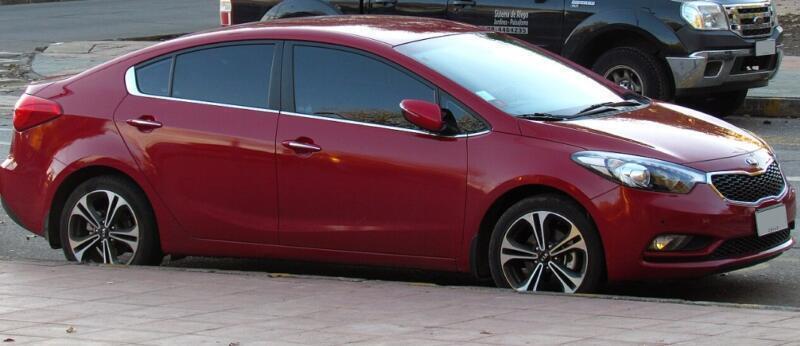
Search for Kia Cerato vs Kia Forte New Zealand, and things get confusing remarkably quickly. One listing says Cerato. Another overseas review talks about the Forte. Photos look almost identical. Engines sound familiar. Interiors seem to come from the same blueprint. So, are we comparing two Kia models, or simply two names stuck onto essentially the same car?
For New Zealand buyers, the answer is refreshingly simple: the Kia Cerato and Kia Forte are fundamentally regional versions of the same compact-car family rather than two completely separate vehicles.
Kia marketed this generation of its compact car as the Cerato in New Zealand, while the Forte name became particularly familiar in markets such as North America. Kia New Zealand's own material confirms the Cerato as the locally marketed model, including the arrival of the third-generation Cerato in 2018 and the updated MY22 range in 2021.
That does not mean every Cerato and Forte is interchangeable, though. Specifications, engines, trim levels, safety equipment, body styles, transmissions and even suspension tuning can vary between countries.
Think of them as cousins wearing different passports.
Let's unpack what that means before buying one in New Zealand.
- Kia Cerato vs Kia Forte: The Short Answer
- Why Does Kia Use the Cerato and Forte Names?
- The Kia Cerato in New Zealand
- What Exactly Is the Kia Forte?
- Kia Cerato vs Kia Forte Exterior Design
- Interior: Cerato vs Forte
- Kia Cerato vs Kia Forte Engine Options
- What About the Cerato GT?
- Transmission Differences Matter
- Driving Experience in New Zealand
- Kia Cerato vs Kia Forte Fuel Economy
- Reliability: Is Cerato Better Than Forte?
- Parts and Servicing in New Zealand
- Safety Features
- Used Kia Cerato vs Imported Kia Forte in New Zealand
- Which Has Better Resale Potential in New Zealand?
- Cerato Sedan vs Forte Sedan
- Is the Cerato a Better Choice for New Zealand?
- When Could a Kia Forte Be the Better Buy?
- Cerato vs Forte for Everyday Family Use
- Kia Cerato vs Kia Forte for First-Time Buyers
- Cerato vs Forte for Commuting
- What Happened After the Cerato and Forte?
- Common Mistakes When Comparing Cerato and Forte
- Kia Cerato vs Kia Forte New Zealand: Which Should We Buy?
- Final Verdict: The Badge Matters Less Than the Car
- Frequently Asked Questions
Kia Cerato vs Kia Forte: The Short Answer
If we strip away marketing names, the Cerato and Forte occupy essentially the same position within Kia's global small-car family.
The Cerato name is the one New Zealand motorists are much more likely to encounter, particularly when shopping through NZ-new dealerships and the local used-car market. Kia New Zealand officially sold the Cerato in sedan and hatch forms, and the model became one of Kia's established passenger cars locally.
Forte, meanwhile, is a badge New Zealand shoppers may encounter when researching international reviews, replacement parts, specifications or imported vehicles.
So asking, "Which is better, Cerato or Forte?" is a little like asking whether a book is better under its British title or American title.
The more useful question is:
Which particular Cerato or Forte specification are we comparing?
That's where genuine differences begin.
Why Does Kia Use the Cerato and Forte Names?
Global car naming can resemble a bowl of alphabet soup.
Manufacturers routinely change model names between regions because of marketing strategy, brand recognition, language and historical positioning. Kia has followed this approach with its compact passenger car.
The Cerato badge became established across countries including New Zealand and Australia, while Forte became widely associated with the equivalent compact Kia sold in North America.
For Kiwi shoppers, therefore, Cerato is not merely an alternative nickname. It is the name appearing throughout Kia New Zealand's historical marketing materials and dealer information. Kia New Zealand announced the MY22 Cerato's local arrival in August 2021, for example, describing it as an important global model for the brand.
Does Forte Mean a More Powerful Cerato?
No.
"Forte" sounds sporty enough to suggest somebody slipped a bigger turbo beneath the bonnet, but the badge itself does not indicate a performance model.
Likewise, Cerato doesn't represent a lower specification.
Equipment depends on the year, market and trim being compared.
That's an essential distinction when browsing imported-car listings. Never assume a Forte automatically equals a Cerato GT, nor that an overseas Forte specification precisely matches a New Zealand Cerato.
The Kia Cerato in New Zealand
The Cerato became a familiar Kia passenger car in New Zealand during an era increasingly dominated by SUVs.
That alone made it interesting.
While buyers flocked toward compact crossovers, Cerato continued offering the traditional virtues of a small sedan or hatchback: relatively low body weight, easy road manners, useful interior room and respectable cargo capacity without forcing us into an SUV-shaped package.
Kia New Zealand officially promoted the 2019 Cerato locally, announcing its arrival in 2018. The company subsequently introduced the facelifted MY22 Cerato carrying Kia's newer corporate logo.
Cerato Body Styles Available in New Zealand
One of the Cerato's strongest advantages was choice.
New Zealand buyers could find both sedan and hatchback configurations depending on model year and trim. Kia dealer material, for example, documented a Cerato LX hatch in the local market.
The sedan delivers the classic three-box profile and separate luggage compartment.
The hatch is arguably the more versatile everyday choice because its larger rear opening makes loading bulky gear easier.
For families, dog owners, cyclists or anyone regularly hauling awkward luggage, that practical difference may matter far more than whether the badge says Cerato or Forte.
What Exactly Is the Kia Forte?
The Forte is Kia's compact-car name familiar from overseas markets, especially North America.
From a global product perspective, it belongs to the same family as the Cerato. Contemporary automotive coverage has regularly referred to the generation as the Kia K3/Forte/Cerato family, highlighting how Kia used different names according to region.
This explains why New Zealand Cerato owners often stumble across Forte videos while searching YouTube for maintenance instructions or accessories.
The exterior might look right.
The dashboard might look right.
Even the engine bay might seem identical.
Yet we should still avoid assuming every component or specification crosses over perfectly.
Why New Zealand Buyers May See Forte Parts Online
Modern automotive shopping is global.
Search an international marketplace for "Cerato floor mats," "Cerato head unit," or "Cerato brake pads," and algorithms may begin throwing Forte products into the results.
Often there is a genuine relationship between them.
But compatibility should always be checked against the model year, VIN, engine, body style and market specification before ordering.
A $20 accessory that doesn't fit is annoying.
A mechanical component that doesn't match is considerably worse.
Kia Cerato vs Kia Forte Exterior Design
Compare equivalent generations side by side and the family resemblance is unmistakable.
We're not looking at two unrelated cars designed on opposite sides of the planet.
Broadly speaking, equivalent Cerato and Forte models share their underlying design language, proportions and architecture. Regional differences may appear through bumpers, lighting arrangements, wheel designs, badges and trim packages.
From ten metres away, most people would struggle to distinguish equivalent versions without looking at the badge.
And that's precisely why calling one inherently better-looking than the other doesn't make much sense.
Sedan Styling
The Cerato/Forte sedan formula aims for something more expressive than an anonymous economy car.
Later models received a sharper nose, sleeker lighting and a sportier roofline than older generations.
Kia's 2021 New Zealand announcement highlighted refreshed front styling and slimmer headlights for the updated Cerato.
It isn't an exotic sports sedan, naturally, but it avoids looking like an appliance with number plates.
Hatchback Practicality
For New Zealand buyers, the Cerato hatch deserves special attention.
Its greatest trick isn't visual drama. It's usability.
A hatchback turns the rear of the car into one large access point. Fold the seats and suddenly that modest commuter becomes surprisingly useful for camping equipment, flat-pack furniture or weekend luggage.
That's one area where researching overseas Forte reviews can become misleading because body-style availability has differed between markets.
Interior: Cerato vs Forte
Inside equivalent models, similarities again outweigh differences.
Expect a straightforward cabin designed around conventional ergonomics rather than novelty for novelty's sake.
That is arguably a virtue on the used market.
We don't always need a dashboard that resembles Mission Control. Sometimes we simply want climate controls we can operate without diving through four touchscreen menus.
Depending on specification and year, Cerato equipment could include smartphone connectivity, reversing cameras and driver-assistance systems. A New Zealand dealer listing for an MY19 Cerato LX, for example, advertised Apple CarPlay, Android Auto, an 8-inch touchscreen, reversing camera and multiple safety technologies.
Which Cabin Is Better?
Neither badge automatically wins.
A high-spec Forte can clearly feel more sophisticated than an entry-level Cerato, while a well-equipped Cerato can reverse that comparison.
Trim level matters more than name.
We'd therefore compare the actual vehicles rather than relying on model badges.
Check seat material.
Check infotainment.
Check climate control.
Check active-safety technology.
Check whether the particular car has keyless entry, heated seats, upgraded audio or other equipment important to you.
That produces a meaningful comparison.
The Cerato-versus-Forte badge debate usually doesn't.
Kia Cerato vs Kia Forte Engine Options
This is where regional differences deserve genuine attention.
Although Cerato and Forte belong to the same model family, Kia did not necessarily offer identical engines in every market.
New Zealand Cerato specifications depended on model year and grade, while overseas Forte variants could receive different powertrains.
Consequently, reading an American Forte review and assuming every performance or fuel-economy observation applies to a New Zealand Cerato can send us down the wrong road.
Naturally Aspirated Engines
Conventional naturally aspirated petrol engines generally formed the sensible side of the range.
They're aimed at everyday driving rather than traffic-light theatrics.
Acceleration is adequate, operation is straightforward, and the character suits commuting, motorway trips and school-run duties.
For many used buyers, simplicity is part of the appeal.
Who Should Choose the Regular Engine?
If our priorities are predictable ownership costs, relaxed driving and relatively simple mechanical hardware, a conventional Cerato powertrain often makes sense.
Not everybody needs turbocharged performance.
Sometimes reliable transportation is exactly what the doctor ordered.
What About the Cerato GT?
Now things become more interesting.
The GT sat toward the enthusiastic end of the Cerato range and gave the small Kia considerably more personality.
Instead of behaving merely as transport from A to B, the performance-oriented model tried to make the road between A and B entertaining too.
New Zealand's Cerato range included multiple variants during the model's later years, and published NZ pricing for the 2022 range stretched from the LX to the higher-priced GT.
This content may interest you! Kia Cerato vs Kia Stonic New Zealand: Which Kia Makes More Sense?
Anyone comparing a Cerato GT against an overseas Forte should therefore compare it with the appropriate performance-oriented Forte specification rather than a base model.
Otherwise we're comparing running shoes with slippers.
Transmission Differences Matter
Here's another trap.
Two cars from the same model family may use different transmissions according to engine and market.
Traditional automatics, continuously variable-style transmissions and dual-clutch arrangements may produce dramatically different driving experiences.
That means the badge tells us less than the drivetrain specification.
Before buying an imported Forte in New Zealand, verify exactly which transmission is installed and whether local servicing knowledge and replacement parts are readily available.
Driving Experience in New Zealand
A New Zealand road can expose weaknesses faster than a glossy dealership brochure.
Smooth motorways are one thing. Patchy rural tarmac, tight corners, steep climbs and uneven surfaces are another.
Cerato's relatively compact dimensions make it an easy companion around Auckland, Wellington, Christchurch and other urban areas, while the sedan and hatch layouts remain stable and familiar on open roads.
The sportier versions naturally deliver more urgency, but the standard model's appeal is its accessibility.
We climb in.
We drive.
We don't need a manual titled Understanding Your Vehicle's Personality in 400 Pages.
Ride Comfort
Wheel size and trim can noticeably affect comfort.
Larger alloy wheels may look fantastic but usually leave less tyre sidewall between us and the road.
On rough surfaces, that can produce a firmer ride.
If comfort is the priority, don't automatically assume the highest specification represents the best purchase.
Sometimes the humble trim on smaller wheels is the car we'd rather live with every Monday morning.
Handling
Neither Cerato nor Forte needs to impersonate a rear-wheel-drive sports car to be enjoyable.
Their mission is different.
They aim to combine manageable dimensions, predictable steering and everyday stability.
Performance-oriented specifications add spice, but regular versions remain targeted at ordinary motorists rather than track-day enthusiasts.
Kia Cerato vs Kia Forte Fuel Economy
Fuel economy cannot be reduced to one universal Cerato-versus-Forte number because engine, transmission, tyre size, body style and test procedure all influence consumption.
Driving conditions matter too.
A vehicle crawling through Auckland traffic will not reproduce an idealised motorway figure.
Likewise, repeated short trips on cold engines can increase consumption.
So instead of asking whether "the Forte uses less fuel than the Cerato," compare specific variants with equivalent engines.
That's the apples-to-apples method.
Everything else risks comparing apples with kiwifruit.
Reliability: Is Cerato Better Than Forte?
Since equivalent Cerato and Forte generations are closely related, there is no sensible basis for declaring one badge universally more reliable.
Condition is king.
A carefully maintained Cerato with documented servicing can be a better purchase than a neglected Forte—and vice versa.
For a used car, we'd pay particular attention to the following:
- Service history and evidence of scheduled maintenance
- Engine behaviour from a cold start
- Transmission smoothness
- Warning lights
- Accident or repair history
- Tyre wear patterns
- Suspension noises
- Brake condition
- Electronics and infotainment operation
- Evidence of fluid leaks
- Vehicle identification and exact market specification
- Availability of NZ-compatible replacement parts for an imported vehicle
Those checks tell us far more about a prospective purchase than the lettering on the boot lid.
Parts and Servicing in New Zealand
Here the Cerato gains a practical advantage for Kiwi buyers.
Because Cerato was the officially marketed New Zealand nameplate, local dealerships, independent workshops, parts databases and used-car sellers are naturally more familiar with that terminology.
A Forte import is not automatically difficult to maintain. Far from it.
But occasionally, parts identification can require an extra layer of checking.
Never order purely by model name.
VIN-based verification is safer.
Can Forte Parts Fit a Cerato?
Sometimes, yes.
Equivalent-generation cars can share substantial mechanical and structural hardware.
But "same basic car" does not mean "every part is identical."
Regional specifications can change connectors, sensors, lighting assemblies, emissions hardware, brakes, suspension components and electronic modules.
Compatibility should therefore be confirmed part by part.
Safety Features
Safety equipment is another area where assumptions become dangerous.
An overseas Forte review may mention a feature absent from a particular New Zealand Cerato—or vice versa.
Kia New Zealand's MY19 Cerato dealer information documented technologies including autonomous emergency braking, lane-departure warning, lane-keeping assistance and driver-attention warning on the listed LX vehicle.
But equipment varies with year and specification.
Always investigate the exact car.
Don't Compare Safety by Badge Alone
A newer lower-trim car may have technologies an older premium trim lacks.
Likewise, active-safety packages can differ between countries even when vehicles look identical.
For families especially, checking the precise safety specification should rank near the top of the shopping list.
Used Kia Cerato vs Imported Kia Forte in New Zealand
This is arguably the most relevant real-world comparison.
Imagine two similar cars.
One is a New Zealand-new Cerato with complete local servicing history.
The other is a Forte imported from another country with slightly better equipment and a tempting price.
Which should we choose?
There's no automatic winner.
The Cerato offers familiarity and potentially easier history verification.
The Forte might offer an equipment combination unavailable locally.
We should calculate value across the entire ownership picture: purchase price, condition, parts availability, insurance, specification, service history and eventual resale appeal.
Why NZ-New Status Can Matter
A locally sold Cerato may be easier for future buyers to understand.
That's valuable when resale day arrives.
An imported Forte might require explaining its origin and specification.
This doesn't make it bad.
It simply introduces another variable.
When two vehicles are otherwise equal, simplicity has value.
Which Has Better Resale Potential in New Zealand?
The Cerato badge arguably enjoys an intuitive advantage because New Zealand consumers recognise it from Kia's local history.
Kia itself used the Cerato name extensively here, including for its 2019 launch and 2022 update.
A Forte may therefore require more buyer education on the used market.
Yet resale value depends heavily on age, kilometres, condition, service record and specification.
A beautifully maintained Forte can still be far more desirable than a battered Cerato.
Badges don't repair scratched paint or missed oil changes.
Cerato Sedan vs Forte Sedan
When comparing equivalent sedan versions, differences can become surprisingly small.
Overall body shape, passenger packaging and basic engineering may overlap heavily.
What we must inspect are the details surrounding that shared foundation.
An overseas Forte could have a different engine.
A Cerato could have market-specific driver-assistance equipment.
One might use different wheel sizes.
Another might have unique infotainment software.
So the buying process should move from broad comparison to forensic comparison.
Same platform family?
Fine.
Now compare VIN, year, engine, gearbox, trim and equipment.
That's where the truth lives.
Is the Cerato a Better Choice for New Zealand?
For many Kiwi buyers, we'd lean toward a New Zealand-new Cerato when everything else is broadly equal.
This content may interest you! Mitsubishi Triton vs Strada New Zealand: Are They Actually Different?
Not because the Forte is fundamentally inferior.
It isn't.
The advantage comes from context.
The Cerato was officially marketed here. Local mechanics recognise it. Parts searches are straightforward. Buyers know the name. Specification research is easier.
Convenience rarely looks exciting on a spec sheet, but after three years of ownership, convenience can feel luxurious.
When Could a Kia Forte Be the Better Buy?
A Forte can absolutely make sense when the individual vehicle is stronger.
Suppose the Forte has lower kilometres, immaculate service records, excellent condition, desirable equipment and a considerably better purchase price than equivalent Ceratos.
Would we reject it because of a badge?
Of course not.
We'd simply perform more homework.
Confirm its origin.
Verify its drivetrain.
Research parts.
Check insurance.
Arrange an independent pre-purchase inspection.
If everything stacks up, the Forte name alone should not scare us away.
Cerato vs Forte for Everyday Family Use
For family duties, practicality wins over semantics.
Both can provide the fundamental characteristics that make compact cars attractive: four-door accessibility, sensible passenger space, manageable exterior dimensions and economical everyday operation.
A Cerato hatch adds particular flexibility for bulky cargo.
A sedan provides a separate, enclosed boot.
Which is better?
Ask what normally goes in the back.
If it's grocery bags and suitcases, either works nicely.
If we're constantly transporting prams, sports equipment and oddly shaped boxes, the hatch starts smiling at us from across the dealership.
Kia Cerato vs Kia Forte for First-Time Buyers
First-time buyers should keep the decision simple.
Don't chase the most powerful engine merely because the numbers look exciting.
Don't assume the highest trim provides the best value.
And certainly don't pay extra merely because an imported Forte sounds more unusual than a Cerato.
Buy the cleanest, best-maintained example our budget comfortably allows.
A boring service history is beautiful.
Receipts are beautiful.
Fresh fluids are beautiful.
An immaculate cold start is far more attractive than shiny 18-inch wheels hiding years of neglect.
Cerato vs Forte for Commuting
For daily commuting, the regular Cerato formula is difficult to misunderstand.
It's compact enough for urban parking yet substantial enough for motorway use.
The cabin technology on later examples provides the connectivity most drivers actually care about, and Kia offered smartphone integration on New Zealand Cerato models.
A comparable Forte can perform exactly the same role.
Again, specification—not geography printed on an original sales brochure—will decide the finer points.
What Happened After the Cerato and Forte?
The story becomes interesting as Kia moves toward a new naming strategy.
The next-generation compact sedan was unveiled globally as the Kia K4, signalling a shift away from the familiar Cerato/Forte naming arrangement. Automotive coverage describing the K4's introduction explicitly characterised the outgoing generation as the K3/Forte/Cerato family.
In other words, the Cerato-versus-Forte confusion is gradually becoming part of Kia history.
Kia's newer naming approach makes the family relationship clearer.
Does the K4 Replace the Cerato?
The K4 represents the new-generation successor to the compact model family previously marketed under names including Cerato and Forte.
Kia Australia now explicitly presents the K4 as its current small hatch and sedan, demonstrating the regional transition away from the Cerato name in the neighbouring Australian market.
For used-car shoppers in New Zealand, however, Cerato will remain relevant for many years because substantial numbers of older examples remain part of the second-hand market.
Common Mistakes When Comparing Cerato and Forte
The biggest mistake is imagining we're comparing completely unrelated Kia models.
We're generally not.
The second mistake is swinging too far the opposite way and assuming they are identical in absolutely every detail.
They're not necessarily that either.
Regional variation is normal.
Engines can change.
Safety equipment can change.
Trim names can change.
Warranty conditions can change.
Body-style availability can change.
Even small electronic or mechanical parts may differ.
The sensible middle ground is understanding that Cerato and Forte represent closely related regional versions of the same compact Kia lineage while still requiring specification-by-specification comparison.
Kia Cerato vs Kia Forte New Zealand: Which Should We Buy?
For most shoppers specifically living in New Zealand, the Cerato is the easier default choice.
It's the locally familiar name.
Kia New Zealand officially marketed it.
Historical information is readily available.
Local servicing conversations are simpler.
Resale buyers immediately recognise what they're looking at.
But we wouldn't automatically reject a Forte.
If an imported Forte is cheaper, better maintained or better equipped—and its history and specification check out—it could be excellent value.
Here's our basic hierarchy:
Condition first. Service history second. Specification third. Purchase price fourth. Badge fifth.
That order prevents us from becoming distracted by marketing terminology.
Final Verdict: The Badge Matters Less Than the Car
So, Kia Cerato vs Kia Forte in New Zealand—which wins?
In the conventional sense, neither.
This isn't Corolla versus Civic or Cerato versus Mazda3. The Cerato and Forte names largely describe regional identities within the same Kia compact-car lineage.
For New Zealand buyers, Cerato is the name that matters most because Kia officially sold the model here under that badge. The Forte becomes relevant mainly when researching overseas versions or considering imports. Kia's own New Zealand archives document multiple Cerato generations and updates offered locally.
If we're choosing between two actual used cars, forget the badge for a moment.
Inspect their histories.
Compare engines.
Compare transmissions.
Check equipment.
Look underneath.
Drive them.
Listen to them.
A well-maintained car whispers confidence. A neglected one can shout trouble before we've left the first roundabout.
Ultimately, the best Kia Cerato vs Kia Forte New Zealand decision isn't about deciding which name sounds better.
It's about finding the better individual car.
Frequently Asked Questions
1. Are the Kia Cerato and Kia Forte the same car?
Broadly, yes. Cerato and Forte have been regional names associated with the same Kia compact-car family. New Zealand officially received the Cerato name, while Forte became particularly familiar in other markets. However, engines, equipment and specifications can differ by country, so individual vehicles should not automatically be treated as mechanically identical.
2. Is the Kia Forte sold in New Zealand?
The Cerato was Kia's officially promoted local nameplate in New Zealand. Forte is more likely to appear in overseas material or in relation to imported vehicles rather than as the familiar NZ-new badge. Kia New Zealand's historical launch material consistently identifies the local compact model as Cerato.
3. Can Kia Forte parts fit a Kia Cerato?
Some components may be shared between equivalent Forte and Cerato models because the cars belong to the same underlying model family. However, regional differences can affect engines, electronics, lighting, suspension and other components. Always confirm compatibility using the VIN and exact part number.
4. Should I buy a Cerato or imported Forte in New Zealand?
If price, mileage and condition are similar, an NZ-new Cerato is usually the simpler purchase because its specification and local history may be easier to verify. A Forte can nevertheless be worthwhile if it offers better condition, equipment or pricing and passes a thorough pre-purchase inspection.
5. What replaced the Kia Cerato and Forte?
Kia introduced the K4 as the next generation of its compact-car family, moving away from the Cerato/Forte naming arrangement used across different regions. The K4 has subsequently been marketed as Kia's new small sedan and hatch in markets such as Australia.
This content may interest you!Kia Cerato Models: Complete Generations and Buyer’s Guide
Leave a Reply