
Is Kia Cerato Reliable? A Complete Reliability Guide
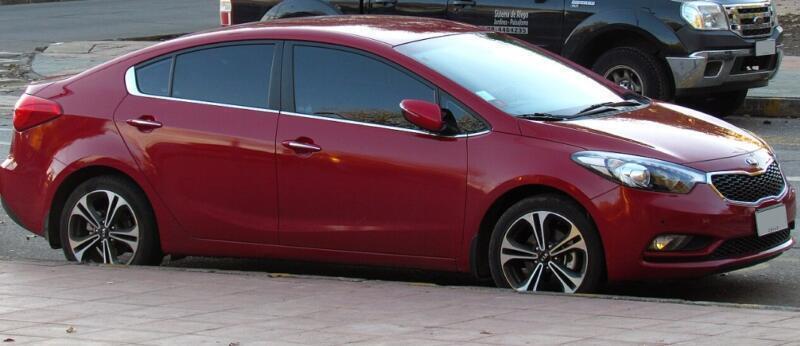
If you're asking “is Kia Cerato reliable?”, chances are you’re considering buying one used, keeping your current Cerato for several more years, or comparing it with dependable rivals like the Toyota Corolla, Hyundai i30, Mazda3, or Honda Civic.
The short answer is encouraging: yes, the Kia Cerato is generally considered a reliable car when it has been properly maintained.
That doesn't mean every Cerato is bulletproof. No car is. Certain engines, transmissions, model years, and neglected examples can produce expensive headaches. Still, the Cerato has earned a solid reputation as a straightforward compact car that can handle daily commuting without behaving like a spoiled exotic car every time something needs servicing.
Think of the Cerato as the dependable friend who rarely creates drama. It may not always be the most exciting person at the party, but when you need someone to show up Monday morning, it usually does.
Let's dig much deeper into Kia Cerato reliability, common problems, engine durability, transmission life, maintenance costs, and whether buying a used Cerato makes sense.
- Is Kia Cerato Reliable Overall?
- How Long Does a Kia Cerato Last?
- Are Kia Cerato Engines Reliable?
- Does the Kia Cerato Have Engine Problems?
- Is the Kia Cerato Automatic Transmission Reliable?
- Are Kia Cerato Manual Transmissions Reliable?
- Kia Cerato Reliability by Generation
- First-Generation Kia Cerato Reliability
- Second-Generation Kia Cerato Reliability
- Third-Generation Kia Cerato Reliability
- Fourth-Generation Kia Cerato Reliability
- What Are the Most Common Kia Cerato Problems?
- Is Kia Cerato Expensive to Maintain?
- Does Kia Cerato Have Timing Belt Problems?
- Is Kia Cerato Reliable After 100,000 km?
- Is Kia Cerato Reliable After 200,000 km?
- Kia Cerato vs Toyota Corolla Reliability
- Kia Cerato vs Hyundai i30 Reliability
- Kia Cerato vs Mazda3 Reliability
- Is Kia Cerato a Good Used Car?
- What Should You Check Before Buying a Kia Cerato?
- What Does a Reliable Cerato Feel Like During a Test Drive?
- Does Driving Style Affect Kia Cerato Reliability?
- How Can We Make a Kia Cerato Last Longer?
- Should You Worry About High-Mileage Kia Ceratos?
- Is Kia Cerato Reliability Better Than Kia's Old Reputation?
- What Is the Biggest Kia Cerato Reliability Risk?
- Is Kia Cerato Reliable Enough for Daily Commuting?
- Is Kia Cerato Reliable for Families?
- Is Kia Cerato Worth Buying?
- Final Verdict: Is Kia Cerato Reliable?
- Frequently Asked Questions
Is Kia Cerato Reliable Overall?
Generally, yes.
Across its different generations, the Kia Cerato has developed a reputation for offering relatively simple mechanical engineering, affordable servicing, widely available replacement parts, and reasonably durable petrol engines.
Most reliability concerns aren't related to catastrophic mechanical failure. Instead, owners are more likely to encounter ordinary age-related issues such as suspension wear, ignition components, batteries, sensors, infotainment glitches, or transmission servicing requirements.
That's an important distinction.
There is a big difference between a car that occasionally needs a coil pack and one that regularly threatens you with a $7,000 engine replacement.
The Cerato usually falls into the first category.
What Makes the Kia Cerato Dependable?
Several characteristics work in its favor.
Many Cerato models use naturally aspirated petrol engines rather than complicated high-output turbocharged units. Naturally aspirated engines tend to have fewer highly stressed components.
You also won't find excessive mechanical complexity in most mainstream Cerato models.
Depending on generation and market, typical ingredients include:
- Naturally aspirated four-cylinder petrol engines
- Conventional automatic transmissions
- Manual gearbox options
- Relatively simple suspension systems
- Widely available service components
- Shared engineering with other Hyundai-Kia vehicles
None of those things guarantee reliability, but simple engineering usually provides fewer opportunities for something painfully expensive to break.
How Long Does a Kia Cerato Last?
A well-maintained Kia Cerato can realistically remain usable beyond 200,000 km, while carefully maintained examples can exceed 250,000 km or even 300,000 km.
Mileage alone isn't the deciding factor, though.
We would rather buy a properly serviced Cerato showing 170,000 km than a neglected 90,000-km example with missing service history.
Why?
Because engines don't read odometers. They experience heat cycles, oil quality, driving conditions, cold starts, neglect, and maintenance habits.
A highway-driven Cerato that receives fresh oil regularly can remain remarkably healthy.
Meanwhile, a low-mileage car subjected to short journeys, delayed servicing, overheating, and cheap fluids can age surprisingly quickly.
What Determines Cerato Longevity?
Several factors matter enormously:
- Regular engine oil changes
- Correct coolant maintenance
- Transmission servicing
- Avoiding prolonged overheating
- Timely spark plug replacement
- Repairing oil leaks early
- Using correct fluid specifications
- Addressing warning lights promptly
Treat a Cerato properly and it will usually return the favor.
Ignore basic maintenance and even Toyota would eventually surrender.
Are Kia Cerato Engines Reliable?
Most Kia Cerato petrol engines are reasonably dependable, especially when serviced according to schedule.
Depending on the market and generation, Cerato models have used several engine families and displacements, commonly around 1.6 and 2.0 liters.
For many buyers, the naturally aspirated petrol engines are particularly appealing because they avoid some of the complexity associated with turbocharging.
Kia Cerato 2.0 Reliability
The 2.0-liter petrol engine found in many Cerato models is generally considered a solid everyday powerplant.
It isn't designed to transform the Cerato into a sports sedan.
That's probably good news for reliability.
A moderately stressed engine that isn't constantly squeezing enormous horsepower from a small displacement tends to enjoy an easier life.
With proper maintenance, the 2.0-liter engine can provide many years of trouble-free driving.
Potential age-related concerns may include:
- Ignition coil failure
- Spark plug wear
- Oil seepage
- Sensors becoming faulty
- Engine mounts deteriorating
- Cooling system components aging
- Carbon deposits depending on engine design
- Increased oil consumption on neglected or very high-mileage cars
These problems aren't necessarily unique to Kia.
They're the automotive equivalent of needing reading glasses once you get older.
Kia Cerato 1.6 Reliability
The 1.6-liter engine used in various markets can also be dependable.
Its lighter fuel consumption and relatively straightforward engineering make it attractive for drivers who prioritize commuting costs over outright performance.
However, reliability still depends heavily on the particular engine version, vehicle history, driving environment, and maintenance schedule.
A properly maintained 1.6 Cerato is usually a much safer purchase than a poorly serviced 2.0-liter example simply because somebody told you the larger engine was stronger.
Engine Maintenance Matters More Than Badge Reputation
People love asking whether an engine is “good” or “bad.”
But ownership history often matters just as much.
Imagine two identical Ceratos.
One received oil changes every year, lived mostly on highways, never overheated, and belonged to a careful owner.
The second spent ten years making five-minute journeys while its owner treated dashboard warning lights like decorative Christmas ornaments.
Which one would you rather buy?
Exactly.
Does the Kia Cerato Have Engine Problems?
Cerato engines can develop problems, but widespread catastrophic engine failure isn't something we would describe as inevitable across the entire model range.
Potential issues vary by generation and engine.
Watch for signs such as:
- Engine knocking
- Excessive oil consumption
- Blue exhaust smoke
- Rough idle
- Engine warning lights
- Coolant loss
- Unusual tapping noises
- Oil leaks around seals or gaskets
- Hesitation under acceleration
None automatically means the engine is dying.
This content may interest you! Kia Cerato or Similar New Zealand: What Car Will You Actually Get?
Something as simple as a failing ignition coil can cause dramatic shaking and misfires while costing far less than an engine rebuild.
The key is diagnosis.
Don't immediately assume the worst, but don't ignore symptoms either.
Is the Kia Cerato Automatic Transmission Reliable?
Conventional automatic Cerato transmissions are generally dependable when serviced correctly.
That's particularly appealing because traditional torque-converter automatics are often easier to live with long-term than some highly complicated dual-clutch transmissions.
Many owners simply put the selector in Drive and forget the transmission exists.
That's good when everything works.
Unfortunately, forgetting it exists also means some owners never change the transmission fluid.
How Long Can a Cerato Automatic Transmission Last?
With proper treatment, an automatic transmission can last well beyond 150,000 km and frequently much longer.
However, transmission longevity depends on:
- Fluid condition
- Heat exposure
- Towing
- Driving style
- Stop-and-go traffic
- Maintenance history
- Previous abuse
Regular inspection and appropriate fluid servicing can make a significant difference.
Signs of Transmission Trouble
Be cautious if a used Cerato displays:
- Delayed engagement into Drive
- Harsh gear changes
- Slipping
- Transmission shudder
- RPM flare between shifts
- Unusual whining
- Transmission warning messages
- Burnt-smelling fluid
A smooth transmission during a cold start isn't enough.
Drive the vehicle until it reaches full operating temperature. Some transmission problems only become noticeable once everything is hot.
Are Kia Cerato Manual Transmissions Reliable?
Manual Ceratos are mechanically straightforward and can be very durable.
However, clutch life depends heavily on the previous driver's habits.
A careful driver may extract tremendous mileage from a clutch.
Someone who rests their foot on the clutch pedal at every traffic light can destroy one much sooner.
During a used-car inspection, watch for:
- Clutch slipping
- High engagement point
- Difficulty selecting gears
- Crunching during shifts
- Clutch pedal vibration
- Noisy release bearing
The gearbox itself may be perfectly healthy while the clutch is approaching replacement time.
Kia Cerato Reliability by Generation
Cerato reliability varies somewhat between generations, but condition matters more than simply choosing the newest possible vehicle.
First-Generation Kia Cerato Reliability
Older first-generation Ceratos are now primarily affected by age.
Even beautifully engineered components eventually deteriorate after decades of exposure to heat, vibration, moisture, and rough roads.
At this stage, buyers should pay particular attention to:
- Cooling system condition
- Rubber hoses
- Suspension bushings
- Engine mounts
- Oil leaks
- Electrical connections
- Air-conditioning performance
- Rust in harsh climates
A surviving example with extensive maintenance records could still serve as inexpensive transportation.
However, buying purely because the purchase price looks irresistible can backfire.
A cheap car needing ten small repairs isn't necessarily cheap anymore.
Second-Generation Kia Cerato Reliability
Second-generation Ceratos became more competitive against established Japanese rivals and are still common in many used-car markets.
These vehicles can represent excellent value.
Their mechanical simplicity is attractive, but age-related wear becomes increasingly relevant.
Pay close attention to servicing history and suspension condition.
Common Second-Generation Wear Areas
Depending on mileage and environment, you might encounter:
- Worn control-arm bushings
- Noisy suspension links
- Engine mount vibration
- Aging batteries
- Faulty sensors
- Air-conditioning problems
- Minor electrical issues
- Interior trim deterioration
These aren't necessarily deal-breakers.
The question is whether the purchase price reflects the work required.
Third-Generation Kia Cerato Reliability
Third-generation Ceratos strike a particularly appealing balance between price, modern equipment, and relatively mature engineering.
For many second-hand buyers, this generation represents the sweet spot.
You get improved safety and technology without necessarily entering the territory of extremely complicated drivetrains.
Well-maintained examples can be excellent commuter vehicles.
What Should We Check?
Look closely at:
- Service records
- Automatic transmission behavior
- Engine oil level
- Suspension noises
- Steering alignment
- Air-conditioning performance
- Infotainment operation
- Battery health
- Evidence of accident repairs
Never assume a newer-looking cabin means the mechanical condition is equally good.
A professional detailer can make a neglected car look ten years younger.
They cannot shampoo away a worn transmission.
Fourth-Generation Kia Cerato Reliability
Later Ceratos benefit from improved refinement, safety technology, cabin quality, and overall development.
From a daily-driver perspective, they are generally strong performers.
The trade-off is that newer cars include more electronics.
Sensors, cameras, infotainment systems, driver-assistance technology, and sophisticated modules improve convenience but introduce additional components that can eventually malfunction.
Even so, their underlying mechanical architecture remains relatively conventional compared with some rivals.
What Are the Most Common Kia Cerato Problems?
No single issue defines every Cerato generation, but several categories deserve attention.
1. Suspension Wear
Knocking noises over speed bumps can indicate worn:
- Sway bar links
- Bushings
- Strut mounts
- Shock absorbers
- Ball joints
These components naturally wear over time.
Driving regularly on pothole-covered roads accelerates deterioration.
2. Engine Mount Wear
A worn engine mount can cause noticeable vibration while idling.
This content may interest you!Kia Cerato vs Kia Stonic New Zealand: Which Kia Makes More Sense?Drivers sometimes panic because the car suddenly feels rough.
The engine itself may be perfectly healthy.
The mount simply isn't isolating vibration effectively anymore.
3. Ignition Coil Problems
Individual ignition coils can eventually fail.
Typical symptoms include:
- Misfires
- Poor acceleration
- Rough idle
- Check-engine light
- Increased fuel consumption
Coils are generally replaceable without dismantling half the vehicle.
4. Battery and Electrical Issues
Modern vehicles depend heavily on stable voltage.
A weak battery can create symptoms that look far more mysterious than the actual problem.
Owners may experience:
- Slow starting
- Warning lights
- Infotainment resets
- Start-stop issues
- Intermittent electrical behavior
Before diagnosing the Cerato as possessed, test the battery.
5. Steering or Alignment Problems
Uneven tire wear can result from poor alignment, worn steering components, damaged suspension, or previous collision repairs.
If the vehicle constantly pulls to one side, investigate before buying.
6. Air-Conditioning Problems
Older Ceratos can develop air-conditioning faults due to leaks, compressors, relays, sensors, or aging seals.
In a hot climate, that's more than a comfort issue.
Driving through summer without air conditioning can feel like commuting inside an air fryer.
Is Kia Cerato Expensive to Maintain?
Generally, no.
Routine Cerato maintenance tends to be relatively affordable compared with luxury European cars or highly specialized performance vehicles.
Common maintenance items include:
- Engine oil
- Oil filters
- Air filters
- Cabin filters
- Spark plugs
- Brake pads
- Brake fluid
- Coolant
- Transmission fluid
- Tires
Parts availability varies by country, but Kia's global presence usually helps.
Are Kia Cerato Parts Expensive?
Most ordinary consumable parts are reasonably priced.
Certain electronic modules, genuine body panels, advanced sensors, or major drivetrain components can still be expensive.
That's true for nearly every modern car.
Nobody smiles when an electronic control module needs replacement.
The difference is that routine Cerato servicing usually doesn't require luxury-car money.
Does Kia Cerato Have Timing Belt Problems?
This depends on the specific engine.
Some Cerato engines use timing chains rather than traditional timing belts.
A timing chain typically doesn't have a simple replacement interval like many belts do, but that doesn't mean it deserves zero attention.
Poor oil maintenance can accelerate timing-chain wear because the chain and tensioner rely heavily on correct lubrication.
If you hear abnormal rattling during startup, especially from a high-mileage engine, have it inspected.
Never assume the words “timing chain” automatically mean “lifetime component.”
Everything mechanical has a lifetime.
The question is how long that lifetime actually becomes.
Is Kia Cerato Reliable After 100,000 km?
Absolutely—provided maintenance has been consistent.
A Cerato reaching 100,000 km isn't necessarily approaching retirement.
In many cases, it is barely entering middle age.
However, once mileage reaches six figures, buyers should budget for wear items.
You may eventually need:
- Shock absorbers
- Suspension bushings
- Spark plugs
- Engine mounts
- Wheel bearings
- Brake components
- Battery replacement
- Serpentine belt
- Cooling system components
This isn't evidence of poor reliability.
Components wear out.
Even refrigerators don't run forever.
Is Kia Cerato Reliable After 200,000 km?
It can be.
At this point, however, maintenance history becomes absolutely critical.
A 200,000-km Cerato might continue reliably for years.
Another might require constant repairs.
Before buying a high-mileage Cerato, obtain a pre-purchase inspection.
Pay particular attention to:
- Compression
- Oil consumption
- Coolant condition
- Automatic transmission behavior
- Suspension wear
- Steering condition
- Air-conditioning
- Electrical equipment
- Previous accident damage
Higher mileage isn't automatically frightening.
Unknown history is.
Kia Cerato vs Toyota Corolla Reliability
The Corolla carries one of the strongest reliability reputations in the entire automotive world.
Does that automatically make the Cerato unreliable?
Not remotely.
The Kia can still deliver excellent service while sometimes costing less to purchase on the used market.
This content may interest you!Kia Cerato vs Kia Forte New Zealand: Are They Actually Different?We would compare actual vehicles rather than worship badges.
A meticulously maintained Cerato can be a better purchase than a neglected Corolla.
Still, if absolute long-term reputation is your only criterion, Toyota traditionally holds a powerful advantage.
Kia Cerato vs Hyundai i30 Reliability
This comparison is particularly interesting because Kia and Hyundai share technology, engineering knowledge, suppliers, and platform development.
Reliability can therefore be broadly similar depending on the exact engines and transmissions involved.
The deciding factors often become:
- Purchase price
- Equipment
- Styling
- Service history
- Warranty
- Local parts availability
Both can be sensible choices.
Kia Cerato vs Mazda3 Reliability
The Mazda3 has an excellent reputation for driving dynamics and strong naturally aspirated engines.
The Cerato responds with practicality, value, equipment, and generally straightforward ownership.
Neither automatically crushes the other.
Again, history matters.
If one vehicle has complete maintenance records and the other arrives with a seller saying, “Don't worry, my cousin serviced it,” we know which direction we're leaning.
Is Kia Cerato a Good Used Car?
Yes, it can be one of the stronger value choices in the compact used-car segment.
Ceratos frequently offer:
- Good equipment levels
- Simple controls
- Reasonable fuel economy
- Affordable maintenance
- Spacious interiors
- Useful boot capacity
- Straightforward mechanical design
Used examples can also depreciate enough to offer strong value compared with similarly aged Japanese competitors.
Who Should Buy a Used Cerato?
The Cerato makes particular sense for:
- Daily commuters
- Students
- Small families
- First-time buyers
- Rideshare drivers
- Budget-conscious owners
- Drivers wanting simple petrol power
If your priorities are reliability, affordability, and practicality rather than breathtaking performance, the Cerato fits the brief nicely.
What Should You Check Before Buying a Kia Cerato?
A thorough inspection can save you thousands.
Used Kia Cerato Checklist
Check the following before handing over your money:
- Verify service history.
- Start the engine completely cold.
- Listen for rattling or knocking.
- Check exhaust smoke.
- Test the transmission.
- Inspect engine oil condition.
- Look for coolant leaks.
- Test the air conditioning.
- Drive over rough roads and listen for suspension noise.
- Check tire wear.
- Test all electric windows.
- Test infotainment and Bluetooth.
- Inspect warning lights.
- Look underneath for fluid leaks.
- Check for mismatched paint or accident repairs.
- Scan the vehicle electronically for fault codes.
- Arrange an independent mechanical inspection.
That final step is especially important.
A pre-purchase inspection is cheap compared with discovering major problems three days after buying the car.
What Does a Reliable Cerato Feel Like During a Test Drive?
A healthy Cerato shouldn't feel dramatic.
That's the point.
The engine should start easily.
Idle should remain relatively smooth.
Acceleration should be linear.
The automatic transmission should shift without excessive hesitation or violent jolts.
The steering should remain centered.
The suspension shouldn't sound like somebody dropped a toolbox in the trunk every time you hit a bump.
Braking should feel straight and predictable.
If the car feels boringly normal, that's often exactly what we want.
Does Driving Style Affect Kia Cerato Reliability?
Absolutely.
Mechanical components don't know whether you consider yourself a “careful owner.”
They only experience what your right foot tells them.
Constant hard acceleration, aggressive braking, high-RPM cold starts, and neglected fluids accelerate wear.
Gentle warm-up, sensible driving, and timely maintenance can significantly extend vehicle life.
Short Trips Can Be Tougher Than Highway Driving
A Cerato used mainly for three-kilometer journeys may experience more wear than expected.
The engine repeatedly operates before reaching optimal temperature.
Moisture accumulates.
The battery doesn't always recover fully.
Oil experiences repeated heat cycles.
That's one reason mileage never tells the complete story.
How Can We Make a Kia Cerato Last Longer?
If you already own one, reliability largely comes down to prevention.
Follow a few simple habits:
- Change engine oil on schedule.
- Use the correct oil specification.
- Check fluid levels periodically.
- Avoid ignoring warning lights.
- Replace worn suspension parts promptly.
- Maintain proper tire pressures.
- Allow the engine to warm naturally.
- Don't abuse the transmission.
- Fix coolant leaks immediately.
- Keep servicing records.
Preventive maintenance doesn't feel exciting.
Neither does brushing your teeth.
But both become extremely exciting when you stop doing them.
Should You Worry About High-Mileage Kia Ceratos?
Not automatically.
High mileage accompanied by detailed maintenance records can indicate a vehicle that has been cared for consistently.
Sometimes highway mileage is even easier on the vehicle than low-mileage urban driving.
We would worry more about:
- Missing service history
- Persistent warning lights
- Low oil level
- Overheating history
- Harsh transmission shifts
- Suspiciously clean engine bays hiding leaks
- Uneven tire wear
- Poor-quality crash repairs
A high odometer reading tells you how far the vehicle traveled.
This content may interest you!Are Kia Cerato Good Cars? Reliability, Problems, and Buying GuideIt doesn't tell you how it was treated along the way.
Is Kia Cerato Reliability Better Than Kia's Old Reputation?
Kia's reputation has changed dramatically over the decades.
Earlier generations of Korean cars were often viewed primarily as inexpensive alternatives.
Modern Kia vehicles compete much more directly with established global manufacturers in safety, technology, refinement, and overall engineering.
The Cerato is one of the models that helped demonstrate that transition.
That doesn't mean every Kia automatically deserves a perfect reliability score.
It means dismissing a Cerato simply because of old perceptions about the badge can lead buyers to overlook a genuinely competent compact car.
What Is the Biggest Kia Cerato Reliability Risk?
For most used buyers, the biggest risk isn't a hidden design catastrophe.
It's neglect.
Affordable cars often attract owners who postpone maintenance because the vehicle itself wasn't particularly expensive.
That's where problems accumulate.
A small coolant leak becomes overheating.
A mild transmission shudder becomes major wear.
A noisy suspension joint damages surrounding components.
A minor oil leak becomes dangerously low oil.
Mechanical problems tend to whisper before they scream.
Listen early.
Is Kia Cerato Reliable Enough for Daily Commuting?
Yes.
Daily commuting is exactly where the Cerato makes sense.
It offers reasonable fuel economy, comfortable road manners, straightforward controls, and generally manageable servicing.
You don't need to emotionally prepare yourself every morning before turning the key.
For commuters covering substantial annual mileage, maintenance should become particularly disciplined.
High mileage itself isn't the enemy.
Neglected high mileage is.
Is Kia Cerato Reliable for Families?
It can work very well for small families.
The Cerato typically offers respectable passenger space, a practical trunk, decent safety equipment depending on generation, and predictable running costs.
Families also benefit from its mainstream mechanical design because repairs don't usually require specialized exotic-car knowledge.
Still, safety technology varies considerably by model year.
A newer Cerato may offer driver-assistance equipment that older generations simply don't have.
Reliability should therefore be only one factor in the buying decision.
Is Kia Cerato Worth Buying?
For many buyers, yes.
The Cerato succeeds because it rarely tries to be something it isn't.
It's not pretending to be a supercar.
It's not a luxury limousine.
It's not an off-road monster.
It is a practical compact passenger car designed to get people to work, school, supermarkets, airports, and weekend destinations without demanding constant attention.
And sometimes that's exactly what good car ownership looks like.
Final Verdict: Is Kia Cerato Reliable?
So, is Kia Cerato reliable?
In general, yes.
A properly maintained Kia Cerato can be a dependable, affordable, and practical vehicle capable of covering high mileage without major drama.
Naturally aspirated petrol engines, relatively straightforward transmissions, reasonable parts availability, and conventional mechanical engineering all contribute to its appeal.
That doesn't mean you should buy the first Cerato you find.
Used-car reliability depends enormously on previous ownership.
Look for documented servicing, smooth engine performance, healthy transmission behavior, clean fluids, good suspension, and evidence that previous owners actually cared about maintenance.
If we had to summarize the Cerato in one sentence, we'd call it an underrated compact car that can deliver impressive long-term service when treated properly.
Buy the condition, not just the mileage.
Buy the maintenance history, not just the badge.
Do that, and the Cerato can be the sort of car you stop worrying about—which may be the biggest compliment we can give any daily driver.
Frequently Asked Questions
Is Kia Cerato reliable after 100,000 km?
Yes. A properly maintained Kia Cerato can remain very reliable after 100,000 km. At this mileage, routine wear components such as suspension bushings, spark plugs, brakes, batteries, and engine mounts may eventually need replacement, but the drivetrain can still have plenty of useful life remaining.
How many kilometers can a Kia Cerato last?
A well-maintained Cerato can commonly exceed 200,000 km, and some vehicles can surpass 250,000-300,000 km. Maintenance history, driving conditions, engine care, and transmission servicing have a major influence on actual lifespan.
Does the Kia Cerato have transmission problems?
Cerato transmissions can experience problems, particularly when fluid maintenance has been neglected or the vehicle has experienced heavy use. However, conventional automatic transmissions found in many Cerato models are generally durable when properly serviced.
Is a used Kia Cerato worth buying?
Yes. Used Ceratos can offer excellent value because they combine reasonable reliability, affordable maintenance, good equipment levels, and practical interiors. A professional pre-purchase inspection is still strongly recommended.
This content may interest you!Kia Cerato Engine Capacity: Complete Engine Size GuideIs Kia Cerato more reliable than Toyota Corolla?
The Toyota Corolla has a particularly strong historical reputation for long-term reliability, but that doesn't make the Cerato unreliable. A well-maintained Cerato can be an excellent long-term vehicle and may offer better used-car value. When shopping second-hand, the individual vehicle's condition and maintenance history matter more than the badge alone.
Leave a Reply