
Are Kia Cerato Good Cars? Reliability, Problems, and Buying Guide
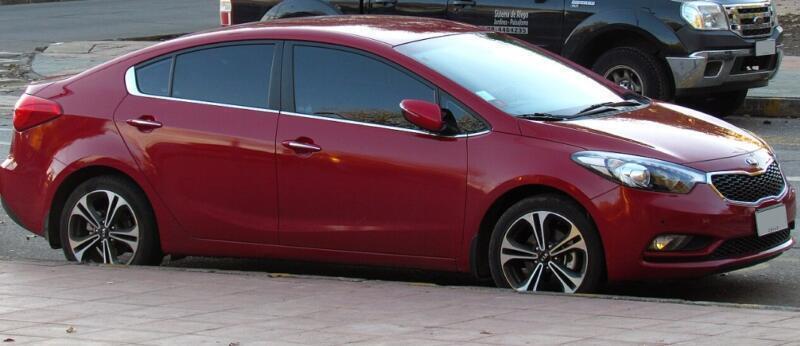
If you’re shopping for a practical compact car, there’s a good chance the Kia Cerato has appeared somewhere on your shortlist. It usually offers plenty of equipment for the money, straightforward everyday usability, and styling that doesn’t scream “budget car.”
But are Kia Cerato good cars, especially once they have a few years and thousands of kilometres behind them?
Generally, yes. The Kia Cerato can be a very good car for buyers who prioritize value, practicality, relatively simple ownership, and comfortable everyday transportation. However, the answer depends heavily on the generation, engine, transmission, maintenance history, and condition of the individual vehicle.
A Cerato that has been properly serviced can make a dependable daily driver. A neglected example with questionable maintenance records can quickly become a different story.
In this guide, we’ll examine reliability, common problems, engines, fuel economy, comfort, maintenance costs, longevity, and what to inspect when buying used.
- What Is the Kia Cerato?
- Are Kia Cerato Good Cars Overall?
- Is the Kia Cerato Reliable?
- How Long Does a Kia Cerato Last?
- Common Kia Cerato Problems
- Are Kia Cerato Engines Good?
- Is the Kia Cerato Fuel Efficient?
- Is the Kia Cerato Comfortable?
- Is the Kia Cerato Good for Families?
- Is the Kia Cerato Good for Long Trips?
- What Is the Kia Cerato Like to Drive?
- Kia Cerato Interior Quality
- Kia Cerato Safety
- Is a Kia Cerato Expensive to Maintain?
- Kia Cerato vs Toyota Corolla
- Kia Cerato vs Hyundai Elantra
- Kia Cerato vs Mazda3
- Is a Used Kia Cerato a Good Buy?
- Which Kia Cerato Should You Buy?
- Should You Avoid Older Kia Cerato Models?
- Who Should Buy a Kia Cerato?
- Are Kia Cerato Good First Cars?
- Are Kia Cerato Good Cars for City Driving?
- Pros and Cons of the Kia Cerato
- So, Are Kia Cerato Good Cars?
- Frequently Asked Questions About the Kia Cerato
What Is the Kia Cerato?
The Kia Cerato is a compact passenger car produced by Kia and sold across numerous international markets. Depending on the country and generation, closely related versions have also carried names such as Forte.
The Cerato has traditionally competed against familiar compact cars including the Toyota Corolla, Hyundai Elantra, Honda Civic, Mazda3, and Nissan Sentra.
Rather than attempting to dominate one particular category, the Cerato takes an all-rounder approach.
Think of it like a reliable pair of everyday shoes. It may not be the most exotic thing in your wardrobe, but it can handle commuting, shopping, road trips, school runs, and weekend errands without demanding constant attention.
That versatility is a major part of its appeal.
Are Kia Cerato Good Cars Overall?
For most ordinary drivers, Kia Cerato cars are generally good vehicles.
Their strongest qualities typically include:
- Competitive value for money
- Practical cabin and luggage space
- Reasonable running costs
- Straightforward everyday driving
- Good equipment levels on many variants
- Widely available servicing and replacement parts in major Cerato markets
- A solid balance between comfort and handling
The Cerato isn't perfect, though.
Some versions can develop suspension noises, electrical annoyances, steering-related issues, engine problems, or transmission concerns as mileage increases. Interior materials can also show wear faster than those in more expensive competitors.
Still, isolated faults shouldn't automatically turn us against an entire model range.
Condition and maintenance history matter enormously.
Is the Kia Cerato Reliable?
Reliability is probably the biggest question behind the phrase “are Kia Cerato good cars?”
Broadly speaking, Cerato reliability ranges from decent to very good depending on the model year and drivetrain.
Many examples cover substantial distances without catastrophic mechanical problems when owners keep up with routine servicing. The naturally aspirated petrol engines found in many Ceratos are particularly attractive to buyers wanting relatively straightforward mechanical packages.
However, reliability shouldn't be interpreted as invincibility.
Oil changes matter. Cooling-system maintenance matters. Transmission servicing matters. Ignoring unusual noises matters.
A simple car can still become expensive when maintenance gets postponed year after year.
What Makes a Cerato Reliable?
Several characteristics work in its favour.
Many mainstream Cerato versions avoid excessively complicated powertrains. Naturally aspirated engines paired with conventional automatic transmissions have historically been common in the range.
Simplicity can be valuable as vehicles age.
There are fewer expensive technologies standing between the engine and the wheels compared with some highly sophisticated alternatives.
That doesn't mean every engine is problem-free, but it can make long-term ownership more predictable.
Maintenance History Matters More Than the Badge
Here's something worth remembering when shopping used: a well-maintained Cerato can be a better purchase than a neglected Toyota Corolla.
Brand reputation doesn't replace maintenance.
We would rather buy a Cerato with documented servicing, clean fluids, four matching tyres, smooth transmission operation, and evidence of careful ownership than a supposedly bulletproof competitor with missing records and suspicious noises.
How Long Does a Kia Cerato Last?
A properly maintained Kia Cerato can potentially remain useful beyond 200,000 km, and some vehicles can travel considerably farther.
There isn't a magic odometer reading at which every Cerato suddenly becomes unreliable.
Longevity depends on factors such as:
- Service intervals
- Engine oil quality and level
- Driving environment
- Cold-start frequency
- Transmission maintenance
- Previous accidents
- Cooling-system condition
- Driving style
- Climate
- Quality of previous repairs
A vehicle driven gently on open roads may age very differently from one that spends its life crawling through traffic, climbing steep roads, or making repeated short journeys.
Is a High-Mileage Kia Cerato Worth Buying?
It can be.
Mileage alone doesn't tell the entire story.
Imagine two Ceratos.
One has travelled 90,000 km but has virtually no service records, cheap mismatched tyres, dirty oil, and evidence of poor repairs.
The other has covered 160,000 km but comes with complete maintenance documentation and drives beautifully.
Which would we prefer?
Quite possibly the second one.
At higher mileage, however, budget for wear-related components including engine mounts, suspension bushes, wheel bearings, shocks, cooling-system parts, and various sensors.
Common Kia Cerato Problems
Every mass-produced vehicle develops patterns of faults, and the Cerato is no exception.
Problems vary considerably between generations, engines, countries, and individual cars, but used buyers should pay attention to several areas.
Engine Noise and Oil Consumption
Some engines may become noisier with age, particularly when maintenance has been inconsistent.
Excessive oil consumption is another warning sign worth investigating.
Check the dipstick before buying a used Cerato. Oil that's slightly old isn't automatically frightening, but an extremely low oil level should raise questions.
Why is it low?
Has the engine been consuming oil?
Has the owner simply ignored maintenance?
Neither possibility is particularly comforting.
Watch for blue exhaust smoke, abnormal knocking, persistent ticking, warning lights, and rough running.
Automatic Transmission Behaviour
Many Ceratos use conventional automatic transmissions, which can provide smooth and dependable operation.
During a test drive, however, watch for:
- Delayed engagement into Drive or Reverse
- Harsh shifting
- Unexpected slipping
- Shuddering
- Transmission warning lights
- Unusual whining noises
A small hesitation under particular conditions isn't necessarily evidence of a failing gearbox, but repeated harsh behaviour deserves professional inspection.
Suspension Knocks and Rattles
Older Ceratos can develop suspension noises as bushes, links, mounts, and shock absorbers wear.
Drive over several road surfaces during your test drive.
A car that feels quiet on perfectly smooth asphalt might start sounding like a toolbox rolling down stairs once the road becomes rough.
Clunks from the front suspension don't automatically mean a major repair, but they shouldn't be ignored.
Steering Issues
Some owners may experience steering noises, looseness, vibration, or unusual feedback depending on the vehicle's age and configuration.
Check the steering while stationary and while driving.
Turn the wheel from side to side and listen carefully.
Any clicking, knocking, excessive play, or inconsistent assistance should be investigated before purchase.
Electrical Problems
Modern Ceratos contain considerably more electronics than older compact cars.
Possible age-related annoyances can involve:
- Infotainment systems
- Reversing cameras
- Power windows
- Central locking
- Parking sensors
- Steering-wheel controls
- Interior switches
- Battery-related warning messages
These problems aren't necessarily disastrous, but several small electrical repairs can become irritating surprisingly quickly.
Check Every Button Before Buying
Seriously—every button.
Turn on the air conditioning. Pair a phone. Open every window. Test the mirrors. Try the camera. Lock and unlock every door.
Five minutes spent pressing buttons can reveal problems that a 20-minute conversation with the seller won't.
Are Kia Cerato Engines Good?
Cerato engine availability differs considerably by generation and market.
Many models use naturally aspirated four-cylinder petrol engines, while certain markets and performance-oriented versions have received turbocharged alternatives.
For everyday ownership, the regular naturally aspirated petrol engines can be appealing because they generally emphasize simplicity rather than spectacular performance.
They're designed to get the job done.
And sometimes that's exactly what we want.
Naturally Aspirated vs Turbo Cerato
A naturally aspirated Cerato generally makes sense for drivers who prioritize simplicity and predictable running costs.
Turbocharged versions offer considerably more excitement.
More torque can transform the personality of the car, making overtaking and acceleration much stronger.
The trade-off is additional complexity.
Turbochargers generate heat and depend heavily on correct lubrication, so maintenance becomes even more important.
If you're buying a used turbo Cerato, service records should be treated as essential rather than optional.
Is the Kia Cerato Fuel Efficient?
Fuel economy is generally respectable for the compact-car class, although actual consumption depends on engine, transmission, generation, driving conditions, tyre pressure, vehicle load, and driving style.
Highway driving usually brings out the Cerato's efficient side.
Heavy urban traffic can produce dramatically different numbers.
Two owners with identical cars can therefore report surprisingly different consumption.
One cruises 60 km to work on open roads.
The other crawls three kilometres through downtown traffic.
Same Cerato. Completely different reality.
How to Improve Cerato Fuel Economy
Basic habits make a meaningful difference.
Keep tyres correctly inflated, remove unnecessary weight, accelerate progressively, maintain the engine properly, and avoid spending excessive time idling.
Also investigate sudden increases in fuel consumption.
A dirty air filter, worn spark plugs, incorrect tyre pressures, sensor problems, dragging brakes, or other mechanical issues can reduce efficiency.
Is the Kia Cerato Comfortable?
For daily driving, generally yes.
The Cerato tends to provide a comfortable driving position, usable passenger accommodation, and suspension tuning designed around everyday roads.
Don't expect luxury-car isolation.
Rough pavement can generate noticeable tyre and suspension noise, especially with larger wheels and lower-profile tyres.
Still, the overall comfort level is competitive enough for commuting and longer journeys.
Rear-Seat Comfort
Rear space varies between generations, but the Cerato is fundamentally designed as a practical compact family car.
Adults can generally use the rear seats without feeling as though they've been folded into a suitcase.
That's important because practicality is one of the Cerato's strongest arguments.
Is the Kia Cerato Good for Families?
It can be an excellent small family car.
Four doors, practical rear seating, reasonable luggage capacity, manageable exterior dimensions, and relatively affordable running costs create a useful combination.
A Cerato sedan can swallow groceries, school bags, luggage, and everyday family equipment surprisingly well.
Hatchback versions, where available, provide additional cargo flexibility.
For families that don't need an SUV, the Cerato can therefore offer a refreshingly sensible alternative.
Is the Kia Cerato Good for Long Trips?
Yes, particularly if the vehicle is mechanically healthy.
Its combination of predictable handling, decent seating comfort, reasonable fuel economy, and useful luggage capacity makes it suitable for highway travel.
Higher-specification models may also offer driver-assistance and convenience features that make long journeys easier.
The biggest limitation is refinement.
Premium sedans and larger vehicles can provide quieter cabins and softer highway manners, but they'll usually cost more to purchase and operate.
What Is the Kia Cerato Like to Drive?
The standard Cerato isn't trying to imitate a sports car.
Steering is generally light enough for parking and city driving, while handling remains predictable during normal cornering.
That makes the car approachable.
You don't need to “learn” the Cerato.
You get in, adjust the mirrors, select Drive, and within minutes it feels familiar.
Is the Kia Cerato Fast?
Most standard versions aren't particularly fast.
Acceleration is adequate rather than dramatic.
For commuting, merging onto highways, and ordinary overtaking, that's usually enough.
Performance-oriented turbo versions are a different animal and can provide substantially stronger acceleration.
But if outright speed sits near the top of your priorities, a basic Cerato probably isn't what you're looking for.
Kia Cerato Interior Quality
Interior quality is usually functional rather than luxurious.
Later generations can look impressively modern, particularly in higher trim levels, but you'll still find harder plastics in various areas.
Is that necessarily bad?
Not really.
Hard plastics don't automatically make a poor car. They can actually tolerate daily abuse fairly well.
The more important questions are whether controls are logically positioned, seats remain comfortable, trim pieces stay secure, and technology continues functioning.
Does the Interior Age Well?
This depends heavily on how the previous owner treated it.
Look for worn steering-wheel surfaces, sagging seat bolsters, broken vents, scratched trim, damaged switches, and deteriorating upholstery.
Interior condition can also provide clues about the vehicle's overall treatment.
A filthy, battered cabin paired with claims of “meticulous maintenance” deserves a little scepticism.
Kia Cerato Safety
Safety equipment differs dramatically depending on model year, market, and trim level.
Newer vehicles may include technologies such as autonomous emergency braking, lane-related assistance, blind-spot monitoring, reversing cameras, and multiple airbags.
Older Ceratos naturally won't necessarily offer the same technology.
When comparing vehicles, don't assume that every Cerato from a particular generation has identical safety equipment.
Check the exact variant.
Newer Isn't Automatically Better Equipped
Trim level matters.
A higher-specification slightly older vehicle can occasionally contain equipment missing from a newer entry-level version.
Compare actual specifications rather than relying solely on registration year.
Is a Kia Cerato Expensive to Maintain?
Routine maintenance is generally one of the Cerato's strengths.
Oil, filters, spark plugs, brake components, tyres, batteries, and other normal consumables aren't unusual for a compact passenger car.
Major mechanical repairs are obviously different.
An engine or transmission failure can be expensive regardless of the badge on the bonnet.
Preventive maintenance therefore matters enormously.
Spending a little money regularly is often preferable to receiving one enormous repair bill later.
Kia Cerato vs Toyota Corolla
This comparison is almost inevitable.
The Toyota Corolla has an exceptional reputation for durability and resale value. The Cerato frequently fights back with competitive pricing, generous equipment, attractive styling, and strong overall value.
The Corolla may be the safer choice for buyers obsessed with resale reputation.
The Cerato can make more sense when the equivalent Corolla costs substantially more.
The trick is comparing vehicles of similar age, mileage, condition, and specification.
Don't compare a pristine Corolla with an abused Cerato and conclude the Toyota is inherently superior—or vice versa.
Kia Cerato vs Hyundai Elantra
This is an especially interesting comparison because Kia and Hyundai share considerable engineering resources.
The Cerato and Elantra can therefore offer similar mechanical philosophies while delivering different styling, tuning, equipment, and pricing.
Which should you buy?
Often, the better individual vehicle.
When buying used, condition can matter more than the logo on the steering wheel.
Kia Cerato vs Mazda3
The Mazda3 typically appeals more strongly to drivers who care about handling, cabin presentation, and a slightly more premium atmosphere.
The Cerato often counters with value and practicality.
Imagine choosing between two restaurants.
One has slightly better presentation.
The other gives you a bigger meal for the same money.
Neither choice is inherently wrong.
Is a Used Kia Cerato a Good Buy?
Yes, a used Cerato can represent excellent value.
Depreciation can make relatively modern examples accessible for buyers who might otherwise be looking at older versions of more prestigious or highly sought-after competitors.
That value proposition is arguably where the Cerato shines brightest.
You're buying transportation, equipment, space, and relative modernity without necessarily paying a premium for the badge.
What Should You Check Before Buying?
We recommend inspecting:
- Complete service history
- Engine oil level and condition
- Coolant condition
- Cold-start engine noise
- Automatic transmission operation
- Steering feel
- Suspension noises
- Tyre condition and wear pattern
- Air-conditioning performance
- Infotainment system
- Reversing camera
- Warning lights
- Evidence of accident repairs
- Fluid leaks
- Recall or campaign history applicable to the exact VIN
A pre-purchase inspection by a qualified mechanic is money well spent.
A beautiful paint job can hide an ugly mechanical story.
Which Kia Cerato Should You Buy?
There isn't one universal answer because Cerato specifications differ by country.
For buyers prioritizing straightforward ownership, a well-maintained naturally aspirated petrol model with documented servicing can be particularly attractive.
Buyers wanting more performance may prefer a turbocharged variant.
Equipment-focused shoppers should investigate mid- and upper-level trims, which can offer impressive features for the price.
But we'd prioritize condition in this order:
Service history → mechanical condition → accident history → mileage → trim level → colour.
Too many buyers reverse that list.
Should You Avoid Older Kia Cerato Models?
Not automatically.
Age alone isn't a reason to reject a car.
Older Ceratos can be inexpensive, relatively simple vehicles, which makes them attractive as first cars, commuter cars, or basic transportation.
However, age introduces wear.
Rubber deteriorates. Bushes crack. Engine mounts soften. Seals leak. Plastic becomes brittle.
At some point, you're no longer evaluating the model's original reliability—you are evaluating how well that particular car has survived its life.
Who Should Buy a Kia Cerato?
The Cerato makes particularly good sense for someone seeking:
- Affordable everyday transportation
- A first car
- A commuter vehicle
- A practical small family car
- Reasonable fuel consumption
- Straightforward servicing
- Good equipment for the money
It makes less sense for buyers primarily seeking luxury, extreme performance, SUV ground clearance, or exceptionally premium interior materials.
Are Kia Cerato Good First Cars?
They certainly can be.
A naturally aspirated Cerato offers approachable performance, manageable dimensions, predictable handling, and practical passenger space.
Replacement consumables are generally ordinary rather than exotic, too.
For younger drivers, insurance costs should still be checked before purchase—especially for sportier versions.
The cheapest car to buy isn't always the cheapest car to own.
Are Kia Cerato Good Cars for City Driving?
Yes.
This is one environment where the Cerato feels completely at home.
Its compact dimensions make parking easier than in an SUV, while four doors and usable luggage space maintain practicality.
Automatic versions are particularly convenient in stop-and-go traffic.
If your daily life involves commuting, supermarkets, parking garages, school runs, and occasional highway journeys, the Cerato fits the brief nicely.
Pros and Cons of the Kia Cerato
Let's condense everything.
Advantages
The Kia Cerato generally offers strong value, useful interior space, accessible everyday performance, reasonable running costs, good equipment availability, and uncomplicated driving manners.
Used examples can be especially appealing because depreciation may put newer vehicles within reach of buyers on relatively modest budgets.
Disadvantages
Interior refinement isn't always class-leading, some vehicles develop suspension or steering noises with age, fuel economy isn't necessarily outstanding across every drivetrain, and neglected examples can suffer significant mechanical problems.
Resale value can also vary considerably by market.
So, Are Kia Cerato Good Cars?
Yes—the Kia Cerato is generally a good car, particularly when judged as practical, affordable everyday transportation.
Its greatest strength isn't that it dominates every category.
It's that it rarely needs to.
The Cerato offers a balanced package: enough space, enough performance, enough comfort, enough equipment, and manageable ownership costs.
It's the automotive equivalent of a dependable everyday backpack. Maybe it isn't something you'll display in a glass cabinet, but you'll appreciate how useful it is every single day.
The biggest qualification concerns the used market.
Never buy the reputation. Buy the individual car.
A properly serviced Cerato with a clean history can be a far smarter purchase than a supposedly more reliable competitor that has spent years being neglected.
Get a pre-purchase inspection, check the service records, test every electrical feature, listen carefully during the cold start, and take a proper test drive.
Do that, and a Kia Cerato can provide many years of practical motoring.
Frequently Asked Questions About the Kia Cerato
1. Are Kia Cerato reliable cars?
Generally, yes. Many Kia Ceratos provide dependable everyday service when maintained correctly. Reliability varies according to generation, engine, transmission, mileage, and maintenance history, so individual condition is extremely important when buying used.
2. How many kilometres can a Kia Cerato last?
A well-maintained Cerato can potentially exceed 200,000 km, with some examples travelling substantially farther. Regular oil changes, cooling-system maintenance, transmission care, and prompt repairs can significantly influence lifespan.
3. Is a used Kia Cerato worth buying?
Yes. Used Ceratos can offer excellent value because buyers often get relatively modern equipment and practical transportation for less money than some highly sought-after rivals. Always obtain a mechanical inspection before purchasing.
4. Is the Kia Cerato expensive to repair?
Routine servicing is generally reasonable for a mainstream compact car. Costs can rise substantially if major engine, transmission, electronic, or accident-related repairs are required, which makes maintenance history particularly important.
5. Is Kia Cerato better than Toyota Corolla?
Neither car wins in every situation. The Corolla has a particularly strong reputation for durability and resale value, while the Cerato can offer better equipment and purchase value. When buying used, we'd choose the better-maintained individual vehicle rather than relying exclusively on brand reputation.
This content may interest you! Kia Cerato Problems: Common Issues, Reliability, and What Owners Should Know
Leave a Reply