
Mitsubishi Triton Best Years New Zealand: Complete Used-Buyer Guide
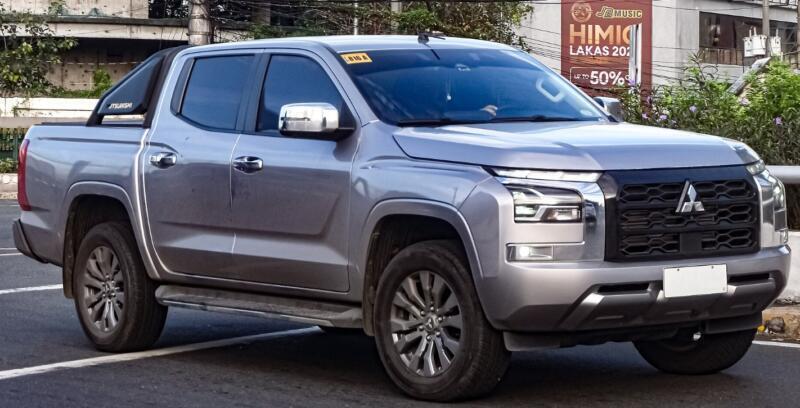
Choosing the best Mitsubishi Triton year in New Zealand is not as simple as pointing at one model and declaring it the winner. A ute that has spent its life commuting between Auckland and Hamilton is a completely different proposition from one that has hauled trailers across Canterbury farms, launched boats into salt water, or crawled through forestry tracks every week.
That is why we need to judge each Triton on two levels: the strengths of its model year and the history of the individual vehicle.
Overall, the 2021–2023 Mitsubishi Triton models are the best used choices for most New Zealand buyers. They combine the proven 2.4-litre turbo-diesel engine, a six-speed automatic transmission, modern safety equipment, useful towing ability and enough age-related depreciation to represent better value than a brand-new ute.
Buyers with a smaller budget should also consider well-maintained 2016–2018 models, while the redesigned 2024-onward Triton is the strongest option for anyone wanting newer technology, more torque and better overall refinement.
Let’s break down the good years, the weaker choices and the things we should inspect before handing over our money.
- What Are the Best Mitsubishi Triton Years in New Zealand?
- Our Quick Verdict
- Why the Model Year Matters
- 2021–2023 Triton: Best Overall Used Years
- 2019–2020 Triton: Best Value Facelift
- 2016–2018 Triton: Best Affordable Modern Choice
- 2013–2014 Triton: Best Older Budget Years
- 2024-Onward Triton: Best New-Generation Choice
- Which Mitsubishi Triton Years Should We Approach Carefully?
- Best Triton Years for Towing in New Zealand
- Best Triton Years for Off-Road Driving
- Best Triton Years for Family Use
- Best Triton Year for Tradies
- Manual or Automatic Triton?
- New Zealand-New Versus Used Import
- How Many Kilometres Is Too Many?
- Pre-Purchase Checklist for a Used Triton
- The Final Ranking
- Conclusion: Which Mitsubishi Triton Year Should We Buy?
- Frequently Asked Questions
What Are the Best Mitsubishi Triton Years in New Zealand?
For most buyers, the standout Triton years are:
- 2021–2023: Best overall used Triton
- 2019–2020: Best combination of styling, safety and value
- 2016–2018: Best affordable modern-generation option
- 2013–2014: Best older Triton for budget-conscious buyers
- 2024 onward: Best new-generation Triton
The fifth-generation Triton arrived in New Zealand during 2015. By 2016, the local range included four variants and carried a five-year or 130,000 km new-vehicle warranty. These models used the 2.4-litre turbo-diesel engine that became one of the defining features of this generation.
A major facelift arrived for the 2019 model year. It brought the sharper “Dynamic Shield” front-end design, revised equipment and, on automatic models, a six-speed transmission. New Zealand versions retained the 135 kW and 437 Nm 2.4-litre diesel engine.
The latest generation reached the New Zealand market in late 2023. It increased output to 150 kW and 470 Nm, introduced a stronger and larger platform, and offered a braked towing capacity of up to 3,500 kg across the range.
Our Quick Verdict
The 2021–2023 Triton is the sweet spot.
These years sit late in the previous generation, meaning Mitsubishi had already refined the platform for several years. They also avoid the steepest part of new-vehicle depreciation while still feeling modern enough for daily driving.
A tidy 2021, 2022 or 2023 GLX-R, GLS or VRX can be a smart all-rounder for work, family trips, towing and weekend adventures. It may not have the heavyweight reputation of a Toyota Hilux or the road presence of a Ford Ranger, but it often gives us more equipment for the money.
Think of it as the quiet achiever in the ute paddock. It does not always shout the loudest, yet it keeps turning up with its sleeves rolled up.
Why the Model Year Matters
Two Tritons wearing the same badge can provide very different ownership experiences.
Model-year changes may affect:
- Engine output
- Transmission design
- Driver-assistance technology
- Infotainment
- Four-wheel-drive hardware
- Towing limits
- Warranty coverage
- Cabin comfort
- Resale value
However, model year is only one piece of the puzzle.
A serviced 2017 Triton owned by a careful private buyer could be a far safer purchase than a neglected 2022 model that has spent every working day overloaded, towing machinery and collecting mud underneath its chassis.
Condition Can Matter More Than Age
When comparing used utes, we should never assume that newer automatically means better.
Commercial vehicles live hard lives. Their paintwork may look polished while the suspension, tow bar, clutch or transmission has already endured years of punishment. The shiny exterior can sometimes be a neatly wrapped parcel hiding an expensive surprise.
A pre-purchase inspection is therefore essential, particularly when the ute has:
- High kilometres
- A tow bar
- Off-road accessories
- A suspension lift
- Oversized tyres
- A remapped engine
- An incomplete service history
- Signs of fleet or agricultural use
2021–2023 Triton: Best Overall Used Years
The 2021–2023 range is our top recommendation for New Zealand used-ute buyers.
These models belong to the facelifted version of the fifth-generation Triton. They use a 2.4-litre turbo-diesel producing 135 kW and 437 Nm. New Zealand versions were offered in rear-wheel-drive and four-wheel-drive configurations, with the 2022 line-up covering GLX, GLX-R, VRX Black Edition, GLS Black Edition and VRX grades.
Why These Years Stand Out
By 2021, the facelifted Triton had already been on sale for a few years. That matters because later production vehicles often benefit from small manufacturing updates, revised software and accumulated dealer experience.
The strongest reasons to buy one include:
- Proven 2.4-litre turbo-diesel engine
- Six-speed automatic availability
- Modern exterior styling
- Competitive safety equipment
- Good value beside major rivals
- Broad dealer and parts support
- Comfortable dimensions for urban use
- Useful off-road capability
- Reasonable purchase prices on the used market
These Tritons are especially suitable for someone who needs one vehicle to perform several roles. They can carry tools during the week, tow recreational equipment on Saturday and take the family away on Sunday.
Best 2021–2023 Variant
For many buyers, the GLX-R delivers the best balance.
It generally provides more comfort and visual appeal than a basic work-spec GLX without reaching the higher price of a flagship VRX. Equipment varies by year, so we should still compare the exact specification rather than relying solely on the badge.
The VRX is better for drivers who value leather upholstery, additional technology and the more sophisticated Super Select four-wheel-drive system found on higher-grade models.
Who Should Buy a 2021–2023 Triton?
These years make sense for:
- Families wanting a dual-purpose ute
- Tradies who also use their vehicle privately
- Buyers towing boats, trailers or caravans
- Drivers who want modern safety technology
- Anyone seeking a Ranger or Hilux alternative
- Used buyers planning to keep the ute long term
2019–2020 Triton: Best Value Facelift
The 2019 facelift transformed the Triton’s appearance.
Its square, upright nose looked tougher and more substantial than the smoother pre-facelift design. Underneath, however, it retained the familiar 2.4-litre turbo-diesel with 135 kW and 437 Nm. The six-speed automatic also gave facelifted vehicles a more relaxed feel than earlier five-speed automatic models.
Why the 2019 Facelift Was Important
The facelift was not merely a cosmetic exercise.
This content may interest you! Mitsubishi Triton Models New Zealand: Complete Range Guide
It helped the Triton feel more competitive in an increasingly sophisticated ute market. Safety and driver-assistance features became a greater part of the package, particularly in better-equipped versions.
The New Zealand Automobile Association praised the 2019 Triton’s restrained calibration of systems such as forward-collision mitigation, noting that its warnings were less intrusive than those in some competing vehicles.
That detail matters. A safety system is most effective when it helps us without constantly behaving like a nervous passenger stamping an imaginary brake pedal.
Advantages of a 2019–2020 Model
- Tougher facelift styling
- Six-speed automatic transmission
- Proven engine
- Improved driver-assistance technology
- Lower prices than later examples
- Good combination of age and equipment
- Wide availability in the used market
Possible Drawbacks
The earliest facelift models may not benefit from every minor improvement applied to later production vehicles. They are also now old enough for tyres, batteries, suspension bushes and other wear items to require replacement.
That does not make 2019 or 2020 a bad year. It simply means we should buy based on inspection results rather than appearance.
2019 Versus 2020 Triton
There is no dramatic reason to reject one in favour of the other.
A 2019 with full Mitsubishi servicing and careful private ownership is usually preferable to a 2020 with patchy records. When condition and mileage are equal, we would naturally lean toward the newer vehicle.
2016–2018 Triton: Best Affordable Modern Choice
The 2016–2018 Triton represents an excellent entry point into the fifth generation.
New Zealand’s 2016 model used a 2.4-litre diesel producing 135 kW and 437 Nm, with five-speed automatic or six-speed manual options. Both two-wheel-drive and four-wheel-drive configurations were available.
These models look softer than the later facelift, but that can work in the buyer’s favour. Because many shoppers prefer the more aggressive 2019-onward styling, pre-facelift examples may offer stronger value.
Why We Like the 2016–2018 Models
Compared with the previous generation, these Tritons feel more efficient, refined and manageable.
They are also slightly narrower and less cumbersome than some newer double-cab utes. That can be a genuine advantage in Wellington car parks, Auckland traffic or on tight rural tracks.
Key strengths include:
- Strong 2.4-litre diesel performance
- Good manoeuvrability
- Useful cabin space
- Attractive used prices
- Straightforward work-ute versions
- Capable four-wheel-drive variants
- Generally good parts availability
What Should We Inspect?
Age is now becoming a factor. Even a mechanically strong Triton may need investment in wear-and-tear components.
Check for:
- Front suspension noises
- Uneven tyre wear
- Worn shock absorbers
- Brake vibration
- Oil or coolant leaks
- Clutch wear on manual models
- Transmission servicing on automatics
- Damage beneath the vehicle
- Rust around accessories and tray fittings
- Proper operation of the four-wheel-drive system
Are 2015 Models Worth Buying?
A good 2015 can still be worthwhile, but 2016–2018 models are easier to recommend.
The first year of any new generation can contain early-production quirks. More importantly, a 2015 vehicle is now sufficiently old that maintenance history matters enormously. We would not reject one automatically, but we would expect a meaningful price advantage.
2013–2014 Triton: Best Older Budget Years
For buyers with a limited budget, the late fourth-generation Triton deserves consideration.
In New Zealand, the 2013 line-up offered several versions of the 2.5-litre turbo-diesel, with outputs reaching 133 kW and 407 Nm depending on variant. Transmission choices included five-speed manuals and four- or five-speed automatics.
The late-production years are preferable because they came after the platform had been on sale for a long time.
Why Choose a 2013 or 2014?
- Lower purchase price
- Simpler cabin technology
- Proven mechanical design
- Plenty of used parts
- Suitable for basic work
- Strong value when maintained properly
These models can be ideal for a buyer who wants a practical ute without paying for the latest touchscreen, camera system or driver-monitoring technology.
However, older does not necessarily mean cheaper to own.
A low purchase price can evaporate quickly if the vehicle needs injectors, cooling-system repairs, tyres, a clutch, suspension work and overdue servicing. Buying the cheapest Triton online can be like adopting a “free” horse—the initial price is rarely the expensive part.
The Cooling System Deserves Attention
On any older diesel ute, we should inspect the cooling system carefully.
Look for dried coolant residue, an unstable temperature gauge, bubbling in the expansion tank, hardened hoses or evidence that the radiator has been neglected. A compression or cooling-system pressure test may be worthwhile when there are warning signs.
Who Should Consider These Years?
A 2013–2014 Triton suits:
- Buyers with modest annual mileage
- Farmers needing a secondary vehicle
- Homeowners wanting a practical utility
- Drivers comfortable with older technology
- Buyers who can handle preventative maintenance
2024-Onward Triton: Best New-Generation Choice
The sixth-generation Triton arrived in New Zealand in late 2023 as a substantially redesigned vehicle.
It uses a 2.4-litre turbo-diesel producing 150 kW and 470 Nm, paired with a six-speed automatic. The current New Zealand range includes rear-wheel-drive and four-wheel-drive variants, while maximum braked towing capacity reaches 3,500 kg.
Rightcar lists the New Zealand-new 2024 Triton with a five-star safety rating, giving newer buyers another important reason to consider the latest platform.
What Improved?
The new generation provides:
- More power and torque
- A stronger visual presence
- Increased body dimensions
- Improved cabin technology
- More advanced safety systems
- Better towing credentials
- Revised chassis and suspension design
- Greater payload-focused engineering
- A more contemporary interior
It feels less like an inexpensive alternative and more like a serious direct rival to mainstream class leaders.
Is the 2024 Triton Already One of the Best Years?
On specification, yes.
This content may interest you!Is Mitsubishi Triton a Good Car in New Zealand? Complete Buyer’s GuideFor long-term used reliability, however, it remains too new to judge with the same confidence as a 2021–2023 vehicle. We simply do not yet have a decade of ownership evidence.
This distinction is important. A strong launch review tells us how a ute performs when new. It does not tell us how every electronic module, emissions component and interior fitting will behave after 200,000 km.
CarExpert New Zealand describes the current Triton as a well-equipped and competitive ute, praising its value and capable chassis while noting frustrations such as an intrusive driver-monitoring system.
Who Should Buy the New Generation?
Choose a 2024-onward Triton when you prioritise:
- New-vehicle warranty coverage
- Higher towing capacity
- Modern crash protection
- More cabin technology
- Improved torque
- Long-term ownership from new
- Fewer unknowns about previous treatment
Which Mitsubishi Triton Years Should We Approach Carefully?
There is no single New Zealand Triton year that deserves to be universally labelled a disaster.
The more realistic answer is that some age groups require stricter inspection.
2007–2009 Models
Early fourth-generation vehicles are now old enough for age-related deterioration to become a major concern.
The 2008 New Zealand range included petrol and diesel engines, manual and four-speed automatic transmissions, and both rear-wheel-drive and four-wheel-drive configurations.
These utes may still provide dependable service, but they should be treated as older machinery rather than inexpensive versions of a modern vehicle.
Potential costs can include:
- Cooling-system refurbishment
- Injector or fuel-system work
- Turbocharger repairs
- Suspension replacement
- Air-conditioning faults
- Corrosion treatment
- Automatic-transmission servicing
- Electrical repairs
2015 First-Year Models
The 2015 model introduced the fifth-generation platform to New Zealand.
A good example can be perfectly sensible, but we would compare it carefully with a 2016 or 2017 vehicle. When the price difference is small, the later model usually makes more sense.
Any Heavily Modified Triton
Model year becomes almost irrelevant when a ute has been poorly modified.
Be cautious around vehicles with:
- Aggressive ECU tuning
- Emissions equipment removed
- Cheap suspension lifts
- Extreme wheel offsets
- Oversized tyres
- Non-certified structural changes
- Homemade electrical accessories
- Evidence of repeated off-road abuse
A well-engineered modification can enhance a Triton. A careless one can place extra strain on wheel bearings, driveline components, suspension geometry and cooling systems.
Best Triton Years for Towing in New Zealand
For regular heavy towing, the 2024-onward Triton is the strongest choice because current variants offer a maximum braked towing capacity of 3,500 kg.
For moderate towing, a 2021–2023 model can still provide excellent value. Yet we must remember that maximum towing capacity is not the only number that matters.
We should also calculate:
- Tow-ball download
- Vehicle payload
- Passenger weight
- Accessories
- Cargo in the tray
- Gross vehicle mass
- Gross combination mass
- Trailer braking requirements
A ute may technically tow a heavy trailer while having very little payload remaining for people and equipment.
Inspecting a Triton That Has Towed Frequently
Check for:
- Wear inside the tow-ball coupling
- Cracks or deformation near tow-bar mounts
- Sagging rear suspension
- Transmission hesitation
- Clutch slip
- Brake wear
- Overheating evidence
- Trailer-brake controller wiring
- Red dust or metal movement around mounting points
Best Triton Years for Off-Road Driving
For off-road use, higher-spec four-wheel-drive models from 2019 onward are particularly attractive.
Some grades use Mitsubishi’s Super Select system, which can provide more flexibility than a basic part-time four-wheel-drive layout. Exact equipment depends on trim and year, so confirm the driveline specification of the individual ute.
The latest generation also benefits from stronger chassis development and updated terrain-management technology.
Nevertheless, tyres remain one of the biggest factors in real-world capability. A basic Triton on good all-terrain tyres may travel farther than an expensive flagship wearing road-focused rubber.
Best Triton Years for Family Use
Families should focus on 2021 or newer models.
These years provide a better mix of:
- Crash-avoidance technology
- Cabin comfort
- Reversing assistance
- Modern infotainment
- Rear-seat practicality
- Daily-driving refinement
A double-cab ute still has compromises. Rear-seat comfort is rarely as generous as in a similarly priced SUV, and an uncovered tray is less secure than a conventional luggage compartment.
Before buying, install the child seats, sit in the rear and test the driving position. Brochure dimensions do not tell us whether a tall driver can sit comfortably in front of a rear-facing child seat.
Best Triton Year for Tradies
Tradies searching for dependable value should shortlist:
- 2018 GLX: Affordable, practical and proven
- 2020 GLX-R: Newer styling with useful equipment
- 2021–2023 GLX or GLX-R: Best overall work-and-private balance
- 2024-onward GLX: Strong new-generation work platform
A lower trim level may be the smarter commercial purchase. Leather seats and decorative accessories look appealing, but durable flooring, sensible tyres and a documented service history often matter more on a working ute.
Manual or Automatic Triton?
The best transmission depends on how the vehicle will be used.
Why Choose a Manual?
A manual Triton may appeal to buyers who want:
This content may interest you!Mitsubishi Triton vs Nissan Navara New Zealand: Which Ute Wins?- Greater mechanical involvement
- Simple control at low speed
- Lower purchase prices
- Traditional rural-vehicle familiarity
The downside is clutch wear, especially when the vehicle has regularly towed, carried heavy loads or worked in steep terrain.
Why Choose an Automatic?
An automatic is usually better for:
- Urban traffic
- Family use
- Long-distance touring
- Boat launching
- Stop-start towing
- Easier resale
The six-speed automatic fitted to facelifted fifth-generation models is preferable to the earlier five-speed unit for buyers wanting more relaxed highway driving.
Service history remains crucial. “Sealed for life” should never be interpreted as “immune from heat, wear and neglect.”
New Zealand-New Versus Used Import
A New Zealand-new Triton is generally easier to research.
Its service history, local specification, warranty record and recall status may be more straightforward to verify. Imported examples can still be good vehicles, but specifications may differ from locally delivered models.
Before purchasing an import, confirm:
- Exact engine and transmission
- Safety equipment
- Towing certification
- Parts compatibility
- Infotainment language and frequencies
- Emissions equipment
- Recall completion
- Compliance documentation
NZTA maintains a national vehicle-safety recall database, and buyers can use the registration plate or VIN to investigate whether action may be required.
How Many Kilometres Is Too Many?
There is no universal kilometre limit.
A Triton with 180,000 km of highway travel and meticulous servicing may be healthier than one with 90,000 km of short trips, idling, overloading and muddy farm work.
As mileage rises, inspect:
- Injector performance
- Turbocharger condition
- Diesel particulate filter operation
- EGR contamination
- Cooling-system health
- Transmission behaviour
- Differential and transfer-case oils
- Wheel bearings
- Suspension bushes
- Driveshaft joints
Service Records Beat Odometer Numbers
We should look for invoices, not merely stamps.
Invoices reveal what work was actually completed. A stamp saying “serviced” does not prove that transmission oil, coolant, differential fluid or the fuel filter was replaced at the appropriate time.
Pre-Purchase Checklist for a Used Triton
Before buying, work through this list:
- Start the engine when completely cold.
- Listen for abnormal knocking or rattling.
- Check for excessive exhaust smoke.
- Inspect coolant colour and level.
- Look underneath for leaks and impact damage.
- Test every transmission gear.
- Engage all four-wheel-drive modes.
- Drive at open-road speed.
- Brake firmly and check for vibration.
- Examine tyre wear across the full tread.
- Test the air conditioning.
- Check warning lights at startup.
- Confirm the service history.
- Verify the VIN and registration details.
- Search for outstanding recalls.
- Arrange an independent mechanical inspection.
Do Not Skip the Cold Start
A warm engine can hide poor starting, smoke, injector noise and cooling-system pressure.
Ask the seller not to start the vehicle before your visit. When we arrive and the engine is already warm, that deserves an explanation.
The Final Ranking
Here is our final New Zealand-focused ranking:
1. 2021–2023: Best Overall
The ideal combination of proven engineering, modern features, safety and used value.
2. 2019–2020: Best Facelift Bargain
A smart choice for buyers wanting the tougher design and six-speed automatic without paying later-model prices.
3. 2016–2018: Best Affordable Modern Triton
Strong value, manageable dimensions and a proven 2.4-litre diesel.
4. 2024 Onward: Best New Triton
More powerful, safer and better suited to buyers wanting maximum towing capacity and new-vehicle protection.
5. 2013–2014: Best Older Budget Choice
Simple and useful when supported by excellent maintenance records.
Conclusion: Which Mitsubishi Triton Year Should We Buy?
For most New Zealand buyers, the 2021–2023 Mitsubishi Triton is the safest all-round recommendation.
It is modern without being brand-new, proven without feeling outdated and affordable without dropping us into the oldest end of the market. A GLX-R offers particularly strong value, while a VRX suits buyers who want more comfort and four-wheel-drive sophistication.
The 2019–2020 facelift is the next-best value option. Buyers spending less should consider a carefully inspected 2016–2018 model, while those wanting the latest towing, safety and engine improvements should look at the 2024-onward generation.
Above all, buy the best individual Triton—not merely the best year.
A clean service history, sensible ownership, standard mechanical condition and independent inspection are worth more than a fashionable badge or a freshly polished bonnet. The right Triton should feel like a sturdy pair of work boots: comfortable, dependable and ready for whatever New Zealand throws beneath its tyres.
Frequently Asked Questions
What is the most reliable Mitsubishi Triton year in New Zealand?
The 2021–2023 Triton models are among the strongest choices because they are late-production versions of a proven generation. However, reliability depends heavily on servicing, previous towing, modifications and operating conditions.
Is the 2019 Mitsubishi Triton a good used buy?
Yes. The 2019 Triton introduced tougher styling, updated safety technology and a six-speed automatic while retaining the proven 2.4-litre turbo-diesel producing 135 kW and 437 Nm.
How long can a Mitsubishi Triton last?
A carefully maintained Triton can cover high kilometres, but there is no guaranteed lifespan. Regular oil changes, cooling-system care, correct transmission servicing and prompt repairs are more important than the model’s age alone.
Is the new Triton better than the previous model?
The 2024-onward Triton is more powerful and offers improved safety, technology and towing capability. Its 2.4-litre diesel produces 150 kW and 470 Nm, while maximum braked towing capacity reaches 3,500 kg.
Should we buy a high-kilometre Triton?
A high-kilometre Triton can be worthwhile when it has comprehensive service records and passes an independent inspection. Avoid buying solely because the price is low, especially when there is evidence of heavy towing, overheating, poor modifications or missed maintenance.
This content may interest you! Ford Ranger vs Isuzu D-Max: Which Pickup Is Better?
Leave a Reply