
Toyota Voxy vs Esquire: Which Toyota Minivan Is Better?
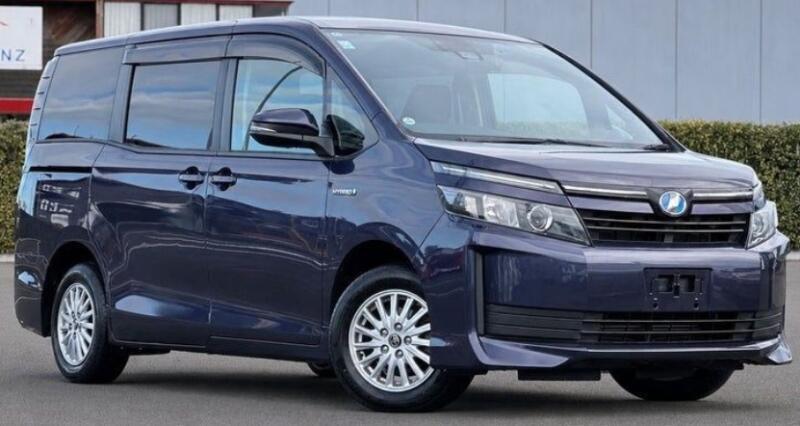
Choosing between the Toyota Voxy and Toyota Esquire can feel like choosing between two tailored suits cut from the same cloth. Beneath the styling, these Japanese minivans share a great deal: three-row seating, sliding rear doors, efficient four-cylinder engines, hybrid options, and Toyota’s reputation for sensible engineering.
Yet they were created for slightly different buyers.
The Voxy presents itself as the bolder, sportier family transporter. It has angular styling, a youthful personality, and a broader model history. The Esquire, meanwhile, takes the same practical formula and dresses it in a more formal jacket. Its chrome-heavy exterior, upscale cabin touches, and comfort-oriented image make it feel closer to a compact luxury people carrier.
So, which one deserves a place in our driveway?
In this Toyota Voxy vs Esquire comparison, we will examine their dimensions, engines, fuel economy, seating, interior quality, practicality, reliability, running costs, and used-car value. We will also explain an important detail: the Esquire was discontinued, while the Voxy moved into a newer generation with substantially more modern technology.
- Toyota Voxy vs Esquire at a Glance
- Understanding the Relationship Between the Voxy and Esquire
- Toyota Voxy and Esquire Generations Explained
- Exterior Design: Sporty Voxy or Elegant Esquire?
- Dimensions and Road Presence
- Interior Design and Material Quality
- Seating Capacity and Passenger Comfort
- Cabin Space and Third-Row Usability
- Cargo Capacity and Seat Flexibility
- Engine Options
- Performance and Driving Experience
- Fuel Economy Comparison
- Safety and Driver-Assistance Technology
- Reliability and Common Ownership Concerns
- Maintenance and Parts Availability
- Used-Car Prices and Resale Value
- Toyota Voxy vs Esquire for Family Use
- Toyota Voxy vs Esquire for Executive Transport
- Toyota Voxy vs Esquire for Imported-Car Buyers
- Advantages of the Toyota Voxy
- Disadvantages of the Toyota Voxy
- Advantages of the Toyota Esquire
- Disadvantages of the Toyota Esquire
- Which Toyota Voxy Should We Compare With an Esquire?
- Toyota Voxy vs Esquire: Which One Is Cheaper to Own?
- Which One Should We Buy Used?
- Our Verdict: Toyota Voxy or Esquire?
- Frequently Asked Questions
Toyota Voxy vs Esquire at a Glance
Before going deeper, here is the basic difference:
| Category | Toyota Voxy | Toyota Esquire |
|---|---|---|
| Main character | Sporty and family-focused | Premium and comfort-focused |
| Production history | 2001 to present | 2014 to 2021 |
| Common seating | Seven or eight seats | Seven or eight seats |
| Common engines | 1.8L hybrid or 2.0L petrol | 1.8L hybrid or 2.0L petrol |
| Exterior style | Bold and aggressive | Formal and chrome-heavy |
| Cabin atmosphere | Modern and practical | More luxurious |
| Current availability | New and used | Used only |
| Best suited to | Families wanting versatility | Buyers wanting affordable luxury |
The central point is simple: an Esquire competes most directly with the third-generation Voxy produced from 2014 onward, not with every Voxy ever built.
Toyota launched the Esquire in 2014 as a more sophisticated relative of the Voxy and Noah. Therefore, comparing an Esquire with a 2014–2021 Voxy produces a close contest. Comparing it with the current-generation Voxy is less balanced because the newer Voxy benefits from a redesigned platform, updated hybrid technology, and more advanced driver-assistance systems.
Understanding the Relationship Between the Voxy and Esquire
Are the Toyota Voxy and Esquire the Same Vehicle?
They are not identical, but they are closely related.
The Toyota Esquire shares much of its basic structure with the third-generation Voxy and Noah. These vehicles use similar engines, transmissions, cabin dimensions, suspension layouts, and seating arrangements. Think of them as siblings who attended the same school but developed different wardrobes.
Toyota positioned each model differently:
- The Voxy targeted buyers seeking expressive styling and a youthful family image.
- The Noah offered a calmer, more traditional appearance.
- The Esquire aimed for a more prestigious, upscale atmosphere.
This strategy allowed Toyota to appeal to several types of minivan buyers without creating three completely unrelated vehicles.
Why Did Toyota Build the Esquire?
The Esquire filled a space between ordinary family minivans and larger premium models such as the Toyota Alphard.
Not every buyer needed the size, price, or road presence of an Alphard. Some simply wanted a manageable three-row vehicle with nicer materials and a more dignified appearance. The Esquire offered that middle ground.
Its large grille, chrome trim, dark interior accents, and available synthetic-leather upholstery gave it a richer visual identity. It was still fundamentally a practical family van, but it arrived wearing polished shoes.
Toyota Voxy and Esquire Generations Explained
Toyota Voxy Generations
The Voxy has enjoyed a much longer production run than the Esquire.
First-Generation Voxy: 2001–2007
The original Voxy established the formula: a relatively narrow body, three seating rows, sliding rear doors, and enough flexibility for large families.
Compared with later models, it feels basic and dated. However, its straightforward design can still appeal to budget-conscious buyers, particularly in markets where imported Japanese vehicles remain popular.
Second-Generation Voxy: 2007–2014
The second generation improved interior flexibility, comfort, and styling. It retained the upright proportions that make these minivans easy to use in crowded cities.
It remains affordable on the used market, although age-related maintenance should now matter more than model reputation.
Third-Generation Voxy: 2014–2021
This is the Voxy generation most relevant to an Esquire comparison.
Toyota introduced a lower floor, improved interior packaging, petrol and hybrid powertrains, and a more dramatic exterior. In typical specifications, buyers could choose seven or eight seats, front-wheel drive, and—in petrol versions—four-wheel drive.
Toyota’s 2014 material listed the Voxy with a 2.0-liter petrol engine, a continuously variable transmission, and seven- or eight-seat configurations. Hybrid versions offered a 1.8-liter petrol-electric system.
Fourth-Generation Voxy: 2022–Present
The latest Voxy is a substantial step forward.
Toyota introduced the redesigned Noah and Voxy in January 2022, giving them a newer platform, expanded safety technology, updated hybrid engineering, and improved cabin usability.
This generation has no direct Esquire equivalent. Buyers wanting a new Toyota minivan in this size category must now generally consider the Voxy or Noah instead.
Toyota Esquire Generation
The Esquire had only one principal generation, produced from 2014 until 2021.
It received revisions during its life, including design updates, equipment changes, and improved safety availability. Nevertheless, its basic architecture remained tied to the 2014-era Voxy and Noah.
This shorter production history makes the Esquire easier to understand but harder to find in some export markets. It also means every Esquire is now a used vehicle.
Exterior Design: Sporty Voxy or Elegant Esquire?
Toyota Voxy Styling
The Voxy has rarely tried to look discreet.
Its squared body, sharp lighting, large grille openings, and dark trim give it a somewhat rebellious personality. Some versions, particularly sporty ZS derivatives, look surprisingly aggressive for a family minivan.
That styling can be a major advantage. A practical seven-seater does not necessarily have to resemble a household appliance, and the Voxy carries its boxy proportions with confidence.
The latest generation is even more dramatic. Its enormous front grille creates a strong road presence, although it may divide opinion. Some buyers will call it modern; others may think it resembles a futuristic helmet.
Toyota Esquire Styling
The Esquire takes a different route.
Its tall chrome grille, polished trim, and restrained body details create a more formal impression. Rather than shouting about sportiness, it tries to suggest comfort and status.
It looks particularly convincing in black or deep metallic paint, where the bright grille contrasts strongly with the body. From a distance, it can appear more expensive than it actually is.
Which One Looks Better?
Design is subjective, but the choice becomes easier when we consider personality:
- Choose the Voxy for a youthful, energetic appearance.
- Choose the Esquire for a mature, executive-style appearance.
Neither body is naturally sleek. Both are tall boxes designed to maximize interior room. The difference is how each model decorates that box.
Dimensions and Road Presence
A typical late-model Esquire measures approximately:
- Length: 4,695 mm
- Width: 1,695 mm
- Height: around 1,825–1,865 mm, depending on drivetrain
- Wheelbase: 2,850 mm
Toyota’s archived information lists the 2020 eight-seat Esquire Gi at 4,695 mm long, 1,695 mm wide, and 1,825 mm high.
The third-generation Voxy has broadly similar dimensions, though some versions with wider exterior styling are slightly broader.
The current Voxy measures 4,695 mm long and 1,730 mm wide, with height listed at 1,895 mm for two-wheel-drive versions and 1,925 mm for E-Four models.
What Do These Measurements Mean in Daily Driving?
Both vehicles are:
- Easier to position than a full-size luxury minivan
- Narrow enough for many urban Japanese roads
- Tall enough to provide excellent headroom
- Long enough to accommodate three usable seating rows
- Boxy enough to deliver good visibility
The Esquire’s sub-1.7-meter width can be useful in tight streets, narrow parking spaces, and automated parking facilities designed around Japanese vehicle categories.
The latest Voxy is wider and taller, which benefits cabin space and stability but slightly reduces the compact feeling of the older models.
Interior Design and Material Quality
Inside the Toyota Voxy
The Voxy focuses on practicality first.
Its dashboard is upright and easy to understand, storage compartments are spread throughout the cabin, and the elevated driving position provides a clear view of surrounding traffic.
Depending on the trim level, the cabin can range from simple to surprisingly well equipped. Higher specifications may include:
- Dual power-sliding doors
- Keyless entry and push-button start
- Automatic climate control
- Rear climate controls
- Large infotainment displays
- Leather-trimmed steering wheels
- Captain’s chairs
- Multiple USB or power outlets
- Rear entertainment systems
However, lower grades can contain plenty of hard plastic. They are durable and sensible, but they rarely create a luxury-car atmosphere.
Inside the Toyota Esquire
The Esquire’s cabin is where its premium positioning becomes clearer.
Toyota used richer-looking trim, darker color combinations, metallic accents, and available synthetic-leather seating to distinguish it from its relatives. Higher Gi versions feel particularly welcoming.
Do not expect Lexus craftsmanship. The underlying architecture remains that of a practical mid-size minivan, and some surfaces reveal the vehicle’s family-car roots. Still, the overall presentation feels more polished.
Does the Esquire Feel Significantly More Luxurious?
It feels more luxurious, but not fundamentally different.
This content may interest you! Toyota Voxy vs Noah: Which Family Minivan Is Better?
The seats, dashboard structure, cabin proportions, and control layout remain closely related to those of the Voxy. The Esquire’s advantage comes from presentation rather than a complete mechanical transformation.
It is like upgrading from a standard hotel room to the executive floor: the basic building remains the same, but the materials, lighting, and atmosphere feel more special.
Seating Capacity and Passenger Comfort
Seven-Seat Configurations
Seven-seat versions usually feature two individual second-row captain’s chairs.
This layout offers several benefits:
- Better second-row comfort
- Easier movement between the seats
- A more premium appearance
- Convenient access to the third row
- Greater flexibility for families with child seats
For buyers who frequently transport four to six people, the seven-seat arrangement is generally the most comfortable choice.
Eight-Seat Configurations
Eight-seat models use a second-row bench.
They are better for maximum passenger capacity, but the middle second-row position is less comfortable than the outer seats. Moving into the third row may also require more seat folding or sliding.
The eight-seat layout makes sense for:
- Larger families
- Community transport
- Occasional group travel
- Buyers who value capacity over captain-chair comfort
Which Has Better Seats?
The Esquire often feels better in higher trim levels because of its upholstery and cabin finishes. However, an upscale Voxy can be more comfortable than an entry-level Esquire.
Condition also matters. On the used market, a well-preserved Voxy with clean captain’s chairs may be a better purchase than a neglected Esquire with worn upholstery.
Cabin Space and Third-Row Usability
The Voxy and Esquire are packaging champions.
Their tall roofs and long wheelbases create substantial headroom, while the low floor makes entry easier for children and older passengers. Sliding doors are extremely useful in narrow parking spaces because passengers do not need to swing a large conventional door outward.
A typical Esquire cabin measures around 2,930 mm long, 1,540 mm wide, and 1,400 mm high internally.
Second-Row Comfort
The second row is one of the strongest reasons to buy either model.
Captain’s-chair versions can provide generous sliding travel, allowing passengers to create limousine-like legroom when the third row is unoccupied. This is where the Esquire’s premium personality works best.
Third-Row Comfort
The third row is usable for children and average-sized adults, particularly on shorter trips.
Adults can travel there for longer journeys, but comfort depends on how far the second-row seats are pushed back. As with most minivans, space becomes a negotiation: giving one row more legroom leaves another row with less.
The tall body prevents passengers from feeling too enclosed, which is a major advantage over seven-seat SUVs with low rooflines.
Cargo Capacity and Seat Flexibility
With every seat occupied, cargo room is limited but still useful for shopping bags, compact luggage, or daily essentials.
For airport trips with seven or eight people, we may need careful packing or an external luggage solution. Once the third-row seats are folded away, however, the cargo area expands dramatically.
Why These Minivans Beat Many SUVs for Practicality
Compared with a similar-length SUV, the Voxy and Esquire usually offer:
- A lower loading height
- A taller cargo opening
- Squarer internal walls
- More usable third-row headroom
- Easier access through sliding doors
- Better conversion between passenger and cargo duties
An SUV may look more adventurous, but a box-shaped minivan often uses every centimeter more intelligently.
Modern Voxy Seat Flexibility
The current Voxy improves the formula further. Toyota highlights flexible seat arrangements, and eight-seat versions use a split second-row seat with up to 705 mm of sliding movement.
That makes the latest Voxy the more versatile choice when compared with the discontinued Esquire.
Engine Options
2.0-Liter Petrol Engine
The common petrol versions use a naturally aspirated 2.0-liter four-cylinder engine connected to a continuously variable transmission.
This engine is suitable for city driving and steady motorway travel. It delivers smooth, predictable acceleration rather than exciting performance.
Its advantages include:
- Familiar mechanical design
- No hybrid battery to assess
- Reasonable servicing requirements
- Availability with four-wheel drive in certain versions
- Lower purchase prices in some markets
Its disadvantages include:
- Higher fuel use than the hybrid
- Noticeable engine noise under hard acceleration
- Modest performance with a full passenger load
- Typical CVT behavior at high throttle
1.8-Liter Hybrid System
Hybrid models combine a 1.8-liter petrol engine with an electric motor and an electronically controlled continuously variable transmission.
In slow traffic, the hybrid feels smooth and relaxed. Electric assistance helps the vehicle move away quietly, while regenerative braking recovers some energy during deceleration.
Its strengths include:
- Lower urban fuel consumption
- Quiet low-speed operation
- Smooth power delivery
- Reduced engine idling
- Strong suitability for stop-start driving
Potential concerns include:
- Hybrid battery condition on older vehicles
- More specialized diagnostic requirements
- Reduced savings on constant high-speed journeys
- Usually higher purchase prices
Performance and Driving Experience
How the Voxy Drives
The Voxy is not a sports car, despite its aggressive face.
Its steering is light, the turning behavior is predictable, and the elevated seating position makes urban driving relatively easy. The suspension prioritizes comfort, although wider-wheel versions may feel firmer over rough surfaces.
Older Voxy models can lean during fast cornering because of their tall bodies. This is normal for the class, but drivers coming from a sedan may need time to adjust.
The current-generation Voxy feels more composed. Its newer platform improves body rigidity, stability, and overall refinement.
How the Esquire Drives
The Esquire’s driving experience is extremely similar to that of the related third-generation Voxy.
It does not receive a magical luxury suspension simply because it has more chrome. Still, wheel and tire choices can affect ride comfort, and many Esquire configurations create a calmer impression.
The Esquire works best when driven smoothly. Gentle acceleration, early braking, and relaxed cornering suit its personality.
Which Is Better on Long Journeys?
For equivalent model years, the Esquire may feel more pleasant because of its cabin ambience and comfort-oriented image.
Against the latest Voxy, however, the Esquire falls behind. The newer Voxy benefits from improved structural engineering, updated seating, more modern assistance systems, and better overall refinement.
Fuel Economy Comparison
Fuel consumption varies according to model year, drivetrain, traffic, weather, tire condition, passenger load, and driving style.
As a broad rule:
- The 1.8-liter hybrid is best for congested urban driving.
- The 2.0-liter petrol can be simpler and cheaper to buy.
- Four-wheel-drive petrol versions generally consume more fuel.
- Short journeys can reduce hybrid efficiency because the engine still needs to warm up.
- Heavy motorway driving narrows the hybrid’s advantage.
Archived Esquire specifications show official economy figures reaching approximately 19.8 km/L under the WLTC cycle for some hybrid versions, while petrol models were rated around 12.6 km/L in certain configurations.
We should not treat official figures as guaranteed real-world results. A heavily loaded minivan climbing hills with the air conditioning running will use more fuel than a lightly loaded test vehicle.
Which Is More Fuel-Efficient?
When comparing equivalent petrol or hybrid versions from the same period, the difference between the Voxy and Esquire is small.
Powertrain choice matters more than the badge.
A hybrid Voxy will usually beat a petrol Esquire. A hybrid Esquire will usually beat a petrol Voxy. Comparing like with like produces much closer results.
The current hybrid Voxy has the advantage of newer-generation technology and should be the stronger overall efficiency choice.
Safety and Driver-Assistance Technology
Safety equipment varies considerably by year, trim, and market.
Later third-generation Voxy and Esquire vehicles may include Toyota Safety Sense features such as:
- Pre-collision assistance
- Lane-departure warning
- Automatic high beams
- Parking sensors
- Reversing cameras
- Stability control
- Multiple airbags
However, equipment should never be assumed from the exterior appearance. Imported vehicles may have different options, and some functions may depend on Japanese-language systems.
The Latest Voxy’s Safety Advantage
The fourth-generation Voxy offers newer driver-assistance technology than the Esquire ever received.
This content may interest you!Toyota Voxy vs Estima: Which Toyota MPV Is Better?Depending on specification, it may include more sophisticated pre-collision detection, enhanced parking support, adaptive cruise control, lane-tracing functions, and additional sensors.
For families prioritizing current safety technology, the latest Voxy is the clear winner.
Reliability and Common Ownership Concerns
Toyota minivans generally have a strong reputation, but no used vehicle is immune to wear.
Areas to Inspect on Both Models
Before purchasing either vehicle, check:
- Complete service records
- CVT operation
- Hybrid battery health
- Electric sliding-door operation
- Air-conditioning performance
- Suspension noises
- Engine oil leaks
- Cooling-system condition
- Warning lights
- Accident or repair history
- Tire wear
- Rust underneath the vehicle
- Condition of the 12-volt battery
- Infotainment compatibility
Sliding-Door Problems
Power sliding doors are wonderfully convenient until they stop behaving properly.
Problems may involve worn rollers, dirty tracks, weak batteries, misaligned sensors, damaged cables, or failing electric motors. Test every door several times using the interior button, exterior handle, and remote control.
Hybrid Battery Condition
Toyota hybrid batteries can last many years, but age, heat, mileage, and storage conditions influence their health.
A professional diagnostic inspection is more useful than guessing from the odometer alone. Ask for battery block-voltage data, error-code history, and cooling-fan condition.
CVT Behavior
A CVT should deliver smooth acceleration without violent shuddering, delayed engagement, or unusual whining.
Some increase in engine speed during hard acceleration is normal. Jerking, slipping sensations, or warning lights are not.
Maintenance and Parts Availability
Voxy Maintenance
The Voxy has the advantage of a longer production history and larger global used-vehicle presence.
In markets that frequently import Japanese vehicles, technicians may already understand common Voxy engines and service procedures. Used and aftermarket parts may also be easier to find.
The newest generation may require more specialized electronic diagnostics, but official support remains available in Japan because the model is still in production.
Esquire Maintenance
Mechanically, the Esquire benefits from sharing many components with the Voxy and Noah.
That reduces the risk of complete parts isolation. Engine, suspension, braking, and service components may be interchangeable across related models, subject to exact part numbers.
Body panels, grille pieces, lighting units, trim, and Esquire-specific interior materials can be harder or more expensive to source. A cracked chrome grille may therefore become more troublesome than an ordinary mechanical service item.
Used-Car Prices and Resale Value
Used prices differ sharply by country, import costs, mileage, grade, condition, and local demand.
The Voxy generally offers:
- More vehicles to choose from
- A wider range of ages and prices
- Easier comparison between listings
- Strong recognition among imported-minivan buyers
- Better future relevance because the model continues
The Esquire offers:
- A more distinctive appearance
- Potentially richer equipment for the money
- Less common styling
- An affordable route into premium-feeling transport
However, rarity can cut both ways. It may make the Esquire special, but it can also narrow the pool of buyers when we eventually sell it.
Toyota Voxy vs Esquire for Family Use
The Voxy is usually the more logical family purchase.
Its design is practical, trims are varied, and the model has a broader market presence. Families can choose between older budget-friendly vehicles, third-generation hybrids, and newer models with improved technology.
The latest Voxy also offers stronger active-safety credentials and greater long-term relevance.
Choose the Voxy when we prioritize:
- Everyday practicality
- Modern safety equipment
- Easier resale
- Broader parts availability
- More model-year choices
- A sportier design
- The possibility of buying new
Toyota Voxy vs Esquire for Executive Transport
The Esquire makes a compelling case for hotel transfers, private transport, corporate use, or buyers who simply prefer a more formal cabin.
A dark-colored Esquire with captain’s chairs can provide an impressive passenger experience without reaching Alphard prices.
Choose the Esquire when we prioritize:
- Premium-looking styling
- Chrome exterior details
- A richer cabin atmosphere
- Comfortable second-row seating
- Distinctiveness
- Used-car value over cutting-edge technology
Toyota Voxy vs Esquire for Imported-Car Buyers
Buying either model outside Japan requires extra homework.
Check Local Compliance
Confirm that the vehicle meets local rules concerning:
- Right- or left-hand-drive registration
- Lighting
- Emissions
- Safety inspections
- Speedometer units
- Import age limits
- Vehicle identification
- Insurance eligibility
Consider Infotainment Limitations
Japanese navigation systems may not function fully overseas. Radio frequencies, map data, voice controls, connected services, and menu languages can also create problems.
Replacing the head unit may solve some issues, but newer vehicles can integrate climate, cameras, and vehicle settings into the original screen. Research compatibility before purchasing.
Inspect for Rust and Auction Damage
Imported vehicles should be checked underneath, especially if they came from snowy regions where road salt is common.
An auction sheet can be valuable, but it should not replace a physical inspection. Documents describe the vehicle at one point in time; they do not reveal everything that happened afterward.
Advantages of the Toyota Voxy
The Voxy’s strongest qualities include:
- A wider selection of model years
- Continued production
- Modern hybrid options
- Excellent passenger packaging
- Flexible seven- and eight-seat layouts
- Strong family practicality
- Greater parts familiarity
- Newer safety technology in current models
- Sportier styling
- Potentially stronger resale demand
Disadvantages of the Toyota Voxy
Potential weaknesses include:
- Bold styling that may not suit everyone
- Basic cabin materials in lower grades
- Limited luggage room with all seats occupied
- Engine noise during hard CVT acceleration
- Higher prices for newer hybrid models
- Complex electronics on well-equipped versions
Advantages of the Toyota Esquire
The Esquire offers:
- A more premium exterior
- Upscale interior trim
- Comfortable captain’s-chair versions
- Proven Voxy-related mechanical components
- Efficient hybrid availability
- Compact exterior dimensions
- Strong value as a used luxury-style minivan
- More distinctive road presence than a common family van
Disadvantages of the Toyota Esquire
Its limitations include:
- No new models
- Older platform technology
- Fewer vehicles available
- Potentially harder-to-find trim and body parts
- No direct successor
- Less advanced safety equipment than the latest Voxy
- Resale demand that may depend heavily on local awareness
Which Toyota Voxy Should We Compare With an Esquire?
For the fairest comparison, place the Esquire beside a 2014–2021 third-generation Voxy.
These vehicles share the same general era, similar dimensions, related mechanical engineering, and overlapping petrol and hybrid options.
A comparison with a 2022-or-newer Voxy should be understood differently. In that contest, the Voxy is not merely the sportier alternative—it is a newer-generation vehicle with meaningful engineering advantages.
Toyota Voxy vs Esquire: Which One Is Cheaper to Own?
A comparable petrol Voxy and petrol Esquire should have similar routine servicing costs. The same is true for equivalent hybrid versions.
Long-term cost differences are more likely to come from:
- Purchase price
- Insurance
- Parts availability
- Trim-specific repairs
- Tire size
- Vehicle condition
- Previous maintenance
- Hybrid battery health
- Resale value
The cheapest listing is not always the cheapest vehicle to own. A neglected minivan can swallow money like a suitcase with a broken zipper—no matter how much we put in, something keeps falling out.
A properly maintained Esquire may cost less over five years than an abused Voxy, even though the Voxy is theoretically easier to support.
Which One Should We Buy Used?
Buy the Toyota Voxy When:
- We want the widest choice of vehicles.
- We prefer sporty styling.
- We need easier parts sourcing.
- We want a newer model.
- We value current safety technology.
- We plan to resell the vehicle later.
- We care more about function than premium decoration.
Buy the Toyota Esquire When:
- We want a premium-looking cabin.
- We prefer restrained, formal styling.
- We find a well-maintained example at an attractive price.
- We regularly carry adult passengers.
- We want captain’s-chair comfort.
- We do not mind owning a discontinued model.
- We have access to Japanese-vehicle specialists.
Our Verdict: Toyota Voxy or Esquire?
For most buyers, the Toyota Voxy is the better overall choice.
It offers a wider model range, broader availability, easier long-term ownership, and—when we consider the fourth generation—far more modern technology. It remains one of Toyota’s most practical mid-size minivans and continues to evolve.
The Toyota Esquire, however, should not be dismissed. It is an appealing used purchase for someone who wants Voxy-like practicality wrapped in a more elegant package. Its captain’s-chair versions can feel special, and its mechanical relationship with the Voxy and Noah reduces some of the risks normally associated with a discontinued vehicle.
Our final recommendation depends on the comparison:
- Third-generation Voxy vs Esquire: Choose the Voxy for sportiness and practicality; choose the Esquire for comfort and premium presentation.
- Current Voxy vs Esquire: Choose the Voxy for its newer platform, stronger safety technology, and long-term relevance.
- Budget used purchase: Buy whichever has the best condition, records, and professional inspection.
Badges and chrome can attract us, but condition should close the deal. A clean, carefully maintained minivan will almost always serve us better than a glamorous one hiding years of neglect.
Frequently Asked Questions
1. Is the Toyota Esquire bigger than the Voxy?
Not significantly. The Esquire and third-generation Voxy have closely related dimensions and share a 2,850 mm wheelbase. Certain Voxy trims may be slightly wider because of their exterior styling. The current Voxy is wider and taller than the Esquire.
2. Do the Toyota Voxy and Esquire use the same engine?
Equivalent models use closely related powertrains. Common choices include a 2.0-liter petrol engine with a CVT and a 1.8-liter petrol-electric hybrid system. Exact engine codes, outputs, drivetrains, and specifications can vary by year and grade.
3. Why was the Toyota Esquire discontinued?
Toyota simplified its mid-size minivan range as it prepared the newer-generation Noah and Voxy. The Esquire ended production without receiving a direct new-generation replacement, leaving the Noah and Voxy to cover this segment.
4. Is a Toyota Esquire expensive to maintain?
Routine maintenance should be broadly comparable to related Voxy and Noah models because many mechanical components are shared. Esquire-specific body panels, lights, chrome pieces, and interior trim may be harder or more expensive to replace.
This content may interest you!Toyota Voxy vs Nissan Serena: Which Family Minivan Is Better?5. Is the Toyota Voxy better than the Esquire?
The Voxy is better for most families because it offers more model years, wider availability, newer technology, and easier resale. The Esquire is better for buyers who prioritize a premium appearance and more sophisticated cabin ambience at a used-car price.
Leave a Reply