
Toyota Voxy Generations New Zealand: Complete Buyer’s Guide
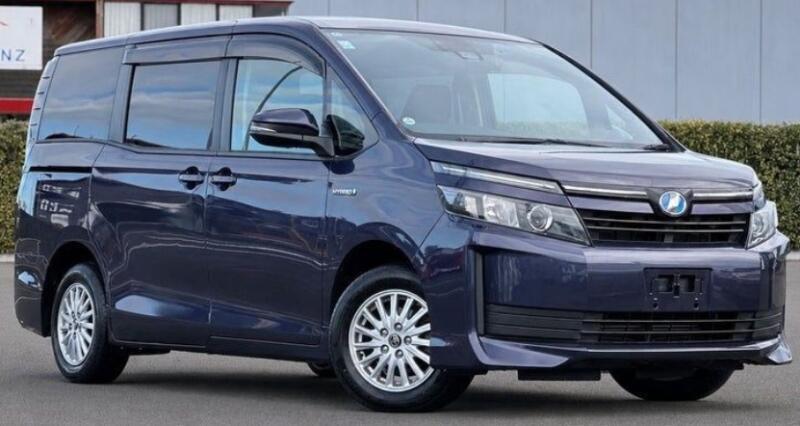
The Toyota Voxy has quietly become one of New Zealand’s most recognisable Japanese-import people movers. It may not carry the showroom familiarity of a Toyota Highlander or RAV4, but on school runs, airport transfers, weekend getaways, and crowded supermarket car parks, the Voxy makes a convincing case for itself.
Its appeal is easy to understand. We get a roomy cabin, sliding rear doors, flexible seating, sensible engines, and Toyota mechanicals wrapped inside a relatively compact body. It is essentially a family lounge that happens to have wheels.
However, not every Toyota Voxy is the same.
Since its Japanese debut in November 2001, the Voxy has passed through four main generations: the R60, R70, R80, and R90 series. Toyota officially identifies the major launch years as 2001, 2007, 2014, and 2022. Each generation introduced meaningful changes in comfort, fuel economy, safety, cabin design, and powertrain technology.
For New Zealand buyers, understanding those differences matters. Most Voxy models on our roads arrived as used imports from Japan rather than through Toyota New Zealand’s regular new-vehicle network. Specifications can therefore vary dramatically, even between two vehicles built in the same year.
Let’s walk through every Toyota Voxy generation, identify the versions commonly seen in New Zealand, and work out which one deserves a place in your driveway.
- Toyota Voxy Generations at a Glance
- How the Toyota Voxy Reached New Zealand
- First-Generation Toyota Voxy R60: 2001–2007
- Second-Generation Toyota Voxy R70: 2007–2014
- Third-Generation Toyota Voxy R80: 2014–2021
- R80 Facelift Models: Why They Attract Buyers
- Fourth-Generation Toyota Voxy R90: 2022–Present
- Toyota Voxy Safety Across the Generations
- Which Toyota Voxy Generation Is Best in New Zealand?
- Toyota Voxy Versus Toyota Noah
- Toyota Voxy Versus Toyota Esquire
- What to Check When Buying a Used Toyota Voxy
- Running a Toyota Voxy in New Zealand
- Final Verdict on Toyota Voxy Generations in New Zealand
- Frequently Asked Questions
Toyota Voxy Generations at a Glance
The Voxy’s family tree can be divided into four principal chapters:
| Generation | Series | Approximate production period | Typical engines | Main attraction |
|---|---|---|---|---|
| First generation | R60 | 2001–2007 | 2.0-litre petrol | Affordable, simple family transport |
| Second generation | R70 | 2007–2014 | 2.0-litre petrol | Improved cabin and everyday refinement |
| Third generation | R80 | 2014–2021 | 2.0-litre petrol or 1.8-litre hybrid | Modern design and hybrid economy |
| Fourth generation | R90 | 2022–present | 2.0-litre petrol or 1.8-litre hybrid | Advanced safety, comfort, and technology |
These dates describe the Japanese model cycle. A Voxy may reach New Zealand several years after its original registration in Japan, so the year it entered New Zealand is not necessarily its manufacturing year.
Why Model Codes Matter in New Zealand
When shopping for a used Voxy, the chassis code often tells us more than the badge on the tailgate.
Common examples include:
- AZR60: first-generation front-wheel-drive petrol model
- AZR65: first-generation four-wheel-drive model
- ZRR70: second-generation front-wheel-drive petrol model
- ZRR75: second-generation four-wheel-drive petrol model
- ZRR80: third-generation front-wheel-drive petrol model
- ZRR85: third-generation four-wheel-drive petrol model
- ZWR80: third-generation hybrid model
- MZRA90: fourth-generation petrol model
- ZWR90: fourth-generation hybrid model
The final letters and numbers may identify a particular body, drivetrain, trim, or certification specification. We should therefore check the chassis plate, Japanese auction sheet, registration records, and seller documentation rather than relying entirely on the advertisement title.
How the Toyota Voxy Reached New Zealand
The Voxy was designed primarily for Japan, where narrow streets, crowded cities, and multigenerational households created strong demand for upright, space-efficient minivans.
Toyota introduced the Voxy alongside its close relative, the Noah. Both succeeded the older LiteAce Noah and TownAce Noah lines. The Voxy generally received sharper styling, while the Noah adopted a more conservative appearance. Underneath, the two vehicles shared much of their engineering.
New Zealand’s right-hand-drive layout makes Japanese vehicles relatively straightforward to import. That compatibility, combined with a steady supply of used Japanese vehicles, allowed the Voxy to develop a loyal following here.
Current New Zealand listings continue to show a broad selection of imported Voxy models, particularly seven- and eight-seat examples from the R70 and R80 generations.
Is the Toyota Voxy Officially a New Zealand Model?
The Voxy has generally been known in New Zealand as a Japanese used import rather than a mainstream Toyota New Zealand new-car model.
That distinction influences ownership. A Japanese import can offer excellent value, but we may encounter:
- Infotainment menus written in Japanese
- Navigation systems that do not operate properly in New Zealand
- Radio frequencies that require an expander
- Trim names unfamiliar to local workshops
- Replacement components that need to be ordered by chassis number
- Safety equipment that differs between model years
- Missing English-language owner manuals
None of these issues automatically makes a Voxy a poor purchase. They simply mean we should investigate the individual vehicle instead of assuming every example has identical equipment.
First-Generation Toyota Voxy R60: 2001–2007
The first-generation Voxy arrived in Japan in November 2001. It replaced older rear-wheel-drive-based Toyota people movers with a more modern front-engine, front-wheel-drive platform. That change helped deliver a lower floor, easier access, and more efficient use of cabin space.
This generation normally carries an AZR60 code for two-wheel-drive models or AZR65 for four-wheel-drive versions.
Visually, the R60 has a tall, square body with a relatively simple front fascia. It looks unmistakably early-2000s today, yet the shape remains practical. The upright roof and large windows make the cabin feel bigger than the vehicle’s footprint suggests.
R60 Engine and Driving Experience
Most first-generation examples use a 2.0-litre four-cylinder petrol engine paired with an automatic transmission.
Performance is adequate rather than exciting. An empty Voxy feels reasonably responsive around town, but a full load of passengers and luggage can expose its modest power. Hills and motorway overtaking require planning.
The reward is a calm, easygoing driving character. Steering is light, visibility is generous, and the short bonnet makes the vehicle easier to place than its boxy appearance might suggest.
Who Should Consider an R60 Voxy?
An R60 may suit buyers seeking:
- A low-cost seven- or eight-seat vehicle
- Simple transportation for short journeys
- A practical second family car
- A people mover with sliding doors
- More cabin space than a conventional station wagon
The problem is age. Even the newest first-generation vehicles are now old enough for rubber seals, suspension bushes, electrical components, cooling-system parts, and interior mechanisms to demand attention.
R60 Issues to Inspect
Before buying, we should examine:
- Automatic sliding-door operation
- Engine oil leaks
- Cooling-system condition
- Steering and suspension noises
- Transmission smoothness
- Air-conditioning performance
- Rust around the underbody and door edges
- Water leaks around the roof and rear hatch
- Signs of neglected servicing
A cheap R60 can be useful, but only when its condition supports the price. Purchasing the least expensive example without an inspection may be like adopting an old house because the front door looks charming—the hidden repairs can quickly reshape the budget.
Second-Generation Toyota Voxy R70: 2007–2014
Toyota launched the second-generation Voxy in 2007. Known as the R70 series, it retained the upright minivan formula while introducing a fresher cabin, more polished styling, and improved daily usability.
The commonly encountered codes are ZRR70 for front-wheel drive and ZRR75 for four-wheel drive.
In New Zealand, the R70 often occupies a useful middle ground. It is newer and more refined than the R60 but usually costs considerably less than a hybrid R80.
What Changed with the R70 Generation?
The R70 continued using a 2.0-litre petrol engine, although specific engine technology and outputs vary by year and grade. A continuously variable transmission is common.
Toyota focused heavily on interior flexibility. Depending on the specification, buyers may find rotating second-row seats, walk-through access, foldable third-row seating, electric sliding doors, keyless entry, and rear climate controls.
Some features feel clever even years later. Others can become maintenance points, especially when electric doors and seat mechanisms have endured years of family use.
Pre-Facelift and Facelift R70 Models
Early R70 vehicles generally cover the 2007–2010 period, while facelifted versions appeared around 2010 and continued until the third generation arrived in 2014. The update brought revised lights, bumpers, and other equipment changes.
A facelift model may look more modern, but condition remains more important than cosmetics. A carefully maintained 2009 Voxy can be a wiser purchase than a neglected 2012 example with unclear mileage history.
R70 Strengths for New Zealand Families
The second-generation Voxy offers several advantages:
- Useful interior height
- Flat and accessible passenger space
- Convenient sliding doors
- Familiar petrol-engine operation
- Generally lower purchase prices than hybrid models
- Good availability in the used-import market
- Seating configurations suitable for large families
The narrow body is particularly helpful in urban areas. We gain the feeling of a large cabin without driving something as wide and cumbersome as a full-size van.
R70 Weaknesses to Consider
Fuel consumption can be disappointing in heavy city traffic, especially when the vehicle is frequently loaded. The CVT must also be assessed carefully. Hesitation, unusual whining, juddering, or delayed engagement should not be dismissed as normal.
Other areas to check include:
- Electric sliding-door cables and motors
- Suspension knocks
- Engine mounts
- Wheel bearings
- Air-conditioning controls
- Dashboard warning lights
- Smart-key operation
- Interior wear around folding seats
The R70 is often the value champion of the range, but it rewards buyers who prioritise service history over shiny alloy wheels.
Third-Generation Toyota Voxy R80: 2014–2021
The R80 generation transformed the Voxy from a practical import into a genuinely desirable modern family vehicle.
This content may interest you! Toyota Voxy vs Estima: Which Toyota MPV Is Better?
Toyota launched the fully redesigned Voxy and Noah in January 2014, promising greater interior space and stronger family usability. More importantly for many New Zealand buyers, this generation introduced a hybrid powertrain.
Petrol models commonly use the ZRR80 code in front-wheel-drive form and ZRR85 with four-wheel drive. Hybrid versions are commonly identified by the ZWR80 code.
R80 Petrol or Hybrid: The Big Decision
The petrol R80 generally uses a 2.0-litre four-cylinder engine with a CVT. The hybrid combines a 1.8-litre petrol engine with Toyota’s hybrid system.
The hybrid is attractive because a people mover spends much of its life in conditions where electrification works well: traffic, school zones, suburban streets, stop-start commuting, and low-speed errands.
Instead of idling away fuel like a kettle left boiling, the hybrid can shut down the petrol engine and use electric assistance when appropriate.
However, a hybrid is not automatically the correct choice for every buyer.
Advantages of the R80 Hybrid
The R80 hybrid typically provides:
- Lower urban fuel consumption
- Quieter low-speed operation
- Smooth acceleration in traffic
- Reduced reliance on conventional friction brakes
- Strong resale appeal
- A more relaxed family-driving experience
Toyota’s official configuration used a 1.8-litre hybrid powertrain, while the non-hybrid continued with a 2.0-litre petrol engine.
Reasons to Choose the R80 Petrol
The petrol model may be preferable when:
- Its purchase price is substantially lower
- The vehicle will mainly cover open-road kilometres
- The buyer prefers simpler non-hybrid servicing
- A particular petrol example has a much better history
- Four-wheel drive is required
We should compare entire vehicles, not merely engine labels. A healthy petrol Voxy with verified servicing can be safer than a suspiciously cheap hybrid with accident repairs, uncertain mileage, and no battery assessment.
R80 Facelift Models: Why They Attract Buyers
Toyota updated the third-generation Voxy during its production run, with later examples gaining sharper exterior styling and improved features.
Facelift models are popular in New Zealand because they still look contemporary. Their bold front grilles, angular lighting, and dark trim give the Voxy a stronger identity than the mechanically related Noah.
Depending on grade, equipment may include:
- Toyota Safety Sense features
- LED headlights
- Dual electric sliding doors
- Heated front seats
- Cruise control
- Reversing camera
- Parking sensors
- Multi-zone climate control
- Seven-seat captain’s chairs
- Eight-seat bench configurations
Equipment must always be verified on the actual vehicle. Japanese grades, option packages, and dealer-installed accessories create enormous variation.
Seven Seats Versus Eight Seats
Seven-seat Voxy models often feature two individual captain’s chairs in the second row. These seats improve comfort and allow easier movement toward the rear.
Eight-seat models usually use a second-row bench. They carry one more person but may feel less luxurious.
For many New Zealand households, the seven-seater is the sweet spot. It works well for parents transporting children, grandparents, and luggage without making every passenger climb over a seat.
An eight-seater makes more sense for larger families, sports teams, community groups, or buyers who regularly need the maximum possible seating capacity.
R80 Problems and Checks Before Purchase
A pre-purchase inspection should cover:
- Hybrid battery health on ZWR80 models
- CVT operation on petrol versions
- Sliding-door alignment and motors
- Evidence of accident repairs
- Underbody corrosion
- Suspension wear
- Wheel alignment and tyre condition
- Camera and sensor operation
- Dashboard language and warning messages
- Availability of replacement smart keys
Hybrid buyers should also confirm that the cooling intake for the battery system is clean and unobstructed. Dust, pet hair, and debris can restrict airflow.
Fourth-Generation Toyota Voxy R90: 2022–Present
Toyota launched the fourth-generation Noah and Voxy in Japan on January 13, 2022. This R90 series moved to Toyota’s TNGA-C architecture and introduced major improvements in structural design, driver assistance, interior access, and hybrid technology.
The R90 is the most sophisticated Voxy yet. It feels less like a utilitarian van and more like a premium family shuttle.
Common codes include MZRA90 for petrol variants and ZWR90 for hybrid models, although drivetrain and specification differences can produce additional codes.
What Makes the R90 Different?
Toyota retained the upright shape because it works. Instead of chasing a coupe-like roofline that steals headroom, the R90 embraces its role as a space-efficient minivan.
Its straighter rear pillars, wider interior, and improved seating arrangement create a more usable cabin. Toyota also expanded convenience features such as power sliding doors, accessible steps, hand grips, storage solutions, and assisted-mobility configurations.
The result is a vehicle that treats family transport as the main event rather than an afterthought.
R90 Petrol Powertrain
The petrol version uses a 2.0-litre engine with a modern CVT. It offers stronger and more natural performance than older Voxy generations, particularly when merging or carrying passengers.
This version may appeal to buyers who want the newest body and safety technology without paying the premium attached to the hybrid.
R90 Hybrid Powertrain
The fourth-generation hybrid continues with a 1.8-litre petrol engine but uses a newer-generation Toyota hybrid system.
Compared with the R80 hybrid, the R90 feels more polished. Electric assistance is stronger, transitions are smoother, and the overall driving experience is more mature.
It remains a people mover rather than a performance car, but it handles everyday work with less effort. Acceleration feels like a steady river instead of a tap being turned on and off.
Is the R90 Voxy Worth Its New Zealand Price?
That depends on priorities.
The R90 makes sense when buyers value:
- Modern active-safety technology
- Improved fuel economy
- A quieter cabin
- Newer hybrid engineering
- Better second-row comfort
- Contemporary styling
- Long-term ownership potential
Its main obstacle is price. Recent imports can overlap with locally sold SUVs and nearly new people movers that offer easier infotainment support, local warranty coverage, and more familiar servicing arrangements.
The R90 is arguably the best Voxy, but it is not automatically the best-value Voxy.
Toyota Voxy Safety Across the Generations
Safety technology evolved dramatically during the Voxy’s lifetime.
Early R60 examples may offer basic airbags, anti-lock brakes, and stability-related equipment depending on grade and year. Later generations progressively introduced more airbags, stability control, reversing cameras, collision-warning systems, lane assistance, and advanced driver aids.
We should never assume an imported vehicle includes a feature simply because it was available somewhere in the model range.
Safety Features Worth Prioritising
For family use, look for:
- Electronic stability control
- Multiple airbags
- Autonomous emergency braking
- Lane-departure warning or assistance
- Reversing camera
- Front and rear parking sensors
- Blind-spot monitoring
- ISOFIX child-seat mounting points
- Automatic high-beam assistance
- Adaptive cruise control
Seat position matters too. Confirm that every passenger seat has a suitable three-point seatbelt and that child restraints can be installed correctly.
Check New Zealand Compliance Information
Before purchasing, inspect the certification label and registration details. Imported vehicles must meet relevant New Zealand entry requirements, but compliance does not guarantee that every advanced system is functioning correctly.
A warning light covered with black tape is not a repair. Neither is a seller’s promise that a Japanese dashboard message “means nothing.”
This content may interest you!Toyota Voxy Weight in KG: Complete Model GuideWhich Toyota Voxy Generation Is Best in New Zealand?
There is no universal winner because budgets and usage patterns differ.
Still, we can identify the strongest option for several common buyers.
Best Budget Choice: R70
The second-generation R70 usually offers the best combination of affordability, space, and everyday usability.
It is old enough to be accessible but modern enough to feel comfortable in regular family service. We would target a facelift example with a clear history, smooth transmission, working doors, and no unexplained dashboard lights.
Best Overall Value: R80 Hybrid
For many New Zealand households, the R80 hybrid is the sweet spot.
It offers modern styling, efficient urban performance, flexible seating, and better safety potential than older models. Supply is also broad enough for buyers to compare several vehicles rather than accepting the first one they see.
A well-maintained facelift R80 hybrid can feel remarkably current without carrying the price of an R90.
Best for Long-Term Ownership: R90
The R90 is the strongest choice for buyers planning to keep their Voxy for many years.
Its newer platform, improved safety systems, refined cabin, and updated hybrid technology provide a better foundation for future ownership. The initial cost is higher, but younger age may reduce the immediate need for age-related repairs.
Best Cheap Second Vehicle: R60
An R60 can still work as a low-cost people mover, but we should buy entirely on condition.
At this age, the badge and trim grade matter less than cooling-system health, structural integrity, transmission behaviour, electrical operation, and maintenance records.
Toyota Voxy Versus Toyota Noah
The Voxy and Noah are close mechanical relatives. They usually share their basic platform, engines, transmissions, interior dimensions, and much of their cabin design.
The major difference is personality.
The Noah tends to look restrained and family-friendly. The Voxy receives a darker, sharper, and more aggressive exterior treatment. Think of them as siblings wearing different outfits to the same event.
For used buyers, condition should outweigh styling. A well-maintained Noah can be a better purchase than a neglected Voxy, even when we prefer the Voxy’s appearance.
Toyota Voxy Versus Toyota Esquire
The Toyota Esquire joined the Noah and Voxy family during the third-generation era. It used similar fundamentals but aimed for a more luxurious image through chrome detailing, richer interior trim, and a more formal front design.
Toyota discontinued the Esquire before the fourth-generation Noah and Voxy arrived.
In New Zealand, an Esquire may appeal to buyers who want Voxy practicality with a more premium atmosphere. However, model-specific exterior parts can be harder or more expensive to source.
What to Check When Buying a Used Toyota Voxy
A Voxy should receive a professional pre-purchase inspection, especially when it is a fresh import or lacks extensive New Zealand service records.
Mechanical Inspection Checklist
Ask the workshop to evaluate:
- Engine oil and coolant condition
- Evidence of leaks
- CVT behaviour
- Hybrid battery condition, where applicable
- Brake wear
- Suspension bushes and dampers
- Wheel bearings
- Engine mounts
- Tyre age and matching specifications
- Underbody corrosion or damage
Interior and Electrical Checklist
Test every switch rather than admiring the spacious cabin and assuming everything works.
Check:
- Both sliding doors
- Rear hatch operation
- Electric windows
- Smart keys
- Air conditioning in every seating row
- Seat-folding mechanisms
- Cameras and parking sensors
- Headlights and interior lights
- USB ports and power sockets
- Steering-wheel controls
- Instrument-cluster warnings
Request the Japanese Auction Sheet
When available, the auction sheet can reveal the vehicle’s condition at the time it was sold in Japan. It may include mileage, repair history, scratches, dents, interior wear, and an overall grade.
However, we should verify that the document belongs to the exact vehicle. Match the chassis number rather than trusting a loose sheet placed inside the glovebox.
Running a Toyota Voxy in New Zealand
Toyota’s broad presence in New Zealand helps with general servicing, but imported specifications may still require specialist knowledge.
Routine items such as oils, filters, brake components, spark plugs, and common suspension parts are usually manageable. Model-specific body panels, electronic modules, door mechanisms, or Japanese-market multimedia components may take longer to source.
Fuel Economy Expectations
Actual fuel use depends on:
- Generation
- Petrol or hybrid powertrain
- Urban or open-road driving
- Passenger load
- Driving style
- Tyre pressure
- Roof racks
- Air-conditioning use
- Mechanical condition
Hybrid models tend to show their biggest advantage in stop-start driving. On uninterrupted motorway journeys, the difference between petrol and hybrid versions may narrow.
Advertising claims should be treated as reference points rather than promises. New Zealand hills, cold starts, short journeys, and fully loaded cabins can all raise consumption.
Insurance and Replacement Parts
Before buying, obtain an insurance quote using the full registration and chassis details. Some insurers treat imported vehicles differently, particularly when replacement body parts or advanced sensors are expensive.
Also ask whether the policy covers:
- Windscreen-mounted safety cameras
- Radar sensors
- Hybrid-system components
- Imported infotainment equipment
- Replacement smart keys
- Agreed or market value
Final Verdict on Toyota Voxy Generations in New Zealand
The Toyota Voxy has evolved from a straightforward Japanese family van into a refined, highly efficient people mover.
The R60 established the practical formula but is now primarily a condition-based budget purchase. The R70 improved refinement and remains a strong low-cost option. The R80 introduced hybrid technology and arguably delivers the best balance for today’s New Zealand buyer. The R90 adds modern safety, better comfort, and Toyota’s newest engineering, although its price demands careful comparison.
For most families, we would begin with a clean R80 hybrid and work outward from there. Buyers on a tighter budget should examine facelift R70 models, while those seeking the newest technology should consider the R90.
Whatever generation catches our eye, the golden rule remains simple: buy the vehicle, not merely the model year.
A tidy Voxy with verified mileage, proper servicing, healthy electronics, and a professional inspection can serve as a wonderfully versatile family vehicle. A neglected one can turn those convenient electric doors into gateways for expensive repairs.
Choose patiently, inspect thoroughly, and the right Toyota Voxy can feel like a small apartment that follows us wherever the road leads.
Frequently Asked Questions
1. How many Toyota Voxy generations are there?
There are four principal Toyota Voxy generations. The first R60 generation launched in 2001, followed by the R70 in 2007, the R80 in 2014, and the R90 in 2022. Toyota’s official vehicle gallery lists these four major launch years.
2. Which Toyota Voxy generation is best for New Zealand?
The third-generation R80 is the best all-round choice for many New Zealand buyers. It offers modern styling, flexible seating, petrol and hybrid options, and potentially stronger safety equipment than earlier generations. The R80 hybrid is particularly suitable for suburban and city driving.
3. Is the Toyota Voxy hybrid reliable?
Toyota’s hybrid technology has a strong general reputation, but reliability depends on maintenance, mileage, age, and previous treatment. Before buying an imported Voxy hybrid, obtain a diagnostic scan and hybrid battery assessment. Also inspect the battery cooling intake and confirm that no hybrid warning lights are present.
4. What is the difference between ZRR80 and ZWR80?
A ZRR80 is generally a third-generation front-wheel-drive Voxy with a 2.0-litre petrol engine. A ZWR80 is generally the third-generation hybrid, combining a 1.8-litre petrol engine with Toyota’s hybrid system. Buyers should verify the complete chassis code because suffixes can identify further specification differences.
5. Is a Toyota Voxy a good family car in New Zealand?
Yes. The Voxy offers generous interior space, sliding doors, flexible seating, good visibility, and relatively compact exterior dimensions. It is especially practical for school runs and urban family use. Its suitability depends on buying a sound example and accepting possible Japanese-import quirks such as untranslated controls or limited infotainment compatibility.
This content may interest you! Mitsubishi Triton Tyre Size: Complete Buyer’s Guide
Leave a Reply