
Petrol vs Hybrid vs Electric Cars in New Zealand
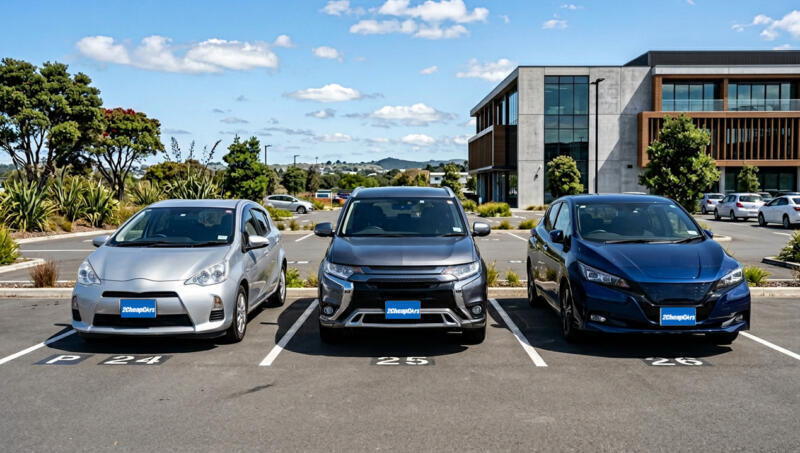
In New Zealand, the choice between petrol, hybrid, and electric cars reflects a dynamic shift in transportation priorities. As Kiwis grapple with fluctuating fuel prices and growing environmental awareness, each powertrain offers distinct trade-offs.
Petrol vehicles remain convenient with an extensive fueling network, but their long-term costs and emissions are rising concerns. Hybrids bridge the gap, delivering better fuel efficiency without range anxiety.
Meanwhile, electric vehicles gain traction due to government incentives and the country’s renewable-heavy grid, yet upfront costs and charging infrastructure still pose barriers. This article explores how these options stack up across cost, sustainability, and practicality for New Zealand drivers.
- Understanding the Shift: Petrol vs Hybrid vs Electric Cars in New Zealand
- Understanding the Total Cost of Ownership for Petrol, Hybrid, and Electric Cars in New Zealand
- Performance and Driving Experience Across the Three Powertrains
- Resale Value and Market Trends in New Zealand
- Frequently Asked Questions
- What Are the Key Cost Differences Between Petrol, Hybrid, and Electric Cars in New Zealand?
- How Does the Driving Range Compare for These Vehicles in New Zealand?
- What Are the Environmental Impacts of Each Option in New Zealand?
- Is Maintenance More Expensive for Hybrids and EVs Compared to Petrol Cars?
Understanding the Shift: Petrol vs Hybrid vs Electric Cars in New Zealand
The transition from traditional petrol vehicles to hybrid and fully electric cars in New Zealand is accelerating, driven by fuel price volatility and a growing focus on reducing carbon emissions. Understanding the key differences in running costs, environmental impact, and infrastructure is crucial for New Zealanders considering their next vehicle.
With the government’s Clean Car Standard influencing import tariffs, the comparison between petrol, hybrid, and electric vehicles (EVs) now significantly impacts long-term ownership expenses and daily usability across both urban and rural areas.
Running Costs: How Petrol, Hybrid, and Electric Cars Compare for Kiwi Drivers
The most immediate difference for New Zealand drivers is the cost per kilometre. Petrol vehicles are currently the most expensive to run, with costs often exceeding 20 cents per kilometre depending on fuel prices and vehicle efficiency.
Hybrid cars, such as the Toyota Prius or RAV4 Hybrid, offer a significant reduction, typically costing between 10 and 14 cents per kilometre by combining a petrol engine with regenerative braking.
Electric vehicles are the clear winner in this category, often costing just 3 to 5 cents per kilometre to charge at home, especially with off-peak electricity rates, though public rapid charging can be more expensive.
Environmental Impact and Emissions in the New Zealand Context
New Zealand’s unique energy grid, which generates over 80% of its electricity from renewable sources like hydro, geothermal, and wind, makes EVs particularly environmentally friendly. A petrol car emits approximately 2.3 tonnes of CO2 per 10,000 km driven, while a hybrid reduces this to around 1.2 tonnes.
An electric vehicle in New Zealand can produce as little as 0.1 tonnes of CO2 per 10,000 km when charged on the national grid, making it a near-zero-emission option for daily commuting. However, the manufacturing and battery production of EVs still carry an initial environmental cost.
Infrastructure, Range, and Practicality Across New Zealand
For urban commuters, an EV’s range of 250-400 km is typically more than sufficient, but for long-distance travel, especially in the South Island, charging infrastructure is still developing. Petrol cars offer the most convenience with an extensive network of over 2,000 fuel stations nationwide.
Hybrids provide a strategic balance, offering excellent fuel economy in cities while eliminating the range anxiety of a pure EV, as they can refuel at any petrol station. Electric vehicles rely on a growing but incomplete network of fast chargers, with the key advantage being much lower noise levels and instant torque for a smoother driving experience.
| Feature | Petrol | Hybrid | Electric (EV) |
|---|---|---|---|
| Fuel Cost (per 10,000 km) | $2,000 - $2,500 | $1,200 - $1,600 | $300 - $500 |
| CO2 Emissions (per 10,000 km) | ~2.3 tonnes | ~1.2 tonnes | ~0.1 tonnes |
| Refuelling/Charging Time | 5 minutes | 5 minutes | 30-60 min (fast charger) |
| Best Use Case in NZ | Rural / long-distance towing | Urban & long-distance mix | Urban commuting / short trips |
| Government Incentives | None (subject to Clean Car Standard fees) | Possible small discounts | Strong discounts and rebates (historical) |
| Noise Level | High | Moderate | Very low |
Understanding the Total Cost of Ownership for Petrol, Hybrid, and Electric Cars in New Zealand
The total cost of ownership (TCO) for vehicles in New Zealand involves more than just the purchase price; it includes fuel, maintenance, insurance, and depreciation. For petrol cars, upfront costs are typically lower, but fuel expenses are higher, and maintenance is frequent due to complex engines.
In contrast, hybrids offer a balance with lower fuel consumption and reduced brake wear from regenerative braking, though they still require some engine upkeep. Electric vehicles (EVs) have the highest initial investment, but charging costs are significantly lower, and maintenance is minimal due to fewer moving parts.
In New Zealand, the Clean Car Discount (which ended in late 2023) and Road User Charges for EVs impact the financial picture, making it essential to calculate running costs over several years to see the real savings.
Fuel Costs and Charging Infrastructure in New Zealand
Fuel costs in New Zealand fluctuate with global prices, averaging around $2.80 to $3.20 per liter for standard petrol, making hybrids more economical at about 4-5 liters per 100 km, while petrol cars can use 7-10 liters per 100 km. EVs benefit from cheaper electricity, with home charging costing roughly $0.30 per kWh, leading to a cost of about $4-6 per 100 km.
However, public charging stations are expanding, but fast chargers can be more expensive, and range anxiety remains a concern for some users. The New Zealand government is investing in charging networks along major highways, but rural areas still have limited coverage.
Environmental Impact and Carbon Emissions
Petrol cars emit around 150-250 grams of CO2 per kilometer, contributing significantly to New Zealand’s transport emissions. Hybrids reduce this to 80-120 g/km by combining an electric motor with a petrol engine, improving fuel efficiency.
EVs produce zero tailpipe emissions, but their lifecycle carbon footprint depends on the electricity grid mix, which in New Zealand is 80-85% renewable (hydro, wind, geothermal), making them the most environmentally friendly choice. However, battery production and disposal involve ecological costs, so overall sustainability requires considering the full lifecycle.
Performance and Driving Experience Across the Three Powertrains
When it comes to performance, petrol cars offer immediate throttle response and a familiar driving feel commonly found in New Zealand’s used import market, but they often lack low-end torque.
Hybrids provide a smooth transition between the engine and electric motor, delivering quiet city driving and adequate acceleration in models like the Toyota Prius or Rav4 Hybrid. EVs excel with instant torque, providing rapid acceleration and a quiet cabin popular models like the Tesla Model 3 and Hyundai Kona Electric are becoming common.
However, some drivers miss the engine sound and manual transmission options, while others appreciate the regenerative braking that enhances driving efficiency in hilly areas like Auckland or Wellington.
Battery Life and Warranty Considerations for Hybrids and EVs
Hybrid batteries typically last 8-10 years or 150,000-200,000 km, with replacement costs ranging from $2,000 to $6,000 NZD, though many models like the Toyota Prius have proven durability. EV batteries degrade slowly, often retaining 70-80% capacity after 8-10 years or 200,000 km, and most manufacturers offer 8-year/160,000 km warranties.
In New Zealand’s temperate climate, battery longevity is generally good, but extreme temperatures in some regions can affect performance. Second-hand buyers should check battery health reports, as replacement costs for EVs can exceed $10,000 NZD, though battery recycling services are emerging.
Maintenance and Long-Term Reliability
Petrol cars require regular oil changes, spark plugs, and timing belt replacements every 80,000-100,000 km, costing around $300-500 annually. Hybrids combine fewer brake replacements due to regenerative braking with standard engine maintenance, though the electrical system may need specialized service.
EVs have the lowest maintenance with no oil changes, fewer moving parts, and simpler drivetrains, saving owners an estimated $1,000 annually compared to petrol cars. In New Zealand, reliability is high for all three in urban areas, but remote regions pose challenges for EV repairs due to limited service centers.
Toyota and Honda hybrids are especially trusted, while Nissan Leaf EVs face battery health issues in older models.
Resale Value and Market Trends in New Zealand
The resale value of petrol cars has been declining in New Zealand due to rising fuel costs and environmental awareness, with used imports from Japan flooding the market.
Hybrids hold their value well, especially Toyota brands, as they appeal to practical buyers and fleet owners. EVs saw a surge in demand during the Clean Car Discount era, but depreciation has been volatile early models like the Nissan Leaf lose value faster, while newer Tesla and Hyundai models retain more worth.
Market trends show a shift toward electrification, with used EV imports from Japan increasing, and petrol cars facing stagnant demand. Buyers should consider future regulations, such as potential low-emission zones in city centres like Auckland and Christchurch, which could affect resale.
Government Incentives and Road User Charges
New Zealand’s Clean Car Discount (ended December 2023) provided rebates up to $7,015 NZD for new EVs and refunded fees for high-emission petrol cars, boosting EV adoption. After its termination, Road User Charges (RUC) were introduced for EVs in April 2024 at $76 per 1,000 km, reducing the cost advantage. Hybrids are not subject to RUC,
Frequently Asked Questions
What Are the Key Cost Differences Between Petrol, Hybrid, and Electric Cars in New Zealand?
The upfront cost for petrol cars is generally lowest, often between NZD $20,000-$40,000 for standard models. Hybrids cost more, around $30,000-$55,000, while electric vehicles (EVs) start near $50,000 but can exceed $80,000. However, running expenses differ: petrol cars cost 15-20 cents per km in fuel, hybrids about 7-12 cents, and EVs as low as 3-5 cents per km when home-charged. Government rebates for new EVs and hybrids can reduce initial prices up to $7,000.
How Does the Driving Range Compare for These Vehicles in New Zealand?
Petrol cars typically offer 400-800 km per tank, depending on engine size and driving. Hybrids combine a petrol engine with battery, achieving 500-1,000 km per tank easily. EVs have a standard range of 250-450 km per full charge, though premium models exceed 600 km. New Zealand’s growing public charging network supports EVs, but remote areas still challenge long trips. For daily commuting (<70 km), all three suffice, but hybrids provide flexibility without range anxiety.
What Are the Environmental Impacts of Each Option in New Zealand?
Petrol cars emit 150-250 g CO2 per km, contributing significantly to greenhouse gases. Hybrids reduce emissions to 80-120 g/km due to electric assist. EVs produce zero tailpipe emissions, but lifecycle impacts depend on New Zealand's electricity grid (80% renewable, mainly hydro and wind). EVs still have lower total emissions than petrol or hybrids, especially when considering battery production. Each vehicle’s pollution also includes particulate matter, which EVs avoid entirely, benefiting urban air quality.
Is Maintenance More Expensive for Hybrids and EVs Compared to Petrol Cars?
Petrol cars require regular oil changes, engine filters, and exhaust system repairs, averaging $500-1,000 annually. Hybrids add battery and electric motor checks but lack a starter motor and alternator, often costing $400-800 yearly. EVs have fewer fluids and mechanical parts (no transmission, belts), with annual maintenance around $300-600—mainly tires, brakes (regenerative braking extends life), and cabin filters. Battery replacements are expensive ($5,000-15,000) but occur under warranty (8-10 years or 160,000 km) and rarely needed in practice.
This content may interest you! How Much Does It Cost to Own a Car in New Zealand?
Leave a Reply