
Audi A3 or Golf New Zealand: Which Is the Better Buy?
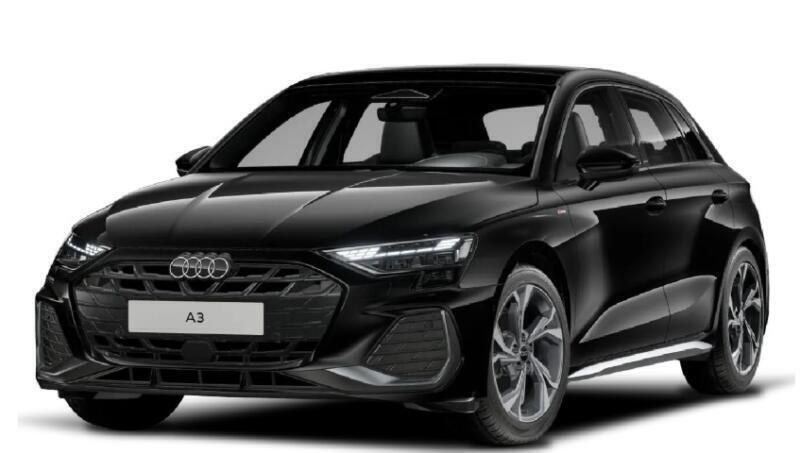
Choosing between an Audi A3 or Volkswagen Golf in New Zealand is a bit like choosing between a tailored jacket and a really good everyday coat. They may come from the same broad family, share some underlying engineering philosophy, and perform many of the same jobs, but they make us feel quite different behind the wheel.
The Audi A3 aims to bring premium-car polish into a compact package. The Volkswagen Golf takes a more pragmatic route: smart, comfortable, well engineered, and usually easier to justify financially.
For Kiwi buyers, that makes the decision more interesting than simply asking which car is "better." We need to think about purchase price, cabin quality, practicality, performance, running costs, resale value, technology, and what each car actually feels like on New Zealand roads.
Volkswagen currently offers the Golf in New Zealand in Life, R-Line and GTI forms, while Audi markets the A3 as its compact premium model and also offers higher-performance derivatives within the wider A3 family.
So, should we pay extra for the four rings, or does the Golf give us almost everything we really need for less money? Let's dig into it.
- Audi A3 vs Volkswagen Golf: The Short Answer
- Audi A3 or Golf New Zealand: Why This Comparison Makes Sense
- Price: The Golf Starts With a Major Advantage
- Exterior Design: Premium Elegance vs Understated Familiarity
- Interior Quality: This Is Where the Audi Makes Its Case
- Technology and Infotainment
- Practicality: The Golf Fights Back Hard
- Driving Experience on New Zealand Roads
- Performance: Don't Compare Badges Alone
- Fuel Economy and Running Costs
- Reliability: The Badge Doesn't Tell the Whole Story
- Safety: Check the Exact Car, Not Just the Model Name
- Audi A3 vs Golf for Families
- Audi A3 vs Golf for Young Professionals
- Which One Has Better Resale Value?
- New vs Used: Where Each Car Makes the Most Sense
- What About the Audi A3 TFSI e?
- Golf GTI vs Audi A3: Which Would We Choose?
- Audi A3 vs Golf R-Line
- Who Should Buy the Audi A3?
- Who Should Buy the Volkswagen Golf?
- Audi A3 or Golf in New Zealand: Our Verdict
- Frequently Asked Questions
Audi A3 vs Volkswagen Golf: The Short Answer
If we want the simplest possible answer, the Volkswagen Golf is usually the stronger value-for-money choice, while the Audi A3 is the more premium-feeling choice.
The Golf makes enormous sense for buyers who value practicality, everyday comfort and relatively restrained ownership costs. The A3 appeals more strongly if design, badge prestige, cabin ambience and that extra layer of refinement matter to us.
There is no embarrassing option here. Both are sophisticated European compact cars.
The real question is whether the A3's premium treatment is worth the additional expense.
For some buyers, absolutely.
For others, the Golf quietly wins by doing almost everything well without asking us to stretch the budget quite as far.
Audi A3 or Golf New Zealand: Why This Comparison Makes Sense
The A3 and Golf have long occupied neighbouring parts of the European hatchback world. Their personalities differ, but their mission overlaps heavily.
Both are compact enough for Auckland parking buildings, Wellington streets and tight suburban driveways. Both are comfortable enough for longer runs between cities. Both offer turbocharged performance in relevant variants, modern infotainment and the sort of road manners we tend to associate with German cars.
Audi describes the current A3 Sportback as a practical five-door compact model with a refined interior and driver-focused technology. Volkswagen, meanwhile, positions the Golf around versatility, comfort and everyday usability.
That distinction tells us plenty.
The A3 wants us to notice the experience.
The Golf wants us to notice how easily it fits into our life.
They Appeal to Slightly Different Buyers
We could almost divide the audience like this:
- Choose the Audi A3 if premium design, cabin presentation, brand image and refinement are high priorities.
- Choose the Volkswagen Golf if practicality, price, everyday usability and value matter more.
- Consider the Golf GTI if performance matters more than luxury.
- Explore an S3 or RS3 if we want serious Audi performance and have a substantially larger budget.
- Buy used only after checking the exact year, engine, transmission, service history and safety rating rather than assuming every A3 or Golf is mechanically identical.
That last point matters enormously in New Zealand because the used market includes different generations, specifications and imports.
Price: The Golf Starts With a Major Advantage
Cost may decide this comparison before anything else does.
Volkswagen New Zealand currently lists the Golf from NZ$49,990, while a current New Zealand-market 2026 Audi A3 listing places the petrol A3 around the mid-NZ$70,000 region before on-road costs. Exact pricing can change with promotions, specification and model year, so we should always confirm the current dealer figure.
That is not a tiny difference.
It is enough money to make us stop and ask what we are actually getting from the Audi.
The A3 isn't simply an expensive Golf with different headlights, but neither does it suddenly become twice the car. Much of the price premium goes toward Audi's positioning, interior treatment, design, equipment structure and broader ownership experience.
Is the Audi A3 Worth the Extra Money?
It can be.
If we climb into both cars and immediately prefer the A3's dashboard, materials, seating position and overall ambience, the premium may feel justified every single day.
Cars are emotional purchases, even when we pretend they aren't.
We can calculate fuel consumption down to the decimal place, then choose the vehicle whose steering wheel feels nicer in our hands.
There is nothing irrational about paying for enjoyment if the budget comfortably allows it.
However, if our reaction is, "The Golf already feels excellent," the financial case for the Audi gets harder.
Design is subjective, but these two cars speak different visual languages.
The Audi A3 tends to look sharper and more deliberate. Its grille, lighting treatment and body lines are intended to place it firmly within Audi's premium family. Even at a glance, it carries some of the visual DNA of larger Audi models.
The Golf is subtler.
Its shape has evolved gradually over decades, almost like a familiar song being remastered instead of rewritten. Volkswagen celebrated the Golf's 50-year history while introducing the latest updated eighth-generation model in New Zealand.
Which One Looks More Expensive?
The Audi.
That is part of its job.
Park a clean A3 beside a regular Golf and most casual observers will probably assume the Audi costs more.
Yet the Golf's restraint has advantages. It rarely looks desperate for attention, and its familiar proportions tend to age gracefully.
The Golf R-Line Changes the Equation
An R-Line Golf adds considerably more visual aggression without forcing us all the way into GTI territory.
For someone who likes the A3's sporty appearance but doesn't care much about the Audi badge, an R-Line Golf may land right in the sweet spot.
Interior Quality: This Is Where the Audi Makes Its Case
Open the door and the A3 begins explaining where some of the extra money went.
Audi's strength has traditionally been cabin design, and the A3 still aims to deliver a premium atmosphere within compact dimensions. Audi itself emphasises the model's refined interior and driver-oriented technology.
The Golf is hardly cheap inside, though.
It feels modern and intelligently designed, particularly compared with many mainstream compact cars. But the difference lies in presentation rather than basic functionality.
The Golf says, "Everything you need is here."
The A3 says, "Everything you need is here, and we've dressed it for dinner."
Materials and Touch Points
The areas we interact with every day matter more than obscure pieces of trim near the floor.
Steering-wheel feel, switchgear, seat upholstery, dashboard textures and the visual integration of screens can make a compact car feel either ordinary or special.
The A3 generally has the advantage when judged through that lens.
Still, we'd avoid buying either car solely from photographs. A test drive matters because equipment levels and interior trims can make two versions of the same model feel surprisingly different.
Technology and Infotainment
Both cars are firmly digital now.
Volkswagen's current Golf update includes revised technology and infotainment features, while Audi emphasises connected digital functions across the A3 range.
The question isn't whether either car has enough technology.
It's whether we enjoy using it.
Modern touchscreens can look gorgeous while parked and become mildly infuriating when we're bouncing over imperfect tarmac trying to change a setting.
Audi's presentation usually has a slightly more sophisticated visual flavour. The graphics, instrument design and overall cockpit layout help support the premium positioning.
For buyers coming from older cars, either vehicle may feel like stepping from a calculator into a tablet.
The Golf Prioritises Function
Volkswagen has worked to improve the latest Golf's digital experience while retaining the model's traditional focus on daily usability.
We would spend ten minutes operating climate controls, navigation, phone integration and driver-assistance settings during a test drive.
Those ten minutes may tell us more than an hour of reading specification sheets.
Practicality: The Golf Fights Back Hard
If the interior is where the A3 stretches its lead, practicality is where the Golf reminds us why it became such an icon.
The Golf has always made clever use of a relatively compact footprint.
It can carry adults, groceries, work gear and luggage without feeling much larger than necessary around town.
The A3 Sportback is practical too—Audi explicitly markets it as a five-door compact hatchback—but luxury positioning hasn't erased the laws of packaging.
Rear-Seat Space
Neither car is a limousine.
Two adults should generally be comfortable in the rear for normal trips, while three across the back is naturally less appealing.
This content may interest you! Audi A3 vs BMW 1 Series New Zealand: Which Premium Hatchback Should You Buy?
Families with rear-facing child seats should test the actual seat they intend to use. A few centimetres can completely change whether the front passenger feels relaxed or folded like camping furniture.
Boot Space and Everyday Use
For real life rather than brochure life, we care about more than quoted litres.
We care about the shape of the boot opening, rear-seat folding, loading height and whether awkward objects fit.
The Golf's practical roots become obvious here.
If we're regularly carrying sports bags, suitcases, shopping or kids' equipment, the Volkswagen may feel like the more natural tool.
Driving Experience on New Zealand Roads
New Zealand exposes chassis tuning quickly.
A car can feel wonderfully smooth on a perfect test route and far less convincing on patched urban surfaces or coarse-chip country roads.
Both the Golf and A3 generally aim for a polished European balance between body control and comfort.
The A3 often feels slightly more deliberate and premium in its responses.
The Golf feels wonderfully natural.
That may sound like faint praise, but it isn't.
A well-sorted Golf can disappear beneath us in the best way possible. Steering, brakes, visibility and chassis behaviour simply work together without demanding constant thought.
Which Is Better Around Town?
For Auckland, Christchurch, Hamilton, Tauranga or suburban Wellington driving, both are easy enough to live with.
Their compact dimensions make them far less cumbersome than the SUVs that now fill dealership forecourts.
The Golf feels especially suited to urban life because practicality is central to its identity.
The A3 provides much the same compact convenience with a more upscale atmosphere.
Which Is Better on the Open Road?
The decision gets tighter.
The A3's refined personality suits longer trips nicely, while the Golf's stability and balanced chassis make it equally comfortable covering distance.
Tyre choice and wheel size can influence ride comfort significantly, so we wouldn't automatically assume the more expensive trim rides better.
Large, stylish wheels can occasionally turn potholes into punctuation marks.
Performance: Don't Compare Badges Alone
We need to compare like with like.
A standard Golf versus a regular A3 is one conversation.
A Golf GTI versus a sporty Audi is another.
A Golf R versus an RS3 is practically a different universe.
The current standard New Zealand Golf Life and R-Line use a 110 kW turbocharged four-cylinder engine, according to Volkswagen New Zealand, while the current GTI produces 195 kW.
Audi's performance ladder rises substantially higher. The current S3 Sportback is rated at 245 kW, while the RS3 Sportback's five-cylinder engine produces 294 kW.
Standard A3 vs Standard Golf
For ordinary commuting, neither needs to be outrageously fast.
Responsive mid-range performance matters more than dramatic acceleration figures when we're merging onto motorways or overtaking.
The regular Golf tends to provide enough performance for everyday use without pretending to be a sports car.
The A3 adds more premium theatre around a similar everyday mission.
Golf GTI: The Enthusiast's Wild Card
The GTI complicates this comparison beautifully.
Volkswagen currently lists the New Zealand Golf GTI with 195 kW and a claimed 0–100 km/h time of 5.9 seconds.
Suddenly, the question isn't merely Audi versus Volkswagen.
It becomes luxury versus driving excitement.
A buyer considering a well-equipped A3 may discover that a Golf GTI offers more personality and performance for similar money, depending on current pricing and options.
Golf R and Audi S3
At the higher end, the Golf R and Audi S3 bring serious performance into compact bodies.
The current Golf R produces 245 kW, matching the published output of the current S3 Sportback, although their chassis setups, drivetrains, equipment and character differ.
At that point, we should test-drive both rather than trying to choose from numbers alone.
Fuel Economy and Running Costs
For everyday petrol variants, neither model should be viewed as an economy car in the Toyota-hybrid sense, but sensible versions can still be reasonably efficient.
The current New Zealand-market 1.5-litre A3 has been listed with claimed combined consumption of around 5.4 L/100 km, although actual results naturally depend on traffic, temperature, driving style and journey type.
The biggest ownership-cost differences may come from matters other than fuel.
Insurance, tyres, dealer servicing, replacement parts and depreciation can easily outweigh modest fuel-economy variations.
Is the Audi A3 More Expensive to Maintain?
We would budget more cautiously for the Audi.
Not because every repair automatically costs a fortune, but because premium-brand ownership creates more opportunities for premium-brand bills.
Tyres on large wheels, sophisticated lighting, electronic components and dealer servicing can all add up.
Audi does offer a comprehensive new-car ownership package in New Zealand; for example, the brand describes a five-year warranty, three-year motoring plan and five years of roadside assistance with new Audi purchases.
That can reduce uncertainty during the early years of ownership.
Reliability: The Badge Doesn't Tell the Whole Story
We should be careful with statements such as "Golfs are reliable" or "Audis are unreliable."
Cars don't fail according to internet stereotypes.
Specific engines, transmissions, generations, maintenance histories and usage patterns matter much more.
A meticulously serviced higher-mileage Golf may be a safer purchase than a neglected low-mileage A3.
The reverse can also be true.
Used Buyers Need to Research the Exact Generation
This is especially important in New Zealand because our used-car market contains New Zealand-new cars and imported examples spanning multiple generations.
Before buying, we'd verify service records, outstanding recalls, warning lights, transmission behaviour, coolant and oil condition, tyre wear and the operation of every major electronic feature.
A pre-purchase inspection is cheap compared with discovering an expensive fault a week later.
Safety: Check the Exact Car, Not Just the Model Name
Safety ratings can change between generations and over time.
Rightcar explicitly warns New Zealand buyers that safety-rating methods evolve throughout a vehicle's lifecycle, so the rating attached to one A3 or Golf should not automatically be applied to another generation.
Volkswagen says the current New Zealand Golf carries a five-star ANCAP rating and offers features including pedestrian and cyclist monitoring, driver alert systems and multiple airbags.
For used vehicles, we would search the actual model year on Rightcar rather than relying on a dealer advertisement or memory.
Audi A3 vs Golf for Families
The Golf probably wins this category.
Not dramatically, but convincingly.
Its whole personality revolves around being good at multiple jobs.
School run? Fine.
Supermarket? Fine.
Weekend trip? Fine.
Commuting? Easy.
This content may interest you!Audi A3 and Q3 New Zealand: Which Audi Should You Buy?Car park? No drama.
The A3 can do all of those things too, but part of its value is emotional rather than practical.
If muddy shoes, child seats and snack crumbs are going to dominate the interior, the Golf's slightly less precious character may actually become an advantage.
Audi A3 vs Golf for Young Professionals
Here the Audi becomes far more tempting.
The A3 has enough badge prestige to feel like we've stepped into the premium market without moving into a large luxury sedan or SUV.
It looks polished outside the office, remains manageable around the city and has an interior designed to make daily commuting feel a little more special.
Yet we shouldn't underestimate a high-spec Golf.
A Golf R-Line can look sharp without appearing flashy, and a GTI adds genuine enthusiast credibility.
The choice is less "successful person versus sensible person" and more about the flavour of car we enjoy.
Which One Has Better Resale Value?
Resale value is difficult to predict because it changes with vehicle age, supply, fuel prices, condition and market demand.
Audi's badge can help desirability, but a higher purchase price also creates more dollars potentially exposed to depreciation.
The Golf benefits from strong model recognition and a long-established presence.
A clean, well-maintained Golf in a desirable specification can be relatively easy for buyers to understand.
For both cars, full service history may matter more to a future buyer than whether we selected one extra interior option when new.
New vs Used: Where Each Car Makes the Most Sense
Buying new gives the Golf a compelling financial argument because its starting price sits noticeably below the A3's current positioning in New Zealand.
Buying used changes everything.
Luxury cars often experience enough early depreciation to make a two- or three-year-old A3 look much more attractive compared with a similarly aged Golf.
That's when we'd stop comparing original retail prices and start comparing actual cars.
Condition beats badge.
History beats mileage alone.
Specification beats assumptions.
What About the Audi A3 TFSI e?
Audi is also broadening the A3 proposition in New Zealand with the A3 Sportback TFSI e plug-in hybrid.
Audi currently lists it from NZ$79,990 MRP and cites an electric range of up to 143 km using global figures, while noting that New Zealand specification values are still to be confirmed.
That changes the comparison considerably for buyers who can charge at home.
Someone commuting 30 or 40 kilometres a day may use very little petrol under suitable conditions.
However, plug-in hybrids make the most sense when we actually plug them in. Buying one and rarely charging it is like buying running shoes and using them as slippers.
Golf GTI vs Audi A3: Which Would We Choose?
This may be the most interesting cross-shop of all.
If we're spending enough to consider an A3, a Golf GTI deserves attention.
The Audi delivers a more prestigious cabin and premium aesthetic.
The GTI gives us considerably more performance character while retaining the practical Golf body.
For keen drivers, we'd lean towards the GTI.
For buyers prioritising refinement, presentation and a luxury-brand ownership experience, we'd lean towards the A3.
Neither answer is wrong because they're satisfying different parts of the brain.
Audi A3 vs Golf R-Line
This comparison is much closer philosophically.
An R-Line Golf gives us sportier styling without turning the car into a full hot hatch.
That makes it arguably the strongest alternative for someone who likes the A3's visual polish but doesn't particularly care about having an Audi on the driveway.
If the Volkswagen's interior feels premium enough during a test drive, the savings may be difficult to ignore.
Who Should Buy the Audi A3?
We would choose the Audi A3 if we cared deeply about cabin ambience, exterior styling, premium branding and the feeling of owning something slightly more special than a mainstream hatchback.
It makes particular sense for singles, couples and small families who don't need SUV space and would rather spend money on quality than sheer vehicle size.
The A3's greatest strength isn't that it destroys the Golf on a spreadsheet.
It doesn't.
Its strength is emotional polish.
Everyday tasks feel dressed up.
Who Should Buy the Volkswagen Golf?
We would choose the Golf if we wanted the rational winner.
It is compact without being cramped, refined without becoming excessively expensive, and mature without being dull.
The current New Zealand range also gives buyers meaningful variety through Life, R-Line and GTI derivatives.
That lets us choose whether our priority is value, appearance or performance without leaving the Golf family.
Few cars have survived for half a century by accident.
Audi A3 or Golf in New Zealand: Our Verdict
If we were choosing with our calculator, we'd probably buy the Volkswagen Golf.
If we were choosing partly with our heart—and had enough budget that the higher price wouldn't bother us—we'd probably be drawn toward the Audi A3.
The Golf is the better all-round value proposition. It gives us strong practicality, good refinement, modern technology and the reassuring familiarity of one of the world's most established hatchback nameplates.
The Audi A3 takes that compact-car recipe and adds a more premium layer. Its cabin feels more special, its design carries greater prestige, and for some buyers that alone will justify the extra money.
But here's the interesting part: the more expensive car isn't automatically the better purchase.
A Golf R-Line may satisfy someone considering a regular A3.
A Golf GTI may be far more exciting for an enthusiastic driver.
A discounted or lightly used A3 may suddenly become excellent value.
And a poorly maintained example of either can turn a bargain into a headache.
So our final recommendation is simple: buy the Golf if value and practicality dominate the decision; buy the A3 if premium feel matters enough that you'll appreciate it every day.
The Golf is the head.
The A3 is the heart.
Fortunately, neither is a bad place to end up.
Frequently Asked Questions
Is an Audi A3 better than a Volkswagen Golf?
Not universally. The Audi A3 generally offers a more premium interior, stronger luxury-brand image and more upscale presentation. The Golf tends to offer better value and excellent practicality. The better choice depends on whether we prioritise refinement or cost efficiency.
Is the Audi A3 basically a Volkswagen Golf?
They occupy similar parts of the compact-car market and share broader Volkswagen Group engineering heritage, but calling the A3 simply a rebadged Golf oversimplifies things. Styling, interior design, equipment, tuning, model positioning and ownership experience differ significantly.
Which is cheaper to own in New Zealand, an Audi A3 or Golf?
We would generally expect the Golf to be the safer choice for buyers focused on controlling ownership costs because its initial purchase price is lower and it sits outside the premium-brand segment. Actual costs still depend heavily on model year, tyres, insurance, servicing and repair history.
Should I buy a used Audi A3 or used Golf?
Buy the better individual car. With used European vehicles, service history, mechanical condition and specification matter enormously. A well-maintained A3 can be a better purchase than a neglected Golf, and vice versa. Always inspect the specific vehicle and check its New Zealand safety information.
Which is better for New Zealand roads, Audi A3 or Golf?
Both suit New Zealand well because their compact dimensions work nicely in cities while their stable, refined road manners make them comfortable for longer journeys. We'd favour the Golf for pure everyday versatility and the A3 when refinement and premium ambience carry greater weight.
This content may interest you!Audi A3 Fuel Type New Zealand: What Should You Put in the Tank?
Leave a Reply