
Audi A3 vs BMW 1 Series New Zealand: Which Premium Hatchback Should You Buy?
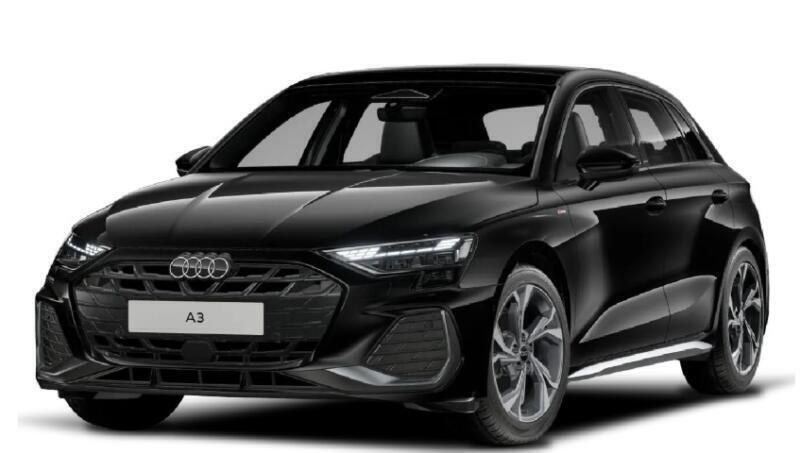
Choosing between the Audi A3 and BMW 1 Series in New Zealand is one of those decisions that looks easy until we actually sit inside both cars. On paper, they occupy almost exactly the same patch of premium-car territory. Both are compact enough for Auckland traffic, polished enough for an evening in Wellington, comfortable enough for a weekend run out of Christchurch, and expensive enough that we probably want to think carefully before signing anything.
Yet these two German hatchbacks have surprisingly different personalities.
The Audi A3 feels measured, sophisticated and quietly confident. It is the sort of car that seems to have ironed its shirt before breakfast. The BMW 1 Series is more expressive. Its cabin, steering and M Sport presentation lean harder into the idea that a compact premium car should still feel a little mischievous.
For New Zealand buyers, the comparison has become particularly interesting because both cars have recently evolved. The current Audi A3 Sportback S line TFSI 110kW carries an official New Zealand MRP of $74,490 before on-road costs, while BMW's 120 Sport Collection has been advertised at an RRP of $62,500 before ORC and optional extras during 2026. Individual BMW 120 stock vehicles can differ significantly in price depending on specification and dealer offers.
So, does paying more for the Audi make sense? Or has the BMW become the cleverer premium hatchback purchase?
Let's dig into it.
- Audi A3 vs BMW 1 Series NZ: The Short Answer
- Audi A3 vs BMW 1 Series New Zealand Specifications
- Exterior Design: Sophistication vs Sportiness
- Interior Quality and Cabin Design
- BMW 1 Series Interior: More Digital Drama
- Infotainment and Technology
- Engine Performance: BMW Takes the Lead
- Driving Experience on New Zealand Roads
- Audi A3: Better for Long-Distance Cruising?
- Fuel Economy and Running Costs
- BMW 1 Series vs Audi A3 Price in New Zealand
- Practicality and Boot Space
- Audi A3 vs BMW 1 Series for City Driving
- Which Has Better Safety Technology?
- Reliability: Audi A3 or BMW 1 Series?
- Resale Value in New Zealand
- Audi A3 S3 and RS3: Performance Changes the Equation
- Audi A3 TFSI e: The Electrified Alternative
- Which Is Better for Families?
- Which One Feels More Expensive?
- Which Gives Better Value for Money?
- Who Should Buy the Audi A3?
- Who Should Buy the BMW 1 Series?
- Audi A3 vs BMW 1 Series NZ: Our Final Score
- Conclusion: Audi A3 or BMW 1 Series in New Zealand?
- Frequently Asked Questions
Audi A3 vs BMW 1 Series NZ: The Short Answer
If we want the simplest possible verdict, the Audi A3 is our pick for refinement, understated design and an effortlessly premium atmosphere, while the BMW 1 Series makes a stronger argument on performance, equipment value and driving character.
The current New Zealand A3 Sportback uses a 110kW petrol powertrain with a seven-speed dual-clutch transmission. BMW's current 120 develops up to 125kW and 280Nm, also using a seven-speed automatic transmission and front-wheel drive.
BMW therefore has the numerical advantage in the regular petrol versions.
But buying a premium hatchback purely by comparing kilowatts would be like choosing coffee purely by caffeine content. There's more going on here.
Our Overall Verdict
We would lean toward the BMW 1 Series if value and performance matter most.
We would choose the Audi A3 if cabin ambience, refinement and mature styling carry more weight.
Neither is objectively the "wrong" car. Their priorities simply point in slightly different directions.
Audi A3 vs BMW 1 Series New Zealand Specifications
Before getting buried in the details, here's how the key current New Zealand-market versions broadly compare.
| Feature | Audi A3 Sportback | BMW 120 |
|---|---|---|
| Body style | 5-door hatchback | 5-door hatchback |
| Regular petrol output | 110kW | Up to 125kW |
| Transmission | 7-speed S tronic dual-clutch | 7-speed automatic |
| Drive | Front-wheel drive | Front-wheel drive |
| Seats | 5 | 5 |
| Engine | 1.5-litre petrol | 1.5-litre petrol |
| Performance versions | S3 / RS3 | Performance variants depending on range |
| NZ pricing | A3 S line from $74,490 MRP | 120 Sport Collection advertised from $62,500 RRP in 2026 |
| Character | Refined and understated | Sportier and more assertive |
Audi also offers significantly hotter relatives, including the S3 Sportback at $105,990 MRP and RS3 Sportback at $131,990 MRP, while its electrified A3 Sportback TFSI e is listed from $79,990 MRP.
Those options make the wider A3 family unusually broad.
Exterior Design: Sophistication vs Sportiness
Style is subjective, obviously, but these cars speak noticeably different visual languages.
The Audi A3 follows the familiar Audi formula: crisp lines, a wide grille, sharp lighting and restrained aggression. It looks expensive without desperately trying to prove it.
There's something almost architectural about it. Everything appears carefully measured.
The BMW 1 Series is bolder.
Its latest styling is smoother than some recent BMW designs, but the car still carries considerably more visual theatre. M Sport versions in particular have larger intakes, sporty wheels and styling details that make the BMW look like it is moving even while parked.
Why the Audi A3 Looks More Mature
The A3's biggest strength might be its ability to age slowly.
Audi rarely redesigns its small cars with the visual equivalent of a sledgehammer. Instead, each generation evolves. That can sound boring, but five years into ownership it may become a considerable advantage.
A fashionable design sometimes ages like a smartphone.
The A3 tends to age more like a good watch.
Why the BMW 1 Series Feels More Youthful
The BMW has more attitude.
Put the cars together and we'd expect the 1 Series to attract buyers who want their compact hatchback to advertise its sportiness rather than quietly suggest it.
Neither philosophy is inherently better.
We simply need to ask ourselves whether we want the car whispering "premium" or shouting "sport".
Interior Quality and Cabin Design
This is where things become more interesting.
Audi built much of its modern reputation around interiors, and the A3 still delivers the precise, organised atmosphere buyers associate with the brand.
Buttons, screens and trim pieces generally feel deliberately positioned rather than scattered around the dashboard.
BMW takes a more technology-forward approach.
The modern 1 Series cockpit feels more digital and visually dramatic, with the infotainment and driver-information displays dominating the cabin.
Audi A3 Interior: Calm and Familiar
The Audi's cabin has a certain Germanic neatness.
We don't need ten minutes inside it to understand what's going on. Most controls fall naturally into place, and the overall architecture feels driver-focused without becoming theatrical.
That's valuable in everyday life.
When we're crawling along Auckland's Southern Motorway after work, we aren't thinking about dashboard design awards. We just want the climate control, navigation and music systems to behave themselves.
Where the Audi Still Feels Special
The A3's strongest interior qualities are subtle.
The fonts look right. The switches generally feel deliberate. The driving position feels natural. The dashboard avoids unnecessary decoration.
None of these things sounds exciting individually.
Together, however, they give the cabin a cohesive premium feeling.
BMW 1 Series Interior: More Digital Drama
BMW's approach is less conservative.
Technology sits front and centre. The cockpit has the visual sophistication buyers increasingly expect from premium brands, and the BMW's interface feels closely related to the company's larger and significantly more expensive models.
That matters psychologically.
When we spend premium-car money on a compact vehicle, we don't want the interior reminding us constantly that we've bought the cheapest model in the showroom.
BMW does a good job of avoiding that sensation.
Infotainment and Technology
Neither car feels remotely old-fashioned.
Both provide the sort of connectivity modern buyers expect, including smartphone integration and extensive digital functionality. Current BMW 120 examples listed through BMW New Zealand specifically advertise Apple CarPlay and Android Auto among their equipment.
The philosophical difference is more important than the feature list.
Audi technology tends to disappear into the driving experience.
BMW technology wants to be noticed.
Which Infotainment System Is Easier to Live With?
We'd call this close.
This content may interest you! Audi A3 or Similar New Zealand: What Should You Choose?
BMW's interface offers considerable depth and modern graphics, but additional digitalisation can also mean more functions live inside menus.
Audi feels slightly more restrained.
For someone who enjoys exploring settings, configuring displays and personalising the car, BMW may be more satisfying.
If we just want everything to work without thinking too much about it, the Audi may feel friendlier.
Engine Performance: BMW Takes the Lead
Here BMW has a clearer advantage.
The current BMW 120 powertrain produces up to 125kW and 280Nm, with BMW quoting 0–100km/h in around 7.8 seconds for the applicable version.
The regular New Zealand Audi A3 Sportback produces 110kW and uses Audi's seven-speed S tronic dual-clutch transmission.
That doesn't make the A3 slow.
Far from it.
But when accelerating onto a motorway or overtaking on a rural road, the BMW's additional output gives it a useful advantage.
Audi A3 Performance in Everyday Driving
The key word with the A3 is smooth.
Its engine and transmission combination suits the car's overall personality. Acceleration feels brisk rather than dramatic, and the A3 is happiest building speed cleanly without making a big event out of it.
Think of it as a very competent athlete wearing a business suit.
BMW 1 Series Performance
The BMW brings more energy.
There is stronger performance on paper, but the bigger difference is psychological. BMW continues to tune the 1 Series around the idea that the driver should feel involved.
The current generation is front-wheel drive in regular form rather than following the rear-wheel-drive layout of much older 1 Series models. BMW officially lists front-wheel drive for the 120, with all-wheel drive reserved for more performance-oriented configurations.
Purists may lament that change.
Most everyday buyers probably won't.
Driving Experience on New Zealand Roads
New Zealand gives suspension engineers quite a workout.
We have smooth motorways, patched urban streets, coarse-chip surfaces, tight rural corners and undulating highways—sometimes all within the same drive.
That makes chassis balance particularly relevant.
BMW 1 Series: The Driver's Choice
The BMW generally feels more eager.
Steering responses are quick, body movements feel well controlled, and M Sport-equipped versions amplify the impression that the chassis wants us to find another corner.
It isn't a sports car.
But among premium hatchbacks, the BMW still works harder than most to make driving feel like an activity rather than simply transportation.
What About Ride Comfort?
Here's the trade-off.
Sportier suspension and larger wheels can reduce ride compliance.
Buy an aggressively specified 1 Series and broken urban surfaces may occasionally remind us that visual drama and comfort don't always sleep in the same bed.
Audi generally strikes a more relaxed balance.
Audi A3: Better for Long-Distance Cruising?
We'd give the A3 a narrow advantage here.
Its entire personality suits long-distance driving.
The seating position is natural, the cabin feels settled, the powertrain is unobtrusive and the exterior design creates less psychological noise.
On a run from Auckland to Taupō, Wellington to Napier or Christchurch toward Queenstown, those characteristics become valuable.
A fast car impresses us for ten seconds.
A comfortable car impresses us for four hours.
Fuel Economy and Running Costs
Fuel economy depends heavily on configuration, tyres, traffic and driving style, so we'd avoid pretending one universal figure tells the entire story.
For context, current BMW New Zealand stock listings for 2026 BMW 120 models show 5.9L/100km for some vehicles.
Both cars use modern small-capacity turbocharged petrol engines intended to balance performance and efficiency.
Neither should drink fuel like an old six-cylinder luxury sedan.
But here's the important part: fuel isn't necessarily the cost we should worry about most.
Tyres, servicing, insurance and replacement parts can make a far greater difference over several years.
Both cars sit above mainstream models such as the Toyota Corolla or Mazda3 in terms of ownership expectations.
Premium badges bring premium engineering.
They can also bring premium invoices.
Used buyers should pay particular attention to service history, tyres, brakes, electronic equipment and evidence of deferred maintenance.
BMW 1 Series vs Audi A3 Price in New Zealand
Price is currently one of BMW's strongest weapons.
Audi New Zealand lists the A3 Sportback S line TFSI 110kW at $74,490 MRP excluding applicable on-road costs.
BMW New Zealand's 2026 Sport Collection campaign lists the BMW 120 Sport Collection from $62,500 RRP, excluding on-road costs, optional extras and delivery costs.
That is a meaningful gap.
Dealer inventory complicates matters because actual transaction prices depend on specification, promotions and available stock. Current new BMW 120 listings have appeared around the high-$60,000 to low-$70,000 range, for example.
So we wouldn't compare brochure prices in isolation.
We'd compare two actual cars sitting at New Zealand dealerships with the equipment we want.
Practicality and Boot Space
Neither model is pretending to be an SUV.
This content may interest you!Audi A3 or Q2 New Zealand: Which Audi Should You Buy?That's partly their charm.
Both provide five doors, five seats and hatchback versatility without the extra height and bulk of something like an Audi Q3 or BMW X1.
For couples or small families, that may be plenty.
Rear-Seat Comfort
Adults can use the back seats of either car, but these remain compact premium hatchbacks.
If three adults regularly occupy the second row, we're shopping in the wrong category.
For children, occasional passengers or shorter trips, both are perfectly workable.
Tall adults spending hours in the back may prefer something larger.
Audi A3 vs BMW 1 Series for City Driving
In cities, both cars make a compelling argument against the SUV obsession.
They're easier to place in narrow streets, easier to park and more agile in heavy traffic.
Visibility is generally manageable, modern driver-assistance systems reduce stress, and their turbocharged engines provide plenty of low-speed response.
The Audi feels slightly calmer.
The BMW feels slightly livelier.
A person commuting every day may prefer the Audi's polished personality.
Someone who enjoys attacking an empty on-ramp after leaving the office may prefer the BMW.
Which Has Better Safety Technology?
Both Audi and BMW operate at the premium end of the market, so sophisticated driver-assistance technology is part of the equation.
However, exact assistance systems can change according to model year, trim and options.
This is an area where checking the individual New Zealand specification sheet matters more than relying on an overseas review.
One vehicle may have equipment fitted as standard that requires an option package elsewhere.
Our advice is simple: compare the actual cars rather than the badges.
Reliability: Audi A3 or BMW 1 Series?
This question attracts dramatic answers online.
Reality is considerably less entertaining.
Modern versions of both vehicles contain turbocharged engines, dual-clutch or sophisticated automatic transmissions, digital electronics, sensors and extensive emissions-control equipment.
Maintenance matters enormously.
A well-maintained example of either model can be a much better purchase than a neglected example of the supposedly "more reliable" one.
Used Audi A3 vs Used BMW 1 Series
If buying used, we would prioritise condition over brand loyalty.
Our inspection priorities would be:
- Complete service history and evidence that scheduled maintenance was performed correctly.
- Smooth cold starts and clean transmission behaviour.
- Tyres from reputable brands with even wear across the axle.
- No unexplained dashboard warning lights.
- Correct operation of infotainment, cameras, sensors, seats and climate systems.
- Signs of accident repair or careless cosmetic work.
- Brake condition and upcoming servicing requirements.
- A professional pre-purchase inspection before committing.
One neglected luxury hatchback can erase years of perceived savings within a single workshop visit.
Resale Value in New Zealand
Brand desirability helps both cars.
Audi and BMW have established dealership networks and strong recognition in New Zealand, which should make them easier to resell than obscure premium alternatives.
Specification matters, though.
Neutral colours, sensible wheels, desirable packages and documented servicing usually make a used premium vehicle easier to move.
Unusual combinations can look brilliant to the original buyer while dramatically shrinking the future audience.
Audi A3 S3 and RS3: Performance Changes the Equation
The Audi family has one enormous ace up its sleeve.
The S3 and RS3.
The current S3 Sportback produces 245kW and is listed by Audi New Zealand from $105,990 MRP.
Then we reach the RS3.
Its 2.5-litre five-cylinder engine produces 294kW and 500Nm, with quattro all-wheel drive and an RS torque splitter. Audi New Zealand lists the RS3 Sportback from $131,990 MRP.
At that point we're no longer discussing sensible premium hatchbacks.
We're discussing a compact car capable of behaving like someone accidentally put a rally-car soul inside a luxury commuter.
Audi A3 TFSI e: The Electrified Alternative
Audi also gives New Zealand shoppers another interesting option.
The A3 Sportback TFSI e plug-in hybrid is listed from $79,990 MRP, with a 150kW system output. Audi quotes an all-electric range of 126–143km, although it notes that the figure is based on global values and that New Zealand specification values were still to be confirmed on its current product page.
For drivers who can charge at home, this changes the comparison significantly.
Daily commuting could potentially be completed largely on electricity while retaining a petrol engine for longer journeys.
That makes the A3 range more flexible than a simple petrol-versus-petrol comparison initially suggests.
Which Is Better for Families?
For a couple with one child, either can work brilliantly.
For two growing teenagers, we'd start wondering whether a larger vehicle makes more sense.
Compact premium hatchbacks give us premium materials and technology without requiring a large footprint.
The trade-off is obvious.
Space remains finite.
If practicality dominates our buying decision, something like a BMW X1, Audi Q3 or a mainstream mid-size SUV will probably make more sense.
But if we only occasionally need the rear seats, the A3 and 1 Series are arguably much more enjoyable vehicles to own.
Which One Feels More Expensive?
The Audi.
Not dramatically, but enough to notice.
This content may interest you!Audi A3 or A5 New Zealand: Which Audi Is the Better Buy?There's a seriousness to the A3's interior and overall presentation that makes it feel like a scaled-down Audi rather than an inexpensive gateway into the brand.
BMW's 1 Series can feel more exciting and more technologically theatrical.
Audi feels slightly more polished.
It is the difference between a modern boutique hotel and a beautifully designed business-class lounge.
Neither is cheap.
They simply create luxury differently.
Which Gives Better Value for Money?
This time, BMW takes it.
With BMW New Zealand advertising the 120 Sport Collection at $62,500 RRP during 2026, compared with the A3 Sportback S line at $74,490 MRP, the 1 Series can start with a substantial price advantage depending on the cars and offers available.
The BMW also offers more power in the regular petrol comparison.
That is difficult to ignore.
Audi needs buyers to value its refinement, design and overall presentation enough to justify the premium.
Some absolutely will.
Others will walk into BMW and wonder where the compromise is.
Who Should Buy the Audi A3?
The A3 suits us if we value polish over theatre.
It is particularly attractive for drivers who want a compact premium car that doesn't constantly demand attention.
The exterior is elegant.
The cabin is restrained.
The driving experience is sophisticated.
The A3 is not trying desperately to convince us that Tuesday's commute is qualifying at Nürburgring.
And that's precisely why many buyers will love it.
Who Should Buy the BMW 1 Series?
The 1 Series makes more sense for people who want a little extra excitement.
It feels younger, more playful and more performance-oriented.
The stronger current 120 powertrain also gives BMW an objective advantage alongside its potentially lower entry price.
For someone who enjoys driving but still needs something compact, efficient and practical enough to use every day, it is extremely convincing.
Audi A3 vs BMW 1 Series NZ: Our Final Score
We'd score them remarkably close.
For interior ambience and refinement, Audi wins.
For engine performance, BMW wins.
For value at current advertised pricing, BMW wins.
For understated exterior design, Audi wins.
For sporty personality, BMW wins.
For long-distance relaxation, we'd narrowly choose Audi.
For enthusiastic weekend driving, we'd choose BMW.
And for sheer high-performance insanity?
Audi can simply point toward the RS3 and end the conversation.
Conclusion: Audi A3 or BMW 1 Series in New Zealand?
The battle between the Audi A3 vs BMW 1 Series in New Zealand doesn't produce one universal winner.
Instead, it exposes the different ways German manufacturers interpret the same idea.
Audi believes a premium compact hatch should feel sophisticated, mature and beautifully resolved.
BMW believes it should inject a little excitement into the school run.
For buyers comparing the regular petrol models, the BMW 1 Series currently makes an especially compelling value argument. Its 125kW powertrain is stronger than the 110kW A3, while BMW's 2026 promotional pricing for the 120 Sport Collection can undercut the Audi A3 S line significantly.
Still, specifications aren't everything.
Spend twenty minutes in each car.
Drive them on the same roads.
Play with the infotainment. Sit in the rear seats. Drive through a rough section of road. Accelerate onto a motorway.
One of them will probably feel right almost immediately.
If we want elegance, calmness and classic premium character, we'd take the Audi A3.
If we want stronger value, more performance and a sportier personality, we'd buy the BMW 1 Series.
Sometimes choosing a car isn't about finding which one wins the spreadsheet.
It's about discovering which one makes us turn around for one last look after we've parked it.
Frequently Asked Questions
Is the Audi A3 better than the BMW 1 Series?
The Audi A3 is arguably better for buyers prioritising refinement, understated styling and a polished cabin, while the BMW 1 Series is stronger for drivers prioritising performance and value. The current New Zealand BMW 120 produces up to 125kW compared with 110kW for the regular A3 Sportback.
Which is cheaper in New Zealand, Audi A3 or BMW 1 Series?
At current 2026 advertised pricing, BMW can be considerably cheaper. BMW New Zealand lists the 120 Sport Collection at $62,500 RRP before applicable additional costs, while Audi lists the A3 Sportback S line TFSI 110kW at $74,490 MRP. Actual dealer prices and specifications vary.
Is the BMW 1 Series faster than the Audi A3?
When comparing the regular current petrol models, BMW has the performance advantage on paper. The BMW 120 produces up to 125kW and 280Nm, while the regular New Zealand Audi A3 Sportback is rated at 110kW.
Are the Audi A3 and BMW 1 Series front-wheel drive?
Yes, the regular current models use front-wheel drive. BMW officially lists front-wheel drive for the 120, while higher-performance derivatives across the two ranges can introduce all-wheel-drive systems.
Which should we buy used: Audi A3 or BMW 1 Series?
We would choose the vehicle with the strongest service history and overall condition rather than automatically favouring either badge. A professional pre-purchase inspection is especially valuable with older premium European cars because deferred maintenance, tyres, electronics and transmission issues can quickly outweigh a small difference in purchase price.
This content may interest you! Most Reliable Vehicles to Buy in New Zealand
Leave a Reply