
Audi A3 Models by Year New Zealand: Complete Buyer’s Guide
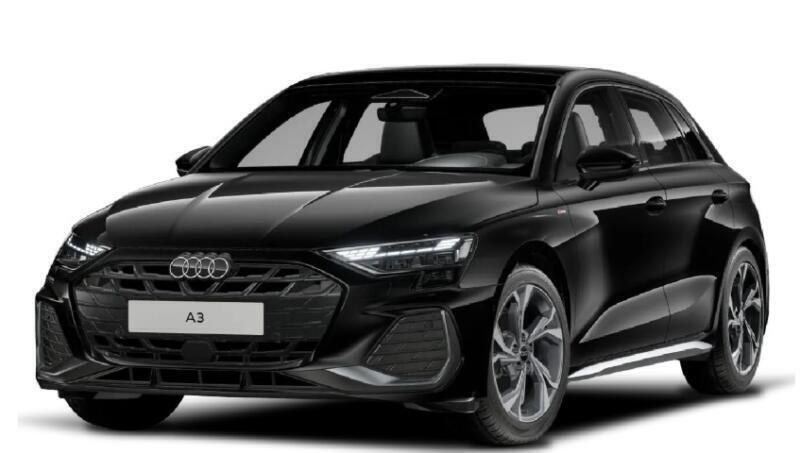
The Audi A3 has spent decades doing something remarkably difficult: squeezing the feel of a larger luxury Audi into a car that actually makes sense in a city. For New Zealand buyers, that combination is particularly attractive. An A3 is compact enough for Auckland parking buildings, comfortable enough for a long run through the Waikato, and refined enough to feel a considerable step above the average hatchback.
Yet shopping for a used A3 can become confusing surprisingly quickly. Search New Zealand listings and we encounter A3 Sportback, Sedan, S line, 35 TFSI, 40 TFSI, e-tron, S3 and RS 3, sometimes with specifications that seem to contradict each other.
There is a reason. New Zealand's A3 market contains both locally delivered vehicles and imported examples. Audi New Zealand notes that European Motor Distributors is the country's authorised Audi importer, while grey-import vehicles can have specifications different from officially supplied NZ-new cars.
So rather than simply listing dates, we're going to walk through Audi A3 models by year in New Zealand, explain the major generations, show what changed, and identify the model years that deserve the closest attention.
- Audi A3 Generations at a Glance
- 1996–2003 Audi A3: First Generation 8L
- 2003–2012 Audi A3: Second Generation 8P
- 2012–2020 Audi A3: Third Generation 8V
- 2013–2014: The A3 Sedan Arrives
- 2014–2016 Audi A3 Sportback e-tron
- 2015–2016 Audi A3: The Mature Early 8V
- 2017 Audi A3 Facelift
- 2018–2019 Audi A3 Models
- 2020 Audi A3: A Transition Year
- 2020–Present Audi A3: Fourth Generation 8Y
- 2022–2023 Audi A3
- 2024 Audi A3 Facelift
- 2025 Audi A3 Models in New Zealand
- 2026 Audi A3 Range in New Zealand
- Audi S3 Models by Year
- Audi RS 3 Models by Year
- Which Audi A3 Years Are Best to Buy in New Zealand?
- Years That Need Extra Inspection
- NZ-New Audi A3 vs Grey Import
- How to Identify the Right A3 From a Listing
- How Much Does Age Matter With an Audi A3?
- Audi A3 Maintenance in New Zealand
- Which Body Style Makes the Most Sense in New Zealand?
- What We'd Buy at Different Budgets
- Final Thoughts on Audi A3 Models by Year in New Zealand
- Frequently Asked Questions
Audi A3 Generations at a Glance
The easiest way to understand the A3 isn't year by year at first. Think in generations.
| Generation | Approximate Era | Common Name | What Changed Most |
|---|---|---|---|
| First generation | 1996–2003 | 8L | Original premium compact A3 |
| Second generation | 2003–2012 | 8P | More body styles, better refinement |
| Third generation | 2012–2020 | 8V | Modern tech, Sedan, e-tron |
| Fourth generation | 2020–present | 8Y | Digital cabin, sharper design, electrification |
These dates refer to the broader international model generations. The precise New Zealand arrival year of a particular engine, trim or body style can differ, especially when we're looking at imports rather than NZ-new vehicles.
That distinction matters. Two cars registered in New Zealand in the same year aren't necessarily identical underneath.
1996–2003 Audi A3: First Generation 8L
The first Audi A3 arrived internationally in 1996 and essentially invented Audi's modern premium compact formula.
Instead of making a small car feel cheap and decorating it with four rings, Audi approached the A3 like a scaled-down luxury car. That philosophy helped the model establish itself.
Early cars are now relatively uncommon in New Zealand, although enthusiasts still encounter imported examples.
1997–1999 Models
Early A3s were simple compared with today's versions. We saw petrol and diesel engines internationally, manual gearboxes, and relatively conservative cabin technology.
The design has aged rather gracefully. It is a classic late-1990s Audi shape: clean lines, relatively small wheels and almost no unnecessary decoration.
What Makes an Early A3 Appealing Today?
It's nostalgia as much as transportation.
A tidy first-generation car can feel refreshingly analogue. There are fewer screens, fewer menus and fewer electronic layers separating us from the driving experience.
However, age changes the buying equation completely. On a car approaching three decades old, service history and mechanical condition matter far more than the badge on the boot.
1999–2003 Models and quattro
One historically important development came in 1999, when Audi introduced quattro all-wheel drive to the premium compact segment with the A3.
That helped transform the A3 from merely a luxury hatchback into something with genuine performance credentials.
The first S3 also became part of the family during this generation, creating a formula Audi continues today: practical hatchback outside, serious performance hardware underneath.
2003–2012 Audi A3: Second Generation 8P
If the first A3 established the idea, the second generation polished it.
The 8P A3 arrived internationally in 2003 and became far more familiar on New Zealand roads. This is where the A3 started feeling like a genuinely mature alternative to larger premium cars.
Cabin quality improved, engine choices expanded, and the styling became sharper.
2004–2007 Audi A3 Models
Earlier second-generation models generally have a restrained appearance. Buyers can encounter naturally aspirated petrol engines, turbocharged TFSI engines and TDI diesels depending on the vehicle's origin.
For today's used buyer, the badge alone tells us relatively little.
We should verify:
- whether the vehicle was NZ-new or imported;
- its exact engine code and displacement;
- whether it uses a manual, conventional automatic or S tronic transmission;
- complete service history;
- timing-belt or timing-chain requirements for that particular engine;
- evidence of regular transmission servicing where applicable.
That little bit of detective work can save an enormous amount of money later.
2008 Audi A3 Cabriolet
The second generation expanded beyond the familiar hatchback formula. Audi began producing the A3 Cabriolet in 2007, adding an open-top version to the family. Audi's production history confirms A3 Cabriolet production began that year.
Cabriolets are less common than Sportbacks in New Zealand, but they occasionally appear on the second-hand market.
They're more of a lifestyle purchase than a practical A3 choice. Roof mechanisms, seals and water drainage deserve careful inspection as vehicles age.
2009–2012 Facelift Cars
Later 8P cars are arguably the sweet spot of the second generation.
Audi refreshed the styling and steadily improved equipment. Late examples look considerably newer than early cars despite sharing the same basic architecture.
If we're buying an inexpensive A3 today, we'd generally favour a well-maintained late-generation example over an early one purely because age is becoming such a significant factor.
But condition still wins.
A beautifully maintained 2007 car can be a better purchase than a neglected 2011 example with missing service history.
2012–2020 Audi A3: Third Generation 8V
This is where the A3 really enters the modern era.
The third-generation A3 arrived internationally in 2012. It became lighter, technologically smarter and much more varied.
For New Zealand used-car shoppers, the 8V generation is particularly important because large numbers of these cars remain modern enough for daily use while costing substantially less than a new premium hatchback.
2013 Audi A3: A New Beginning
Early third-generation cars introduced cleaner styling and a noticeably more contemporary interior.
Everything became more architectural. Buttons were reduced, infotainment became more central to the experience, and the dashboard adopted the minimalist horizontal layout that became fashionable throughout the Volkswagen Group.
The A3 was no longer simply a nice small hatchback. It began feeling like a miniature executive car.
2013–2014: The A3 Sedan Arrives
One of the biggest changes of the 8V generation was the introduction of the A3 Sedan.
Audi's Hungarian production facility began series production of the A3 Sedan and Cabriolet in 2013.
That sedan body gave the A3 a completely different personality.
The Sportback says practical European hatch.
The Sedan says compact executive car.
For New Zealand buyers who like the appearance of an A4 but don't necessarily need its size, the A3 Sedan can be particularly attractive.
Sportback or Sedan?
Neither is automatically better.
The Sportback usually makes more sense if we:
- regularly carry bulky items;
- have dogs;
- need easier access to the luggage area;
- prefer the traditional European hatchback format.
The Sedan is compelling if we:
- prioritise styling;
- mostly carry normal luggage;
- want a more conventional premium-car silhouette;
- rarely fold the rear seats for large cargo.
It's essentially practicality versus presentation, although both remain useful everyday cars.
2014–2016 Audi A3 Sportback e-tron
Electrification entered the A3 story long before plug-in hybrids became commonplace.
Audi says its first A3 Sportback e-tron production model debuted in 2014.
This combined a petrol engine with plug-in electric capability.
At the time, the idea felt futuristic. Today, used e-trons can look tempting because they offer an interesting mixture of electric commuting and petrol-road-trip flexibility.
Should We Buy an Older A3 e-tron?
Possibly, but we need to buy differently.
With an ordinary petrol A3, we're mainly judging the engine, gearbox, suspension, electronics and general condition.
With an ageing plug-in hybrid, we're adding another very expensive component: the high-voltage battery.
That doesn't automatically make the car risky. It simply means a battery-health assessment becomes part of sensible pre-purchase inspection.
2015–2016 Audi A3: The Mature Early 8V
By 2015 and 2016, the third-generation A3 had settled into its stride.
These model years can represent appealing value because they look relatively modern but sit far below new-A3 pricing.
Specification varies widely.
One A3 may have relatively modest trim while another has S line styling, larger wheels, sports seats, upgraded lighting and substantially more equipment.
That's why we shouldn't shop purely by registration year.
This content may interest you! Nissan Murano Reliability by Year New Zealand: Which Years Are Best?
A carefully specified 2015 A3 may feel more desirable than a basic 2017 model.
2017 Audi A3 Facelift
For many used buyers, 2017 is one of the key dividing lines in the third-generation A3 story.
The facelift brought styling tweaks and newer technology. Depending on specification and market, later cars can offer features that make the cabin feel significantly younger.
If our budget stretches from a pre-facelift car into a post-facelift example, comparing them back-to-back is worthwhile.
Virtual Cockpit Changes the Experience
One of Audi's strongest technologies from this era was its fully digital instrument concept.
Cars equipped with Audi virtual cockpit immediately feel more modern because navigation and vehicle information can be displayed directly in front of the driver.
Not every A3 has it.
That's an important used-car shopping lesson: year tells us the era; specification tells us what we'll actually live with.
2018–2019 Audi A3 Models
Late third-generation cars can be a very appealing place to spend our money.
They retain the relatively clean design of the 8V but benefit from years of development.
By this stage, we're often looking at the generation in its most polished form rather than paying a premium for being first through the door.
When comparing 2018 and 2019 examples, we'd place condition, mileage and history above tiny differences in registration year.
2020 Audi A3: A Transition Year
2020 can be confusing because it sits around the transition between generations.
Depending on manufacture date, registration timing and import history, New Zealand listings may include both outgoing third-generation cars and vehicles associated with the new fourth-generation era.
The lesson is simple: don't assume "2020 A3" tells the whole story.
Look at the actual body shape, chassis generation and build details.
2020–Present Audi A3: Fourth Generation 8Y
The fourth-generation A3 moved the car firmly into the digital age.
The new A3 Sedan introduced in 2020 became larger than its predecessor, measuring 4.50 metres long and 1.82 metres wide while retaining the same wheelbase.
Inside, the minimalist cabin of the previous A3 was replaced with something far more dramatic.
Angular vents, larger displays and a more driver-focused dashboard made the car feel substantially newer.
2021 Audi A3 in New Zealand
For New Zealand used buyers, 2021 examples mark the point where fourth-generation cars become increasingly relevant.
Audi New Zealand's current used inventory demonstrates that locally available 2021 A3s include examples such as the A3 35 TFSI Advanced with a 1,498 cc petrol engine.
These cars offer a useful compromise: much of the appearance and technology of today's A3 without the full cost of buying new.
2022–2023 Audi A3
The 2022 and 2023 model years largely refine the fourth-generation formula.
For used shoppers, this is where we'd begin evaluating whether newer age and remaining ownership benefits justify the price difference over 2021 examples.
The decision often comes down to depreciation.
Premium cars can lose a meaningful chunk of their initial value during their first few years. That isn't wonderful for the first owner, but it's exactly what can make a nearly new A3 attractive to the second buyer.
Understanding A3 Engine Badges
Modern Audi badges can be confusing because numbers such as 35 no longer directly represent engine displacement.
An A3 35 TFSI, for example, isn't fitted with a 3.5-litre engine.
Current New Zealand A3 listings show the 35 TFSI paired with a 1,498 cc petrol engine.
Think of modern Audi numeric badges more as performance categories than traditional engine-size labels.
2024 Audi A3 Facelift
Audi refreshed the fourth-generation A3 for 2024.
Changes included a redesigned Singleframe grille, revised interior elements and digital daytime-running-light signatures that can be selected through the MMI on appropriately equipped cars.
It's an evolutionary update rather than a ground-up redesign.
Imagine sharpening a good photograph rather than taking an entirely new one.
Is a 2024 A3 Worth More Than a 2023?
For buyers who value styling and technology, perhaps.
For buyers looking primarily for value, a lightly used pre-facelift 8Y can be the smarter move.
The underlying concept remains extremely similar, so we shouldn't automatically dismiss a 2022 or 2023 example simply because the 2024 car has a newer face.
2025 Audi A3 Models in New Zealand
By 2025, the refreshed A3 becomes the version most buyers associate with the contemporary range.
Expect the familiar Audi formula:
compact dimensions, polished turbocharged powertrains, increasingly comprehensive driver assistance and a digital-first interior.
The exact specification still needs checking individually. Packages, wheels, lighting and cabin equipment can materially change both the appearance and asking price.
2026 Audi A3 Range in New Zealand
As of August 2026, Audi New Zealand continues to market the A3 Sportback as its compact premium five-door model. Audi describes it as a practical five-door hatchback combining sporty styling with driver-focused technology.
The current A3 family is broader than simply one petrol hatchback.
Official Audi New Zealand material currently includes the A3, S3 and RS 3 within the range, while available new stock includes petrol A3 models and Audi's latest electrified options.
2026 Audi A3 Sportback 35 TFSI
The current New Zealand A3 Sportback offer uses a 1.5-litre TFSI petrol engine.
Audi New Zealand quotes fuel consumption of 5.4 L/100 km WLTP for the promoted A3 Sportback S line configuration, with luggage capacity reaching 1,200 litres when the rear seats are folded.
That specification shows what the regular A3 has become: quick enough for everyday driving, relatively economical and still practical.
2026 Audi A3 Sportback TFSI e
The major electrified development is the current A3 Sportback TFSI e plug-in hybrid.
Audi New Zealand lists a starting MRP of NZ$79,990 and quotes a global all-electric range of approximately 126–143 km, while noting that final New Zealand specification values remain to be confirmed. Its system output is listed at 150 kW and usable battery capacity at 19.7 kWh.
That's a dramatic leap from the early A3 e-tron era.
A plug-in A3 can now potentially cover many routine urban journeys electrically while retaining a petrol engine for longer trips.
Audi S3 Models by Year
Although technically a separate performance derivative, we'd be doing the A3 family a disservice by ignoring the S3.
The S3 takes the practical A3 shell and turns the performance dial several clicks clockwise.
Early generations built its reputation, but today's car is remarkably quick.
Current S3 Sportback
Audi New Zealand currently lists the S3 Sportback with 245 kW, 420 Nm of torque and quattro all-wheel drive, with a claimed 0–100 km/h time of 4.7 seconds.
That's serious performance wrapped in the body of a compact hatchback.
It also illustrates why we shouldn't view the A3 family as a single model with different badges. The gap between an ordinary A3 and S3 is substantial.
Audi RS 3 Models by Year
Then we reach the wild one.
The RS 3 takes the A3 platform and adds Audi's distinctive five-cylinder turbocharged engine.
The result is less like adding chilli to dinner and more like emptying the whole bottle into the saucepan.
Audi's five-cylinder history shows that the current RS 3 engine architecture delivers 400 PS globally, while the latest generation introduced additional performance-oriented drivetrain technology.
This content may interest you! Which Audi A3 Years to Avoid in New Zealand? Used Buyer’s Guide
2026 RS 3 New Zealand
The current New Zealand RS 3 is available in Sedan and Sportback forms.
Audi New Zealand lists the RS 3 with a 2.5-litre TFSI engine, 294 kW output and quattro all-wheel drive. Current official pricing material lists the RS 3 Sportback from NZ$131,990 and the Sedan from NZ$133,990 before applicable on-road costs under the referenced offer.
For most people it's unnecessary.
That's exactly why enthusiasts love it.
Which Audi A3 Years Are Best to Buy in New Zealand?
There isn't one universally perfect year.
Our ideal choice depends heavily on budget.
For lower-cost used ownership, late 8P examples can still make sense if exceptionally well maintained.
For the strongest balance of price, styling and modern equipment, facelift third-generation cars from roughly 2017–2019 deserve serious consideration.
For modern technology without paying new-car money, 2021–2023 fourth-generation cars are particularly interesting.
And if we want the newest styling, plug-in hybrid technology and current ownership package, the refreshed 2024–2026 era becomes the natural destination.
Years That Need Extra Inspection
This isn't about declaring certain years "bad."
Older premium cars simply require more investigation.
A 12-year-old A3 with meticulous maintenance can be vastly safer financially than a five-year-old example that has been neglected.
Pay particular attention to:
- incomplete service histories;
- unexplained warning lights;
- rough or hesitant gearbox behaviour;
- cooling-system leaks;
- excessive oil consumption;
- suspension knocks;
- neglected tyres;
- mismatched replacement parts;
- modified S3 or RS 3 vehicles;
- imported cars with unclear history.
One cheap repair is fine.
Five cheap repairs arriving together aren't cheap anymore.
NZ-New Audi A3 vs Grey Import
This issue deserves its own section because it can materially affect the ownership experience.
Audi New Zealand states that European Motor Distributors is the country's only authorised Audi importer. Officially supplied new Audis receive benefits including a five-year/150,000 km warranty, five years of roadside assistance and a three-year Audi Cover Motoring Plan, subject to the programme's terms.
Grey imports may have different specifications and histories.
That doesn't automatically make them poor purchases. Plenty of imported vehicles are perfectly good cars.
It simply means we should confirm exactly what we're buying.
How to Identify the Right A3 From a Listing
Don't stop at the title.
"Audi A3 2018" isn't enough information.
We want to know the generation, engine, body style, specification, transmission, import status, build date and service record.
A useful shopping sequence is:
- Identify the chassis generation.
- Confirm Sportback, Sedan or Cabriolet.
- Verify engine displacement and fuel type.
- Establish NZ-new versus imported status.
- Check servicing and repair invoices.
- Scan the vehicle electronically before purchase.
- Test every infotainment and electrical function.
- Test-drive it from completely cold if possible.
- Have an independent pre-purchase inspection completed.
That process is far more valuable than simply trying to find the newest registration plate our budget allows.
How Much Does Age Matter With an Audi A3?
Quite a lot—but mileage and maintenance can matter more.
Modern vehicles age in two directions.
Kilometres wear mechanical components through use.
Time ages seals, plastics, batteries, fluids and rubber whether the car is moving or sitting still.
That's why an ultra-low-mileage 12-year-old premium car isn't automatically better than a regularly driven six-year-old car.
Sometimes the garage queen needs more attention than the commuter.
Audi A3 Maintenance in New Zealand
As an Audi becomes older, maintenance cost becomes increasingly relevant.
Audi New Zealand currently offers an Audi Essential Service for vehicles eight years or older, priced at NZ$399 at the time of writing. It includes genuine Audi engine oil and filter replacement, a vehicle inspection, logbook stamp and service-interval reset, among other listed benefits.
That doesn't mean every service costs $399. Additional repairs, scheduled components and consumables can obviously increase ownership costs.
But it does demonstrate that older A3s remain supported within Audi's New Zealand service network.
Which Body Style Makes the Most Sense in New Zealand?
For most people, we'd choose the Sportback.
It fits the A3's personality perfectly: compact on the outside and unexpectedly useful inside.
The Sedan, however, is arguably the more elegant car.
If we rarely haul awkward objects and prefer a traditional boot, it can make the A3 feel like a more expensive vehicle than it really is.
The Cabriolet is the emotional purchase.
And the S3 or RS 3?
Those are what happen when practicality gets bored and goes looking for trouble.
What We'd Buy at Different Budgets
If we were shopping today, we'd think about the generations rather than chasing arbitrary years.
A tight budget could lead us toward a well-documented late 8P, but we'd leave money aside for maintenance.
A moderate used-car budget would make the 2017–2019 facelift 8V A3 very attractive.
With more room to spend, we'd look carefully at 2021–2023 8Y cars, especially low-mileage NZ-new examples with excellent histories.
At the top end, the latest 2024–2026 cars bring refreshed styling and increasingly sophisticated electrification, while the S3 and RS 3 cater to buyers whose definition of "necessary performance" is wonderfully flexible.
Final Thoughts on Audi A3 Models by Year in New Zealand
Understanding Audi A3 models by year in New Zealand becomes much easier once we stop thinking of the car as one continuous model.
The first-generation 8L created the premium compact idea.
The second-generation 8P matured it.
The third-generation 8V expanded the A3 into Sedans, plug-in hybrids and a genuinely modern digital experience.
The fourth-generation 8Y turned the car into the high-tech compact Audi we know today.
For most used buyers, the strongest value is likely to sit somewhere in the late third-generation or early fourth-generation period. But the golden rule remains wonderfully simple: buy the best individual car, not merely the newest year.
A complete service folder, careful previous owner and clean inspection report are worth far more than a shiny registration year attached to a neglected vehicle.
The badge gets us interested.
The history should decide whether we buy.
Frequently Asked Questions
1. What generation is a 2018 Audi A3 in New Zealand?
A 2018 Audi A3 is generally part of the third-generation 8V family and falls within the facelift era. Exact equipment and powertrain specifications can vary depending on whether the car was NZ-new or imported.
2. What generation is a 2021 Audi A3?
Most new-generation 2021 A3s belong to the fourth-generation 8Y family. However, registration timing and imports mean we should always confirm the actual build generation rather than relying solely on the registration year.
3. Is the Audi A3 Sportback better than the Sedan?
The Sportback is usually more practical because of its hatch opening and flexible cargo area. The Sedan offers a more traditional premium-car shape. Mechanically, comparable versions can be very similar, so the better choice largely depends on how we use the car.
4. What is the best used Audi A3 year to buy in New Zealand?
For many shoppers, facelift third-generation models from around 2017–2019 offer an appealing combination of modern styling, useful technology and depreciation. Buyers wanting a newer cabin and stronger digital experience should consider 2021–2023 fourth-generation examples. Condition and maintenance history remain more important than year alone.
5. Is a grey-import Audi A3 worth buying in New Zealand?
It can be, provided the vehicle has clear provenance, suitable local support and a strong inspection report. Audi New Zealand warns that grey imports may differ from officially supplied vehicles in specification and ownership support, so buyers should verify the exact history and equipment before committing.
This content may interest you! Mitsubishi Triton Years to Avoid in New Zealand: A Used-Buyer’s Guide
Leave a Reply