
Toyota Voxy vs Noah vs Esquire: The Complete Comparison
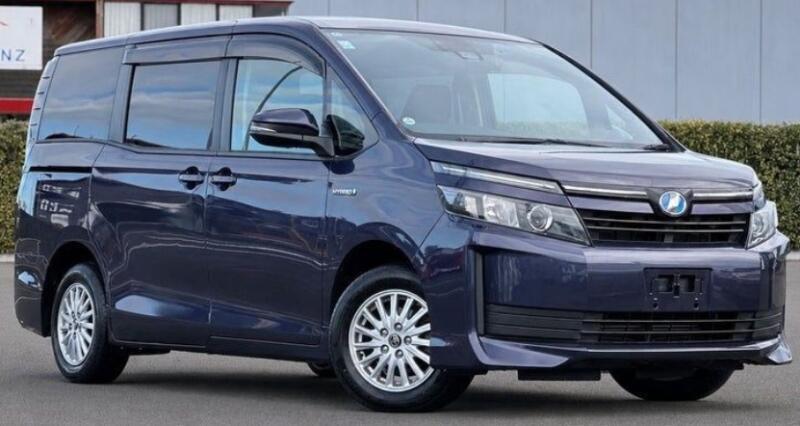
Choosing between the Toyota Voxy, Noah, and Esquire can feel like choosing between three rooms in the same well-designed house. The foundations are nearly identical, the dimensions overlap, and the mechanical ingredients often match. Yet each room has its own atmosphere.
The Toyota Noah is the sensible, family-first choice. The Voxy wears sharper clothes and carries a more rebellious personality. The Esquire takes the same practical formula and wraps it in chrome, richer upholstery, and a more formal sense of occasion.
That sounds simple, but the used-car market complicates matters. We encounter different generations, trim levels, seating arrangements, drivetrains, safety packages, and imported examples with equipment that varies dramatically. A basic Noah can feel considerably less luxurious than a high-spec Voxy, while an Esquire Hybrid Gi may appear to belong in a more expensive vehicle class.
So, which one should we buy?
In this Toyota Voxy vs Noah vs Esquire comparison, we will examine their history, design, engines, fuel economy, interior comfort, reliability, practicality, ownership costs, and suitability for different buyers. More importantly, we will explain where the differences genuinely matter—and where they are mostly cosmetic.
- Toyota Voxy vs Noah vs Esquire at a Glance
- Are the Toyota Voxy, Noah, and Esquire the Same Vehicle?
- A Brief History of the Three Minivans
- Exterior Design: Which One Looks Best?
- Interior Design and Cabin Atmosphere
- Seating Capacity and Passenger Comfort
- Practicality and Cargo Space
- Sliding Doors and Everyday Convenience
- Petrol Engines: Performance and Suitability
- Hybrid Systems: Economy Without Sacrificing Space
- Toyota Voxy vs Noah vs Esquire Fuel Economy
- Ride Comfort and Driving Experience
- Safety Technology
- Reliability: Which One Is Most Dependable?
- Maintenance Costs and Parts Availability
- Used-Car Value and Resale Appeal
- Which One Is Best for Families?
- Which One Is Best for Style?
- Which One Is Best for Luxury?
- Which One Is Best for Business or Passenger Transport?
- R80 vs R90: Should We Buy the Older or Newer Generation?
- Toyota Voxy vs Noah vs Esquire: Pros and Cons
- Which Toyota Minivan Should We Buy?
- Final Verdict
- Frequently Asked Questions
Toyota Voxy vs Noah vs Esquire at a Glance
The easiest way to understand these minivans is to view them as closely related siblings rather than completely separate vehicles.
| Category | Toyota Noah | Toyota Voxy | Toyota Esquire |
|---|---|---|---|
| Main personality | Conventional and family-focused | Sporty and distinctive | Premium and formal |
| Typical buyer | Practical family | Style-conscious family | Comfort-focused buyer |
| Mechanical layout | Shared with Voxy | Shared with Noah | Based on Noah/Voxy |
| Seating | Usually 7 or 8 | Usually 7 or 8 | Usually 7 or 8 |
| Petrol availability | Yes | Yes | Yes |
| Hybrid availability | On later generations | On later generations | Yes |
| Four-wheel drive | Available on many petrol models | Available on many petrol models | Available on petrol versions |
| Current production | Yes | Yes | No |
| Biggest advantage | Choice and value | Bold styling | Upscale cabin |
| Biggest drawback | Can look ordinary | Styling is not for everyone | Older and sometimes expensive |
Toyota launched the Noah and Voxy as compact cab-over-style family minivans in November 2001. The Esquire arrived much later, in 2014, as a more luxurious derivative of the third-generation platform. Toyota did not continue the Esquire when the fourth-generation Noah and Voxy were introduced in January 2022.
Are the Toyota Voxy, Noah, and Esquire the Same Vehicle?
Mechanically, they are extremely close—especially when comparing examples from the same generation, year, engine family, and drivetrain.
They generally share:
- Core chassis architecture
- Engine and transmission options
- Suspension layouts
- Major body structures
- Seating mechanisms
- Sliding-door systems
- Hybrid components
- Many electrical and safety systems
- A considerable number of service parts
However, “the same underneath” does not mean “identical in every way.”
Toyota differentiated them through front-end styling, rear lamps, interior colors, dashboard finishes, seat materials, equipment packages, and dealer-channel positioning. Historically, the Noah, Voxy, and Esquire were associated with different Toyota sales channels in Japan, helping the company offer multiple interpretations of essentially one family-minivan formula.
The differences become especially noticeable when we compare trim levels. A high-grade Voxy can be better equipped than a lower-grade Esquire, despite the Esquire’s premium positioning. Condition and specification therefore matter more than the badge alone.
The Simple Family Analogy
Think of the trio this way:
- Noah: the dependable sibling who remembers everyone’s schedule.
- Voxy: the sibling who turns up wearing black trainers and a dramatic jacket.
- Esquire: the sibling who books the restaurant and insists on polished shoes.
They can perform the same basic jobs. They simply present themselves differently.
A Brief History of the Three Minivans
Toyota Noah: The Mainstream Original
The modern front-wheel-drive Toyota Noah appeared in 2001 as the successor to the TownAce Noah and LiteAce Noah lineage. Its mission was straightforward: provide families with a spacious, manageable minivan featuring dual sliding doors and flexible seating.
Over successive generations, the Noah became more refined, efficient, and technically sophisticated. Its styling generally remained the most conservative of the family, although later Aero versions adopted larger grilles and more assertive bodywork.
Major Noah Generations
- First generation, R60: 2001–2007
- Second generation, R70: 2007–2014
- Third generation, R80: 2014–2021
- Fourth generation, R90: 2022 onward
Each step brought meaningful improvements, but the leap from the R70 to the low-floor R80 generation was particularly important for cabin access and packaging.
Toyota Voxy: The Edgier Alternative
The Voxy arrived alongside the Noah and has traditionally shared its core engineering. Toyota used the Voxy to attract customers who wanted the usefulness of a family van without looking as though they had surrendered entirely to sensible footwear.
Dark trim, split lighting elements, angular grilles, aero packages, and black interiors became part of its identity. Toyota describes the current Voxy design philosophy as “leading edge and unique,” while the Noah follows a more mainstream, high-quality direction.
That distinction is not merely marketing fluff. Park the two beside each other and the Voxy usually appears more dramatic, particularly in ZS, S-G, S-Z, or Kirameki form.
Toyota introduced the Esquire in October 2014, using the third-generation Noah and Voxy architecture. It was designed to deliver a more luxurious atmosphere without moving all the way up to the larger, more expensive Alphard or Vellfire.
The Esquire was commonly offered in Xi and Gi grades, with petrol and hybrid powertrains. Its most recognizable features included a tall chrome grille, dressier cabin materials, and a more formal appearance.
Production ended in 2021, and there is no R90-generation Esquire. Buyers seeking one today are therefore shopping exclusively in the used or imported-vehicle market.
Exterior Design: Which One Looks Best?
Design is where Toyota worked hardest to create separation.
Toyota Noah Styling
The Noah tends to look clean, balanced, and approachable. Even when fitted with an Aero body package, it usually avoids the Voxy’s deliberately futuristic face.
This can be an advantage. Conservative styling often ages more gracefully, and the Noah is less likely to divide opinion. It slips into family life like a comfortable pair of jeans: not always exciting, but rarely inappropriate.
The fourth-generation Noah offers both standard and Aero-style versions, giving buyers a wider visual range than the Voxy. Toyota describes its themes as majestic, modern, high-quality, mainstream, and aggressive, depending on the selected body treatment.
Toyota Voxy Styling
The Voxy is the boldest member of the trio.
Depending on the generation, expect:
- Darkened exterior trim
- More aggressive bumpers
- Split or unusually shaped headlights
- Larger-looking grille treatments
- Sportier alloy-wheel designs
- Black-heavy interior themes
- Special editions with extra brightwork
The current R90 Voxy has an especially distinctive nose. It is less a gentle handshake and more a neon sign outside a futuristic nightclub.
Some buyers love that. Others see too much grille and visual drama. There is no universally correct verdict.
Toyota Esquire Styling
The Esquire follows a different route. Rather than trying to look sporty, it attempts to look expensive.
Its upright chrome grille dominates the front end, while additional bright trim and more elegant detailing create an executive-shuttle flavor. In dark paint, a clean Esquire can resemble a scaled-down luxury people carrier.
The design works best when the vehicle remains original. Excessive aftermarket chrome, oversized wheels, or poorly fitted body kits can quickly turn restrained luxury into visual clutter.
Our Styling Verdict
Choose the Noah for timeless neutrality, the Voxy for personality, and the Esquire for a more dignified appearance.
There is no practical winner here. The best-looking model is simply the one that makes us glance back after parking.
Interior Design and Cabin Atmosphere
All three models offer fundamentally similar packaging when compared within the same generation. Differences in cabin mood, however, can be substantial.
Inside the Toyota Noah
The Noah’s cabin emphasizes visibility, accessibility, and sensible controls. Lighter upholstery may make some versions feel airier, although family use can expose stains more quickly.
Lower trim levels can appear plain, but that simplicity has benefits. Fewer powered features mean fewer components to diagnose as the vehicle ages, and basic cloth seats may tolerate hard family use better than delicate premium surfaces.
Inside the Toyota Voxy
The Voxy typically uses darker materials and sportier accents. Black upholstery hides everyday marks well and complements the model’s sharper exterior.
Some versions add:
- Leather-trimmed steering wheels
- Piano-black dashboard inserts
- Ambient lighting
- Premium audio
- Larger displays
- Dual power sliding doors
- Rear entertainment systems
- Heated seats
- Additional USB or power outlets
The result often feels younger and more contemporary than an equivalent Noah, although the basic layout remains familiar.
Inside the Toyota Esquire
The Esquire’s cabin is its main selling point.
Depending on grade and year, it may include richer seat coverings, decorative stitching, upgraded trim panels, additional chrome or metallic accents, and a more formal dashboard treatment. Gi and Gi Premium Package versions are especially desirable when preserved in good condition.
Yet we should keep expectations realistic. It is still based on a compact Japanese minivan, not a miniature limousine engineered from a completely separate luxury platform. Under the polished trim, it shares much of its architecture with the Noah and Voxy.
Seating Capacity and Passenger Comfort
Most examples provide either seven or eight seats.
Seven-Seat Configurations
Seven-seat versions usually use two individual captain’s chairs in the second row. They are ideal for buyers who value:
- Easier movement between rows
- Better second-row personal space
- A more premium cabin arrangement
- Long-distance passenger comfort
- Convenient access to the third row
On third-generation models, the long-sliding captain’s chairs can create remarkable legroom. Toyota’s 2014 design introduced a low-floor layout and an 810 mm sliding range for certain seven-seat configurations.
Eight-Seat Configurations
Eight-seat models generally use a second-row bench. They make more sense when maximum passenger capacity matters, particularly for larger families, community transport, or occasional group travel.
The trade-off is flexibility. Moving between the second and third rows can be less graceful, and adult passengers may prefer the personal space of captain’s chairs.
Which Seating Layout Is Better?
For most private owners, we would choose seven seats. Captain’s chairs transform the cabin from a bus-like space into something closer to a mobile lounge.
We would select eight seats only when the extra seating position will be used regularly. Carrying an empty bench every day for one annual family trip is not always worthwhile.
Practicality and Cargo Space
These vans are designed around people, but they remain impressively adaptable.
The third-row seats typically fold upward against the sides of the cargo area on R80 models, creating a broad loading space. This method is quick and leaves a useful floor, although the folded seats still occupy some side width.
The low-floor R80 redesign reduced cargo-floor height and improved entry for children, elderly passengers, and anyone loading bulky items. Toyota stated that the third-generation design lowered the cargo floor and provided a continuous flat floor through the passenger compartment.
The newer R90 Noah and Voxy go further. Toyota lists a 104-liter underfloor storage compartment, a cabin height of 1,405 mm, and more space between the rear pillars than in the previous generation.
What Can They Realistically Carry?
With all seats occupied, luggage capacity is naturally limited. Soft bags work better than rigid suitcases.
With the third row folded, these vans can handle:
- Family holiday luggage
- Baby strollers
- Bicycles with some preparation
- Flat-packed furniture
- Camping equipment
- Sports gear
- Airport-transfer luggage
- Business supplies
With additional seats moved or folded, the cabin becomes almost van-like. That versatility is the trio’s secret weapon.
Sliding Doors and Everyday Convenience
Dual sliding doors are among the strongest reasons to buy any of these models.
They simplify life in tight parking spaces, reduce the risk of children striking neighboring cars, and provide a wide opening for child seats or less-mobile passengers.
Depending on trim, we may find one or two power-operated doors, touch-sensitive handles, remote controls, or hands-free functions.
The R90 Noah and Voxy can be equipped with hands-free power sliding doors and a retractable universal step. Toyota also introduced a free-stop rear hatch that can remain open at various angles, helping in cramped parking areas.
Convenience brings a warning, though: powered doors need inspection. A slow, noisy, or hesitant door may have worn rollers, dirty tracks, weak motors, poor alignment, damaged cables, or electrical problems.
Petrol Engines: Performance and Suitability
Engine choices depend on generation, but many used examples employ a naturally aspirated 2.0-liter four-cylinder petrol engine paired with a continuously variable transmission.
In the R80 generation, the 2.0-liter 3ZR-FAE Valvematic engine was widely used. It provides adequate performance rather than excitement. Around town, it feels smooth and predictable. On steep roads with seven passengers and luggage, it may need to work hard.
The newer R90 petrol versions use Toyota’s 2.0-liter M20A-FKS Dynamic Force engine with a Direct Shift-CVT. Toyota claims improved response and efficiency, with an official Japanese WLTC figure reaching 15.1 km/L for selected two-wheel-drive Noah grades.
Advantages of Petrol Models
- Lower purchase price in many markets
- Straightforward long-distance behavior
- Easier diagnosis for some independent garages
- No aging high-voltage battery to assess
- Four-wheel-drive availability on many versions
- Good choice for lower annual mileage
Disadvantages of Petrol Models
- Higher urban fuel use
- Less relaxed low-speed response than a hybrid
- Engine can sound busy under load
- Fuel costs may erase the lower purchase-price advantage
- Imported specifications can complicate parts identification
Hybrid Systems: Economy Without Sacrificing Space
Third-generation hybrid versions use a 1.8-liter Atkinson-cycle petrol engine paired with Toyota’s hybrid system. In 2014 specification, Toyota quoted a combined system output of 100 kW, or 136 PS, and used a nickel-metal-hydride battery.
The system suits the vehicle’s mission beautifully. Electric assistance improves low-speed smoothness, while regenerative braking captures energy during frequent slowing. Urban and suburban driving are where the hybrid usually shines.
This content may interest you! Toyota Voxy vs Esquire: Which Toyota Minivan Is Better?
The R90 generation uses an updated 1.8-liter hybrid system with stronger electrical components and improved efficiency. Toyota’s best official Japanese WLTC figure was 23.4 km/L for a selected Noah X two-wheel-drive model, although real-world results vary with traffic, climate, load, speed, terrain, tires, and driving style.
Why Choose a Hybrid?
A hybrid is particularly appealing when we:
- Drive frequently in city traffic
- Cover substantial annual mileage
- Value quiet low-speed operation
- Plan to keep the vehicle for several years
- Have access to technicians familiar with Toyota hybrids
- Can verify the battery’s condition before purchase
When Petrol May Be the Safer Choice
Petrol may suit us better when:
- The vehicle will cover low annual mileage
- We live far from hybrid specialists
- The hybrid battery history is unknown
- We need a petrol four-wheel-drive configuration
- The price difference is considerable
- We prioritize simple ownership over maximum efficiency
Toyota Voxy vs Noah vs Esquire Fuel Economy
When powertrain, drivetrain, body package, wheel size, and year are matched, fuel-economy differences among the three are generally small.
The badge itself does not perform magic. A Voxy Hybrid and Noah Hybrid with equivalent hardware should return broadly similar results. An Esquire may carry slightly different equipment or weight, but driving conditions will usually have a greater impact than the name on the tailgate.
Factors That Matter More Than the Badge
- Hybrid versus petrol power
- Two-wheel drive versus four-wheel drive
- Urban versus motorway use
- Passenger and cargo load
- Wheel and tire size
- Tire pressure
- Air-conditioning use
- Driving speed
- Battery health
- Maintenance condition
- Aggressive acceleration
- Roof boxes or exterior accessories
A neglected hybrid with underinflated tires can consume more fuel than a carefully maintained petrol model on an easy route. Specifications provide the map, but condition determines whether the vehicle follows it.
Ride Comfort and Driving Experience
None of these models is designed to attack corners like a sports hatchback. Their tall bodies, soft suspension tuning, and family priorities encourage a calmer rhythm.
The R80 generation provides a comfortable ride, good visibility, and easy maneuverability for its capacity. Body movement becomes noticeable on rough roads or during abrupt direction changes, but that is expected in a tall minivan.
The R90 platform delivers a more substantial improvement. Toyota adopted a TNGA GA-C-based structure with increased rigidity and revised suspension geometry to improve stability and ride quality.
Does the Voxy Drive Sportier Than the Noah?
Not necessarily.
Sportier styling does not automatically mean a radically different driving experience. Wheel sizes, tires, suspension packages, and special editions may alter the feel, but equivalent Noah and Voxy models remain closely related.
The Voxy looks faster while parked. That does not mean it becomes a hot hatch once we press the accelerator.
Is the Esquire More Comfortable?
It may feel more luxurious because of its seats, materials, insulation, and equipment. Mechanically, however, it does not float along like an Alphard merely because it wears more chrome.
A well-maintained Esquire on sensible tires can be very comfortable. A neglected example on oversized aftermarket wheels may ride worse than a standard Noah.
Safety Technology
Safety equipment varies significantly by year and trim.
Earlier vehicles may have basic airbags, anti-lock braking, stability control, and reversing cameras. Later R80 examples gained Toyota Safety Sense C on many specifications, while imported trim differences mean buyers should verify the actual equipment fitted.
The R90 Noah and Voxy offer a much more advanced Toyota Safety Sense package. Depending on specification and options, systems may include improved pre-collision assistance, intersection support, proactive driving assistance, lane-change assistance, front cross-traffic alert, safe-exit assistance, and Toyota Teammate functions.
Why Verification Matters
Japanese imports may arrive with:
- Missing navigation functionality
- Japanese-language warnings
- Disabled connected services
- Market-specific camera systems
- Different sensor packages
- Replacement windscreens without correct calibration
- Aftermarket audio units affecting original controls
Never assume a vehicle has a feature because another example of the same year has it. Inspect the actual car, check the chassis code, and test every system.
Reliability: Which One Is Most Dependable?
Because the three share so much engineering, reliability depends more on age, powertrain, service history, mileage, previous use, and maintenance quality than on the badge.
A cared-for Esquire is not inherently less dependable than a Noah. A Voxy is not mechanically tougher simply because it looks more aggressive.
Common Areas to Inspect
When evaluating a used example, pay attention to:
- CVT smoothness
- Hybrid battery condition
- Engine cooling system
- Water-pump leaks
- Oil consumption or neglected oil changes
- Sliding-door rollers and motors
- Power-door cables
- Suspension bushes
- Wheel bearings
- Brake wear
- Twelve-volt battery condition
- Air-conditioning performance
- Electrical accessories
- Accident repairs
- Rust underneath
- Dashboard warning lights
- Missing import documentation
Hybrid Battery Concerns
Toyota hybrid batteries can last a long time, but no battery is immortal. Heat, age, long storage periods, mileage, and cooling-system cleanliness all influence battery health.
A proper diagnostic scan is more useful than a seller saying, “The battery feels fine.” We should examine block voltages, temperature data, recorded fault codes, and the operation of the cooling fan.
CVT Concerns
A CVT should deliver smooth acceleration. Jerking, delayed engagement, unusual whining, warning lights, or a burnt-fluid smell deserve investigation.
Service practices vary by country, and “lifetime fluid” is often interpreted too casually. Evidence of appropriate maintenance adds confidence.
Maintenance Costs and Parts Availability
The Noah often has the broadest recognition in export markets, but Voxy components are also widely available where Japanese imports are common. Mechanical parts may interchange across the trio, while model-specific body panels, lamps, grille pieces, interior trim, and electronic modules can be harder to locate.
The Esquire’s exclusive cosmetic parts may cost more because the model was sold for a shorter period and has now been discontinued.
Parts That May Be Model-Specific
- Front grille
- Headlamp assemblies
- Front bumper covers
- Fog-light surrounds
- Rear combination lamps
- Tailgate trim
- Interior decorative panels
- Seat upholstery
- Badges
- Certain cameras or electronic modules
- Special-edition exterior pieces
Before purchasing a vehicle with front-end damage, check parts availability. A cheap Esquire with a cracked premium grille may not remain cheap once shipping and replacement costs enter the picture.
Used-Car Value and Resale Appeal
The Noah often represents the safest value proposition. Its familiar styling, wide range of trims, and practical image appeal to a broad audience.
The Voxy may command a premium where buyers favor dramatic Japanese styling. Special editions such as Kirameki models can be particularly desirable, although we should not overpay for badges and chrome without examining mechanical condition.
The Esquire occupies an interesting position. It can offer excellent value when buyers appreciate its luxury touches, but discontinued-model status may narrow the resale audience. In some markets, however, its scarcity and executive appearance keep demand strong.
What Determines Value Most?
- Overall condition
- Verified mileage
- Service history
- Hybrid battery health
- Accident history
- Trim level
- Number of powered doors
- Seven- or eight-seat layout
- Local parts support
- Import taxes and registration status
A base model with excellent history is usually a wiser purchase than a fully loaded vehicle carrying hidden damage.
Which One Is Best for Families?
The Toyota Noah is the default family recommendation.
It offers the same essential packaging as the Voxy and, in comparable form, many of the same mechanical strengths. Its calmer styling may also attract a larger pool of future buyers.
That does not make it automatically superior. A Voxy in better condition is a better purchase than a tired Noah, and a well-priced Esquire can deliver a more pleasant cabin for the same money.
Best Family Configuration
For many households, the sweet spot is:
- Seven seats
- Dual power sliding doors
- Reversing camera
- Toyota Safety Sense
- Hybrid power for urban use
- Sensible factory wheels
- Documented maintenance
- Clean underbody
- Verified hybrid diagnostic report
This configuration balances comfort, efficiency, and everyday usefulness without chasing every expensive option.
Which One Is Best for Style?
The Toyota Voxy wins.
Its dramatic face and darker cabin help it stand out in a market full of anonymous family boxes. It provides the practicality of the Noah without looking quite as conventional.
Still, style is personal. Buyers who dislike oversized grilles may find the Voxy fussy, particularly in later generations.
The Voxy is the minivan for someone who needs to carry seven people but still wants the vehicle to have an attitude.
Which One Is Best for Luxury?
The Toyota Esquire is the most natural choice for luxury-minded used-car buyers.
Its strengths include:
- More formal exterior styling
- Premium-looking grille design
- Richer cabin presentation
- Attractive high-grade specifications
- Executive-shuttle character
- Comfortable captain-seat arrangements
The catch is age. Even the newest Esquire is now an older used vehicle than a current R90 Noah or Voxy. Buyers must weigh premium trim against newer safety technology, structural improvements, efficiency, and warranty possibilities.
Which One Is Best for Business or Passenger Transport?
An Esquire may create the best first impression for hotel transfers, corporate transport, or private-hire work. Its appearance tells passengers that they are entering something slightly more special.
A Noah, however, may be more economical to repair and easier to replace. The Voxy can work well for younger tourism brands or businesses that prefer a modern visual identity.
For intensive commercial use, we would prioritize:
- Serviceability
- Fuel economy
- Door reliability
- Air-conditioning strength
- Seat durability
- Local parts supply
- Easy-clean materials
- Vehicle downtime
Chrome cannot earn money while the van is waiting three weeks for a replacement door motor.
R80 vs R90: Should We Buy the Older or Newer Generation?
This is one of the most important decisions in the comparison.
Reasons to Buy an R80 Model
- Lower purchase price
- Wide used-market selection
- Esquire availability
- Proven 1.8-liter hybrid system
- Strong interior packaging
- Easier access to used parts
- Numerous trim and special-edition choices
Reasons to Buy an R90 Noah or Voxy
- Newer GA-C-based platform
- More advanced safety technology
- Updated hybrid performance
- More efficient petrol engine
- Improved body rigidity
- Cleverer access features
- Larger underfloor storage
- Newer infotainment and convenience options
The R90 is not merely an R80 wearing a fresh grille. It is a substantial redesign. Toyota widened the cabin structure, updated the powertrains, expanded safety technology, and introduced new seating and access solutions.
The R80 remains attractive because depreciation has softened prices without erasing its practicality.
Toyota Voxy vs Noah vs Esquire: Pros and Cons
Toyota Noah Pros
- Broad model range
- Family-friendly design
- Strong practicality
- Petrol and hybrid choices
- Seven- and eight-seat options
- Conservative styling may age well
- Current R90 generation available
- Often strong value
Toyota Noah Cons
- Base grades can feel plain
- Less visually distinctive
- Equipment varies widely
- Popularity can keep good examples expensive
Toyota Voxy Pros
- Bold exterior design
- Sportier cabin atmosphere
- Same practical foundation as Noah
- Desirable special editions
- Current R90 generation available
- Strong appeal among style-conscious buyers
Toyota Voxy Cons
- Polarizing appearance
- Cosmetic parts can cost more
- Dark interiors may feel less airy
- Sporty image does not mean sporty performance
Toyota Esquire Pros
- Most luxurious presentation
- Attractive captain-seat configurations
- Premium exterior detailing
- Shared proven mechanical components
- Good alternative to larger luxury minivans
- Excellent executive-shuttle character
Toyota Esquire Cons
- Discontinued after 2021
- No fourth-generation version
- Unique trim parts may be harder to find
- High-spec examples can be overpriced
- Newer Noah and Voxy models offer better technology
Which Toyota Minivan Should We Buy?
Choose the Toyota Noah when practicality, selection, and resale flexibility matter most.
Choose the Toyota Voxy when we want the Noah’s usefulness with a more distinctive personality.
Choose the Toyota Esquire when cabin atmosphere and premium styling matter more than owning the latest generation.
Our overall recommendation is not to select a badge first. Instead, shortlist vehicles using five filters:
- Correct powertrain for our driving
- Complete inspection and diagnostic scan
- Verifiable history
- Suitable seating arrangement
- Reliable local parts support
Once those boxes are ticked, styling can decide the winner.
A spotless Noah is better than an abused Esquire. A carefully maintained Voxy Hybrid is better than a suspiciously cheap Noah Hybrid. Condition is the king of the used-car kingdom; badges are merely the flags.
Final Verdict
The Toyota Voxy, Noah, and Esquire are different expressions of one highly effective minivan recipe.
The Noah is the balanced all-rounder. It does not try too hard, and that is part of its charm. It carries families, luggage, bicycles, shopping, and the chaos of daily life without demanding attention.
The Voxy injects style into the formula. It is practical but not shy, spacious but not anonymous. For buyers who dislike the idea of driving a visual appliance, it makes a persuasive case.
The Esquire adds polish. Its chrome-heavy design and richer cabin create a sense of occasion that neither sibling matches in equivalent form. Yet its discontinued status and older platform mean it should be chosen for condition and value—not prestige alone.
For most buyers, the Noah is the safest choice, the Voxy is the most expressive, and the Esquire is the most luxurious.
Whichever one we choose, the real victory lies in finding a clean, correctly specified example with documented care. Do that, and any member of this family can become a remarkably adaptable companion—part lounge, part cargo van, and part family command center on wheels.
Frequently Asked Questions
1. Is the Toyota Esquire better than the Voxy?
The Esquire is more luxurious in presentation, but it is not automatically better. It shares much of its engineering with the third-generation Voxy and Noah. The Esquire suits buyers who prefer premium trim, while the Voxy appeals to those who want sportier styling. Condition and specification should determine the purchase.
2. Do the Toyota Noah and Voxy use the same engine?
Equivalent Noah and Voxy models from the same generation commonly share engine and transmission choices. Differences are usually concentrated in styling, trim, equipment, and model grades. Buyers should still verify the chassis code because powertrain and drivetrain configurations vary.
3. Why was the Toyota Esquire discontinued?
Toyota ended the Esquire after the third-generation model cycle and did not include it in the redesigned 2022 R90 range. The fourth generation continued with only the Noah and Voxy nameplates.
4. Is a Toyota Noah, Voxy, or Esquire Hybrid worth buying?
A hybrid can be an excellent choice for frequent city and suburban driving, where electric assistance and regenerative braking provide the greatest benefit. Before buying, obtain a hybrid-system diagnostic report and inspect the battery cooling system, service history, and warning-code records.
5. Which is more reliable: Toyota Voxy, Noah, or Esquire?
None has a decisive badge-based reliability advantage when the age, engine, drivetrain, and maintenance history are equivalent. Reliability depends far more on condition, servicing, mileage, previous use, accident history, and the health of the CVT, hybrid system, sliding doors, and electrical equipment.
This content may interest you!Toyota Voxy vs Noah: Which Family Minivan Is Better?
Leave a Reply