
Ford Ranger Years to Buy New Zealand: The Best Used Models
Buying a used Ford Ranger in New Zealand can feel a bit like choosing a pair of work boots. Two examples may look almost identical from a distance, yet one will serve you faithfully for years while the other quietly empties your wallet.
So, which Ford Ranger years should we buy in New Zealand?
For most buyers, the strongest all-round choices are 2019–2021 Rangers with excellent service records and 2023-onward next-generation models for those with a larger budget. Buyers seeking a simpler, cheaper work ute may also find good value in a carefully inspected 2015–2018 3.2-litre Ranger.
However, the year printed on the registration label is only half the story. Engine choice, transmission, previous use, maintenance history, towing habits and accident repairs can matter just as much.
In this guide, we will examine the best Ford Ranger years to buy in New Zealand, identify the models that require extra caution and explain what to inspect before handing over our money.
- Quick Answer: What Is the Best Ford Ranger Year to Buy?
- Understanding Ford Ranger Generations in New Zealand
- Best Ford Ranger Years to Buy in New Zealand
- 2023–2025 Ford Ranger: Best Modern Used Choice
- 2019–2021 Ford Ranger: The Used-Market Sweet Spot
- 2015–2018 Ford Ranger: Best Affordable All-Rounder
- 2012–2014 Ford Ranger: Good Only When Condition Is Exceptional
- Pre-2012 Ford Ranger: Best as a Simple Work Ute
- Ford Ranger Years That Require Extra Caution
- Best Ranger Year by Buyer Type
- Which Ranger Engine Is Best to Buy?
- What to Inspect Before Buying a Used Ford Ranger
- How Many Kilometres Is Too Many for a Used Ranger?
- Should We Buy a Ranger From a Dealer or Privately?
- Is the Newest Ranger Always the Best Ranger?
- Our Final Ranking of Ford Ranger Years to Buy
- Conclusion: Which Ford Ranger Should We Buy in New Zealand?
- Frequently Asked Questions
Quick Answer: What Is the Best Ford Ranger Year to Buy?
Our preferred used Ranger years can be summarised like this:
- 2023–2025: Best modern used choice
- 2019–2021: Best balance of price, equipment and maturity
- 2015–2018: Best affordable option when properly maintained
- 2012–2014: Suitable for budget buyers, but condition matters enormously
- Pre-2012: Best treated as workhorses rather than refined family vehicles
The 2019–2021 range is arguably the sweet spot for many Kiwi buyers. These Rangers belong to the later portion of the first T6 generation, offer modern safety and comfort, and are usually more affordable than the current-generation ute.
Meanwhile, the next-generation Ranger went on sale in New Zealand during 2022, bringing a redesigned cabin, updated technology and new engine options, including the 3.0-litre V6 turbo-diesel on selected variants.
Our Overall Used Ranger Pick
For mixed family, recreational and towing use, we would look closely at a:
2019–2021 Ford Ranger XLT 4x4 with documented servicing, moderate kilometres and evidence of careful ownership.
It delivers useful equipment without all the cosmetic extras that can inflate the price of a Wildtrak. The 3.2-litre five-cylinder engine has strong low-speed character, while later 2.0-litre Bi-Turbo models offer more sophisticated performance.
Neither option is automatically perfect. The winning vehicle is the one that passes a detailed mechanical and historical inspection.
Understanding Ford Ranger Generations in New Zealand
Before ranking individual years, we need to separate the major generations. A 2010 Ranger and a 2024 Ranger may wear the same badge, but they are very different machines.
Older New Zealand Rangers were closely related to Mazda’s B-Series and BT-50 products. They tend to be mechanically straightforward, relatively compact and less refined than later Rangers.
These vehicles may appeal to farmers, tradespeople and buyers who value simplicity. However, age-related corrosion, worn suspension, tired diesel systems and patchy ownership histories are becoming increasingly relevant.
2012–2022 T6 Ranger
The T6 Ranger transformed Ford’s ute presence. Developed by Ford Australia, it was larger, safer, more comfortable and better suited to family use than the older platform.
In New Zealand, common engine choices included:
- 2.2-litre four-cylinder turbo-diesel
- 3.2-litre five-cylinder turbo-diesel
- 2.0-litre single-turbo diesel
- 2.0-litre Bi-Turbo diesel
During this generation, the Ranger evolved through styling, safety, infotainment and powertrain updates rather than remaining frozen in time.
2022-Onward Next-Generation Ranger
The next-generation model arrived for the 2022 model year with more modern cabin technology and a broader powertrain range. Ford’s initial New Zealand line-up included 2.0-litre single-turbo and Bi-Turbo diesels, as well as a 3.0-litre V6 turbo-diesel in selected Sport and Wildtrak configurations.
This generation also introduced a portrait-oriented infotainment display, improved storage and more sophisticated driver-assistance features on many variants.
By 2026, Ford New Zealand was advertising an expanded Ranger range, including additional V6 availability and updated standard equipment, although specifications vary by model year and trim.
Best Ford Ranger Years to Buy in New Zealand
There is no universal winner because a farmer, urban commuter and caravan owner need different things. Still, several periods stand out.
2023–2025 Ford Ranger: Best Modern Used Choice
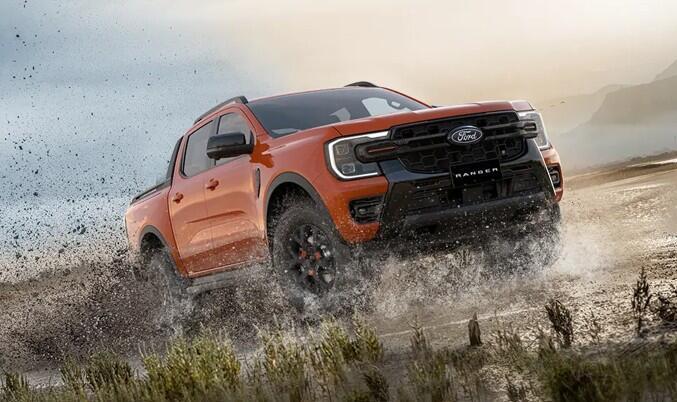
The 2023–2025 Ranger is our leading recommendation for buyers who want a near-new ute without necessarily paying the full price of the newest model.
Why begin with 2023 rather than 2022? The 2022 launch year introduced the new generation, but a later-build vehicle may benefit from factory refinements, dealership updates and fewer early-production uncertainties. That does not make every 2022 Ranger undesirable. It simply gives 2023-onward examples a slight advantage when prices are similar.
This content may interest you! Ford Ranger Years to Avoid in New Zealand: A Used-Buyer’s Guide
Why These Years Make Sense
The new-generation Ranger feels more like a modern SUV from the driver’s seat. Its cabin design is more polished, its displays are larger and its storage solutions are better thought out.
Depending on the variant, buyers can find:
- 2.0-litre single-turbo diesel power
- 2.0-litre Bi-Turbo diesel power
- 3.0-litre V6 turbo-diesel power
- Advanced four-wheel-drive systems
- Large central touchscreens
- Modern towing assistance
- Improved driver-assistance technology
The generation also retained serious ute capability. Ford lists up to 3,500kg of braked towing capacity on many suitable Ranger configurations, although real-world legal capacity depends on the exact variant, tow equipment, payload and combined mass limits.
Which 2023–2025 Ranger Should We Choose?
For everyday use, the XLT is often enough. It combines practical equipment with a less extravagant price than a Wildtrak or Platinum.
The Sport can make sense for buyers who want stronger styling and access to the V6 in relevant model years.
The Wildtrak suits drivers who genuinely value its additional comfort, appearance and lifestyle equipment. We should not buy it merely because it looks impressive in the driveway.
The Raptor is a specialist performance model. Ford New Zealand lists its twin-turbo 3.0-litre petrol V6 at 292kW and 583Nm, with a lower 2,500kg towing rating than many diesel Rangers. It is exciting, but it is not automatically the smartest choice for towing a large caravan.
Potential Disadvantages
New-generation Rangers remain relatively expensive on the used market. Their additional technology also means more electronic systems to inspect.
We should test:
- Touchscreen operation
- Cameras and parking sensors
- Driver-assistance warnings
- Keyless entry
- Drive-mode controls
- Four-wheel-drive selection
- Trailer-related functions
- Digital instrument displays
A low odometer figure does not guarantee trouble-free ownership if the ute has spent its life towing near maximum capacity or working in mud, forestry and saltwater environments.
2019–2021 Ford Ranger: The Used-Market Sweet Spot
For many New Zealand buyers, this is the most attractive period.
By 2019, the T6 Ranger was a mature product. It had benefited from years of development and received updated technology, styling and engine options. Buyers could still choose the familiar 3.2-litre five-cylinder diesel, while the 2.0-litre Bi-Turbo and ten-speed automatic became increasingly prominent.
Ford’s 2019 New Zealand specification material shows the 3.2-litre engine remained available in the Ranger range during this period.
Why We Like 2019–2021 Rangers
These vehicles strike a useful balance:
- Modern enough for daily commuting
- Comfortable enough for family travel
- Capable enough for towing and rural work
- Old enough to have depreciated noticeably
- Common enough for parts and workshop familiarity
A clean 2020 Ranger may feel vastly more contemporary than an early T6 model without carrying the price of a next-generation example.
3.2-Litre or 2.0-Litre Bi-Turbo?
This is one of the biggest decisions.
The 3.2-litre five-cylinder diesel feels muscular and relatively relaxed. Many buyers like its character and established reputation. It can be an appealing choice for towing, long-distance driving and buyers who prefer a less highly stressed engine layout.
The 2.0-litre Bi-Turbo diesel offers strong outputs from a smaller engine and is paired with a ten-speed automatic in many applications. For example, Ford’s 2021.75 FX4 Max documentation lists the 2.0-litre engine at 157kW and 500Nm.
However, we should never choose solely from a specification sheet. The 2.0-litre powertrain is more complex, and the ten-speed transmission should operate smoothly during both gentle and firm acceleration.
Who Should Buy a 2019–2021 Ranger?
These years suit:
- Families wanting one vehicle for work and weekends
- Caravan and boat owners
- Tradies seeking a presentable dual-purpose ute
- Rural buyers needing comfortable long-distance transport
- Drivers wanting modern safety without near-new pricing
A complete service history is essential. A heavily accessorised Ranger with missing invoices is less appealing than a standard-looking example with meticulous records.
2015–2018 Ford Ranger: Best Affordable All-Rounder
The 2015–2018 period can deliver excellent value, especially for buyers who like the 3.2-litre engine but cannot justify later-model pricing.
The Ranger received a substantial update around the middle of the decade, improving its styling, interior and technology. These vehicles still look reasonably modern and remain common on New Zealand roads.
The Case for Buying One
A good 2015–2018 Ranger offers:
This content may interest you!Will Ford Ranger Wheels Fit Toyota Hilux? Complete Fitment Guide- Strong towing ability in appropriate configurations
- Broad parts availability
- Familiarity among independent diesel specialists
- A spacious double-cab interior
- Competitive used prices
- Plenty of trim and body-style choices
The 3.2-litre XLT is a particularly attractive proposition. It feels purposeful rather than flashy, and many examples include the features most buyers actually use.
Where Buyers Get Caught Out
These Rangers are now old enough for neglect to become visible. A seven- or ten-year-old ute may have experienced:
- Repeated heavy towing
- Commercial fleet use
- Farm use
- Off-road recovery
- Beach launching
- Deferred servicing
- Poorly installed accessories
- Engine tuning or emissions modifications
We need to look beyond shiny paint. Fresh tyres and polished trim can act like a crisp shirt at a job interview—they create a good first impression but tell us little about what is happening underneath.
Best Version to Seek
A privately owned, standard-specification 2016–2018 XLT 3.2 4x4 with consistent maintenance can be a sensible purchase.
We would generally prefer one with:
- Original engine calibration
- No unexplained warning lights
- Smooth automatic shifts
- Clean cooling system
- Dry engine and transmission
- No serious underbody damage
- Evidence of transmission and differential maintenance
- Verified recall completion
2012–2014 Ford Ranger: Good Only When Condition Is Exceptional
Early T6 Rangers brought major improvements, but age and usage now matter more than the model-year badge.
These vehicles may appear tempting because they offer the visual presence of a modern ute at a relatively accessible price. Yet cheap purchase prices can hide expensive mechanical needs.
Why They Can Still Be Worth Buying
A carefully maintained early T6 Ranger may still provide:
- Strong diesel torque
- Practical towing ability
- A roomy cabin
- Good off-road geometry
- Straightforward trim levels
- Lower entry cost
The key phrase is carefully maintained.
A 2013 Ranger with 230,000 kilometres and a thick folder of invoices may be safer than a 2015 model with 150,000 kilometres, no records and an suspiciously clean engine bay.
At this stage of life, inspect for:
- Cooling-system deterioration
- Injector or fuel-system issues
- Turbocharger wear
- Oil leaks
- Worn suspension bushes
- Driveshaft vibration
- Differential noise
- Automatic transmission hesitation
- Corrosion underneath
- Failing air-conditioning
- Ageing electrical accessories
We should budget for maintenance even when the ute passes inspection. Buying an older diesel with our last dollar is a risky game.
Pre-2012 Ford Ranger: Best as a Simple Work Ute
Older Rangers have their own charm. They are narrower, less electronically complicated and often easier to manoeuvre around farms or building sites.
However, they should not be confused with newer Rangers in refinement, safety or comfort.
Reasons to Consider One
A pre-2012 Ranger may be appropriate when:
- Our budget is limited
- The vehicle will perform light local work
- We value mechanical simplicity
- We have access to affordable repairs
- Cabin technology is unimportant
- We do not need modern driver-assistance features
Reasons to Walk Away
Avoid examples with severe corrosion, difficult cold starting, overheating history, obvious chassis repairs or uncertain registration history.
Older utes can become restoration projects without announcing themselves. One month it is a wheel bearing, the next month a clutch, then injectors arrive like uninvited guests.
Ford Ranger Years That Require Extra Caution
It would be misleading to declare one year universally “bad.” Problems often relate to specific engines, production periods, maintenance patterns or vehicle use.
Still, several groups deserve more scrutiny.
Early T6 Models With Poor Histories
The 2012–2014 Rangers are not automatically unreliable, but they are now old enough for neglect and hard work to accumulate.
A cheap early T6 should undergo a comprehensive inspection by a workshop that understands modern diesel utes.
Early Examples of a New Powertrain
Whenever a new engine, transmission or generation appears, the earliest examples may carry more uncertainty than later production.
For that reason, some cautious buyers may prefer:
- A late 3.2-litre T6 over an early 2.0-litre Bi-Turbo
- A 2023 next-generation Ranger over an early-build 2022 example
This is a risk-management preference, not proof that every launch-year vehicle is defective.
This content may interest you!Will Ford Ranger Wheels Fit Isuzu D-Max? Complete Fitment GuideModified Rangers of Any Year
Modification can transform a useful Ranger into a brilliant off-road machine—or into somebody else’s unfinished engineering experiment.
Be cautious with:
- Aggressive engine tunes
- Emissions-system deletions
- Oversized tyres
- Extreme suspension lifts
- Non-certified structural changes
- Poorly wired light bars
- Aftermarket alarms
- Cheap throttle controllers
- Unknown transmission software
- Heavy steel accessories
Modifications increase load on steering, suspension, driveline and braking components. They can also affect insurance and legal compliance.
Best Ranger Year by Buyer Type
The best year depends on what we expect the ute to do.
Best for Families: 2023–2025
The newer cabin, improved technology and stronger safety package make the next-generation Ranger the easiest to live with.
A 2023 or 2024 XLT provides most of the everyday features a family needs without moving into luxury-ute pricing.
Best for Value: 2019–2021
This period offers the clearest compromise between affordability and modernity.
We receive a mature T6 platform, broad engine choice and good market availability.
Best for Towing: 2019–2021 3.2 or Newer V6 Diesel
A properly maintained 3.2-litre Ranger remains appealing for towing because of its relaxed five-cylinder character.
The newer 3.0-litre V6 turbo-diesel provides effortless performance, although purchase and maintenance costs may be higher.
Always confirm the exact vehicle’s towing, gross vehicle mass and gross combined mass limits. Maximum advertised towing capacity does not mean we can simultaneously load the tray, fill every seat and tow at the limit.
Best for Tradespeople: 2018–2021 XL or XLT
The XL usually delivers the best work-focused value. The XLT adds comfort and presentation without becoming excessively decorative.
For commercial use, a clean ex-fleet vehicle with complete maintenance can be preferable to a privately owned ute that has been modified and poorly serviced.
Best Budget Choice: 2015–2018 3.2
This is where we would look when the budget cannot stretch to a late T6.
We should reserve part of the purchase budget for preventive maintenance rather than spending everything on a higher trim level.
Best for Off-Road Recreation: Ranger Raptor
The Raptor offers specialised suspension and impressive high-speed off-road ability. Its 2,500kg towing capacity, however, is lower than the 3,500kg figure associated with many work-oriented Ranger variants.
It is the exciting choice, not always the practical one.
Which Ranger Engine Is Best to Buy?
Engine choice can be more important than year.
2.2-Litre Diesel
The 2.2-litre diesel makes sense for buyers who prioritise purchase price and moderate running costs over outright power.
It may suit light commercial work, commuting and occasional towing. Loaded performance is less effortless than the larger engines.
3.2-Litre Five-Cylinder Diesel
The 3.2 is the traditional favourite. It produces a distinctive sound, strong low-speed pull and a reassuringly substantial feel.
Its weaknesses are weight, fuel consumption and the possibility of expensive diesel-system or cooling-related repairs when maintenance has been poor.
2.0-Litre Single-Turbo Diesel
The single-turbo 2.0-litre engine is the sensible modern workhorse. Ford used it in entry-level next-generation Ranger configurations, paired with automatic transmissions depending on variant.
It lacks the headline outputs of the Bi-Turbo or V6 but may be entirely adequate for buyers who rarely tow heavy loads.
This content may interest you! Ford Ranger Towing Tips for New Zealand Drivers
2.0-Litre Bi-Turbo Diesel
This engine combines strong output with relatively small displacement. It works well when healthy and suits buyers wanting performance without stepping up to a V6.
Because it is a more complex system, maintenance quality matters. Listen for abnormal noises, inspect for leaks and pay close attention to the ten-speed transmission during the test drive.
3.0-Litre V6 Turbo-Diesel
The V6 is the premium towing and touring choice in the next-generation range. It feels muscular and relaxed, especially on hills or when carrying weight.
Yet bigger is not always better. Purchase price, fuel use and servicing costs should be considered. A lightly loaded urban Ranger does not need a V6 simply to visit the supermarket.
3.0-Litre Petrol Raptor Engine
This twin-turbo petrol V6 is about speed and off-road performance rather than diesel economy.
It suits enthusiasts who understand what they are buying. It is unlikely to be the economical choice for high annual kilometres.
What to Inspect Before Buying a Used Ford Ranger
A pre-purchase inspection is not an optional extra. It is part of the purchase price.
Check the Service History
Look for more than stamps. Invoices reveal what was actually replaced and whether maintenance was proactive.
The records should match the odometer and demonstrate regular attention to:
- Engine oil and filters
- Fuel filters
- Transmission servicing
- Differential oils
- Transfer-case fluid
- Brake fluid
- Cooling system
- Timing-system requirements
- Diesel emissions equipment
Inspect the Cooling System
Check the coolant level and condition when the engine is cold. Look for dried residue, damaged hoses, leaks and signs of overheating.
Any unexplained coolant loss deserves investigation.
Test the Transmission Properly
Drive the vehicle from cold where possible.
The transmission should engage without a heavy delay and shift predictably under light, moderate and firm acceleration. Test low-speed manoeuvring, hill starts and reversing.
Check Four-Wheel Drive
Do not accept “I never use it” as proof that it works.
Test the selectable four-wheel-drive system according to the owner’s manual and in a suitable environment. Confirm that warning lights behave normally.
Look Underneath
Underbody inspection can reveal the Ranger’s real biography.
Watch for:
- Deep dents
- Scraped differentials
- Bent protection plates
- Oil contamination
- Rust
- Sand packed into cavities
- Fresh paint over repairs
- Damaged chassis components
A ute used for launching boats may have hidden salt exposure.
Verify the Vehicle’s New Zealand History
Check for money owing, registration issues, recorded damage, odometer inconsistencies and theft status using a reputable New Zealand vehicle-history service.
CarJam, for example, offers information relating to ownership history, security interests, plate changes and imported-vehicle history, depending on the report selected.
Waka Kotahi also maintains resources relating to damaged vehicles and warns that improperly repaired structural, fire, flood or water damage may compromise vehicle safety.
Check Outstanding Recalls
A recall does not automatically make a vehicle unsafe to buy. An incomplete recall does mean we need to arrange the remedy.
New Zealand’s official Vehicle Safety Recalls database was developed by Waka Kotahi with industry and government cooperation. The database includes Ranger-related campaigns covering specific model years, including some 2017–2019 Ranger and Everest vehicles.
Use the vehicle identification number rather than relying only on its advertised year.
This content may interest you!Ford Ranger Models New Zealand: Complete 2026 Buyer’s GuideHow Many Kilometres Is Too Many for a Used Ranger?
There is no magic odometer limit.
A Ranger with 180,000 kilometres of motorway travel and disciplined servicing may be healthier than one with 90,000 kilometres accumulated on farms, short trips and heavy towing.
As a broad buying strategy:
- Under 80,000km: Attractive, but usually expensive
- 80,000–150,000km: Often the value zone
- 150,000–220,000km: History and inspection become critical
- Over 220,000km: Buy primarily on condition and price
High kilometres should reduce the price enough to leave room for repairs.
Should We Buy a Ranger From a Dealer or Privately?
A dealer purchase may offer consumer-law protections and easier finance, although the asking price can be higher.
A private sale may deliver better value and more direct information about how the ute was used. It also places greater responsibility on us to verify the vehicle.
Regardless of seller type, we should obtain:
- Independent inspection
- Vehicle-history report
- Recall check
- Proof of servicing
- Written sale documentation
- Confirmation that accessories are included
- Two working keys where possible
Is the Newest Ranger Always the Best Ranger?
Not necessarily.
The newest Ranger provides the latest design, but it may also bring:
- Higher depreciation
- Greater insurance costs
- More electronic complexity
- More expensive accessories
- Less long-term reliability data
A well-kept 2020 XLT may be a more intelligent purchase than a neglected 2023 Wildtrak.
Buying used is not about chasing the newest registration year. It is about finding the best combination of age, specification, maintenance and price.
Our Final Ranking of Ford Ranger Years to Buy
Here is our practical New Zealand ranking:
First Place: 2019–2021
These are the best all-round years for most used buyers. They feel modern, provide several engine options and sit in an attractive price range.
Second Place: 2023–2025
Choose these years for modern technology, stronger refinement and near-new ownership. They are excellent but cost considerably more.
Third Place: 2015–2018
A strong choice for value-focused buyers, especially when paired with a documented 3.2-litre powertrain.
Fourth Place: 2012–2014
Buy only after a thorough inspection. Condition now matters far more than trim level.
Fifth Place: Pre-2012
Potentially useful as an inexpensive work ute, but less suitable for buyers expecting modern comfort and safety.
Conclusion: Which Ford Ranger Should We Buy in New Zealand?
For most New Zealand used-ute buyers, the 2019–2021 Ford Ranger represents the strongest balance of price, capability and everyday comfort.
Those with more money should consider a 2023–2025 next-generation Ranger, particularly an XLT or Sport with a complete dealer history. Buyers on a tighter budget can still find real value in a 2015–2018 3.2-litre Ranger, provided it has not been abused, heavily modified or poorly serviced.
The smartest rule is simple: buy the history, not merely the year.
A Ranger is built to work, and many have worked extremely hard. The right one can be a loyal companion across motorways, farms, beaches and gravel roads. The wrong one can turn every drive into a new dashboard warning.
Take our time, inspect everything and leave enough money in the budget for maintenance. That approach matters more than any badge on the tailgate.
Frequently Asked Questions
1. What is the best used Ford Ranger year in New Zealand?
The 2019–2021 Ford Ranger is the best overall choice for many buyers because it combines mature T6 engineering, modern equipment and lower prices than the next-generation model. A complete service history remains more important than choosing one exact year.
2. Is a 3.2-litre Ford Ranger worth buying?
Yes. A well-maintained 3.2-litre five-cylinder Ranger can be excellent for towing, touring and general ute duties. Check its cooling system, diesel system, transmission, maintenance history and evidence of heavy commercial use before buying.
This content may interest you!What Ford Ranger Engine Is Best in New Zealand?3. Should we buy a 2.0-litre Bi-Turbo Ranger?
The 2.0-litre Bi-Turbo offers strong performance and works well in many Rangers. Because it uses a more complex turbo arrangement and is commonly paired with a ten-speed automatic, we should insist on complete servicing and a careful road test.
4. Is a 2022 Ford Ranger a good buy?
A 2022 Ranger can be a good purchase, particularly when it has a complete Ford service history and all updates have been performed. As the launch year of the next-generation model in New Zealand, cautious buyers may compare it with a 2023 example before deciding.
5. How long can a Ford Ranger last in New Zealand?
A properly maintained Ranger can cover high kilometres, but lifespan depends on servicing, towing, terrain, corrosion exposure and previous repairs. Rather than relying on a fixed kilometre figure, commission an independent inspection and assess each vehicle individually.
Leave a Reply