
Kia Cerato Models: Complete Generations and Buyer’s Guide
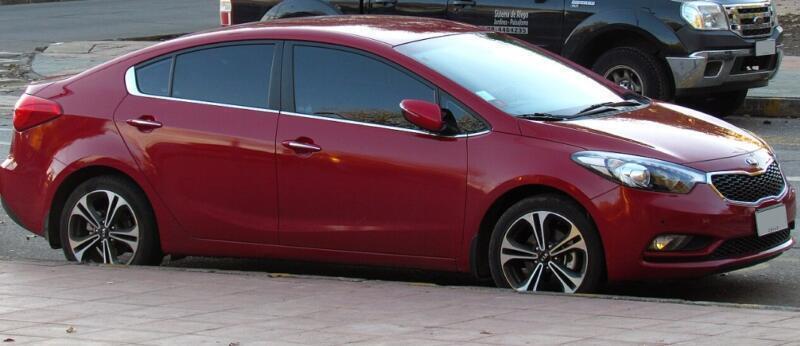
The Kia Cerato models story is more complicated than it first appears. Walk into a used-car dealership in Australia and you may see a Cerato. Search for essentially the same Kia compact car in the United States and you will probably find a Forte. Look through Korean-market listings and names such as K3 enter the picture. Go further back and the Spectra badge appears in certain countries.
Confusing? A little.
But once we separate the generations from the regional names, the Cerato family becomes much easier to understand.
Kia introduced the original Cerato in 2003 as a global C-segment compact. Since then, the model has evolved through four main generations, moving from an inexpensive alternative to established Japanese compact cars into a genuinely competitive sedan and hatchback with strong equipment levels, modern safety technology and, in selected versions, surprisingly entertaining performance. Kia itself describes the original Cerato as a global C-segment model developed with input from its European design operation.
In this guide, we're going to explore the Kia Cerato generations, body styles, engines, trims and regional names so buyers can quickly work out which Cerato may suit them best.
- Kia Cerato Models at a Glance
- Why Does the Kia Cerato Have So Many Names?
- First-Generation Kia Cerato (LD): 2003–2008
- Second-Generation Kia Cerato (TD): 2008–2013
- Third-Generation Kia Cerato (YD): 2013–2018
- 2016–2018 Cerato Facelift
- Fourth-Generation Kia Cerato (BD): 2018–2024/2025
- Kia Cerato S
- Kia Cerato Sport
- Kia Cerato Sport+
- Kia Cerato GT
- Kia Cerato LX, EX and Limited
- Kia Cerato SX
- Kia Cerato Engine Options
- Cerato Manual vs Automatic
- Which Kia Cerato Generation Is Best?
- Which Kia Cerato Body Style Is Best?
- What Replaced the Kia Cerato?
- Cerato vs K4: Is the K4 a New Cerato?
- What to Check Before Buying a Used Kia Cerato
- Are Kia Cerato Models Good Cars?
- Best Kia Cerato Models for Different Buyers
- Kia Cerato Generations: Final Verdict
- Frequently Asked Questions About Kia Cerato Models
Kia Cerato Models at a Glance
Before diving into each generation, here's the easiest way to understand the family.
| Generation | Approx. Years | Common Codes | Typical Body Styles | Related Names |
|---|---|---|---|---|
| First generation | 2003–2008 | LD | Sedan, hatchback | Spectra in some markets |
| Second generation | 2008–2013 | TD | Sedan, hatchback, Koup | Forte in North America |
| Third generation | 2013–2018 | YD | Sedan, hatchback, Koup | Forte, K3 |
| Fourth generation | 2018–2024/25* | BD | Sedan, hatchback | Forte, K3 |
| Successor | 2024 onward, depending on market | CL4/K4 | Sedan, hatchback | Kia K4 |
*Exact introduction and discontinuation dates differ by country.
Australia is particularly useful for tracing the lineage because all four Cerato generations were sold there. The Cerato has subsequently been replaced by the Kia K4 as Kia moves toward a more globally consistent alphanumeric naming strategy.
Why Does the Kia Cerato Have So Many Names?
This is the question that trips up more buyers than almost anything else.
The Cerato was never marketed under one universal badge.
Depending on the generation and country, closely related versions have been called:
- Kia Cerato
- Kia Forte
- Kia K3
- Kia Spectra
- Cerato Koup
- Forte Koup
Think of them as cousins who turn up to the same family reunion wearing different name tags.
Kia Cerato vs Kia Forte
The Forte name became particularly important in the United States and Canada. While Australians and many buyers elsewhere knew the car as the Cerato, North American buyers generally knew later generations as the Kia Forte.
Mechanically and structurally, they belong to the same broad compact-car family, although engines, transmissions, suspension tuning, equipment and styling details can vary between countries.
That means a replacement part, reliability report or owner's guide written for a Forte may sometimes be relevant to a Cerato—but buyers should always confirm the exact model year, engine and chassis code rather than assuming everything is interchangeable.
Kia Cerato vs Kia K3
Then there's the K3.
Kia used the K3 name in South Korea, while Cerato and Forte continued elsewhere. The situation became even more confusing because Kia has gradually moved toward global K-number naming.
The Cerato's fourth-generation relative was known as the K3 in Korea, for example, while the Cerato name remained familiar in markets including Australia and New Zealand.
First-Generation Kia Cerato (LD): 2003–2008
The first-generation Cerato is where our story properly begins.
Introduced in 2003, the car was designed as Kia's contender in the globally important compact segment. Kia offered inline four-cylinder petrol and diesel engines depending on country, with displacements spanning roughly 1.5 to 2.0 litres.
Today, the original Cerato looks fairly conservative. That's not necessarily a criticism.
It was created at a time when Kia's strongest argument was value rather than dramatic design. Buyers were meant to look at cars like the Toyota Corolla, Nissan Pulsar/Sentra, Mazda3 or Hyundai Elantra and then notice how much equipment Kia could provide for the money.
First-Generation Cerato Body Styles
The main configurations were:
- Four-door sedan
- Five-door hatchback
Some countries used the Spectra name for closely related variants.
The sedan has a conventional three-box shape, while the hatchback offers the practicality you'd expect from a compact five-door.
First-Generation Cerato Engines
Engine availability varied considerably by market.
Common choices included petrol four-cylinder engines around 1.6 and 2.0 litres, while diesel versions were offered in selected regions.
These engines generally focused on affordability and straightforward everyday performance rather than speed.
Should You Buy a First-Generation Cerato Today?
Possibly—but condition matters far more than specification.
These cars are now old enough that mileage alone tells only half the story. We'd care more about service history, rust, cooling-system condition, oil leaks, suspension wear and transmission behaviour.
A well-kept example can still work as inexpensive basic transportation.
A neglected bargain, however, can behave like a cheap printer: inexpensive to acquire, then oddly determined to take your money one small problem at a time.
Second-Generation Kia Cerato (TD): 2008–2013
The second generation marked a major step forward.
This was the era in which Kia started turning styling into a genuine selling point rather than merely promising low prices.
The TD Cerato featured cleaner proportions and a much stronger visual identity. It helped establish the formula buyers now associate with modern Kia products: attractive design, generous equipment and competitive pricing.
Second-Generation Cerato Sedan
The sedan remained the backbone of the range.
It offered useful cabin space, a sizeable boot and straightforward naturally aspirated petrol engines in many markets.
Australia, for example, received second-generation TD sedan and hatch variants with a 2.0-litre petrol engine producing 115kW in the specifications reported by carsales.
Second-Generation Cerato Hatch
A hatchback broadened the model's appeal.
For buyers regularly carrying bulky items, the hatch was the smarter option. Fold the rear seats and the Cerato became considerably more versatile than its conservative sedan proportions might suggest.
Cerato Koup
Then Kia did something more interesting.
It created the Cerato Koup, a two-door coupe.
No, it wasn't a rear-wheel-drive sports car. But that wasn't really the point.
The Koup gave younger buyers a compact Kia that actually looked desirable, not simply sensible. It helped change perceptions of the brand.
Who Should Consider the TD Cerato?
The second generation is now an affordable used-car option in many countries.
We'd consider one primarily if:
- The budget is limited.
- Maintenance history is documented.
- You want uncomplicated transport.
- Modern driver-assistance technology isn't essential.
- You find a particularly clean, low-owner example.
Among older Ceratos, the TD can represent good value, but age-related wear should be expected.
Third-Generation Kia Cerato (YD): 2013–2018
If the TD proved Kia was improving, the YD Cerato proved the company was becoming genuinely competitive.
Introduced for the 2013 era in many markets, this generation looked more polished inside and out. The body became sleeker, interior materials improved and the range of available comfort technology expanded.
For many used buyers, this generation represents an interesting middle ground: modern enough to feel contemporary, yet old enough to be considerably cheaper than late-model examples.
Third-Generation Cerato Sedan
The YD sedan adopted a smoother, more aerodynamic appearance.
Inside, Kia continued pushing its value argument with available features that weren't always expected in mainstream compact cars at the time.
Depending on market and trim, equipment could include items such as:
- Touchscreen infotainment
- Reversing camera
- Parking sensors
- Keyless entry/start
- Leather upholstery
- Heated seats
- Ventilated driver's seat
- Sunroof
- Blind-spot monitoring
Not every market received every feature, of course.
Third-Generation Cerato Hatch
The five-door version remained one of the most practical choices.
If you're deciding between the sedan and hatch, we'd normally recommend the hatch for family use or buyers who regularly carry luggage, bicycles, boxes or pets.
The sedan, meanwhile, may appeal to drivers who prefer a larger separated luggage compartment and more traditional appearance.
Third-Generation Cerato Koup
The coupe survived into this generation too.
Better still, certain markets received a turbocharged Koup.
New Zealand, for example, launched the Cerato Koup in 2013, and Kia NZ identifies it as the first turbocharged Kia sold in that market.
That's significant because it showed Kia was beginning to experiment with performance as part of its mainstream brand identity.
Is the Cerato Koup a Sports Car?
Not really in the traditional sense.
Think sporty compact rather than miniature Porsche.
Still, the turbo versions provided much more personality than an ordinary economy sedan and remain interesting used-car choices for drivers wanting something a little unusual.
2016–2018 Cerato Facelift
Mid-generation updates matter when shopping used, and the YD Cerato received a notable facelift.
In New Zealand, for example, the updated 2016 model introduced revised front styling, additional safety equipment and a 2.0-litre Nu petrol engine across the range. Kia's NZ lineup at the time consisted of LX, EX and Limited grades.
This illustrates an important Cerato-buying rule:
Never judge specification from the model year alone.
A 2017 Australian Cerato, New Zealand Cerato and Middle Eastern Cerato can have different engines and equipment.
Always inspect the actual vehicle specification.
Fourth-Generation Kia Cerato (BD): 2018–2024/2025
For many buyers, the fourth-generation Cerato is the sweet spot.
It combines relatively modern styling and technology with used-car prices that can be significantly lower than a brand-new compact sedan.
The generation debuted around 2018 internationally, reaching markets such as New Zealand as a 2019 model.
Kia New Zealand noted that its 2019 Cerato sedan and hatch range included autonomous emergency braking and lane-keep assistance across the lineup and achieved a five-star ANCAP rating under the applicable 2019 testing standards.
Fourth-Generation Cerato Sedan
The sedan took clear design inspiration from larger fastback-style Kia products.
It grew longer and adopted a more mature profile.
This matters because the Cerato isn't particularly tiny inside. One of its strongest characteristics has traditionally been packaging: it occupies the compact-car class externally while providing generous passenger and luggage space for the category.
Fourth-Generation Cerato Hatch
The hatch remained especially important in Australia and New Zealand.
For everyday usability, we'd argue the hatch is one of the strongest versions of the entire Cerato family.
It mixes easy urban dimensions with a large cargo opening and folding rear seats, making it useful for people who want SUV-like practicality without actually buying an SUV.
Kia Cerato S
Trim names vary by country, but the Cerato S became the mainstream entry point in Australia during the BD generation.
This is generally the version for buyers who prioritize value over visual extras.
You typically give up some luxury equipment, larger wheels and cosmetic enhancements compared with upper trims, but the fundamental space and practicality remain.
For second-hand shoppers, that's important.
A clean Cerato S with perfect maintenance can be a far better buy than a poorly treated top-specification model.
Kia Cerato Sport
The Sport sits higher in the range in markets such as Australia.
Despite the badge, buyers shouldn't automatically assume it receives a much more powerful engine.
In the Australian facelifted range described by carsales, the S, Sport and Sport+ retained the naturally aspirated 2.0-litre four-cylinder, while the GT received the turbocharged engine.
The Sport is therefore better understood as a styling/equipment upgrade rather than a true high-performance model.
Kia Cerato Sport+
Move another step upward and we reach the Sport+.
This sort of mid-to-upper trim is often where we find the best balance for used buyers.
Why?
Because expensive options on a new car can become relatively cheap features on a used one.
Items such as better interior trim, additional driver assistance or convenience technology may add significant value without adding thousands to the second-hand price.
Kia Cerato GT
Now things get interesting.
The Cerato GT is the enthusiast-oriented version.
In the facelift-era Australian specification, the GT retained a 1.6-litre turbocharged petrol engine paired with a seven-speed dual-clutch transmission, whereas mainstream versions used the 2.0-litre engine and conventional six-speed automatic.
The GT isn't simply an ordinary Cerato wearing bigger wheels.
It offers meaningfully stronger performance and a sportier driving character.
Who Should Buy the Cerato GT?
The GT makes sense if you want:
- Stronger acceleration
- Sportier suspension tuning
- More distinctive styling
- Higher equipment levels
- A compact performance-oriented daily driver
However, the regular 2.0-litre Cerato may make more sense for someone who cares mainly about simplicity, commuting and long-term running costs.
That's the fascinating thing about the Cerato lineup.
The cheapest and most expensive versions often appeal to completely different buyers.
Kia Cerato LX, EX and Limited
Australia's S/Sport/Sport+/GT structure is not universal.
New Zealand and several other markets have historically used names such as LX, EX and Limited.
For example, Kia New Zealand's facelifted 2016 range consisted of LX, EX and Limited models, with progressively more safety and luxury equipment.
Later lineups changed again.
This is why searching for "highest Kia Cerato model" without specifying a country can generate contradictory answers.
Both answers may be correct—they're simply talking about different markets.
Kia Cerato SX
New Zealand also offered the SX badge during the fourth-generation era.
In 2020, Kia NZ introduced a Cerato SX five-door hatch positioned as a particularly value-focused variant.
Again, the lesson is simple: trim hierarchy is regional.
Don't assume an SX, EX or Sport designation means exactly the same thing worldwide.
Kia Cerato Engine Options
One of the hardest things to summarize globally is the engine lineup.
Ceratos have been sold with numerous petrol and diesel engines across different generations and markets.
Broadly, buyers may encounter:
| Engine Type | Typical Role |
| 1.6L naturally aspirated petrol | Economy-focused versions |
| 1.8L petrol | Selected markets/generations |
| 2.0L naturally aspirated petrol | Common mainstream option |
| 1.6L turbo petrol | Performance-oriented models |
| Diesel engines | Selected early/global markets |
The original Cerato itself was offered with gasoline and diesel inline-four engines spanning approximately 1.5 to 2.0 litres.
Which Cerato Engine Is Best?
For most used buyers, the naturally aspirated 2.0-litre petrol is arguably the easiest recommendation where available.
It's not the quickest option, but it suits the Cerato's basic mission well: dependable, uncomplicated everyday transportation.
Drivers who prioritize performance should look at the 1.6 turbo GT or turbo Koup models.
Just remember that more performance usually means more complexity.
Cerato Manual vs Automatic
Manual transmissions were offered in various earlier generations, although availability diminished as the model evolved.
Automatic transmissions became increasingly dominant.
By the facelifted Australian 2021 range, the manual had been dropped: mainstream versions used a six-speed automatic, while the GT retained its seven-speed dual-clutch gearbox.
For relaxed daily driving, the conventional automatic is probably the easiest ownership proposition.
Enthusiasts might prefer a manual earlier model or turbocharged DCT version depending on availability.
Which Kia Cerato Generation Is Best?
If budget allows, we'd place the fourth-generation BD model at the top for most buyers.
It feels substantially more modern, and newer examples can offer advanced safety technology that simply didn't exist on early Ceratos.
Our rough buyer hierarchy would look like this:
Fourth generation (BD): best all-round choice.
Third generation (YD): excellent value if condition is good.
Second generation (TD): sensible budget option.
First generation (LD): mainly for buyers prioritizing extremely low purchase price.
Of course, a generation doesn't tell us whether an individual car is good.
A beautifully maintained YD can be a much smarter purchase than a neglected BD.
Which Kia Cerato Body Style Is Best?
For pure practicality, the hatch wins.
For conventional styling and potentially greater availability in some countries, the sedan makes excellent sense.
For personality, the Koup wins.
Here's how we'd break it down:
| Buyer | Best Cerato Style |
| Families | Hatch |
| Commuters | Sedan or hatch |
| Budget buyers | Whichever has best history |
| Enthusiasts | GT or turbo Koup |
| Buyers carrying bulky cargo | Hatch |
| Style-focused used buyers | Koup |
What Replaced the Kia Cerato?
The Cerato name is now disappearing from several important markets as Kia reorganizes its passenger-car naming strategy.
The key successor is the Kia K4.
Australia had sold all four Cerato generations before Kia moved toward the K4 as the replacement.
In North America, meanwhile, the K4 effectively takes over the compact-sedan position previously occupied by the Forte. Kia's current U.S. lineup includes the K4 sedan and K4 Hatchback.
So when someone asks whether there is a fifth-generation Cerato, the answer depends on how strictly we define the name.
From a product-line perspective, the lineage continues.
From a badge perspective, Kia is moving on.
Cerato vs K4: Is the K4 a New Cerato?
Conceptually, yes.
Officially, it's a K4.
Think of it like a restaurant changing its name while keeping roughly the same position in town. The new place may look different, offer a revised menu and attract new customers, but it occupies the role familiar patrons recognize.
The K4 continues Kia's compact passenger-car line while adopting the brand's newer naming language and much more contemporary design.
Current U.S. K4 trims include LX, LXS, EX, GT-Line and GT-Line Turbo, illustrating how far Kia's compact offering has evolved from the simple early Cerato.
What to Check Before Buying a Used Kia Cerato
Generation matters, but history matters more.
Before buying any used Cerato, we would examine:
- Service history: Look for consistent scheduled maintenance rather than a mysterious blank booklet.
- Engine behaviour: Listen for unusual knocking, rattling or excessive ticking, especially on a cold start.
- Transmission operation: Changes should be smooth and predictable.
- Cooling system: Check coolant condition and signs of past overheating.
- Suspension: Listen for clunks over rough roads.
- Steering: Make sure the car tracks normally and doesn't produce unexplained noises.
- Tyres: Uneven wear can hint at alignment or suspension issues.
- Electronics: Test cameras, sensors, infotainment, windows and air conditioning.
- Accident repairs: Inspect panel gaps, paint consistency and structural areas.
- VIN and recall history: Check outstanding campaigns using the appropriate official service for your country.
A pre-purchase inspection remains worthwhile, particularly on turbocharged or high-mileage examples.
Are Kia Cerato Models Good Cars?
Generally, the Cerato earned its popularity by doing ordinary things well.
It's roomy.
It's usually well equipped.
Many versions are mechanically straightforward.
And used prices have historically made it attractive beside equivalent Corollas, Civics and Mazda3s.
The fourth generation pushed the formula further with much more sophisticated safety technology. When the 2019 Cerato launched in New Zealand, for example, Kia highlighted standard autonomous emergency braking and lane-keeping assistance across sedan and hatch variants.
That's a huge leap from the original 2003 car.
Best Kia Cerato Models for Different Buyers
If we were narrowing down the range today, we'd approach it like this.
Best overall used Cerato: Fourth-generation 2.0-litre model with strong service history.
Best budget choice: Well-maintained third-generation YD.
Best sporty option: Fourth-generation Cerato GT.
Most interesting older model: Turbo Cerato Koup.
Best practical body style: Cerato hatchback.
Best choice for simplicity: Naturally aspirated petrol model with conventional automatic transmission.
The crucial phrase in nearly every recommendation is well maintained.
Bad maintenance can turn the best trim into the worst purchase.
Kia Cerato Generations: Final Verdict
The Cerato's evolution tells us almost as much about Kia as it does about one compact car.
The first-generation Cerato was fundamentally a value proposition. It gave buyers affordable transportation and helped Kia strengthen its global presence.
The second generation brought much stronger styling and introduced the memorable Koup.
The third generation became more polished, more sophisticated and, in certain turbo versions, genuinely entertaining.
Then the fourth-generation Cerato matured into a spacious, technologically competitive compact with modern safety equipment and a proper performance derivative in the GT.
Now the story moves toward the Kia K4, continuing the same basic mission under a new name.
For buyers, the fourth-generation BD Cerato will usually be our preferred starting point if the budget permits. The YD generation remains compelling for value-conscious shoppers, while older TD models can still make sense when condition and maintenance history are exceptional.
Most importantly, remember that Kia Cerato models differ substantially by country. A trim, engine or feature offered in Australia may not match one sold in New Zealand, South Africa, the Middle East or Latin America, while the North American equivalent may carry the Forte badge instead.
So don't buy a badge.
Buy the right generation, engine, condition and ownership history.
That's how we find the Cerato worth keeping.
Frequently Asked Questions About Kia Cerato Models
1. How many generations of Kia Cerato are there?
There are four principal generations sold under the Cerato name in major markets such as Australia, starting with the LD generation in the 2000s and ending with the fourth-generation BD. Kia is now transitioning this compact-car lineage toward the K4 name in several markets. Australia, for example, received all four generations before the Cerato's replacement by the K4.
2. Are Kia Cerato and Kia Forte the same car?
They are closely related versions of Kia's global compact-car family. Forte was used prominently in North America, while Cerato appeared in markets including Australia and New Zealand. Engines, transmissions, trims and equipment can differ, so the names shouldn't automatically be treated as identical specifications.
3. Which Kia Cerato model is the best?
For most used-car buyers, we'd choose a fourth-generation BD Cerato because it combines modern safety, good interior space and relatively recent technology. Buyers wanting stronger performance should investigate the Cerato GT, while value hunters may prefer a well-maintained third-generation YD.
4. What is the difference between Cerato Sport and Cerato GT?
In markets such as Australia, Sport is primarily an equipment and styling grade, whereas GT is the genuinely performance-oriented model. In the facelifted fourth-generation Australian lineup, S, Sport and Sport+ models used a naturally aspirated 2.0-litre engine while the GT used a 1.6-litre turbo engine and seven-speed dual-clutch transmission.
5. Did Kia discontinue the Cerato?
The Cerato name has been phased out or replaced in important markets as Kia adopts newer K-series naming. The K4 now occupies the compact-car position in markets including the United States, where Kia currently offers K4 sedan and hatchback variants.
This content may interest you! Is Kia Cerato Reliable? A Complete Reliability Guide
Leave a Reply