
Mitsubishi Triton Tyre Size: Complete Buyer’s Guide
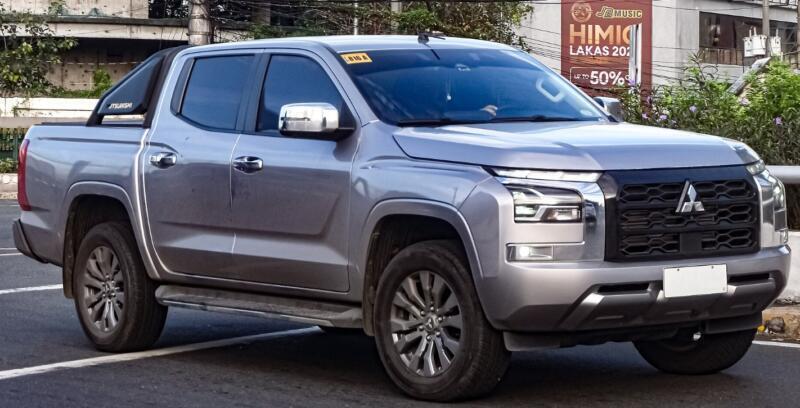
Choosing the correct Mitsubishi Triton tyre size sounds simple until we start comparing generations, cab styles, trim levels, wheel diameters, and regional specifications. One Triton may leave the factory on narrow 16-inch commercial tyres, while another rolls out on wide 18-inch alloys. Both are genuine factory configurations, yet they serve very different drivers.
That is why buying tyres by vehicle name alone can lead us down the wrong track.
The Mitsubishi Triton—also sold in various markets as the Mitsubishi L200, Strada, Forte, Colt, or Mighty Max—has evolved from a basic workhorse into a sophisticated dual-cab ute. Across its generations, it has worn everything from compact commercial tyres to modern all-terrain rubber designed for towing, touring, and off-road driving.
In this guide, we will explore the common tyre sizes used across all Mitsubishi Triton generations, explain how to read tyre markings, compare replacement options, and help buyers avoid expensive fitment mistakes.
Because tyre specifications differ by market, model year, body style, payload rating, and trim, we should always treat a size chart as a starting point. The tyre placard fitted to the vehicle remains the most reliable reference for an individual Triton.
- Quick Mitsubishi Triton Tyre Size Chart
- Why the Correct Triton Tyre Size Matters
- How to Find Your Mitsubishi Triton Tyre Size
- Understanding Mitsubishi Triton Tyre Markings
- First-Generation Mitsubishi Triton Tyre Sizes
- Second-Generation Mitsubishi Triton Tyre Sizes
- Third-Generation Mitsubishi Triton Tyre Sizes
- Fourth-Generation ML and MN Triton Tyre Sizes
- Fifth-Generation MQ and MR Triton Tyre Sizes
- Sixth-Generation MV Mitsubishi Triton Tyre Size
- Can We Fit Larger Tyres to a Mitsubishi Triton?
- Will Bigger Tyres Affect the Triton Speedometer?
- Triton Wheel Offset and Tyre Clearance
- Highway-Terrain Tyres for the Mitsubishi Triton
- All-Terrain Tyres for the Mitsubishi Triton
- Mud-Terrain Tyres for the Mitsubishi Triton
- Best Triton Tyre Size for Towing
- Best Triton Tyre Size for Off-Road Driving
- Can We Mix Tyre Sizes on a Triton?
- Does the Spare Tyre Need to Match?
- When Should Triton Tyres Be Replaced?
- Common Mitsubishi Triton Tyre-Wear Problems
- Should We Replace Two or Four Triton Tyres?
- Tyre Buying Checklist for Every Triton Generation
- Final Thoughts on Mitsubishi Triton Tyre Size
- Frequently Asked Questions
Quick Mitsubishi Triton Tyre Size Chart
The table below summarises commonly encountered factory and replacement sizes. It does not mean that every size listed was available on every vehicle within that generation.
| Triton generation | Approximate years | Common tyre sizes |
|---|---|---|
| First generation | 1978–1986 | 165R14, 185R14, 195R15, 215R15 |
| Second generation | 1986–1996 | 185R14, 195R14, 205R16, 215R15, 235/75R15 |
| Third generation | 1996–2006 | 195R15, 205R16, 215/75R15, 235/75R15, 245/70R16 |
| Fourth generation ML/MN | 2006–2015 | 205R16C, 245/70R16, 245/65R17 |
| Fifth generation MQ/MR | 2015–2023 | 205R16C, 245/70R16, 245/65R17, 265/60R18 |
| Sixth generation MV | 2024 onward | 265/65R17 and market-dependent alternatives |
Recent Australian Mitsubishi brochures illustrate just how much variation can exist within one generation. The fifth-generation range included sizes such as 205R16C, 245/70R16, 245/65R17, and 265/60R18, depending on the model. The newer generation commonly uses 265/65R17 tyres in the Australian range.
Never order from this table without checking the vehicle itself. A previous owner may have changed the wheels, and imported vehicles may carry specifications that differ from locally delivered models.
Why the Correct Triton Tyre Size Matters
A tyre is not simply a rubber ring that happens to fit around a wheel. Its diameter, width, construction, load capacity, and speed rating all influence how the Triton behaves.
Installing the correct tyre size helps preserve:
- Steering response
- Braking performance
- Speedometer accuracy
- Gearbox behaviour
- Fuel economy
- Ride comfort
- Suspension clearance
- Towing stability
- Payload capability
- ABS and stability-control operation
A poorly chosen tyre can rub against the suspension, contact the body at full steering lock, overload the wheel bearings, or reduce the vehicle’s legal load-carrying capacity.
In other words, tyre size is part of the vehicle’s engineering recipe. Changing it carelessly is like swapping ingredients in a cake and hoping it still rises.
How to Find Your Mitsubishi Triton Tyre Size
Before shopping online or calling a tyre retailer, we should collect information from the vehicle.
Check the Driver’s Door Tyre Placard
The tyre placard is usually located around the driver’s door opening. Depending on the model and market, it may be attached to:
- The door pillar
- The door frame
- The edge of the door
- The glove compartment
- The inside of the fuel flap
The placard normally displays the approved tyre size, load specification, wheel information, and recommended cold inflation pressures. Mitsubishi advises owners to use the vehicle’s placard or designated information point when checking recommended pressures.
Read the Existing Tyre Sidewall
Look for a marking such as:
245/70R16 111S
This tells us the tyre currently installed is 245 millimetres wide, has a sidewall height equal to 70% of its width, uses radial construction, and fits a 16-inch wheel.
However, we should not assume the current tyres are correct. Used Tritons sometimes arrive with mismatched wheels, undersized load ratings, or modifications performed by an earlier owner.
Consult the Owner’s Manual
The manual may list approved combinations or explain where the tyre information is located. It is especially useful when identifying spare-wheel requirements and rotation procedures.
Use the VIN and Exact Variant
A Mitsubishi dealer or knowledgeable tyre retailer can use the vehicle identification number to determine its original specification. Be ready to provide:
- Model year
- Generation
- Cab type
- Two-wheel drive or four-wheel drive
- Trim level
- Engine
- Factory wheel diameter
This is much safer than saying, “I need tyres for a Triton.”
Understanding Mitsubishi Triton Tyre Markings
Let us decode 265/60R18 110H, a size commonly associated with higher-spec fifth-generation Tritons.
265: Tyre Width
The first number is the nominal section width in millimetres. In this example, the tyre is approximately 265 mm wide.
A wider tyre may provide a larger contact patch, but wider does not automatically mean better. It can also create more rolling resistance, increase steering weight, and reduce clearance.
60: Aspect Ratio
The second number describes the sidewall height as a percentage of the tyre width.
Here, the sidewall is 60% of 265 mm:
265 × 0.60 = 159 mm
A lower ratio usually produces a shorter, firmer sidewall. A higher ratio gives us more cushioning and often better protection on rough tracks.
R: Radial Construction
The letter R means radial. Nearly all modern passenger and four-wheel-drive tyres use radial construction.
18: Wheel Diameter
The final number in the size code is the wheel diameter in inches. An 18-inch tyre must be fitted to an 18-inch wheel. It cannot be installed on a 17-inch or 16-inch rim.
110: Load Index
The load index indicates the maximum load each tyre can carry at its rated pressure.
This matters enormously on a Triton used for:
- Towing
- Carrying tools
- Supporting a canopy
- Transporting camping equipment
- Holding water tanks
- Carrying a slide-on camper
A tyre may physically fit while still having an inadequate load rating. That makes load index every bit as important as width and diameter.
H: Speed Rating
The speed-rating letter represents the tyre’s tested maximum speed capability under specified conditions.
We should fit a rating that complies with local regulations and is appropriate for the vehicle. Off-road tyres may use a different speed rating from highway-oriented factory tyres, so professional advice is worthwhile.
First-Generation Mitsubishi Triton Tyre Sizes
The first-generation Mitsubishi pickup appeared in the late 1970s and was sold under several names. These early vehicles were relatively small compared with today’s Triton and frequently used narrow 14-inch or 15-inch wheels.
Commonly encountered sizes include:
- 165R14
- 175R14
- 185R14
- 195R15
- 215R15
Exact fitment varies considerably because these vehicles were sold in multiple markets with different engines, axle configurations, and body styles.
Buying Tyres for a Classic Triton
Finding an exact original-size tyre can be difficult. Some older metric sizes now have limited availability, particularly in commercial or period-correct tread patterns.
Owners may consider a modern equivalent, but we should compare:
This content may interest you! Mitsubishi Triton Engine Oil: Complete Selection and Maintenance Guide
- Overall diameter
- Wheel width
- Load rating
- Steering clearance
- Suspension clearance
- Legal modification rules
A classic Triton can look charming on period-correct narrow tyres. Fitting unnecessarily wide rubber may spoil its steering feel and create clearance problems without delivering meaningful benefits.
Do Not Forget Wheel Condition
On a vehicle several decades old, the wheel itself deserves inspection. Rust, cracks, distortion, damaged bead seats, or incorrect aftermarket wheels can undermine even a brand-new tyre.
Second-Generation Mitsubishi Triton Tyre Sizes
The second generation arrived during the 1980s and expanded the Triton’s role as both a commercial vehicle and recreational four-wheel drive.
Common sizes may include:
- 185R14
- 195R14
- 215R15
- 235/75R15
- 205R16
- 225/75R16 on some applications or conversions
Two-wheel-drive work models often used narrower tyres, while four-wheel-drive variants generally received taller and wider options.
Why Two Similar Tritons May Use Different Sizes
Two trucks from the same year might have different tyre requirements because one is a low-riding two-wheel-drive pickup and the other is a high-clearance four-wheel drive.
The differences may include:
- Wheel diameter
- Suspension height
- Brake clearance
- Axle rating
- Tyre construction
- Load capacity
This is why generation alone is not enough to confirm fitment.
Third-Generation Mitsubishi Triton Tyre Sizes
The third generation, sold through the late 1990s and early 2000s, remains popular as an affordable farm, trade, and off-road vehicle.
Frequently encountered sizes include:
- 195R15
- 205R16
- 215/75R15
- 235/75R15
- 245/70R16
Some vehicles now wear sizes that were fitted years after production. Lift kits, replacement wheels, flared guards, and suspension changes are common on older four-wheel-drive Tritons.
Check Modifications Before Reordering
Do not blindly reorder the size already installed. First inspect whether the truck has:
- Raised suspension
- Extended shackles
- Body lift blocks
- Wheel spacers
- Aftermarket control arms
- Non-standard offsets
- Cut or modified guards
A tyre that works on a modified vehicle may not suit an original one. Conversely, returning a modified truck to a factory size could leave the gearing, ground clearance, and appearance different from what the owner expects.
Fourth-Generation ML and MN Triton Tyre Sizes
The fourth-generation Triton introduced the distinctive curved body design many of us immediately recognise. It was sold under ML and MN model designations in markets such as Australia.
Common factory-style sizes include:
- 205R16C
- 245/70R16
- 245/65R17
Base cab-chassis and work-focused variants commonly used narrow commercial tyres. Better-equipped dual-cab models often received wider 16-inch or 17-inch combinations.
205R16C Triton Tyres
The letter C indicates a commercial-type tyre construction. These tyres are designed with load carrying in mind and commonly appear on work-oriented vehicles.
Their advantages can include:
- Strong load capacity
- Durable construction
- Good availability
- Lower replacement cost
- Practicality for fleet use
Their disadvantages may include a firmer ride, less aggressive appearance, and lower levels of wet-road refinement than some premium passenger-style four-wheel-drive tyres.
245/70R16 Triton Tyres
This is one of the most familiar Triton sizes. It offers a useful balance between sidewall height, road comfort, tyre availability, and off-road capability.
It is available in a wide selection of tread types, including:
- Highway terrain
- All terrain
- Rugged terrain
- Mud terrain
For many owners, 245/70R16 is the comfortable pair of boots in the Triton wardrobe: not flashy, but versatile enough for almost everything.
245/65R17 Triton Tyres
Moving to a 17-inch wheel gives the vehicle a slightly more modern appearance while retaining a reasonable sidewall.
This size can suit drivers who want stable road behaviour without moving to the shorter sidewall of an 18-inch package.
Fifth-Generation MQ and MR Triton Tyre Sizes
The fifth generation launched during the mid-2010s and later received a substantial facelift commonly identified as the MR.
Depending on trim and market, common sizes include:
- 205R16C 8PR
- 245/70R16
- 245/65R17
- 265/60R18
Mitsubishi’s archived Australian brochure confirms these four main configurations across the model range, although their load and speed descriptions differ by version.
MQ Triton Tyre Size
MQ work models commonly use 16-inch wheels, while higher trims may use 17-inch alloys.
Typical examples include:
- 205R16C for cab-chassis or entry work variants
- 245/70R16 for selected pickup models
- 245/65R17 for higher-spec variants
MR Triton Tyre Size
The facelifted MR continued to use several established sizes while introducing or expanding 18-inch fitment on premium variants.
The most recognisable premium combination is:
265/60R18
This provides a broad stance and sharper visual presence, although replacement tyres can cost more than comparable 16-inch options.
265/60R18 Versus 245/65R17
The 18-inch tyre is wider and uses a shorter sidewall. It may offer more immediate steering response on sealed roads, while the 17-inch option provides extra sidewall cushioning.
For touring and rough-road driving, many owners prefer more sidewall. For appearance and road handling, the 18-inch setup may be attractive.
Neither is automatically superior. The right answer depends on where the Triton spends its life.
Sixth-Generation MV Mitsubishi Triton Tyre Size
The latest-generation Triton is larger and more advanced than its predecessor. In Australia, the 2025 range brochure lists 265/65R17 112H tyres with a full-size spare for the specified range.
Other markets and future trim expansions may use different wheel packages, so buyers should still check the placard.
Understanding the 265/65R17 Setup
Compared with 265/60R18, a 265/65R17 tyre keeps the same nominal width but uses:
- A smaller wheel
- A taller sidewall
- A slightly larger calculated overall diameter
That taller sidewall can improve bump absorption and provide more protection when driving on gravel or corrugated tracks.
Why the Newer Triton Uses a Taller Tyre
Modern utes must juggle comfort, payload, off-road capability, braking, steering, and electronic-driver-assistance systems. A 17-inch wheel with a generous sidewall provides a sensible middle ground.
This content may interest you!Mitsubishi Triton Load Capacity: Payload, Limits, and Safe Loading ExplainedIt is like choosing a hiking shoe instead of a dress shoe: still presentable, but much happier when the pavement ends.
Can We Fit Larger Tyres to a Mitsubishi Triton?
Often, yes—but “can fit” and “should fit” are not the same thing.
A slightly larger tyre may provide:
- More ground clearance
- A stronger off-road stance
- Better obstacle clearance
- A wider selection of aggressive tread patterns
It may also cause:
- Guard rubbing
- Suspension contact
- Reduced acceleration
- Higher fuel consumption
- Incorrect speedometer readings
- Altered transmission shift behaviour
- Greater stress on driveline components
- Reduced braking performance
- Legal or insurance complications
Popular Triton Tyre Upgrades
Depending on generation and modification level, buyers frequently consider sizes such as:
- 265/70R16
- 265/65R17
- 265/70R17
- 275/65R17
- 265/60R18
- 285/60R18
- 285/70R17
These are examples of commonly discussed upgrades, not universal recommendations.
A 285-width tyre may look impressive, but it needs more room. Wheel offset, suspension geometry, mudflaps, upper control arms, guards, and steering lock all affect whether it will clear.
Calculate the Diameter Difference
When comparing two sizes, calculate their approximate overall diameters.
For 245/70R16:
- Sidewall: 245 × 0.70 = 171.5 mm
- Two sidewalls: 343 mm
- Wheel diameter: 16 × 25.4 = 406.4 mm
- Total diameter: approximately 749.4 mm
For 265/70R16:
- Sidewall: 265 × 0.70 = 185.5 mm
- Two sidewalls: 371 mm
- Wheel diameter: 406.4 mm
- Total diameter: approximately 777.4 mm
The second tyre is approximately 28 mm taller overall, which raises the vehicle by roughly half that amount.
Will Bigger Tyres Affect the Triton Speedometer?
Yes. Increasing overall diameter means the tyre travels farther with each revolution.
If the speedometer was calibrated for the original size, the displayed speed may become lower than the vehicle’s actual road speed after fitting substantially taller tyres.
Smaller tyres create the opposite effect.
The change can also affect:
- Odometer readings
- Fuel-use calculations
- Cruise-control behaviour
- Transmission shift points
- Electronic stability systems
The exact impact depends on the percentage difference. Even when a size physically fits, local laws may restrict how far we can depart from the approved diameter.
Triton Wheel Offset and Tyre Clearance
Tyre width is only half the fitment story. Wheel offset determines where the tyre sits relative to the hub.
A wheel positioned too far inward may contact:
- Suspension components
- Upper control arms
- Brake components
- Inner guards
A wheel positioned too far outward may:
- Protrude beyond the body
- Strike the guard edge
- Increase bearing loads
- Change steering behaviour
- Throw mud and stones against the body
Two wheels can both be 17 inches in diameter and still place the tyre in completely different positions.
Avoid Choosing Wheels by Appearance Alone
A deep-dish wheel may look muscular in an advertisement, but the wrong offset can turn a simple tyre purchase into a rubbing, vibrating headache.
Ask the supplier to confirm compatibility with the exact Triton generation and brake package.
Highway-Terrain Tyres for the Mitsubishi Triton
Highway-terrain tyres suit owners who spend most of their time on sealed roads.
Their strengths generally include:
- Low road noise
- Comfortable ride
- Predictable wet handling
- Reduced rolling resistance
- Good tread life
- Lower weight than aggressive tyres
They are ideal for commuting, urban driving, motorway travel, and light gravel-road use.
A Triton does not need chunky mud tyres merely because it has four-wheel drive. Wearing extreme tyres for city driving is like walking around the supermarket in mountaineering boots.
All-Terrain Tyres for the Mitsubishi Triton
All-terrain tyres are popular because they bridge the gap between highway comfort and off-road grip.
They suit drivers who combine:
- Daily commuting
- Gravel roads
- Camping
- Farm access
- Beach trips
- Light mud
- Long-distance touring
Look for a design with enough sidewall strength and tread depth for the intended terrain, without choosing something unnecessarily heavy or noisy.
Light-Tuck Construction or Passenger Construction?
Some four-wheel-drive sizes are offered in different constructions. A light-truck tyre may provide stronger casing and higher load capacity, but it can also be heavier and firmer.
A passenger-oriented tyre may feel smoother and quieter but may not offer the same durability under heavy loads or harsh off-road use.
We should choose according to the Triton’s actual work—not the adventure we imagine doing once every three years.
Mud-Terrain Tyres for the Mitsubishi Triton
Mud-terrain tyres use large tread blocks and wide channels to clear mud and find traction in loose surfaces.
They can be valuable for:
- Deep mud
- Rocky trails
- Forestry work
- Remote property access
- Serious recreational four-wheel driving
However, the compromises are real:
- More road noise
- Increased vibration
- Longer wet-road braking in some conditions
- Faster or uneven wear
- Greater rolling resistance
- Heavier steering
- Potentially higher fuel use
For a Triton that spends 95% of its life on sealed roads, an all-terrain tyre is usually the more balanced choice.
Best Triton Tyre Size for Towing
The best towing tyre is not necessarily the widest tyre available.
For towing, prioritise:
- Correct load index
- Suitable construction
- Stable sidewall
- Correct inflation pressure
- Adequate tread condition
- Matching tyres across the axle
- Legal compatibility with the vehicle
A heavily loaded Triton towing a caravan places considerable demands on its rear tyres. Accessories such as canopies, drawers, tow bars, auxiliary batteries, and water tanks also consume payload before the trailer is attached.
Tyre Pressure While Towing
Do not guess the pressure solely from the number printed on the tyre sidewall. That figure is not necessarily the recommended everyday pressure for the vehicle.
Start with the tyre placard and seek professional advice when the Triton carries unusual loads. Pressures should normally be checked when the tyres are cold.
This content may interest you!Mitsubishi Triton Long Range Fuel Tank: The Complete Upgrade GuideBest Triton Tyre Size for Off-Road Driving
For off-road work, sidewall height can be more valuable than a large wheel.
A smaller wheel with a taller tyre may offer:
- Better impact absorption
- More flexibility when pressure is reduced
- Greater rim protection
- Improved comfort on corrugations
- More tyre choices
- Lower replacement costs
This helps explain why many serious off-road drivers prefer 16-inch or 17-inch wheels over low-profile 18-inch setups, provided the smaller wheels clear the brakes.
Driving on Sand
Lowering tyre pressure increases the footprint and helps the vehicle float over soft sand. Mitsubishi notes that approximately 18–20 psi can be a starting point for sand, while stressing that the appropriate pressure depends on vehicle weight, tyre size, and conditions. Tyres must be reinflated before normal road driving.
This should not be treated as a universal pressure prescription. Very low pressures increase the risk of tyre damage or the bead separating from the wheel.
Can We Mix Tyre Sizes on a Triton?
We should generally avoid mixing sizes, constructions, or significantly different tread patterns.
On four-wheel-drive models, mismatched rolling circumferences can create driveline stress because the axles may attempt to rotate at different rates.
For best results, use:
- The same size on all four corners
- Matching construction
- Similar tread depth
- Compatible load and speed ratings
- Ideally, the same tyre model
Mitsubishi material also advises using the same specified tyre type and size across all four wheels.
If one tyre is damaged on a worn set, replacing only that tyre may create a meaningful tread-depth difference. Ask a tyre professional whether two or four tyres should be replaced.
Does the Spare Tyre Need to Match?
Ideally, a full-size spare should match the road tyres in size and rolling diameter.
This becomes particularly important after installing larger aftermarket tyres. A factory spare may no longer match the upgraded set.
Before travelling remotely, check:
- Spare size
- Spare pressure
- Tread condition
- Age and cracking
- Wheel compatibility
- Whether it clears the brakes
- Whether it fits the spare-wheel carrier
- Whether the wheel brace fits the nuts
A spare tyre that has spent years untouched beneath the tray can appear forgotten yet still be your only route home.
When Should Triton Tyres Be Replaced?
Tyres should be replaced when they are legally worn, damaged, deteriorated, or no longer suitable for safe use.
Warning signs include:
- Tread at or below the legal limit
- Sidewall cracking
- Bulges
- Exposed cords
- Deep cuts
- Repeated pressure loss
- Uneven shoulder wear
- Severe vibration
- Irregular tread blocks
- Damage from underinflation
Age matters too. A tyre can have plenty of tread and still be compromised by heat, sunlight, storage conditions, or internal deterioration.
Read the Tyre Date Code
The date code is normally a four-digit number. For example:
2425
This means the tyre was manufactured during the 24th week of 2025.
The date does not create an automatic expiry point, but it helps us assess age alongside condition, use, and the tyre manufacturer’s guidance.
Common Mitsubishi Triton Tyre-Wear Problems
Uneven wear often signals a problem beyond the tyre itself.
Wear on Both Outer Edges
This can indicate underinflation, although driving style and loading also play a role.
Wear Through the Centre
Excessive pressure may contribute to greater wear around the centre of the tread.
Wear on One Side
Possible causes include:
- Incorrect wheel alignment
- Worn suspension components
- Bent steering parts
- Incorrect ride height
- Poorly chosen wheel offset
Cupping or Scalloping
This wave-like wear pattern may point toward worn shock absorbers, wheel imbalance, loose components, or alignment trouble.
Installing new tyres without correcting the cause is like mopping the floor while the tap is still running.
Should We Replace Two or Four Triton Tyres?
Replacing all four produces the most consistent grip and handling, especially on four-wheel-drive vehicles.
When replacing only two, the tyres should match the remaining pair as closely as possible in size, construction, and performance. Placement recommendations can vary according to the vehicle, tyre manufacturer, and local industry practice.
Do not mix a mud-terrain pair with a highway-terrain pair merely because all four share the same nominal size. Their grip, stiffness, and response can differ considerably.
Tyre Buying Checklist for Every Triton Generation
Before paying for a new set, confirm the following:
- Exact placard size
- Wheel diameter and width
- Required load index
- Acceptable speed rating
- Two-wheel drive or four-wheel drive
- Standard or modified suspension
- Wheel offset
- Brake clearance
- Typical vehicle load
- Towing requirements
- Main road conditions
- Spare-wheel compatibility
- Local modification laws
- Warranty conditions
- Total fitted cost
Ask whether the quoted price includes:
- Installation
- Balancing
- New valves
- Tyre disposal
- Wheel alignment
- Rotation service
- Road-hazard coverage
A cheap online price can lose its shine once fitting, balancing, freight, and disposal charges arrive.
Final Thoughts on Mitsubishi Triton Tyre Size
There is no single Mitsubishi Triton tyre size that applies to every generation or trim. Early workhorses may use narrow 14-inch or 15-inch tyres, while modern Tritons commonly run 16-inch, 17-inch, or 18-inch combinations.
Popular factory-style sizes across later generations include:
- 205R16C
- 245/70R16
- 245/65R17
- 265/60R18
- 265/65R17
The best replacement is not always the biggest, widest, or most aggressive tyre. It is the tyre that safely matches the vehicle, carries the expected load, suits the terrain, and preserves reliable handling.
Start with the tyre placard. Confirm the load and speed ratings. Consider how the Triton is genuinely used. Then choose a quality tyre from a knowledgeable supplier.
A well-matched set of tyres transforms the vehicle quietly. Steering feels cleaner, braking becomes more predictable, and the Triton settles into its work like a good pair of boots—secure, dependable, and ready for the road ahead.
Frequently Asked Questions
What is the standard Mitsubishi Triton tyre size?
There is no universal standard size. Common later-generation sizes include 205R16C, 245/70R16, 245/65R17, 265/60R18, and 265/65R17. The correct specification depends on the year, trim, drivetrain, body style, and market. Check the tyre placard before purchasing.
Can I put 265 tyres on my Mitsubishi Triton?
Many Triton variants use or can accommodate certain 265-width tyres, but compatibility depends on the full size—not only the width. A 265/60R18 and a 265/70R17 have different overall diameters. Wheel offset, suspension height, brake clearance, and local regulations must also be considered.
What tyre size does an MQ or MR Triton use?
MQ and MR models commonly use 205R16C, 245/70R16, 245/65R17, or 265/60R18 tyres, depending on the variant. Work models usually have narrower commercial tyres, while premium dual-cab versions often use larger alloy wheels.
This content may interest you! Ford Ranger Tyre Size: Complete Fitment and Upgrade Guide
Are bigger tyres better for a Triton?
Not always. Larger tyres may improve ground clearance and off-road appearance, but they can reduce acceleration, increase fuel consumption, affect speedometer accuracy, and cause rubbing. A modest, correctly engineered upgrade is usually better than simply fitting the largest tyre available.
What is the best tyre type for a Mitsubishi Triton?
Highway-terrain tyres are best for mainly sealed-road driving. All-terrain tyres suit mixed road, gravel, touring, and light off-road use. Mud-terrain tyres are appropriate for demanding off-road conditions but tend to be noisier and less refined on the road. The best option depends on where the vehicle spends most of its time.
Leave a Reply