
Mitsubishi Triton Load Capacity: Payload, Limits, and Safe Loading Explained
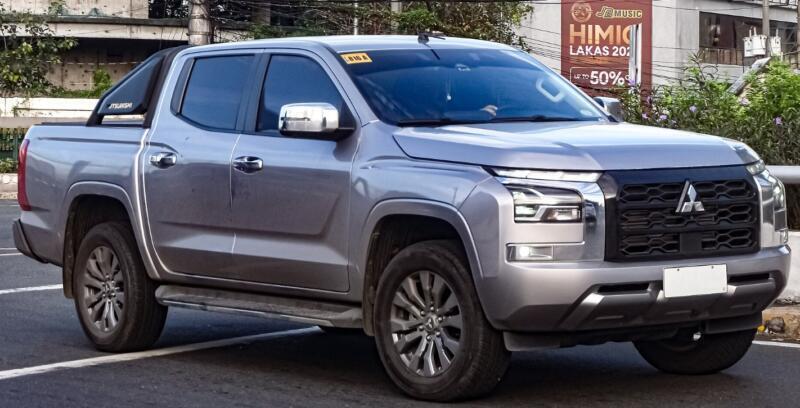
The Mitsubishi Triton has built its reputation by doing the jobs that make ordinary vehicles nervous. It carries tools during the week, camping gear on Friday, and sometimes a trailer, passengers, bicycles, and half the contents of a garage by Saturday morning.
But how much weight can a Mitsubishi Triton actually carry?
The answer is not one universal number. Mitsubishi Triton load capacity varies according to generation, model year, body style, drivetrain, transmission, trim level, accessories, and country. A basic single-cab chassis may carry considerably more than a highly equipped double-cab pickup because the heavier vehicle uses more of its permitted weight before we load anything.
As a broad guide, many Mitsubishi Triton models offer a payload of approximately 900 to 1,200 kg. Certain work-focused cab-chassis variants sit near the upper end of that range, while heavier lifestyle-oriented double cabs may offer less.
For example, Mitsubishi Australia lists a payload of 1,210 kg for the 2025 model-year GLX Double Cab Chassis, while the current UK Mitsubishi L200 range advertises a maximum payload of 1,092 kg. Philippine specifications for the latest Triton show variant-dependent payload figures ranging from approximately 985 to 1,115 kg. These differences underline why the specification plate for the exact vehicle matters more than a number found in a general online guide.
Let us unpack the numbers, explain what counts toward payload, and work out how to load a Triton without accidentally turning it into an overloaded wheelbarrow.
- What Is the Mitsubishi Triton Load Capacity?
- Typical Mitsubishi Triton Payload Figures
- Payload Capacity Is Not the Same as Tray Capacity
- How Mitsubishi Triton Payload Is Calculated
- What Is Gross Vehicle Mass?
- Kerb Weight Versus Tare Weight
- Why Single-Cab Tritons Usually Carry More
- Double-Cab Mitsubishi Triton Load Capacity
- Cab-Chassis Versus Factory Pickup Load Capacity
- Mitsubishi Triton Load Capacity by Generation
- How Passengers Reduce Available Cargo Capacity
- How Accessories Affect Triton Payload
- Tow-Ball Weight and Load Capacity
- Payload Versus Towing Capacity
- What Is Gross Combination Mass?
- Axle Load Limits Matter Too
- How to Load a Mitsubishi Triton Safely
- Can Upgraded Suspension Increase Payload?
- Signs Your Triton May Be Overloaded
- How to Weigh Your Mitsubishi Triton
- How Much Can You Put in a Triton Tray?
- Is the Mitsubishi Triton a True One-Tonne Ute?
- Mitsubishi Triton Load Capacity for Work
- Mitsubishi Triton Load Capacity for Camping
- Buying a Used Triton for Heavy Loads
- Common Mitsubishi Triton Loading Mistakes
- Final Thoughts on Mitsubishi Triton Load Capacity
- Frequently Asked Questions
What Is the Mitsubishi Triton Load Capacity?
The term load capacity usually refers to the maximum payload the vehicle can legally and safely carry. Payload includes much more than the bags, equipment, or materials sitting in the cargo tray.
It normally includes:
- The driver and passengers
- Tools and work equipment
- Cargo in the tray
- Cargo inside the cabin
- Bull bars and side steps
- Canopies and drawer systems
- Roof racks and rooftop tents
- Replacement trays
- Auxiliary batteries
- Additional fuel tanks
- Tow-ball download
- Any accessory not already included in the listed kerb weight
This catches many owners by surprise. We may look at an empty tray and assume the entire published payload remains available. In reality, a canopy, drawers, recovery equipment, four adults, and a trailer can consume a large chunk of the capacity before the first suitcase goes aboard.
Typical Mitsubishi Triton Payload Figures
Across different generations and markets, Triton payload ratings commonly fall somewhere between about 900 and 1,200 kg. However, this is only a planning range, not permission to load every Triton with one tonne.
The precise figure depends on the difference between the vehicle’s Gross Vehicle Mass and its actual unladen weight.
A practical overview looks like this:
| Triton configuration | Typical payload tendency |
|---|---|
| Single-cab cab chassis | Usually highest |
| Club cab or extra cab | Medium to high |
| Double-cab cab chassis | Medium to high |
| Double-cab pickup | Usually medium |
| Premium automatic double cab | Often lower |
| Vehicle with heavy accessories | Reduced usable payload |
The newest Australian Triton range illustrates how configuration changes the result. Mitsubishi states that the 2025 GLX Double Cab Chassis has a 3,200 kg Gross Vehicle Mass and a 1,210 kg payload. That is a strong figure, but it should not be copied across every trim in the range.
Payload Capacity Is Not the Same as Tray Capacity
Payload and tray capacity are often used as though they mean the same thing. They do not.
Payload Capacity
Payload is the total allowable weight added to the entire vehicle.
That includes people, accessories, cargo, and trailer download.
Tray Load
Tray load is only the portion of payload placed in the cargo bed or aftermarket tray.
Suppose a Triton has a 1,050 kg payload. We cannot automatically place 1,050 kg of bricks in the bed because the driver, passengers, tow-ball mass, and accessories must also be counted.
The tray may be large enough to hold the material, but volume is not permission. A suitcase full of jackets and a pallet of paving stones may occupy similar floor space while placing dramatically different stress on the vehicle.
How Mitsubishi Triton Payload Is Calculated
The basic payload calculation is:
Payload = Gross Vehicle Mass − Kerb Weight
Imagine a Triton with:
- Gross Vehicle Mass: 3,100 kg
- Kerb weight: 2,050 kg
Its theoretical payload would be:
3,100 kg − 2,050 kg = 1,050 kg
That sounds straightforward, but the kerb-weight definition can vary slightly between markets. Fuel quantity, standard equipment, fluids, and the inclusion of a driver may be treated differently.
For a genuinely accurate result, we should weigh the vehicle in its everyday configuration.
What Is Gross Vehicle Mass?
Gross Vehicle Mass, commonly shortened to GVM, is the maximum permitted weight of the vehicle when it is fully loaded.
The figure includes:
- The vehicle itself
- Occupants
- Cargo
- Installed accessories
- Fuel
- Tow-ball load
- Anything carried on the roof
Crossing the GVM is not simply a matter of making the engine work harder. It can affect braking distance, steering, suspension control, tyre temperature, chassis stress, insurance coverage, and legal compliance.
A Triton may still move while overloaded, just as a chair may remain standing with a cracked leg. Movement does not prove safety.
Kerb Weight Versus Tare Weight
Kerb weight is the weight of a vehicle in road-ready condition, normally including fluids and a specified quantity of fuel. Tare weight may be measured under a different standard and can exclude certain items.
The distinction matters because a payload calculated from the wrong starting number may appear larger than it really is.
The safest approach is simple:
- Load the Triton exactly as it is normally used.
- Include accessories, permanently carried tools, and a full or typical fuel load.
- Weigh it at a public weighbridge.
- Subtract that measured weight from the legal GVM.
- Treat the remaining number as the actual available payload.
That figure is far more useful than a brochure number for a bare factory vehicle.
Why Single-Cab Tritons Usually Carry More
A single-cab Triton normally has fewer seats, a smaller cabin, and less bodywork than a double cab. Because the vehicle itself weighs less, more of the permitted GVM remains available for cargo.
This makes single-cab cab-chassis models particularly useful for:
- Construction work
- Farm equipment
- Landscaping supplies
- Service bodies
- Toolboxes
- Delivery operations
- Custom trays
- Commercial fleets
The trade-off is obvious. We gain carrying ability but lose rear seating and some everyday versatility.
A single cab is like a work boot: simple, tough, and designed around the job. A premium double cab is closer to a hiking shoe—it can still work hard, but comfort and additional equipment take up some of the capacity.
Double-Cab Mitsubishi Triton Load Capacity
Double-cab Tritons are popular because they combine five-seat practicality with a useful load bed. They can transport workers, family members, tools, sports equipment, or camping gear without requiring two vehicles.
However, the passenger cabin adds weight. Premium trims may also include:
- Larger wheels
- Electric seats
- Additional sound insulation
- More safety equipment
- Styling accessories
- Heavier transmissions
- Four-wheel-drive hardware
- Sports bars
- Bed liners or covers
Every kilogram added at the factory can reduce the remaining payload when the GVM stays unchanged.
A double cab may still carry around one tonne in some configurations, but its real usable cargo capacity can shrink rapidly once passengers and accessories are included.
Cab-Chassis Versus Factory Pickup Load Capacity
A cab-chassis Triton leaves the factory without a conventional pickup bed. The buyer or body builder installs a tray, service body, tipper, camper, or another specialised structure.
This flexibility can create excellent working vehicles, but the body itself counts toward the payload.
Cab-Chassis Advantages
- Flexible body design
- Potentially higher published payload
- Easier installation of commercial equipment
- Flat trays can improve usable cargo space
- Better suitability for specialised work
Cab-Chassis Disadvantages
- The tray or body reduces available payload
- Poor body design may overload an axle
- Weight distribution requires careful planning
- Heavy steel trays can consume hundreds of kilograms
Mitsubishi publishes technical information for body builders, including axle limits and installation requirements. This is important because staying below GVM does not automatically mean each axle is within its permitted load.
Mitsubishi Triton Load Capacity by Generation
Historical payload figures vary significantly by market and model. Older brochures, registration records, and vehicle plates should therefore be treated as the primary sources for an individual vehicle.
First-Generation Triton and L200
Early Mitsubishi pickups were much simpler than today’s models. They were lighter, narrower, and offered fewer comfort or safety features.
Some commercial configurations were marketed around one-tonne payload capability, while recreational versions could have much lower ratings because of softer suspension and different equipment. Early Australian variants, for example, included commercial models rated around 1,000 kg and leisure-focused versions with substantially lower carrying ability.
The lesson is important: even within one generation, visual similarity does not guarantee the same load rating.
Second-Generation Triton
The second generation expanded the Triton’s international presence and offered numerous engine, cab, and drivetrain combinations.
Work-oriented two-wheel-drive models generally provided the strongest payload figures. Four-wheel-drive and double-cab versions were heavier, often reducing the cargo allowance.
Because these vehicles are now older, modifications and corrosion matter almost as much as the original rating. Upgraded springs cannot repair a weakened chassis, tired bushes, or rusted tray mounts.
Third-Generation Triton
Third-generation models continued the shift from pure commercial transport toward dual-purpose use. Better interiors and more equipment improved comfort but added weight.
Payload remained competitive, although actual capacity differed between single-cab, club-cab, and double-cab versions. Owners of these older vehicles should check the compliance plate rather than relying on modern one-tonne marketing language.
Fourth-Generation Triton
The fourth-generation Triton became particularly popular in markets such as Australia, New Zealand, Southeast Asia, and parts of Europe.
Many models offered payload ratings close to one tonne, but the exact result depended heavily on engine, transmission, drivetrain, and body style.
Accessories are especially relevant with used fourth-generation models. A vehicle may now carry a bull bar, winch, canopy, drawers, dual batteries, roof rack, long-range tank, and towing equipment. Together, these can quietly swallow several hundred kilograms.
Fifth-Generation Triton
The fifth-generation Triton improved refinement, safety, engine efficiency, and cabin quality. Many versions retained competitive payload ratings while becoming better family vehicles.
Yet premium double-cab models often had lower usable payload than simpler commercial variants. A heavy canopy or touring build could reduce the remaining capacity enough to make family trips surprisingly close to the legal limit.
Sixth-Generation Triton
The current generation introduced a stronger frame, upgraded suspension, a more powerful 2.4-litre bi-turbo diesel in several markets, and a towing capacity of up to 3,500 kg on applicable models. Mitsubishi Australia describes the latest Triton as offering up to 3.5 tonnes of braked towing capacity.
Current payload remains variant-specific. Official Philippine data, for example, lists figures between roughly 985 and 1,115 kg across different versions, while selected Australian cab-chassis configurations exceed 1,200 kg.
This generation proves that “the Triton carries one tonne” is an oversimplification. Some variants comfortably exceed that benchmark on paper; others may fall below it once passengers and accessories are included.
How Passengers Reduce Available Cargo Capacity
Let us imagine a Triton with a published payload of 1,050 kg.
We add:
- Driver: 85 kg
- Front passenger: 70 kg
- Two rear passengers: 130 kg combined
- Bull bar: 55 kg
- Canopy: 80 kg
- Drawer system: 60 kg
- Tools and recovery gear: 75 kg
- Tow-ball download: 250 kg
Total used payload:
805 kg
Remaining capacity:
1,050 kg − 805 kg = 245 kg
The truck may look almost empty, yet only 245 kg remains for luggage, food, water, bicycles, fuel containers, and anything else.
This is why published payload and practical cargo allowance can feel like two entirely different numbers.
How Accessories Affect Triton Payload
Accessories do not float weightlessly around the vehicle simply because they are useful. They count.
Common Accessory Weights
Approximate accessory weights may include:
- Bull bar: 40–80 kg
- Winch: 25–45 kg
- Steel tray: 200–400 kg
- Aluminium tray: 120–250 kg
- Canopy: 50–150 kg
- Drawer system: 40–100 kg
- Roof rack: 20–40 kg
- Rooftop tent: 50–90 kg
- Auxiliary battery system: 25–60 kg
- Long-range fuel tank and extra fuel: 40–100 kg
- Underbody protection: 20–60 kg
Actual weights vary, but the pattern is clear. Building a Triton for touring is like packing a suitcase while wearing several coats—the capacity disappears faster than expected.
Permanent Accessories Still Count
A common misconception is that permanently attached equipment becomes part of the vehicle and therefore stops counting as payload.
It does not.
Unless a certified modification changes the legal weight rating, the accessory simply increases the vehicle’s operating weight and reduces the payload that remains.
Tow-Ball Weight and Load Capacity
When a trailer is connected, the downward force on the tow ball becomes part of the Triton’s load.
A trailer with a 300 kg tow-ball download effectively adds approximately 300 kg to the vehicle before accounting for passengers or cargo.
That weight also sits behind the rear axle, creating a leverage effect. As the rear suspension compresses, weight may transfer away from the front axle. Steering can become lighter, headlights may point upward, and braking balance can change.
This is why towing capacity, payload, axle limits, and Gross Combination Mass must be considered together.
Payload Versus Towing Capacity
Payload answers:
How much weight can the Triton carry on or in itself?
Towing capacity answers:
How much trailer weight can it pull under specified conditions?
They are related, but they are not interchangeable.
A Triton may be rated to tow 3,500 kg, yet it may not be able to carry its maximum payload while towing that amount. Mitsubishi’s UK guidance for the previous L200 Series 6 referred to a combined total load capacity of 4,090 kg, illustrating that towing and loading must be considered as a complete system rather than two independent maximums.
Maximum values often cannot all be used simultaneously. The vehicle must comply with:
- Gross Vehicle Mass
- Gross Combination Mass
- Front axle limit
- Rear axle limit
- Maximum towing capacity
- Maximum tow-ball load
- Tyre load ratings
- Hitch rating
One limit does not cancel another.
What Is Gross Combination Mass?
Gross Combination Mass, or GCM, is the maximum permitted combined weight of the loaded vehicle and loaded trailer.
The calculation is:
Loaded Triton weight + loaded trailer weight = combination weight
That total must remain below the vehicle’s rated GCM.
Suppose:
- Maximum GCM: 6,250 kg
- Actual loaded Triton weight: 3,000 kg
- Actual loaded trailer weight: 3,250 kg
The combination equals:
3,000 kg + 3,250 kg = 6,250 kg
The vehicle is exactly at the combination limit. Adding another passenger, fuel container, or toolbox could push it over.
Axle Load Limits Matter Too
A vehicle may remain below its GVM and still exceed the legal rating of the rear axle.
This frequently occurs when heavy equipment is installed behind the rear axle, including:
- Tow balls and trailers
- Rear drawers
- Spare-wheel carriers
- Long trays
- Motorcycles
- Water tanks
- Slide-out kitchens
- Heavy canopies
Where we place the weight matters almost as much as how much weight we add.
Cargo located between the axles is generally kinder to the chassis than the same mass hanging far behind the rear wheels. Think of holding a heavy bag against your chest versus holding it at arm’s length. The weight is identical, but the strain is not.
How to Load a Mitsubishi Triton Safely
Safe loading begins before the first item enters the tray.
Place Heavy Items Low
Heavy cargo should sit as low as possible to reduce the vehicle’s centre of gravity.
A high load increases body roll and may make sudden steering movements less predictable.
Keep Weight Near the Centre
Where practical, position the heaviest cargo close to or slightly ahead of the rear axle.
Avoid concentrating major weight at the tailgate.
Secure Everything Properly
Use tie-down points, rated straps, cargo nets, or purpose-built restraints.
An unsecured 20 kg toolbox can become a dangerous projectile during emergency braking.
Balance the Load
Do not place all heavy items on one side. Uneven loading can affect handling, tyre wear, and suspension movement.
Check Tyre Pressures
Use the manufacturer’s recommended pressures for the vehicle’s load and operating conditions. Do not simply inflate every tyre to the maximum number printed on the sidewall.
Drive for the Weight
A loaded Triton will:
- Accelerate more slowly
- Need more room to brake
- Lean more in corners
- React differently on rough roads
- Place greater heat into tyres and brakes
The vehicle may still feel powerful, but physics never clocks off early.
Can Upgraded Suspension Increase Payload?
Heavier springs, upgraded shock absorbers, airbags, or reinforced suspension components may improve how a loaded Triton sits and handles.
However, they do not automatically increase the legal payload.
Suspension upgrades may:
- Reduce rear sag
- Improve stability
- Control bouncing
- Better support regular loads
- Restore ride height
They do not necessarily change:
- The manufacturer’s GVM
- Chassis capacity
- Axle ratings
- Brake capability
- Tyre ratings
- Legal registration limits
A certified GVM upgrade may be available in certain countries, but rules vary. It should be engineered, documented, and approved under the applicable local regulations.
Airbags Can Hide Overloading
Helper airbags can level a sagging vehicle, but level suspension does not prove legal weight.
They may also introduce concentrated stress into parts of the chassis if incorrectly installed or inflated. The solution to overloading is not always making the vehicle look less overloaded.
Signs Your Triton May Be Overloaded
Warning signs include:
- Rear suspension sitting unusually low
- Front end appearing raised
- Steering feeling vague or light
- Longer stopping distances
- Excessive body movement
- Tyres overheating
- Vehicle pulling to one side
- Frequent bottoming out
- Headlights pointing too high
- Poor stability in crosswinds
- Harsh or unstable behaviour over bumps
These symptoms deserve attention, but their absence does not guarantee compliance. A well-suspended overloaded vehicle can still exceed legal weight limits without looking dramatic.
How to Weigh Your Mitsubishi Triton
A public weighbridge provides the clearest answer.
For a touring or towing setup, weigh the vehicle in realistic travel condition with:
- Driver and regular passengers
- Full or normal fuel level
- Tools
- Food and water
- Camping gear
- Canopy and drawers
- Bikes or recreational equipment
- Trailer attached, where applicable
Try to obtain:
- Total vehicle weight
- Front axle weight
- Rear axle weight
- Trailer axle weight
- Total combination weight
- Tow-ball download, measured separately if necessary
Compare each result with the limits shown on the vehicle plate, owner’s manual, official brochure, registration documents, and towbar plate.
How Much Can You Put in a Triton Tray?
There is no universal tray figure.
The practical tray allowance is:
Remaining payload after occupants, fuel, accessories, cabin cargo, and tow-ball load are deducted
For example:
- Published payload: 1,100 kg
- Occupants: 220 kg
- Accessories: 180 kg
- Cabin cargo: 40 kg
- Tow-ball load: 250 kg
Remaining tray capacity:
1,100 − 220 − 180 − 40 − 250 = 410 kg
Even though the Triton began with a headline payload above one tonne, only 410 kg remains for the tray.
Is the Mitsubishi Triton a True One-Tonne Ute?
Many Triton variants qualify broadly for the one-tonne pickup category, but not every version can carry a full 1,000 kg in real-world use.
A commercial model with minimal accessories may offer more than one tonne of published payload. A premium double cab carrying five occupants and touring equipment may have far less than one tonne available for actual cargo.
Therefore, “one-tonne ute” is best treated as a vehicle-category description rather than a promise that we may place a tonne in the tray under every condition.
Mitsubishi Triton Load Capacity for Work
The Triton can be a capable work vehicle when configured thoughtfully.
Before installing a trade body or loading equipment, list every regular item:
- Tray or service body
- Shelving
- Toolboxes
- Tools
- Generator
- Compressor
- Ladder racks
- Materials
- Driver
- Crew
- Tow equipment
- Fuel
A commercial body builder should consider rear overhang, axle distribution, mounting points, and the centre of gravity—not merely whether the body physically fits.
An aluminium tray may preserve more payload than a steel alternative. Likewise, removing unused equipment can increase daily capacity without changing the vehicle itself.
Mitsubishi Triton Load Capacity for Camping
Camping builds often become heavier one small purchase at a time.
A rooftop tent may weigh 70 kg. A drawer system adds another 70 kg. A fridge, battery, water, recovery gear, canopy, food, chairs, and passengers keep joining the party.
Before long, the Triton resembles a traveller trying to close an overstuffed suitcase by sitting on it.
Water deserves special attention. One litre weighs approximately one kilogram. Carrying 100 litres adds roughly 100 kg before including the tank itself.
The ideal touring build is not the one with the most equipment. It is the one that carries the necessary equipment while remaining comfortably below every limit.
Buying a Used Triton for Heavy Loads
When buying a used Triton that has worked hard, inspect more than the odometer.
Look for:
- Chassis cracks or repairs
- Corrosion around tray mounts
- Flattened or mismatched leaf springs
- Uneven tyre wear
- Damaged bump stops
- Leaking shock absorbers
- Worn suspension bushes
- Cracks around towbar mounts
- Distorted trays
- Evidence of frequent overloading
- Unapproved chassis modifications
A vehicle advertised with “heavy-duty suspension” may have been upgraded responsibly—or it may have spent years carrying too much weight.
Service history, modification certificates, and a professional inspection are especially valuable for vehicles fitted with large canopies, campers, cranes, or commercial bodies.
Common Mitsubishi Triton Loading Mistakes
The most frequent mistakes are surprisingly simple:
- Treating payload as tray-only capacity.
- Forgetting passenger weight.
- Ignoring accessories.
- Excluding tow-ball download.
- Staying below GVM but exceeding the rear axle limit.
- Assuming stronger springs raise the legal rating.
- Using payload figures from another trim.
- Loading heavy cargo behind the rear axle.
- Trusting appearance instead of weighbridge results.
- Trying to use maximum towing and maximum payload simultaneously.
Avoiding these mistakes is often cheaper than repairing suspension, replacing tyres, or dealing with an insurance dispute.
Final Thoughts on Mitsubishi Triton Load Capacity
The Mitsubishi Triton can be an impressive load carrier, with many versions offering payload ratings around one tonne and selected commercial configurations exceeding 1,200 kg. Current official figures vary substantially by market and variant, from under 1,000 kg for some models to 1,210 kg for an Australian 2025 GLX Double Cab Chassis.
The important number is not the largest figure advertised for the Triton range. It is the remaining capacity of the exact vehicle after passengers, fuel, accessories, cargo, and trailer download are included.
We should check the compliance plate, read the correct manual, calculate every addition, and confirm the completed setup on a weighbridge. That may sound less exciting than fitting a new canopy or loading the trailer for a weekend away, but it protects the vehicle, the driver, and everyone sharing the road.
A Triton is a tough machine. Even tough machines work best when we respect the numbers.
Frequently Asked Questions
1. What is the Mitsubishi Triton’s maximum load capacity?
Depending on the model, market, and configuration, Mitsubishi Triton payload capacity commonly ranges from approximately 900 to 1,200 kg. Selected current cab-chassis variants can carry more than 1,200 kg, while heavier double-cab pickups may carry less.
2. Can a Mitsubishi Triton carry one tonne in its tray?
Some variants may technically have a payload of one tonne or more, but the full amount cannot necessarily be placed in the tray. Occupants, accessories, fuel, cabin cargo, and tow-ball download all consume payload.
3. Does a canopy reduce Triton payload capacity?
Yes. The canopy’s complete installed weight must be deducted from the available payload. Drawer systems, roof racks, spare wheels, batteries, and equipment inside the canopy must also be included.
4. Does tow-ball weight count toward payload?
Yes. The trailer’s downward force on the tow ball becomes part of the Triton’s loaded weight. It can also place significant additional load on the rear axle because the tow ball sits behind it.
5. Do upgraded springs increase Mitsubishi Triton payload?
Not automatically. Stronger springs may improve ride height and handling under load, but the legal payload remains tied to the approved GVM and axle limits unless the vehicle receives a properly certified weight-rating upgrade.
This content may interest you! Ford Ranger Towing Capacity New Zealand: Complete Guide
Leave a Reply