
Ford Ranger and Everest: Two Sides of the Same Adventure
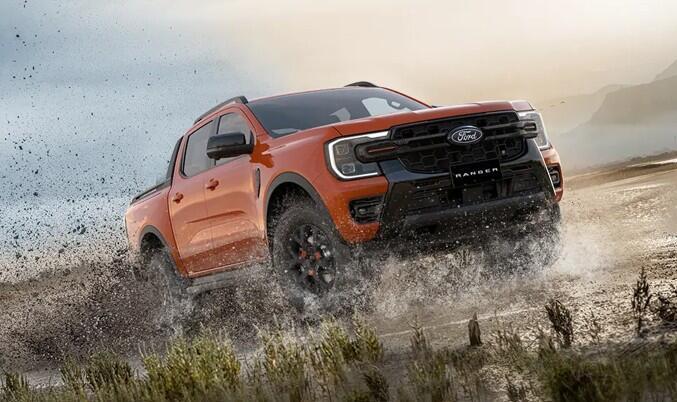
The Ford Ranger and Everest often appear together in conversations about rugged vehicles, towing, family travel, off-road capability, and everyday practicality. That is hardly surprising. They share a strong family resemblance, offer many similar technologies, and are built for drivers who expect more than a quiet trip to the supermarket.
Yet they are not interchangeable.
The Ford Ranger is a midsize pickup truck designed around an open cargo bed, commercial flexibility, and serious load-carrying potential. The Ford Everest is a body-on-frame SUV created for passengers, enclosed luggage, long-distance comfort, and family adventures. We could call them siblings, but they have grown into very different personalities.
The Ranger arrives wearing work boots. The Everest turns up in hiking shoes with the children already buckled into the back.
So, which one deserves a place in our garage? Let us compare the Ford Ranger and Everest across design, practicality, engines, towing, comfort, off-road performance, ownership costs, and everyday usability.
Important note: Engines, drivetrains, trims, payload ratings, towing limits, technology, prices, and safety equipment vary by country, model year, and configuration. Always check the official specifications for the exact vehicle sold in your market.
- Ford Ranger and Everest at a Glance
- Are the Ford Ranger and Everest the Same Vehicle?
- Exterior Design: Pickup Toughness or SUV Sophistication?
- Interior Space and Passenger Comfort
- Cargo Practicality: Bed Versus Boot
- Engine and Transmission Choices
- On-Road Driving Experience
- Off-Road Capability
- Towing Capacity and Trailer Use
- Fuel Economy
- Safety and Driver-Assistance Technology
- Ownership Costs
- Ford Ranger Advantages
- Ford Ranger Disadvantages
- Ford Everest Advantages
- Ford Everest Disadvantages
- Which Is Better for Families?
- Which Is Better for Work?
- Which Is Better for Camping and Touring?
- Ford Ranger and Everest Reliability Considerations
- Should We Buy a Ranger or Everest?
- Final Verdict: Ranger Utility or Everest Versatility?
- Frequently Asked Questions
Ford Ranger and Everest at a Glance
At their core, the Ranger and Everest are rugged, utility-focused vehicles intended to handle conditions that would make many road-oriented crossovers nervous. Depending on the market and trim, both can offer diesel power, four-wheel drive, selectable driving modes, advanced trailer technology, large infotainment displays, driver-assistance systems, and extensive accessory support.
The main difference is their body style.
| Category | Ford Ranger | Ford Everest |
|---|---|---|
| Vehicle type | Midsize pickup truck | Body-on-frame SUV |
| Main purpose | Work, carrying equipment, towing | Family travel, passenger comfort, towing |
| Cargo area | Open pickup bed | Enclosed rear cargo compartment |
| Passenger capacity | Usually two to five | Commonly five to seven |
| Third-row seats | No | Available or standard on many versions |
| Best suited to | Trades, farms, outdoor equipment | Families, touring, enclosed storage |
| Off-road potential | Excellent in suitable 4x4 trims | Excellent in suitable 4WD trims |
| Towing potential | Strong | Strong |
| Cabin character | Practical to premium | More passenger-focused and refined |
Neither vehicle wins every category. The better choice depends on what we plan to carry, where we intend to drive, and how frequently we need to transport passengers rather than equipment.
Are the Ford Ranger and Everest the Same Vehicle?
No, but they are closely related.
The Ranger is engineered as a pickup truck, while the Everest is engineered as an SUV. Their relationship can create similarities in powertrains, transmissions, controls, technology, four-wheel-drive hardware, and general driving character. However, the Everest is not simply a Ranger with a roof placed over the cargo bed.
Its body, rear seating arrangement, suspension tuning, interior packaging, sound insulation, weight distribution, and passenger-focused equipment create a distinct experience.
The Ranger must balance comfort with the demands of payload, commercial use, and an exposed load box. The Everest can focus more heavily on ride quality, cabin refinement, climate control, seating flexibility, and protection from noise.
We can think of the Ranger as a strong platform for work and recreation. It can carry dirty tools during the week, camping equipment on Friday, and a trailer on Saturday.
The Everest takes a different route. It wants to carry people first. Its enclosed interior makes it more suitable for children, pets, suitcases, shopping, cameras, laptops, and other belongings that we do not want exposed to rain, dust, or curious hands.
That distinction shapes nearly every part of the ownership experience.
Exterior Design: Pickup Toughness or SUV Sophistication?
The Ford Ranger generally communicates utility from the moment we see it. Its separate cabin and cargo bed create the classic pickup silhouette, while its upright front end, broad shoulders, and high ground clearance contribute to an assertive appearance.
Depending on the version, the Ranger can look like a simple fleet vehicle, a premium lifestyle truck, or an aggressive off-road machine.
The Everest uses similar visual language but wraps it around a full-length SUV body. Its roof continues over the rear passenger and cargo areas, giving it a more cohesive, polished profile. It still looks rugged, but it usually appears more formal and family-oriented.
The Ranger’s Open-Bed Advantage
An open pickup bed gives us freedom that an SUV cannot easily reproduce. We can transport:
- Building materials
- Muddy bicycles
- Gardening supplies
- Large coolers
- Camping equipment
- Motorcycles, depending on size and configuration
- Tools and commercial machinery
- Firewood
- Items too tall for an SUV cargo area
The bed can also be customized with covers, drawers, racks, canopies, liners, dividers, sports bars, and power accessories.
Ford offers accessory ecosystems for both the Ranger and Everest, including adventure-oriented equipment developed with established off-road accessory suppliers in some markets.
The Disadvantage of an Open Bed
Without a suitable cover or canopy, cargo may be vulnerable to weather, dust, theft, and movement. A pickup bed is wonderfully flexible, but it requires planning.
Throwing a laptop bag into the back of an Everest is simple. Doing the same with an uncovered Ranger during heavy rain would be a rather expensive experiment.
The Everest’s Enclosed-Body Advantage
The Everest protects passengers and cargo within one enclosed cabin. This makes it easier to secure belongings, control the temperature, and access luggage from inside the vehicle.
We also gain folding rear seats, a conventional tailgate, and the possibility of carrying seven occupants in many configurations. Ford markets the Everest as a five- or seven-seat SUV depending on version and region, with seven-seat layouts widely offered across the range.
Interior Space and Passenger Comfort
This is where the Everest begins to pull away for family use.
The Ranger can be spacious in double-cab form, but its second row still lives within the packaging limits of a pickup. Rear-seat comfort can be good, especially in higher trims, yet the cabin must end before the cargo bed begins.
The Everest has more freedom to prioritize rear passengers. Its second row is typically better integrated into the overall cabin, while a third row adds occasional or regular seating for larger families.
Front-Seat Experience
From the driver’s seat, the Ranger and Everest may feel surprisingly similar in markets where they share dashboard layouts, infotainment systems, digital displays, steering-wheel controls, and switchgear.
Both can feel modern rather than agricultural. Large portrait-style central screens, smartphone connectivity, digital instruments, camera systems, and trailer assistance may be available depending on trim.
Ford also offers wireless Apple CarPlay and Android Auto through compatible SYNC systems on certain Everest models and markets.
However, the Everest generally creates a more passenger-oriented atmosphere. Upholstery, trim materials, ambient features, climate control, seat adjustment, and sound insulation tend to become more luxurious as we move up the range.
Second-Row Comfort
For occasional adult passengers, a double-cab Ranger may be perfectly adequate. For frequent long-distance travel with teenagers or adults, the Everest is usually the more natural fit.
Its advantages may include:
- Easier entry and exit
- More SUV-like seating
- Better access to climate controls
- Additional storage
- Greater protection from road and cargo noise
- More flexible seat-folding arrangements
- Better integration with a third row
Third-Row Seating
The Ranger does not offer a third row. The Everest can accommodate up to seven people in many versions, although third-row space should always be tested in person.
As with most midsize SUVs, the last row may suit children better than tall adults on long trips. It remains valuable for school runs, visiting relatives, group outings, or those moments when five seats are suddenly not enough.
Some higher Everest trims also offer powered or flexible third-row mechanisms, depending on market.
Cargo Practicality: Bed Versus Boot
Choosing between the Ranger and Everest often comes down to a simple question: what are we actually carrying?
Why the Ranger Wins for Dirty or Oversized Loads
A pickup bed does not care much about muddy boots, leaking bags of soil, oily tools, or wet outdoor equipment. With a durable liner, cleanup can be relatively straightforward.
It is also easier to carry tall or awkwardly shaped items. Add a rack system or canopy, and the Ranger becomes a mobile equipment station.
Certain Ranger accessory systems are designed to support long cargo, roof loads, work equipment, and recreational gear. Exact load limits vary, so we must follow the ratings for the chosen rack, bed, roof, and vehicle configuration.
Why the Everest Wins for Everyday Luggage
The Everest is better when our cargo needs protection and easy cabin access. Groceries, suitcases, electronics, pushchairs, sports bags, and pets are more comfortable inside an enclosed SUV.
Fold the rear seats and the available space expands substantially. The floor may not match the vertical freedom of a pickup bed, but it provides privacy, weather protection, and a more controlled environment.
The Pet Question
For many dog owners, the Everest is the easier solution. A properly secured pet can travel within the climate-controlled interior.
A Ranger can still work well, particularly with a professionally fitted canopy, ventilation, restraints, and safe temperature management. An exposed bed, however, is not a casual substitute for a protected passenger compartment.
Engine and Transmission Choices
Powertrain availability is highly regional.
Depending on country and model year, the Ranger and Everest may be offered with single-turbo diesel, bi-turbo diesel, V6 turbo-diesel, petrol, or electrified powertrains. Some markets receive combinations unavailable elsewhere.
For example, current official Ford information in New Zealand lists Everest variants with 2.0-litre turbo-diesel and 3.0-litre V6 turbo-diesel options, while the Philippine Everest range includes 2.0-litre turbo and bi-turbo diesel configurations.
The Ranger lineup can be broader because it serves commercial, lifestyle, high-performance, and specialist roles. That may mean more body styles, drivetrains, payload-oriented versions, and engine choices.
Four-Cylinder Diesel Engines
A four-cylinder diesel can be the sensible choice for drivers seeking:
- Lower purchase costs
- Reasonable fuel consumption
- Strong low-speed torque
- Adequate towing performance
- More affordable everyday operation
- A balance between work and family use
It may not feel as effortless as a larger engine under heavy load, but it can still be highly capable when matched to the correct gearing and vehicle configuration.
V6 Diesel Performance
Where offered, a V6 turbo-diesel adds stronger acceleration, smoother power delivery, and a more relaxed feeling when overtaking or towing.
Official specifications for certain Everest V6 models in New Zealand list 184 kW and 600 Nm, paired with a 10-speed automatic transmission and four-wheel drive.
Those figures should not be assumed to apply worldwide, but they illustrate why the V6 attracts drivers who frequently tow, tour with a full cabin, or simply prefer effortless performance.
Petrol and Performance Variants
The Ranger may also be available with petrol engines in selected markets, particularly in performance-focused trims. These versions can deliver much stronger acceleration and a more energetic character, but they may consume more fuel and may not offer the same long-distance economy associated with diesel touring.
The Everest is generally positioned less as a performance vehicle and more as a capable, refined SUV.
On-Road Driving Experience
Although both vehicles have rugged foundations, they do not behave exactly alike on the road.
How the Ford Ranger Drives
An unloaded pickup can feel firmer or more active over broken surfaces because its rear suspension must be prepared to carry cargo. The precise behavior varies significantly by model, suspension type, wheel size, tire choice, and load.
With some weight in the bed, the ride may settle. Higher-spec lifestyle variants can also be impressively refined, particularly compared with older generations of pickups.
Still, we remain aware that we are driving a truck. Its length, rear overhang, turning circle, and open cargo structure influence the experience.
How the Ford Everest Drives
The Everest normally feels more settled and passenger-focused. Its enclosed body, suspension tuning, cabin insulation, and seating layout help it behave more like a touring SUV.
It is still a substantial body-on-frame vehicle. We should not expect the agility of a compact crossover or sports sedan. Yet for long motorway journeys, family holidays, and mixed urban use, the Everest usually delivers the more polished ride.
Parking and Urban Use
Neither is tiny.
The Ranger’s pickup bed can make it feel especially long in tight parking areas. The Everest may be easier to judge as a conventional SUV, but its width and height still require care.
Parking sensors, reversing cameras, 360-degree camera systems, blind-spot monitoring, and cross-traffic assistance can make a major difference. Availability varies by trim.
Off-Road Capability
Both the Ranger and Everest can be excellent off-road vehicles when properly configured.
Their capability may include:
- Four-wheel drive
- Low-range gearing
- Selectable drive modes
- Locking differentials
- Hill-descent control
- Underbody protection
- High ground clearance
- Off-road camera views
- All-terrain tires
- Water-wading capability
The exact equipment depends heavily on the selected model.
Where the Ranger Has an Edge
The Ranger’s open bed makes it well suited to carrying recovery boards, muddy gear, fuel containers where legally permitted, camping equipment, tools, and spare parts without filling the passenger compartment.
Specialized versions may also offer more aggressive suspension, tires, underbody protection, or commercial durability.
The Ranger can be the better base for overlanding builds, farm use, remote-area work, and equipment-heavy expeditions.
Where the Everest Has an Edge
The Everest provides a more comfortable environment for passengers during long expeditions. Everyone remains inside the insulated cabin, and luggage can be stored securely behind the seats.
This content may interest you! Why the Ford Ranger Is New Zealand's Favourite Ute
Certain Everest trims offer full-time four-wheel-drive systems and terrain modes, while specialized variants add increased ground clearance and off-road equipment. Ford’s New Zealand Everest information, for example, highlights full-time and part-time four-wheel-drive configurations as well as terrain-focused variants such as Tremor.
Does the Everest Match the Ranger Off Road?
In many real-world situations, it can come remarkably close. Tire selection, driver skill, ground clearance, approach and departure angles, suspension setup, vehicle weight, and recovery preparation often matter more than the name on the tailgate.
A highly equipped Everest can outperform a road-oriented Ranger trim. Likewise, a specialized Ranger can go far beyond a basic two-wheel-drive Everest.
We should compare exact versions, not just model names.
Towing Capacity and Trailer Use
Towing is a major strength of both vehicles.
In Australia, Ford advertises maximum braked towing capacities of up to 3,500 kg for eligible Ranger and Everest configurations.
That headline figure does not tell the whole story.
Understanding Real Towing Limits
Before hitching a caravan, boat, horse trailer, or work trailer, we must check:
- Maximum braked towing capacity
- Gross vehicle mass
- Gross combination mass
- Payload
- Towball download
- Front and rear axle limits
- Trailer weight when fully loaded
- Passenger and accessory weight
- Local towing laws
- Tire and suspension ratings
A vehicle may be technically rated to tow a certain amount, yet passengers, luggage, accessories, and towball weight can reduce the usable margin.
Ranger as a Tow Vehicle
The Ranger is attractive for towing because the bed can carry tools, generators, hoses, camping equipment, or dirty gear separately from passengers.
However, heavy accessories such as canopies, drawer systems, steel bumpers, auxiliary batteries, and roof racks consume payload before the trailer is connected.
Everest as a Tow Vehicle
The Everest may be more comfortable for families towing a caravan or boat. Its cabin provides better passenger accommodation and enclosed storage.
The trade-off is that seven passengers, luggage, accessories, and towball download can add weight quickly. A family should calculate the complete loaded combination rather than relying only on the advertised maximum.
Some Everest variants offer technologies such as integrated trailer brake controls, trailer profiles, surround-view cameras, and trailer reversing assistance, depending on region and specification.
Fuel Economy
Fuel consumption depends on engine, drivetrain, transmission, tires, load, aerodynamics, traffic, terrain, driving style, and towing frequency.
The Ranger may be lighter in some comparable configurations, but its open bed, accessories, all-terrain tires, and commercial setup can affect efficiency. The Everest may carry more body weight and interior equipment, although its enclosed shape can behave differently at motorway speeds.
What Raises Fuel Consumption?
Both vehicles will use more fuel when we add:
- Large off-road tires
- Roof racks
- Bull bars
- Canopies
- Heavy cargo
- Lift kits
- Underbody protection
- Frequent short journeys
- Aggressive acceleration
- High-speed motorway driving
- A caravan or large trailer
Drivers who spend most of their time in cities should question whether they genuinely need a large diesel 4x4. These vehicles are most convincing when their capability is used.
Safety and Driver-Assistance Technology
Modern versions of the Ranger and Everest can offer advanced safety systems, although features vary by model.
Possible equipment includes:
- Autonomous emergency braking
- Adaptive cruise control
- Lane-keeping assistance
- Blind-spot monitoring
- Rear cross-traffic alert
- Traffic-sign recognition
- Driver-attention monitoring
- Parking sensors
- Reversing camera
- 360-degree camera
- Trailer coverage for blind-spot systems
We should remember that driver-assistance systems support the driver rather than replace attention or judgment. Ford itself notes that such systems have operational limitations related to road, speed, traffic, and weather conditions.
Which Is Better for Family Safety?
The Everest has a practical advantage because all passengers and most belongings remain inside the enclosed body. Its SUV layout may also make child-seat installation, school runs, and rear climate management easier.
The Ranger can still be a strong family vehicle in double-cab form, but buyers should carefully evaluate rear-seat space, child-seat compatibility, and bed security.
Ownership Costs
The purchase price is only the beginning.
We should budget for:
- Fuel
- Insurance
- Registration
- Scheduled servicing
- Tires
- Brake wear
- Diesel-system maintenance
- Four-wheel-drive servicing
- Accessories
- Depreciation
- Unexpected repairs
Which One Is Usually Cheaper?
A basic Ranger work trim may cost less than a well-equipped Everest. However, premium Ranger variants can equal or exceed the price of many Everest models.
The real comparison should involve equivalent engines, drivetrains, safety equipment, and comfort features.
A low-spec rear-wheel-drive Ranger and a premium four-wheel-drive Everest do not serve the same buyer, so their prices tell us very little in isolation.
Tire and Accessory Costs
Large wheels look impressive but often increase tire costs and may reduce sidewall protection on rough roads. More aggressive all-terrain tires can also create additional road noise and fuel consumption.
Ranger owners may spend heavily on bed covers, canopies, racks, liners, drawers, and commercial accessories. Everest owners may invest in roof platforms, cargo barriers, towing equipment, floor protection, or touring accessories.
Customization is tempting. It can also turn the budget into a leaking tap.
Ford Ranger Advantages
The Ranger makes the strongest case when we need genuine utility.
Its main advantages include:
- Open-bed cargo flexibility
- Better suitability for dirty equipment
- Strong commercial potential
- Broad accessory selection
- Multiple body and trim configurations
- Excellent towing capability in eligible versions
- Strong off-road potential
- Easier separation of passengers and work gear
- Greater suitability for farms, trades, and outdoor businesses
It is the more logical choice for builders, landscapers, technicians, farmers, mobile service operators, and adventure enthusiasts carrying bulky equipment.
Ford Ranger Disadvantages
The Ranger is not perfect.
Potential disadvantages include:
- Cargo requires weather and theft protection
- Rear-seat comfort may trail the Everest
- No third-row seating
- Long body can complicate parking
- Unloaded ride may feel firmer
- Work accessories can reduce payload
- Bed contents may be harder to access
- A canopy can increase cost and weight
For someone who rarely carries large or dirty items, the pickup bed may become wasted space.
Ford Everest Advantages
The Everest shines as a rugged family tourer.
Its main advantages include:
- Seating for up to seven in many versions
- Enclosed, lockable cargo storage
- Better passenger comfort
- More refined road manners
- Strong towing capability in eligible versions
- Serious four-wheel-drive potential
- Flexible folding seats
- Better suitability for pets and children
- More natural everyday SUV usability
It blends the strength of a traditional 4x4 with the comfort expected from a modern family vehicle.
Ford Everest Disadvantages
Potential drawbacks include:
- No open bed for tall or dirty loads
- Third-row use reduces luggage space
- Larger trims can be expensive
- Seven passengers can consume payload quickly
- Less suitable for commercial equipment
- Interior trim can be damaged by dirty cargo
- Size may still make city parking difficult
- Fuel and tire costs can be substantial
The Everest is highly practical, but it cannot match the Ranger’s ability to swallow awkward work equipment without concern for the upholstery.
Which Is Better for Families?
For most families, the Everest is the clearer winner.
It offers more passenger flexibility, enclosed luggage space, easier access to belongings, and a cabin designed around long-distance comfort. The availability of seven seats can be decisive.
The Ranger remains attractive for families who camp, cycle, surf, tow, farm, or carry equipment regularly. A double-cab model with a secure canopy can become an extremely versatile family vehicle.
Still, we should be honest about our habits. Do we genuinely carry muddy mountain bikes every weekend, or do we mainly transport shopping bags and school backpacks?
Sometimes the vehicle we imagine using is not the vehicle we actually need.
Which Is Better for Work?
The Ranger wins for most commercial applications.
Its bed allows rapid loading, easy cleaning, and extensive customization. Buyers may choose configurations suited to tools, deliveries, construction materials, agricultural use, or mobile workshops.
The Everest can serve professionals who need to carry people and equipment securely, but it is less appropriate for bulky, sharp, dirty, or leaking cargo.
A surveyor, site manager, or rural professional may prefer the Everest. A builder or landscaper will probably find the Ranger more useful.
Which Is Better for Camping and Touring?
This depends on our style of adventure.
Choose the Ranger for Camping When:
- We carry large amounts of equipment
- Our gear is often muddy or wet
- We want a canopy or drawer system
- We transport bicycles, boards, or tools
- We need separation between cargo and passengers
- We are building an overlanding setup
Choose the Everest for Camping When:
- Passenger comfort matters most
- We travel with children
- We want enclosed luggage storage
- We sleep in hotels or tents rather than the vehicle
- We need seven seats occasionally
- We prefer an SUV for daily driving
The Ranger is often the better expedition tool. The Everest is often the better expedition companion.
Ford Ranger and Everest Reliability Considerations
Reliability depends on maintenance history, model year, engine, transmission, usage, modifications, climate, and driver behavior.
A vehicle used for light motorway travel has a very different life from one that regularly tows at high weight through dust, heat, water, and steep terrain.
Before buying either model used, we should inspect:
- Complete service records
- Transmission behavior
- Cooling-system condition
- Diesel particulate filter history
- Signs of poor-quality modifications
- Underbody damage
- Differential and transfer-case operation
- Water entry
- Uneven tire wear
- Towing equipment
- Electrical accessories
- Accident repairs
- Recalls and service campaigns
- Evidence of heavy commercial use
A shiny exterior does not guarantee an easy life. Mud can be washed away; mechanical neglect is harder to hide.
Should We Buy a Ranger or Everest?
Choose the Ford Ranger when the cargo bed is central to the way we work or travel. It is the stronger choice for commercial use, dirty equipment, oversized loads, and highly customized adventure builds.
Choose the Ford Everest when passengers come first. It offers the more complete family cabin, better enclosed storage, available third-row seating, and a more refined touring experience.
Our Simple Decision Rule
Buy the Ranger if we regularly need to carry things that should not be inside an SUV.
Buy the Everest if we regularly need to carry people who should not be squeezed inside a pickup.
That single distinction resolves the decision for many buyers.
Final Verdict: Ranger Utility or Everest Versatility?
The Ford Ranger and Everest are like two paths beginning at the same trailhead.
One leads toward worksites, open cargo, heavy equipment, and practical customization. The other heads toward family holidays, seven-seat flexibility, enclosed luggage, and long-distance comfort.
The Ranger is the more versatile tool. The Everest is the more versatile passenger vehicle.
For commercial work, farms, hobbies, and equipment-heavy travel, we would lean toward the Ranger. For everyday family use, towing holidays, school runs, and comfortable touring, we would choose the Everest.
Neither is automatically better. The right answer sits in our daily routine.
Before purchasing, we should test-drive both, sit in every row, load representative equipment, examine parking space at home, and calculate towing and payload requirements. A vehicle can look perfect beneath dealership lights yet feel completely wrong once real life climbs aboard.
Frequently Asked Questions
1. Are the Ford Ranger and Everest built on the same platform?
They are closely related and may share major engineering elements, powertrains, technology, and four-wheel-drive components. However, the Ranger is a pickup and the Everest is an SUV, so their bodies, rear packaging, suspension tuning, cargo arrangements, and passenger priorities differ.
2. Is the Ford Everest more comfortable than the Ranger?
The Everest is generally more comfortable for passengers, especially in the second and third rows. Its suspension tuning, enclosed body, cabin insulation, and SUV seating arrangement make it better suited to family touring. A high-spec Ranger can still be impressively refined.
3. Can the Ford Everest tow as much as the Ranger?
In some markets and configurations, both are advertised with maximum braked towing capacities of up to 3,500 kg. Actual limits depend on the exact model, drivetrain, equipment, vehicle mass, payload, towball load, and local regulations.
4. Is the Ford Ranger better off road than the Everest?
Not automatically. A Ranger with suitable four-wheel drive, tires, clearance, and off-road equipment may have an advantage, especially in specialized trims. A well-equipped Everest can also be extremely capable. We must compare the exact variants rather than the model names alone.
5. Which is better for everyday driving, Ranger or Everest?
The Everest is usually better for families and everyday passenger use because it provides enclosed storage, flexible rear seating, and a more SUV-like ride. The Ranger is better when daily life involves tools, large equipment, dirty cargo, or regular use of a pickup bed.
This content may interest you! Ford Ranger vs Raptor: Which Pickup Should We Buy?
Leave a Reply