
What Ford Ranger Engine Is Best in New Zealand?
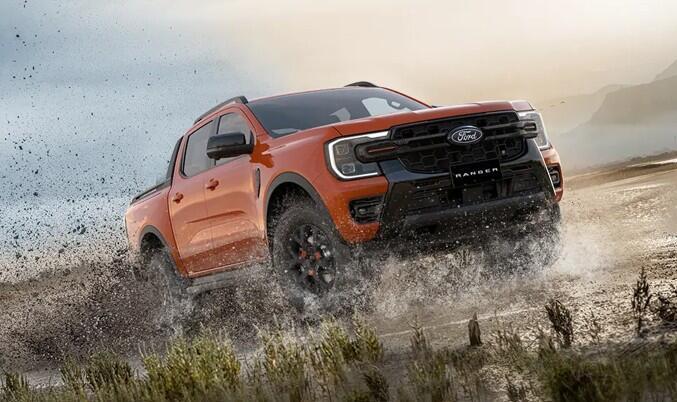
Choosing the best Ford Ranger engine in New Zealand is not as simple as picking the one with the biggest power figure. A Ranger working on a Canterbury farm has very different needs from one commuting through Auckland, towing a caravan around the South Island, or exploring muddy forestry tracks near Rotorua.
So, what Ford Ranger engine is best in New Zealand?
For most Kiwi buyers, the 3.0-litre V6 turbo-diesel is the best all-round Ford Ranger engine. It delivers strong low-speed torque, relaxed open-road performance, excellent towing ability, and the kind of effortless acceleration that suits New Zealand’s hills and winding highways.
However, that does not automatically make it the best choice for everyone.
The 2.0-litre turbo-diesel remains the sensible workhorse for buyers focused on affordability, payload and everyday operating costs. Meanwhile, the Ranger Plug-in Hybrid can make more sense for drivers who charge regularly and complete plenty of shorter trips. At the opposite end of the paddock, the 3.0-litre twin-turbo petrol V6 in the Ranger Raptor is the performance champion.
Let us break down the options and find the engine that fits your actual lifestyle rather than simply looking impressive on a specification sheet.
- Ford Ranger Engine Options in New Zealand
- Quick Verdict: Which Ford Ranger Engine Is Best?
- Why the 3.0-Litre V6 Diesel Is the Best All-Rounder
- Is the 2.0-Litre Turbo-Diesel Ranger Engine Good?
- What Happened to the 2.0-Litre Bi-Turbo Diesel?
- Is the Ranger Plug-in Hybrid the Best Engine?
- Which Ranger Engine Is Best for Towing?
- Which Ford Ranger Engine Is Most Fuel-Efficient?
- Which Ranger Engine Is Best for Off-Road Driving?
- Which Ranger Engine Is Likely to Be Most Reliable?
- Diesel Particulate Filter Considerations
- Which Engine Is Best for a Ford Ranger Work Ute?
- Which Engine Is Best for a Family Ranger?
- Should We Buy the V6 Diesel or Save Money?
- New Ranger Engine Versus Used Ranger Engines
- Test-Driving Each Ranger Engine
- Our Final Ranking of Ford Ranger Engines
- Conclusion: What Ford Ranger Engine Is Best in New Zealand?
- Frequently Asked Questions
Ford Ranger Engine Options in New Zealand
The current New Zealand Ranger range includes several distinctly different powertrains:
- 2.0-litre four-cylinder turbo-diesel
- 3.0-litre V6 turbo-diesel
- 2.3-litre EcoBoost plug-in hybrid
- 3.0-litre twin-turbo EcoBoost petrol V6 in the Ranger Raptor
Ford’s New Zealand specifications list the regular 2.0-litre turbo-diesel at 125kW and 405Nm, while the 3.0-litre V6 diesel produces 184kW and 600Nm. Both are paired with a 10-speed automatic transmission in current advertised configurations.
The Ranger Plug-in Hybrid combines a 2.3-litre EcoBoost petrol engine with an electric motor. Ford quotes a total system output of 207kW and 697Nm, supported by an 11.8kWh usable battery and full-time four-wheel drive.
The Ranger Raptor sits in a different category. Its 3.0-litre twin-turbo EcoBoost petrol V6 develops 292kW and 583Nm, making it the most powerful Ranger engine sold in New Zealand.
Those figures tell us part of the story, but numbers alone cannot explain how each engine feels when climbing a steep rural road with a trailer attached.
Quick Verdict: Which Ford Ranger Engine Is Best?
Here is the practical answer:
| Ranger engine | Best for | Main advantage | Main compromise |
|---|---|---|---|
| 2.0L turbo-diesel | Fleets, trades and value-focused buyers | Lower purchase cost and useful torque | Less effortless under heavy loads |
| 3.0L V6 turbo-diesel | Towing, touring and all-round use | Strong, smooth and versatile | Higher price and fuel consumption |
| 2.3L plug-in hybrid | Urban use, home charging and mixed driving | High torque and electric capability | Benefits depend on regular charging |
| 3.0L petrol V6 Raptor | Performance and fast off-road driving | Exceptional power and character | High fuel use and lower towing capacity |
If we could recommend only one engine without knowing anything about the buyer, we would choose the 3.0-litre V6 turbo-diesel. It is the most complete traditional Ranger powertrain for New Zealand conditions.
It may not be the cheapest, greenest or fastest, but it performs almost every ordinary ute task exceptionally well.
Why the 3.0-Litre V6 Diesel Is the Best All-Rounder
The V6 diesel feels like the engine the Ranger chassis was waiting for. Its 600Nm of torque arrives between 1,750 and 2,250rpm, giving the ute a broad wave of pulling power without requiring dramatic throttle inputs.
That matters in New Zealand because our roads rarely behave like rulers.
They climb, dip, twist and tighten. A ute may leave a motorway, cross a steep rural route, crawl through a paddock and reverse a trailer up a gravel driveway—all before lunch.
The V6 diesel handles those transitions with less strain than the smaller engine. It feels calmer when overtaking, more composed while towing and less busy on long journeys.
Power That Feels Effortless
The V6’s advantage is not simply that it accelerates faster. The larger engine does not need to work as hard to move the Ranger.
Imagine two people carrying the same heavy box. One can lift it comfortably; the other can still carry it, but must breathe harder. That is roughly how the V6 compares with the 2.0-litre diesel when the vehicle is heavily loaded.
The smaller engine is capable, but the V6 usually feels more relaxed.
This extra reserve is especially valuable when:
- Towing a large caravan
- Pulling a horse float
- Carrying tools and equipment
- Driving through hilly regions
- Overtaking on two-lane roads
- Travelling with passengers and luggage
- Fitting heavier off-road accessories
Better Suited to New Zealand’s Terrain
New Zealand has relatively short distances compared with larger countries, but those kilometres can be demanding.
A drive through the Southern Alps is not equivalent to cruising along a flat motorway. Neither is hauling equipment across a steep North Island farm.
The 3.0-litre diesel’s generous torque makes elevation changes feel less dramatic. The transmission does not need to chase gears as frequently, and the engine maintains speed more confidently on long climbs.
That relaxed character is one of the V6’s greatest strengths.
A Strong Choice for Long-Distance Touring
For extended road trips, the V6 diesel is arguably the most satisfying Ranger engine.
It offers the low-revving character we expect from a larger diesel, while the 10-speed automatic keeps the engine within its useful torque range. Ford offers the V6 diesel across several New Zealand Ranger variants, including versions of the XL, XLT, Wildtrak, Platinum, Tremor and Wolftrak ranges.
On long journeys, the V6 feels less like a commercial engine wearing polished shoes and more like a proper touring powertrain.
Is the 2.0-Litre Turbo-Diesel Ranger Engine Good?
Yes. The 2.0-litre turbo-diesel is still a good engine, particularly when value and practicality matter more than effortless performance.
The current single-turbo version produces 125kW and 405Nm. Those figures are lower than the outputs of the V6, but they remain adequate for daily work, commuting and moderate towing.
We should not confuse “less powerful” with “underpowered.”
For an unladen Ranger driven sensibly, the 2.0-litre diesel performs its job without drama. It can carry equipment, travel on rural roads and complete ordinary ute duties perfectly well.
Who Should Choose the 2.0-Litre Diesel?
The smaller diesel makes sense for:
- Business fleets
- Tradespeople carrying moderate loads
- Buyers who rarely tow heavy trailers
- Drivers covering substantial annual distances
- Owners prioritising purchase price
- Rural buyers wanting a straightforward work ute
- Anyone who does not need V6 performance
If the Ranger spends most of its life transporting one or two people and a modest collection of tools, paying extra for 600Nm may be unnecessary.
A Sensible Fleet Engine
For fleet operators, engine selection is often an accounting decision rather than an emotional one.
A V6 may be faster and smoother, but a company purchasing several Rangers must consider upfront cost, fuel, insurance, servicing and replacement cycles. Across an entire fleet, small differences can grow into large numbers.
The 2.0-litre engine therefore remains a rational choice. It provides enough performance for routine commercial use without forcing a business to pay for capability it may rarely use.
Where the 2.0-Litre Diesel Feels Limited
Its limitations become clearer when the Ranger is:
- Heavily loaded
- Towing near its maximum capacity
- Climbing long gradients
- Fitted with heavy accessories
- Asked to overtake quickly
- Driven regularly on demanding off-road terrain
Under those conditions, the engine and transmission may need to work harder. More gear changes, higher revs and stronger throttle inputs become part of the experience.
It still completes the task. It simply does so with less grace than the V6.
What Happened to the 2.0-Litre Bi-Turbo Diesel?
Earlier versions of the current-generation Ranger were widely offered with Ford’s 2.0-litre Bi-Turbo diesel, which produced 154kW and 500Nm. Ford’s original New Zealand launch information positioned it between the 125kW single-turbo diesel and the 184kW V6.
That engine was an appealing middle ground. It offered noticeably more urgency than the single-turbo unit without the size or pricing of the V6.
However, Ford’s 2026 New Zealand pricing and model information now emphasises the 2.0-litre turbo-diesel and expanded availability of the 3.0-litre V6 diesel. Buyers considering a particular new or used Ranger should therefore verify the exact engine fitted rather than relying solely on the trim badge.
On the used market, the Bi-Turbo remains relevant and may suit buyers looking for a balance between performance and price.
Is the Ranger Plug-in Hybrid the Best Engine?
For the right owner, the Ranger Plug-in Hybrid may be the smartest engine in the range.
It combines a 2.3-litre turbocharged petrol engine with a 75kW electric motor. Total system output reaches 207kW and 697Nm, meaning it produces more quoted torque than the V6 diesel.
That sounds like a knockout punch, but hybrid ownership is more complicated than choosing the highest number.
The Hybrid Works Best When Charged Regularly
A plug-in hybrid delivers its greatest advantages when the owner can charge it frequently.
A driver with home charging who completes short local journeys may use electric driving for a meaningful portion of the week. A tradesperson could potentially travel between nearby jobs with reduced fuel use, then charge again overnight.
By contrast, someone who never plugs it in will carry the additional weight and complexity of the hybrid system without enjoying its full benefits.
This engine is therefore less forgiving of poor ownership habits. The V6 diesel works in broadly the same way every day. The hybrid’s efficiency depends heavily on how and where it is used.
Excellent Torque for Work and Towing
The hybrid’s 697Nm system output gives it strong low-speed response. Electric motors provide immediate assistance, making the Ranger feel eager when moving away from a stop or responding to the accelerator.
Ford also positions the New Zealand Ranger Hybrid as a vehicle capable of towing, carrying payload and operating off-road rather than merely serving as an urban lifestyle model.
That distinction matters. It remains a Ranger, not a delicate city crossover with a deck attached.
Pro Power Onboard Adds Real Utility
One of the hybrid Ranger’s most interesting advantages is not found under the accelerator pedal.
Its onboard electrical capability can supply power for tools, equipment or recreational appliances. For builders, mobile technicians, campers and outdoor enthusiasts, that feature may be more valuable than a small improvement in acceleration.
Instead of carrying a separate generator, owners may be able to power equipment directly from the vehicle.
That turns the Ranger into something closer to a mobile power station.
The Hybrid’s Main Disadvantages
The plug-in hybrid may not be ideal for:
- Drivers without convenient charging
- Owners completing constant long-distance motorway trips
- Buyers seeking the simplest possible powertrain
- People prioritising maximum payload
- Remote users concerned about specialised repairs
- Buyers working within a tight purchase budget
Its high torque does not automatically make it superior to the diesel for every type of heavy work. Vehicle weight, payload, fuel use after battery depletion and charging habits all influence the real-world result.
Which Ranger Engine Is Best for Towing?
For conventional long-distance towing, we would choose the 3.0-litre V6 diesel.
Its combination of 600Nm, diesel efficiency, broad torque delivery and relaxed open-road performance makes it particularly well suited to caravan, boat and horse-float towing.
Most mainstream Ranger variants have historically offered up to 3,500kg of maximum braked towing capacity when properly configured, whereas the Ranger Raptor is rated lower at 2,500kg. The exact limit depends on model, configuration, vehicle loading and applicable specifications.
Why Torque Matters While Towing
Torque helps the Ranger start moving with a heavy trailer and maintain speed on gradients.
However, maximum torque is only part of the equation. We must also consider:
- Cooling capacity
- Transmission calibration
- Vehicle weight
- Tow-ball download
- Gross combined mass
- Payload remaining after accessories
- Trailer braking
- Stability and suspension setup
A giant torque figure cannot repeal the laws of physics.
V6 Diesel Versus Hybrid for Towing
The hybrid produces more quoted torque, but the V6 diesel remains the more familiar choice for sustained long-distance towing.
The hybrid may excel when towing locally, particularly if journeys begin with a charged battery. Yet on repeated long trips, its electric advantage may become less significant once the usable battery charge is depleted.
The V6 diesel, meanwhile, provides consistent behaviour regardless of whether the nearest charger is across the road or across the mountain.
For towing a large caravan from Auckland to Queenstown, the V6 diesel would be our first choice.
For towing equipment between nearby worksites and charging every night, the hybrid becomes much more compelling.
Which Ford Ranger Engine Is Most Fuel-Efficient?
The answer depends on how fuel efficiency is measured.
Ford advertises a combined average fuel-consumption figure of 2.8L/100km for the Ranger Hybrid. However, plug-in hybrid figures assume a charged battery and a particular testing cycle. Real-world consumption can vary significantly according to trip length, charging frequency, load, terrain and driving style.
A regularly charged hybrid completing short journeys may use dramatically less petrol than a diesel Ranger uses fuel.
A hybrid driven hundreds of kilometres without charging may produce a very different result.
Efficiency for Urban and Short Trips
Best choice: Ranger Plug-in Hybrid
Its electric capability is most useful in stop-start traffic, suburban driving and shorter journeys. These are conditions where diesel engines may also struggle to complete passive diesel particulate filter regeneration consistently.
Efficiency for Long-Distance Driving
Best choice: potentially the 2.0-litre diesel, depending on load and conditions.
The smaller diesel does not need to carry as much engine capacity as the V6 and may consume less fuel when driven gently. However, a heavily loaded 2.0-litre engine working hard can narrow the difference.
Efficiency While Towing
Best choice: generally the 3.0-litre V6 diesel for comfort and consistency, although it may not record the lowest raw fuel figure.
An engine that maintains speed without constantly changing gears can feel much more suitable even if it uses slightly more fuel.
Fuel economy matters, but so does arriving without feeling as though the vehicle spent the entire journey wrestling a bear.
Which Ranger Engine Is Best for Off-Road Driving?
For technical off-road driving, engine choice matters less than many buyers assume.
Tyres, suspension, gearing, four-wheel-drive hardware, ground clearance, driver skill and differential locks often influence off-road performance more than maximum engine output.
Nevertheless, each engine has a different character.
Best for Controlled Off-Road Torque: V6 Diesel
The 3.0-litre V6 diesel delivers strong low-rev torque and smooth progress. That makes it useful on steep climbs, loose surfaces and slow technical sections.
Its power reserve also helps when the Ranger is loaded with recovery equipment, camping gear or accessories.
Best for Fast Off-Road Driving: Raptor Petrol V6
The Ranger Raptor is the obvious answer for high-speed off-road performance.
Its 3.0-litre twin-turbo EcoBoost V6 produces 292kW and 583Nm. It is paired with specialised FOX suspension, performance-oriented drive modes and full-time four-wheel drive.
The Raptor is not simply a Ranger with a louder engine. It is engineered as a specialised performance vehicle.
Why the Raptor Is Not the Best Ranger for Everyone
The Raptor’s abilities are extraordinary, but many owners will never use them fully.
Its disadvantages include:
- Higher fuel consumption
- Premium purchase price
- Lower towing capacity than mainstream Rangers
- More expensive performance components
- Reduced focus on payload and commercial work
- A wide body that may be awkward in narrow spaces
The Raptor is the best Ranger engine for excitement, not necessarily the best engine for farm work, towing or business use.
Which Ranger Engine Is Likely to Be Most Reliable?
Reliability cannot be judged fairly from cylinder count alone.
A smaller engine is not automatically more reliable, and a larger engine is not automatically stronger. Maintenance history, operating conditions, driving habits and mechanical complexity all matter.
The 2.0-litre diesel may appeal to buyers who prefer a lower-output work engine. The V6 diesel, meanwhile, may operate with less effort under heavy loads but includes more cylinders and associated components.
The plug-in hybrid adds an electric motor, high-voltage battery, power electronics and hybrid transmission hardware. That does not mean it will be unreliable, but it creates a different long-term ownership equation.
Maintenance Matters More Than the Badge
Regardless of engine, a Ranger should receive:
- Correct engine oil
- Quality filters
- On-time servicing
- Proper cooling-system maintenance
- Suitable transmission servicing
- Regular checks for leaks
- Diesel particulate filter awareness
- Prompt investigation of warning lights
A carefully maintained Ranger used within its limits is likely to be a safer used purchase than a neglected example with the supposedly “best” engine.
Diesel Particulate Filter Considerations
Modern Ranger diesels use emissions-control equipment that benefits from appropriate driving conditions.
A diesel particulate filter collects soot and periodically burns it away through regeneration. Regular longer trips generally help the system reach the temperatures needed to complete this process.
A Ranger diesel used only for tiny urban journeys may not be operating in its ideal environment.
Drivers who complete mostly short trips should consider whether the plug-in hybrid better matches their routine.
It is rather like buying hiking boots for an office job. The boots may be excellent, but the environment never allows them to do what they were designed to do.
Which Engine Is Best for a Ford Ranger Work Ute?
For ordinary commercial use, the 2.0-litre turbo-diesel is often the best-value work engine.
It provides sufficient power for daily tasks while keeping the initial purchase price more manageable. Current New Zealand listings offer the 2.0-litre diesel in models such as the Ranger XL and XLT.
For heavier work, frequent towing or demanding rural use, the 3.0-litre V6 diesel deserves the upgrade.
Choose the 2.0-Litre Diesel When:
- Purchase price matters strongly
- The ute carries moderate loads
- Heavy towing is occasional
- Multiple vehicles are being purchased
- Drivers value function over performance
Choose the V6 Diesel When:
- The ute tows regularly
- Routes include steep terrain
- The vehicle carries substantial equipment
- Long-distance comfort matters
- Strong resale appeal is important
- The Ranger doubles as a family touring vehicle
Choose the Hybrid When:
- The vehicle returns to base each night
- Charging is available
- Trips are often short or urban
- Onboard electrical power is valuable
- The business wants to reduce fuel consumption
Which Engine Is Best for a Family Ranger?
The 3.0-litre V6 diesel is also our preferred engine for a family Ranger used for holidays, towing and general travel.
It offers enough performance to move a fully occupied double cab without feeling breathless. Add luggage, bikes, a roof platform and a trailer, and the V6’s additional torque becomes more than a luxury.
For families living in a city with home charging, the hybrid may be even better during the working week. It could complete school runs and local errands using electric assistance, then retain the versatility expected from a Ranger at the weekend.
The decision comes down to trip patterns:
- Frequent long journeys: V6 diesel
- Mostly short journeys with charging: plug-in hybrid
- Tight budget and light use: 2.0-litre diesel
- Weekend performance and adventure: Raptor petrol V6
Should We Buy the V6 Diesel or Save Money?
This is the question many buyers will eventually face.
The V6 is desirable, but desire can make us poor mathematicians.
Before upgrading, ask:
- How often will we tow?
- What does the trailer actually weigh?
- How much payload will we carry?
- Are our regular roads steep?
- How long do we plan to keep the Ranger?
- Does stronger resale demand offset some of the cost?
- Would the smaller engine already meet our needs?
If heavy towing happens twice per year, the V6 may be a want rather than a need.
If the Ranger tows every week, crosses mountain roads or carries equipment daily, the V6 may feel like money well spent every time the accelerator is pressed.
New Ranger Engine Versus Used Ranger Engines
Used Ranger buyers will encounter a broader engine range than new buyers, including:
- 2.2-litre five-cylinder diesel
- 3.2-litre five-cylinder diesel
- 2.0-litre single-turbo diesel
- 2.0-litre Bi-Turbo diesel
- 3.0-litre V6 turbo-diesel
- 3.0-litre petrol V6 Raptor
The older 3.2-litre five-cylinder remains popular for its strong character and established reputation, while the 2.0-litre Bi-Turbo offers stronger performance and a more modern driving experience.
However, condition matters more than mythology.
A well-serviced 2.0-litre Ranger may be a better purchase than an abused 3.2-litre model with an impressive reputation. Service records, diagnostic checks, transmission behaviour, towing history and underbody condition should all be inspected.
Test-Driving Each Ranger Engine
A short test drive around a dealership may not reveal meaningful differences.
Try to include:
- A steep hill
- Open-road acceleration
- Low-speed manoeuvring
- Rough or uneven surfaces
- Several transmission kickdowns
- Urban stop-start traffic
- Parking and reversing
Pay attention to how often the transmission changes gear, how quickly the engine responds and whether the power delivery feels natural.
Questions to Ask During the Test Drive
- Does the engine feel strained on hills?
- Is there enough overtaking performance?
- Does the transmission shift smoothly?
- Is engine noise acceptable?
- Will this performance remain adequate with a load?
- Can the hybrid be charged conveniently?
- Are the additional V6 costs justified?
The best engine is not the one that wins an imaginary race. It is the one that disappears into your daily routine and quietly makes every task easier.
Our Final Ranking of Ford Ranger Engines
1. 3.0-Litre V6 Turbo-Diesel: Best Overall
The V6 diesel wins because it combines strong torque, smooth operation, towing ability and open-road confidence.
It suits New Zealand unusually well. Our geography rewards engines that can pull strongly from low revs and maintain momentum through hills.
2. 2.3-Litre Plug-in Hybrid: Best for the Right Lifestyle
The hybrid is technologically impressive and produces the highest torque figure among mainstream Rangers.
It could be the best overall choice for owners with regular charging, short daily journeys and a genuine use for onboard electrical power.
3. 2.0-Litre Turbo-Diesel: Best Value
The 2.0-litre diesel remains the sensible tool of the range.
It is not exciting beside the V6, but many buyers do not require excitement. They need a ute that starts each morning, carries equipment and controls operating costs.
4. 3.0-Litre Petrol V6 Raptor: Best for Performance
The Raptor engine is easily the most thrilling.
However, its thirst, price, specialised purpose and lower towing capacity prevent it from being the best general-purpose Ranger engine.
Conclusion: What Ford Ranger Engine Is Best in New Zealand?
The 3.0-litre V6 turbo-diesel is the best Ford Ranger engine for most New Zealand buyers.
Its 184kW output and 600Nm of torque provide the strength needed for towing, touring, rural work and hilly roads without making the Ranger feel constantly pushed. It is smooth, flexible and reassuringly capable.
Still, the smartest purchase depends on use.
Choose the 2.0-litre turbo-diesel when affordability and straightforward work capability are the priorities. Choose the plug-in hybrid when home charging, short trips and onboard power suit your routine. Choose the Raptor’s petrol V6 when performance matters more than running costs or maximum towing.
A good engine meets the specification sheet. The best engine meets your life.
Frequently Asked Questions
1. Is the Ford Ranger V6 diesel worth buying in New Zealand?
Yes, particularly for buyers who tow regularly, carry heavy loads or travel through hilly terrain. Its 600Nm of torque gives the Ranger stronger, more relaxed performance than the 2.0-litre diesel. Buyers doing only light urban driving may not need the additional capability.
2. Is the 2.0-litre Ford Ranger engine powerful enough?
The 2.0-litre turbo-diesel’s 125kW and 405Nm are sufficient for commuting, commercial work and moderate loads. It may feel busier than the V6 when towing heavily or climbing steep roads, but it remains a capable everyday work engine.
3. Is the Ford Ranger Hybrid better than the diesel?
It can be better for drivers who charge regularly and complete many short journeys. Its 207kW and 697Nm system output provide strong performance, while electric driving can reduce fuel use. For continuous long-distance towing, the V6 diesel remains the more conventional choice.
4. Which Ford Ranger engine is best for towing a caravan?
The 3.0-litre V6 turbo-diesel is our preferred choice for towing a large caravan. Its broad torque delivery, diesel characteristics and relaxed open-road performance make it well suited to New Zealand’s hills and long touring routes.
5. Which Ford Ranger engine uses the least fuel?
The plug-in hybrid can use the least fuel when it is charged regularly and driven on shorter routes. For long-distance driving without charging, the 2.0-litre diesel may provide lower consumption than the V6, depending on load, terrain and driving style.
This content may interest you! Ford Ranger Models New Zealand: Complete 2026 Buyer’s Guide
Leave a Reply