
Will Ford Ranger Wheels Fit Toyota Hilux? Complete Fitment Guide
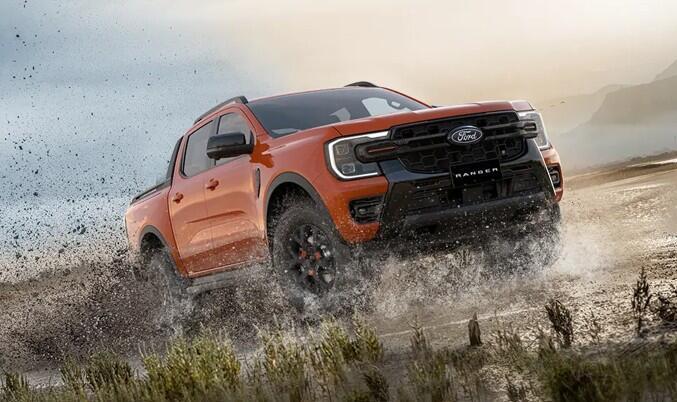
At first glance, fitting Ford Ranger wheels to a Toyota Hilux sounds straightforward. Both vehicles are rugged pickups, both commonly use six wheel studs, and their factory wheels often come in similar diameters. Put the two wheels side by side, and they may look like cousins from the same off-road family.
Unfortunately, wheel compatibility is not determined by appearance alone.
For most modern Australian, European, Asian, and international-market models, Ford Ranger wheels will not fit directly onto a Toyota Hilux, even though many versions share a 6×139.7 mm bolt pattern. The main obstacle is normally the centre bore: a modern Ranger wheel commonly has a smaller hub opening than the Hilux requires.
There are also potential differences in offset, wheel width, stud hardware, brake clearance, load rating, and tyre diameter. In other words, getting the wheel nuts through the holes is only the beginning of the conversation.
Let’s break down the complete answer so we can determine when the swap is impossible, when modification might make it physically achievable, and why buying Hilux-specific wheels is usually the smarter decision.
- The Quick Answer: Do Ranger Wheels Fit a Hilux?
- Ford Ranger vs Toyota Hilux Wheel Specifications
- Why Matching Bolt Patterns Are Not Enough
- Understanding the 6×139.7 Bolt Pattern
- The Centre-Bore Problem Explained
- Wheel Offset: The Second Major Difference
- Wheel Width and Diameter Considerations
- Stud Size and Wheel-Nut Seat Design
- Tyre Size and Overall Rolling Diameter
- Load Rating Matters on a Working Pickup
- What About Ford Ranger Raptor Wheels?
- Can Toyota Hilux Wheels Fit a Ford Ranger?
- Do Older Ranger Wheels Fit Older Hilux Models?
- How to Check Ranger Wheel Fitment on a Hilux
- Step 1: Identify Both Vehicles Exactly
- Step 2: Read the Wheel Markings
- Step 3: Measure the Centre Bore
- Step 4: Confirm the Bolt Pattern
- Step 5: Compare Width and Offset
- Step 6: Check Brake and Suspension Clearance
- Step 7: Verify Wheel-Nut Compatibility
- Step 8: Check Tyre Diameter and Load Index
- Step 9: Check Local Regulations
- Step 10: Have the Installation Inspected
- Signs That the Wheels Do Not Fit Correctly
- Why Universal or Multi-Fit Wheels Need Caution
- Is Machining Ranger Wheels Worth It?
- Better Wheel Alternatives for a Toyota Hilux
- Common Myths About Ranger and Hilux Wheels
- The Importance of Professional Advice
- Final Verdict: Will Ford Ranger Wheels Fit Toyota Hilux?
- Frequently Asked Questions
The Quick Answer: Do Ranger Wheels Fit a Hilux?
In most cases, no—not as a direct bolt-on installation.
Many modern Ford Ranger and Toyota Hilux models use the same basic six-stud pattern:
- Ford Ranger: commonly 6×139.7 mm
- Toyota Hilux: commonly 6×139.7 mm
- Number of wheel studs: six
- Pitch-circle diameter: 139.7 mm
That matching pattern explains why the wheels may appear compatible. However, the centre hole of a Ranger wheel is generally smaller than the centre hole required to slide over a Hilux hub.
A typical modern Ranger wheel has a centre bore of approximately 93.1 mm, while many modern Hilux models require roughly 106.1 mm. Because the Ranger opening is smaller, the wheel usually cannot pass over the Hilux hub.
Think of it like trying to place a small bottle cap over a larger bottle neck. The screw pattern around it might line up perfectly, but the centre obstruction stops everything before installation can begin.
Ford Ranger vs Toyota Hilux Wheel Specifications
The table below offers a general comparison for commonly encountered modern models. Exact specifications can vary according to year, trim, drivetrain, market, and factory wheel package.
| Specification | Modern Ford Ranger | Modern Toyota Hilux |
|---|---|---|
| Bolt pattern | Commonly 6×139.7 mm | Commonly 6×139.7 mm |
| Centre bore | Commonly around 93.1 mm | Commonly around 106.1 mm |
| Typical wheel diameter | 16–20 inches | 16–18 inches |
| Typical positive offset | Often higher | Often lower |
| Direct interchangeability | Usually no | Not applicable |
| Main obstacle | Centre bore too small | Larger hub required |
Ford and Toyota currently offer their pickups with several wheel sizes depending on the grade. Toyota’s eighth-generation Hilux range has included 16-, 17-, and 18-inch options, while contemporary Ranger variants are offered with multiple sizes extending into larger premium wheels.
These figures should be treated as a starting point rather than permission to install a wheel. Before buying anything, we need specifications for the exact Ranger wheel and the exact Hilux receiving it.
Why Matching Bolt Patterns Are Not Enough
The phrase “same bolt pattern” often creates false confidence.
A bolt pattern tells us only two things:
- How many wheel studs or bolt holes there are.
- The diameter of the imaginary circle passing through those studs.
It does not confirm that the wheel will sit correctly against the hub, clear the brakes, remain inside the guards, carry the vehicle’s weight, or work with the original wheel nuts.
Two vehicles can share a 6×139.7 pattern and still require completely different wheels. This pattern is widely used across pickups and four-wheel drives, but each manufacturer can choose its own centre bore, offset, mounting-seat design, wheel width, and brake package.
The Ranger-to-Hilux question is a perfect example. The matching stud pattern opens the door, but the smaller Ranger centre bore usually places a brick wall directly behind it.
Understanding the 6×139.7 Bolt Pattern
A 6×139.7 wheel has six mounting holes arranged on a circle measuring 139.7 mm in diameter. The measurement is also commonly expressed as 6×5.5 inches.
Because both vehicles frequently use this arrangement, a loose Ranger wheel may align with the studs on a Hilux. That visual alignment can make the swap look promising.
However, we should never judge compatibility by loosely placing a wheel against the vehicle. A correct wheel must sit completely flat against the hub mounting face without interference, rocking, gaps, forced tightening, or contact with suspension and brake components.
If the centre opening catches on the Hilux hub, tightening the nuts will not turn an incompatible wheel into a compatible one.
Does Every Ford Ranger Use 6×139.7?
No. The Ranger name has been used on different pickups in different markets and generations.
North American Ranger models, older compact Rangers, Mazda-related generations, global-market Rangers, and modern T6-based vehicles do not necessarily share identical wheel specifications. Even when two generations use six studs, centre-bore and offset dimensions may differ.
This is why searching only for “Ford Ranger wheels” is too vague. We need to know:
- Model year
- Country or sales market
- Two-wheel-drive or four-wheel-drive configuration
- Trim level
- Original wheel dimensions
- Donor wheel part number
A wheel from a 2024 Australian Ranger Wildtrak is not automatically interchangeable with one from an older American Ranger simply because both carry a Ford badge.
Does Every Toyota Hilux Use the Same Pattern?
Not necessarily.
Many popular Hilux generations use six-stud wheels, especially four-wheel-drive and heavier-duty configurations. Nevertheless, specifications can differ across generations, markets, body styles, and two-wheel-drive variants.
Some work-oriented models may use different wheel widths, offsets, tyre packages, or brake arrangements. The safe approach is always to read the tyre placard, consult the owner’s manual, or verify the vehicle identification details with Toyota. Toyota itself directs owners to the tyre placard or owner’s manual for vehicle-specific tyre information.
The Centre-Bore Problem Explained
The centre bore is the large circular opening in the middle of the wheel. It must be large enough to pass over the vehicle’s hub-centering lip.
On many modern Ranger wheels, this opening is approximately 93.1 mm. On many Hilux applications, the hub requires an opening of approximately 106.1 mm.
That difference is substantial:
106.1 mm − 93.1 mm = 13 mm
In diameter terms, the Ranger wheel opening may be roughly 13 mm too small. That means about 6.5 mm of additional radial clearance would be needed around the entire opening.
No amount of ordinary hub-centric rings can solve this situation.
Hub rings are designed to fill a gap when a wheel’s bore is larger than the vehicle hub. They cannot make a physically smaller centre hole fit over a larger hub.
Can We Use Hub-Centric Rings?
Not when fitting a smaller-bore Ranger wheel to a larger Hilux hub.
For example, suppose we have an aftermarket wheel with a 110 mm centre bore and a Hilux hub measuring around 106.1 mm. A properly selected ring could reduce the wheel opening so it centres neatly on the hub.
With a Ranger factory wheel, the situation is reversed. Its centre opening may already be smaller than the Hilux hub. There is no empty space for a ring to fill.
The wheel simply will not slide fully into position.
Can the Ranger Wheel Bore Be Machined Larger?
A specialist machine shop may be able to enlarge the centre bore of some alloy wheels. Physically possible, however, does not automatically mean safe, legal, affordable, or sensible.
Machining removes material from a load-bearing component. Whether it can be done safely depends on:
- Wheel design
- Thickness around the centre bore
- Material and manufacturing method
- Structural shape behind the mounting pad
- Amount of metal that must be removed
- Local roadworthiness regulations
- Approval from a qualified engineer
- Wheel manufacturer guidance
The required enlargement is not a tiny cleanup. Moving from approximately 93.1 mm to 106.1 mm means removing a meaningful amount of material around the opening.
Poor machining can create an off-centre bore, weaken the wheel, introduce vibration, reduce mounting-pad strength, or leave insufficient material near the stud holes. It may also void the wheel manufacturer’s approval or create insurance and inspection problems.
For most owners, purchasing wheels produced for the Hilux is cheaper and safer than modifying used Ranger wheels.
Never Force the Wheel Onto the Hub
We should never use wheel nuts to pull a tight wheel over the centre lip.
This can:
- Prevent the wheel from sitting flush
- Damage the hub
- Distort the wheel
- Apply uneven clamping force
- Produce vibration
- Loosen wheel nuts
- Increase the risk of stud failure
- Make future wheel removal extremely difficult
A wheel must slide into position naturally and sit flat before the nuts are tightened.
Wheel Offset: The Second Major Difference
Even if the centre bore were enlarged correctly, offset could still create trouble.
Wheel offset is the distance between the wheel’s centreline and its mounting surface. It is normally expressed in millimetres:
- Positive offset: mounting face sits toward the outside of the wheel.
- Zero offset: mounting face aligns with the wheel centreline.
- Negative offset: mounting face sits toward the inside edge.
Modern Ranger factory wheels often use relatively high positive offsets. Hilux wheels commonly use lower positive offsets, although exact values vary widely by model and grade.
When a high-positive-offset Ranger wheel is installed on a Hilux, the wheel can sit farther inward than intended.
That may cause contact with:
- Upper control arms
- Steering components
- Brake calipers
- Shock absorbers
- Inner guards
- Anti-roll-bar components
- Chassis or suspension parts
The problem may appear only while turning, braking, carrying a load, or compressing the suspension. A wheel that clears while the vehicle is parked can still rub badly on the road.
How Offset Changes Wheel Position
Suppose the original Hilux wheel has a +30 mm offset and the Ranger wheel has a +55 mm offset, with both wheels being the same width.
This content may interest you! Toyota Voxy vs Alphard Size: Which MPV Fits Your Life?
The Ranger wheel would sit approximately 25 mm farther inward.
That is a dramatic change. It reduces inner clearance and alters track width by about 50 mm across the axle.
Wheel width complicates the calculation further. A wider wheel can extend both inward and outward, depending on its offset. We therefore cannot compare offset figures without also comparing rim width.
Will Wheel Spacers Solve the Offset Problem?
Spacers might move a wheel outward, but they do not automatically create a safe or legal conversion.
A spacer would need to:
- Clear the Hilux hub
- Fit the wheel’s smaller centre bore
- Provide the correct centring arrangement
- Use suitable studs or fasteners
- Maintain adequate thread engagement
- Carry the vehicle’s loads
- Comply with local law
- Avoid excessive track-width changes
In some jurisdictions, aftermarket wheel spacers are restricted or prohibited unless originally installed or specifically approved. Ford Australia’s published wheel guidance, for example, notes that wheel spacers are not permitted in several Australian state or territory scenarios except where fitted by the manufacturer. It also stresses that wheels must not contact the body or suspension or protrude beyond the bodywork.
Using a spacer to rescue an already questionable wheel swap can turn a simple purchase into a chain of compromises. We fix the offset but introduce new concerns involving leverage, stud loading, centring, and legality.
Wheel Width and Diameter Considerations
A 17-inch Ranger wheel and a 17-inch Hilux wheel do not necessarily share the same width or shape.
Wheel dimensions are normally written in a format such as:
17×8J
This means the wheel is 17 inches in diameter and approximately 8 inches wide between the tyre bead seats.
Changing wheel width affects:
- Tyre compatibility
- Inner suspension clearance
- Outer guard clearance
- Steering feel
- Sidewall shape
- Bead seating
- Vehicle track
- Scrub radius
A Ranger wheel that is wider than the Hilux factory wheel may create additional rubbing, especially when combined with a high positive offset.
Diameter also matters because the wheel must clear the brake package. A 16-inch wheel might share the correct bolt pattern yet fail to clear the caliper on a Hilux grade originally equipped with larger wheels and brakes.
Brake-Caliper Clearance Is Not Guaranteed
Wheel diameter alone does not tell us how much internal brake clearance exists.
Two 17-inch wheels can have completely different barrel shapes, spoke profiles, and mounting-pad depths. One may fit over a brake caliper comfortably, while another touches it before reaching the hub face.
Toyota noted larger ventilated front discs across the eighth-generation Hilux range when that generation launched, reinforcing why brake clearance should be checked rather than assumed.
We need to inspect both radial and lateral clearance:
- Radial clearance between the caliper and wheel barrel
- Lateral clearance between the caliper and wheel spokes
- Clearance to wheel-balance weights
- Clearance during wheel flex and heat expansion
A few millimetres on a stationary vehicle may not be enough.
Stud Size and Wheel-Nut Seat Design
Matching bolt holes do not confirm that the original Hilux nuts are suitable for a Ranger wheel.
Wheel nuts differ in:
- Thread diameter
- Thread pitch
- Seat shape
- Seat angle
- Shank length
- Overall length
- Washer design
- Material
- Load capacity
Common seat designs include conical, ball, flat, and mag-style seats. Using a conical nut on a wheel designed for a flat washer can prevent proper clamping even when the thread fits the stud.
The nut may feel tight while contacting only a small portion of the seat. Under repeated loading, this can damage the wheel, loosen the fastener, and allow movement around the stud holes.
We should use hardware approved for the exact wheel-and-vehicle combination—not whichever nut happens to screw onto the stud.
Tyre Size and Overall Rolling Diameter
Perhaps the Ranger wheel itself could be modified, but what about the tyre fitted to it?
Ranger and Hilux models frequently run tyres with similar-looking dimensions, yet even a small difference in overall diameter can affect:
- Speedometer accuracy
- Odometer readings
- Effective gearing
- Acceleration
- Braking
- Fuel consumption
- Electronic stability control
- Automatic transmission behaviour
- Clearance at full steering lock
- Spare-wheel compatibility
The wheel diameter is only one piece of the equation. A 265/65R17 tyre and a 265/70R17 tyre both fit 17-inch wheels, but the second has a taller sidewall and a larger rolling diameter.
How to Compare Tyre Diameters
A tyre labelled 265/65R17 can be interpreted as follows:
- 265: tread-section width in millimetres
- 65: sidewall height as a percentage of width
- R: radial construction
- 17: wheel diameter in inches
Approximate sidewall height:
265 × 0.65 = 172.25 mm
Approximate overall diameter:
(172.25 × 2) + (17 × 25.4) = 776.3 mm
We should calculate the original and proposed diameters rather than relying on visual similarity.
A modest change may be acceptable under applicable rules, but a large increase can create rubbing and alter the operation of safety systems. The tyre placard and local regulations remain the primary references.
Load Rating Matters on a Working Pickup
The Hilux and Ranger are often used for towing, carrying tools, transporting equipment, and travelling off-road. Wheel load rating is therefore crucial.
A wheel must be rated for the load imposed on it—not merely for the vehicle’s empty weight.
We should consider:
- Gross vehicle mass
- Maximum axle loads
- Payload
- Towing downforce
- Accessories
- Bull bars and winches
- Canopies
- Long-range fuel tanks
- Camping equipment
- Uneven off-road impact loads
A wheel from a lighter-duty Ranger variant may not automatically meet the requirements of a heavily loaded Hilux. Likewise, an attractive aftermarket wheel may have the right dimensions but an inadequate load rating.
The wheel should display or document a recognised load rating, and that rating must comfortably satisfy the relevant axle requirements.
What About Ford Ranger Raptor Wheels?
Ranger Raptor wheels deserve special caution.
Although they may use a six-stud pattern, Raptor wheels and tyres are designed around the Raptor’s unique suspension, track, brakes, guards, and body clearance.
Potential issues on a Hilux include:
- Incompatible centre bore
- Unsuitable offset
- Excessive inward positioning
- Wide tyres
- Guard rubbing
- Brake interference
- Altered track width
- Excessive rolling diameter
- Different wheel-nut requirements
The aggressive appearance is tempting. Raptor wheels can make almost any pickup look ready to leap across a desert. Yet appearance does not erase geometry.
A Hilux-specific wheel with a similar off-road design provides the look without forcing us to redesign the mounting system around an incompatible factory wheel.
Can Toyota Hilux Wheels Fit a Ford Ranger?
The reverse conversion can sometimes be physically easier because a Hilux wheel’s centre opening is generally larger than the Ranger hub.
A larger-bore wheel can potentially pass over the smaller Ranger hub, assuming the bolt pattern matches. A correctly designed hub-centric ring may then fill the gap.
However, that still does not establish complete compatibility.
We must verify:
- Offset
- Wheel width
- Brake clearance
- Nut-seat design
- Stud compatibility
- Load rating
- Tyre diameter
- Guard clearance
- Local regulations
This directional difference is important:
- Ranger wheel onto Hilux: centre bore is commonly too small.
- Hilux wheel onto Ranger: centre bore may be large enough, but centring and other dimensions still require attention.
Wheel interchangeability is not always symmetrical.
Do Older Ranger Wheels Fit Older Hilux Models?
Possibly in isolated combinations, but there is no universal answer.
Older vehicles can have different:
- Bolt patterns
- Centre bores
- offsets
- Stud threads
- Brake sizes
- Axle configurations
- Two-wheel-drive and four-wheel-drive specifications
The only reliable approach is to compare exact measurements.
For the donor Ranger wheel, record:
- Diameter
- Width
- Offset
- Bolt pattern
- Centre bore
- Load rating
- Part number
- Nut-seat design
Then compare those details with the exact Hilux model and its tyre placard.
This content may interest you! Ford Ranger vs Toyota Hilux: Which Pickup Is Better?
Never assume that “old six-stud wheels” are interchangeable. Pickups from the same decade may still use dramatically different hub and offset geometry.
How to Check Ranger Wheel Fitment on a Hilux
Before purchasing or modifying anything, follow a structured inspection.
Step 1: Identify Both Vehicles Exactly
Write down the complete details:
- Ranger model year and generation
- Ranger trim and drivetrain
- Ranger sales market
- Hilux model year and generation
- Hilux trim and drivetrain
- Hilux sales market
This prevents comparisons between specifications sourced from unrelated regional models.
Step 2: Read the Wheel Markings
Factory wheel dimensions are often cast or stamped on the rear of the wheel.
Look for markings such as:
- 17×8J
- ET55
- Manufacturer part number
- Load rating
- Certification marks
“ET55,” for example, usually indicates a +55 mm offset.
Step 3: Measure the Centre Bore
Use accurate vernier calipers rather than a household ruler.
Measure the wheel’s centre opening and compare it with the Hilux hub lip. The wheel bore must be at least as large as the vehicle hub.
If it is smaller, stop. Do not attempt to force the wheel into place.
Step 4: Confirm the Bolt Pattern
Verify both the stud count and pitch-circle diameter.
Do not assume that every six-stud pattern is 6×139.7. Other six-stud patterns exist, and a small mismatch can be difficult to spot by eye.
Step 5: Compare Width and Offset
Use an online offset calculator or calculate the inner and outer position changes manually.
The comparison must account for both width and offset. Offset alone cannot tell us where the wheel edges will sit.
Step 6: Check Brake and Suspension Clearance
A professional trial fit should be carried out without forcing the wheel.
The technician should inspect clearance:
- At full left steering lock
- At full right steering lock
- Around the calipers
- Around the upper control arms
- Near steering links
- Through suspension movement
- With the vehicle loaded appropriately
Step 7: Verify Wheel-Nut Compatibility
Confirm the required thread and seat type. The correct torque value should come from the vehicle or approved hardware specification.
Step 8: Check Tyre Diameter and Load Index
The proposed tyre must fit the wheel correctly and meet or exceed the load and speed requirements for the Hilux.
Step 9: Check Local Regulations
Wheel width, tyre diameter, track changes, body coverage, spacers, and structural modifications may all be regulated.
Legal requirements vary by country and, in some places, by state or territory. Manufacturer guidance also warns that replacement wheels must avoid body or suspension contact and may be subject to strict width and track limits.
Step 10: Have the Installation Inspected
After installation, a qualified wheel specialist should confirm:
- Correct seating
- Correct torque
- No vibration
- No rubbing
- Proper balance
- Safe thread engagement
- Suitable tyre pressure
- Acceptable alignment
Wheel nuts should be rechecked according to the installer’s or manufacturer’s recommendation after the initial driving period.
Signs That the Wheels Do Not Fit Correctly
A bad wheel swap often gives warnings. We should never ignore them.
Common symptoms include:
- Wheel will not sit flush
- Visible gap behind the mounting face
- Nuts tighten unevenly
- Steering-wheel vibration
- Vehicle pulls to one side
- Clicking or knocking
- Tyre rub at full lock
- Caliper contact
- Wheel touches a control arm
- Stud threads appear insufficient
- Nuts repeatedly loosen
- Tyres protrude beyond the guards
- Steering becomes unusually heavy
- Stability-control warnings appear
Any of these signs justify stopping and inspecting the installation immediately.
Why Universal or Multi-Fit Wheels Need Caution
Some aftermarket wheels have multiple sets of bolt holes and are marketed as multi-fit designs. That does not mean they fit every six-stud pickup.
A suitable aftermarket wheel still needs:
- The correct 6×139.7 drilling
- A centre bore large enough for the Hilux
- Proper hub rings when required
- Appropriate offset
- Adequate load rating
- Correct nut seats
- Brake clearance
- Legal wheel and tyre dimensions
Multi-fit holes solve only one part of the puzzle. In fact, their busy mounting area can make inspection more confusing because not every visible hole belongs to the Hilux pattern.
Is Machining Ranger Wheels Worth It?
For most Hilux owners, no.
Let’s consider the likely process:
- Purchase used Ranger wheels.
- Remove the tyres.
- Send each wheel for precision machining.
- Confirm enough material remains.
- Obtain engineering or roadworthiness approval if required.
- Correct the offset, perhaps with an approved solution.
- Find suitable wheel nuts.
- Test brake clearance.
- Refit and balance the tyres.
- Accept uncertainty around resale and insurance.
Now compare that with buying Hilux-compatible wheels designed with the correct bore and offset from the beginning.
The second path is usually cleaner, quicker, safer, and easier to document. Used Ranger wheels may look inexpensive in an advertisement, but conversion costs can swallow the saving like sand disappearing beneath a tyre.
Better Wheel Alternatives for a Toyota Hilux
Rather than modifying Ranger wheels, look for wheels specifically listed for the exact Hilux generation.
Strong options include:
- Genuine Toyota Hilux wheels
- Hilux-compatible aftermarket alloy wheels
- Load-rated steel wheels
- Wheels approved for both the Hilux and another compatible Toyota platform
- Reputable 4×4 wheels with documented fitment
The ideal wheel should provide:
- Correct centre bore or an approved larger bore with hub rings
- Correct 6×139.7 bolt pattern where applicable
- Suitable offset
- Adequate brake clearance
- Correct load rating
- Compatible nut seats
- Legal width and track position
- Suitable tyre choices
A proper wheel should fit like a tailored boot, not like a shoe stretched until the seams begin to complain.
Common Myths About Ranger and Hilux Wheels
“They Are Both Six-Stud, So They Fit”
False. Six studs do not identify the full bolt pattern, centre bore, offset, or nut type.
“The Wheel Nuts Will Centre the Wheel”
Not safely in every application. Correct hub fit and wheel-seat design remain critical, especially when the wheel was not engineered for the vehicle.
“A Hub Ring Can Fix Any Bore Difference”
False. Rings reduce a wheel’s effective bore. They cannot enlarge a wheel that is already too small.
“Spacers Fix the Entire Problem”
False. Spacers may affect offset, but they introduce additional fitment, structural, fastening, and legal considerations. They also cannot magically make every centre-bore arrangement compatible.
“If It Does Not Rub While Parked, It Fits”
False. Clearance changes under steering, braking, suspension compression, axle movement, heat, and payload.
The Importance of Professional Advice
Wheel fitment affects far more than appearance. Each wheel carries a significant portion of the vehicle’s mass while absorbing acceleration, braking, cornering, potholes, towing loads, and off-road impacts.
An incorrect installation can compromise:
- Steering control
- Wheel-bearing life
- Suspension geometry
- Brake cooling
- Tyre life
- Fastener integrity
- Electronic safety systems
- Insurance coverage
- Roadworthiness
Ford states that genuine and licensed accessories undergo engineering evaluation for compatibility with the vehicle. That does not prove that every non-genuine wheel is unsafe, but it illustrates why proper engineering compatibility matters.
A reputable tyre shop or automotive engineer can measure the wheel, check the hub, assess the load rating, and determine whether a proposed conversion is reasonable.
Final Verdict: Will Ford Ranger Wheels Fit Toyota Hilux?
For most modern models, Ford Ranger wheels will not fit directly onto a Toyota Hilux.
Although both vehicles commonly use a 6×139.7 mm bolt pattern, the Ranger wheel’s centre bore is usually smaller than the Hilux hub. As a result, the wheel cannot slide fully onto the mounting face.
Even if a specialist enlarges the bore, the Ranger wheel may still have:
- Excessive positive offset
- Insufficient suspension clearance
- Brake-caliper interference
- Unsuitable wheel-nut seats
- Incompatible tyre dimensions
- An uncertain load rating
- Legal or insurance complications
Could a carefully engineered conversion work in a specific case? Possibly. Is it normally the best solution? No.
For everyday owners, workers, tourers, and off-road drivers, Hilux-specific wheels are the sensible choice. They remove uncertainty, reduce modification costs, and allow us to focus on tyre selection rather than fighting mismatched hub geometry.
The wheel swap may look simple from across the workshop, but the details hide beneath the surface. Match the entire specification—not just the number of holes—and the Hilux will reward us with safer, smoother, and more predictable driving.
Frequently Asked Questions
1. Do Ford Ranger and Toyota Hilux wheels have the same bolt pattern?
Many modern Ford Ranger and Toyota Hilux models share a 6×139.7 mm bolt pattern. However, matching bolt patterns do not guarantee compatibility because the centre bore, offset, width, load rating, brake clearance, and wheel-nut design may differ.
2. Why won’t a Ranger wheel slide onto a Hilux hub?
The centre opening in many modern Ranger wheels is approximately 93.1 mm, while many Hilux hubs require an opening of around 106.1 mm. The smaller Ranger bore catches on the larger Hilux hub before the wheel can sit against the mounting face.
3. Can hub-centric rings make Ranger wheels fit a Hilux?
No, not when the Ranger wheel’s bore is smaller than the Hilux hub. Hub-centric rings fill space around a smaller hub when the wheel opening is larger. They cannot enlarge an undersized wheel opening.
4. Can I machine Ranger wheels to fit a Hilux?
Some alloy wheels may be machinable, but the work should be assessed and completed by qualified specialists. Removing material can affect strength, centring, certification, legality, and insurance. Offset and brake clearance would still need to be checked after machining.
This content may interest you!Ford Ranger Weight KG: Kerb Weight, Payload and GVM Explained5. What wheels should I buy for a Toyota Hilux?
Choose genuine Toyota wheels or reputable aftermarket wheels specifically approved for your Hilux’s year, generation, trim, drivetrain, brake package, and market. Verify bolt pattern, centre bore, width, offset, load rating, nut-seat type, and tyre compatibility before installation.
Leave a Reply