
Tesla Model Y Efficiency kWh/km: The Real-World Guide to How Far Your Energy Goes
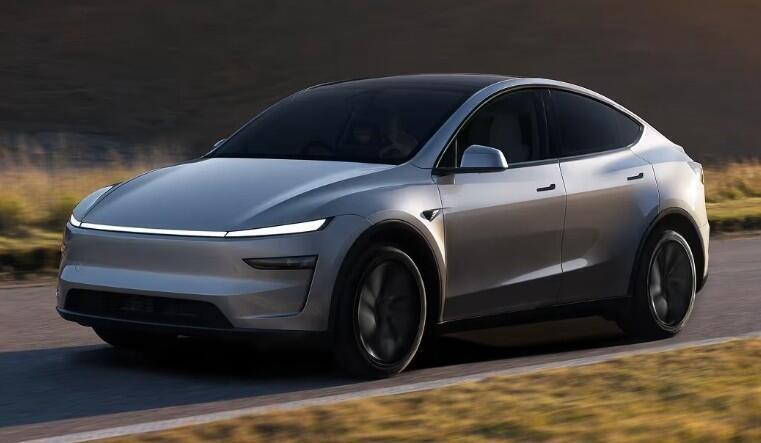
The Tesla Model Y efficiency kWh/km question sounds technical at first, almost like something only engineers should care about. But once we strip away the jargon, it becomes beautifully simple: how much electricity does the Model Y use to move one kilometre?
And that tiny number matters more than most people think.
It affects how much we pay to drive, how often we charge, how realistic the advertised range feels, and whether a weekend road trip feels smooth or stressful. In a petrol car, we talk about litres per 100 km. In an electric car, we talk about kWh per km, Wh/km, or kWh/100 km. Same idea, different fuel.
The Tesla Model Y has become one of the most talked-about electric SUVs in the world because it blends family practicality, quick acceleration, clever software, and surprisingly strong efficiency. It is not a tiny city car. It is a roomy crossover with a big boot, high seating position, and enough punch to make merging onto the motorway feel effortless. Yet it can sip electricity like a careful commuter when driven gently.
So, let’s unpack the numbers, the real-world expectations, and the everyday habits that help us get the best efficiency from a Tesla Model Y.
- What Does Tesla Model Y Efficiency kWh/km Mean?
- Tesla Model Y Efficiency in kWh/km: The Simple Number
- Tesla Model Y kWh/100 km Explained
- Why the Tesla Model Y Is So Efficient for an SUV
- Real-World Tesla Model Y Efficiency by Driving Situation
- Tesla Model Y Efficiency by Version
- How Wheels and Tyres Affect Tesla Model Y kWh/km
- Weather and Temperature: The Silent Efficiency Killer
- Speed: The Biggest Driver-Controlled Factor
- How to Improve Tesla Model Y Efficiency kWh/km
- Tesla Model Y Efficiency and Charging Cost
- Home Charging vs Supercharging Efficiency
- Is Tesla Model Y More Efficient Than Other Electric SUVs?
- Why Advertised Range and Real Efficiency Differ
- Best Tesla Model Y Efficiency: What Should We Aim For?
- Tesla Model Y Efficiency for Road Trips
- Tesla Model Y Efficiency in the City
- Tesla Model Y Efficiency in Cold Countries
- Tesla Model Y Efficiency in Hot Countries
- Does Battery Size Change Efficiency?
- Tesla Model Y Efficiency vs Petrol SUV Running Costs
- Common Mistakes That Hurt Model Y Efficiency
- Tesla Model Y Efficiency kWh/km: Buyer’s Perspective
- Final Thoughts: Tesla Model Y Efficiency kWh/km in Real Life
- FAQs About Tesla Model Y Efficiency kWh/km
What Does Tesla Model Y Efficiency kWh/km Mean?
When we say Tesla Model Y efficiency kWh/km, we are measuring how many kilowatt-hours of electricity the car uses to travel one kilometre.
Think of a kilowatt-hour as a “bucket” of energy. The smaller the bucket needed per kilometre, the more efficient the car is. If a Model Y uses 0.150 kWh/km, that means it consumes 0.150 kilowatt-hours to travel one kilometre. Multiply that by 100, and we get 15 kWh/100 km.
That is why EV efficiency is often written in three ways:
- kWh/km
- kWh/100 km
- Wh/km
They all describe the same thing, just with different units.
Quick Conversion Table
| Efficiency Format | Example | What It Means |
|---|---|---|
| kWh/km | 0.150 kWh/km | Energy used per kilometre |
| kWh/100 km | 15.0 kWh/100 km | Energy used per 100 km |
| Wh/km | 150 Wh/km | Watt-hours used per kilometre |
In simple terms, lower is better. A Model Y using 0.135 kWh/km is more efficient than one using 0.180 kWh/km.
Tesla Model Y Efficiency in kWh/km: The Simple Number
A typical Tesla Model Y can often land somewhere around:
- 0.130–0.160 kWh/km in gentle mixed driving
- 0.160–0.190 kWh/km in normal everyday driving
- 0.190–0.230+ kWh/km in cold weather, fast motorway use, or heavy rain
That means a practical everyday expectation is around 0.15 to 0.18 kWh/km, depending on trim, wheels, road speed, temperature, and driving habits.
The magic of the Model Y is that it can be impressively efficient for its size. We are not talking about a featherweight hatchback here. We are talking about a family SUV with a high roofline, a large cabin, a big cargo area, and plenty of performance. Yet it can still return energy numbers that make some smaller EVs look a little lazy.
Tesla Model Y kWh/100 km Explained
Because many regions use kWh/100 km, it helps to think in that format first.
If the Model Y consumes:
- 13 kWh/100 km, it is excellent
- 15 kWh/100 km, it is very efficient
- 17 kWh/100 km, it is normal and realistic
- 20 kWh/100 km, it is likely motorway, cold, windy, or faster driving
- 22+ kWh/100 km, conditions are working against us
To convert kWh/100 km into kWh/km, divide by 100.
So:
- 13 kWh/100 km = 0.13 kWh/km
- 15 kWh/100 km = 0.15 kWh/km
- 18 kWh/100 km = 0.18 kWh/km
- 22 kWh/100 km = 0.22 kWh/km
Easy, right? It is like moving the decimal point two places.
Why the Tesla Model Y Is So Efficient for an SUV
The Model Y’s efficiency is not accidental. Tesla has spent years polishing the small details, and with EVs, small details stack up like coins in a jar.
Aerodynamics Do the Heavy Lifting
At higher speeds, air resistance becomes the main enemy. The faster we drive, the more the car has to punch through the air. The Model Y’s smooth nose, flush door handles, curved roofline, flat underbody, and tidy rear shape help it glide rather than shove.
It is still an SUV, of course, not a teardrop-shaped science project. But compared with many boxier crossovers, the Model Y slips through the air more cleanly.
Efficient Electric Motors
Tesla’s motors are one of the brand’s biggest strengths. They convert battery energy into movement with very little waste. In plain English, more of the electricity goes into moving the car and less disappears as heat.
That is why the Model Y can feel quick without being thirsty.
Regenerative Braking
Regenerative braking is like catching coins before they fall into a drain. Instead of wasting braking energy as heat, the Model Y sends some of that energy back into the battery.
This content may interest you! Toyota RAV4 Fuel Consumption: The Real-World Guide We Wish We Had
In city driving, this can make a noticeable difference. Stop-start traffic, roundabouts, downhill sections, and gentle deceleration all become opportunities to recover energy.
Smart Thermal Management
Batteries like comfortable temperatures. Too cold, and they become sluggish. Too hot, and they need cooling. Tesla’s thermal management system helps keep the battery, motors, and cabin operating efficiently.
That said, physics still wins. A freezing winter morning will usually hurt efficiency more than a mild spring afternoon.
Real-World Tesla Model Y Efficiency by Driving Situation
No single efficiency number tells the whole story. The Model Y behaves differently in city traffic, on country roads, and on fast motorways.
City Driving Efficiency
In city driving, the Model Y can be wonderfully efficient. Speeds are lower, aerodynamic drag is reduced, and regenerative braking gets to work often.
A realistic city figure might be around 0.12–0.16 kWh/km, depending on temperature and traffic flow.
This is where EVs feel almost unfair compared with petrol cars. A petrol SUV often burns more fuel in traffic. An electric SUV can actually shine there.
Suburban and Mixed Driving Efficiency
Mixed driving is usually where many owners spend most of their time. School runs, supermarket trips, short motorway sections, local roads, errands, and weekend drives all blend together.
In this environment, the Model Y often sits around 0.14–0.18 kWh/km.
That is the sweet spot. Not laboratory-perfect, not winter-worst-case. Just normal life.
Motorway Efficiency
Motorway driving changes the game. Once speed climbs, air resistance grows quickly. Driving at 110 km/h is much easier on the battery than cruising at 130 km/h.
At steady motorway speeds, the Model Y may use around 0.17–0.22 kWh/km. Add cold weather, rain, roof bars, passengers, or headwinds, and that number can rise.
This is why two owners can report very different results and both be telling the truth.
Tesla Model Y Efficiency by Version
Different Model Y versions can show different efficiency figures.
Model Y Rear-Wheel Drive
The Rear-Wheel Drive version is often the efficiency champion. It usually has fewer drivetrain losses because it does not need to power two motors all the time. It is also often lighter than AWD versions.
For drivers focused on low running costs and strong efficiency, the RWD Model Y makes a lot of sense.
Model Y Long Range
The Long Range version balances efficiency and distance. It may use slightly more energy than the most efficient RWD version, but it usually offers more usable range thanks to a larger battery.
This is the version many road-trippers like because it gives a bigger buffer between charging stops.
Model Y All-Wheel Drive
The AWD version gives stronger traction and performance, especially in wet, snowy, or slippery conditions. The trade-off is usually slightly higher energy use.
That does not mean it is inefficient. It is still very good for a dual-motor electric SUV. But if we are chasing the lowest kWh/km possible, RWD usually has the edge.
Model Y Performance
The Performance version is the fun one. It delivers sharper acceleration, sportier hardware, and a more aggressive character. Naturally, performance tyres, bigger wheels, and spirited driving can push consumption higher.
It can still be efficient when driven calmly, but let’s be honest: if we buy the quick one, we might occasionally enjoy the quickness.
How Wheels and Tyres Affect Tesla Model Y kWh/km
Wheels matter more than many buyers expect. Bigger wheels often look better, but they can reduce efficiency.
Why Bigger Wheels Use More Energy
Larger wheels usually come with wider tyres, more rolling resistance, and sometimes more weight. They can also disturb airflow around the car.
This content may interest you!Can Toyota RAV4 Go Off Road? A Realistic Trail GuideThe result? Higher consumption.
A Model Y on smaller, more aerodynamic wheels may use less energy than the same car on larger sport wheels. The difference will not always be dramatic on a short trip, but over thousands of kilometres, it adds up.
Tyre Pressure Matters Too
Underinflated tyres are efficiency thieves. They create more rolling resistance, which means the car needs more energy to move.
Checking tyre pressure is boring. We know. But it is one of the easiest ways to protect range.
Weather and Temperature: The Silent Efficiency Killer
Cold weather is one of the biggest reasons Model Y efficiency changes.
Why Cold Weather Increases Consumption
In winter, the car may need energy to:
- Warm the cabin
- Heat the battery
- Keep windows clear
- Push through denser cold air
- Overcome higher tyre rolling resistance
This can raise kWh/km noticeably. A trip that uses 0.15 kWh/km in mild weather might use 0.19 or 0.22 kWh/km in freezing conditions.
Hot Weather Also Matters
Hot weather can increase consumption too, especially when the air conditioning works hard. But in many cases, heat is less damaging than deep cold.
The biggest hit usually comes from extreme temperatures, not ordinary sunny weather.
Speed: The Biggest Driver-Controlled Factor
If we want better Tesla Model Y efficiency, speed is the big lever.
At low and moderate speeds, the Model Y feels almost effortless. But as speed rises, drag rises fast. The car has to push more air out of the way, and that takes energy.
Driving at 100 km/h instead of 120 km/h can make a meaningful difference on a long journey. It may feel slower, but sometimes the total trip time barely changes because we need fewer or shorter charging stops.
That is the EV road-trip paradox: slower can occasionally be faster.
How to Improve Tesla Model Y Efficiency kWh/km
We do not need to drive like a sleepy robot to get better efficiency. Small habits make a real difference.
Practical Efficiency Tips
- Use smooth acceleration
- Keep motorway speeds moderate
- Precondition the cabin while plugged in
- Maintain correct tyre pressure
- Remove roof racks when not needed
- Avoid carrying unnecessary weight
- Use seat heaters instead of blasting cabin heat
- Plan charging stops with navigation
- Drive in Chill Mode if you prefer smoother response
- Keep windows closed at higher speeds
The goal is not to make driving boring. The goal is to stop wasting energy without thinking.
Tesla Model Y Efficiency and Charging Cost
Efficiency directly affects charging cost. This is where kWh/km becomes real money.
Let’s say electricity costs $0.20 per kWh.
If the Model Y uses 0.15 kWh/km, then:
- 100 km uses 15 kWh
- 15 kWh costs $3.00
- Driving cost is about $3.00 per 100 km
If efficiency drops to 0.20 kWh/km, then:
- 100 km uses 20 kWh
- 20 kWh costs $4.00
- Driving cost becomes $4.00 per 100 km
That difference may seem small, but over 20,000 km per year, it becomes noticeable.
Home Charging vs Supercharging Efficiency
Charging location does not change how efficient the car is on the road, but it changes what we pay.
Home Charging
Home charging is usually cheaper and more convenient. Plug in overnight, wake up ready. It feels like charging a phone, except the phone can take us across the city.
Supercharging
Supercharging is brilliant for road trips, but it often costs more per kWh than home electricity. That makes efficient driving more valuable on long-distance journeys.
When charging is expensive, every wasted kWh feels heavier.
This content may interest you!Is Toyota RAV4 Good for Off Road? A Realistic Capability GuideIs Tesla Model Y More Efficient Than Other Electric SUVs?
In many comparisons, the Model Y does very well. Its combination of aerodynamics, drivetrain efficiency, software, and charging network makes it one of the stronger electric SUVs for real-world energy use.
Some smaller EVs can beat it in pure efficiency. That is expected. A smaller, lighter car has an advantage. But among roomy electric crossovers, the Model Y remains very competitive.
It is like a tall athlete who somehow runs with the rhythm of a smaller sprinter.
Why Advertised Range and Real Efficiency Differ
Many owners wonder why they do not always match the official range. The answer is simple: official tests are controlled. Real life is messy.
Official range tests do not perfectly represent:
- Fast motorway driving
- Heavy rain
- Winter temperatures
- Mountain roads
- Roof boxes
- Aggressive acceleration
- Fully loaded family trips
- Battery preheating
- Strong headwinds
So when real-world efficiency is higher than the brochure suggests, it does not mean something is wrong. It means the car is living in the real world.
Best Tesla Model Y Efficiency: What Should We Aim For?
For everyday driving, a good target is:
Excellent
0.13–0.15 kWh/km
This usually means mild weather, sensible speeds, and efficient tyres.
Normal
0.15–0.18 kWh/km
This is a realistic daily-use range for many drivers.
High but Understandable
0.18–0.22 kWh/km
This often happens with motorway driving, cold weather, heavy loads, or less efficient wheels.
Very High
0.22+ kWh/km
This suggests tough conditions, high speed, winter driving, roof accessories, or aggressive acceleration.
Tesla Model Y Efficiency for Road Trips
For road trips, efficiency becomes part of the strategy. The Model Y’s navigation helps by estimating battery arrival percentage and suggesting charging stops.
But we can still help the car.
A calmer speed, fewer unnecessary lane surges, and smart charging stops can make the journey smoother. Instead of arriving at chargers with anxiety, we arrive with a buffer.
That buffer is peace of mind, and on a long trip, peace of mind is worth more than shaving two minutes from a motorway blast.
Tesla Model Y Efficiency in the City
City driving is where the Model Y often feels most relaxing. One-pedal driving, regenerative braking, quiet movement, and instant torque make urban driving smooth.
Efficiency can be excellent because speeds are low and braking energy is partly recovered.
If most of our driving is city-based, the Model Y can be surprisingly cheap to run.
Tesla Model Y Efficiency in Cold Countries
In cold countries, we should expect higher kWh/km numbers. That does not make the Model Y bad. It simply means winter asks more from every EV.
To improve winter efficiency:
This content may interest you! Petrol vs Hybrid vs Electric Cars in New Zealand
- Preheat while plugged in
- Keep the battery charged before long trips
- Use scheduled departure
- Clear snow from the car
- Avoid unnecessary high speeds
- Use seat and steering wheel heaters
- Keep tyres properly inflated
Winter efficiency is not about perfection. It is about preparation.
Tesla Model Y Efficiency in Hot Countries
In warmer regions, air conditioning is the main extra load. Fortunately, once the cabin is cool, maintaining temperature is usually manageable.
Helpful habits include:
- Pre-cooling while plugged in
- Parking in shade
- Using cabin overheat protection wisely
- Avoiding heavy acceleration in extreme heat
- Keeping windows closed at speed
Hot weather can reduce efficiency, but the Model Y generally handles heat better than severe cold from an energy-use perspective.
Does Battery Size Change Efficiency?
Battery size affects range, but it does not automatically mean better efficiency.
A larger battery can let us drive farther, but if the car is heavier, it may use slightly more energy. Efficiency is about energy used per kilometre, not total energy stored.
Think of it like a water bottle. A bigger bottle lets us walk longer before refilling, but it does not mean we sip less water per step.
Tesla Model Y Efficiency vs Petrol SUV Running Costs
This is where the Model Y can shine. Even when electricity is not free, an efficient EV can cost far less per kilometre than a petrol SUV.
A petrol SUV might use 7–10 litres per 100 km. A Model Y using 15–18 kWh/100 km can be much cheaper, especially with home charging.
The exact savings depend on local petrol and electricity prices, but the efficiency advantage is real.
Common Mistakes That Hurt Model Y Efficiency
Sometimes the car is not the problem. Our habits are.
Efficiency Killers
- Driving too fast on motorways
- Ignoring tyre pressure
- Leaving roof bars installed
- Using large wheels for style only
- Heating the cabin aggressively in winter
- Carrying unnecessary cargo
- Accelerating hard from every stop
- Taking short cold trips without preconditioning
None of these are crimes. We all do them sometimes. But if efficiency matters, they are the first places to look.
Tesla Model Y Efficiency kWh/km: Buyer’s Perspective
If we are shopping for a Model Y, efficiency should be part of the decision.
Choose RWD if we want the best efficiency and lower running costs.
Choose Long Range if we want more distance between charging stops.
Choose AWD if traction, confidence, and stronger performance matter.
Choose Performance if driving excitement matters more than squeezing every kilometre from each kWh.
There is no single “best” version for everyone. The best Model Y is the one that fits our roads, climate, budget, and personality.
Final Thoughts: Tesla Model Y Efficiency kWh/km in Real Life
The Tesla Model Y efficiency kWh/km story is not just about a number on a screen. It is about how intelligently the car uses energy in the real world.
In gentle conditions, the Model Y can feel impressively frugal. In winter or at high motorway speeds, consumption rises. That is normal. What makes the Model Y stand out is its ability to deliver space, comfort, performance, and strong efficiency in one package.
For most drivers, a realistic expectation sits around 0.15–0.18 kWh/km in everyday use. Better is possible. Higher is understandable. The secret is knowing what changes the number.
Drive smoothly, manage speed, keep tyres healthy, and precondition when needed. Do that, and the Model Y becomes more than an electric SUV. It becomes a smart energy machine that turns every kilowatt-hour into useful distance.
FAQs About Tesla Model Y Efficiency kWh/km
1. What is the average Tesla Model Y efficiency in kWh/km?
A realistic average is usually around 0.15–0.18 kWh/km for everyday mixed driving. In ideal conditions, it can be lower. In cold weather or fast motorway driving, it can be higher.
2. Is 0.15 kWh/km good for a Tesla Model Y?
Yes. 0.15 kWh/km is a strong efficiency figure for an electric SUV. It equals 15 kWh/100 km, which is very efficient for a vehicle with the Model Y’s size and performance.
This content may interest you! Are Hybrid SUVs Worth It in New Zealand?
3. Why does my Tesla Model Y use more kWh/km on the motorway?
Motorway driving increases aerodynamic drag. The faster we drive, the more energy the car needs to push through the air. Cold weather, wind, rain, and bigger wheels can make it worse.
4. How can I reduce Tesla Model Y energy consumption?
Drive smoothly, keep speeds moderate, maintain tyre pressure, remove roof racks, precondition while plugged in, and use seat heaters in cold weather. These small habits can reduce kWh/km.
5. Which Tesla Model Y version is most efficient?
The Rear-Wheel Drive version is usually the most efficient because it is generally lighter and simpler than dual-motor versions. Long Range and AWD models may use slightly more energy but offer more range or traction.
Leave a Reply