
Toyota RAV4 Towing Capacity NZ: Complete Kiwi Guide
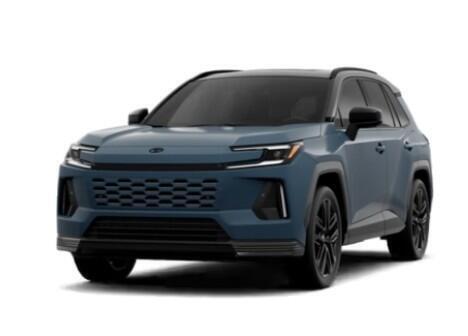
The Toyota RAV4 towing capacity NZ drivers receive depends heavily on the model, drivetrain, trailer braking system, and exact year of manufacture. That last point matters more than many buyers realise.
Two RAV4s parked side by side may look almost identical, yet one might be rated to tow 800kg braked, while another can pull as much as 1,500kg braked. That difference could determine whether we can legally and safely tow a small garden trailer, jet ski, fishing boat, or lightweight caravan.
For the current New Zealand range, selected front-wheel-drive RAV4 models are rated for up to 800kg braked, while selected all-wheel-drive variants can tow up to 1,500kg braked. The maximum published unbraked capacity is generally 750kg, although the exact limit shown in the vehicle handbook, certification label, and towbar rating always takes priority.
So, is the RAV4 a serious towing vehicle or merely an urban SUV with a towbar attached? The honest answer sits somewhere in the middle. It is not a heavy-duty tow rig, but properly configured, it can be a remarkably useful weekend companion.
- Toyota RAV4 Towing Capacity NZ at a Glance
- What Does Braked Towing Capacity Mean?
- What Does Unbraked Towing Capacity Mean?
- RAV4 FWD Versus AWD Towing Capacity
- Toyota RAV4 Hybrid Towing Capacity NZ
- Toyota RAV4 Plug-in Hybrid Towing Capacity
- How Much Can a RAV4 Tow in Real Life?
- Can a Toyota RAV4 Tow a Caravan in New Zealand?
- Can a RAV4 Tow a Boat?
- Can a RAV4 Tow a Horse Float?
- Understanding Towball Download
- Payload Matters as Much as Towing Capacity
- How to Confirm Your Exact RAV4 Tow Rating
- Choosing the Right Towbar
- Trailer Brakes and Brake Controllers
- Preparing a RAV4 for Towing
- Tyre Pressure When Towing
- Driving a RAV4 With a Trailer
- Towing on New Zealand Roads
- Trailer Sway: What Should We Do?
- Fuel Economy While Towing
- RAV4 Towing Versus Larger Toyota SUVs
- Is the Toyota RAV4 Good for Towing?
- Common RAV4 Towing Mistakes
- How to Weigh Your Towing Setup
- Toyota RAV4 Towing Capacity NZ: Final Verdict
- Frequently Asked Questions
Toyota RAV4 Towing Capacity NZ at a Glance
The following figures provide a general overview of the current New Zealand RAV4 range. Specifications may vary by grade, model year, drivetrain, and market availability.
| RAV4 configuration | Maximum braked capacity | Maximum unbraked capacity |
|---|---|---|
| Selected Hybrid FWD models | Up to 800kg | Up to 750kg |
| Selected Plug-in Hybrid FWD models | Up to 800kg | Up to 750kg |
| Selected Hybrid AWD models | Up to 1,500kg | Up to 750kg |
| Selected Plug-in Hybrid AWD models | Up to 1,500kg | Up to 750kg |
Toyota New Zealand currently advertises up to 1,500kg of braked towing capacity for eligible RAV4 Hybrid and Plug-in Hybrid models. Individual model pages show that some FWD variants remain limited to approximately 800kg braked, while AWD versions may receive the full 1,500kg rating.
These are maximum figures, not automatic permissions to attach any trailer under that weight. We also need to consider the towbar rating, vehicle payload, trailer brakes, tyre pressures, tongue weight, road conditions, and the amount of luggage or passengers inside the RAV4.
What Does Braked Towing Capacity Mean?
A braked trailer has its own braking system. Rather than asking the RAV4’s brakes to stop the combined weight alone, the trailer helps slow itself.
That additional braking support is why a RAV4 may be permitted to tow 1,500kg with a braked trailer but only 750kg without trailer brakes.
Think of it like walking down a steep hill while carrying a heavy backpack. A braked trailer is similar to having someone behind us helping control the load. An unbraked trailer simply pushes forward whenever the towing vehicle slows down.
In New Zealand, the towing vehicle and trailer combination must be able to stop within seven metres from 30km/h. Trailer brakes, when fitted, must be maintained in proper working condition and must contribute effectively to stopping the combination.
What Counts as Trailer Brakes?
Depending on the trailer design and weight, braking systems may include:
- Mechanical override brakes
- Hydraulic override brakes
- Electric trailer brakes
- Electrically controlled hydraulic brakes
- Breakaway braking systems
We should never assume that a trailer is considered “braked” simply because it has brake components attached. The system must be functional, correctly adjusted, compatible with the tow vehicle, and compliant with applicable New Zealand requirements.
Why Braked Ratings Are Much Higher
A heavier trailer carries more momentum. On a flat road, that weight may feel manageable. On a wet descent through the Remutaka Range, the same trailer can feel like a runaway shopping trolley tied to the rear bumper.
Trailer brakes reduce the load placed on the RAV4’s braking system. They also help control instability and may reduce the chance of the trailer pushing the vehicle during emergency braking.
What Does Unbraked Towing Capacity Mean?
An unbraked trailer relies entirely on the towing vehicle to slow and stop the combination.
Current RAV4 specifications commonly list a maximum unbraked capacity of 750kg. However, that does not mean every small trailer can automatically be loaded to exactly 750kg.
We must still remain below:
- The vehicle’s stated unbraked towing limit
- The towbar’s rated capacity
- The coupling’s rated capacity
- The trailer’s certified maximum load
- The legal and practical braking limit
- The tyre and axle limits of both vehicles
The lowest applicable rating wins. A 1,500kg-rated RAV4 fitted with an 800kg-rated towbar is effectively limited by that towbar.
RAV4 FWD Versus AWD Towing Capacity
Drivetrain is one of the biggest factors affecting the Toyota RAV4 towing capacity in NZ.
Front-Wheel-Drive RAV4
Selected front-wheel-drive versions have a braked towing capacity of around 800kg. That is suitable for lighter recreational and domestic towing but may be restrictive for caravans and larger boats.
An FWD RAV4 may be suitable for towing:
- A small box trailer
- Garden waste
- Light building supplies
- A motorcycle trailer
- A compact personal watercraft
- A lightweight camping trailer
- A small aluminium dinghy
The crucial word is lightweight. Once fuel, batteries, water, tools, spare wheels, fishing gear, and camping equipment are included, a trailer can become much heavier than its brochure suggests.
All-Wheel-Drive RAV4
Selected AWD models raise the maximum braked capacity to 1,500kg. Toyota describes eligible AWD versions as suitable for towing items such as small boats, bicycles, and lightweight caravans.
AWD does not magically increase braking power. Its main advantage appears when pulling away on slippery surfaces, gravel roads, wet grass, steep driveways, or boat ramps.
When we tow a boat from a slimy launching ramp, extra driven wheels can feel like having a second pair of hands pushing from behind. Nevertheless, tyre condition, trailer balance, and sensible throttle use remain essential.
Is AWD Always Better for Towing?
For regular towing, particularly on loose or uneven surfaces, AWD is generally the more capable choice within the RAV4 range.
For occasional trips with a small, light trailer, FWD may be perfectly adequate. We should not pay for extra capability we will never use, but neither should we choose an 800kg-rated model when our loaded trailer regularly weighs 900kg.
Toyota RAV4 Hybrid Towing Capacity NZ
The RAV4 Hybrid combines a petrol engine with electric motor assistance. Current New Zealand Hybrid AWD variants can offer up to 1,500kg braked towing capacity, while selected Hybrid FWD grades are rated for approximately 800kg braked.
Hybrid assistance can provide smooth low-speed response, which is useful when moving away from a stop or manoeuvring a trailer carefully.
However, towing adds weight and aerodynamic drag. Fuel consumption will rise, especially when pulling a tall caravan into a strong Canterbury nor’wester or climbing through hilly terrain.
Does Towing Damage a RAV4 Hybrid?
Towing within the approved limits should not inherently damage the vehicle, provided we operate it correctly and follow Toyota’s maintenance and towing instructions.
Problems become more likely when owners:
- Exceed the tow rating
- Ignore warning lights
- Tow with incorrect tyre pressures
- Carry too much weight inside the vehicle
- Climb long gradients aggressively
- Use an incorrectly balanced trailer
- Fit unsuitable aftermarket towing equipment
- Neglect scheduled servicing
A maximum rating represents the edge of the approved operating envelope. It is not necessarily the most comfortable weight for every journey.
Toyota RAV4 Plug-in Hybrid Towing Capacity
The latest New Zealand RAV4 Plug-in Hybrid range offers up to 1,500kg braked towing capacity in selected AWD configurations. Certain FWD Plug-in Hybrid grades may be rated for only 800kg braked, so drivetrain and specification remain crucial.
The Plug-in Hybrid delivers strong combined output and can complete many shorter trips using electric power under suitable conditions. Yet towing a heavy or aerodynamically bulky trailer will reduce electric range and increase energy consumption.
Can We Tow in EV Mode?
A Plug-in Hybrid may operate electrically under certain conditions, but the vehicle decides how to manage its petrol engine and electric motors according to power demand, battery charge, temperature, speed, and driving mode.
While towing, especially uphill or at open-road speeds, the petrol engine may run more frequently. We should treat the system as an integrated powertrain rather than expecting pure-electric operation throughout the journey.
How Much Can a RAV4 Tow in Real Life?
A maximum towing figure answers only one question: what is the highest approved trailer weight under defined conditions?
It does not tell us whether the combination will feel relaxed, economical, or enjoyable.
A trailer weighing 1,450kg may technically fit below a 1,500kg limit, but that leaves a narrow margin. Add a gas bottle, freshwater, food, clothing, awning, outdoor chairs, batteries, and children’s bikes, and the legal buffer can disappear faster than biscuits at morning tea.
A Sensible Working Margin
Many experienced towers prefer not to operate permanently at the vehicle’s absolute maximum. Leaving a margin can provide greater flexibility for:
- Unexpected luggage
- Changing weather
- Steep gradients
- Emergency manoeuvres
- Measurement inaccuracies
- Future trailer accessories
- Extra passengers
- Water and fuel carried on board
There is no single percentage that guarantees safety in every situation. The goal is to calculate actual weights rather than rely on optimistic estimates.
Dry Weight Is Not Loaded Weight
Trailer advertisements often highlight tare weight or dry weight. That figure may exclude optional equipment and everything we add for a trip.
Consider a lightweight caravan with a dry weight of 1,200kg. Once loaded, it might include:
- 80kg of water
- 20kg of LPG
- 25kg of batteries
- 30kg of food
- 40kg of clothing
- 15kg of outdoor furniture
- 25kg of tools and accessories
- 20kg of bedding and cookware
That example adds 255kg, lifting the trailer to approximately 1,455kg. Suddenly, a caravan that looked comfortably below the limit is nudging against it.
Can a Toyota RAV4 Tow a Caravan in New Zealand?
Yes, selected RAV4 AWD models can tow a lightweight caravan, provided its fully loaded weight remains within the vehicle, towbar, coupling, axle, and trailer limits.
The phrase “lightweight caravan” deserves emphasis. Many family caravans exceed 1,500kg once loaded.
Before buying a caravan, we should confirm:
- Its tare weight
- Its gross trailer mass
- Its expected holiday-ready weight
- Its ball or coupling load
- Whether it has compliant brakes
- The RAV4’s exact model-specific tow rating
- The towbar’s vertical and horizontal limits
Is a 1,500kg Caravan a Good Match?
A caravan with a maximum loaded weight of exactly 1,500kg leaves no towing-capacity margin on a RAV4 rated to 1,500kg.
Although it may fall within the stated rating when correctly configured, we may find a lighter caravan more comfortable, particularly for frequent journeys across hilly or windy parts of New Zealand.
A broad, tall caravan also creates more aerodynamic resistance than a lower boat trailer of the same weight. Weight matters, but shape matters too.
Can a RAV4 Tow a Boat?
A properly equipped AWD RAV4 can tow many small boats, dinghies, personal watercraft, and lightweight fishing setups.
We must calculate the total trailer weight, including:
- Boat hull
- Trailer
- Outboard motor
- Fuel
- Batteries
- Anchors
- Safety equipment
- Fishing gear
- Chilly bins
- Spare wheel
- Water and accessories
A boat advertised at 700kg may sit on a 300kg trailer and carry another 150kg of equipment. The real towing weight could therefore approach 1,150kg.
Boat Ramp Considerations
Boat ramps add challenges that ordinary road towing does not:
- Slippery algae-covered surfaces
- Loose gravel
- Saltwater exposure
- Steep gradients
- Limited visibility
- Tight manoeuvring space
AWD can provide an advantage when retrieving a boat, but it does not make the RAV4 invincible. Enter the water only as far as necessary, avoid sudden throttle inputs, and rinse exposed towing components after saltwater use.
Can a RAV4 Tow a Horse Float?
In most cases, a RAV4 is not the ideal choice for towing a loaded horse float.
A single horse may weigh roughly 400kg to more than 600kg, while the float itself could weigh several hundred kilograms. Tack, feed, water, equipment, and passengers add further weight.
Even where the theoretical total falls below 1,500kg, animals create a moving load. A horse shifting its weight can alter the balance of the trailer dynamically.
For regular horse transport, a heavier vehicle with a higher tow rating, larger braking reserves, and greater stability will usually be more appropriate.
Understanding Towball Download
Towball download, tongue weight, or coupling load is the downward force the trailer applies to the towball.
Too little downward force can encourage trailer sway. Too much can overload the rear axle, towbar, suspension, or tyres while making the front of the RAV4 feel light.
That light-front feeling is not harmless. Steering response may become vague, braking balance may change, and headlights may point higher than intended.
Where Does Towball Weight Go?
Towball load forms part of the load carried by the RAV4. It therefore reduces the remaining payload available for passengers, luggage, roof cargo, and accessories.
Suppose the vehicle can carry a certain payload and the trailer places 100kg on the towball. That 100kg is not floating in space; it is pressing on the rear of the vehicle and must be included in our loading calculations.
Always check the vehicle handbook, towbar documentation, and certification information for the permitted vertical load.
Payload Matters as Much as Towing Capacity
Owners often focus on the trailer’s total weight while overlooking the weight carried inside the RAV4.
Payload can include:
- Driver
- Passengers
- Luggage
- Pets
- Roof racks
- Roof boxes
- Towbar assembly
- Aftermarket accessories
- Towball download
- Tools and recovery gear
A family of five, a packed boot, a roof box, and a trailer can push a vehicle toward its limits even when the trailer alone is below the advertised towing capacity.
This is why towing calculations should consider the whole combination, not merely the number printed beside “maximum braked towing capacity.”
How to Confirm Your Exact RAV4 Tow Rating
Do not rely solely on a generic online table. Toyota RAV4 specifications vary across generations, grades, drivetrains, and import markets.
The AA notes that its published towing tables are based on vehicles sold new in New Zealand and warns that recommendations may differ for used imports.
To confirm the correct figure, check:
- The owner’s manual
- Toyota New Zealand’s model specification page
- The vehicle identification and certification labels
- The towbar compliance plate
- The trailer identification plate
- An authorised Toyota store
- A qualified towbar installer or automotive engineer
Used Imports Require Extra Care
A Japanese-imported RAV4 may differ from a New Zealand-new model in equipment, cooling specifications, certification, and manufacturer documentation.
This content may interest you! Toyota RAV4 vs BYD Sealion 6 New Zealand: Which Hybrid SUV Is the Smarter Buy?
We should not automatically apply an Australian, British, American, or New Zealand rating to an imported vehicle just because the badge says RAV4.
The exact chassis, drivetrain, compliance documentation, and installed towbar must support the proposed load.
Choosing the Right Towbar
A towbar must be designed and rated for the specific vehicle and intended trailer load.
A proper towing installation may include:
- Vehicle-specific towbar
- Rated towball or coupling
- Safety-chain attachment point
- Trailer wiring harness
- Electronic brake controller
- Suitable electrical connector
- Transmission or cooling modifications, where required
- Correct fasteners and mounting hardware
New Zealand inspection guidance requires appropriate towing connections and secure safety-chain or cable attachment provisions for relevant towbar applications.
The Towbar Rating Can Be Lower
Installing a towbar does not automatically grant the vehicle its highest advertised capacity.
Our safe maximum is determined by the lowest rating among:
- The RAV4
- The towbar
- The towball
- The coupling
- The trailer
- The braking system
- The tyres
- Any applicable axle limit
A beautifully fitted towbar with an insufficient rating is still the wrong towbar.
Trailer Brakes and Brake Controllers
For heavier trailers, a suitable braking system is vital.
Electric trailer brakes usually require an in-vehicle brake controller. This device tells the trailer brakes how strongly to operate when the RAV4 slows down.
A well-adjusted controller helps the vehicle and trailer brake together. Too little trailer braking allows the trailer to push the RAV4. Too much can cause the trailer wheels to lock.
The adjustment may need to change as trailer weight changes. A caravan loaded for a three-week South Island trip will not behave exactly like the same caravan nearly empty.
Preparing a RAV4 for Towing
Before attaching a trailer, we should inspect more than the towball.
Pre-Towing Checklist
- Confirm the loaded trailer weight
- Check the RAV4’s exact towing limit
- Verify towbar and coupling ratings
- Inspect the towball and fasteners
- Connect the safety chain correctly
- Test trailer lights
- Test trailer brakes
- Check tyre condition and pressures
- Secure all cargo
- Confirm correct coupling engagement
- Raise and lock the jockey wheel
- Adjust mirrors
- Check the number plate is visible
- Confirm doors, hatches, and windows are secured
- Recheck everything after a short distance
Do Not Forget the Spare Tyre
Both the RAV4 and trailer need roadworthy tyres. A spare wheel is little help when it is flat, inaccessible, or fitted with the wrong wheel nuts.
Carry the correct jack, wheel brace, locking-wheel-nut key, and any tools needed to change the trailer wheel safely.
Tyre Pressure When Towing
Correct tyre pressure improves stability, steering, braking, tyre life, and heat management.
Follow the vehicle manufacturer’s recommendations for loaded operation. Do not simply inflate the tyres to the maximum number moulded into the sidewall.
Trailer tyres also need inspection. Ageing trailer tyres can look healthy while developing internal deterioration, particularly when the trailer spends long periods parked outdoors.
Check for:
- Cracks
- Bulges
- Flat spots
- Uneven wear
- Low pressure
- Exposed cords
- Damaged valve stems
- Insufficient load rating
Driving a RAV4 With a Trailer
Towing changes nearly everything about how the RAV4 feels.
Acceleration becomes slower. Braking distances increase. Corners require wider lines. Crosswinds become more noticeable. Reversing becomes an exercise in patience rather than speed.
Leave More Following Distance
A trailer adds mass and can lengthen stopping distances. We should create a larger gap from the vehicle ahead, particularly in rain or on loose surfaces.
The legal stopping requirement is a minimum performance standard, not a target for everyday driving. Defensive space is far more valuable than proving the combination can stop at the limit.
Use Smooth Inputs
Sudden steering, hard braking, and abrupt acceleration can disturb trailer balance.
Imagine carrying a full cup of coffee over uneven ground. Smooth movement keeps everything controlled. Sharp movement creates a mess.
The same principle applies to towing.
Plan Corners Early
The trailer wheels cut inside the path followed by the RAV4. Take turns more widely where safe and legal, while watching kerbs, signs, pedestrians, and nearby vehicles.
Expect Slower Hill Climbing
The Hybrid system may increase engine speed on long climbs. That sound does not automatically indicate a problem; the powertrain may be working to provide the requested performance.
Still, we should avoid forcing the vehicle to maintain unrealistic speeds. Slow down, maintain a steady pace, and leave space for faster traffic to pass when appropriate.
Towing on New Zealand Roads
New Zealand is beautiful precisely because it is not flat, straight, or predictable.
A route that looks simple on a map may include:
- One-lane bridges
- Steep descents
- Tight bends
- Strong coastal winds
- Loose gravel
- Narrow shoulders
- Sudden rain
- Stock on the road
- Limited overtaking opportunities
A RAV4 towing comfortably around Auckland may feel very different crossing the Crown Range or travelling through exposed sections of State Highway 1.
Crosswind Awareness
Caravans and covered trailers act like sails. A passing truck can first push the trailer away and then pull it back as the air pressure changes.
Hold the steering wheel steadily, reduce speed smoothly, and avoid dramatic corrections.
Descending Long Hills
Long descents can overheat brakes if we rely on continuous pedal pressure.
Use an appropriate driving mode or lower transmission range where available, allowing the powertrain to assist with speed control. Maintain a sensible speed before the descent becomes steep.
Never begin a major downhill section too quickly and expect the brakes to solve everything halfway down.
Trailer Sway: What Should We Do?
Trailer sway may be caused by poor loading, excessive speed, crosswinds, unsuitable tyre pressures, abrupt steering, or insufficient towball load.
If sway develops:
- Remain calm
- Hold the steering wheel steadily
- Ease off the accelerator
- Avoid aggressive steering
- Avoid sudden heavy braking
- Allow speed to reduce gradually
- Use the trailer brake control carefully, where appropriate
- Stop safely and inspect the load distribution
Do not accelerate in an attempt to “pull out” of serious sway unless the vehicle or trailer manufacturer explicitly recommends a specific procedure. Reducing the underlying instability is safer than trying to outrun it.
Fuel Economy While Towing
Towing will increase fuel consumption. The size of the increase depends on:
- Trailer weight
- Trailer height and shape
- Road speed
- Wind direction
- Gradient
- Tyre pressure
- Driving style
- Temperature
- Traffic
- Roof-mounted cargo
A tall caravan can create more drag than a lower trailer even when both weigh the same. At open-road speeds, the RAV4 is not merely pulling weight; it is pushing a larger hole through the air.
How to Reduce Towing Fuel Consumption
We can improve efficiency by:
- Driving smoothly
- Reducing unnecessary speed
- Removing unused roof accessories
- Maintaining correct tyre pressures
- Avoiding excessive cargo
- Planning flatter routes where practical
- Anticipating traffic
- Servicing the vehicle regularly
- Using a properly balanced trailer
Saving fuel should never come at the expense of stability or legal compliance.
RAV4 Towing Versus Larger Toyota SUVs
The RAV4 is best viewed as a medium SUV with moderate towing ability.
For heavier caravans, larger boats, frequent horse-float use, or regular towing near 1,500kg, a larger and heavier vehicle may be more suitable.
Toyota New Zealand lists the Highlander AWD with a 2,000kg braked towing capacity, providing additional headroom beyond the RAV4’s maximum.
A larger tow rating does not automatically make every vehicle better for every owner. Larger SUVs often cost more to buy and run. The RAV4 remains attractive when we need an efficient everyday vehicle that also handles occasional recreational towing.
Is the Toyota RAV4 Good for Towing?
Yes, within the correct limits.
The RAV4 works well for:
- Small trailers
- Personal watercraft
- Lightweight boats
- Motorcycle trailers
- Compact camping trailers
- Lightweight caravans
- Occasional household towing
It is less suitable for:
- Large family caravans
- Heavy boats
- Loaded horse floats
- Vehicle transport trailers
- Frequent maximum-weight towing
- Commercial heavy-duty work
The AWD models offering up to 1,500kg braked capacity are the strongest choice for owners who tow regularly. FWD versions rated around 800kg are better suited to genuinely light trailers.
Common RAV4 Towing Mistakes
Even experienced drivers can underestimate trailer weight or overlook a simple connection.
Mistake 1: Using Dry Weight
Dry weight is not the weight we tow on holiday. Calculate the trailer after loading.
Mistake 2: Ignoring Payload
Passengers, luggage, accessories, and towball load all affect the RAV4.
Mistake 3: Assuming Every RAV4 Tows 1,500kg
Some variants are rated for only 800kg braked. Check the exact model.
Mistake 4: Trusting the Vehicle Rating Alone
The towbar or coupling may have a lower limit.
Mistake 5: Loading the Rear of the Trailer
Excess weight behind the axle can reduce towball load and encourage sway.
Mistake 6: Driving at Normal Car Speeds
A trailer requires greater stopping distance and gentler manoeuvres.
Mistake 7: Skipping a Weighbridge
Guessing trailer weight is like guessing petrol level with the gauge covered. We may get lucky, but numbers are safer.
How to Weigh Your Towing Setup
The most reliable approach is to weigh the combination in its real travel configuration.
Load the RAV4 and trailer with:
- Passengers
- Luggage
- Fuel
- Water
- Food
- Gas bottles
- Batteries
- Outdoor equipment
- Boat fuel and fishing gear
- Everything normally carried
A certified weighbridge can help us understand the actual vehicle, trailer, and axle loads.
Keep the weighbridge receipt or recorded figures. They provide a useful baseline when changing equipment or loading patterns.
Toyota RAV4 Towing Capacity NZ: Final Verdict
The Toyota RAV4 towing capacity NZ owners can use ranges from approximately 800kg braked in selected front-wheel-drive models to 1,500kg braked in selected all-wheel-drive variants. The commonly published maximum unbraked capacity is 750kg.
That makes the RAV4 a capable light-to-medium towing vehicle rather than a miniature heavy-duty truck.
For a small boat, jet ski, box trailer, motorcycle trailer, or lightweight caravan, an appropriately equipped RAV4 can fit the Kiwi lifestyle beautifully. It remains easy to live with during the week and becomes a practical adventure partner when the weekend arrives.
The AWD models provide the most useful towing capacity and better traction on slippery ramps or loose surfaces. FWD versions remain practical for lighter loads but require closer attention to the lower braked limit.
Above all, we should treat 1,500kg or 800kg as the ceiling, not the starting point. Check the handbook, verify the towbar, calculate payload, weigh the loaded trailer, inspect the brakes, and drive according to conditions.
A towbar opens the door to adventure. Good preparation makes sure that door does not swing off its hinges.
Frequently Asked Questions
1. What is the maximum Toyota RAV4 towing capacity in NZ?
Selected current Toyota RAV4 AWD models can tow up to 1,500kg with a braked trailer. Selected FWD versions may be limited to approximately 800kg braked. Always confirm the rating for the exact model and year.
2. Can a Toyota RAV4 tow a caravan?
Yes. An AWD RAV4 rated to tow 1,500kg can tow many lightweight caravans, provided the caravan’s actual loaded weight, towball load, brakes, and other relevant limits comply with the vehicle and towbar specifications.
3. What is the RAV4 unbraked towing capacity?
Current New Zealand RAV4 specifications commonly show a maximum unbraked capacity of 750kg. The exact vehicle, towbar, coupling, and trailer ratings must still be checked.
4. Is a RAV4 Hybrid suitable for towing a boat?
A Hybrid AWD RAV4 can be suitable for a small or lightweight boat-and-trailer combination weighing no more than its approved braked towing limit. Include the boat, trailer, motor, fuel, batteries, and equipment in the calculation.
5. Does every Toyota RAV4 tow 1,500kg?
No. Towing capacity varies by year, drivetrain, and grade. Selected AWD models can tow up to 1,500kg braked, while certain FWD models are rated at around 800kg braked. Used imports may also have different specifications.
This content may interest you!Toyota RAV4 Tow Rating: What Can This SUV Really Pull?
Leave a Reply