
Nissan Murano Weight: Complete Guide by Year and Trim
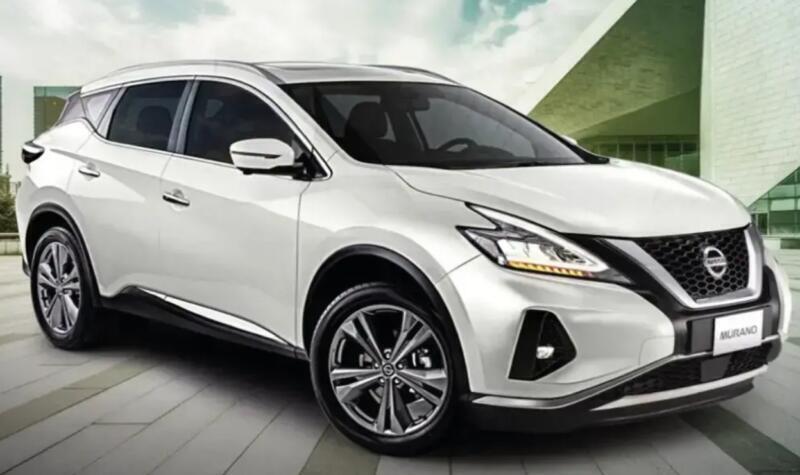
The Nissan Murano weight is one of those specifications that rarely receives much attention until we actually need it. Maybe we're comparing SUVs, checking whether a trailer or transport service can handle the vehicle, calculating payload, or simply wondering how much this stylish crossover weighs compared with its competitors. Whatever brought us here, there's one thing worth knowing immediately: there isn't one universal Murano weight.
Depending on the model year, trim level, and whether we're looking at front-wheel drive or all-wheel drive, the Murano's curb weight can vary by several hundred pounds. A first-generation model from the early 2000s isn't necessarily going to weigh the same as today's considerably more sophisticated version.
For some useful reference points, a 2003 Murano is listed at around 3,960 pounds, while the redesigned 2025 Murano ranges from approximately 4,193 to 4,438 pounds, depending on configuration.
The 2026 lineup remains firmly in the same territory, with Nissan listing curb weights between roughly 4,290 and 4,386 pounds across the available trims.
So yes, the Murano has gained some weight over the years. But that number alone doesn't tell the full story. Let's unpack what Nissan Murano weight really means, how it changes between trims and generations, and why those extra pounds matter when we're behind the wheel.
- How Much Does a Nissan Murano Weigh?
- What Does Nissan Murano Curb Weight Mean?
- 2026 Nissan Murano Weight
- 2025 Nissan Murano Weight
- 2024 Nissan Murano Weight
- How Much Did the Original Nissan Murano Weigh?
- Nissan Murano Weight by Generation
- Does AWD Make the Nissan Murano Heavier?
- Does Trim Level Affect Murano Weight?
- How Nissan Murano Weight Affects Fuel Economy
- How Weight Changes Nissan Murano Handling
- Nissan Murano Weight and Towing
- Nissan Murano Weight and Payload
- Why Nissan Murano Weight Matters When Shipping the Vehicle
- Can You Reduce Nissan Murano Weight?
- Is the Nissan Murano Heavy for an SUV?
- Should Nissan Murano Weight Influence Our Buying Decision?
- Final Thoughts on Nissan Murano Weight
- Frequently Asked Questions
How Much Does a Nissan Murano Weigh?
A modern Nissan Murano generally weighs somewhere around 4,200 to 4,400 pounds, although older versions can fall below that range.
For example, Nissan's official 2025 specifications show the following curb weights:
| 2025 Nissan Murano | Curb Weight |
|---|---|
| SV FWD | 4,193 lb |
| SV AWD | 4,323 lb |
| SL AWD | 4,388 lb |
| Platinum AWD | 4,438 lb |
Those figures come directly from Nissan's 2025 Murano specifications.
Convert that into kilograms and we're looking at roughly 1,902 to 2,013 kg.
That's substantial, but hardly unusual for a midsize crossover loaded with modern comfort, structural, safety, and technology equipment.
Think of it this way: the Murano isn't built like a lightweight running shoe. It's more like a comfortable hiking boot—heavier, yes, but carrying quite a lot of equipment.
Nissan Murano Weight in Pounds
For shoppers who normally use imperial measurements, we'd describe a typical late-model Murano as roughly a 4,000-plus-pound SUV.
Recent examples stretch beyond 4,300 pounds depending on the drivetrain and equipment package. The 2026 Murano, for instance, is listed by Nissan at 4,290 pounds for the SV, 4,355 pounds for the SL, and 4,386 pounds for the Platinum.
That's useful to remember because people sometimes see figures closer to 5,000 pounds online and assume they're curb weights. Often they aren't.
They may instead be gross vehicle weight ratings or another weight measurement.
Nissan Murano Weight in Kilograms
For anyone working in metric measurements, dividing the pounds by approximately 2.205 gives us the equivalent weight in kilograms.
Using recent models as examples:
- 4,193 lb is approximately 1,902 kg
- 4,290 lb is approximately 1,946 kg
- 4,355 lb is approximately 1,975 kg
- 4,438 lb is approximately 2,013 kg
In simple terms, we can think of a modern Nissan Murano as weighing around 1.9 to just over 2.0 metric tonnes before passengers and luggage are added.
That's an important distinction: curb weight isn't necessarily the weight the vehicle has once we've filled every seat and packed the cargo compartment for a holiday.
What Does Nissan Murano Curb Weight Mean?
Curb weight sounds technical, but the concept is actually straightforward.
The curb weight is essentially the weight of the vehicle in normal operating condition with its necessary fluids and equipment but without the passengers and cargo we add ourselves.
It's the number most people mean when asking, "How much does a Nissan Murano weigh?"
That's also why two Murano trims can have different curb weights even if they look almost identical.
Add an all-wheel-drive system, larger wheels, additional motors, premium seating hardware, a panoramic roof, extra sound insulation, and other luxury equipment, and those seemingly small differences start stacking up like coins in a jar.
Curb Weight vs Gross Vehicle Weight
This is where SUV weight specifications can become confusing.
Curb weight tells us what the vehicle itself weighs under its defined operating condition. Gross vehicle weight, on the other hand, represents what the vehicle actually weighs once occupants, luggage, accessories, and other loads are included.
This content may interest you! Nissan Murano Dash Lights: Meanings, Warnings, and What to Do
Then there's GVWR, or Gross Vehicle Weight Rating.
That figure isn't simply "how heavy the Murano is." It's the manufacturer's specified maximum permissible loaded weight.
Why the Difference Matters
Imagine our Murano weighs around 4,300 pounds at the curb.
Now add:
- Four adults
- Several suitcases
- A child seat
- Groceries
- Sports equipment
- Accessories
Suddenly, the actual vehicle weight becomes significantly greater.
That's why using curb weight alone to determine how much cargo we can carry would be a mistake. When payload or towing limits matter, the specifications for our exact vehicle should always take priority.
2026 Nissan Murano Weight
The 2026 Murano represents the newer generation of Nissan's midsize crossover and uses a very different mechanical formula from earlier V6/CVT models.
Nissan lists a 241-horsepower VC-Turbo engine paired with a nine-speed automatic transmission for the current Murano.
According to Nissan's 2026 brochure, curb weights are approximately:
| 2026 Trim | Curb Weight |
| Murano SV | 4,290 lb |
| Murano SL | 4,355 lb |
| Murano Platinum | 4,386 lb |
These figures show something interesting. Moving upward through the range doesn't transform the Murano into a dramatically heavier vehicle, but additional equipment gradually adds weight.
In practice, around 65 pounds separates the SV and SL, while the Platinum adds another 31 pounds.
Those aren't differences most of us would immediately feel from the driver's seat, but they matter when we're comparing detailed specifications.
Why the New Murano Is Heavier
More weight isn't necessarily a sign that engineers have become careless.
Modern SUVs pack a remarkable amount of hardware into their bodies. Today's Murano can include sophisticated driver-assistance systems, large displays, electrically operated convenience features, premium seating functions, extra structural engineering, panoramic glass, all-wheel-drive hardware, and more.
The 2026 model also offers available features such as massaging seats, ventilated seating, a panoramic moonroof, and Intelligent All-Wheel Drive.
Every individual component might seem small. Together, they add up.
It's like packing for a weekend away: one jacket doesn't fill the suitcase, but somehow the suitcase still weighs twenty kilograms when we're finished.
2025 Nissan Murano Weight
The fully redesigned 2025 Nissan Murano marks one of the clearest shifts in the model's weight story.
According to Nissan, the 2025 SV weighs 4,193 pounds with front-wheel drive and 4,323 pounds with all-wheel drive. The SL AWD reaches 4,388 pounds, while the Platinum AWD comes in at 4,438 pounds.
That gives the model a 245-pound spread between the lightest and heaviest listed configurations.
2025 Murano FWD vs AWD Weight
The SV gives us an especially useful apples-to-apples comparison because Nissan listed it with both drivetrains.
SV FWD: 4,193 lb
SV AWD: 4,323 lb
Difference: 130 lb
That additional weight isn't surprising. An AWD system requires extra driveline components to deliver torque beyond the front wheels.
Those components aren't weightless.
This content may interest you!Nissan Murano Fuel Type New Zealand: What Petrol Should You Use?Still, 130 pounds represents only a small percentage of the Murano's total mass, so choosing AWD should generally revolve more around traction needs, driving conditions, efficiency considerations, and personal preference than the raw weight difference alone.
2024 Nissan Murano Weight
Step back one model year and the numbers look noticeably different.
Nissan's 2024 brochure lists curb weights of 3,892 pounds for the SV FWD, 3,926 pounds for the SL FWD, and 4,021 pounds for the Platinum FWD. AWD versions are listed at 4,037, 4,071, and 4,165 pounds, respectively.
So the 2024 lineup ranged from 3,892 to 4,165 pounds.
That's one reason we shouldn't grab a Nissan Murano weight from a random search result and assume it applies to every year.
The model underwent a major redesign afterward.
2024 Murano Weight Chart
| 2024 Trim | FWD | AWD |
| SV | 3,892 lb | 4,037 lb |
| SL | 3,926 lb | 4,071 lb |
| Platinum | 4,021 lb | 4,165 lb |
These official specifications also make the effect of AWD easy to see. Across those three trim comparisons, adding AWD increases curb weight by about 145 pounds.
The pattern is remarkably consistent.
How Much Did the Original Nissan Murano Weigh?
The Murano has never been a featherweight vehicle.
A 2003 model is listed by Edmunds at approximately 3,960 pounds of curb weight, with a gross weight of 5,053 pounds.
An AWD specification source for the same early generation places one version at approximately 3,955 pounds, reinforcing the idea that an early Murano hovered around the four-thousand-pound mark depending on configuration.
That sounds close to some third-generation numbers, doesn't it?
And that's where looking only at generation age becomes misleading. Automotive weight doesn't always rise neatly year after year. Platforms change. Materials change. Powertrains change. Equipment levels change. Manufacturers sometimes remove weight in one area while adding it in another.
Nissan Murano Weight by Generation
Instead of treating every Murano as though it were the same vehicle wearing different headlights, it makes more sense to view the model generation by generation.
First Generation Murano: Z50
The first-generation Murano arrived for the 2003 model year in North America and established the formula that would define the nameplate: five-seat crossover practicality paired with a more stylish, road-focused personality than many traditional SUVs of the period.
A representative 2003 curb-weight figure is around 3,960 pounds.
For an early-2000s crossover, that was hardly a tiny machine.
Second Generation Murano: Z51
The second-generation Murano made its debut for the 2009 model year after Nissan skipped a 2008 North American model year. It retained the familiar crossover layout while moving onto Nissan's D platform.
Exact weight varies according to year, market, trim, and drivetrain, so this is one generation where checking the specification for the individual vehicle matters more than relying on a blanket number.
Used imports can complicate things further because equipment available in Japan, Europe, Australasia, or North America wasn't necessarily identical.
Third Generation Murano: Z52
The third-generation Murano gives us an excellent example of why trim and drivetrain matter.
By 2024, Nissan's official U.S. figures ranged from 3,892 pounds for an SV FWD to 4,165 pounds for a Platinum AWD.
That's a 273-pound difference within one model year.
So when somebody says, "A 2024 Murano weighs 4,000 pounds," they're broadly in the neighborhood—but they're still missing the detail.
Fourth Generation and the 2025 Redesign
The redesign introduced for 2025 pushed the Murano into a higher weight bracket.
The official range of 4,193 to 4,438 pounds means even the lightest 2025 version outweighs the lightest 2024 version by more than 300 pounds.
This content may interest you!Nissan Murano Tank Size: Capacity, Range, and Refueling GuideThat sounds dramatic, yet it's also important to remember we're comparing two distinctly engineered generations rather than merely successive annual updates.
Does AWD Make the Nissan Murano Heavier?
Yes.
Whenever comparable FWD and AWD versions are available, the AWD model generally carries additional mass because of the hardware needed to send power to another axle.
The 2024 specifications illustrate this particularly clearly:
- SV: AWD adds about 145 lb
- SL: AWD adds about 145 lb
- Platinum: AWD adds about 144 lb
The 2025 SV shows a 130-pound difference between FWD and AWD.
That's roughly the weight of a smaller adult passenger permanently sitting somewhere inside the vehicle.
Does that automatically mean FWD is better? Not at all.
The trade-off depends on where and how we drive. Someone living in an area with challenging winter conditions may value the traction capabilities of AWD far more than the modest weight reduction of FWD.
Does Trim Level Affect Murano Weight?
Definitely.
Premium trims generally weigh more because they contain more equipment.
Take the 2025 lineup again. Nissan lists the Platinum AWD at 4,438 pounds, compared with 4,323 pounds for the SV AWD.
That's a difference of 115 pounds even though both vehicles share the same basic body and drivetrain layout.
Where does it come from?
Think power-operated convenience systems, seating hardware, larger or different wheel combinations, interior equipment, glass, electronics, insulation, and other trim-specific features.
None individually needs to be especially heavy. Collectively, they move the scale.
How Nissan Murano Weight Affects Fuel Economy
Weight matters to efficiency because the engine has to accelerate mass.
All else being equal, moving 4,400 pounds requires more energy than moving 3,900 pounds.
But "all else being equal" rarely applies when comparing different generations of modern vehicles.
Engine efficiency improves. Transmissions change. Aerodynamics evolve. Tires change. Electronics optimize power delivery. Stop-start functions and thermal management improve.
That's why we shouldn't assume a newer, heavier Murano must automatically consume more fuel than every lighter predecessor.
The current-generation Murano, for example, combines its 241-horsepower VC-Turbo engine with a nine-speed automatic, and Nissan advertises up to 27 mpg on the highway for the 2026 model.
Vehicle mass matters, but it's only one ingredient in the efficiency recipe.
How Weight Changes Nissan Murano Handling
Weight doesn't automatically make a vehicle handle badly.
Where that mass sits may be just as important as how much of it exists.
A lower center of gravity, carefully tuned suspension, suitable tires, structural rigidity, and sophisticated electronic control systems can make a heavy crossover feel surprisingly composed.
Still, physics never takes a day off.
This content may interest you! How Heavy Tesla Model Y: Complete Weight Guide for Buyers, Owners, and EV-Curious Drivers
More mass means the tires, brakes, and suspension have more work to do during aggressive acceleration, braking, and cornering.
A Murano isn't trying to be a sports coupe, of course. Its mission is much closer to comfortable daily transport with a premium flavor.
For that job, a little extra substance isn't necessarily unwelcome.
Does Murano Weight Affect Braking?
Vehicle weight is certainly one factor engineers have to account for when designing braking systems.
A heavier moving object carries more kinetic energy at a given speed than a lighter one.
That's why comparing brake performance between vehicles requires looking beyond vehicle weight alone. Tire grip, rotor size, pad compound, suspension behavior, electronic systems, road surface, and temperature all matter.
In other words, don't judge stopping performance purely by looking at curb weight.
Nissan Murano Weight and Towing
Here's another area where people commonly mix up specifications.
Vehicle weight and towing capacity aren't the same thing.
The current Murano might weigh well above 4,000 pounds, yet Nissan lists the 2026 model with a towing capacity of up to 1,500 pounds and a Gross Combined Weight Rating of 6,779 pounds.
A heavy SUV isn't automatically a heavy-duty tow vehicle.
Why Curb Weight Doesn't Tell Us Towing Capacity
Towing capacity depends on far more than whether the vehicle itself feels substantial.
Manufacturers have to consider:
- Engine and transmission capability
- Cooling capacity
- Braking performance
- Suspension design
- Chassis limitations
- Hitch specifications
- Axle loading
- Combined vehicle and trailer weight
So we should always use the towing specifications assigned to our particular model rather than estimating from curb weight.
Nissan Murano Weight and Payload
Payload is another separate concept.
We can think of payload as everything we add to the vehicle: ourselves, our passengers, our bags, and whatever else we're carrying.
That means four adults can easily add 600 pounds or more before we've loaded a single suitcase.
Throw in luggage, camping equipment, or bicycles, and the numbers climb quickly.
This is why drivers who regularly carry heavy loads should consult the vehicle certification label and owner's documentation rather than depending on a generic internet payload estimate.
Where to Find the Correct Weight for Your Murano
If accuracy truly matters, our first stop should be the labels and documentation associated with the actual vehicle.
Depending on the market, useful information may appear on:
- The driver's door jamb certification label
- The owner's manual
- Manufacturer specification documentation
- Registration or compliance records
- Official Nissan brochures
- Vehicle transport paperwork
This becomes especially important with imported Muranos because equipment and specifications can differ by market.
Why Nissan Murano Weight Matters When Shipping the Vehicle
Ever tried getting a quote for shipping a car?
Weight suddenly becomes very interesting.
Transporters, ferries, shipping companies, and freight services may classify or price vehicles using dimensions, gross mass, actual measured mass, or predefined categories.
For a late-model Murano, describing it as "about two tonnes" is a reasonable conversational shorthand, but we shouldn't treat that estimate as an official transport figure.
This content may interest you! Kia Cerato Weight: Complete Kerb Weight and Load Guide
If a freight provider asks for an exact weight, use the specification for the precise model—or have the vehicle weighed if required.
Can You Reduce Nissan Murano Weight?
Technically, yes.
Practically, it's usually not worthwhile.
Removing unnecessary cargo from the trunk obviously reduces the actual weight we're driving around every day. That's sensible.
Trying to significantly lower the Murano's curb weight by removing factory components is another story.
Unless we're building a bizarre Murano track car—and we have to admit that would be interesting—the convenience, safety, resale, and comfort compromises rarely justify aggressive weight reduction.
The easiest rule is refreshingly simple: don't carry half your garage around in the cargo area.
Is the Nissan Murano Heavy for an SUV?
At around 4,200 to 4,400 pounds for newer examples, the Murano has substantial mass, but the figure makes sense in the context of a well-equipped midsize crossover.
We wouldn't describe it as a lightweight SUV, yet neither should we look at a 4,300-pound curb weight and immediately conclude that something is excessive.
Vehicle dimensions, drivetrain, equipment, construction, luxury features, and segment positioning all influence the final number.
It's much more useful to compare the Murano against similarly sized, similarly equipped crossovers than against compact SUVs or body-on-frame trucks.
Should Nissan Murano Weight Influence Our Buying Decision?
Usually, it shouldn't be our first concern.
For most buyers, these considerations will matter more:
- Reliability and service history
- Fuel costs
- Passenger comfort
- Cargo space
- Purchase price
- Insurance
- Drivetrain choice
- Safety equipment
- Maintenance costs
Weight becomes especially relevant when towing, carrying heavy loads, transporting the vehicle, comparing efficiency, or dealing with specific regulatory limits.
Otherwise, it's simply another piece of the puzzle.
And sometimes that's exactly what a good specification should be: useful when we need it, invisible when we don't.
Final Thoughts on Nissan Murano Weight
The Nissan Murano weight varies considerably depending on generation, model year, trim, and drivetrain.
An original 2003 example sits at roughly 3,960 pounds, while the outgoing 2024 generation ranged from 3,892 to 4,165 pounds according to Nissan's U.S. specifications.
The 2025 redesign moved higher, ranging from 4,193 to 4,438 pounds, while Nissan lists 2026 models between 4,290 and 4,386 pounds.
The biggest lesson isn't that the Murano is heavy or light.
It's that there is no single Nissan Murano weight.
If we're looking at one specific vehicle, we need to match the weight figure to the correct year, trim, drivetrain, and market. That's especially important when towing, shipping, or calculating loading limits.
For casual comparison, though, remembering roughly 4,000 to 4,400 pounds—or about 1.8 to 2.0 tonnes—for many Murano configurations gets us into the right neighborhood.
Frequently Asked Questions
1. How much does a Nissan Murano weigh in pounds?
It depends on the year and trim. Recent models generally weigh more than 4,000 pounds. The 2025 Murano ranges from approximately 4,193 to 4,438 pounds, while Nissan lists the 2026 trims from 4,290 to 4,386 pounds.
2. How much does a Nissan Murano weigh in kilograms?
A modern Murano typically weighs roughly 1,900 to 2,000 kg, with some configurations slightly above the two-tonne mark. The exact number depends on model year, trim, drivetrain, and equipment.
3. Is a Nissan Murano AWD heavier than FWD?
Yes. Comparable AWD models are heavier because the all-wheel-drive system requires additional mechanical hardware. In the 2024 lineup, AWD adds approximately 144–145 pounds depending on trim, while the 2025 SV AWD weighs about 130 pounds more than the SV FWD.
This content may interest you! Toyota RAV4 Tow Rating: What Can This SUV Really Pull?
4. What is the difference between Nissan Murano curb weight and gross weight?
Curb weight refers to the vehicle itself in its defined ready-to-operate condition without the passengers and cargo we add. Actual gross vehicle weight includes those occupants and loads. GVWR, meanwhile, refers to the manufacturer's specified maximum loaded weight.
5. Does a heavier Nissan Murano use more fuel?
Weight can increase the energy required to accelerate a vehicle, so it's one factor affecting fuel consumption. However, engine technology, transmission design, aerodynamics, tires, gearing, and driving conditions also matter. That's why a newer vehicle can be heavier yet still benefit from efficiency improvements elsewhere.
Leave a Reply