
Kia Cerato Engine Capacity: Complete Engine Size Guide
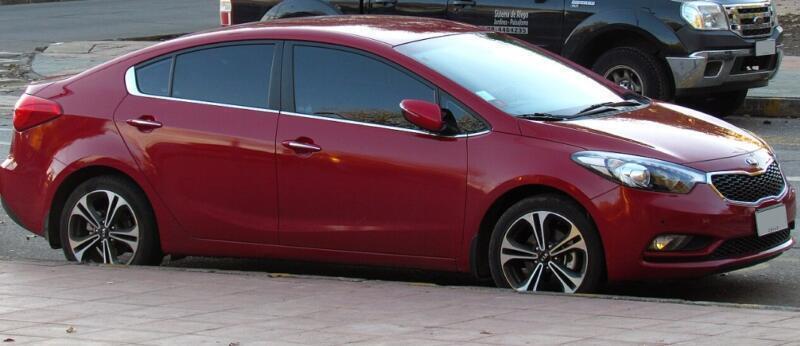
When we talk about Kia Cerato engine capacity, things can become confusing surprisingly quickly. One Cerato might have a 1.6-liter engine, another carries a 2.0-liter unit, and some sportier versions squeeze significantly more performance from a turbocharged engine that is actually smaller.
So, which engine capacity does the Kia Cerato have?
The short answer is that Kia Cerato engine capacity varies according to generation, model year, trim level, and country. Across its long production history, the Cerato has commonly been equipped with engines ranging from roughly 1.5 liters to 2.0 liters, although the 1.6-liter and 2.0-liter four-cylinder petrol engines are arguably the ones most closely associated with the nameplate.
For example, Kia's published specifications for later Australian-market Cerato models list a 1,999 cc 2.0 MPI petrol engine and a 1,591 cc 1.6 T-GDI petrol engine.
But engine capacity is only part of the story. A smaller turbo engine can easily outperform a larger naturally aspirated one, while the larger engine may provide simpler, smoother everyday driving.
Let's dig into the numbers.
- What Is the Kia Cerato Engine Capacity?
- Kia Cerato Engine Capacity in CC
- Kia Cerato 1.6 Engine Capacity
- Kia Cerato 1.6 Turbo Engine Capacity
- Kia Cerato 2.0 Engine Capacity
- Kia Cerato 1.6 vs 2.0 Engine Capacity
- Kia Cerato 1.6 Turbo vs 2.0 Engine
- Does Kia Cerato Engine Capacity Affect Fuel Economy?
- Does a Bigger Cerato Engine Mean Better Performance?
- Kia Cerato Engine Capacity by Generation
- Why Does Kia Cerato Engine Capacity Vary by Country?
- Is the Kia Cerato a Four-Cylinder Car?
- How to Find Your Kia Cerato Engine Capacity
- Engine Capacity vs Engine Oil Capacity
- Does Kia Cerato Engine Capacity Affect Reliability?
- Which Kia Cerato Engine Capacity Should We Buy?
- Is a 1.6 or 2.0 Engine Better for Highway Driving?
- How Important Is Kia Cerato Engine Capacity When Buying Used?
- Kia Cerato Engine Capacity and Performance: The Bigger Picture
- Kia Cerato Engine Capacity Quick Reference
- Closing Thoughts on Kia Cerato Engine Capacity
- Frequently Asked Questions
What Is the Kia Cerato Engine Capacity?
The most familiar Kia Cerato engine capacities are:
- 1.5-liter
- 1.6-liter
- 2.0-liter
Depending on the generation and destination market, diesel and turbocharged petrol options have also appeared.
Kia's heritage information shows just how broad the range has been. The original Cerato family offered engine displacement from approximately 1,493 cc to 1,975 cc, using four-cylinder petrol and diesel engines.
More recent versions commonly settled around two important capacities: 1,591 cc and 1,999 cc.
Think of engine displacement as the size of the lungs underneath the bonnet. Capacity tells us how much air and fuel the engine's cylinders can theoretically move through one complete cycle. Bigger lungs can breathe more, but modern turbocharging means smaller lungs can breathe much harder.
Kia Cerato Engine Capacity in CC
Engine capacity is frequently quoted in liters, but official specifications usually give a more precise figure in cubic centimeters, or cc.
Here's how the familiar Cerato engine labels translate:
| Engine Label | Actual Capacity | Cylinders | Typical Configuration |
|---|---|---|---|
| 1.5L | Around 1,493–1,500 cc | 4 | Petrol or diesel, depending on generation |
| 1.6L MPI | 1,591 cc | 4 | Naturally aspirated petrol |
| 1.6L T-GDI | 1,591 cc | 4 | Turbocharged petrol |
| 1.6L diesel | Around 1,582–1,598 cc | 4 | Turbo diesel |
| 2.0L petrol | Around 1,998–1,999 cc | 4 | Naturally aspirated petrol |
Exact specifications vary by model year and region, so we shouldn't assume that every Cerato carrying the same badge uses exactly the same engine family.
Why Is a 2.0-Liter Cerato Actually 1,999 cc?
This is normal automotive terminology.
Manufacturers round engine displacement into a simpler number for marketing purposes. Calling an engine "1.999-liter" every time would be rather clumsy, wouldn't it?
A capacity of 1,999 cc is therefore marketed simply as a 2.0-liter engine.
Likewise, the Cerato's 1,591 cc engine is called a 1.6-liter.
Kia Cerato 1.6 Engine Capacity
One of the most widespread Cerato engines is the 1.6-liter four-cylinder.
The familiar naturally aspirated petrol version has an actual displacement of approximately 1,591 cc. Kia has used this basic capacity in multiple configurations and generations.
In one published Cerato specification, Kia rated its 1.6 MPI petrol engine at 1,591 cc, while another version of the same capacity appeared as the turbocharged 1.6 T-GDI.
That illustrates something important: two engines can share identical displacement yet behave like completely different animals.
Kia Cerato 1.6 MPI Engine
MPI stands for Multi-Point Injection.
Rather than chasing huge performance figures, this type of Cerato engine generally prioritizes predictable operation, smooth everyday performance, and relatively straightforward engineering.
A naturally aspirated 1.6 works well for drivers who spend most of their time commuting, running errands, and cruising at normal highway speeds.
It isn't trying to tear your face off when the traffic light turns green. It simply gets on with the job.
Is the 1.6 Cerato Underpowered?
That depends heavily on what we're expecting.
With one or two occupants and ordinary urban driving, the 1.6-liter Cerato can feel perfectly adequate. Add several passengers, luggage, steep hills, and a quick overtaking maneuver, however, and we'll naturally ask more from it.
That's where a larger 2.0-liter engine or turbocharged 1.6 starts to show its advantage.
Kia Cerato 1.6 Turbo Engine Capacity
Here's where engine capacity becomes particularly interesting.
The sporty Cerato GT has been offered with a 1,591 cc turbocharged 1.6-liter T-GDI petrol engine.
This content may interest you! Kia Cerato Oil Type: Complete Engine Oil Guide
Despite being smaller than the naturally aspirated 2.0-liter engine, the turbo version can produce considerably more power and torque.
For the Australian MY24 Cerato, Kia listed:
1.6 T-GDI
- Capacity: 1,591 cc
- Maximum power: 150 kW at 6,000 rpm
- Maximum torque: 265 Nm from 1,500 to 4,500 rpm
2.0 MPI
- Capacity: 1,999 cc
- Maximum power: 112 kW at 6,200 rpm
- Maximum torque: 192 Nm at 4,000 rpm
Those official figures demonstrate beautifully why displacement alone doesn't determine performance.
How Can a 1.6 Engine Be More Powerful Than a 2.0?
Turbocharging.
A turbocharger forces additional air into the engine. More oxygen allows more fuel to be burned efficiently, producing more power without needing larger cylinders.
Imagine two people trying to inflate an air mattress. The 2.0-liter engine has larger lungs. The turbocharged 1.6 has someone standing behind it with a compressor.
Suddenly, raw lung size isn't the whole contest.
The Cerato GT's turbo setup therefore gives us stronger low- and mid-range torque, making acceleration feel much more urgent.
Kia Cerato 2.0 Engine Capacity
For many buyers, the 2.0-liter petrol engine is the quintessential Cerato motor.
Later specifications commonly place its exact displacement at 1,999 cc, although some older Cerato versions used engines listed at approximately 1,998 cc.
Kia's Hong Kong specification for the Cerato 2.0 MPI Premium, for example, lists a displacement of 1,999 cc and maximum output of 152 ps (112 kW) at 6,200 rpm.
The appeal is easy to understand.
The 2.0 gives us a relatively straightforward naturally aspirated four-cylinder setup with more displacement than the basic 1.6 MPI. The result is useful everyday flexibility without needing turbocharging.
Kia Cerato 2.0 MPI Engine Explained
MPI again means multi-point injection.
Unlike the turbocharged GT engine, the 2.0 MPI relies primarily on displacement and engine speed to produce performance.
Press the accelerator and the power delivery builds progressively. There's less of the turbocharged shove that characterizes the GT, but the response can feel pleasantly linear.
For drivers who simply want an engine that behaves predictably every morning, this simplicity has obvious appeal.
How Much Power Does the 2.0-Liter Cerato Produce?
Power varies between generations and markets.
A later Australian Cerato 2.0 MPI produces 112 kW, while earlier Kia literature listed certain 2.0 engines at roughly 156 ps.
This is why searching only for "Kia Cerato 2.0 horsepower" without including a model year can lead us down a rabbit hole.
Same displacement doesn't necessarily mean the same engine calibration.
Kia Cerato 1.6 vs 2.0 Engine Capacity
Which should we choose?
Let's put their personalities side by side.
| Feature | Cerato 1.6 MPI | Cerato 2.0 MPI |
| Capacity | 1,591 cc | Around 1,999 cc |
| Cylinders | 4 | 4 |
| Aspiration | Naturally aspirated | Naturally aspirated |
| Typical character | Efficient and relaxed | Stronger and more flexible |
| Highway overtaking | Adequate | Generally easier |
| Urban commuting | Very suitable | Very suitable |
| Potential fuel use | Usually lower | Potentially higher |
| Performance focus | Low | Moderate |
If our priorities revolve around gentle commuting, basic transportation, and potentially lower fuel consumption, the 1.6 makes plenty of sense.
If we regularly drive at highway speeds, carry passengers, tackle hills, or simply dislike working an engine hard, the 2.0 may feel better matched.
But there is one big wildcard.
The 1.6 turbo.
Compared with either naturally aspirated engine, the turbocharged 1.6 offers a much stronger performance character.
Kia Cerato 1.6 Turbo vs 2.0 Engine
This comparison sounds backwards at first.
This content may interest you!Kia Cerato Fuel Tank Capacity: Size, Range, and Refueling GuideSurely 2.0 liters beats 1.6 liters?
Not necessarily.
In later Cerato specifications, the 1.6 T-GDI's turbocharger helps it produce substantially more torque than the naturally aspirated 2.0 MPI.
The difference is especially noticeable during acceleration.
Push the accelerator in the 2.0 and the car gathers speed progressively.
Do the same in the 1.6 turbo when the engine is within its boost range and it pulls with much greater urgency.
The larger engine is therefore not automatically the faster one.
Which Cerato Engine Is Better for Daily Driving?
For relaxed daily transportation, we'd lean toward whichever engine best matches the local market, budget, and type of driving.
The 1.6 MPI can be enough for lighter use.
The 2.0 MPI offers a useful middle ground.
The 1.6 turbo makes more sense when performance matters.
None is universally "best." It's like choosing shoes: running shoes aren't inherently better than comfortable walking shoes. They're better when we're actually running.
Does Kia Cerato Engine Capacity Affect Fuel Economy?
Yes, but capacity alone doesn't decide fuel consumption.
Engine technology, turbocharging, transmission, gearing, vehicle weight, tires, driving conditions, and our right foot all influence real-world economy.
Here's an interesting example.
Kia's MY24 Australian specifications listed combined fuel consumption of around 7.4 L/100 km for the 2.0 MPI sedan and hatch, while the 1.6 T-GDI GT was listed at approximately 6.9 L/100 km for the sedan and 6.8 L/100 km for the hatch under the relevant testing standard.
So the more powerful turbo engine isn't automatically thirstier in an official combined test.
Real-world results, however, depend enormously on how we drive.
Use that turbo performance enthusiastically and physics will eventually send the fuel bill.
Does a Bigger Cerato Engine Mean Better Performance?
With two similarly designed naturally aspirated engines, additional capacity often helps torque and flexibility.
But comparing engines from different technological families is much more complicated.
Performance depends on:
- Engine displacement
- Turbocharging
- Fuel-injection technology
- Compression ratio
- Valve timing
- Transmission ratios
- Vehicle weight
- Engine-management calibration
- Maximum torque
- Where that torque appears in the rev range
That's why reading only the capacity figure is like judging a laptop entirely by screen size.
Useful? Certainly.
Enough information to understand the whole machine? Not even close.
Kia Cerato Engine Capacity by Generation
The Cerato has existed since the early 2000s, and specifications have changed substantially over that period.
First-Generation Kia Cerato Engine Sizes
Kia's heritage archive places the original Cerato's displacement range at approximately 1,493 to 1,975 cc, with both petrol and diesel four-cylinder engines appearing in the lineup.
Depending on the country, buyers could therefore encounter several different capacities.
This first generation established something that continued throughout the Cerato's life: Kia tailored its engine offerings heavily to individual markets.
Second-Generation Kia Cerato Engine Sizes
The second-generation Cerato — also connected with the Forte name in some markets — continued using compact four-cylinder petrol engines.
Kia documentation for the Cerato Koup lists a 1,591 cc 1.6 DOHC CVVT petrol engine and a 1,998 cc 2.0 DOHC CVVT petrol engine.
This content may interest you!Kia Cerato Tyre Pressure Warning Light: Causes, Reset Guide, and FixesThese two capacities became especially recognizable within the Cerato family.
Third-Generation Kia Cerato Engine Sizes
The familiar 1.6- and 2.0-liter pattern continued, though exact technology, outputs, and availability varied geographically.
A Kia Cerato brochure lists options including a 1,591 cc 1.6 MPI petrol, 1,591 cc 1.6 T-GDI petrol, 1,598 cc 1.6 diesel, and 1,999 cc 2.0 MPI petrol.
That's quite a spread from what appears, at first glance, to be a simple compact car.
Later Kia Cerato Engine Sizes
Later Cerato models in markets such as Australia prominently featured the 1,999 cc 2.0 MPI and the performance-focused 1,591 cc 1.6 T-GDI.
Other countries received different configurations.
For example, Singapore-market Kia material listed a 1,591 cc 1.6-liter Cerato.
That's why location matters whenever we're researching a particular Cerato.
Why Does Kia Cerato Engine Capacity Vary by Country?
Car manufacturers rarely sell identical powertrain lineups worldwide.
Emissions regulations differ. Fuel prices differ. Tax systems differ. Customer preferences differ. Even insurance structures can influence which engine makes commercial sense.
In one market, a 2.0-liter engine might be the ordinary choice.
In another, taxation heavily favors engines below a certain capacity.
Elsewhere, Kia may emphasize the 1.6-liter because buyers value economy more than outright performance.
So when someone says, "My 2019 Cerato has a 1.6," while somebody else insists that their 2019 Cerato has a 2.0, both can easily be correct.
Is the Kia Cerato a Four-Cylinder Car?
Most mainstream Kia Cerato engines are indeed four-cylinder units.
That includes the well-known:
1.6 MPI — inline-four
1.6 T-GDI — inline-four
2.0 MPI — inline-four
The basic arrangement places all four cylinders in one straight row.
Inline-four engines dominate the compact-car world for good reason. They're relatively compact, efficient to manufacture, and capable of delivering a good compromise between economy, smoothness, packaging, and performance.
In other words, the Cerato doesn't need a huge engine bay full of cylinders to do its job.
How to Find Your Kia Cerato Engine Capacity
Don't rely exclusively on the badge on the boot.
If we've bought a used Cerato and want to confirm precisely which engine it carries, there are several places we can check.
Look at:
- The owner's manual
- Registration or vehicle documents
- VIN information
- Engine identification markings
- The vehicle's compliance plate or label
- Original Kia specifications for the exact model year
- A Kia dealer using the VIN
The VIN is particularly useful because outwardly similar Cerato models can hide different engines under the bonnet.
Can the VIN Tell Us the Cerato Engine Size?
Usually, yes, when decoded through the appropriate manufacturer or vehicle database.
However, VIN structures and decoding methods vary by region and model year.
For that reason, the safest approach is to provide the complete VIN to Kia or another reliable vehicle-information service rather than trying to interpret a single character without the correct regional documentation.
Engine Capacity vs Engine Oil Capacity
Here's an easy mistake to make.
Engine capacity and engine oil capacity are not the same thing.
This content may interest you! Nissan Murano Engine Capacity New Zealand: Complete Guide
Engine capacity refers to cylinder displacement.
So:
1.6-liter Cerato = roughly 1.6 liters of engine displacement
That does not mean we pour 1.6 liters of oil into it.
Oil capacity describes how much lubricant the engine requires during servicing, and that figure is entirely separate.
Searching "Kia Cerato engine capacity" can therefore produce two very different answers depending on what someone really wants to know.
If we're changing the oil, always look for the oil capacity for the exact engine code and model year, not simply engine displacement.
Does Kia Cerato Engine Capacity Affect Reliability?
Not automatically.
A 2.0-liter engine isn't inherently more reliable than a 1.6, nor is a smaller engine automatically less durable.
Reliability depends far more on the specific engine design, servicing history, operating conditions, maintenance quality, and treatment by previous owners.
That last point matters enormously when buying used.
A lovingly maintained turbocharged Cerato may be a far wiser purchase than a neglected naturally aspirated one.
Engine capacity tells us how big the cylinders are collectively.
It doesn't tell us whether the previous owner changed the oil on time.
Naturally Aspirated vs Turbo Cerato Reliability
Naturally aspirated engines generally contain fewer turbo-related components, which can make their mechanical layout simpler.
Turbocharged engines, meanwhile, operate with forced induction and place different thermal and lubrication demands on the powertrain.
That doesn't mean turbo equals unreliable.
It means maintenance matters.
With a used Cerato GT, service records become especially valuable because proper oil servicing and correct fluids are important for long-term turbocharger and engine health.
Which Kia Cerato Engine Capacity Should We Buy?
Here's the simplest way to frame the decision.
Choose the 1.6 MPI If…
We mostly drive around town, value uncomplicated performance, aren't chasing speed, and have access to a well-maintained example at the right price.
Choose the 2.0 MPI If…
We want a little more naturally aspirated muscle for highways, hills, passengers, and everyday flexibility without stepping into a performance-focused turbo model.
Choose the 1.6 T-GDI If…
We actually enjoy driving.
The turbo Cerato delivers substantially stronger torque and acceleration than the ordinary naturally aspirated versions, making it the enthusiast's choice within many Cerato lineups.
But there's a catch: we should consider the whole ownership package, including maintenance, transmission characteristics, fuel requirements, insurance, and the condition of the specific used car.
Is a 1.6 or 2.0 Engine Better for Highway Driving?
If we're comparing naturally aspirated versions, the 2.0-liter engine generally offers the more relaxed highway experience because of its additional displacement and power.
Overtaking can require less effort.
Steep gradients become easier.
A full cabin affects performance less noticeably.
But bring the 1.6 turbo into the conversation and the hierarchy flips. Its stronger torque output can make it substantially more responsive than the naturally aspirated 2.0.
Again, displacement alone doesn't tell the whole tale.
This content may interest you!Kia Cerato Weight: Complete Kerb Weight and Load GuideHow Important Is Kia Cerato Engine Capacity When Buying Used?
It's important, but we'd never make it our first filter.
Condition comes first.
Imagine two Ceratos sitting beside each other.
Car A has exactly the engine we wanted but questionable maintenance records, mismatched tires, strange noises, and evidence of neglect.
Car B has our second-choice engine but complete servicing, clean fluids, good tires, smooth operation, and a careful previous owner.
We'd inspect Car B much more seriously.
When buying a used Cerato, consider engine capacity alongside:
- Complete service history
- Mileage
- Engine condition
- Transmission operation
- Oil leaks
- Cooling-system condition
- Warning lights
- Accident history
- Suspension condition
- Tires and brakes
- Ownership history
A good engine attached to a bad car is still a bad purchase.
Kia Cerato Engine Capacity and Performance: The Bigger Picture
There's a temptation to turn engine displacement into a scoreboard.
2.0 beats 1.6.
Simple.
Except modern engines don't work that way.
Kia's own later Cerato specifications demonstrate the point perfectly: the 1,591 cc turbo engine produces substantially more power and torque than the 1,999 cc naturally aspirated engine.
Technology changes the equation.
Turbocharging, injection systems, valve timing, compression, software calibration, transmissions, and vehicle mass can all transform how an engine feels.
Capacity remains useful information, but we should treat it as the first chapter rather than the entire book.
Kia Cerato Engine Capacity Quick Reference
If we just need the important numbers, here they are:
| Cerato Engine | Approximate/Published Displacement |
| Early 1.5 engines | Around 1,493–1,500 cc |
| 1.6 MPI petrol | 1,591 cc |
| 1.6 T-GDI petrol | 1,591 cc |
| 1.6 diesel | Around 1,582–1,598 cc depending on engine |
| 2.0 petrol | Around 1,998–1,999 cc |
The two numbers most buyers are likely to encounter are therefore 1,591 cc and 1,999 cc.
Closing Thoughts on Kia Cerato Engine Capacity
So, what have we learned?
The Kia Cerato engine capacity isn't one fixed number. It changes according to generation, country, model year, and trim.
Across the Cerato's history, engine displacement has broadly ranged from around 1.5 to 2.0 liters, with 1.6-liter and 2.0-liter four-cylinder engines forming the heart of many lineups.
Later mainstream versions commonly use a 1,999 cc 2.0 MPI, while sportier Cerato GT models have featured a 1,591 cc 1.6 T-GDI turbo engine.
And that smaller turbo motor gives us perhaps the most useful lesson of all: bigger engine capacity doesn't automatically mean bigger performance.
When choosing a Cerato, we should therefore look beyond the number printed beside the word "engine." Consider power, torque, turbocharging, transmission, fuel economy, maintenance history, and how the car will actually be used.
Numbers describe the engine.
The driving experience tells us whether it's the right engine for us.
Frequently Asked Questions
1. What is the engine capacity of a Kia Cerato?
Kia Cerato engine capacity varies by generation and market. Common versions include the 1,591 cc 1.6-liter petrol engine and 1,999 cc 2.0-liter petrol engine. Earlier generations also offered other petrol and diesel capacities.
2. What is the Kia Cerato 2.0 engine capacity in cc?
Many later Kia Cerato 2.0 MPI models have an exact engine displacement of 1,999 cc. Some older 2.0-liter Cerato engines were listed at approximately 1,998 cc. Both are conventionally described as 2.0-liter engines.
3. What is the Kia Cerato 1.6 engine capacity?
The common Kia Cerato 1.6 petrol engine has a displacement of 1,591 cc. This capacity has been used for both naturally aspirated MPI and turbocharged T-GDI versions, depending on model and market.
4. Is the Kia Cerato 1.6 turbo faster than the 2.0?
In later Cerato configurations, yes. Kia's 1.6 T-GDI produces more power and considerably more torque than the naturally aspirated 2.0 MPI, despite having less displacement. Turbocharging allows the smaller engine to force additional air into the cylinders and generate stronger performance.
5. Which Kia Cerato engine is best: 1.6 or 2.0?
It depends on how we drive. A naturally aspirated 1.6 can suit routine commuting, while the 2.0 MPI provides stronger everyday performance. The 1.6 T-GDI is the performance-oriented choice and offers much greater torque than either naturally aspirated alternative. When buying used, maintenance history and vehicle condition should matter just as much as engine size.
This content may interest you! Ford Ranger vs Nissan Navara: Which Pickup Is Better?
Leave a Reply