
Mitsubishi Triton Towing Capacity: A Complete Guide for Safe, Confident Towing
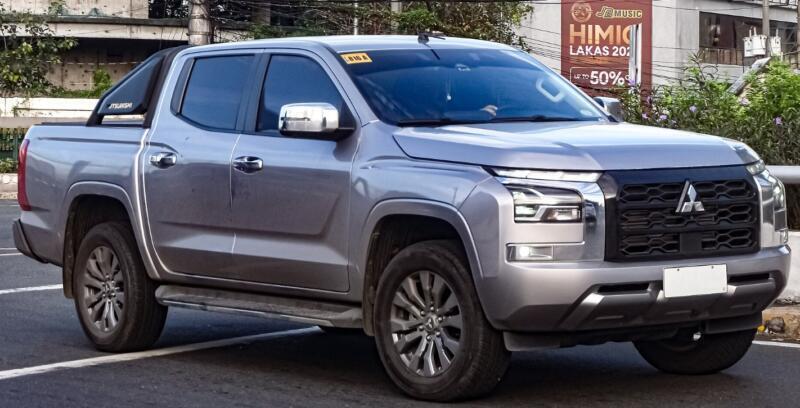
The Mitsubishi Triton towing capacity is one of the biggest reasons this hard-working pickup remains popular with caravan owners, tradespeople, farmers, boat enthusiasts, and weekend adventurers. It promises the muscle of a serious tow vehicle without feeling like an oversized truck during everyday driving.
But towing is never as simple as reading one impressive number from a brochure.
A modern Mitsubishi Triton may offer a maximum braked towing capacity of up to 3,500 kg, depending on its model, specification, configuration, and market. However, that figure does not automatically mean we can hitch up a 3,500 kg caravan, fill the tray with tools, add five passengers, and drive away legally or safely.
Think of maximum towing capacity as the ceiling of a room. It tells us how high the space reaches, but it does not tell us how much furniture we can safely stack inside.
To determine what a Triton can genuinely tow, we must also consider payload, tow-ball download, gross vehicle mass, gross combination mass, trailer brakes, accessories, passengers, cargo, and local regulations.
In this guide, we will unpack those figures in plain English, examine what affects the Mitsubishi Triton’s towing ability, and show how to calculate a safer real-world towing setup.
- What Is the Mitsubishi Triton Towing Capacity?
- Mitsubishi Triton Towing Capacity by Generation
- Can a Mitsubishi Triton Really Tow 3,500 kg?
- Understanding the Weight Terms That Matter
- How Tow-Ball Weight Reduces Payload
- Mitsubishi Triton Engine and Towing Performance
- Two-Wheel Drive Versus Four-Wheel Drive
- Trailer Stability Assist and Towing Safety
- What Can a Mitsubishi Triton Tow?
- How to Calculate Your Real Mitsubishi Triton Towing Limit
- Does Adding Accessories Affect Towing Capacity?
- How Heavy Should We Tow Regularly?
- Fuel Economy While Towing
- Preparing a Mitsubishi Triton for Towing
- Best Driving Practices When Towing
- Common Mitsubishi Triton Towing Mistakes
- Is the Mitsubishi Triton a Good Tow Vehicle?
- Mitsubishi Triton Towing Capacity Checklist
- Conclusion: Tow the Numbers, Not the Marketing
- Frequently Asked Questions
What Is the Mitsubishi Triton Towing Capacity?
For many current Mitsubishi Triton models, the headline maximum is:
- Maximum braked towing capacity: up to 3,500 kg
- Maximum unbraked towing capacity: up to 750 kg
Mitsubishi Motors Australia currently advertises up to 3.5 tonnes of braked towing capacity for the Triton, while its towing guidance lists an unbraked limit of up to 750 kg.
The next-generation Triton is also promoted with a 3.5-tonne braked capacity in other markets, including South Africa, although capacity can vary between individual variants. For example, one official South African specification document lists a lower figure for an entry-level version while other variants reach 3,500 kg.
That variation is important. The badge on the tailgate does not determine the final number. The exact year, engine, cab style, drivetrain, transmission, chassis and trim level all matter.
Braked Towing Capacity Explained
Braked towing capacity refers to the heaviest trailer the vehicle is rated to tow when the trailer has its own effective braking system.
A heavy caravan, horse float, equipment trailer or large boat trailer will normally require trailer brakes. These brakes reduce the burden on the Triton’s braking system and help the vehicle-trailer combination stop more predictably.
For current Tritons rated to 3,500 kg, the trailer must meet all applicable braking, registration and roadworthiness requirements. The towbar, tow ball, coupling and electrical brake-control equipment must also be correctly rated.
Unbraked Towing Capacity Explained
An unbraked trailer has no independent braking system. It relies entirely on the tow vehicle to slow and stop both the vehicle and the trailer.
For this reason, unbraked towing limits are much lower. Mitsubishi’s Australian guidance states that the Triton offers up to 750 kg of unbraked capacity.
Small garden trailers, lightweight box trailers and compact recreational trailers may fall within this category. Once the loaded trailer approaches the applicable legal threshold, independent trailer brakes are generally required.
Never assume an empty trailer’s listed weight represents its weight on the road. Fuel containers, tools, camping equipment, spare wheels, water, luggage and accessories can quickly push it beyond the unbraked limit.
Mitsubishi Triton Towing Capacity by Generation
Towing capacity has changed throughout the Triton’s history. Older trucks may have lower limits than the current generation, even when they use a strong diesel engine and look nearly identical from the outside.
Next-Generation Mitsubishi Triton
The latest-generation Triton has been developed with heavy towing in mind. In Australia, Mitsubishi promotes a 3,500 kg maximum braked towing capacity, supported by a 2.4-litre bi-turbo diesel engine producing up to 150 kW and 470 Nm in the locally advertised specification. Mitsubishi also highlights frame and suspension upgrades intended to improve stability when towing.
These numbers place the Triton directly among the serious towing contenders in the midsize pickup market.
The important word, however, is maximum.
Some body styles, two-wheel-drive versions, entry-level models or market-specific variants may carry different ratings. Always verify the compliance label, owner’s manual and official specification sheet for the exact vehicle.
Previous-Generation Mitsubishi Triton
Many previous-generation Tritons were commonly rated below the current 3,500 kg headline figure. Depending on the year and market, maximum braked ratings may sit around 3,000 kg, 3,100 kg or 3,500 kg.
That means we should never apply a new-generation specification to an older Triton merely because both vehicles use the same model name.
A used-vehicle advertisement may also contain errors. The safest approach is to check:
- The owner’s manual.
- The vehicle identification or compliance plate.
- The manufacturer’s specification for that model year.
- The towbar manufacturer’s rating.
- Local registration records where applicable.
Why Older Triton Ratings Differ
Towing limits are influenced by more than engine output. Manufacturers examine:
- Chassis strength
- Suspension design
- Cooling performance
- Transmission durability
- Axle ratings
- Braking capability
- Stability-control calibration
- Vehicle kerb mass
- Gross combination mass
- Towbar mounting strength
An older Triton may have enough torque to move a heavy trailer but still lack the certified chassis, cooling or combination-mass rating required to tow it legally.
Can a Mitsubishi Triton Really Tow 3,500 kg?
Yes, a properly rated Mitsubishi Triton can tow a trailer with an aggregate mass of up to 3,500 kg under the conditions established by the manufacturer.
But can it tow that amount while carrying everything we want in the cabin and tray?
That is where the answer becomes more complicated.
A vehicle can remain below its maximum trailer rating while exceeding another legal or mechanical limit. The most common hidden restriction is payload.
This content may interest you! Mitsubishi Triton DPF Regeneration: The Complete Owner’s Guide
Imagine a Triton with a nominal payload of roughly one tonne. A heavy trailer may place 280 to 350 kg on the tow ball. Add a driver, four passengers, a canopy, bull bar, drawer system, fridge, recovery equipment and luggage, and that available payload can disappear like ice on hot asphalt.
The trailer may still weigh less than 3,500 kg, yet the Triton itself may already be overloaded.
Understanding the Weight Terms That Matter
We cannot calculate real towing capacity without understanding the language used on vehicle and trailer plates.
Kerb Weight
Kerb weight is generally the vehicle’s weight with standard equipment and necessary operating fluids, according to the definition used in the relevant market.
It may not include:
- Passengers
- Luggage
- Aftermarket accessories
- Tools
- Tray bodies
- Canopies
- Camping equipment
- Tow-ball load
Because definitions can vary, use the exact manufacturer and local regulatory meaning when making calculations.
Payload
Payload is the weight the Triton can carry on or in the vehicle.
A simplified formula is:
Payload = Gross Vehicle Mass − Kerb Weight
Payload includes far more than cargo in the tray. It normally includes:
- Driver and passengers
- Tow-ball download
- Bull bars
- Canopies
- Roof racks
- Drawer systems
- Auxiliary batteries
- Recovery equipment
- Fuel carried beyond the standard allowance
- Tools, food, water and luggage
This is the figure that catches many owners by surprise.
Gross Vehicle Mass
Gross Vehicle Mass, commonly shortened to GVM, is the maximum permitted operating weight of the Triton itself.
The loaded vehicle must remain below this limit when it is sitting on its wheels. That includes the load transferred onto the rear of the vehicle by the trailer.
A pickup can therefore be overloaded even when its trailer is technically within the advertised towing capacity.
Gross Combination Mass
Gross Combination Mass, or GCM, is the maximum permitted combined weight of the loaded Triton and loaded trailer.
A simplified calculation is:
Combined mass = Loaded vehicle mass + Loaded trailer mass
The exact weighing method and definitions should follow the rules in the relevant country, but the principle remains straightforward: the whole combination has a ceiling.
If the Triton is loaded to its maximum GVM, there may not be enough remaining combination capacity to tow the full advertised 3,500 kg.
Aggregate Trailer Mass
Aggregate Trailer Mass, often called ATM, is generally the trailer’s total loaded mass when it is not coupled to the tow vehicle.
It includes the weight supported by the trailer wheels and jockey wheel.
The ATM listed on the trailer plate is its design limit—not necessarily its current loaded weight.
Gross Trailer Mass
Gross Trailer Mass, or GTM, generally refers to the loaded trailer mass supported by its wheels while coupled to the tow vehicle.
Because part of the trailer’s weight is transferred to the Triton through the coupling, GTM is normally lower than ATM.
Tow-Ball Download
Tow-ball download is the downward force the trailer applies to the tow ball.
A stable conventional trailer often places a meaningful percentage of its loaded weight on the tow vehicle, although the correct amount depends on the trailer manufacturer’s design and instructions.
Too little ball weight can encourage sway. Too much can overload the Triton’s rear axle, consume payload and lighten the steering response.
How Tow-Ball Weight Reduces Payload
This is the calculation every Triton owner should understand.
Suppose our Triton has 950 kg of available payload before accessories. We add:
- Driver and passenger: 160 kg
- Bull bar: 55 kg
- Canopy: 80 kg
- Drawer system and fridge: 95 kg
- Recovery gear and luggage: 110 kg
- Tow-ball load: 300 kg
The total added load is 800 kg.
That leaves only 150 kg of payload margin.
This content may interest you!Mitsubishi Triton Service Reset: Complete Step-by-Step GuideAdd two more adults, extra water or a roof-top tent and the vehicle may exceed its GVM—even though the trailer itself remains below 3,500 kg.
This is why the maximum advertised towing figure should never be viewed in isolation.
Mitsubishi Triton Engine and Towing Performance
The latest Australian Triton uses a 2.4-litre bi-turbo diesel advertised with up to 150 kW and 470 Nm. Mitsubishi links this output with its 3.5-tonne braked towing capability.
Torque matters because it helps the truck pull away, climb gradients and maintain speed under load. Yet peak torque is only one chapter of the story.
Strong towing performance also depends on:
- Gear ratios
- Transmission calibration
- Cooling capacity
- Turbo response
- Final-drive ratio
- Vehicle mass
- Aerodynamic drag
- Tyre size
- Road gradient
- Ambient temperature
A tall caravan can demand more effort at highway speed than a lower, heavier equipment trailer because it pushes through the air like a garden shed in a headwind.
Automatic Versus Manual for Towing
Both automatic and manual Tritons may be capable tow vehicles, provided their exact specifications allow the intended trailer mass.
An automatic transmission can make low-speed manoeuvring and hill starts easier, particularly with a large caravan. It also removes the challenge of clutch wear caused by repeated heavy starts.
A manual gives the driver direct control but demands careful clutch technique. Holding a heavy trailer on an incline by slipping the clutch can generate enormous heat.
Neither transmission should be assumed to have the same towing rating across every model. Consult the specification for the precise variant.
Two-Wheel Drive Versus Four-Wheel Drive
A two-wheel-drive Triton may be perfectly suitable for highway towing and work trailers on sealed surfaces. It can also be lighter, potentially leaving more theoretical payload depending on the configuration.
A four-wheel-drive Triton offers extra traction on:
- Gravel roads
- Wet grass
- Muddy campsites
- Boat ramps
- Sandy tracks
- Steep, loose inclines
Four-wheel drive does not increase the trailer’s legal weight unless the manufacturer assigns that variant a higher rating. It simply improves traction and control in certain conditions.
For boat owners, that extra traction can feel like having an anchor in reverse when climbing a slippery launch ramp.
Trailer Stability Assist and Towing Safety
Mitsubishi promotes Trailer Stability Assist as a feature designed to help manage trailer swing at speed.
Electronic assistance can be valuable, but it cannot rewrite the laws of physics.
Trailer sway may still be triggered by:
- Poor load distribution
- Insufficient tow-ball weight
- Excessive speed
- Sudden steering inputs
- Strong crosswinds
- Incorrect tyre pressures
- Worn suspension components
- Mismatched tyres
- An overloaded trailer
- Passing large trucks
Stability technology should be viewed as a safety net, not a licence to ignore loading discipline.
What Can a Mitsubishi Triton Tow?
A Triton rated to 3,500 kg braked may be suitable for many demanding tasks, provided every applicable limit is observed.
Caravans
Many single-axle and tandem-axle caravans sit within the Triton’s rated range.
Before buying a caravan, check its:
- Tare mass
- ATM
- GTM
- Maximum payload
- Expected loaded mass
- Typical ball download
- Brake type
Do not select a caravan based only on tare weight. A 2,700 kg empty caravan may approach or exceed 3,200 kg once loaded with water, gas bottles, food, batteries, solar equipment and personal belongings.
Boats
The total trailer mass includes much more than the boat.
We must count:
- Hull
- Engine
- Trailer
- Fuel
- Batteries
- Fishing gear
- Safety equipment
- Water
- Anchors
- Coolers
- Accessories
A boat package that looks comfortably below the limit when dry may gain hundreds of kilograms once prepared for a trip.
Horse Floats
Horse towing creates a special challenge because the load moves.
The float’s own mass, horses, feed, water, equipment and tack must all be included. Braking, suspension condition and load distribution become especially important because sudden animal movement can influence stability.
Work and Equipment Trailers
Builders, landscapers and contractors may use the Triton for:
- Mini excavators
- Compact loaders
- Mowers
- Generators
- Tool trailers
- Building materials
- Mobile workshops
Equipment trailers can reach their limit quickly because machinery is dense. Positioning the machine only a few centimetres forward or backward can also change the tow-ball load significantly.
How to Calculate Your Real Mitsubishi Triton Towing Limit
Use the lowest applicable limit—not the most generous one.
Step 1: Identify the Exact Vehicle
Record the Triton’s:
This content may interest you!Mitsubishi Triton Tyre Pressure: Complete PSI Guide- Model year
- Cab style
- Drivetrain
- Engine
- Transmission
- Trim level
- Chassis type
Do not rely on a generic internet figure.
Step 2: Find the Official Limits
Confirm:
- Maximum braked towing capacity
- Maximum unbraked towing capacity
- GVM
- GCM
- Front axle limit
- Rear axle limit
- Maximum tow-ball download
- Towbar rating
The lowest applicable rating controls the setup.
Step 3: Calculate Vehicle Load
Add the weight of:
- Occupants
- Accessories
- Tray equipment
- Luggage
- Tools
- Recovery gear
- Tow-ball download
Subtract this total from the vehicle’s available payload.
Step 4: Estimate the Loaded Trailer Weight
Include every item carried in or on the trailer.
Water deserves special attention because it weighs roughly one kilogram per litre. Two 100-litre tanks can add approximately 200 kg before we count the containers or plumbing.
Step 5: Check Combined Mass
Make sure the loaded Triton and loaded trailer remain within GCM.
Do not assume that remaining towing capacity equals GCM minus kerb weight. The vehicle will rarely be operating at bare kerb weight once people, accessories and tow-ball load are included.
Step 6: Visit a Public Weighbridge
A weighbridge removes guesswork.
Where possible, obtain measurements for:
- Front axle
- Rear axle
- Total vehicle
- Trailer axles
- Full combination
- Tow-ball download
Weigh the vehicle in genuine travel condition with passengers, fuel, water, luggage and equipment aboard.
Does Adding Accessories Affect Towing Capacity?
Accessories do not necessarily change the manufacturer’s stated trailer rating, but they reduce available payload and can alter axle loading.
Common heavy accessories include:
- Steel bull bars
- Winches
- Side steps
- Underbody protection
- Canopies
- Toolboxes
- Drawer systems
- Long-range fuel tanks
- Auxiliary batteries
- Roof-top tents
- Spare-wheel carriers
A dozen “small” upgrades can combine into a surprisingly large mass.
The rear axle deserves special attention. Canopies, drawers, spare wheels and tow-ball load all tend to accumulate behind or near the rear axle. The vehicle might remain below GVM while exceeding the rear axle rating.
Will a GVM Upgrade Increase Towing Capacity?
Not automatically.
A certified GVM upgrade may increase the legal carrying capacity of the vehicle in certain jurisdictions, but it does not necessarily increase:
- Manufacturer towing capacity
- GCM
- Towbar rating
- Axle capacity
- Trailer rating
In some situations, increasing the permitted vehicle mass may leave less room below the original GCM for the trailer. Modifications must therefore be assessed as a complete system.
How Heavy Should We Tow Regularly?
A maximum rating describes an approved upper boundary. It does not guarantee that towing at that boundary will be effortless, economical or comfortable in every condition.
Regularly operating with a 3,500 kg trailer can increase:
- Fuel consumption
- Brake wear
- Tyre wear
- Transmission temperatures
- Engine workload
- Suspension stress
- Stopping distance
- Sensitivity to crosswinds
Leaving a sensible margin can make the towing experience calmer and more forgiving.
The appropriate margin depends on the terrain, climate, trailer design, driver experience and frequency of towing. A setup used twice a year on flat roads faces different demands from one hauling machinery through mountains every week.
Fuel Economy While Towing
There is no single towing fuel-consumption figure because aerodynamic drag and total mass vary enormously.
A low equipment trailer may have less wind resistance than a large caravan, even when both weigh the same. Speed also has a major effect. As velocity rises, aerodynamic resistance climbs sharply, forcing the engine to work harder.
We can improve efficiency by:
- Maintaining moderate speeds
- Accelerating progressively
- Using appropriate gears
- Keeping tyres correctly inflated
- Removing unnecessary cargo
- Reducing roof-mounted drag
- Planning smoother routes
- Avoiding aggressive overtaking
Trying to force unloaded fuel-economy numbers from a fully loaded tow rig is like asking hiking boots to behave like running shoes. They can keep moving, but they are doing a different job.
Preparing a Mitsubishi Triton for Towing
Before every long trip, inspect the complete combination.
Vehicle Checks
Confirm:
- Engine oil level
- Coolant level
- Brake-fluid condition
- Tyre pressure and tread
- Spare-wheel pressure
- Battery condition
- Suspension condition
- Wheel-nut torque
- Lighting
- Mirrors
- Towbar fasteners
Trailer Checks
Inspect:
- Coupling engagement
- Safety chains
- Breakaway system
- Electrical plug
- Brake controller
- Trailer brakes
- Wheel bearings
- Tyres
- Lights
- Jockey wheel
- Load restraints
- Doors, hatches and awnings
Driving Checks
Before joining fast traffic, perform a controlled low-speed brake test in a safe area. Confirm that the trailer brakes engage smoothly without locking or pushing the Triton forward.
This content may interest you! Ford Ranger Towing Capacity New Zealand: Complete Guide
Best Driving Practices When Towing
A well-loaded combination still requires a different driving style.
Leave More Braking Distance
A heavy trailer increases momentum. Even with effective trailer brakes, the combination needs more distance to stop.
Look farther ahead and avoid following other vehicles too closely.
Slow Down Before Corners
Brake in a straight line before entering the bend. Smoothly maintain or gently apply power through the corner when appropriate.
Late, sharp braking can unsettle the trailer.
Use Lower Gears on Descents
Select an appropriate gear before the slope becomes steep. Engine braking helps control speed and reduces heat buildup in the service brakes.
Do not ride the brakes continuously down a long descent.
Avoid Sudden Steering Inputs
Quick swerves can turn a small movement into a violent oscillation at the rear of the trailer.
Keep inputs measured and progressive.
Respect Wind and Weather
Strong crosswinds, standing water and slippery roads reduce the safety margin.
Sometimes the smartest towing decision is simply to slow down, stop, or delay the journey.
Common Mitsubishi Triton Towing Mistakes
Even experienced drivers can fall into familiar traps.
The most common mistakes include:
- Using the brochure’s maximum figure without checking the exact variant.
- Calculating from the trailer’s empty weight instead of its loaded weight.
- Forgetting that tow-ball download consumes payload.
- Ignoring rear axle capacity.
- Loading heavy items at the back of the trailer.
- Assuming suspension upgrades increase legal towing capacity.
- Failing to weigh the complete combination.
- Using an underrated towbar or coupling.
- Setting the brake controller incorrectly.
- Driving at normal solo-vehicle speeds in poor conditions.
Is the Mitsubishi Triton a Good Tow Vehicle?
For buyers who need a midsize pickup with meaningful towing ability, the Triton makes a strong case.
Current versions combine up to 3,500 kg of braked towing capacity with a diesel engine designed to deliver substantial torque, while Mitsubishi also promotes chassis, suspension and trailer-stability improvements for towing.
Its manageable dimensions may also appeal to owners who want a truck that can tow on weekends without becoming exhausting in city traffic.
Still, its suitability depends on the trailer and loading plan.
A Triton may be an excellent match for a 2,500 kg caravan with a controlled payload, yet a less comfortable match for a 3,500 kg caravan combined with a fully loaded tray and five adults.
The best tow vehicle is not simply the one with the largest number on the specification sheet. It is the one that can carry our passengers, accessories and tow-ball load while staying comfortably within every limit.
Mitsubishi Triton Towing Capacity Checklist
Before hitching up, ask:
- Is this exact Triton variant rated for the trailer?
- Is the trailer’s loaded mass below the limit?
- Are trailer brakes required and operational?
- Is the towbar rated correctly?
- Is tow-ball download within specification?
- Is the vehicle below GVM?
- Are both axles below their limits?
- Is the combination below GCM?
- Are the tyres suitable and correctly inflated?
- Is the load balanced and restrained?
- Has the setup been weighed in travel condition?
When every answer is supported by actual figures, towing becomes far less stressful.
Conclusion: Tow the Numbers, Not the Marketing
The Mitsubishi Triton towing capacity reaches up to 3,500 kg braked on many current models, giving the truck enough rated muscle for large caravans, boats, horse floats and equipment trailers. The unbraked limit is typically much lower, reaching up to 750 kg in Mitsubishi’s current Australian guidance.
Yet the headline figure is only the starting point.
Our genuine towing limit may be reduced by passengers, accessories, tray cargo, tow-ball download, axle loads, GVM, GCM, towbar ratings and the specification of the exact Triton variant.
That does not weaken the Triton’s credentials. It simply reminds us that safe towing is a balancing act. Engine torque provides the muscle, but careful weighing provides the wisdom.
Check the plates, calculate every load, visit a weighbridge and leave a sensible margin. Do that, and the Triton can become a dependable towing partner rather than a vehicle constantly working on the edge of its ability.
Frequently Asked Questions
1. What is the maximum Mitsubishi Triton towing capacity?
Many current Mitsubishi Triton variants offer a maximum braked towing capacity of up to 3,500 kg. Exact capacity varies by model year, market, cab style, drivetrain and specification, so owners should verify the rating of their individual vehicle.
2. What is the Mitsubishi Triton unbraked towing capacity?
Mitsubishi’s current Australian towing guidance lists an unbraked towing capacity of up to 750 kg for the Triton. The exact legal and manufacturer limits applicable to the vehicle and trailer should always be checked.
3. Can a Mitsubishi Triton tow a 3,500 kg caravan?
A correctly rated Triton can legally tow a trailer with an aggregate mass of up to 3,500 kg when all manufacturer conditions are met. However, the vehicle must also remain within its GVM, GCM, axle and tow-ball limits. Passengers, accessories and cargo may prevent the full 3,500 kg rating from being usable in practice.
4. Does tow-ball weight count as payload?
Yes. The downward weight imposed on the tow ball becomes part of the load carried by the Triton. It reduces available payload and contributes to rear axle and gross vehicle mass calculations.
5. Do suspension upgrades increase Triton towing capacity?
Suspension upgrades may improve ride height, load control or handling, but they do not automatically increase the manufacturer’s towing capacity, GCM, axle ratings or towbar rating. Any legal capacity increase requires the appropriate engineering approval and certification for the relevant jurisdiction.
This content may interest you! Ford Ranger Towing Tips for New Zealand Drivers
Leave a Reply