
Nissan Murano Fuel Type New Zealand: What Petrol Should You Use?
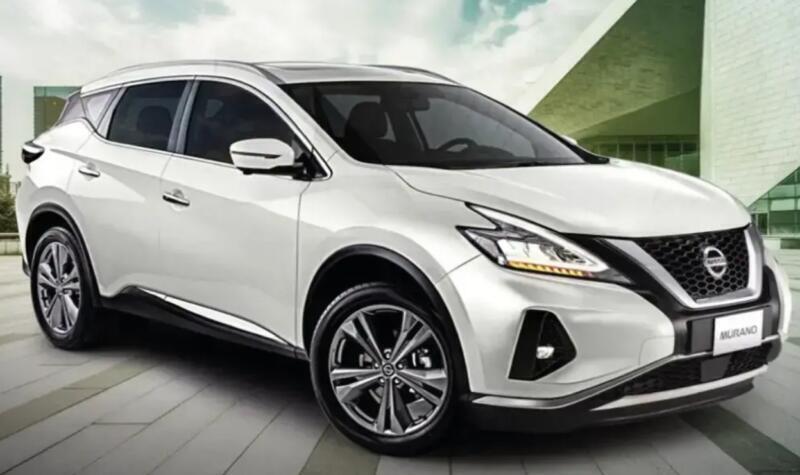
If you own a Nissan Murano in New Zealand, standing in front of a petrol pump can create a surprisingly awkward question: should we fill it with 91, 95, or 98 octane petrol?
At first glance, the answer seems simple. The Murano is a petrol SUV, so we grab the green nozzle and get on with our day. But things become murkier when we consider that New Zealand has received different Murano generations, many vehicles arrived as used Japanese imports, and overseas owner's manuals sometimes describe octane using a completely different rating system.
That is where confusion creeps in.
For many New Zealand-market second-generation Nissan Murano models with the 3.5-litre V6, 95 RON premium unleaded is the sensible fuel to use, particularly when the vehicle documentation specifies premium petrol. Contemporary Australian specifications for the closely related Murano listed 95 RON premium unleaded, and Nissan itself warns that vehicles requiring 95 RON should not be fed lower-octane fuel simply because it is cheaper.
However, not every Murano on New Zealand roads is identical. Japanese imports, older Z50 models, and vehicles originally built for other markets can carry different recommendations.
So rather than treating every Murano as if it came from the same mould, we need to look at the exact vehicle.
- What Fuel Does a Nissan Murano Use in New Zealand?
- Is a Nissan Murano Petrol or Diesel?
- Should We Put 91 or 95 in a Nissan Murano?
- Can a Nissan Murano Run on 98 Octane?
- Why Does Octane Matter in a Nissan Murano?
- Nissan Murano Fuel Type by Generation
- How Do We Find the Correct Fuel for Our Exact Murano?
- Understanding 91, 95 and 98 Petrol in New Zealand
- Is Premium Petrol Worth It for a Nissan Murano?
- Will 95 Petrol Improve Murano Fuel Economy?
- How Much Fuel Does a Nissan Murano Use?
- Can We Mix 91 and 95 Petrol?
- What Happens If We Put 91 in a Murano That Needs 95?
- Can We Put Diesel in a Nissan Murano?
- What About Ethanol-Blended Petrol?
- Does the Nissan Murano Require Premium Fuel Forever?
- Japanese-Import Nissan Murano Fuel Type
- Does Higher-Octane Petrol Clean the Murano Engine?
- How to Reduce Nissan Murano Fuel Costs in New Zealand
- 91 vs 95 vs 98: Which One Should Murano Owners Choose?
- Common Nissan Murano Fuel Mistakes
- Best Fuel for a High-Mileage Nissan Murano
- Should We Use Fuel Injector Cleaner?
- Nissan Murano Fuel Type New Zealand: Final Verdict
- Frequently Asked Questions
What Fuel Does a Nissan Murano Use in New Zealand?
The Nissan Murano uses unleaded petrol, not diesel.
Most examples commonly encountered in New Zealand use Nissan's naturally aspirated V6 petrol engine, particularly the 3.5-litre VQ35DE found across much of the Murano's first and second generations.
For many NZ owners, the practical recommendation is:
- Fuel type: Unleaded petrol
- Common recommended grade: 95 RON premium unleaded
- Higher grade alternative: 98 RON is normally acceptable
- 91 RON: Use only when your particular Murano's manual or fuel-flap information permits it
- Diesel: Never
- E85: Do not use unless the vehicle is explicitly certified for it
New Zealand petrol grades are labelled using Research Octane Number, or RON, with 91, 95 and 98 being the familiar choices. The Motor Trade Association confirms that New Zealand uses RON rather than the AKI system commonly displayed at American petrol stations.
That distinction matters more than it might seem.
Is a Nissan Murano Petrol or Diesel?
The Murano models most New Zealand buyers encounter are petrol-powered SUVs.
Unlike SUVs that were widely available with both petrol and turbo-diesel engines, the Murano built much of its identity around a smooth petrol V6.
That is part of its personality. A Murano does not drive like a diesel workhorse with a big lump of low-end torque. The V6 tends to feel smoother, quieter and more progressive, working with Nissan's continuously variable transmission in many generations.
If you buy a used Murano and somebody casually tells you that it is "a diesel SUV," check again before going anywhere near the diesel nozzle.
Putting diesel into a petrol Murano can cause major starting and fuel-system problems.
The familiar 3.5-litre V6
The engine most strongly associated with the Murano is Nissan's 3.5-litre VQ-series V6.
In second-generation Australasian specification, the Murano used a 3.5-litre V6 producing around 191 kW and 336 Nm, paired with an Xtronic CVT. Contemporary road-test specifications listed 95 RON premium unleaded petrol for this combination.
For owners of these models, that makes the choice at the petrol station fairly straightforward.
Should We Put 91 or 95 in a Nissan Murano?
This is the question most owners actually want answered.
If the owner's manual, fuel flap, Japanese specification sticker or NZ documentation states 95 RON minimum or premium unleaded, use 95.
Do not downgrade to 91 simply because the engine still starts and appears to run.
An engine management system can sometimes compensate for lower-octane fuel by adjusting ignition timing when knock is detected. That does not magically transform the lower-grade petrol into the correct fuel, however.
Think of it like wearing shoes one size too small. We might still walk down the road, but that does not make the fit ideal.
The New Zealand Automobile Association explains the basic rule clearly: using petrol with a higher octane rating than required is generally acceptable, whereas using fuel below the manufacturer's minimum recommended octane risks engine problems.
When 91 RON may be acceptable
There is an important wrinkle.
Some Murano manuals produced for markets such as the United States specify regular unleaded petrol using the AKI octane system. American "87 octane" should not be interpreted as 87 RON. New Zealand and the United States label octane differently.
Consequently, an imported owner's manual can make things look more confusing than they really are.
If your specific Murano documentation permits approximately 91 RON petrol, then using New Zealand 91 may be perfectly acceptable.
That is why we should never make the fuel decision solely from something written about another Murano on an overseas forum.
When 95 RON is the safer choice
For an Australasian-specification Z51 Murano that explicitly calls for premium petrol, 95 RON should be our default.
It offers the anti-knock resistance the engine calibration expects without paying extra for an octane level that may deliver little additional benefit.
Can a Nissan Murano Run on 98 Octane?
Generally, yes.
If a Murano requires 95 RON, using 98 RON unleaded petrol is normally fine because we are exceeding the minimum octane requirement rather than falling below it.
The AA's guidance follows the same principle: if a vehicle requires 95, using 95 or a higher grade is acceptable, whereas dropping to 91 is not recommended.
Does that mean we should always buy 98?
Not necessarily.
Does 98 make the Murano faster?
Probably not in any dramatic way.
Octane rating is mainly a measure of the fuel's resistance to abnormal combustion or knock. It is not a simple "power rating."
If the Murano is calibrated around 95 RON and is already running happily on it, switching to 98 does not automatically unlock hidden horsepower.
Some drivers may notice smoother operation under particular conditions, while others will notice absolutely nothing except a larger number on the petrol receipt.
When 98 may make sense
We might choose 98 if:
- 95 is unavailable at the station.
- The vehicle's documentation recommends 98.
- The engine appears particularly sensitive to knock.
- We are towing or operating under heavy load and the manufacturer permits the grade.
- The price difference is small enough that we simply prefer it.
Otherwise, 95 is often the sensible middle ground for a Murano specifically requiring premium fuel.
Why Does Octane Matter in a Nissan Murano?
Petrol does not always burn exactly when we want it to.
Inside the cylinder, the spark plug is supposed to ignite the air-fuel mixture at a carefully controlled point. Under certain combinations of pressure, heat and engine load, fuel can ignite abnormally.
That phenomenon is often described as knock, pinging or detonation.
Higher-octane petrol is more resistant to this unwanted combustion.
The MTA notes that New Zealand's 91, 95 and 98 grades refer to their RON octane ratings.
The engine computer can only do so much
Modern engine electronics can respond to knock by altering ignition timing.
That protection is useful, but we should not treat it as permission to ignore Nissan's fuel recommendation indefinitely.
When ignition timing is pulled back, the engine may sacrifice some performance or efficiency in order to protect itself.
In other words, the computer can sometimes put out the fire, but we should not keep handing it matches.
Nissan Murano Fuel Type by Generation
Murano fuel recommendations require a little context because New Zealand's Murano population contains both locally supplied vehicles and used imports.
First-generation Nissan Murano Z50
The first-generation Murano, known as the Z50, arrived in the early 2000s and was sold in several international markets.
Many versions used the 3.5-litre VQ35DE V6.
Fuel recommendations can vary according to market specification. Some overseas material allows regular unleaded, while other regional information recommends higher octane petrol.
For that reason, owners of a Z50 should treat the fuel filler door and the owner's manual supplied for that exact vehicle as the final authority.
If you own a Japanese import and cannot read the fuel label, obtaining a translation is a far better idea than guessing.
Second-generation Nissan Murano Z51
The Z51 Murano is especially relevant in New Zealand.
This generation retained the 3.5-litre V6 and CVT combination and was offered in Australia and New Zealand during the period when the Murano remained part of Nissan's regional SUV range.
Australian test specifications from 2012 explicitly identify 95 RON premium unleaded petrol as the required fuel for the 3.5-litre Z51.
For a comparable NZ-spec Z51 with the same fuel recommendation, we would therefore choose 95 at the pump unless the individual vehicle documentation says otherwise.
Third-generation Nissan Murano Z52
Here we need to be careful.
The third-generation Z52 Murano was not officially marketed in New Zealand in the same way as earlier generations, because it was not produced in right-hand-drive form for this market.
Consequently, any Z52 found in New Zealand deserves vehicle-specific checking because its original market specification matters.
An imported left-hand-drive vehicle, for example, may have North American fuel instructions.
Fourth-generation Murano
The newer fourth-generation Murano was developed primarily for North America, replacing the traditional Murano V6 with a turbocharged four-cylinder powertrain.
For a privately imported example in New Zealand, we should follow its original manufacturer's fuel specification rather than assuming the recommendations for an older NZ-market Z51 still apply.
Different engine, different calibration, different rulebook.
How Do We Find the Correct Fuel for Our Exact Murano?
Fortunately, we do not need detective hats.
There are several places to check.
1. Look inside the fuel filler door
Open the fuel flap first.
Manufacturers often place fuel information near the filler neck or inside the flap.
Look for wording such as:
UNLEADED FUEL ONLY
or:
PREMIUM UNLEADED
You may also see an octane number.
2. Read the owner's manual
The owner's manual is the strongest source because it relates to the vehicle's actual specification.
Nissan maintains manuals for numerous Murano model years through its official technical-information and owner resources.
Search the manual for terms such as:
- Fuel recommendation
- Octane
- Gasoline
- Petrol
- Fuel information
- Technical and consumer information
3. Check the vehicle's original market
A Japanese-import Murano is not automatically identical to a New Zealand-new Murano.
Likewise, an American specification cannot always be copied directly because octane numbers may use AKI rather than RON.
4. Ask Nissan using the VIN
When documentation is missing, the vehicle identification number can help establish the original specification.
This is especially worthwhile when dealing with an unusual import.
Understanding 91, 95 and 98 Petrol in New Zealand
New Zealand motorists commonly encounter 91, 95 and 98 RON petrol. The numbers represent the fuel's resistance to knock rather than its energy content or overall "quality."
91 RON
91 is regular unleaded petrol.
It is widely used by vehicles designed to operate on standard fuel and is generally cheaper.
If our Murano explicitly allows 91 RON, there is no inherent reason to feel guilty about using it.
95 RON
95 is premium unleaded.
For many Australasian Murano owners, this is the sweet spot.
If the manufacturer specifies 95, use it.
98 RON
98 provides even greater knock resistance.
It is useful for engines designed to take advantage of it and can serve as a higher-octane substitute when a vehicle requires 95.
However, if the Murano only requires 95, the extra money spent on every tank of 98 will not necessarily return itself through improved fuel economy.
If premium is required, yes.
We should not really think of it as an upgrade in that case. It is simply the correct fuel.
It is like buying the correct viscosity of engine oil. The cheaper alternative is not necessarily a bargain if it falls outside the specification.
If premium is merely optional, the calculation becomes less clear.
Suppose 95 costs noticeably more per litre than 91. To justify the extra expense purely on fuel economy, the Murano would need to improve its consumption enough to offset the price difference.
That does not always happen.
Higher octane by itself does not guarantee better fuel economy. New Zealand motoring guidance similarly notes that vehicles designed for 91 do not automatically gain meaningful advantages simply by being filled with 95.
Will 95 Petrol Improve Murano Fuel Economy?
Only if the engine benefits from it.
A Murano designed to operate on 95 can potentially perform more consistently on the correct octane because the engine management system does not need to compensate for knock caused by insufficient octane.
But we should not expect miracles.
Fuel economy in a Murano is influenced by far more than petrol grade:
- Driving speed
- Stop-start traffic
- Tyre pressure
- Wheel alignment
- Vehicle load
- Air-conditioning use
- Engine condition
- Spark plugs
- Air filter condition
- CVT condition
- Terrain
- Short trips
- Cold starts
A heavy V6 SUV travelling through hilly city streets will not suddenly sip fuel like a compact hatchback because we bought premium petrol.
How Much Fuel Does a Nissan Murano Use?
Fuel consumption varies considerably by model year and driving conditions.
A 2012 Australasian-spec Murano was quoted at around 10.9 L/100 km combined, although real-world road testing could produce figures closer to 12 L/100 km depending on conditions.
Urban driving can push consumption higher.
That is hardly surprising. The Murano combines a relatively large petrol engine, SUV body, automatic transmission and substantial vehicle weight.
City driving
In Auckland, Wellington or Christchurch traffic, frequent acceleration and braking can make the Murano thirsty.
Short journeys are particularly hard on fuel economy because the engine spends more time warming up.
Open-road driving
At a steady cruising speed, consumption usually becomes more respectable.
This is where the Murano's smooth V6 character makes more sense. Once moving, the engine is not constantly hauling the SUV away from traffic lights.
Can We Mix 91 and 95 Petrol?
Accidentally adding a small amount of 91 to a tank containing 95 does not mean we need to panic.
The fuels will mix, creating an effective octane level somewhere between them.
However, if the Murano requires 95 minimum, deliberately filling half the tank with 91 every week defeats the purpose of the specification.
If you accidentally add a small amount of lower-octane petrol, fill the remaining space with the correct higher-octane fuel and drive moderately until the tank has been used.
If you have filled the entire tank with the wrong fuel and the manufacturer explicitly requires premium, professional advice is sensible.
What Happens If We Put 91 in a Murano That Needs 95?
One accidental tank is not necessarily an engine death sentence.
Modern knock control provides some protection.
Nevertheless, possible symptoms can include:
- Reduced performance
- Sluggish acceleration
- Engine pinging under load
- Rougher operation
- Reduced efficiency
- Increased ignition correction by the ECU
Persistent use of petrol below the manufacturer's required octane should be avoided. The AA specifically advises motorists to treat the recommended octane as a minimum rather than assuming a lower grade is harmless.
What should we do after accidentally using 91?
Avoid aggressive acceleration, high engine loads and unnecessary towing.
Then refill with the correct grade when practical.
If severe knocking, warning lights or poor running develop, get the vehicle inspected.
Can We Put Diesel in a Nissan Murano?
No.
A petrol Murano is not designed to run on diesel.
If diesel has been accidentally added, do not start the engine.
Once the ignition system and fuel pump begin circulating the wrong fuel, the repair becomes more complicated.
Arrange for the tank to be professionally drained.
That relatively inconvenient afternoon is still much cheaper than forcing the vehicle to digest fuel it was never designed to burn.
What About Ethanol-Blended Petrol?
Ethanol compatibility deserves attention, especially with older vehicles.
Nissan New Zealand's owner-support guidance notes that some Nissan vehicles require 95 RON premium unleaded and warns that not every ethanol-blended petrol meets premium-fuel requirements. It also says Nissan does not recommend ethanol-blended fuel in certain older Nissan vehicles even where operation may technically be possible.
For an older Murano, particularly an import, we would check the manual before regularly using ethanol-rich fuel.
Do not assume that every petrol carrying a similar octane number is chemically identical.
If the manufacturer's specification states premium unleaded, yes—the requirement does not disappear because the vehicle becomes older.
An engine with 180,000 km does not suddenly decide that 91 is now good enough.
In fact, an older engine may have carbon deposits or other age-related characteristics that make avoiding knock even more worthwhile.
Maintenance changes with age.
Fuel specification generally does not.
Japanese-Import Nissan Murano Fuel Type
This deserves its own section because used Japanese imports are common in New Zealand.
A Japanese domestic-market Murano may carry stickers and manual information written in Japanese.
Do not use the local registration year alone to determine the fuel type.
Instead, identify:
- Chassis code
- Engine code
- Build year
- Original market
- Fuel-flap label
- Factory manual recommendation
A Z50 or Z51 imported from Japan may not have exactly the same trim, emissions equipment or calibration as a vehicle sold new through Nissan New Zealand.
Why overseas Google results can mislead us
Search "Nissan Murano fuel type" and we may immediately see American advice about 87 octane.
That sounds dramatically lower than New Zealand 91.
But the comparison is misleading because American pumps generally use the Anti-Knock Index, whereas New Zealand uses RON.
We need to compare equivalent rating systems before drawing conclusions.
Does Higher-Octane Petrol Clean the Murano Engine?
Not automatically.
Octane and detergent packages are two separate concepts.
A petrol retailer may include a stronger additive package in a premium product, but the higher octane number itself does not mean the fuel possesses magical cleaning powers.
If an engine has dirty injectors, worn spark plugs or intake deposits, pouring 98 into the tank is not a substitute for proper diagnosis and maintenance.
A fuel pump is not a mechanic in disguise.
How to Reduce Nissan Murano Fuel Costs in New Zealand
Because a V6 Murano can consume a fair amount of petrol, owners naturally want to reduce running costs.
The biggest savings usually come from using the correct fuel efficiently, not from gambling with a lower octane than Nissan specifies.
Try these habits:
- Keep tyres at the recommended pressure.
- Avoid unnecessary hard acceleration.
- Remove heavy cargo when it is not needed.
- Maintain the engine on schedule.
- Replace worn spark plugs with the correct specification.
- Make sure the CVT is operating properly.
- Combine short trips where possible.
- Avoid excessive idling.
- Check wheel alignment if the vehicle pulls or tyres wear unevenly.
- Track fuel consumption over several tanks rather than judging one fill-up.
That last point is particularly useful.
Reset the trip meter when we fill the tank, record litres added at the next fill and calculate actual L/100 km.
After three or four tanks, patterns become obvious.
91 vs 95 vs 98: Which One Should Murano Owners Choose?
Here is the simplest decision tree.
Choose 91 when:
Your exact owner's manual or vehicle label states that 91 RON unleaded is acceptable.
Choose 95 when:
The vehicle requires 95 RON premium unleaded, as found with certain Australasian Z51 Murano specifications.
Choose 98 when:
Your vehicle requires it, or you need a higher-octane substitute for 95 and are comfortable with the extra cost.
Our practical rule
Never go below the specified minimum octane.
Going above it is normally harmless but may be financially unnecessary.
That rule cuts through most of the confusion.
Common Nissan Murano Fuel Mistakes
Murano owners can save themselves trouble by avoiding a few recurring mistakes.
Mistake 1: Assuming every Murano needs the same petrol
Different generations and markets can have different specifications.
Mistake 2: Comparing US octane numbers directly with NZ pumps
87 AKI in the United States is not the same measurement as 87 RON.
Mistake 3: Believing 98 always produces more power
Higher octane only helps when the engine can use it.
Mistake 4: Choosing 91 solely because it is cheaper
If Nissan specifies 95 minimum, the saving is based on using fuel outside the intended specification.
Mistake 5: Ignoring the owner's manual
A forum comment from somebody driving a completely different Murano is not better evidence than the manufacturer's documentation for our vehicle.
Best Fuel for a High-Mileage Nissan Murano
High mileage does not automatically change the required octane.
If a Murano has travelled 200,000 km and was designed for 95 RON, continue using 95 or higher.
What may change is how carefully we monitor the vehicle.
High-mileage owners should pay attention to:
- Cold-start behaviour
- Engine knock
- Misfires
- Check-engine lights
- Fuel consumption changes
- Oil consumption
- Spark plug condition
- Injector performance
- Oxygen sensors
If fuel consumption suddenly climbs by 20%, buying more expensive petrol should not be our first response.
Find the fault.
Should We Use Fuel Injector Cleaner?
Not at every fill.
Quality petrol already contains additive packages, and an engine running correctly does not necessarily need bottles of aftermarket cleaner poured into the tank every month.
If injectors are genuinely dirty, a reputable fuel-system cleaner may help in some circumstances.
But persistent hesitation, misfires or poor fuel economy deserve diagnosis rather than a cocktail of additives.
Nissan Murano Fuel Type New Zealand: Final Verdict
For most New Zealand Murano owners, the safest answer is beautifully simple:
Use unleaded petrol and follow the minimum RON rating specified for your exact vehicle.
For many second-generation 3.5-litre Murano models sold in the Australasian region, 95 RON premium unleaded is the appropriate choice. Contemporary specifications for this version identify 95 RON PULP, making 95 the natural default when the vehicle's own documentation agrees.
98 RON is generally a perfectly reasonable higher-octane alternative.
91 RON should only be our everyday choice when the specific Murano manual or fuel label says it meets the minimum requirement.
And that final qualification matters because New Zealand has plenty of imported vehicles.
If there is one thing worth remembering, it is this: the fuel flap and owner's manual beat internet folklore every time.
The Murano's V6 is like a comfortable pair of running shoes—it works best when we give it what it was designed for. Feed it the right petrol, keep the maintenance current, and we have removed one unnecessary source of trouble from Murano ownership.
Frequently Asked Questions
1. What fuel does a Nissan Murano take in New Zealand?
The Nissan Murano uses unleaded petrol. Many Australasian second-generation 3.5-litre Murano models specify 95 RON premium unleaded. However, owners should always check their exact vehicle's fuel flap or manual because imported and older models can differ.
2. Can I put 91 petrol in my Nissan Murano?
Only if your specific Murano documentation allows 91 RON. If the vehicle specifies 95 RON minimum, use 95 or higher rather than routinely filling with 91.
3. Can a Nissan Murano use 98 octane petrol?
Yes, a Murano requiring 95 RON can generally use 98 RON because it exceeds the minimum octane requirement. However, 98 may cost more without providing a noticeable performance or economy improvement.
4. Does the Nissan Murano use diesel?
No. The Murano models commonly found in New Zealand are petrol-powered. Never put diesel into a petrol Murano. If diesel is added accidentally, do not start the engine; arrange to have the fuel system drained.
5. Is 95 petrol better than 91 for a Nissan Murano?
It is better when Nissan specifies 95 RON. If the vehicle is designed to run on 91, however, 95 is not automatically necessary. The best petrol is the lowest octane grade that meets or exceeds the manufacturer's requirement.
This content may interest you! Audi A3 Fuel Type New Zealand: What Should You Put in the Tank?
Leave a Reply