
Are Audi A3 Expensive to Maintain in New Zealand?
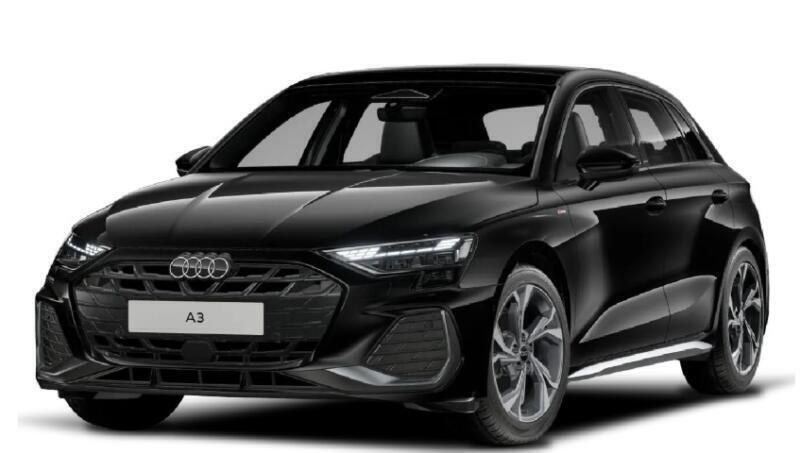
The Audi A3 has a tempting formula. It gives us much of the premium feel associated with larger Audi models, but in a smaller, more manageable package. In New Zealand, that can make a used A3 particularly attractive. You get sharp European styling, a refined cabin, strong turbocharged engines, and plenty of technology without necessarily paying luxury-SUV money.
But then comes the question that can quickly take the shine off a used European-car bargain: are Audi A3 expensive to maintain in New Zealand?
The short answer is yes, an Audi A3 generally costs more to maintain than a mainstream Japanese or Korean hatchback, but it doesn't have to be outrageously expensive. The difference comes down to the particular A3 we buy, how well it has been maintained, where we have it serviced, and whether we encounter one of the model's potentially expensive mechanical or electronic problems.
A carefully chosen A3 with comprehensive service records can be surprisingly manageable. A neglected example bought simply because the purchase price looks cheap can become a very different story.
Let's break down what New Zealand A3 ownership can really involve.
- Is the Audi A3 Expensive to Maintain in NZ?
- How Much Does Audi A3 Maintenance Cost in New Zealand?
- Why Audi A3 Maintenance Costs More Than Mainstream Cars
- Audi A3 Servicing Costs in NZ: Dealer vs Independent Specialist
- Audi A3 DSG Maintenance Costs
- Audi A3 Engine Maintenance in New Zealand
- Water Pump and Cooling-System Repairs
- How Expensive Are Audi A3 Brakes in NZ?
- Audi A3 Suspension Maintenance
- Electronics: The Hidden Audi A3 Maintenance Cost
- Are Audi A3 Parts Expensive in New Zealand?
- Older Audi A3 vs Newer Audi A3 Maintenance Costs
- How Much Should We Budget Each Year?
- Audi A3 vs Toyota Corolla Maintenance Costs
- Audi A3 vs Volkswagen Golf Maintenance
- Which Audi A3 Is Cheapest to Maintain?
- Should You Buy a Used Audi A3 in New Zealand?
- How to Reduce Audi A3 Maintenance Costs in NZ
- Is an Audi A3 Worth the Maintenance Cost?
- Final Verdict: Are Audi A3 Expensive to Maintain in New Zealand?
- Frequently Asked Questions
Is the Audi A3 Expensive to Maintain in NZ?
Compared with something like a Toyota Corolla, Mazda3, Hyundai i30, or Suzuki Swift, we'd normally expect the Audi A3 to be more expensive to keep on the road.
That isn't particularly surprising. The A3 is a premium European vehicle, and beneath its relatively understated appearance are turbocharged engines, sophisticated transmissions, numerous electronic systems, and components that may cost more to replace than equivalent parts on mainstream cars.
However, calling the A3 "expensive" without context isn't especially useful.
There is a huge difference between paying for routine servicing on a healthy 1.4-litre A3 and repairing a poorly maintained car with DSG transmission trouble, coolant leaks, worn suspension components, and dashboard warning lights.
For most owners, the real question should therefore be:
How predictable will my Audi A3 maintenance costs be?
That's where service history becomes incredibly important.
How Much Does Audi A3 Maintenance Cost in New Zealand?
There isn't one universal Audi A3 maintenance price in NZ. Costs vary according to the generation, engine, transmission, workshop, location, mileage, and the work required.
As a broad budgeting guide rather than a fixed quote, owners might encounter figures roughly along these lines:
| Maintenance item | Approximate NZ cost |
|---|---|
| Basic oil and filter service | NZ$250–$450 |
| More comprehensive scheduled service | NZ$450–$800+ |
| Brake pads | NZ$300–$600 per axle |
| Pads and rotors | NZ$600–$1,200+ per axle |
| Battery replacement | NZ$300–$600+ |
| DSG transmission service | NZ$500–$900+ |
| Spark plugs | NZ$250–$500 |
| Water pump/thermostat repair | NZ$900–$2,000+ |
| Major suspension work | NZ$1,000–$2,500+ |
| Significant DSG repair | NZ$2,000–$5,000+ |
These figures should be treated as planning ranges, not guaranteed prices. Labour rates and parts prices can differ considerably between an Audi dealer, European specialist, and independent workshop.
The important lesson is that ordinary servicing isn't necessarily frightening. It's the occasional four-figure repair that makes A3 ownership more expensive than running a basic economy car.
Routine Maintenance Is Usually Manageable
An oil service doesn't suddenly cost thousands of dollars simply because there are four rings on the grille.
If our A3 needs nothing beyond engine oil, filters, inspections, and normal consumables, annual maintenance can remain quite reasonable for a premium vehicle.
Problems begin when several age-related jobs arrive together.
Imagine buying an older A3 that soon needs tyres, brakes, a battery, transmission servicing, and a coolant-system repair. Suddenly the supposedly affordable European hatchback has swallowed several thousand dollars.
That clustering of expenses is one reason older luxury cars sometimes earn intimidating reputations.
Why Audi A3 Maintenance Costs More Than Mainstream Cars
Several factors explain the difference.
Audi-specific components can cost more than equivalent components for high-volume Japanese models.
Fortunately, the A3 shares a significant amount of engineering with other Volkswagen Group vehicles. Depending on the generation and component, this can improve aftermarket parts availability and make maintenance less painful than it would be on a rarer luxury vehicle.
Still, we shouldn't expect bargain-basement parts pricing across the board.
European Specialist Labour Isn't Cheap
Modern Audi vehicles require appropriate diagnostic equipment and technicians familiar with Volkswagen Group systems.
A competent European-car specialist can often provide a useful middle ground between a dealership and a generic workshop.
Going to the cheapest workshop available isn't necessarily the smartest way to save money. Proper diagnosis matters enormously. Replacing three unnecessary components while hunting for a fault costs far more than paying an experienced technician to identify the correct one first.
This content may interest you! Toyota RAV4 Maintenance Schedule
The A3 Is Mechanically More Complex
Turbocharging, direct injection, DSG transmissions, sophisticated infotainment, electronic parking brakes, driver-assistance systems, and numerous sensors add refinement.
They also create more things that can eventually require attention.
Think of the A3 like a quality mechanical watch compared with a basic digital one. The additional sophistication is part of the attraction, but simplicity generally wins when our only objective is minimizing maintenance costs.
Audi A3 Servicing Costs in NZ: Dealer vs Independent Specialist
Where we service the car can dramatically affect the ownership budget.
Audi Dealership Servicing
Dealer servicing offers several advantages, especially for newer vehicles.
Dealership technicians work with Audi products every day, have access to manufacturer-specific diagnostic systems, and can perform servicing according to factory procedures.
That expertise and infrastructure usually come with higher labour rates.
For a newer A3, particularly one still covered by warranty or a service plan, dealership servicing can make perfect sense.
For an older vehicle, however, many owners start looking elsewhere.
Independent European Specialists
A reputable independent workshop specializing in Audi, Volkswagen, Škoda, and other European vehicles can be an excellent option.
We can often obtain specialist knowledge while paying less than dealership rates.
The key word is specialist.
An experienced technician who already knows the common A3 faults can save both time and money. When a particular warning light appears, they may know where to look immediately rather than diagnosing the car from scratch.
Should We Avoid Dealers Completely?
No.
Price shouldn't be the only consideration. Dealers may be useful for manufacturer-specific work, software-related issues, recalls, or complex diagnostic situations.
For ordinary servicing on an older A3, though, an established independent European specialist can often keep long-term costs under better control.
Audi A3 DSG Maintenance Costs
The transmission deserves its own section because it can make the difference between an enjoyable A3 and an expensive ownership experience.
Many Audi A3 models use a dual-clutch automatic transmission commonly referred to as DSG or S tronic.
When operating correctly, these transmissions are excellent. Changes are quick, smooth once underway, and contribute to the A3's polished driving experience.
But different DSG variants have different servicing requirements and potential problems.
Why Transmission History Matters
Before buying a used Audi A3, we should determine exactly which transmission it has and what maintenance it requires.
On transmissions requiring periodic fluid and filter changes, skipping those services to save a few hundred dollars can be false economy.
Transmission problems can involve:
- Mechatronic units
- Clutch packs
- Sensors
- Solenoids
- Bearings
- Internal mechanical components
- Control software
Once major repairs become necessary, costs can climb into the thousands.
Signs of Possible DSG Trouble
During a test drive, pay attention to hesitation, harsh engagement, excessive shuddering, unusual noises, delayed selection of Drive or Reverse, warning messages, or inconsistent gear changes.
Not every slightly unusual DSG characteristic means the gearbox is failing. Dual-clutch transmissions can feel different from conventional torque-converter automatics, especially at very low speeds.
Still, anything obviously abnormal deserves investigation before purchase.
Audi A3 Engine Maintenance in New Zealand
Audi has offered the A3 with numerous petrol and diesel engines over the years, so maintenance requirements vary substantially.
This content may interest you! Ford Ranger Maintenance Checklist
Some engines have excellent reputations when maintained correctly. Others have known weak points worth researching before buying.
Petrol Audi A3 Maintenance
Turbocharged TFSI petrol engines are popular because they combine decent performance with respectable fuel economy.
Depending on generation and engine family, potential areas to watch can include oil consumption, ignition coils, spark plugs, PCV components, coolant leaks, carbon deposits, and timing-system components.
Not every A3 develops these issues.
That's an important distinction. Internet forums naturally concentrate on broken cars because owners rarely create a post titled, "My Audi worked perfectly again today."
We should use known problems as inspection points rather than assuming every vehicle will suffer every possible failure.
Diesel Audi A3 Maintenance
Diesel A3 models can deliver impressive fuel economy, particularly on longer trips.
However, diesel emissions equipment can add another layer of complexity.
Vehicles repeatedly driven on very short urban journeys may be more vulnerable to diesel particulate filter problems because the exhaust system doesn't always reach ideal operating conditions for regeneration.
For someone regularly covering longer motorway or open-road distances, a diesel may make more sense.
For low-mileage city driving, a petrol A3 may be the simpler choice.
Water Pump and Cooling-System Repairs
Cooling-system problems deserve attention when evaluating a used Audi A3.
Depending on the engine, water pump and thermostat assemblies can become expensive maintenance items.
A small coolant leak may look harmless at first. Ignored for long enough, however, cooling problems can potentially lead to overheating and much larger engine bills.
When inspecting an A3, look for unexplained coolant loss, warning messages, dried coolant residue, unusual smells, temperature fluctuations, and evidence of previous cooling-system repairs.
A pre-purchase inspection can be worth its weight in gold here.
How Expensive Are Audi A3 Brakes in NZ?
Brake costs are usually manageable, particularly if we use reputable aftermarket components rather than insisting on dealer-supplied parts for an older car.
The exact price depends on wheel size, specification, model generation, and whether we need pads alone or pads and rotors.
Performance-oriented A3 variants naturally tend to have larger and more expensive brakes.
Don't Forget Tyres
Tyres can quietly become one of the bigger recurring ownership expenses.
A higher-spec A3 sitting on large alloy wheels will usually need more expensive tyres than an entry-level model with smaller wheels.
Four quality premium-brand tyres can easily represent a substantial bill.
Cheap tyres may reduce the immediate cost, but tyres influence braking, wet-weather grip, noise, ride quality, and handling. On a car designed to feel refined and composed, poor tyres can undermine much of what we're paying for.
Audi A3 Suspension Maintenance
New Zealand roads aren't always gentle on suspension components.
Over time, bushes, control arms, ball joints, wheel bearings, dampers, and related components can wear.
One small suspension repair isn't normally disastrous.
The expensive scenario appears when we purchase a high-mileage A3 that needs multiple components simultaneously.
Listen for knocks over bumps, check for uneven tyre wear, and pay attention to steering that feels loose or inconsistent.
This content may interest you! Tesla Model Y Maintenance Guide
An inspection on a hoist can reveal considerably more than a quick lap around the block.
Mechanical components aren't the only consideration.
Modern A3 models contain increasingly sophisticated electronic systems, including infotainment, parking sensors, electronic modules, cameras, adaptive lighting, keyless systems, and driver-assistance technology.
A faulty sensor may be relatively inexpensive.
A failed control module or complex infotainment fault can be another story.
This is why we should test everything before buying a used A3.
Don't just confirm that the engine starts.
Try the air conditioning, infotainment, Bluetooth, windows, mirrors, central locking, parking sensors, cameras, steering-wheel controls, cruise control, lights, seat functions, and every other electronic feature fitted to the car.
That ten-minute electronics check can uncover hundreds or even thousands of dollars in potential repairs.
Are Audi A3 Parts Expensive in New Zealand?
Some are. Some surprisingly aren't.
Because Audi belongs to the Volkswagen Group and the A3 shares mechanical architecture with other models, many service components have strong aftermarket availability.
That can make routine maintenance considerably cheaper than purchasing every component through an Audi dealership.
The NZ market also has independent European-parts suppliers and workshops familiar with these vehicles.
However, specialized electronic modules, body components, headlights, certain transmission parts, and model-specific equipment can still be costly.
Parts availability also matters. A component that has to be ordered from overseas can leave us dealing with both a large bill and an inconvenient wait.
Older Audi A3 vs Newer Audi A3 Maintenance Costs
This comparison is more complicated than it initially appears.
A newer A3 costs more to purchase but will generally have less age-related wear.
An older A3 may cost surprisingly little to buy, but that low purchase price doesn't make its replacement parts cheaper.
This creates one of the classic traps of used luxury-car ownership.
A Cheap Audi Is Still an Audi
Suppose an A3 originally occupied the premium end of the compact-car market but has depreciated to the price of an ordinary used hatchback.
Its market value has fallen.
The complexity of its engineering hasn't.
That's why buying solely on purchase price is dangerous.
A NZ$8,000 European car can still generate a NZ$2,000 repair bill.
The repair doesn't know how much we paid for the vehicle.
How Much Should We Budget Each Year?
For an older used A3 outside warranty, maintaining a dedicated repair reserve is sensible.
If the vehicle is healthy, some years might involve little more than routine servicing and consumables.
Other years could bring brakes, tyres, a battery, cooling-system work, suspension repairs, or transmission maintenance.
This content may interest you! Is Ford Ranger Expensive to Maintain in New Zealand?
Rather than assuming we'll spend exactly the same amount annually, it makes more sense to think in terms of a multi-year ownership budget.
For example, putting aside roughly NZ$1,000–$2,000 per year for servicing, maintenance, and unexpected repairs can provide a useful cushion for an older A3, excluding major catastrophic failures and depending heavily on mileage and condition.
We may spend much less.
We could also spend considerably more.
The reserve simply prevents every repair from feeling like an emergency.
Audi A3 vs Toyota Corolla Maintenance Costs
If minimum running cost is our number-one priority, the Corolla has the advantage.
Toyota's widespread parts availability, mechanical simplicity, huge workshop familiarity, and strong reliability reputation make it difficult for a premium European hatchback to compete purely on maintenance economics.
But we're not necessarily comparing equivalent experiences.
The A3 may offer a more premium cabin, stronger performance, different driving dynamics, more sophisticated technology, and that unmistakably European feel.
So the question isn't whether the A3 is cheaper to maintain than a Corolla.
Usually it isn't.
The question is whether the additional ownership cost is worth what the Audi gives us in return.
Audi A3 vs Volkswagen Golf Maintenance
This comparison is much closer.
The A3 and Golf have historically shared platforms, engines, transmissions, and numerous components.
As a result, their mechanical maintenance costs can sometimes be relatively similar when comparing equivalent versions.
Audi-specific trim, electronics, lighting, body components, and dealership labour can push A3 costs higher.
Still, someone comfortable owning a turbocharged Volkswagen Golf shouldn't automatically be terrified of an A3.
Under the tailored suit, they're often distant cousins attending the same family reunion.
Which Audi A3 Is Cheapest to Maintain?
There isn't one version that universally wins.
However, simpler specifications usually reduce financial risk.
An A3 with a proven engine, sensible wheel size, fewer complex options, complete maintenance records, and relatively modest mileage may be a safer financial bet than a heavily optioned model with questionable history.
More equipment means more toys to enjoy.
Eventually, it can also mean more toys to repair.
Service History Matters More Than Mileage Alone
A lower odometer reading doesn't automatically make one car better.
We'd rather consider a slightly higher-mileage A3 that has been consistently serviced than a suspiciously cheap low-mileage example with large gaps in its records.
Look for evidence of regular oil changes, transmission servicing where applicable, cooling-system work, brake maintenance, tyre replacement, and repairs to known age-related components.
Documentation turns uncertainty into information.
Should You Buy a Used Audi A3 in New Zealand?
Yes, provided we approach the purchase differently from buying a basic economy hatchback.
This content may interest you! Mitsubishi Triton Maintenance Cost New Zealand: Complete Ownership Guide
We shouldn't buy the cheapest A3 we can find and hope for the best.
Instead, prioritize:
- Comprehensive service history
- A clean pre-purchase inspection
- Smooth engine and transmission operation
- No unexplained warning lights
- Correct transmission servicing
- Evidence of cooling-system maintenance
- Quality tyres with even wear
- Fully functioning electronics
- A sensible ownership and repair budget
Paying an extra NZ$1,500 for a properly maintained example can easily be cheaper than buying the bargain car and immediately spending NZ$3,000 putting neglected maintenance right.
How to Reduce Audi A3 Maintenance Costs in NZ
The best strategy isn't avoiding maintenance. It's preventing small issues from becoming expensive ones.
Follow the correct service schedule and use oil meeting the appropriate manufacturer specification. Don't ignore coolant loss, oil leaks, unusual gearbox behaviour, suspension noises, or warning lights.
Find a reputable European specialist before the car breaks rather than after.
Keep maintenance records.
Use high-quality OEM-equivalent parts where appropriate instead of assuming that dealer-branded components are the only acceptable option.
And most importantly, don't postpone necessary work.
A NZ$400 problem ignored today has an irritating habit of returning dressed as a NZ$1,500 problem tomorrow.
Is an Audi A3 Worth the Maintenance Cost?
For the right driver, absolutely.
The A3 occupies an appealing middle ground. It's premium without being enormous, refined without being excessively flashy, and practical enough to use every day.
Its maintenance costs are higher than those of many mainstream hatchbacks, but they can remain reasonable when we choose the right car and maintain it proactively.
Someone who wants the cheapest possible transportation probably shouldn't buy an Audi A3.
Someone who values refinement, design, driving feel, and premium features—and accepts a somewhat larger maintenance budget—may find the A3 a compelling used-car choice.
Final Verdict: Are Audi A3 Expensive to Maintain in New Zealand?
So, are Audi A3 expensive to maintain in New Zealand?
Compared with a Toyota Corolla, Mazda3, or similar mainstream car, yes, generally.
Compared with larger and more complicated European luxury vehicles, an A3 can actually be relatively manageable.
Routine servicing itself isn't usually what makes ownership expensive. The bigger financial risk comes from neglected maintenance and major repairs involving transmissions, cooling systems, electronics, suspension, or other sophisticated components.
The smartest approach is simple: buy on condition and service history rather than price alone.
A well-maintained Audi A3 serviced by a knowledgeable European specialist can deliver years of enjoyable ownership without becoming a financial nightmare. A neglected example with missing records can turn a bargain purchase into a money pit remarkably quickly.
Budget realistically, inspect carefully, and remember that preventative maintenance is almost always cheaper than repair.
Do that, and owning an Audi A3 in New Zealand can feel less like feeding a hungry luxury car and more like paying a reasonable premium for something genuinely enjoyable to drive.
Frequently Asked Questions
1. How much does an Audi A3 cost to service in New Zealand?
A basic Audi A3 oil and filter service may roughly fall around NZ$250–$450, while larger scheduled services can cost NZ$450–$800 or more depending on the workshop, engine, model year, and required parts. Dealership prices may be higher than independent European specialists.
2. Is an Audi A3 more expensive to maintain than a Toyota Corolla?
Yes. In most cases, an Audi A3 will cost more to maintain than a Toyota Corolla because of its more sophisticated drivetrain, turbocharged engines, electronics, parts prices, and specialist labour requirements. The gap can become particularly noticeable when major repairs are required.
3. Are used Audi A3 reliable in New Zealand?
A well-maintained Audi A3 can be reliable, but reliability depends heavily on generation, engine, transmission, previous maintenance, and driving history. A comprehensive service record and professional pre-purchase inspection are especially valuable when buying an older A3.
4. Is it cheaper to service an Audi A3 at an independent workshop?
Usually, yes. A reputable European-car specialist can often provide Audi-specific expertise at lower labour rates than a franchised dealership. For older A3 models outside warranty, this can significantly reduce long-term ownership costs.
5. Should I buy a high-mileage Audi A3 in NZ?
A high-mileage A3 isn't automatically a bad purchase. Condition and maintenance history can matter more than mileage alone. Before buying, check servicing records, transmission behaviour, coolant system condition, suspension, electronics, tyres, brakes, and arrange a professional pre-purchase inspection.
This content may interest you! Audi A3 vs A4 vs A5 New Zealand: Which Audi Is Best?
Leave a Reply