
Kia Cerato Weight: Complete Kerb Weight and Load Guide
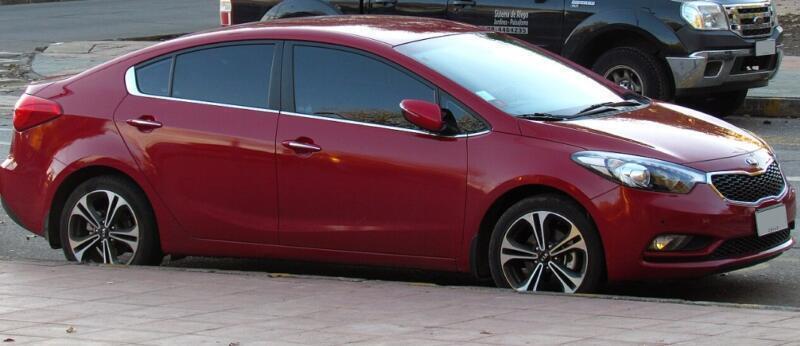
The Kia Cerato weight is not represented by one universal number. Depending on the year, engine, transmission, trim level, body style, and country in which the car was sold, a Cerato can weigh noticeably more or less than another Cerato parked beside it.
As a useful starting point, many later-model Kia Ceratos fall somewhere around 1,300 to 1,440 kg in kerb weight, or approximately 2,866 to 3,175 lb. Official Kia New Zealand documentation for the MY23 Cerato gives a kerb-weight range of 1,310 to 1,375 kg, while the 2.0 MPI Cerato Premium listed by Kia Hong Kong weighs 1,330 kg. Performance-oriented GT versions can be heavier still.
Why should we care about a few hundred kilograms?
Because vehicle weight quietly influences almost everything we experience behind the wheel. Acceleration, fuel consumption, braking, tyre wear, handling, towing, payload and even the kind of jack we should use are connected to weight.
So rather than throwing one number at the screen and calling it a day, we're going to unpack Kia Cerato weight properly.
- How Much Does a Kia Cerato Weigh?
- Kia Cerato Weight in Kg
- What Does Kerb Weight Actually Mean?
- Kia Cerato Kerb Weight vs Gross Vehicle Weight
- Kia Cerato Sedan Weight
- Kia Cerato Hatchback Weight
- Kia Cerato GT Weight
- Kia Cerato Weight by Generation
- Why Does Kia Cerato Weight Differ Between Models?
- Do Bigger Wheels Increase Cerato Weight?
- How Kia Cerato Weight Affects Fuel Economy
- How Weight Influences Cerato Acceleration
- How Kia Cerato Weight Affects Braking
- Does Kia Cerato Weight Affect Handling?
- What Is the Kia Cerato Payload?
- Where Can We Find the Exact Kia Cerato Weight?
- Kia Cerato Tare Weight vs Kerb Weight
- Kia Cerato Weight Compared With Other Compact Cars
- Is a Lighter Kia Cerato Better?
- Does Fuel Level Change Kia Cerato Weight?
- Can Extra Weight Damage a Kia Cerato?
- Kia Cerato Weight and Towing
- How Much Does a Fully Loaded Kia Cerato Weigh?
- Why Knowing Kia Cerato Weight Is Useful
- Kia Cerato Weight: Quick Reference
- Conclusion: Understanding Kia Cerato Weight
- Frequently Asked Questions
How Much Does a Kia Cerato Weigh?
For most modern Cerato models, we can use the following range as a practical reference:
| Kia Cerato version | Approximate kerb weight |
|---|---|
| Standard Cerato | 1,300–1,375 kg |
| Cerato 2.0 sedan | Around 1,330 kg |
| Later Cerato GT versions | Roughly 1,385–1,440 kg |
| Typical range in pounds | About 2,866–3,175 lb |
These numbers are best treated as a guide rather than specifications for every Cerato ever produced.
Kia's own MY23 New Zealand brochure, for example, quotes 1,310–1,375 kg depending on configuration. Meanwhile, specifications for the Cerato 2.0 MPI Premium sold in Hong Kong quote 1,330 kg.
That's quite a spread for what appears to be the same compact car.
The explanation is simple: a car's badge doesn't determine its entire weight.
Its equipment does.
Kia Cerato Weight in Kg
Most owners looking for the Kia Cerato weight in kg are interested in kerb weight.
For newer versions, a sensible working range is approximately:
1,300 to 1,440 kg.
Think of that range as the Cerato's normal neighbourhood rather than an exact street address.
A basic naturally aspirated model with smaller wheels and less equipment generally sits toward the lighter end.
Move to a turbocharged GT with bigger wheels, larger brakes, additional interior equipment and a different rear suspension arrangement, and the scales begin moving upward.
Kia Cerato Weight in Pounds
Converting the commonly seen Cerato figures into pounds gives us approximately:
- 1,300 kg = 2,866 lb
- 1,330 kg = 2,932 lb
- 1,375 kg = 3,031 lb
- 1,395 kg = 3,075 lb
- 1,440 kg = 3,175 lb
That means most later Ceratos live somewhere around the 2,900–3,200 lb region.
For a five-seat compact car, that's fairly conventional territory.
What Does Kerb Weight Actually Mean?
Here's where car specifications sometimes become unnecessarily confusing.
Kerb weight generally describes the vehicle in a road-ready condition with its normal equipment and operating fluids but without passengers or luggage.
Kia describes base kerb weight as the weight of the vehicle with its standard equipment and without passengers, cargo or optional equipment. Exact definitions can differ slightly by jurisdiction and specification standard, which is one reason two apparently trustworthy sources can list slightly different weights for the same vehicle.
Imagine the Cerato sitting on your driveway ready to leave.
That's broadly what kerb weight is attempting to represent.
Kerb Weight Is Not Payload
If your Cerato weighs 1,350 kg empty, that doesn't mean 1,350 kg is the most it may legally weigh.
Passengers and luggage have to go somewhere in the equation.
This leads us to gross vehicle weight.
Kia Cerato Kerb Weight vs Gross Vehicle Weight
Kerb weight and gross vehicle weight are completely different numbers.
Kerb weight represents the vehicle itself in operating condition.
Gross vehicle weight, or GVW, represents the vehicle once we add its actual load: occupants, cargo and equipment.
GVWR, meanwhile, is the maximum permitted loaded weight specified by the manufacturer.
Kia explains that GVW consists of the vehicle's base kerb weight plus its actual cargo and passengers, while GVWR is the maximum allowable fully loaded vehicle weight shown on the certification label.
That distinction matters tremendously.
A Simple Example
Suppose we have a Cerato weighing 1,330 kg.
Then we add:
Four adults: 300 kg
Luggage: 80 kg
Child equipment and miscellaneous items: 25 kg
The actual loaded vehicle now weighs around:
1,735 kg.
That is why we should never compare our calculated loaded weight only with the published kerb weight.
The manufacturer's allowable gross weight is the important limit.
Kia Cerato Sedan Weight
The sedan is one of the most familiar Cerato body styles worldwide.
A later-generation 2.0-litre Cerato sedan can weigh roughly 1,330 kg, although the number changes with trim and market. Kia Hong Kong, for instance, publishes a kerb weight of exactly 1,330 kg for its Cerato 2.0 MPI Premium.
Other sedan variants can be lighter or heavier.
Why?
Because a base sedan with cloth seats and smaller wheels is not carrying precisely the same hardware as a highly equipped model with larger alloy wheels, premium audio, electric seat equipment and additional convenience features.
Even small components add up.
A kilogram here, five there, another twelve somewhere else—and suddenly two Ceratos differ by 50 kg.
Does the Sedan Weigh More Than the Hatch?
Sometimes.
But not always.
Body shape alone doesn't dictate the answer.
A hatchback's rear structure, glass, tailgate and hardware differ from those of the sedan. Meanwhile, equipment specifications can easily outweigh whatever difference the body shell creates.
That means we need to compare specific trims, not simply say "the hatch is lighter."
Kia Cerato Hatchback Weight
The Cerato hatch is generally in the same broad weight category as the sedan.
Depending on specification, we can expect later examples to fall somewhere around the low-to-high 1,300 kg range.
The difference between hatch and sedan becomes particularly interesting with the Cerato GT.
Independent testing of the 2019 Cerato GT reported approximately 1,370 kg for the hatch and 1,395 kg for the sedan in the tested specifications.
That's a useful reminder that the apparently larger-looking hatchback isn't automatically the heavier car.
Why Hatch and Sedan Figures Can Look Inconsistent
We frequently find different numbers online because specifications may use:
- Kerb mass
- Tare mass
- Unladen weight
- Minimum kerb weight
- Maximum kerb weight
- Market-specific equipment
- Different fuel assumptions
Mix those definitions together and comparing cars becomes like measuring one table in centimetres and another in inches.
The numbers might both be correct, but they aren't necessarily measuring exactly the same thing.
Kia Cerato GT Weight
The Kia Cerato GT weight deserves its own section because the GT carries extra performance hardware.
Depending on year and body style, published figures commonly sit around 1,385 to 1,440 kg.
One New Zealand review quoted a Cerato GT kerb weight of approximately 1,385 kg, while Australian specification data for later GT versions lists published kerb weights reaching 1,440 kg depending on body configuration.
Why is the GT heavier?
We gain equipment such as:
- A turbocharged engine
- Seven-speed dual-clutch transmission
- Larger wheels and tyres
- Upgraded brakes
- Sportier suspension components
- Multi-link rear suspension
- Additional convenience equipment on many trims
Performance cars aren't always lighter.
Sometimes we add power with one hand and weight with the other.
Does the Extra GT Weight Hurt Performance?
Technically, yes.
More mass means the engine has more inertia to overcome.
But that's only half the story.
The Cerato GT's 1.6-litre turbocharged engine develops substantially more power and torque than the standard naturally aspirated 2.0-litre unit in many markets.
Consequently, the additional performance more than compensates for the additional weight.
It's like swapping a runner's backpack from 5 kg to 8 kg while giving the runner much stronger legs.
The load increased, but so did the ability to move it.
Kia Cerato Weight by Generation
Cerato weight has changed throughout the model's history.
That's completely normal.
Cars tend to gain equipment as generations evolve.
First-Generation Kia Cerato Weight
Early Cerato models were generally lighter than today's versions.
Safety systems were simpler, wheels were often smaller, infotainment hardware was minimal by modern standards and there were fewer powered convenience features.
Depending on engine and body style, many early versions lived comfortably below the weight of today's heavily equipped GT.
Second-Generation Kia Cerato Weight
The second-generation Cerato grew into a more polished compact car.
More safety technology, improved structural strength and additional equipment gradually pushed mass upward.
Yet it remained relatively light compared with many modern compact vehicles.
Third-Generation Kia Cerato Weight
This generation continued the march toward more sophisticated equipment.
We began seeing more technology, stronger safety packages and additional comfort features throughout the range.
Again, specifications depended heavily on engine choice and market.
Fourth-Generation Kia Cerato Weight
This is the generation most people have in mind when searching for Cerato weight today.
Later examples broadly occupy the 1.3-to-1.4-tonne range, with performance versions potentially reaching approximately 1,440 kg depending on specification.
Kia New Zealand's MY23 documentation lists 1,310–1,375 kg for its mainstream Cerato range.
Why Does Kia Cerato Weight Differ Between Models?
It may seem strange that one website says 1,330 kg while another says 1,395 kg.
Neither necessarily has to be wrong.
Several mechanical and equipment differences affect vehicle mass.
Engine Size Changes Weight
A larger or turbocharged engine can bring additional components.
Turbo hardware itself adds mass.
Then we have associated plumbing, cooling hardware and supporting components.
The difference may not be enormous, but kilograms accumulate surprisingly quickly.
Transmission Makes a Difference
Manual, conventional automatic and dual-clutch transmissions aren't identical in weight.
The Cerato GT's seven-speed DCT, for example, forms part of a drivetrain package very different from that of an entry-level naturally aspirated Cerato.
Trim Level Matters More Than We Think
Consider everything a higher trim might add:
A larger infotainment system.
More speakers.
Power seat motors.
Additional sound insulation.
Sunroof hardware.
Larger alloy wheels.
Extra sensors.
Premium upholstery.
Rear climate vents.
None of these sounds particularly heavy by itself.
Together, however, they're like filling a backpack one small item at a time. We don't notice the first few additions, then suddenly the bag is heavy.
Do Bigger Wheels Increase Cerato Weight?
Usually, yes—although the precise difference depends on wheel construction and tyre choice.
Larger alloy wheels often carry wider tyres.
This doesn't merely increase static vehicle weight. It can also increase unsprung mass and rotational inertia.
Those two things matter because wheels aren't sitting peacefully in the boot.
They're spinning.
Why Rotational Weight Matters
Adding 5 kg to a wheel can have a more noticeable dynamic effect than placing the same 5 kg inside the cabin.
The wheel must accelerate rotationally as well as move forward with the car.
That's why engineers pay close attention to wheel mass.
For us as owners, the lesson is simple: giant aftermarket wheels may look fantastic, but bigger isn't automatically better.
How Kia Cerato Weight Affects Fuel Economy
Weight is one ingredient in fuel consumption.
Every time we accelerate, the engine has to move the mass of the vehicle.
More mass requires more energy.
This becomes most noticeable in urban driving.
Why?
Because city traffic means repeatedly accelerating a stationary vehicle.
Accelerate.
Brake.
Accelerate.
Brake.
It's basically asking the engine to push the same boulder up a short hill again and again.
Highway Driving Is Different
Once a Cerato reaches a steady highway speed, aerodynamic drag becomes more important than weight.
A heavier car still faces consequences when climbing hills and accelerating, but maintaining a constant velocity on flat ground doesn't punish mass as severely as stop-start driving does.
That's why carrying an extra passenger may barely move the fuel economy needle during a calm motorway journey but can have a larger impact in dense city traffic.
How Weight Influences Cerato Acceleration
We can boil acceleration down to one basic principle:
More power helps. Less weight helps.
This is why performance enthusiasts care about power-to-weight ratio.
If two cars produce 150 kW but one weighs 1,250 kg and the other 1,600 kg, the lighter car generally has the advantage.
Cerato GT Power-to-Weight Advantage
Despite being somewhat heavier than basic Cerato models, the GT receives significantly more power.
The turbo engine produces 150 kW in Australian and New Zealand specification, giving the GT enough muscle to overcome its higher kerb weight convincingly. Testing has also highlighted its relatively modest mass as one reason the car feels energetic.
So the GT teaches us something useful:
The lightest Cerato isn't necessarily the fastest Cerato.
Far from it.
How Kia Cerato Weight Affects Braking
Physics refuses to negotiate.
This content may interest you! Toyota Voxy Weight in KG: Complete Model Guide
A heavier moving object carries more kinetic energy.
Therefore, increasing vehicle weight increases the amount of energy the braking system must dissipate when slowing down.
In normal driving, Cerato brakes are designed to handle the car at its permitted weights.
Problems appear when we overload the vehicle or substantially alter it.
Loaded Car vs Empty Car
Drive alone with an empty boot and the Cerato may feel nimble.
Add four adults, a boot full of suitcases and miscellaneous cargo and you'll probably notice:
- Slower acceleration
- Longer braking response
- More body movement
- Heavier steering feel
- Greater suspension compression
The car hasn't suddenly developed a fault.
We've simply changed its mass.
Does Kia Cerato Weight Affect Handling?
Absolutely.
But "lighter equals better" is too simplistic.
Weight distribution matters.
Centre of gravity matters.
Suspension tuning matters.
Tyre quality matters.
Chassis stiffness matters.
A well-engineered 1,400 kg car can handle far better than a poorly engineered 1,250 kg one.
Why the Cerato GT Feels Different
The Cerato GT doesn't merely rely on its stronger engine.
Its suspension and tyre package are also designed around its performance ambitions.
Reviews have highlighted the GT's firmer chassis tuning and strong handling characteristics despite its greater equipment load.
So when comparing Cerato weights, we shouldn't stare at the scale in isolation.
Weight is one character in a much bigger story.
What Is the Kia Cerato Payload?
Payload is the amount of usable load the car can safely carry within its manufacturer's weight limits.
That includes:
Passengers.
Luggage.
Accessories.
Equipment.
Anything we add to the vehicle counts.
The correct payload figure should be determined using the certification information for the exact vehicle rather than an internet average.
Why Exact Payload Matters
Imagine loading the Cerato for a holiday.
Five people get inside.
The boot is packed.
There are drinks, bags, a stroller and maybe a roof-mounted cargo system.
Suddenly, we've added several hundred kilograms.
That's exactly why gross vehicle limits exist.
Kia advises that the vehicle's gross axle weight ratings and gross vehicle weight rating must not be exceeded.
Where Can We Find the Exact Kia Cerato Weight?
When accuracy matters, don't depend solely on a generic online specification.
Check the vehicle itself.
Useful sources include:
- The certification or compliance label.
- The owner's manual.
- The official specification sheet for the exact year.
- Kia's regional documentation.
- Registration or homologation documentation, depending on country.
Why the VIN Matters
A VIN identifies the specific vehicle configuration much more precisely than the words "Kia Cerato 2022."
Two Ceratos from the same year may have different engines, equipment packages or market specifications.
If we're calculating something safety-critical, the specific car always wins over the generic model description.
Kia Cerato Tare Weight vs Kerb Weight
Another term we frequently encounter is tare weight.
Tare and kerb mass aren't always defined identically between regions.
Australian vehicle databases, for example, sometimes publish both figures for the Cerato GT. One 2024 GT specification lists 1,395 kg tare weight alongside a 1,440 kg published kerb weight.
That's a perfect demonstration of why we shouldn't mix different weight definitions.
Forty-five kilograms didn't magically appear.
The measurement standard changed.
Which Number Should We Use?
Use the number required for the task.
Comparing vehicle specifications?
Use kerb weight consistently.
Checking registration requirements?
Use the definition your local authority requires.
Calculating legal payload?
Use the vehicle's official compliance data and rated gross vehicle weight.
Consistency matters more than chasing whichever number appears first on Google.
Kia Cerato Weight Compared With Other Compact Cars
The Cerato sits in a fairly normal weight class for a modern compact sedan or hatchback.
It isn't featherweight.
It isn't unusually heavy either.
That's important because modern cars carry equipment older compact cars simply didn't have.
We now expect:
Multiple airbags.
Electronic stability systems.
Large touchscreen displays.
Cameras.
Radar sensors.
Automatic emergency braking technology.
Climate systems.
Reinforced crash structures.
Electric seat motors in some trims.
Noise insulation.
All of this mass buys us something.
The trick for manufacturers is keeping weight under control while adding equipment customers expect.
Is a Lighter Kia Cerato Better?
Not automatically.
A lighter Cerato may offer slightly better efficiency and feel more responsive with an equivalent engine.
But the lighter version may also simply have less equipment.
Would we trade advanced safety technology, stronger crash protection or useful convenience features to save 40 kg?
Probably not.
Vehicle engineering is about balance.
When Low Weight Becomes Valuable
Reduced weight helps particularly with:
- Fuel consumption
- Acceleration
- Braking
- Tyre load
- Suspension response
- Power-to-weight ratio
But obsessing over 20 kg while carrying unnecessary luggage in the boot makes little sense.
Sometimes the easiest weight reduction is simply removing the stuff we forgot was in the car.
Does Fuel Level Change Kia Cerato Weight?
Of course.
Fuel has mass.
The later Cerato has commonly been specified with a 50-litre fuel tank, including MY23 New Zealand versions.
Petrol weighs roughly three-quarters of a kilogram per litre, depending on temperature and composition.
That means a nearly full 50-litre tank can contain somewhere around the high-30-kilogram region of fuel.
So a Cerato with an almost empty tank and the same Cerato filled to the brim won't weigh exactly the same.
Why Published Figures May Differ
This also explains part of the confusion between weight standards.
One standard might assume a particular amount of fuel.
Another may include operating fluids differently.
Another could use minimum or maximum equipment configurations.
Whenever we see two slightly different figures, our first question should therefore be:
Are they actually using the same definition?
Can Extra Weight Damage a Kia Cerato?
Normal passengers and luggage won't hurt the car when we remain within its limits.
Overloading is different.
Excess weight may increase stress on:
- Tyres
- Wheel bearings
- Suspension
- Brakes
- Transmission
- Engine cooling
- Chassis components
It also changes how the car behaves.
Kia specifically warns against exceeding GVWR and axle ratings because overloading can contribute to vehicle damage and accidents.
There's nothing glamorous about payload limits, but they're safety specifications for a reason.
Kia Cerato Weight and Towing
Vehicle mass matters when towing, but kerb weight alone doesn't tell us whether a Cerato can tow a particular trailer.
We also need the manufacturer's permitted towing capacity.
For example, Kia New Zealand's MY23 Cerato brochure lists towing capacity of 1,100 kg braked and 610 kg unbraked for the applicable specification.
Those numbers should never be inferred merely from vehicle weight.
A car weighing 1,350 kg doesn't automatically mean it can tow 1,350 kg.
Why Towing Limits Are Separate
Towing affects:
Engine cooling.
Transmission temperature.
Braking.
Rear suspension loading.
Tow-ball load.
Vehicle stability.
Structural loads.
That's why towing ratings come from the manufacturer rather than a simple ratio based on kerb weight.
How Much Does a Fully Loaded Kia Cerato Weigh?
There is no single answer because the allowable gross weight differs between exact configurations and markets.
A fully loaded Cerato will naturally be several hundred kilograms heavier than its kerb weight.
However, we shouldn't simply add an arbitrary 500 kg.
The proper method is to check the exact Cerato's certification label or official manufacturer specification.
Think of kerb weight as the starting line.
GVWR is the finish line we're not allowed to cross.
Why Knowing Kia Cerato Weight Is Useful
For most daily driving, we never need to think about the car's weight.
Yet the figure becomes surprisingly useful in certain situations.
Knowing it helps when:
- Selecting a vehicle hoist
- Buying a trolley jack
- Transporting the Cerato on a trailer
- Checking ferry or shipping requirements
- Calculating payload
- Towing
- Comparing performance
- Understanding fuel economy
- Choosing tyres with an appropriate load rating
- Modifying suspension
Suddenly that boring number on the specification page becomes rather important.
Kia Cerato Weight: Quick Reference
If we want the short version, here's the practical takeaway.
A modern Kia Cerato typically weighs roughly 1,300 to 1,440 kg in kerb form, depending on model and specification.
Official MY23 New Zealand figures run from 1,310 to 1,375 kg, while Kia Hong Kong lists the Cerato 2.0 MPI Premium sedan at 1,330 kg. Higher-specification GT versions may climb toward roughly 1,400 kg or more, with some published Australian GT kerb figures reaching 1,440 kg.
So if somebody asks, "How much does a Kia Cerato weigh?" the most accurate simple answer is:
Around 1.3 to 1.4 tonnes for many later models, but check the exact year and trim before relying on the number.
Conclusion: Understanding Kia Cerato Weight
The Kia Cerato weight looks like a straightforward specification until we start comparing models.
Then we discover a maze of sedan versus hatch, naturally aspirated versus turbo, base model versus GT, tare mass versus kerb mass and country-specific specification differences.
Fortunately, the big picture is simple.
Most recent Ceratos occupy a relatively conventional compact-car weight range of roughly 1,300–1,440 kg. Mainstream models often sit toward the lower or middle part of that range, while highly equipped and performance-oriented versions tend to carry more mass.
And that weight isn't simply dead baggage.
Some of it comes from better safety equipment, larger wheels, more powerful drivetrains, stronger structures, improved comfort and extra technology.
So rather than asking whether a Cerato is "heavy" or "light," a better question is:
Does its weight make sense for what the car offers?
For the Cerato, we'd say it generally does.
Just remember that when payload, towing, lifting or transport is involved, an internet average isn't enough. Check the specification for your exact Cerato and treat its compliance limits as the final authority.
Frequently Asked Questions
1. How much does a Kia Cerato weigh in kg?
Most later Kia Cerato models weigh approximately 1,300 to 1,440 kg, although the precise number changes with body style, engine, transmission, trim and market. Kia New Zealand lists a 1,310–1,375 kg range for MY23 models.
2. How much does a Kia Cerato weigh in pounds?
A Cerato weighing 1,300–1,440 kg is approximately 2,866–3,175 lb. The exact weight should be checked against official specifications for the model year and configuration.
3. How much does a Kia Cerato GT weigh?
Later Cerato GT versions generally sit around the upper 1,300 kg to low 1,400 kg range. Published figures vary by body style and market, with Australian specifications showing kerb weights as high as approximately 1,440 kg for some GT configurations.
4. Is the Kia Cerato hatch heavier than the sedan?
Not necessarily. Weight depends on equipment as well as body style. One 2019 Cerato GT comparison listed the hatch at approximately 1,370 kg and the sedan at 1,395 kg, showing that the sedan can actually be heavier in equivalent performance specification.
5. What is the difference between Kia Cerato kerb weight and gross weight?
Kerb weight represents the vehicle itself in road-ready form without normal passenger and cargo loads. Gross vehicle weight includes the actual vehicle, passengers and cargo. GVWR is the maximum allowable loaded weight and should never be exceeded.
This content may interest you! Mitsubishi Triton Load Capacity: Payload, Limits, and Safe Loading Explained
Leave a Reply