
Kia Cerato Boot Space: Sedan vs Hatch Cargo Capacity
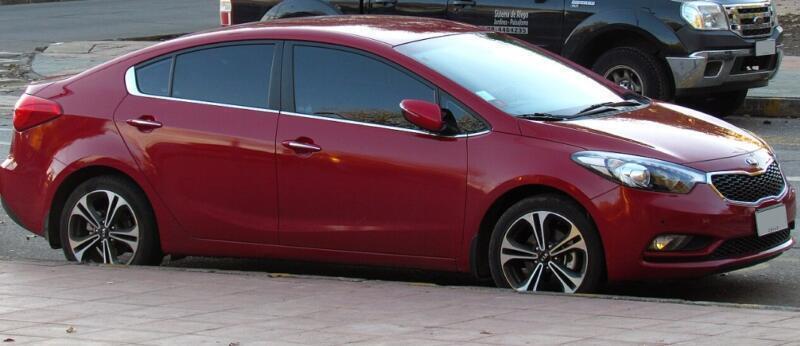
When we look at a compact car, boot space can seem like one of those specifications that only matters after we have already bought the vehicle. Then comes the first airport run, the weekly supermarket trip, a family holiday, or a flat-pack furniture box that suddenly refuses to fit. That's when those litres on the specification sheet become very real.
Fortunately, the Kia Cerato boot space is one of the stronger points of this practical small car. In the commonly referenced Australian-specification Cerato, Kia lists 502 litres of VDA luggage capacity for the four-door sedan and 428 litres for the five-door hatchback.
Yes, you read that correctly. The sedan officially has the larger boot.
That sounds backwards at first. We naturally expect the hatchback, with its large rear door and boxier body, to swallow more luggage. Yet the numbers tell only part of the story. The sedan provides greater measured capacity, while the hatchback delivers a larger opening and greater flexibility when we need to transport awkward or bulky cargo.
So, which Kia Cerato offers the better boot? Let's open both of them and find out.
- How Big Is the Kia Cerato Boot?
- Kia Cerato Sedan Boot Space
- Kia Cerato Hatch Boot Space
- Kia Cerato Sedan vs Hatch Boot Space
- What Does 502 Litres of Boot Space Actually Mean?
- What Does 428 Litres Look Like in the Cerato Hatch?
- Do the Kia Cerato Rear Seats Fold Down?
- Kia Cerato Boot Space With Seats Down
- Can a Kia Cerato Fit Suitcases?
- Can a Pram Fit in the Kia Cerato Boot?
- Is the Kia Cerato Boot Big Enough for a Family?
- Kia Cerato Boot Dimensions vs Boot Capacity
- How Does the Cerato Use Its Exterior Size?
- Is the Sedan Better for Road Trips?
- Is the Hatch Better for Active Lifestyles?
- Kia Cerato GT Boot Space
- How to Make Better Use of the Cerato Boot
- Common Mistakes When Comparing Boot Space
- Is 502 Litres Good for a Small Sedan?
- Does the Cerato Hatch Feel Smaller Than the Sedan?
- Which Kia Cerato Has the Biggest Boot?
- Sedan or Hatch: Which Cerato Should We Choose?
- Kia Cerato Boot Space Verdict
- Frequently Asked Questions
How Big Is the Kia Cerato Boot?
For the later-generation Kia Cerato sold in markets such as Australia, the headline capacities are straightforward:
| Kia Cerato body style | Boot capacity |
|---|---|
| Cerato Sedan | 502 litres (VDA) |
| Cerato Hatch | 428 litres (VDA) |
Kia's own specification material confirms these figures.
That gives the sedan a 74-litre advantage when both vehicles are measured using the same VDA standard.
Seventy-four litres isn't insignificant. In simple terms, that's additional space for shopping bags, smaller travel bags, sports equipment, or the assorted clutter that follows family life around like an enthusiastic puppy.
But here's the catch: litres don't tell us the shape of the space.
A deep 502-litre sedan boot with a relatively restricted opening can sometimes be less useful for a large square object than a smaller 428-litre hatchback compartment with its seats folded and tailgate raised.
That's why we shouldn't pick a Cerato purely by comparing 502 with 428.
Kia Cerato Sedan Boot Space
The Kia Cerato sedan boot capacity is 502 litres using the VDA measurement method. That's impressive for a compact sedan and helps explain why the Cerato has traditionally appealed to buyers wanting family-car practicality without moving into a larger vehicle.
The boot is long and relatively deep, which suits conventional luggage extremely well.
Imagine we're heading away for a weekend. A couple of medium suitcases, backpacks, shoes and several smaller bags can be arranged efficiently because the luggage compartment provides plenty of horizontal space.
For everyday driving, 502 litres also means we usually won't have to play supermarket Tetris every time we buy groceries.
Why the Sedan Holds More Than the Hatch
This is where things become interesting.
Despite having a conventional boot lid rather than a large hatch, the sedan has more measured cargo capacity because its rear body stretches farther behind the passenger compartment.
The MY24 Cerato specification lists an overall length of 4,640 mm for the sedan compared with 4,510 mm for the hatchback. Both share a 2,700 mm wheelbase, meaning much of that additional sedan length is concentrated around the rear of the vehicle.
That extended tail creates a surprisingly generous luggage compartment.
It's almost like comparing two storage boxes: one has a smaller lid but stretches farther backwards, while the other has a huge lid but a shorter box.
Is the Cerato Sedan Boot Practical?
Very.
The sedan works particularly well for luggage that is reasonably regular in shape. Suitcases, shopping bags, laptop bags, prams that collapse compactly and everyday household items make good use of the 502-litre compartment.
Independent testing has similarly highlighted the sedan's 502-litre boot as one of the Cerato's practical strengths.
Where the sedan becomes less convenient is with tall or bulky objects.
A large cardboard box may technically occupy less than 502 litres but still refuse to pass through the boot opening. That's the classic limitation of sedans: the room exists, but the doorway isn't always big enough.
Kia Cerato Hatch Boot Space
The Kia Cerato hatchback has 428 litres of VDA luggage capacity with the rear seats in their normal position.
On paper, that's 74 litres less than the sedan.
In practice, though, the Cerato hatch can sometimes feel like the more versatile cargo carrier.
Why?
Open the tailgate and almost the entire back of the vehicle becomes the loading aperture.
We can approach the cargo compartment from above rather than feeding our belongings through the narrower opening of a sedan. That seemingly simple difference changes the character of the car.
The Hatchback Has the Better Loading Opening
If we're carrying bulky boxes, a bicycle, household appliances, plants, a pet carrier or irregularly shaped equipment, the hatch starts making a lot of sense.
CarsGuide reached the same basic conclusion in its testing: although the sedan carries more litres on paper, the hatchback can be more practical because its tailgate creates a large opening and folding the rear seats allows the cabin to function as an extended cargo area.
This content may interest you! Kia Cerato Weight: Complete Kerb Weight and Load Guide
Think of it like the difference between loading a suitcase through a letterbox and opening an entire cupboard door.
Okay, the Cerato sedan isn't quite a letterbox, but you get the idea.
Useful Underfloor Storage
Another clever detail found in the Cerato hatch is storage beneath the boot floor.
Depending on specification and market, this compartmentalised area can be handy for keeping smaller objects separate from the main cargo space. Independent reviewers have specifically noted the usefulness of this segmented underfloor storage.
We might use it for muddy shoes, emergency equipment, cleaning supplies or small items that would otherwise roll noisily around the boot.
It's the type of feature that doesn't dominate a brochure but becomes surprisingly useful after a few months of ownership.
Kia Cerato Sedan vs Hatch Boot Space
If we judge the competition purely by litres, the sedan wins.
502 litres beats 428 litres.
Simple.
But real-world practicality gives us a more nuanced result.
The sedan is better when we routinely carry conventional luggage and want maximum capacity without folding seats. The hatch is more useful if the shape and size of our cargo frequently changes.
A family that mostly transports groceries, school bags and suitcases may prefer the sedan.
Someone who regularly carries sports equipment, boxes, tools or larger recreational gear may appreciate the hatch more.
In other words, the sedan gives us more boot. The hatch gives us more flexibility.
What Does 502 Litres of Boot Space Actually Mean?
Cargo capacity figures are strange because most of us don't naturally visualise objects in litres.
We know what a two-litre bottle looks like. Imagining 502 litres of luggage space is considerably harder.
The VDA method typically represents usable luggage capacity using standardized blocks. That's useful because it helps create consistent comparisons between vehicles, but it still doesn't guarantee that every 502-litre boot behaves the same way.
Shape matters enormously.
A wide, square 450-litre cargo area can sometimes accommodate something that won't fit inside a narrow 500-litre compartment.
So when we hear 502 litres, it's best to interpret that figure as evidence that the Cerato sedan has a genuinely generous boot for its class—not as a promise that every object measuring less than 502 litres will fit.
What Does 428 Litres Look Like in the Cerato Hatch?
A 428-litre boot is still a healthy amount of cargo room for a small hatchback.
There's enough space for normal weekly shopping, school gear, gym bags and typical weekend luggage without constantly lowering the rear seats.
The advantage appears when we do need extra room. Lift the tailgate, lower part or all of the rear seating, and the Cerato becomes substantially more useful for larger loads.
Kia doesn't consistently publish a seats-folded cargo figure for the Cerato hatch in the same material that lists its standard 428-litre VDA capacity, so we shouldn't invent a precise number. What matters more is the transformation in usable shape.
The load floor stretches into the passenger compartment and the large tailgate makes loading long items dramatically easier.
Do the Kia Cerato Rear Seats Fold Down?
Yes. Later Cerato models provide split-folding rear seats, commonly in a 60/40 configuration, allowing us to extend the luggage compartment while retaining part of the rear seating.
This is a feature we tend to underestimate until the day we need it.
Suppose we buy a long flat-pack shelf. Instead of sacrificing the entire rear bench, we can fold one section and still keep a passenger in the back.
Need more space?
Fold both sections.
The sedan also benefits from folding rear seatbacks. CarsGuide notes that lowering the sedan's 60/40 rear seats extends the available cargo area, although the seats don't create a completely flat floor.
Kia Cerato Boot Space With Seats Down
This is where the hatchback starts closing the gap.
While the sedan offers greater conventional boot capacity, its fixed rear parcel shelf and smaller boot opening remain physical constraints. Folding the rear seats creates extra length, but loading a bulky item still requires us to pass it through the external boot opening.
The hatch is different.
This content may interest you!Kia Cerato Warning Lights: Complete Dashboard GuideOnce the rear seatbacks are lowered, the tailgate provides direct access to a much larger portion of the cabin.
For long, tall or square cargo, that's enormously helpful.
So if our search for Kia Cerato boot space with seats down is really about whether the vehicle can carry occasional oversized objects, we'd generally favour the hatchback.
Can a Kia Cerato Fit Suitcases?
For most normal trips, absolutely.
The Cerato sedan's 502-litre capacity gives us plenty to work with when packing conventional luggage. The trick is to use the deepest portion of the boot for the largest cases and fill gaps with softer bags.
The hatch's 428-litre boot should also handle normal holiday luggage comfortably, though a family travelling with several large hard-shell suitcases may reach its limit sooner.
How many suitcases fit depends on their actual dimensions, of course. "Large suitcase" isn't a regulated measurement, and one manufacturer's cabin case can look surprisingly different from another's.
Still, for an airport trip with two adults or a small family, both Cerato body styles provide useful luggage capacity.
Can a Pram Fit in the Kia Cerato Boot?
In many cases, yes.
A compact folding stroller should be straightforward in either body style. Larger prams and travel systems are more dependent on their folded dimensions.
The sedan provides plenty of overall volume, but a particularly bulky pram may expose the limitation of the boot opening.
The hatch's larger aperture can make loading and unloading easier even though its official cargo capacity is lower.
This is why parents shouldn't judge a car using litres alone.
If we're seriously considering a Cerato and already own a large pram, taking the pram to a test drive is one of the smartest things we can do. Nothing answers the question faster than physically placing it in the boot.
Is the Kia Cerato Boot Big Enough for a Family?
For many small families, yes.
The Cerato sits in the small-car category, yet the sedan's cargo area punches above what we might expect from its exterior size. CarsGuide's family-oriented testing has also described the 502-litre sedan boot as a strong practical feature.
A family of three or four using the Cerato for school, shopping and normal weekend travel should find the boot perfectly workable.
Long holidays are a tougher test.
Add a full-size pram, four people's luggage, toys, food, coats and miscellaneous travel equipment and even a generous compact-car boot starts shrinking quickly.
Physics always wins eventually.
For families that constantly travel heavily loaded, an SUV, wagon or larger liftback could still be more appropriate. But for ordinary family duties, the Cerato makes surprisingly efficient use of its footprint.
Kia Cerato Boot Dimensions vs Boot Capacity
This distinction matters.
Boot capacity tells us volume.
Boot dimensions tell us whether a particular object will physically fit.
Two vehicles can both claim 500 litres while having completely different cargo shapes. One might be long and shallow; another might be short but tall.
That's why shoppers trying to carry a particular item—such as a wheelchair, mobility aid, musical instrument, large dog crate or specific suitcase—shouldn't rely solely on the published litre figure.
Measure the object.
Then measure the boot opening, load-floor width, available height and depth in the actual Cerato you're considering.
A five-minute tape-measure session can save us months of frustration.
How Does the Cerato Use Its Exterior Size?
The Cerato is a good example of packaging efficiency.
Kia's MY24 specifications put the sedan at 4,640 mm long and 1,800 mm wide, while the hatch measures 4,510 mm long and the same 1,800 mm wide. Both use a 2,700 mm wheelbase.
That means the sedan gains additional overall length without dramatically enlarging the footprint in width.
For buyers who spend most of their time in urban areas, this matters.
We get a 502-litre luggage compartment without stepping into a significantly bulkier SUV.
This content may interest you!Kia Sorento 7 Seater Boot Space: Complete Practical GuideThat's rather like buying a small apartment and discovering a walk-in wardrobe hidden behind the bedroom wall.
Is the Sedan Better for Road Trips?
If our road trips involve conventional bags and suitcases, we'd give the sedan an advantage.
Having 502 litres available behind the rear seats lets passengers keep the cabin relatively uncluttered.
That's more important than it sounds.
A backpack under someone's feet is mildly annoying on a 20-minute trip. After six hours on the road, it starts feeling like an enemy.
Keeping luggage safely contained in the boot also helps preserve passenger comfort and visibility.
The sedan is therefore particularly attractive for buyers who want compact-car running costs but frequently travel with luggage.
Is the Hatch Better for Active Lifestyles?
Potentially, yes.
Cyclists, photographers, musicians, campers, tradespeople and anyone carrying awkward equipment may find the hatch easier to live with.
Again, the 428-litre headline number doesn't win the specification contest, but the access is the secret weapon.
That broad rear opening transforms how we can use the vehicle.
Drop the rear seats and suddenly the Cerato hatch isn't just a car with a boot. It becomes a compact cargo carrier.
For some lifestyles, that's far more valuable than another 74 litres behind a sedan boot lid.
Kia Cerato GT Boot Space
One useful detail is that choosing the sportier Cerato GT doesn't fundamentally change the headline cargo story between the two body styles.
Independent testing of the Cerato GT has reported the same 502-litre sedan and 428-litre hatch capacities, meaning performance-oriented buyers don't have to give up the Cerato's fundamental luggage practicality simply because they choose the GT specification.
That's welcome because sporty variants sometimes sacrifice practicality for styling, equipment or mechanical packaging.
The Cerato GT largely avoids that compromise where basic boot volume is concerned.
How to Make Better Use of the Cerato Boot
No matter which Cerato we choose, intelligent packing can make the luggage area feel noticeably larger.
The most effective approach is simple: place large, rigid objects first and use softer bags to occupy irregular gaps. Keep frequently needed items near the opening, and avoid creating a towering pile that could shift around during braking.
In the hatch, the underfloor compartments are useful for smaller objects we don't want moving around. In either body style, the split-folding rear seat can help when an item is too long for the normal boot.
A compact organizer can also prevent grocery bags from sliding from one side to the other every time we turn a corner.
Boot capacity isn't only about how much space the manufacturer gives us. It's also about how intelligently we use it.
Common Mistakes When Comparing Boot Space
The biggest mistake is treating the litre figure as the complete answer.
It isn't.
We should consider five things together: capacity, shape, opening size, rear-seat flexibility and our own cargo habits.
A sedan with a huge boot may frustrate someone who carries bulky boxes every weekend. A smaller hatch could suit them far better.
Conversely, someone who drives to the airport regularly with several suitcases may wonder why they sacrificed 74 litres just to gain a larger opening they rarely need.
There is no universally "better" cargo area.
There is only the one that better matches how we actually use our car.
Is 502 Litres Good for a Small Sedan?
Yes. It's one of the strongest aspects of the Cerato sedan.
Independent reviews have repeatedly highlighted the 502-litre figure, and Kia's own specifications confirm it.
For perspective, the important takeaway isn't chasing tiny differences against every competitor. Boot-space methodologies and model generations can vary, and raw numbers rarely capture usability perfectly.
What we can confidently say is that a luggage compartment exceeding 500 litres gives the Cerato sedan serious practical credibility.
It offers the kind of capacity that makes us question whether we genuinely need a larger vehicle.
This content may interest you! Audi A3 Oil Capacity: Complete Guide by Engine and Generation
Does the Cerato Hatch Feel Smaller Than the Sedan?
Not necessarily.
That's the wonderful contradiction at the heart of this comparison.
Put standardized measuring blocks inside and the hatch loses.
Start loading awkward real-world objects and it can suddenly feel more useful.
The hatch's tailgate lifts high, exposing a broad cargo opening. Independent reviews have specifically noted that this design can make the hatch more practical for bulky loads despite its smaller measured capacity.
Numbers are excellent servants but terrible masters.
A 428-litre hatch that accepts our bicycle is more useful than a 502-litre sedan that doesn't.
Which Kia Cerato Has the Biggest Boot?
If "biggest" means official luggage volume, the answer is easy:
The Kia Cerato sedan.
Its 502-litre VDA boot is 74 litres larger than the hatchback's 428-litre VDA cargo area.
If "biggest" means most adaptable for oversized cargo, we'd lean toward the hatch.
This distinction is worth remembering because it prevents a common buying mistake.
People sometimes buy the hatch automatically because they assume a hatchback always has more cargo room. With the Cerato, that assumption is false when the rear seats remain upright.
Sedan or Hatch: Which Cerato Should We Choose?
Our decision comes down to the things we carry.
Choose the Cerato sedan if we value maximum luggage capacity with all five seats available, regularly transport suitcases or shopping, and prefer the security and separation of a conventional enclosed boot.
Choose the Cerato hatch if we regularly transport awkward cargo, want easier loading through a large tailgate, frequently fold the rear seats, or simply value versatility more than maximum seats-up litres.
Neither answer is wrong.
The sedan is the volume champion.
The hatch is the flexibility champion.
And that makes the choice pleasantly straightforward.
Kia Cerato Boot Space Verdict
The Kia Cerato proves that compact cars don't necessarily require us to pack like minimalists.
With 502 litres of VDA luggage capacity in the sedan and 428 litres in the hatch, both versions provide credible everyday practicality.
The surprise is that the sedan wins the numerical contest.
Its long rear section creates a substantial conventional boot that's particularly well suited to suitcases, shopping and family luggage.
Yet we'd hesitate before declaring it the automatic winner.
The Cerato hatch may have fewer litres, but its large tailgate and adaptable cargo area make it easier to transport bulky items. Fold the rear seats and that practical advantage becomes even more obvious.
So the question isn't simply, "How big is the Kia Cerato boot?"
The better question is, "What do we need to put inside it?"
For pure capacity, choose the sedan.
For cargo flexibility, choose the hatch.
Either way, the Cerato offers more practicality than its compact dimensions might initially suggest.
Frequently Asked Questions
1. How many litres is the Kia Cerato boot?
Later-generation Australian-spec Kia Cerato models provide 502 litres of VDA luggage capacity in the sedan and 428 litres in the hatchback. The exact figure can vary by model year, generation and market, so owners of older Ceratos should verify the specification for their particular vehicle.
2. Does the Kia Cerato sedan have a bigger boot than the hatch?
Yes. Surprisingly, the Cerato sedan has the larger measured luggage compartment. Its 502-litre capacity gives it 74 litres more space than the 428-litre hatch with the rear seats upright. The hatch can nevertheless be easier to load with bulky objects because of its much larger rear opening.
3. Can you fold the rear seats in a Kia Cerato?
Yes. Later Cerato models use split-folding rear seats, allowing longer cargo to extend from the boot into the passenger compartment. In the sedan, reviews note that the folded seatbacks don't create a completely flat load floor.
This content may interest you! Tesla Model Y vs Model Y L: Which Electric SUV Makes More Sense?
4. Is the Kia Cerato boot big enough for a pram?
Many compact and medium-size folding prams should fit, particularly given the sedan's 502-litre capacity. Large travel systems depend heavily on their folded dimensions, however. The hatch's larger tailgate can make bulky prams easier to load despite its smaller 428-litre measured cargo volume.
5. Which is more practical, the Kia Cerato sedan or hatch?
The sedan is more practical if maximum seats-up luggage volume matters because it provides 502 litres versus 428 litres in the hatch. The hatch is often better for irregular or oversized objects because its large tailgate provides easier access and its folding rear seats create a more flexible cargo area.
Leave a Reply