
Toyota Voxy Weight in KG: Complete Model Guide
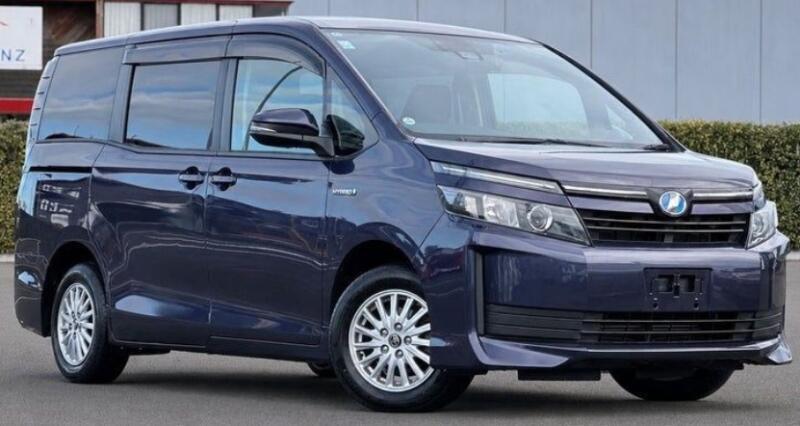
The Toyota Voxy weight in kg is not represented by one universal figure. Depending on the generation, engine, trim, seating configuration, drivetrain, and factory equipment, a Voxy can weigh anywhere from roughly 1,500 kg to more than 1,700 kg before passengers and luggage are added.
That is a fairly wide range, isn’t it?
A front-wheel-drive petrol model may be noticeably lighter than an E-Four hybrid fitted with powered doors, upgraded seats, additional climate-control equipment, and other options. Two Toyota Voxys parked beside each other can look almost identical while carrying substantially different official weight figures.
For most standard passenger versions, the simplest answer is:
A Toyota Voxy generally has a kerb weight of approximately 1,500 to 1,710 kg, depending on its model year and specification.
Current-generation models commonly sit between 1,610 and 1,710 kg, while many previous-generation versions weigh between approximately 1,570 and 1,680 kg. Toyota’s specification sheet for the fourth-generation model lists vehicle weights from 1,610 kg to 1,710 kg, depending on engine, grade, seating arrangement, and drivetrain.
Let us unpack those numbers properly, because vehicle weight can affect fuel use, tyre choice, ferry charges, transport costs, performance, payload, and even whether a particular trailer or lift is suitable.
- What Is the Toyota Voxy Weight in KG?
- Toyota Voxy Weight by Generation
- First-Generation Toyota Voxy Weight: 2001–2007
- Second-Generation Toyota Voxy Weight: 2007–2014
- Third-Generation Toyota Voxy Weight: 2014–2021
- Third-Generation Petrol Toyota Voxy Weight
- Fourth-Generation Toyota Voxy Weight: 2022 Onward
- Kerb Weight vs Gross Vehicle Weight
- How Much Payload Can a Toyota Voxy Carry?
- Does Seating Capacity Affect Toyota Voxy Weight?
- How Factory Options Change the Voxy’s Weight
- Does Toyota Voxy Weight Affect Fuel Economy?
- How Weight Changes Toyota Voxy Performance
- Toyota Voxy Weight and Tyre Pressure
- Is Toyota Voxy Weight Important for Importing?
- Can a Standard Garage Lift Handle a Toyota Voxy?
- How to Find the Exact Weight of Your Toyota Voxy
- Toyota Voxy Weight Compared With Similar Minivans
- Is a Heavier Toyota Voxy Better?
- Common Mistakes When Checking Toyota Voxy Weight
- Practical Loading Tips for Toyota Voxy Owners
- Final Verdict on Toyota Voxy Weight in KG
- Frequently Asked Questions
What Is the Toyota Voxy Weight in KG?
The Toyota Voxy’s weight depends first on which type of weight we are discussing.
When buyers ask, “How much does a Toyota Voxy weigh?” they usually mean its kerb weight. This is the weight of the vehicle in operating condition, including standard equipment and essential fluids, but without a full load of passengers and cargo.
A useful general guide is:
| Toyota Voxy version | Approximate weight |
|---|---|
| Early first-generation petrol models | 1,500–1,600 kg |
| Second-generation models | 1,550–1,690 kg |
| Third-generation petrol models | 1,570–1,680 kg |
| Third-generation hybrid models | 1,610–1,620 kg |
| Fourth-generation petrol models | 1,610–1,700 kg |
| Fourth-generation hybrid models | 1,640–1,710 kg |
| Gross vehicle weight | Around 1,950–2,120 kg |
These figures are broad reference ranges rather than substitutes for the identification plate, registration document, or official specification sheet for a specific chassis number.
Quick Toyota Voxy Weight Answer
For readers who simply need a practical number, we can use these estimates:
- Typical petrol Toyota Voxy: approximately 1,570–1,680 kg
- Typical hybrid Toyota Voxy: approximately 1,620–1,710 kg
- Typical gross vehicle weight: approximately 2,000–2,120 kg
- Likely usable payload: roughly 350–500 kg, depending on the version
Think of the Voxy as sitting between a conventional family car and a large premium people mover. It is heavier than a compact hatchback but generally lighter than full-size luxury vans such as the Toyota Alphard.
Toyota Voxy Weight by Generation
The Voxy has evolved considerably since its introduction in 2001. Toyota’s historical information confirms that it replaced the passenger versions of the LiteAce Noah and TownAce Noah lines and adopted a front-engine, front-wheel-drive layout.
Every new generation brought more safety technology, structural reinforcement, comfort equipment, and—in later models—hybrid components. Those additions helped improve refinement, but they also influenced vehicle mass.
First-Generation Toyota Voxy Weight: 2001–2007
First-generation Voxy models are usually among the lightest versions of the minivan.
A typical front-wheel-drive 2.0-litre model weighs approximately 1,500 kg, although four-wheel-drive versions and highly equipped trims can be heavier. Published specifications for an early 2.0-litre Voxy place kerb weight at about 1,500 kg.
Typical First-Generation Weight Range
Most first-generation examples sit around:
- 2WD petrol: 1,500–1,560 kg
- 4WD petrol: 1,570–1,630 kg
- Seven- or eight-seat versions: variation depends on trim and equipment
These models had fewer electronic systems, lighter seating mechanisms, and less sound insulation than newer Voxys. They may feel more mechanical and less polished, but their lower mass can make them pleasantly manageable in town.
Why Early Models Were Lighter
An early Voxy did not need to carry the same mountain of technology fitted to a modern version. It typically lacked large safety-sensor suites, multiple powered doors, hybrid batteries, rear climate systems, panoramic cameras, and electrically operated comfort seats.
Less equipment meant less weight. It is the automotive equivalent of travelling with one suitcase instead of six.
Second-Generation Toyota Voxy Weight: 2007–2014
The second-generation Voxy became larger, more refined, and better equipped. Depending on the version, weight commonly falls between approximately 1,550 and 1,690 kg.
Four-wheel-drive variants generally sit at the upper end of that range because they include extra shafts, drivetrain hardware, and rear-drive components.
What Changes the Second-Generation Weight?
Important variables include:
- Front-wheel drive or four-wheel drive
- Seven-seat or eight-seat cabin
- Standard or sporty body specification
- Powered sliding doors
- Sunroof equipment
- Wheel and tyre package
- Additional rear heating or air conditioning
- Accessibility conversions
A sporty ZS model may also differ from a standard X or V grade because of its body kit, wheels, tyres, interior features, and optional equipment.
Third-Generation Toyota Voxy Weight: 2014–2021
The third generation is especially popular in used-import markets, including New Zealand, Australia, the United Kingdom, Ireland, Kenya, Pakistan, and parts of the Caribbean.
It is also where the weight question becomes more complicated, because buyers can choose between petrol, hybrid, 2WD, and 4WD configurations.
Toyota’s 2017 specification sheet lists third-generation vehicle weights from approximately 1,570 kg to 1,680 kg in standard passenger specifications. Its hybrid versions are shown at roughly 1,610 or 1,620 kg, while petrol grades vary according to drivetrain, seating arrangement, and optional equipment.
Third-Generation Petrol Toyota Voxy Weight
A typical third-generation petrol Voxy weighs approximately:
| Configuration | Approximate kerb weight |
|---|---|
| Petrol 2WD, lighter specification | 1,570 kg |
| Petrol 2WD, higher trim | 1,570–1,620 kg |
| Petrol 4WD | 1,650–1,680 kg |
| Heavily optioned model | Up to around 1,700 kg |
A 2019 V 2.0-litre, seven-seat, front-wheel-drive example is listed at 1,570 kg, illustrating the lower end of the third-generation petrol range.
Third-Generation Hybrid Toyota Voxy Weight
The hybrid system adds a traction battery, electric motor, power-control equipment, and supporting hardware. Even so, the difference between a hybrid and a highly equipped petrol model is not always dramatic.
Typical hybrid figures include:
- Hybrid X: approximately 1,610 kg
- Hybrid V: approximately 1,620 kg
- Hybrid ZS: approximately 1,620 kg
- Optioned hybrid: potentially 10–40 kg heavier
Several model references list the third-generation Hybrid V at 1,620 kg.
Does the Hybrid Battery Make the Voxy Much Heavier?
It makes the vehicle heavier, but perhaps not as much as we might expect.
Toyota can offset some hybrid-system mass through changes elsewhere in the vehicle. Meanwhile, a petrol model equipped with four-wheel drive, upgraded seating, powered doors, and a moonroof may weigh as much as—or more than—a simpler hybrid.
This is why the badge alone cannot reveal the full story.
Fourth-Generation Toyota Voxy Weight: 2022 Onward
The fourth-generation Voxy uses a newer platform and offers petrol, hybrid, front-wheel-drive, conventional 4WD, and electric E-Four configurations, depending on the powertrain.
Toyota’s published specification table shows official vehicle weights ranging from 1,610 kg to 1,710 kg before certain optional equipment adjustments.
Current Toyota Voxy Hybrid Weight
Official fourth-generation hybrid figures include approximately:
| Hybrid model | 2WD weight | E-Four weight |
|---|---|---|
| S-Z seven-seater | 1,670 kg | 1,710 kg |
| S-G seven-seater | 1,640 kg | 1,690 kg |
| S-G eight-seater | 1,640 kg | Not generally offered in the same configuration |
The hybrid S-Z is one of the heavier mainstream versions because it combines hybrid hardware with a high equipment level. Its E-Four model reaches approximately 1,710 kg before applicable option-related increases.
Current Toyota Voxy Petrol Weight
Official fourth-generation petrol figures include approximately:
| Petrol model | 2WD weight | 4WD weight |
|---|---|---|
| S-Z seven-seater | 1,640 kg | 1,700 kg |
| S-G seven-seater | 1,610 kg | 1,680 kg |
| S-G eight-seater | 1,610 kg | 1,680 kg |
The lightest mainstream model in Toyota’s cited specification sheet is therefore around 1,610 kg, while a higher-specification four-wheel-drive model can approach 1,700 kg.
Why Is the E-Four Hybrid Heavier?
E-Four adds an electric motor and associated hardware at the rear axle. It does not use exactly the same mechanical layout as a traditional driveshaft-based 4WD system, but the extra components still increase weight.
The result is approximately 40–50 kg more than an equivalent front-wheel-drive hybrid in certain configurations.
This content may interest you! Ford Ranger Weight KG: Kerb Weight, Payload and GVM Explained
That extra mass is the price of additional traction. For drivers facing wet hills, loose surfaces, or snowy roads, it may be a worthwhile trade.
Kerb Weight vs Gross Vehicle Weight
These two terms often become tangled together, yet they describe different things.
What Is Kerb Weight?
Kerb weight is broadly the mass of the usable vehicle with standard equipment and necessary fluids, but without its normal complement of passengers or luggage.
In practical language, it is the Voxy standing at the kerb, ready to drive but not packed for a family holiday.
What Is Gross Vehicle Weight?
Gross vehicle weight is the maximum permitted total mass of the vehicle when loaded. It includes:
- The vehicle itself
- Driver and passengers
- Luggage
- Child seats
- Accessories
- Cargo
- Any downward trailer load applied to the vehicle
Toyota’s fourth-generation specification sheet lists gross vehicle weights ranging from approximately 1,995 kg to 2,120 kg, depending on the model and configuration.
Why the Difference Matters
Suppose a Voxy has:
- Kerb weight: 1,640 kg
- Gross vehicle weight: 2,025 kg
The theoretical difference is 385 kg.
That 385 kg must cover every passenger, suitcase, stroller, child seat, cooler, accessory, and other item placed inside the vehicle.
A family of seven could consume most of that allowance before luggage enters the picture. The Voxy has plenty of seats, but seats do not magically create unlimited carrying capacity.
How Much Payload Can a Toyota Voxy Carry?
Payload is calculated using a simple formula:
Payload = Gross vehicle weight minus actual vehicle weight
For many Voxy variants, the difference between listed kerb and gross weights is roughly 350–500 kg.
However, the genuine available payload can be lower when the car has optional equipment or permanent accessories.
Example Payload Calculation
Imagine a seven-seat hybrid Voxy with:
- Kerb weight: 1,670 kg
- Gross vehicle weight: 2,055 kg
- Maximum theoretical payload: 385 kg
Now add:
- Driver: 80 kg
- Front passenger: 65 kg
- Three children: 105 kg combined
- Luggage: 80 kg
- Child seats and accessories: 25 kg
Total added load: 355 kg
That leaves only 30 kg of theoretical capacity.
Suddenly, the large cabin feels a little like a generous wallet with a strict card limit: it looks spacious, but the numbers still matter.
Does Seating Capacity Affect Toyota Voxy Weight?
Yes. Seven-seat and eight-seat versions can have different vehicle and gross weights.
Seven-seat versions commonly use individual second-row captain’s chairs, while eight-seat models generally use a bench arrangement. The seat frames, rails, reclining mechanisms, armrests, and ottomans can all change the final mass.
Seven-Seater vs Eight-Seater Weight
There is no rule that an eight-seater must always be heavier. A sophisticated pair of captain’s chairs may weigh more than a simpler bench.
Toyota notes that certain captain’s-chair configurations can add 20 kg to fourth-generation models. It also states that some utility-seat packages can reduce weight, depending on the configuration.
That explains why we should check the exact grade rather than assume more seats automatically mean more kilograms.
How Factory Options Change the Voxy’s Weight
Factory equipment can quietly push the vehicle into a different weight figure.
Toyota identifies several options that may add approximately 10 or 20 kg each, including particular infotainment systems, powered steps, sliding-door equipment, accessory power outlets, upgraded climate-control systems, and captain’s chairs.
Common Weight-Adding Features
Depending on the model year, additions may include:
- Dual power sliding doors
- Hands-free door hardware
- Rear automatic air conditioning
- Moonroof or twin moonroof
- Premium navigation system
- Larger multimedia display
- Powered side step
- Accessory electrical outlet
- Captain’s chairs with ottomans
- Four-wheel-drive hardware
- E-Four rear motor
- Accessibility equipment
- Larger alloy wheels and tyres
Ten kilograms may sound insignificant, but several options stacked together can add 30, 40, or even 50 kg.
Aftermarket Accessories Count Too
The official specification does not necessarily include accessories fitted after the vehicle left the factory.
Examples include:
- Roof racks
- Roof boxes
- Tow bars
- Bull bars
- Additional batteries
- Audio amplifiers
- Camping equipment
- Mobility equipment
- Heavy floor liners
- Custom seating
- Full-size spare wheels
A steel tow bar and roof system can consume a meaningful slice of payload before a single bag is loaded.
Does Toyota Voxy Weight Affect Fuel Economy?
Yes, although weight is only one piece of the puzzle.
A heavier vehicle requires more energy to accelerate. In stop-and-start driving, repeated acceleration exposes the effect more clearly. On a level motorway at a steady speed, aerodynamic drag may play a larger role.
Weight and City Driving
In urban traffic, a heavily loaded Voxy may:
- Accelerate more slowly
- Require more throttle
- use more petrol
- Generate additional brake heat
- Place greater stress on tyres
- Feel less agile when changing direction
A hybrid can recover some braking energy through regeneration, which helps soften the fuel-economy penalty. It cannot repeal physics, though. Moving an extra 300 kg still takes energy.
Weight and Motorway Driving
At motorway speed, extra mass has less influence during constant cruising than during acceleration. However, it still matters on hills, during overtaking, and whenever speed changes.
Roof boxes can have an even larger effect because they add both weight and aerodynamic drag.
How Weight Changes Toyota Voxy Performance
The Voxy is designed as a people mover, not a sports car. Its priorities are smoothness, cabin space, easy access, and efficiency.
Still, two versions with different weights can feel noticeably different.
Acceleration
A lighter petrol 2WD model may feel more responsive than a fully loaded 4WD version. A hybrid’s electric motor can provide immediate low-speed assistance, helping disguise some of its additional mass.
Braking
More weight means the brakes must manage more kinetic energy. When the vehicle is carrying seven or eight occupants, stopping distances can increase, especially in poor conditions.
We should therefore leave a larger safety gap when fully loaded.
Cornering
A heavily loaded Voxy may lean more through bends and respond less sharply to steering input. Correct tyre pressure becomes especially important because underinflated tyres can exaggerate a soft, wandering sensation.
Toyota Voxy Weight and Tyre Pressure
Tyre pressures are chosen partly with vehicle load in mind. An underinflated tyre carries its burden like a sagging mattress: it flexes excessively, heats up, and wears unevenly.
This content may interest you! Mitsubishi Triton Load Capacity: Payload, Limits, and Safe Loading Explained
Before carrying a full passenger load, we should check:
- The tyre-pressure label on the vehicle
- The correct pressure for the fitted tyre size
- Whether Toyota provides a higher loaded-pressure recommendation
- Tyre condition and load rating
- Whether aftermarket wheels remain suitable
Never rely solely on a generic pressure found online. The correct figure can vary by tyre size, model year, and market.
Is Toyota Voxy Weight Important for Importing?
Absolutely. The vehicle’s mass may influence:
- Shipping quotations
- Port handling
- Registration categories
- Road-user charges
- Inspection requirements
- Ferry pricing
- Transporter selection
- Workshop-lift suitability
- Insurance classification
Shipping Weight Is Not Always Kerb Weight
Import documents may use terms such as:
- Net weight
- Kerb mass
- Tare weight
- Gross weight
- Shipping weight
- Maximum authorised mass
These are not necessarily interchangeable.
Shipping weight may reflect the condition of the vehicle at the time of transport, including fuel level or additional items stored inside. When arranging international transport, use the definition requested by the shipping company rather than guessing.
Can a Standard Garage Lift Handle a Toyota Voxy?
Most professional vehicle lifts rated for ordinary passenger cars should comfortably accommodate a Voxy weighing around 1.5–1.7 tonnes.
However, total capacity is not the only issue. The technician must also consider:
- Correct lifting points
- Vehicle length and wheelbase
- Weight distribution
- Accessibility conversions
- High-roof clearance
- Position of hybrid components
- Lift-arm reach
- Condition of the lift
A home jack rated at 2,000 kg is not automatically ideal simply because the vehicle weighs less than 2,000 kg. A jack normally lifts one section of the vehicle, but it still needs an adequate safety margin and must be used on a stable surface with suitable axle stands.
How to Find the Exact Weight of Your Toyota Voxy
Online tables are useful for orientation, but the exact vehicle should always win the argument.
Check the Vehicle Identification Plate
Look for the manufacturer’s plate or label, commonly located around:
- The driver’s door opening
- Passenger-side door pillar
- Engine compartment
- Firewall area
- Under a seat or floor panel, depending on market conversion
The plate may display chassis details and permitted axle or total weights.
Check the Registration Document
Registration documents often show one or more of the following:
- Tare
- Kerb mass
- Unladen mass
- Gross vehicle mass
- Revenue weight
- Maximum permissible mass
Imported vehicles sometimes carry a locally assigned weight that differs slightly from a Japanese catalogue figure because the local authority uses a different definition or measurement method.
Use the Chassis Code
The chassis code is one of the best tools for identifying a Voxy specification.
Common examples include:
- AZR60 or AZR65
- ZRR70 or ZRR75
- ZRR80 or ZRR85
- ZWR80
- MZRA90 or MZRA95
- ZWR90 or ZWR95
The digits and letters help distinguish generations, engines, hybrid systems, and drivetrains. They narrow the search far more effectively than a description such as “2019 Voxy automatic.”
Use a Public Weighbridge
For the most accurate real-world result, take the vehicle to a certified weighbridge.
This is especially valuable when the Voxy has:
- A wheelchair conversion
- Camping equipment
- Removed or replaced seats
- A tow bar
- Roof accessories
- Custom audio equipment
- Additional batteries
- Commercial storage fittings
The weighbridge reveals what the vehicle weighs now—not what it weighed in a brochure years ago.
Toyota Voxy Weight Compared With Similar Minivans
The Voxy occupies the middle of the minivan spectrum.
It is typically heavier than compact MPVs but lighter than large luxury people movers.
| Vehicle category | Typical weight range |
|---|---|
| Compact hatchback | 1,000–1,400 kg |
| Compact MPV | 1,250–1,550 kg |
| Toyota Voxy-class minivan | 1,500–1,710 kg |
| Large premium minivan | 1,900–2,300 kg |
| Full-size commercial passenger van | 2,000 kg and above |
This middle-ground character is part of the Voxy’s appeal. It provides three-row practicality without feeling like a bus squeezed into a supermarket parking space.
Is a Heavier Toyota Voxy Better?
Not automatically.
A heavier model may offer:
- More equipment
- Better sound insulation
- Four-wheel-drive capability
- Hybrid hardware
- Additional comfort features
- Greater structural refinement
A lighter model may deliver:
- Slightly better responsiveness
- Lower fuel use in some conditions
- More theoretical payload
- Reduced tyre and brake stress
- Simpler mechanical packaging
The best choice depends on what we need. A mountain-area family may value E-Four traction more than a 40 kg weight saving. A city driver may prefer the lighter, simpler 2WD version.
Common Mistakes When Checking Toyota Voxy Weight
Confusing Kerb Weight With Gross Weight
A listing showing 2,050 kg may be quoting gross vehicle weight rather than the empty vehicle’s mass.
Assuming Every Hybrid Weighs the Same
Trim, seating, drivetrain, and options all alter the figure.
Using Noah Specifications Without Verification
The Toyota Noah and Voxy are closely related, but trim structures and equipment can differ. Their weights may be similar without being identical in every configuration.
Ignoring Permanent Accessories
A tow bar, roof rack, spare wheel, and additional battery all count toward the real loaded weight.
Calculating Payload From an Approximate Internet Figure
A 50 kg error is significant when the remaining payload is only a few hundred kilograms. Use official or measured figures whenever payload compliance matters.
Practical Loading Tips for Toyota Voxy Owners
A spacious cabin invites us to fill every corner, but sensible loading improves safety.
- Place heavy items low and close to the vehicle’s centre.
- Avoid stacking dense luggage high behind the rear seats.
- Secure loose objects so they cannot become projectiles.
- Keep the driver’s rearward visibility clear.
- Check tyre pressure before a long, fully loaded journey.
- Do not exceed axle or gross vehicle limits.
- Remember that roof cargo raises the centre of gravity.
- Include passenger weight when estimating the load.
- Account for child seats, mobility devices, and accessories.
- Recheck headlight aim if the rear of the vehicle sits unusually low.
A Voxy may swallow luggage like a large cupboard, but its legal and mechanical capacity is not endless.
Final Verdict on Toyota Voxy Weight in KG
The Toyota Voxy weight in kg generally ranges from about 1,500 to 1,710 kg, depending on generation, engine, trim, drivetrain, seating layout, and equipment.
Early petrol models can weigh around 1,500 kg, while many third-generation versions sit between approximately 1,570 and 1,680 kg. Current fourth-generation models typically weigh 1,610–1,710 kg, with hybrid E-Four and highly equipped grades occupying the upper end. Toyota lists gross vehicle weights of roughly 1,995–2,120 kg for the fourth generation.
The most important lesson is simple: never treat “Toyota Voxy weight” as one fixed number.
For casual comparison, a figure near 1,600–1,700 kg is a sensible guide. For ferry bookings, towing calculations, import documentation, workshop lifting, or payload planning, check the exact chassis specification, registration papers, identification plate, or a certified weighbridge.
The Voxy is roomy, practical, and impressively efficient for its size. Yet beneath that boxy family-friendly shape sits a carefully balanced weight equation. Understand it, and we can load, maintain, and drive the vehicle with far greater confidence.
Frequently Asked Questions
1. How much does a Toyota Voxy weigh in kg?
Most Toyota Voxy models weigh approximately 1,500–1,710 kg in kerb condition. The exact figure depends on the model year, engine, trim, drivetrain, number of seats, and installed options.
2. What is the weight of a Toyota Voxy hybrid?
A third-generation Voxy hybrid generally weighs around 1,610–1,620 kg. Fourth-generation hybrid versions commonly weigh approximately 1,640–1,710 kg, with E-Four models normally heavier than equivalent front-wheel-drive versions.
3. What is the Toyota Voxy gross vehicle weight?
Depending on the model, the gross vehicle weight is generally around 1,950–2,120 kg. Fourth-generation official figures extend from approximately 1,995 kg to 2,120 kg, depending on specification.
4. How much payload can a Toyota Voxy carry?
Many versions provide a theoretical payload of roughly 350–500 kg. The usable amount must include the driver, passengers, luggage, child seats, accessories, and any downward load from a trailer.
5. Is the four-wheel-drive Toyota Voxy heavier?
Yes. A conventional 4WD or hybrid E-Four Voxy is normally heavier because it carries additional drivetrain or electric-motor hardware. The difference can be approximately 40–70 kg, depending on the model and trim.
This content may interest you!Mitsubishi Triton Towing Capacity: A Complete Guide for Safe, Confident Towing
Leave a Reply