
How Much Is a Canopy for a Mitsubishi Triton in New Zealand?
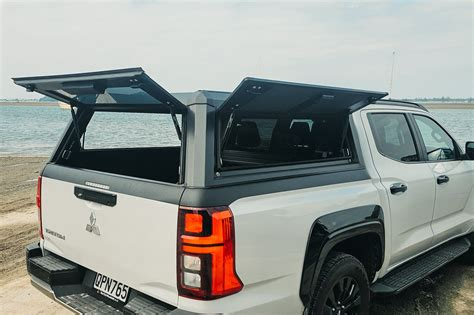
A canopy for a Mitsubishi Triton in New Zealand generally costs between NZ$2,850 and NZ$10,000-plus, depending on its material, design, load rating, security features, accessories, and whether installation and GST are included.
At the affordable end, a basic aluminium canopy may cost roughly NZ$2,850 to NZ$3,500 installed. A colour-coded fibreglass canopy usually sits around NZ$3,800 to NZ$6,000 once fitted and equipped, while a premium commercial canopy from a specialist manufacturer can exceed NZ$8,000 before GST.
That is a wide price range, isn’t it? Buying a canopy is a little like buying a kitchen: the shell establishes the starting price, but the doors, lights, locks, shelves, electrical systems, and finishing touches determine what we actually pay.
For a straightforward answer, here is a realistic New Zealand pricing guide:
| Canopy type | Typical NZ price |
|---|---|
| Entry-level aluminium kit | NZ$2,850–NZ$3,500 |
| Fibreglass recreational canopy | NZ$3,800–NZ$6,000 fitted |
| Mid-range aluminium touring canopy | NZ$4,000–NZ$7,000 |
| Premium commercial canopy | NZ$8,000–NZ$12,000+ |
| Used Mitsubishi Triton canopy | NZ$1,000–NZ$3,500 |
| Installation when charged separately | NZ$400–NZ$1,000+ |
These figures are practical market estimates rather than fixed quotations. Prices change with the Triton generation, cab configuration, supplier, location, availability, paint choice, and optional equipment.
- Mitsubishi Triton Canopy Prices in New Zealand at a Glance
- How Much Should We Budget for a Complete Canopy?
- Why Mitsubishi Triton Canopy Prices Vary So Much
- Does the Mitsubishi Triton Model Year Affect the Price?
- Single Cab, Club Cab, and Double Cab Pricing
- Is Installation Included in the Advertised Price?
- How Much Does Canopy Installation Cost?
- Are Cheap Aluminium Canopies Worth Buying?
- How Much Is a Fibreglass Canopy for a Triton?
- How Much Is a Premium Commercial Canopy?
- Optional Extras That Increase the Final Cost
- Can We Buy a Used Triton Canopy?
- Does a Canopy Add Value to a Mitsubishi Triton?
- Should We Choose Windows or Solid Side Doors?
- How to Compare Mitsubishi Triton Canopy Quotes
- Which Canopy Price Range Offers the Best Value?
- Common Mistakes to Avoid
- Our Verdict: How Much Should We Really Spend?
- Frequently Asked Questions
Mitsubishi Triton Canopy Prices in New Zealand at a Glance
Current advertised examples show just how broad the market has become.
Kiwi 4WD Explore lists an aluminium canopy for the 2024-onward Mitsubishi Triton at NZ$3,150 including tax and installation at its Auckland store. The canopy is manufactured from 2 mm and 3 mm 5052 aluminium and is advertised with a tested roof rating of 200 kg dynamic and 400 kg static.
Tuff 4x4 has advertised its EcoTuff aluminium canopy for the next-generation Triton at NZ$2,850. It is supplied as a five-piece kit, and although DIY assembly is possible, professional installation is recommended.
At another point in the market, Fully Equipped lists a Crown Canopy for the Mitsubishi Triton from NZ$3,290 excluding GST. Optional equipment can raise the total substantially; for example, the listed sliding-window security mesh and interior LED light carry additional charges.
Utemaster’s Centurion canopy represents the premium commercial end. Its base canopy for the 2024-onward Triton starts at NZ$8,692 plus GST, while adding its cantilever roof rack brings the package to approximately NZ$9,900 plus GST. Shelving, central locking, roof-top-tent mounts, and other additions can push the final price higher.
What These Prices Mean in the Real World
We should compare like with like. A NZ$2,850 canopy and a NZ$9,900 canopy may both cover the ute’s deck, but they are not necessarily competing products.
The cheaper model may be an assemble-and-fit aluminium shell with basic gull-wing doors. The premium option may include reinforced construction, integrated water management, commercial-grade locks, modular accessories, tested roof carrying capability, local engineering, and a more comprehensive warranty.
The right question is not simply, “Which canopy is cheapest?” It is, “Which canopy gives us the features we will genuinely use?”
How Much Should We Budget for a Complete Canopy?
For most private Mitsubishi Triton owners, a sensible complete budget is approximately NZ$4,000 to NZ$6,500.
That amount usually gives us room for:
- A model-specific canopy
- Professional installation
- Basic interior lighting
- Suitable windows or solid side doors
- Weather sealing
- Standard locking
- Minor electrical work
- Freight or delivery, where applicable
Tradies and serious touring owners should consider budgeting NZ$8,000 to NZ$15,000 for a fully developed setup. Once we add shelving, drawers, a roof rack, an auxiliary battery, power outlets, internal lining, tool storage, or a roof-top tent, the project stops being “just a canopy” and becomes a complete cargo-management system.
Example Budget for a Recreational Triton
A typical recreational setup might look like this:
| Item | Estimated cost |
|---|---|
| Aluminium or fibreglass canopy | NZ$3,300–NZ$4,500 |
| Installation | NZ$500–NZ$800 |
| Interior LED light | NZ$100–NZ$300 |
| Central locking upgrade | NZ$300–NZ$800 |
| Roof bars | NZ$500–NZ$1,200 |
| Total | NZ$4,700–NZ$7,600 |
Example Budget for a Trade Setup
A work-focused configuration may cost considerably more:
| Item | Estimated cost |
|---|---|
| Heavy-duty canopy | NZ$6,000–NZ$9,000 |
| Installation and wiring | NZ$700–NZ$1,500 |
| Shelving or drawers | NZ$1,000–NZ$4,000 |
| Roof rack | NZ$1,000–NZ$2,500 |
| Lighting and power system | NZ$500–NZ$3,000 |
| Total | NZ$9,200–NZ$20,000 |
The upper figure may look dramatic, but a vehicle used as a mobile workshop needs more than an empty metal box. Security, organisation, access, and electrical reliability all become part of the investment.
Why Mitsubishi Triton Canopy Prices Vary So Much
Several factors influence the final quotation. Understanding them helps us avoid comparing a basic advertised shell with a fully installed premium package.
Canopy Material
Material is one of the biggest price drivers.
Fibreglass Canopies
Fibreglass canopies remain popular because they can blend smoothly with the Triton’s body. A colour-coded fibreglass shell gives the ute an integrated, almost SUV-like appearance.
Typical advantages include:
- Attractive factory-style design
- Large glazed areas
- Good weather protection
- Smooth, easy-to-clean surfaces
- Colour matching to the vehicle
Their limitations may include a lower tolerance for hard knocks than a heavy-duty metal unit, less convenient side access on some models, and extra charges for paint matching.
A fibreglass canopy is often ideal when we use the Triton for family trips, camping, carrying dogs, sports equipment, or general everyday transport.
Aluminium Canopies
Aluminium canopies tend to look more purposeful. They suit drivers who prefer gull-wing doors, broad side access, modular storage, and higher practical roof-load capability.
Their strengths commonly include:
- Relatively low weight
- Resistance to corrosion
- Wide side-door access
- Strong touring and trade potential
- Easy integration with shelving
- Rugged appearance
Entry-level imported aluminium kits can be surprisingly affordable. Locally developed or commercial-grade systems, however, may cost significantly more because of their engineering, locks, sealing systems, construction quality, and accessory support.
Steel and Stainless-Steel Canopies
Steel is strong but heavier than aluminium. Stainless-steel systems can offer excellent durability and a premium finish, although their price and weight may not suit every owner.
Before fitting any heavy canopy, we should consider the Triton’s available payload. A canopy, drawers, recovery equipment, passengers, tow-ball load, tools, water, and camping gear all count against the vehicle’s legal carrying capacity.
Does the Mitsubishi Triton Model Year Affect the Price?
Yes. A canopy must match the tub dimensions, cabin profile, mounting points, tailgate position, and body shape of the specific Triton generation.
The latest Triton sold in New Zealand uses a different body and tub from the previous MQ and MR models. A canopy designed for a 2019–2023 Triton will not normally fit a 2024-onward vehicle correctly.
ARB, for example, offers a dedicated Classic Plus canopy for the 2024-onward MV Triton. It includes a central electronic rear handle, keyless entry capability, slam-shut operation, a smooth finish, and the option of vehicle colour coding.
Common Triton Fitment Groups
When requesting a quotation, we should provide more than the registration year. Useful information includes:
- Triton generation
- Exact model year
- Single Cab, Club Cab, or Double Cab
- Wellside or cab-chassis body
- Existing sports bar
- Tub liner type
- Deck rail system
- Tailgate accessories
- Vehicle colour
A 2023 vehicle first registered in 2024 may still belong to the previous generation. Supplying photographs and the VIN can help the installer confirm fitment before ordering.
Single Cab, Club Cab, and Double Cab Pricing
Cab configuration changes the length and shape of the deck, which affects product availability and price.
Double Cab Canopies
Double Cab Tritons have the broadest canopy selection in New Zealand. Competition among suppliers often makes prices more attractive, and stock may be easier to find.
This is the configuration most likely to have:
- Budget aluminium options
- Fibreglass touring shells
- Premium gull-wing designs
- Second-hand stock
- Off-the-shelf roof racks
- Vehicle-specific accessories
Club Cab Canopies
Club Cab canopies can be harder to source. Lower sales volumes mean fewer off-the-shelf choices, so a special order or custom solution may be necessary.
Single Cab Canopies
For a Single Cab Triton, we need to distinguish between a canopy fitted over a factory wellside and a full service body installed on a flat deck or cab chassis.
A large custom tray-and-canopy package can cost far more than a conventional wellside shell. Commercial builds may include toolboxes, under-tray storage, internal framing, water tanks, electrical equipment, and custom doors.
This content may interest you! Mitsubishi Triton Reliability New Zealand: Is It a Dependable Ute?
Is Installation Included in the Advertised Price?
Sometimes, but not always. This is one of the easiest places to make a costly mistake.
One supplier may advertise a tax-inclusive, installed price. Another may quote only the canopy shell before GST, freight, assembly, wiring, and fitting.
Kiwi 4WD Explore explicitly advertises free installation at its Auckland location for its listed 2024 Triton aluminium canopy, or free nationwide shipping to a depot. By comparison, the Crown canopy’s advertised starting price is stated before GST, meaning the tax-inclusive cost will be higher even before adding options or installation.
Questions to Ask About Installation
Before paying a deposit, ask the supplier:
- Is GST included?
- Is freight included?
- Is installation included?
- Does the canopy arrive assembled?
- Is wiring included?
- Will the installer remove the sports bar?
- Is tub-liner trimming required?
- Are roof racks included?
- Is colour coding included?
- Does the quotation include certification where required?
A written itemised quotation is better than a vague total discussed over the phone.
How Much Does Canopy Installation Cost?
When installation is billed separately, we should generally allow NZ$400 to NZ$1,000 for a straightforward fit. Complex jobs can cost more.
Installation expenses depend on:
- Whether the canopy arrives assembled
- Removal of an existing sports bar
- Drilling or mounting requirements
- Sealing work
- Brake-light wiring
- Interior lighting
- Central-locking integration
- Roof-rack installation
- Tub-liner modification
- Electrical accessories
An Australian Triton canopy fitting guide estimates a bare-tub installation at approximately A$450–A$590 and notes that removing sports bars or liners can increase the bill. While this is not a New Zealand quotation, it illustrates why labour requirements must be confirmed rather than assumed.
Why Professional Fitting Can Be Worth Paying For
A poorly fitted canopy can leak, rub against the body, produce wind noise, damage paint, strain mounting points, or allow dust into the cargo area.
Professional installation also provides a clearer path if something needs adjustment. When one business supplies and installs the canopy, there is less room for a manufacturer and fitter to blame each other if a problem develops.
Are Cheap Aluminium Canopies Worth Buying?
They can be, provided our expectations are realistic.
A budget aluminium canopy around NZ$2,850–NZ$3,500 may be excellent value for a driver who wants lockable storage, wide side access, and a strong-looking shell without elaborate internal equipment.
However, we should inspect:
- Door alignment
- Hinge quality
- Lock operation
- Gas-strut strength
- Weld consistency
- Powder-coating coverage
- Water sealing
- Drainage channels
- Roof-load documentation
- Replacement-part availability
- Warranty conditions
Cheap does not automatically mean poor, just as expensive does not automatically mean perfect. The decisive factor is how well the product matches our use.
A weekend mountain biker carrying helmets and muddy gear has different needs from an electrician storing thousands of dollars’ worth of tools.
How Much Is a Fibreglass Canopy for a Triton?
A fitted fibreglass Triton canopy in New Zealand will often land between NZ$3,800 and NZ$6,000, although premium features can move it beyond that range.
The initial shell price may not include:
- Colour coding
- Sliding side windows
- Security mesh
- Roof rails
- Roof bars
- Interior lining
- Central locking
- Brake-light wiring
- Installation
- Freight
Fully Equipped’s Crown Canopy starts at NZ$3,290 excluding GST, with optional window mesh and lighting available separately. Once GST, fitting, paint, and selected accessories are considered, the real drive-away cost can be notably higher than the headline figure.
Who Should Choose Fibreglass?
Fibreglass makes sense when appearance, enclosed weather protection, and a vehicle-like finish matter more than workshop-style side access.
It is especially suitable for:
- Family travel
- Dog transport
- Luggage
- Fishing equipment
- Golf clubs
- General camping
- Everyday shopping
- Light recreational use
For intensive trade work, solid side doors and modular internal storage may be more practical than large glass windows.
A premium commercial canopy for a Mitsubishi Triton can start around NZ$8,000 to NZ$10,000 before GST and accessories.
Utemaster’s listed starting point of NZ$8,692 plus GST for the Centurion illustrates this category. With its cantilever roof rack, the listed total reaches approximately NZ$9,900 plus GST before additional customisation.
Why would anyone spend that much?
Because a commercial system may offer:
- Robust construction
- High-quality locking mechanisms
- Large gull-wing openings
- Integrated roof support
- Modular shelving
- Central locking
- Better parts availability
- Detailed load information
- Long-term commercial support
- A configuration designed for daily abuse
For a business, reduced loading time and better tool organisation can return value every working day. The canopy is not merely a lid; it becomes part of the employee’s workspace.
Optional Extras That Increase the Final Cost
The base canopy price is only the beginning. Extras can add hundreds—or several thousand—dollars.
Roof Racks and Load-Carrying Systems
Basic roof bars may cost several hundred dollars, while reinforced platform systems can exceed NZ$2,000.
We must also distinguish between static and dynamic roof loads. A static rating refers to weight supported while the vehicle is parked. Dynamic capacity refers to the load carried while driving and is normally much lower.
Never assume a high static rating means we can drive with the same weight on the roof.
Central Locking
Central locking is convenient, especially when the canopy has three opening doors. Depending on the product and complexity, it may add several hundred dollars.
Confirm whether central locking operates every door, only the rear door, or merely the canopy handle. Also ask how the system behaves if the vehicle battery goes flat.
Windows and Security Mesh
Sliding or lift-up windows improve ventilation and access. Solid doors improve privacy and can make it harder for opportunistic thieves to see the contents.
Security mesh adds protection but may cost several hundred dollars per opening. Fully Equipped’s listed Crown options illustrate how window-related upgrades can significantly change the starting price.
Interior Lighting
A simple battery-powered lamp is cheap, but a professionally wired LED system is much more useful.
Good lighting should illuminate the entire deck without casting large shadows behind drawers and equipment. Door-triggered lights, dimmers, and independent switches add convenience.
Shelves, Drawers, and Cargo Barriers
Storage equipment can easily add NZ$1,000–NZ$5,000. Yet good organisation can make a smaller canopy feel twice as useful.
A cargo barrier may be valuable when animals, tools, or loose equipment are carried near the cabin window. The exact design should suit the canopy and intended load.
Dual-Battery and Power Systems
Touring owners may add:
- Auxiliary battery
- DC-to-DC charger
- Solar input
- USB outlets
- 12-volt sockets
- Inverter
- Fridge wiring
- Battery monitor
- Work lights
A simple outlet is inexpensive. A carefully engineered touring electrical system can cost several thousand dollars.
Do Not Forget the Weight
Every accessory consumes payload. A 150 kg canopy, 80 kg drawer system, 60 kg roof-top tent, fridge, battery, water, recovery gear, and passengers can turn a roomy-looking ute into an overloaded one faster than we expect.
This content may interest you! Ford Ranger Timing Belt Replacement Cost New Zealand: Complete Price Guide
Ask the installer for the canopy’s fitted weight and calculate the total vehicle load before finalising the design.
Can We Buy a Used Triton Canopy?
Yes, and the savings can be substantial. A used canopy may cost NZ$1,000 to NZ$3,500, depending on age, condition, brand, fitment, accessories, and paint colour.
The challenge is finding one that fits the exact Triton body.
Used Canopy Inspection Checklist
Before buying, check for:
- Cracks around mounts and hinges
- Water stains
- Distorted doors
- Missing keys
- Weak gas struts
- Damaged seals
- Corroded hardware
- Faulty brake lights
- Scratched glazing
- Peeling paint
- Incomplete mounting kits
- Modified roof racks
- Signs of accident damage
We should also budget for transport, repainting, new seals, replacement locks, and installation. A NZ$1,500 bargain can quickly become a NZ$3,000 project.
Will a Previous-Generation Canopy Fit?
Usually not when moving between major Triton generations.
Even when deck lengths appear similar, differences in width, rail shape, tailgate angle, cabin profile, and mounting position can prevent a safe, weatherproof installation.
Do not buy based only on an online seller’s claim that it “should fit.” Confirm the canopy’s product code or measure both the canopy and tub carefully.
Does a Canopy Add Value to a Mitsubishi Triton?
A good canopy can improve resale appeal, particularly when it is a recognised brand, matches the vehicle, remains watertight, and has been installed neatly.
However, we should not expect to recover the full purchase price. Accessories generally depreciate, and highly customised trade layouts may appeal to a narrower group of buyers.
A clean, versatile canopy is likely to attract more buyers than one filled with permanent specialist equipment.
Canopy Value Is About Use, Not Only Resale
The greater financial return may come from daily usefulness:
- Tools remain organised
- Luggage stays dry
- Equipment is less visible
- Loading becomes faster
- Camping gear can stay packed
- The ute works in more weather conditions
- Fragile items receive better protection
If a canopy saves us fifteen minutes every working day, its value is not captured by the resale figure alone.
Should We Choose Windows or Solid Side Doors?
This decision has a major impact on usefulness.
Choose Windows When We Need
- Visibility into the deck
- Ventilation for dogs
- A family-friendly appearance
- Better natural light
- An SUV-like design
Choose Solid Gull-Wing Doors When We Need
- Direct access to tools
- Better privacy
- Large side openings
- Modular shelving
- Improved security
- A touring or trade layout
Some canopies combine a rear window with solid side doors, creating a useful compromise.
How to Compare Mitsubishi Triton Canopy Quotes
A meaningful quote comparison should include the complete installed specification.
Create a simple checklist with these columns:
| Quotation detail | Supplier A | Supplier B | Supplier C |
|---|---|---|---|
| Canopy model | |||
| GST included | |||
| Installation included | |||
| Freight included | |||
| Paint included | |||
| Roof system included | |||
| Central locking | |||
| Interior lighting | |||
| Canopy weight | |||
| Dynamic roof rating | |||
| Warranty | |||
| Final installed price |
This approach removes the fog from headline pricing. A NZ$3,300 shell can be more expensive than a NZ$4,200 package once every missing item is added.
Which Canopy Price Range Offers the Best Value?
For many private owners, the sweet spot is around NZ$4,000 to NZ$6,000 installed.
At this level, we can usually avoid the most basic fittings while stopping short of a complex commercial system. We should be able to find either a well-finished fibreglass canopy or a capable aluminium model with useful access and basic equipment.
Best Value for Family and Recreational Use
Look for:
- Colour-coded or neatly finished shell
- Tinted windows
- Good ventilation
- Interior light
- Reliable rear lock
- Quality seals
- Roof bars only when required
Best Value for Tradespeople
Prioritise:
- Solid side doors
- Strong locks
- Shelf compatibility
- Low empty weight
- Easy replacement parts
- Roof-load documentation
- Professional fitting
Best Value for Touring
Focus on:
- Dust and water sealing
- Gull-wing access
- Roof-top-tent compatibility
- Electrical upgrade potential
- Spare-parts support
- Sensible weight
- Strong internal tie-down points
The best-value canopy is the least expensive model that meets our real requirements—not simply the cheapest product available.
Common Mistakes to Avoid
Buying a canopy is easier when we sidestep a few predictable traps.
Buying Before Confirming Fitment
Model year alone is not always enough. Confirm the generation, cab type, and tub design.
Ignoring GST
A price of NZ$3,290 excluding GST becomes approximately NZ$3,783.50 including GST before installation or options.
Assuming Installation Is Free
Some packages include fitting; others arrive as flat-packed kits or shells.
Choosing Appearance Over Access
A sleek canopy can become frustrating if we need to crawl through the tailgate every day to reach equipment at the front.
Ignoring Payload
The strongest-looking setup may not be the smartest if it leaves too little capacity for passengers and cargo.
Overbuilding the Canopy
It is easy to add accessories because they look useful. Every shelf, battery, bar, and panel adds cost and weight. Start with the equipment we know we need.
Skipping Warranty Questions
Ask who handles leaks, faulty locks, broken struts, electrical problems, paint defects, and replacement parts. A warranty is only useful when the support process is clear.
Our Verdict: How Much Should We Really Spend?
A Mitsubishi Triton canopy in New Zealand can cost less than NZ$3,000 or climb beyond NZ$10,000, but most owners do not need to shop at either extreme.
We would use the following budgets:
- NZ$3,000–NZ$4,000: Basic aluminium canopy or competitively priced entry package
- NZ$4,000–NZ$6,500: Strong all-round recreational or everyday setup
- NZ$6,500–NZ$10,000: Premium touring or light-commercial configuration
- NZ$10,000–NZ$20,000: Fully equipped trade, expedition, or mobile-workshop build
Start with the way the Triton is used. Are we protecting suitcases and fishing rods, carrying a dog, organising trade tools, or supporting a roof-top tent through South Island back roads?
Once we answer that question, the confusing forest of prices becomes much easier to navigate.
A canopy should feel like a natural extension of the Triton, not a heavy metal hat purchased because it looked impressive in a photograph. Buy the structure first, add only the accessories that solve genuine problems, and insist on a complete installed quotation before committing.
Frequently Asked Questions
How much is the cheapest Mitsubishi Triton canopy in New Zealand?
New aluminium canopies for current Triton models have been advertised from approximately NZ$2,850, although the final cost depends on assembly, fitting, freight, electrical work, and included accessories. A used canopy may cost less, but fitment and refurbishment expenses must be considered.
How much does a fitted Triton canopy cost?
A practical fitted price is usually around NZ$3,500 to NZ$6,500 for a conventional recreational or mid-range aluminium canopy. Premium commercial packages can exceed NZ$10,000 once GST and accessories are added.
Is a fibreglass or aluminium canopy better for a Mitsubishi Triton?
Fibreglass is often better for owners prioritising appearance, windows, and family use. Aluminium is usually better for trades, touring, wide side access, and modular storage. Neither material is automatically superior; the best choice depends on how the ute is used.
Can I install a Mitsubishi Triton canopy myself?
Some five-piece aluminium kits are designed so that DIY assembly is possible, although suppliers may still recommend professional installation. Correct sealing, alignment, mounting, and wiring are essential, so professional fitting may be the safer option for owners without suitable equipment or experience.
This content may interest you! Toyota RAV4 Insurance Cost Per Month New Zealand: What We Should Really Expect
Does adding a canopy affect the Triton’s payload?
Yes. The canopy and every attached accessory count toward the vehicle’s payload. Roof racks, drawers, batteries, tools, passengers, tow-ball load, and camping equipment must all be included when calculating the loaded weight. Ask for the canopy’s actual fitted weight rather than relying on a rough estimate.
Leave a Reply