
Toyota Voxy Engine Type: Complete Petrol and Hybrid Guide
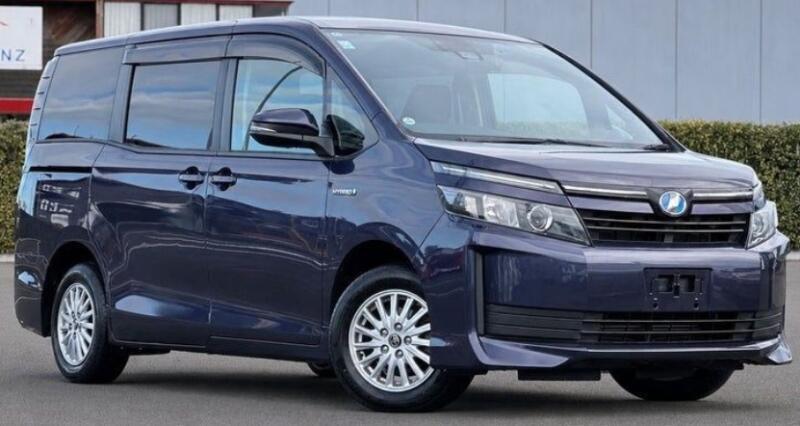
The Toyota Voxy has never been designed to dominate a drag strip. Its real purpose is much more practical. It carries families, luggage, shopping bags, sports equipment, and everything else that daily life throws through its sliding doors.
Even so, the engine matters enormously.
When we investigate the Toyota Voxy engine type, we quickly discover that there is no single answer. Toyota has produced the Voxy across several generations, using different petrol engines, hybrid systems, transmissions, and drivetrain configurations.
Depending on the model year, a Voxy may have a 2.0-litre direct-injection petrol engine, a Valvematic unit, a 1.8-litre hybrid powertrain, or Toyota’s newer 2.0-litre Dynamic Force engine.
That may initially sound confusing. Fortunately, the picture becomes much clearer once we separate the engines by generation.
In this guide, we will examine the main Toyota Voxy engine types, their engine codes, petrol and hybrid differences, expected performance, reliability considerations, and the checks we should complete before purchasing a used Japanese import.
- What Engine Does the Toyota Voxy Have?
- Understanding Toyota Voxy Engine Codes
- First-Generation Toyota Voxy Engine Type
- Second-Generation Toyota Voxy Engine Types
- Third-Generation Toyota Voxy Engine Types
- Fourth-Generation Toyota Voxy Engine Types
- Toyota Voxy Petrol vs Hybrid Engine
- Is the Toyota Voxy Engine Turbocharged?
- Does the Toyota Voxy Use a Timing Belt or Chain?
- Toyota Voxy Engine Maintenance Tips
- What Should We Check Before Buying a Toyota Voxy?
- Which Toyota Voxy Engine Is Best?
- Final Thoughts on Toyota Voxy Engine Types
- Frequently Asked Questions
What Engine Does the Toyota Voxy Have?
Most Toyota Voxy models use one of two basic powertrain arrangements:
- A 2.0-litre four-cylinder petrol engine
- A 1.8-litre four-cylinder petrol-electric hybrid system
The specific engine depends on the generation, production year, trim level, and drivetrain.
Older Voxy models commonly use engines from Toyota’s AZ family. Later petrol versions received engines from the ZR family, while the newest generation uses a modern Dynamic Force unit.
Hybrid versions generally use the 2ZR-FXE Atkinson-cycle petrol engine as part of Toyota’s integrated hybrid system.
The main Toyota Voxy engine types include:
| Voxy generation | Approximate production period | Main engine types |
|---|---|---|
| First generation | 2001–2007 | 2.0L 1AZ-FSE petrol |
| Second generation | 2007–2014 | 2.0L 3ZR-FE or 3ZR-FAE petrol |
| Third generation | 2014–2021 | 2.0L 3ZR-FAE petrol or 1.8L 2ZR-FXE hybrid |
| Fourth generation | 2022 onward | 2.0L M20A-FKS petrol or 1.8L 2ZR-FXE hybrid |
Specifications may differ between model revisions and drivetrain configurations. Many Voxy vehicles are exported from Japan as used imports, so checking the identification plate is safer than relying only on the registration year.
Understanding Toyota Voxy Engine Codes
An engine code may appear to be a random collection of numbers and letters, but it works like a mechanical fingerprint.
For example, 3ZR-FAE identifies a particular Toyota engine family and configuration. Likewise, 2ZR-FXE indicates that the engine belongs to the ZR family and has been configured for hybrid operation.
Knowing the correct engine code helps us identify:
- The required engine oil
- Compatible filters
- Correct spark plugs
- Replacement-engine compatibility
- Maintenance procedures
- Suitable diagnostic information
- Whether the vehicle is petrol-only or hybrid
This becomes especially important when buying parts for a Japanese import. Two Voxy vans may look almost identical from the outside while using different engines underneath.
Where Can We Find the Engine Code?
The engine code may appear on:
- The identification plate inside the engine compartment
- A label near the door frame
- Japanese export documents
- Auction inspection sheets
- Registration paperwork
- The engine block
- Toyota diagnostic records
We should always confirm both the engine code and chassis code before ordering parts.
Guessing from the model year alone is like ordering shoes without checking the size. We might get lucky, but the risk of an expensive mistake is unnecessarily high.
First-Generation Toyota Voxy Engine Type
The first Toyota Voxy appeared in 2001 as a close relative of the Toyota Noah.
It established the basic formula that continues today: a tall body, practical sliding doors, flexible seating, and enough interior room for family or commercial transport.
The 2.0-Litre 1AZ-FSE Petrol Engine
Many first-generation Voxy models use the 1AZ-FSE, a naturally aspirated 2.0-litre four-cylinder petrol engine.
It belongs to Toyota’s AZ engine family and uses direct petrol injection. Toyota often referred to this injection technology as D-4 in Japan.
Typical characteristics include:
- 2.0-litre displacement
- Four-cylinder configuration
- Double overhead camshafts
- Variable valve timing
- Direct fuel injection
- Automatic or continuously variable transmission
- Front-wheel-drive or four-wheel-drive availability
For its era, the 1AZ-FSE delivered a reasonable combination of torque, refinement, and fuel economy.
It was never intended to provide sports-car acceleration. Its job was to move a tall minivan smoothly and confidently, even when several passengers were aboard.
How Does the 1AZ-FSE Feel to Drive?
During everyday urban driving, the 1AZ-FSE should feel reasonably smooth and responsive.
Its 2.0-litre capacity provides enough power for:
- School runs
- Daily commuting
- Shopping trips
- Intercity travel
- Moderate motorway driving
When the Voxy is fully loaded or climbing a steep road, the engine may need to rev more strongly. That is normal for a naturally aspirated four-cylinder engine carrying the weight and aerodynamic profile of a large minivan.
A healthy unit should sound consistent rather than harsh, metallic, or uneven.
Possible Problems With Older Direct-Injection Engines
The 1AZ-FSE can provide dependable service, but its age must be considered.
Most first-generation Voxy models are now old enough for maintenance history to matter more than the specifications printed in the original brochure.
Potential areas to inspect include:
- Carbon deposits in the intake system
- Fuel-injector contamination
- Rough idling
- Cooling-system deterioration
- Oil consumption
- Ignition-coil failures
- Oxygen-sensor faults
- Neglected transmission maintenance
Direct-injection engines can develop intake deposits because fuel is injected directly into the combustion chamber rather than passing over and cleaning the intake valves.
Not every engine experiences serious carbon buildup, but repeated short journeys and poor maintenance may increase the likelihood.
Is the 1AZ-FSE Still Worth Buying?
It can be, provided the vehicle is inexpensive, mechanically sound, and supported by clear service records.
However, we should not buy an older Voxy simply because Toyota has a strong reputation for reliability. Age affects rubber seals, hoses, electrical connections, suspension components, and cooling systems regardless of the badge on the grille.
A proper inspection matters more than brand reputation alone.
Second-Generation Toyota Voxy Engine Types
Toyota introduced the second-generation Voxy in 2007.
The familiar box-shaped design remained, but the powertrain technology became more efficient and sophisticated.
Depending on the version, the vehicle may use either the 3ZR-FE or 3ZR-FAE petrol engine.
The 2.0-Litre 3ZR-FE Engine
Some second-generation models use the 3ZR-FE, a naturally aspirated 2.0-litre four-cylinder petrol engine.
Its main characteristics include:
- Approximately 2.0 litres of displacement
- Four-cylinder construction
- Dual overhead camshafts
- Variable valve timing
- Electronic fuel injection
- CVT operation in many versions
The 3ZR-FE has a relatively conventional design compared with the Valvematic-equipped 3ZR-FAE.
That relative simplicity may appeal to buyers who prefer familiar petrol-engine technology and want to avoid some of the additional valve-control hardware used by Valvematic.
The 2.0-Litre 3ZR-FAE Valvematic Engine
The 3ZR-FAE is one of the most widely discussed Toyota Voxy petrol engines.
Like the 3ZR-FE, it is a naturally aspirated 2.0-litre four-cylinder unit. The major difference is Toyota’s Valvematic technology.
Valvematic continuously adjusts intake-valve lift as well as valve timing. This allows the engine to control incoming airflow more precisely.
Instead of depending almost entirely on the throttle plate, the engine can change how far its intake valves open.
Think of it as replacing a basic tap with a carefully controlled valve. Both allow water to pass, but one gives us much finer control.
Potential Valvematic benefits include:
- Improved fuel efficiency
- Reduced pumping losses
- Better throttle response
- Smoother power delivery
- Improved combustion control
- Lower emissions under suitable conditions
Is Valvematic the Same as VVT-i?
No. Although both technologies control valve operation, they perform different tasks.
VVT-i changes valve timing. In simple terms, it adjusts when the valves open and close.
Valvematic also controls valve lift. It determines how far the intake valves open.
By controlling both timing and lift, the engine can manage airflow more efficiently across different speeds and loads.
Does the 3ZR-FAE Have a Turbocharger?
No. The 3ZR-FAE is naturally aspirated.
It does not use a turbocharger or supercharger to force additional air into the cylinders. Its performance comes from displacement, valve technology, engine management, and fuel control.
That may sound less exciting than a turbocharged engine, but predictable and progressive power delivery suits a family minivan.
Third-Generation Toyota Voxy Engine Types
The third-generation Voxy arrived in 2014 and marked an important turning point.
For the first time, buyers could choose between a conventional petrol powertrain and a full petrol-electric hybrid system.
The available options included:
- A 2.0-litre 3ZR-FAE petrol engine
- A 1.8-litre 2ZR-FXE hybrid engine
This generation remains particularly popular in used-import markets because it combines modern styling, practical interior space, reasonable fuel economy, and widely recognised Toyota technology.
This content may interest you! Toyota Voxy Engine Oil Type: Complete Owner’s Guide
The 2.0-Litre 3ZR-FAE Petrol Option
The petrol-powered third-generation Voxy continued using the 3ZR-FAE Valvematic engine.
Toyota paired it with a Super CVT-i continuously variable transmission.
Unlike a conventional automatic transmission with a fixed number of gears, the CVT continuously changes its operating ratio. This allows the engine to remain within an efficient speed range.
Advantages of the Petrol Voxy
The petrol model may suit drivers who:
- Spend considerable time on open roads
- Prefer conventional petrol-engine technology
- Have limited access to hybrid specialists
- Want a lower initial purchase price
- Drive relatively few kilometres each year
- Find a petrol model with an excellent service history
A petrol Voxy may also be easier to understand for independent workshops that do not regularly service high-voltage hybrid systems.
Disadvantages of the Petrol Voxy
The petrol version will usually consume more fuel than the hybrid during congested city driving.
The CVT may also hold the engine at high revolutions during strong acceleration. Some drivers describe this as a droning or elastic sensation.
That behaviour can be normal. However, we should investigate the vehicle if:
- Engine speed rises without corresponding acceleration
- The transmission shudders
- Engagement is delayed
- Warning lights appear
- The vehicle hesitates under load
- Unusual whining noises are present
A healthy CVT should provide smooth and predictable operation.
The 1.8-Litre 2ZR-FXE Hybrid Engine
The third-generation Voxy Hybrid uses the 2ZR-FXE, a 1.8-litre four-cylinder petrol engine working with Toyota’s hybrid system.
This is not merely a petrol engine with a larger starter motor. It is a fully integrated powertrain containing:
- A petrol engine
- Electric motor-generators
- A high-voltage traction battery
- A power-control unit
- Regenerative braking
- An electronically controlled power-split transaxle
The petrol engine and electric motor work together, independently or simultaneously, depending on speed, battery charge, acceleration demand, and driving conditions.
What Is an Atkinson-Cycle Engine?
The 2ZR-FXE is commonly described as an Atkinson-cycle engine.
Its valve timing allows the effective compression process to differ from the expansion process. This improves thermal efficiency and helps the engine extract more useful energy from the fuel it burns.
The trade-off is that an Atkinson-cycle engine may produce less power on its own than a similarly sized conventional petrol engine.
The electric motor fills this gap by providing immediate torque, particularly when the vehicle moves away from a stop.
It works like a relay team. The petrol engine concentrates on efficiency, while the electric motor delivers assistance when quick response is required.
Why Does a Hybrid System Work Well in the Voxy?
Minivans frequently operate in environments involving repeated starting, stopping, slowing, and accelerating.
These conditions favour hybrid technology because the electric motor can assist at low speeds, while regenerative braking recovers some energy that would otherwise be lost as heat.
The petrol engine may also stop when the vehicle is stationary or travelling under light-load conditions.
Potential benefits include:
- Reduced urban fuel consumption
- Quiet low-speed operation
- Smooth initial acceleration
- Less engine idling
- Reduced conventional brake wear
- Relaxed operation in congested traffic
Actual fuel economy depends on many factors, including:
- Driving style
- Traffic conditions
- Ambient temperature
- Terrain
- Tyre pressure
- Passenger load
- Air-conditioning use
- Hybrid battery condition
Can the Toyota Voxy Hybrid Drive on Electricity Alone?
Yes, but only for relatively short periods and under suitable conditions.
The vehicle may travel using electric power when:
- The traction battery has sufficient charge
- Road speed is low
- Acceleration demand is gentle
- The engine is warm enough
- Heating or cooling demand is moderate
The petrol engine will start when more power is required, the battery needs charging, or operating conditions make engine use more efficient.
The Voxy Hybrid is not a long-range electric vehicle. Electric-only driving is one part of its efficiency strategy rather than its primary operating mode.
Fourth-Generation Toyota Voxy Engine Types
Toyota introduced the fourth-generation Voxy in 2022.
The vehicle moved to Toyota’s GA-C platform and received redesigned petrol and hybrid powertrains.
The main engine choices are:
- A 2.0-litre M20A-FKS Dynamic Force petrol engine
- An updated 1.8-litre 2ZR-FXE hybrid system
The 2.0-Litre M20A-FKS Dynamic Force Engine
The M20A-FKS is a modern naturally aspirated 2.0-litre four-cylinder engine from Toyota’s Dynamic Force family.
It represents a significant technological step beyond the older 3ZR-FAE.
Key features include:
- 2.0-litre displacement
- Inline-four-cylinder construction
- Naturally aspirated operation
- Advanced fuel-injection technology
- Variable valve timing
- High-efficiency combustion
- Reduced internal energy losses
- Direct Shift-CVT transmission
Toyota designed its Dynamic Force engines to combine strong thermal efficiency with responsive everyday performance.
The goal is not merely to produce more power. It is to use fuel more effectively while maintaining smooth acceleration.
How Does the Direct Shift-CVT Work?
Toyota pairs the M20A-FKS with a Direct Shift-CVT.
A traditional CVT manages both initial acceleration and cruising through its continuously variable pulley system.
The Direct Shift-CVT adds a physical launch gear for low-speed take-off. Once the vehicle gains speed, the transmission transitions to continuously variable operation.
This arrangement may provide:
- More immediate response from a standstill
- Reduced load on the CVT mechanism
- A broader effective ratio range
- More natural initial acceleration
- Better overall efficiency
The transmission still behaves like a CVT during many driving situations, but take-off may feel more direct than it does in older models.
The Updated 1.8-Litre 2ZR-FXE Hybrid
The fourth-generation Voxy Hybrid continues using the 2ZR-FXE engine code.
However, the complete hybrid system is not identical to that of the previous generation.
Toyota revised several components, including:
- Electric motor performance
- Battery technology
- Power-control modules
- Energy-management software
- Hybrid-system response
- Overall system efficiency
The updated system aims to provide stronger acceleration while preserving the low-speed refinement and fuel-saving advantages associated with Toyota hybrids.
What Is Toyota E-Four?
Some fourth-generation hybrid versions are available with Toyota’s E-Four system.
E-Four provides electrically assisted all-wheel drive.
Instead of using a conventional mechanical driveshaft to connect the petrol engine to the rear axle, the system uses an electric motor to supply rear-wheel torque when required.
It may provide assistance during:
- Slippery-road starts
- Wet-weather acceleration
- Uphill take-offs
- Snowy conditions
- Low-grip cornering
- Acceleration from rest
E-Four is designed to improve traction and stability. It does not turn the Toyota Voxy into a serious off-road vehicle.
Toyota Voxy Petrol vs Hybrid Engine
Choosing between a petrol and hybrid Voxy is not simply a matter of asking which is better.
The real question is which one better matches our driving pattern, local fuel prices, access to mechanical expertise, and long-term ownership plans.
When Should We Choose the Petrol Engine?
A petrol Voxy may make more sense when:
- Its purchase price is significantly lower
- Most journeys involve steady open-road driving
- Annual mileage is relatively low
- Hybrid specialists are difficult to find
- Replacement hybrid batteries are expensive locally
- The petrol vehicle has a superior maintenance history
The petrol model may also suit buyers who prefer conventional mechanical systems and plan to keep the vehicle for only a few years.
When Should We Choose the Hybrid Engine?
A hybrid Voxy may be the better choice when:
- Most driving takes place in urban areas
- Traffic congestion is common
- Fuel prices are high
- Quiet low-speed operation is important
- Annual mileage is substantial
- Hybrid specialists are readily available
- We intend to keep the vehicle for several years
A hybrid generally delivers its greatest advantage in stop-and-go driving. On a long motorway journey at a stable speed, the difference may be less dramatic.
Which Toyota Voxy Engine Is More Reliable?
Both petrol and hybrid versions can be reliable when maintained correctly.
The petrol model has fewer high-voltage components, but it still contains:
- A CVT
- Electronic sensors
- Variable valve-control hardware
- Emissions equipment
- Computer-controlled fuel injection
The hybrid adds a traction battery and power electronics. However, it also eliminates or reduces dependence on several conventional components.
For example, Toyota hybrids do not use a traditional starter motor and alternator in the same way as ordinary petrol vehicles.
Hybrid regenerative braking may also reduce wear on conventional brake pads and discs.
Reliability depends heavily on:
- Maintenance history
- Genuine mileage
- Cooling-system condition
- Correct oil and transmission fluid
- Accident history
- Battery health
- Previous repairs
- Diagnostic fault codes
- Storage and import history
A well-maintained hybrid is usually a safer purchase than a neglected petrol model. The opposite is equally true.
Is the Toyota Voxy Engine Turbocharged?
Standard Toyota Voxy petrol and hybrid engines are generally naturally aspirated.
This content may interest you!Toyota Voxy Fuel Tank Capacity: Complete Guide by GenerationThe Voxy does not rely on a turbocharger to generate its everyday performance.
Toyota has instead used:
- Conventional naturally aspirated petrol engines
- Valvematic technology
- Dynamic Force combustion
- Petrol-electric hybrid assistance
For some buyers, the absence of a turbocharger is reassuring because there is no turbo unit, oil-feed pipe, intercooler, or boost-control system to maintain.
However, naturally aspirated does not mean maintenance-free.
Correct oil, coolant, spark plugs, filters, and transmission servicing remain essential.
Does the Toyota Voxy Use a Timing Belt or Chain?
The main Voxy engines covered in this guide generally use timing chains rather than rubber timing belts.
A timing chain is designed to last a long time, but it is not indestructible.
Poor oil quality, low oil levels, sludge, and excessively long oil-change intervals can accelerate wear in:
- The chain
- Tensioner
- Guides
- Camshaft components
- Variable valve-timing system
Potential warning signs include:
- Rattling during cold starts
- Engine timing fault codes
- Rough running
- Reduced power
- Persistent warning lights
- Metal particles in the engine oil
We should not automatically replace a timing chain at a particular mileage unless inspection or manufacturer guidance indicates that it is necessary.
At the same time, abnormal rattling should never be ignored.
Toyota Voxy Engine Maintenance Tips
A Toyota Voxy is more likely to remain dependable when we treat maintenance as prevention rather than emergency repair.
Use the Correct Engine Oil
The correct oil viscosity and specification depend on the exact engine, climate, and manufacturer guidance.
Different Toyota Voxy engines may have different requirements. We should use:
- The owner’s manual
- Toyota service information
- The engine code
- A trusted parts catalogue
We should not assume that every 2.0-litre Voxy uses identical oil.
Using an inappropriate viscosity may affect cold-start protection, fuel economy, oil pressure, and variable valve operation.
Do Not Neglect the Cooling System
A minivan engine often works harder than we realise.
The vehicle may regularly carry several passengers, climb hills, operate a large air-conditioning system, and remain in slow traffic for extended periods.
Important cooling-system checks include:
- Radiator condition
- Coolant level
- Water-pump leakage
- Cooling-fan operation
- Hose condition
- Thermostat function
- Expansion-tank condition
- Inverter cooling on hybrid models
Overheating can transform a manageable maintenance issue into a major repair surprisingly quickly.
Service the Transmission Correctly
Petrol Voxy models commonly use CVTs, while hybrid models use an electronically controlled power-split transaxle.
These systems are mechanically different and require the correct servicing procedures and fluids.
Using a generic fluid without confirming compatibility is a dangerous shortcut.
The label may claim that one fluid works in every transmission, but mechanical systems tend to be less optimistic than marketing departments.
Inspect the Hybrid Battery Cooling Intake
Hybrid batteries need controlled airflow to remain within a suitable operating temperature.
Dust, hair, fabric fibres, and other debris can block the battery intake or cooling fan.
This may be more common in vehicles used for:
- Family transport
- Taxi work
- Passenger services
- Pet transportation
- Commercial driving
Keeping the cooling intake clean can help the battery avoid unnecessary heat stress.
Respond to Warning Lights Quickly
A dashboard warning light does not automatically indicate catastrophic failure.
However, ignoring it removes our opportunity to identify and correct the problem early.
A proper diagnostic scan should inspect all relevant control modules, including:
- Engine computer
- Transmission system
- Hybrid control system
- Battery-management system
- Brake-control system
- Power-control unit
A basic code reader may not access every system in a hybrid Voxy.
What Should We Check Before Buying a Toyota Voxy?
Before purchasing a used Voxy, we should confirm its mechanical condition and identity rather than being distracted by polished paint or a spotless interior.
Toyota Voxy Pre-Purchase Checklist
- Confirm the chassis code.
- Confirm the engine code.
- Review Japanese auction records where available.
- Check maintenance documentation.
- Verify mileage history.
- Start the engine when completely cold.
- Listen for rattles, knocks, or unusual vibration.
- Inspect the exhaust for abnormal smoke.
- Scan all electronic control modules.
- Test the CVT or hybrid transaxle.
- Inspect the engine oil.
- Check coolant condition.
- Look underneath for leaks.
- Inspect for structural accident repairs.
- Test the hybrid battery under load.
- Check the battery cooling intake.
- Drive on both slow and fast roads.
- Arrange an independent mechanical inspection.
Why Is a Cold Start Important?
A seller may warm the engine before we arrive because certain problems become less noticeable once it reaches operating temperature.
A cold start may expose:
- Timing-chain rattle
- Weak 12-volt battery performance
- Misfires
- Excessive exhaust smoke
- Rough idling
- Slow oil-pressure buildup
- Abnormal mechanical noises
One cold start may reveal more than ten minutes spent inspecting the seats and infotainment system.
Which Toyota Voxy Engine Is Best?
There is no single perfect answer for every buyer.
The 1AZ-FSE may appeal to someone looking for an inexpensive older Voxy, although age-related maintenance should be considered carefully.
The 3ZR-FAE is a sensible petrol option for buyers wanting a third-generation vehicle with a widely recognised 2.0-litre engine.
The 2ZR-FXE hybrid is attractive for urban drivers who value fuel economy, quiet operation, and smooth low-speed performance.
The newer M20A-FKS offers Toyota’s most modern Voxy petrol-engine design and benefits from the Direct Shift-CVT.
For most used-car buyers, however, the best engine is not automatically the newest or most economical.
It is the engine installed in the vehicle with:
- The clearest maintenance history
- The best diagnostic results
- The lowest evidence of neglect
- The most appropriate drivetrain for local conditions
- The strongest overall inspection report
A desirable engine code cannot rescue a poorly maintained vehicle.
Final Thoughts on Toyota Voxy Engine Types
The Toyota Voxy has evolved considerably since its introduction.
Early models used the 2.0-litre 1AZ-FSE direct-injection petrol engine. Later generations adopted the 3ZR-FE and 3ZR-FAE, with Valvematic technology improving airflow control and efficiency.
The third generation introduced the 1.8-litre 2ZR-FXE hybrid, combining an efficient petrol engine with electric assistance.
The latest generation gives buyers a choice between the 2.0-litre M20A-FKS Dynamic Force petrol engine and an updated 1.8-litre hybrid system.
Our ideal choice should depend on:
- Where we drive
- How many kilometres we travel
- Local fuel prices
- Hybrid-service availability
- Purchase price
- Maintenance history
- Overall vehicle condition
The engine code tells us what the Voxy was when it left the factory. Its maintenance record tells us what it has become.
Frequently Asked Questions
1. What Is the Most Common Toyota Voxy Engine Type?
Many Toyota Voxy models use a naturally aspirated 2.0-litre four-cylinder petrol engine.
Depending on the generation, common engine codes include 1AZ-FSE, 3ZR-FE, 3ZR-FAE, and M20A-FKS.
Hybrid models generally use a 1.8-litre 2ZR-FXE petrol engine combined with one or more electric motors.
2. Is the Toyota Voxy Available With a Hybrid Engine?
Yes. Toyota introduced a full-hybrid Voxy with the third generation in 2014.
It uses a 1.8-litre 2ZR-FXE Atkinson-cycle petrol engine, electric motors, a traction battery, and Toyota’s power-split hybrid transmission.
An updated hybrid system remains available in the fourth-generation Voxy.
3. Does the Toyota Voxy Have a 2.0-Litre Engine?
Yes. Petrol-powered Toyota Voxy models commonly use 2.0-litre engines.
Depending on the year, the vehicle may have a 1AZ-FSE, 3ZR-FE, 3ZR-FAE, or M20A-FKS engine.
The exact unit should be confirmed through the vehicle identification plate or official documentation.
4. Is the Toyota Voxy Engine Reliable?
Toyota Voxy engines can be reliable when serviced correctly.
Long-term dependability depends on engine-oil changes, cooling-system maintenance, transmission condition, genuine mileage, previous repairs, and accident history.
Hybrid buyers should also inspect the traction battery and battery-cooling system.
This content may interest you!Toyota Voxy Seating Capacity: 7 or 8 Seats Explained5. Which Is Better, a Toyota Voxy Petrol or Hybrid?
The hybrid is usually better suited to frequent urban driving because it can recover energy during braking and use electric assistance at low speeds.
The petrol version may be more appropriate for lower-mileage owners, motorway users, or buyers living in areas where hybrid repairs and replacement batteries are difficult to obtain.
Leave a Reply